



Ladybugs
Aphids happen to almost every grower. You caught them, and that's the hard part.
Aphids on the new growth in a closed room or greenhouse? Ladybugs eat them on sight, and you can watch them work.
- Ships Mon–Thu2-day or overnight
- Live arrival coveredReport concerns within 72 hours
- Free shippingOn orders from $30

Their larvae keep hunting aphids after the beetles move on
1,250 Eggs ·$49Buying for a group or a business? · Wholesale
01 · The problem
Are ladybugs right for your aphids?
Signs it's aphids
- Clusters of soft, pear-shaped bugs on new growth and under leaves.
- Sticky leaves from the honeydew they leave behind.
- Ants running up the stem to farm them.
Seeing these? Good catch. The sooner you start, the smaller the job.


- You receive
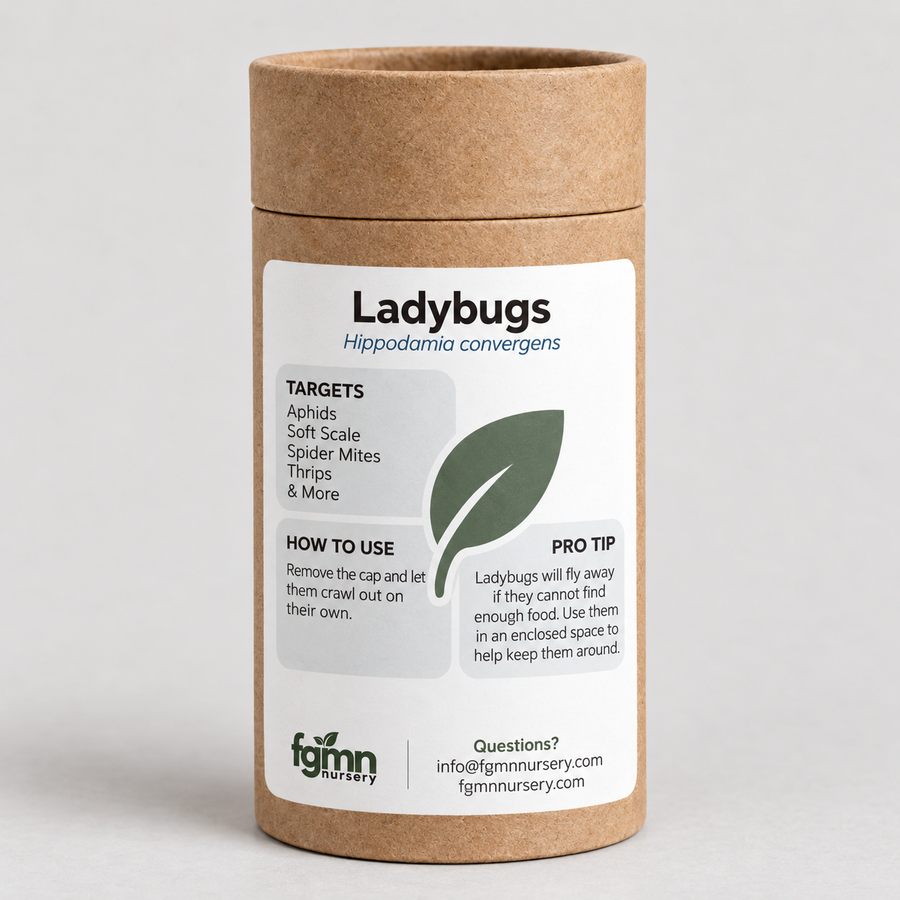
- Live adult beetles, cool and resting. They wake as they warm.
- Main target
- Aphids you can see, on stems and new growth
- Best conditions
- 65–85°F, 50% humidity or higher, a closed room or greenhouse
- Not for
- Spider mites, broad mites or adult mealybugs
Works on
- Aphids
- Young mealybugs
- Soft scale crawlers
- Thrips larvae, now and then
- Moth eggs
Not the answer for
- Spider mites
- Broad & russet mites
- Adult mealybugs
02 · Meet the beneficial
Hippodamia convergens
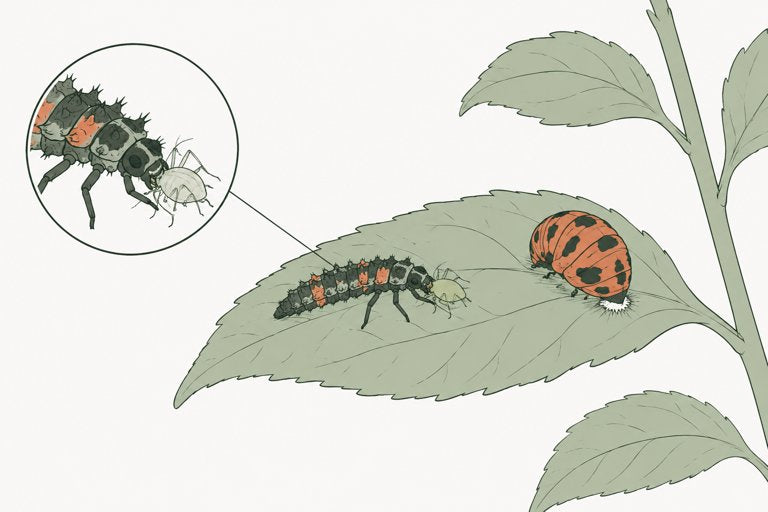
Gathered in the mountains. Hired for your aphids.
In winter, many pile together in big clusters in California's mountain foothills. That is where ladybugs like these are collected.
The name is on its collar
Just behind the head, two white marks slant toward each other, or converge. That is where the convergent lady beetle gets its name.
Thirteen spots, or none
Most have 13 black spots on orange wings, but some have fewer and some have none. Spotted or plain, it's the same ladybug doing the same job.
Eggs stood on end
A female lays small yellow eggs standing on end, in clusters of 10 to 30, right beside aphids. Over a season she can lay several hundred.
03 · How it works
Living hunters, working on their own
- Easy to start. Open, release, done. Nothing to mix or spray.
- They search for you. Most pests are too small to spot. Predators find them anyway, so you don't need to know where every one is hiding.
- They stay where the food is. For the most part they settle where the pests are and keep working.
- Another round is normal. Living things work in waves. You'll see the results as fewer pests on the plant.
Ladybugs are the exception to "they stay where the food is": adults fly, and many move on within a day or two. They do their best work fast, so a generous release and repeat rounds are the plan.
Ladybug temperature and storage
04 · Not your conditions?
Choose one of these instead
Not quite your situation? No problem. If your space or your pest is different, one of these fits better.
 You need predators that stay putGreen Lacewing Larvae
Lacewing larvae can't fly, and lamps don't distract them
View → It's mealybugsCryptolaemus montrouzieri
The beetle that specializes in mealybugs
View → Aphids keep coming backAphidius colemani
A tiny wasp that finds scattered aphids and multiplies on the plant
View →05 · The plan
How to release ladybugs
No experience needed. Here's all it takes.
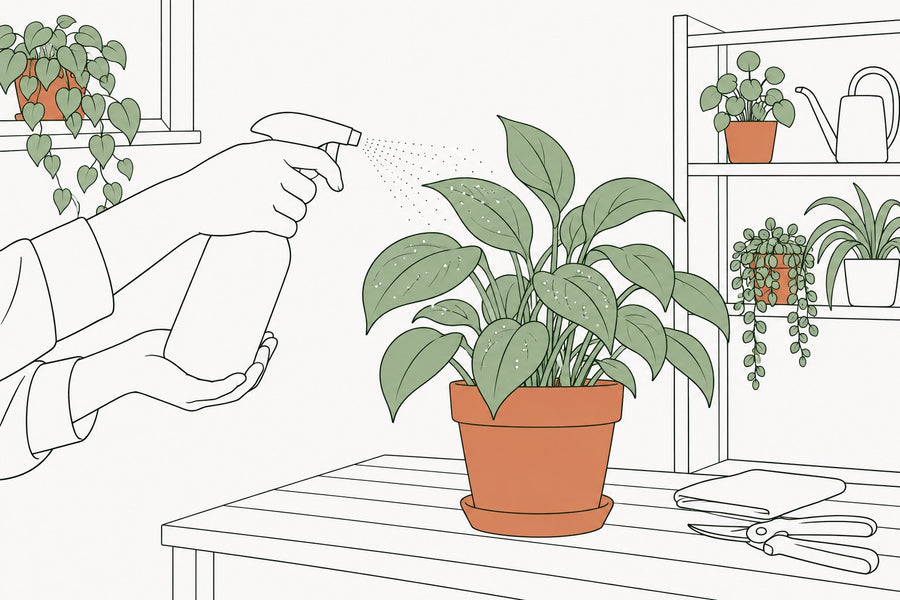
Mist the plants
Water or mist first. Beetles look for a drink before a meal, and a thirsty one leaves to find it.
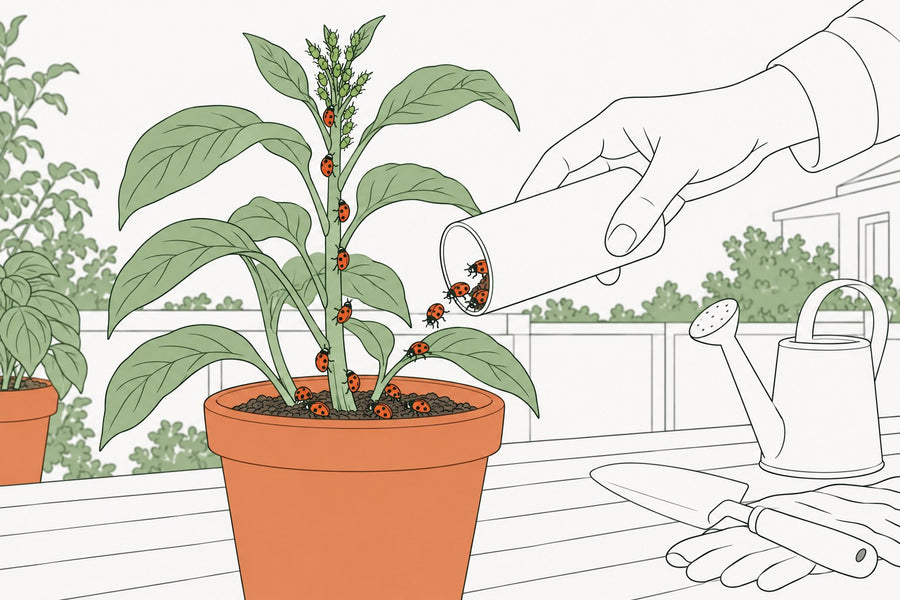
Open at the base
Let them out on the lower stems or the soil, never on top. They climb toward the aphids, checking every leaf.

Close the windows
Indoors, shut the windows and keep the tube out of hot direct sun when you open it.

Fridge the rest
For a bigger job, hold some back in the fridge (never the freezer) and release again a few days later.
06 · What happens next
What to expect
Living things work at their own pace. Here's what normal looks like.
Most leave within a day or two
Even with plenty of aphids. That's normal for purchased ladybugs.
They cut aphids before they go
In one study, a single release of 100 per potted rose reduced aphids by 66 to 88%.
So plan on repeat releases
Every 1 to 2 weeks while aphids are present.
Spiky larvae are a bonus
In a closed space with plenty of aphids, some may lay eggs. Spiky black-and-orange larvae are young ladybugs: leave them be.
07 · Reviews
What growers say
Very unhappy with my purchase and customer service. First time ordering , 90% of my bugs arrived dead (even though I paid $22 for express shipping). They did give me the option for store credit or a free replacement. The store credit didn’t cover the shipping cost, I had already paid so I went with the replacement. However all my bugs arrived dead the second time as well. When I asked if I could just do store credit this time as reimbursement, they said I couldn’t because I already used my one replacement. Very unhappy all around and will not be buying anything from this nursery again, which is so sad because I like supporting small businesses and usually have better experience with customer service from them :(
Hi Jessi, we're truly sorry for the experience you've had with your order. I did just review your correspondence with Mia and it doesn’t look like you finished answering her questions. While she did quote to you our policy, she was asking further questions to see if there was something more she could do. Also, I noted that you said the store credit wouldn’t cover your shipping. Could you reach back out and let us know what that means? If people choose the store credit, we give them a full store credit and that includes the cost of their shipping in the first order. Perhaps there was a miscommunication? You can address both in the email back to Mia. Thank you!
I had a great experience ordering ladybugs from FMGN Nursery. Although there was an issue with my initial order, their customer service was excellent. They responded quickly, handled my concern professionally, and immediately offered to send me a replacement order of ladybugs at no additional cost.
I truly appreciate how responsive, helpful, and accommodating their team was. It’s refreshing to see a company that genuinely stands behind its products and values customer satisfaction. I am very happy with the way they resolved the situation and would definitely recommend FMGN Nursery to others. Excellent customer service!
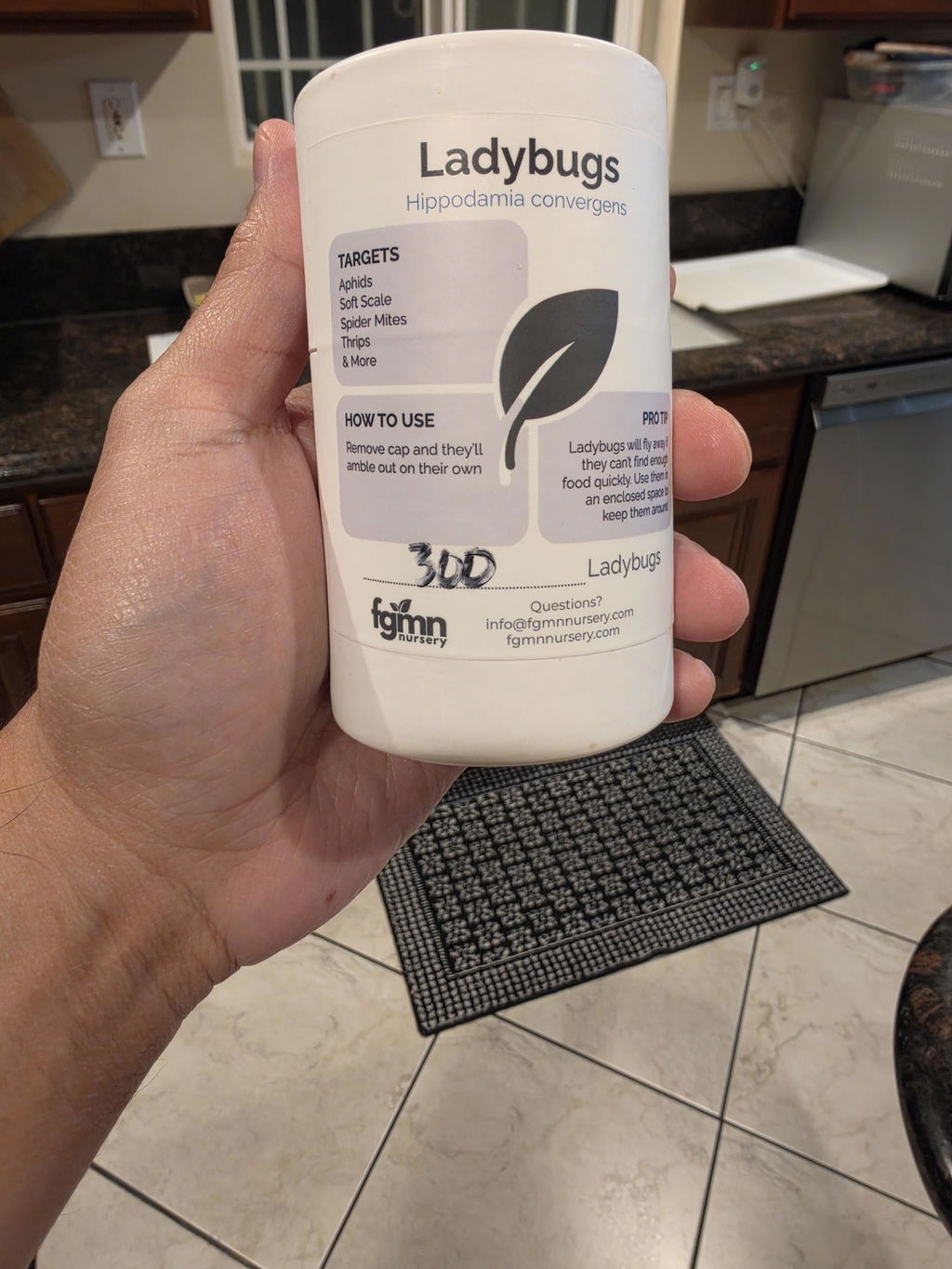
Carl, this made the whole crew's day. Consider the ladybugs officially on the clock at your place. Thanks for the kind words!
I ordered these little ladies for my indoor greenhouse. They arrived healthy, active, & ready to eat. There’s something ridiculously cute about watching them wandering around all my plants, especially knowing they’re helping protect. Such a fun, natural way to add a little extra defense to my greenhouse. I’ll definitely be ordering again!

Ridiculously cute is the correct scientific term, Amanda. A greenhouse full of tiny red security guards on their rounds is a very good view.
Ordered 150, about 1/3 of them arrived dead in the container.
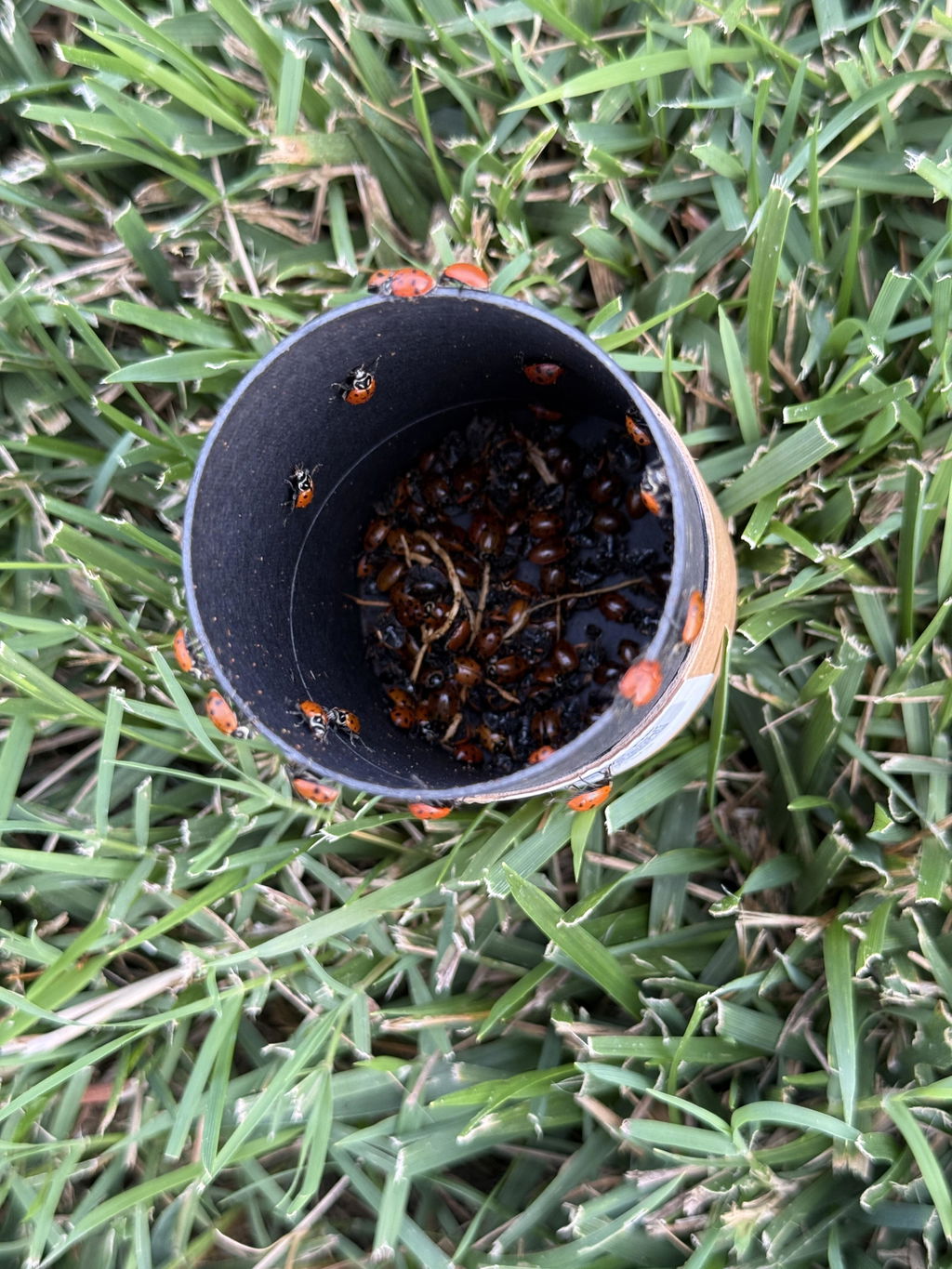
Hi Sean, we're sorry to hear about the issue with your ladybugs. Please make a claim through the link in your email. Assuming you're within the required timelines of the live shipping guarantee, you'd receive a partial store credit.
If you’re looking for ladybugs, look no place else! They arrived quickly, and packaged so well! I watered my plants right before releasing, and highly recommend doing so. They all immediately flicked to the water droplets. My plants were aphid free in less than 48 hours! Will definitely order again next year!
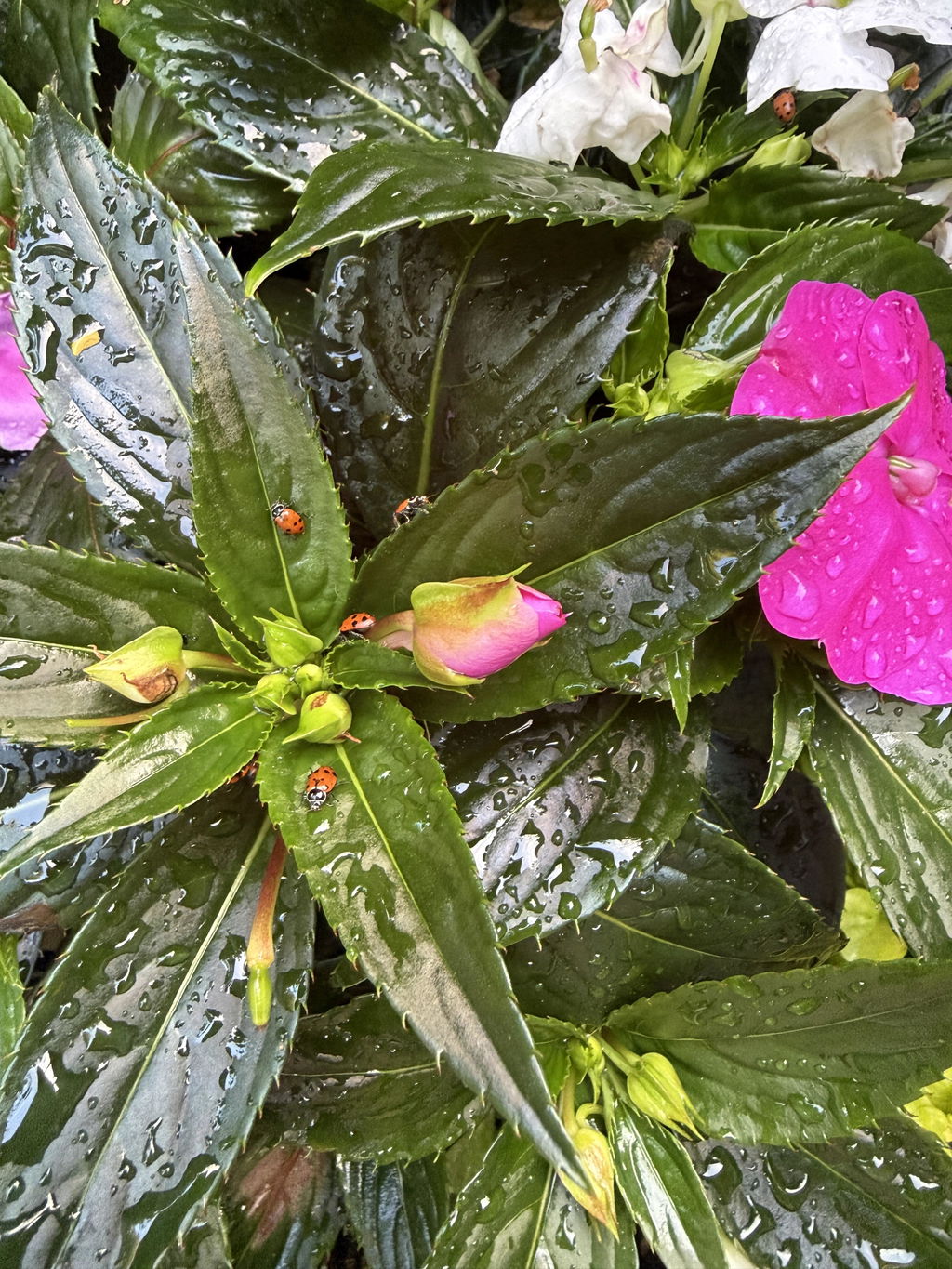
I wish I would have known about this place sooner! I have a rose bush that has been on the property for at least 30 years from my understanding. Maybe more. The aphids got it this year and were out of control. Thousands of aphids covering almost every inch of the rose bush and spreading to other plants. I bought the ladybugs. 800 of them. I placed the container deep in the middle of the bush. Yes some flew away. But most of them stayed. The lady bugs almost completely wiped out the aphids in just a few days. I might have to buy one more package, but they definitely are handling business. Fast shipping, the bugs came alive and well. Definitely buying from here again.


These hungry ladies absolutely went to town on an aphid infestation that I'd been fighting for days. They made short work of it!


So, we had a huge aphid problem on our honeysuckle. I ordered 300 ladybugs, and when they arrived, I watered our vines at dusk, and released the ladybugs per instructions.
And then the next day, there were no signs of ladybugs. Couldn't figure it out - there's a freaking aphid buffet here! Why don't we see any ladybugs eating them?
And then after a bit, there were two or three little ladybug alligator larvae crawling around on the honeysuckle. And then, no aphids.
I don't see any ladybugs now, or larvae. But I also don't see any aphids. So... didn't see the thing happening, but apparently, it happened.
No aphids now. Money well spent, and I didn't have to use chemicals. Godspeed, ladybugs, wherever you may be.

Very easy ordering process with great communication. The lady bugs feasted on the aphids that were plaguing my rose bush. Haven’t seen any more aphids and see an occasional lady bug in the garden. Hopefully they stuck around.

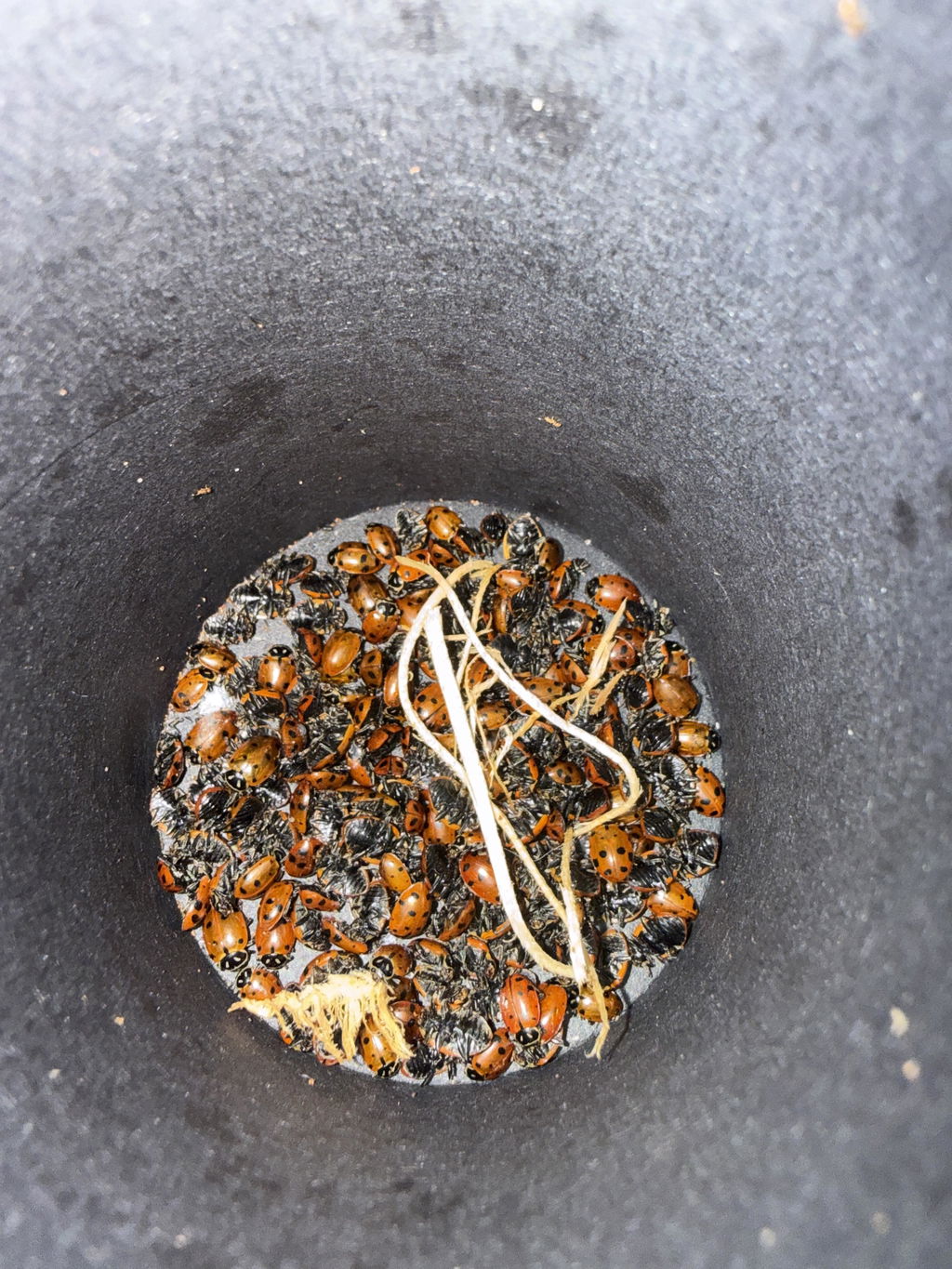
About half of them were dead. They didn’t wake up - I took photos when I released them & the next day. The same group of ladybugs was unresponsive unfortunately. I would expect some to not make it but not this many.


Hi Taryn,
Alas... that can happen! But it's also why we have the Live Guarantee. :) If it's within 24 hours of shipment, please send this picture to the support team and even if it's not 100% dead, they'll at least give you some store credit toward another order. You can reach them at info@fgmnnursery.com
I’ve been interested in biological pest control for awhile but was totally overwhelmed with options and logistics. I found FGMN on PalmStreet and sat in on a live sale. I loved getting my questions answered in real time, and it was a fun and informative way to determine what was right for me.
Shipping was timely as promised, and my little ladies were raring to go when I unboxed.
It’s been 48hr and they’re munching their way through our aphids. I hope they’ll be happy enough to stick around and lay eggs. I do see some dead bugs in the dirt, but I expected there would be a percentage that didn’t survive; it’s definitely not enough to warrant concern, and I will happily order again as needed.


The ladybugs cleaned up all the visible aphids within 12 hours! I am amazed!


Easy process. All my lady bugs were alive upon arrival (the best I could tell anyway lol). Would definitely order again

All 150 were crawling around waiting to start eating the white flies that have been attacking my greenhouse plants. Happyme!

Cute little bug friends arrived ready to get to work and eat the evil aphids that have taken over my plants. They arrived quickly and healthy. The notes on the package and the info card are witty and made me smile. It’s small humorous friendly touches like that- that will make me choose this vendor over others.

The box had a lot less than 150 ladybugs, we counted maybe 40-50and did take pictures. Unfortunately, they did not do much for the aphid infestetion. I did not see any ladybugs go to those plants after they day were released on them. I have moved back to systemics.

Hi! Honestly it looks like you were sent the tube we use for scooping by accident. It did go missing and the pack at the bottom tells me that might be it. Did you reach out to our customer service? They would have absolutely refunded or replaced this. You can easily do that by replying to any of the emails you've received from us, or emailing info@fgmnnursery.com
I don't know what conversations you've had with us, but I'm sorry if it was our mistake! We do make them.
Love these ladybugs, they are now my soldiers and I have launched my attack on the war against the spider mites in my garden. I released them last night and this morning still chowing down.


There were a lot of them in here. I put them next to some plants thinking they would need to be contained for a bit... but they climbed up on those and started eating right away. I've put these on auto-order.
Thanks!

Will these ladybugs bite my leaves?
Hi!
Great question! No, they only want aphids or other pests when they can’t find aphids. They love a good protein meal, not a salad.
When should they be released
That's a great question! Generally in the evening is considered best practice.
Before you order
All your questions, answered
Something else? Toby's in the chat, bottom right, and happy to help.
When does it ship, and how does it arrive?
Live beetles, cool, clustered and mostly still. They wake up as they warm. Live orders ship Monday to Thursday, 2-day or overnight, whichever suits them best. Free shipping from $30. Free shipping from $30; $15 under that.
What if something's wrong when it arrives?
If there's a problem when your order arrives, email info@fgmnnursery.com with your order number within 72 hours of delivery. You choose a replacement or store credit.
Why native ladybugs?
Ours are Hippodamia convergens, the convergent lady beetle, native to North America. Not the invasive Asian lady beetle.
They're all huddled together. Is something wrong?
No. Ladybugs huddle naturally, especially when they're cool. They spread out and start hunting as they warm up and pick up the scent of aphids.
Can I use them with predatory mites?
Yes, with care. Ladybugs eat mites they come across, so put predatory mites out about 5–7 days after the ladybugs, on different plants where you can.
Is it safe to order in summer?
Yes. We only ship Monday to Thursday, so nothing sits in a hot warehouse over the weekend, and they travel 2-day or overnight.
Ready when you are
Ladybugs
You've got this. And if you get stuck, we're one email away at info@fgmnnursery.com.