
Too Many Options?
Try our predatory mite and insect matchmaking quiz! This 6-question interview will automatically match you to the best options for your situation.
Aphids

How to know it's aphids
Clusters of soft, pear-shaped insects on new growth and flower stems, usually green but also black, pink, grey or woolly white. Sticky honeydew on the leaves below them, sometimes with black sooty mould growing on it. Aphids reproduce without mating and give birth to live young, so a handful becomes a colony in days.
What eats them
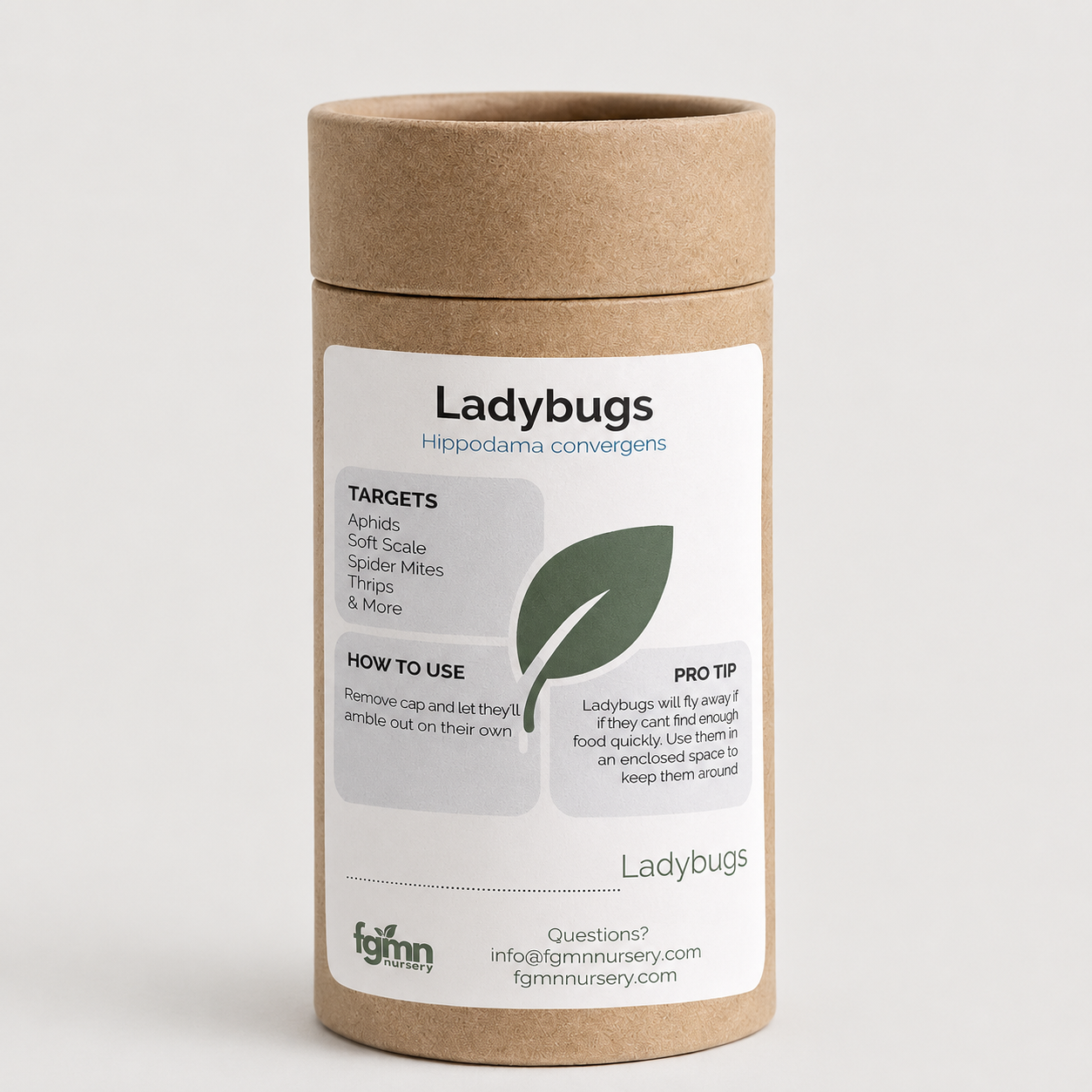
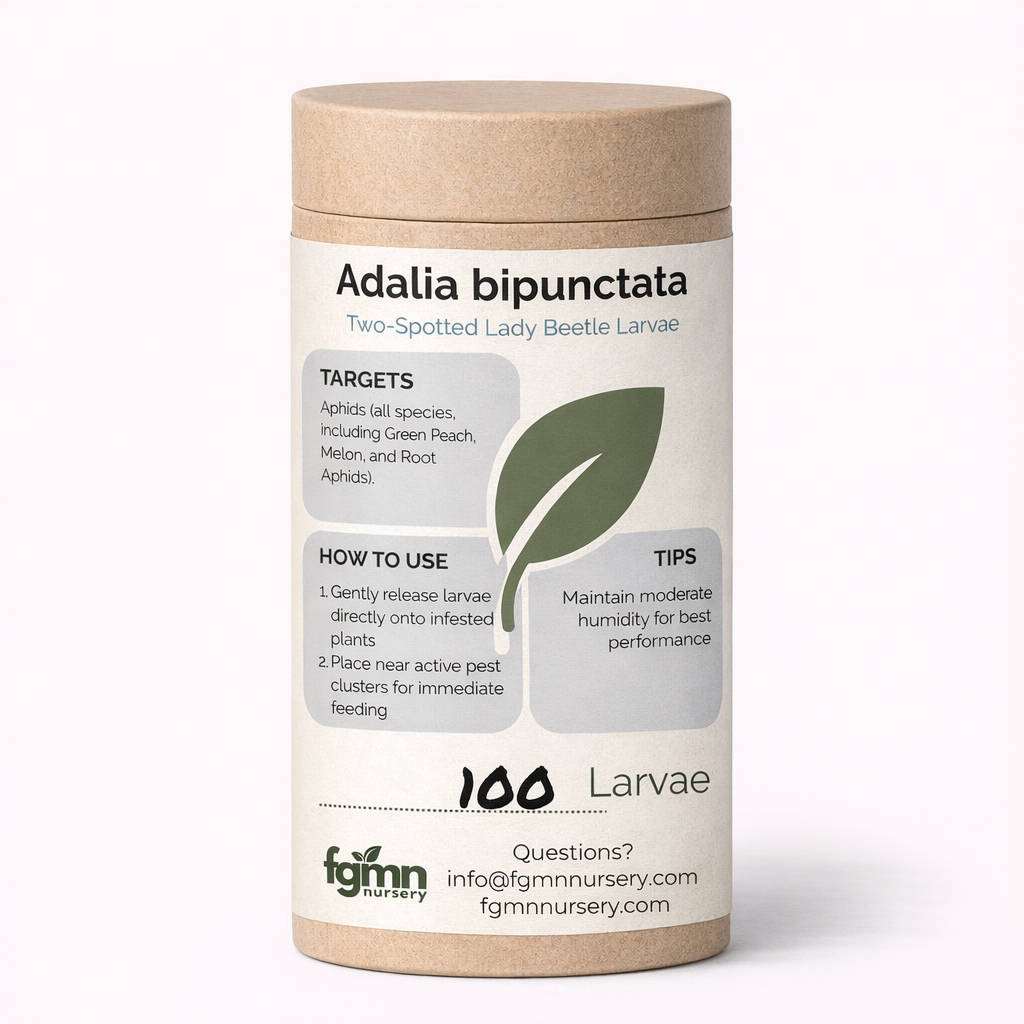
Lady beetle larvae — Adalia bipunctata — are the workhorses. The larval stage does most of the eating, which is why we ship larvae rather than adults: adults have wings and opinions about where they'd rather be.
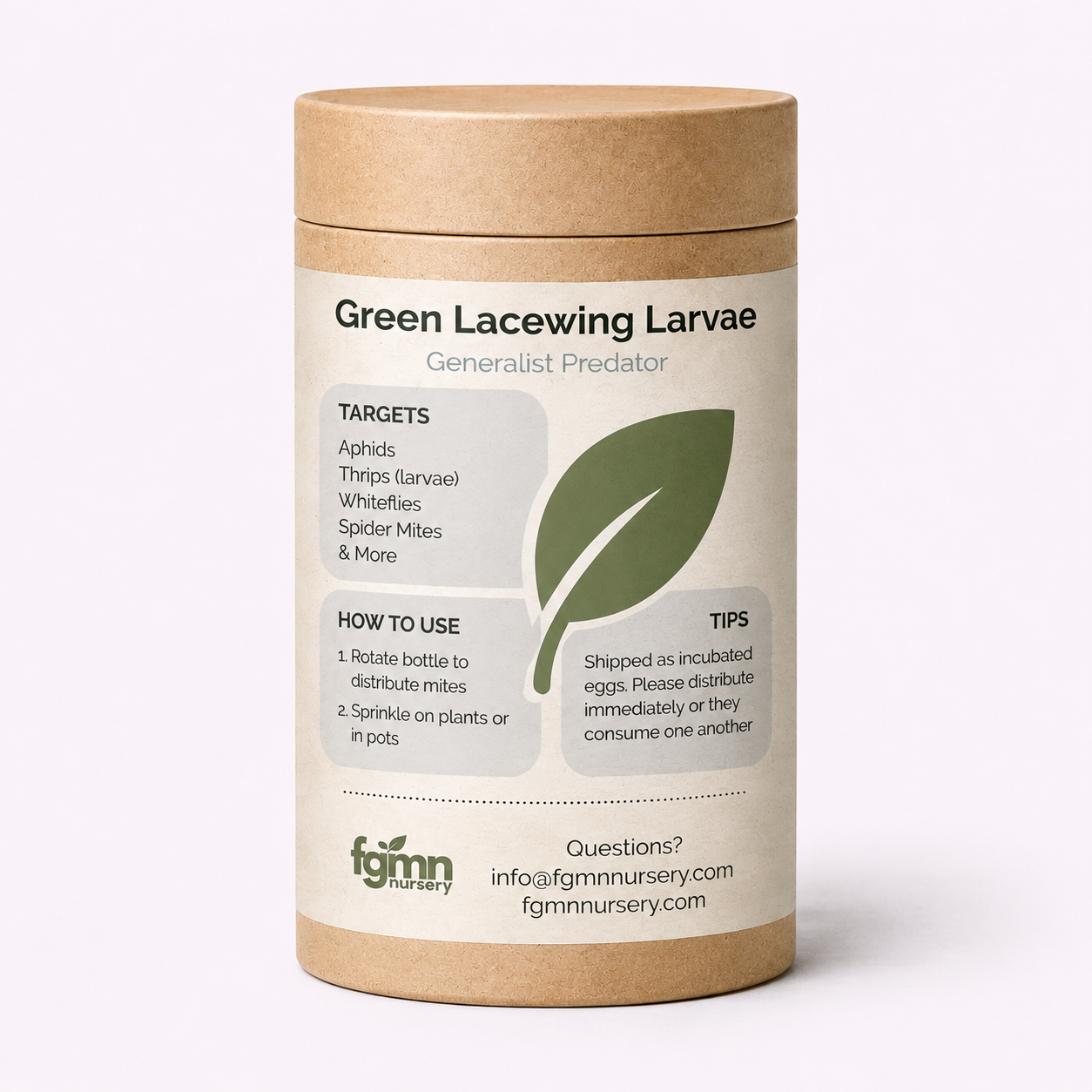
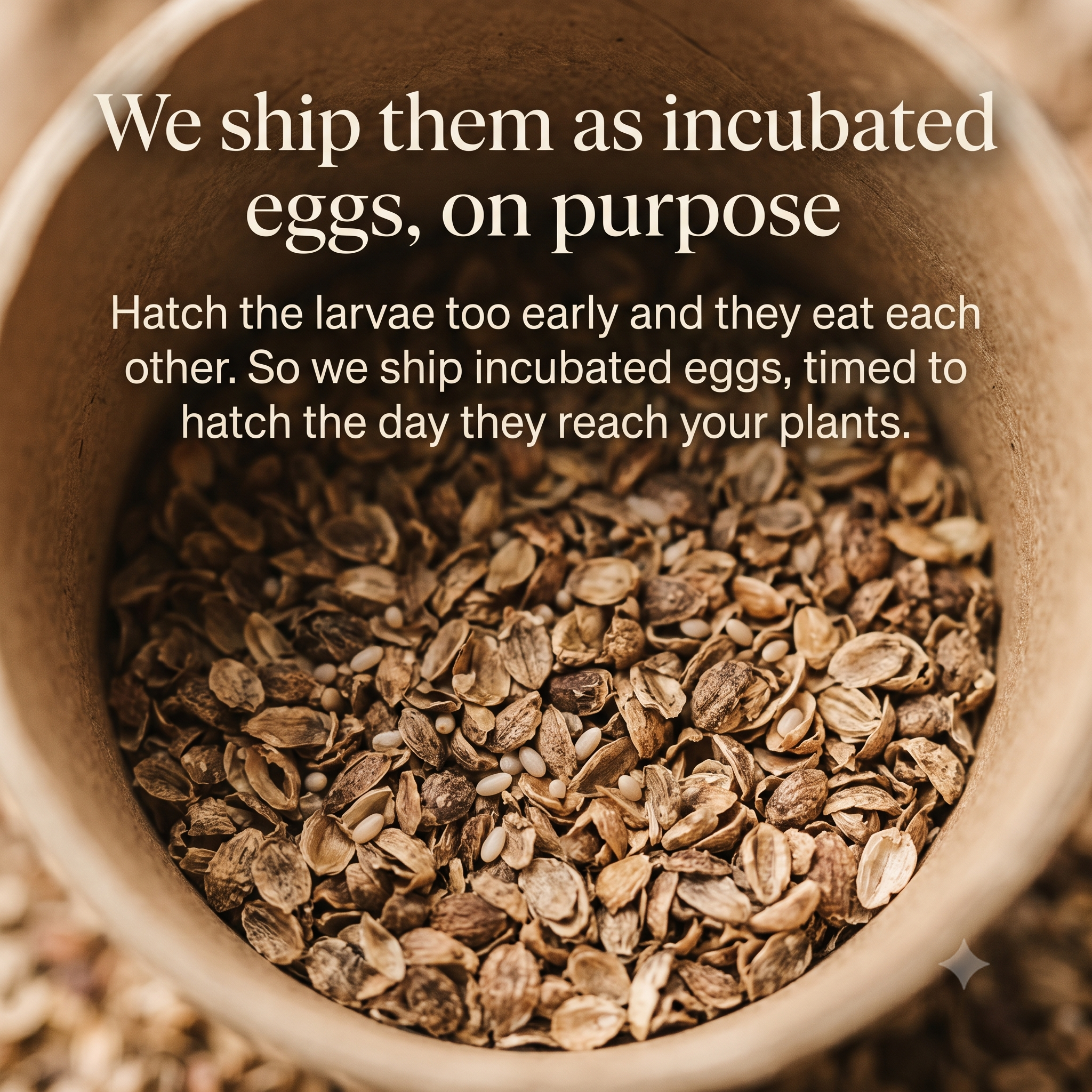
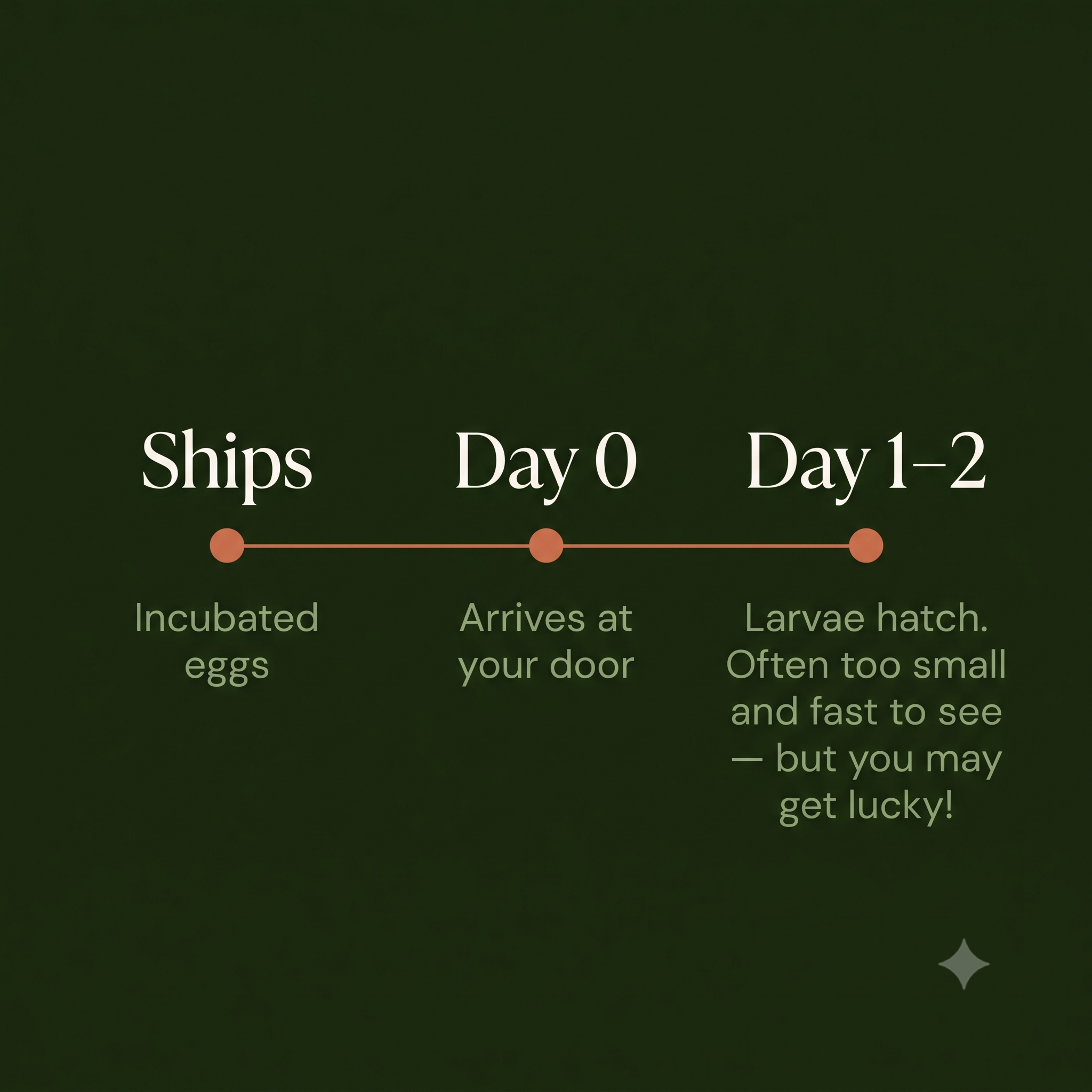
Green lacewing larvae are indiscriminate and effective. They'll take aphids, thrips, whitefly and small mites, which makes them a good choice when you have more than one thing going on.
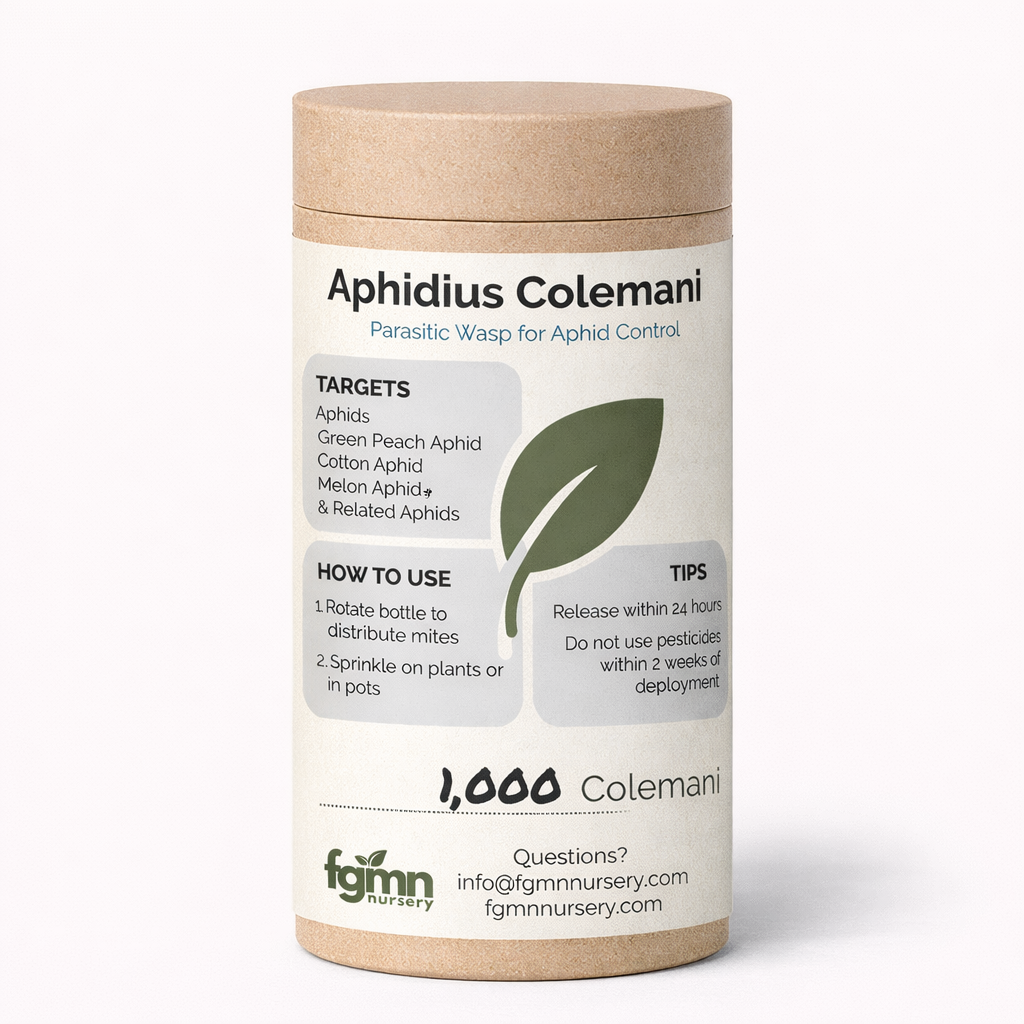
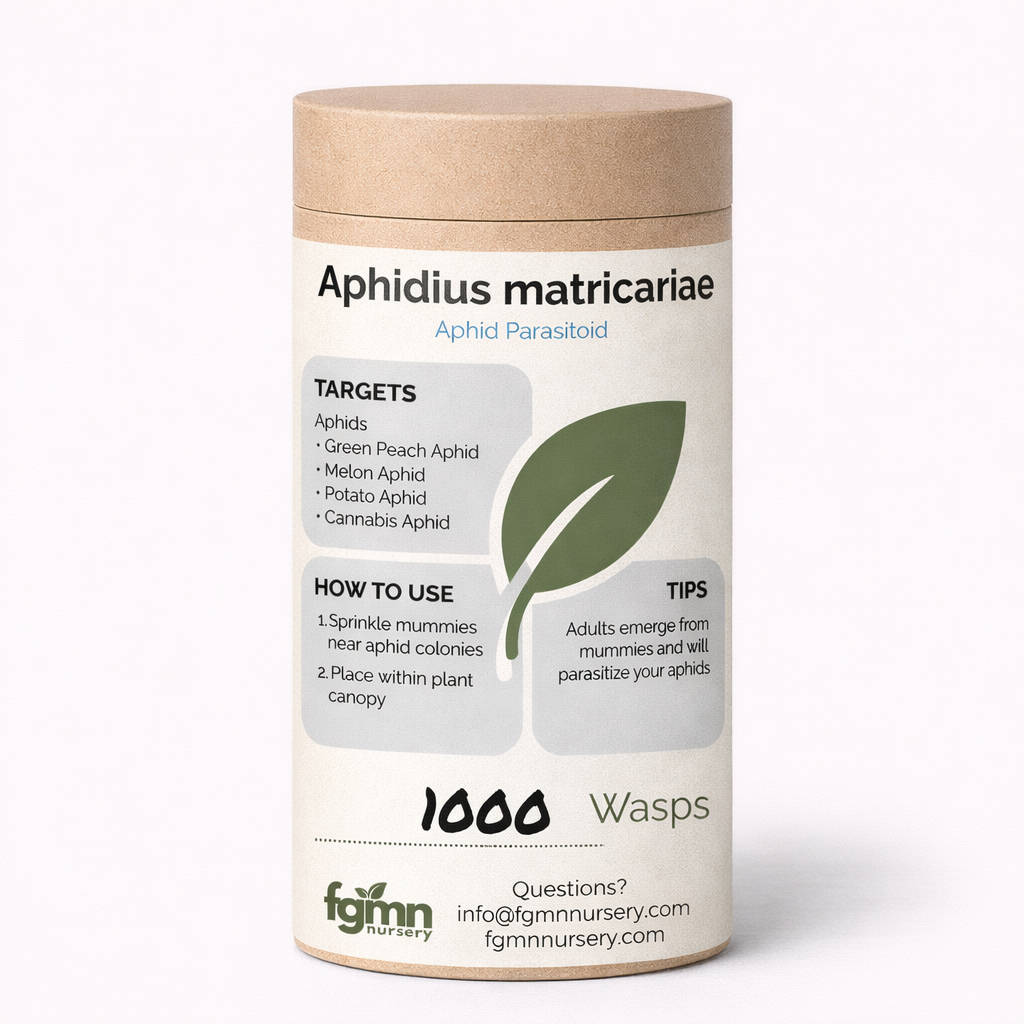
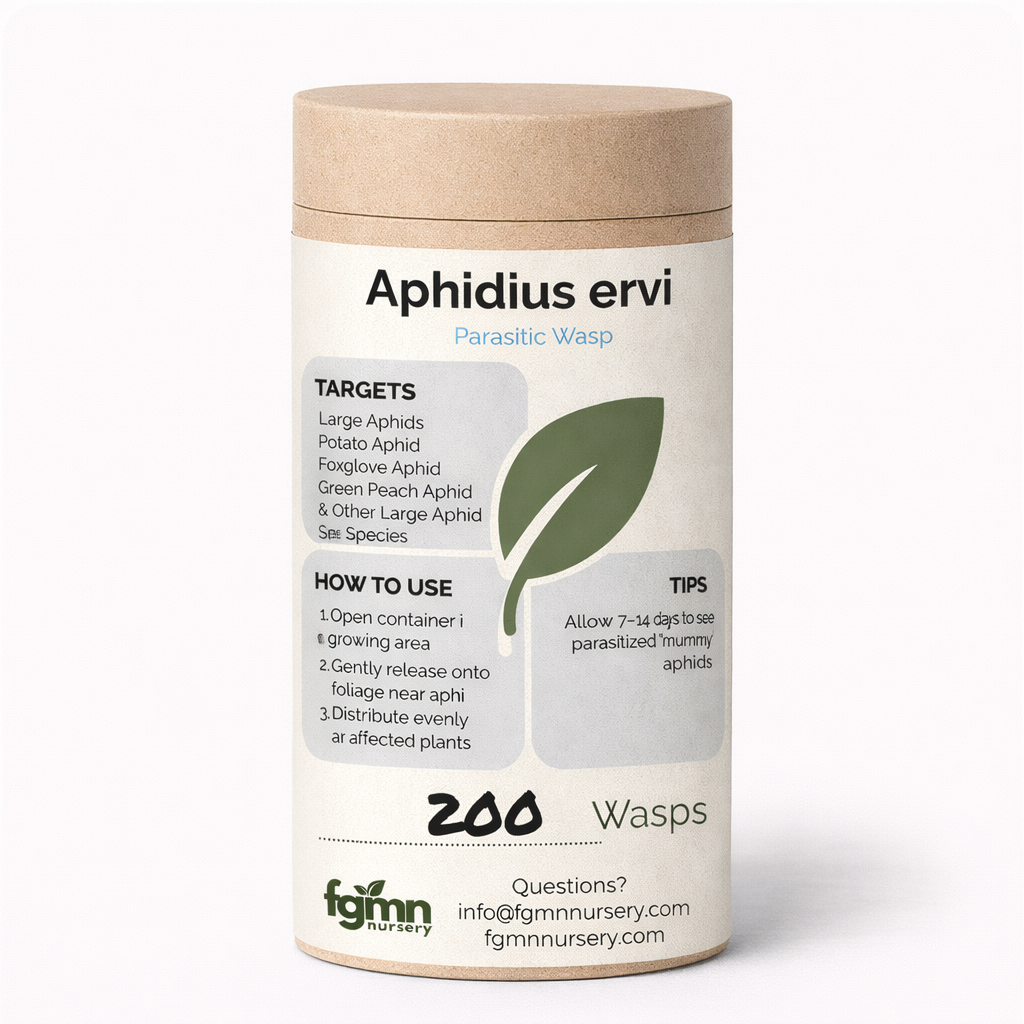
Aphidius wasps work differently. These stingless parasitoids lay an egg inside the aphid; the larva develops there and the aphid becomes a papery brown mummy. Seeing mummies is how you know it's working. Colemani targets smaller species like green peach aphid, ervi handles the larger ones.
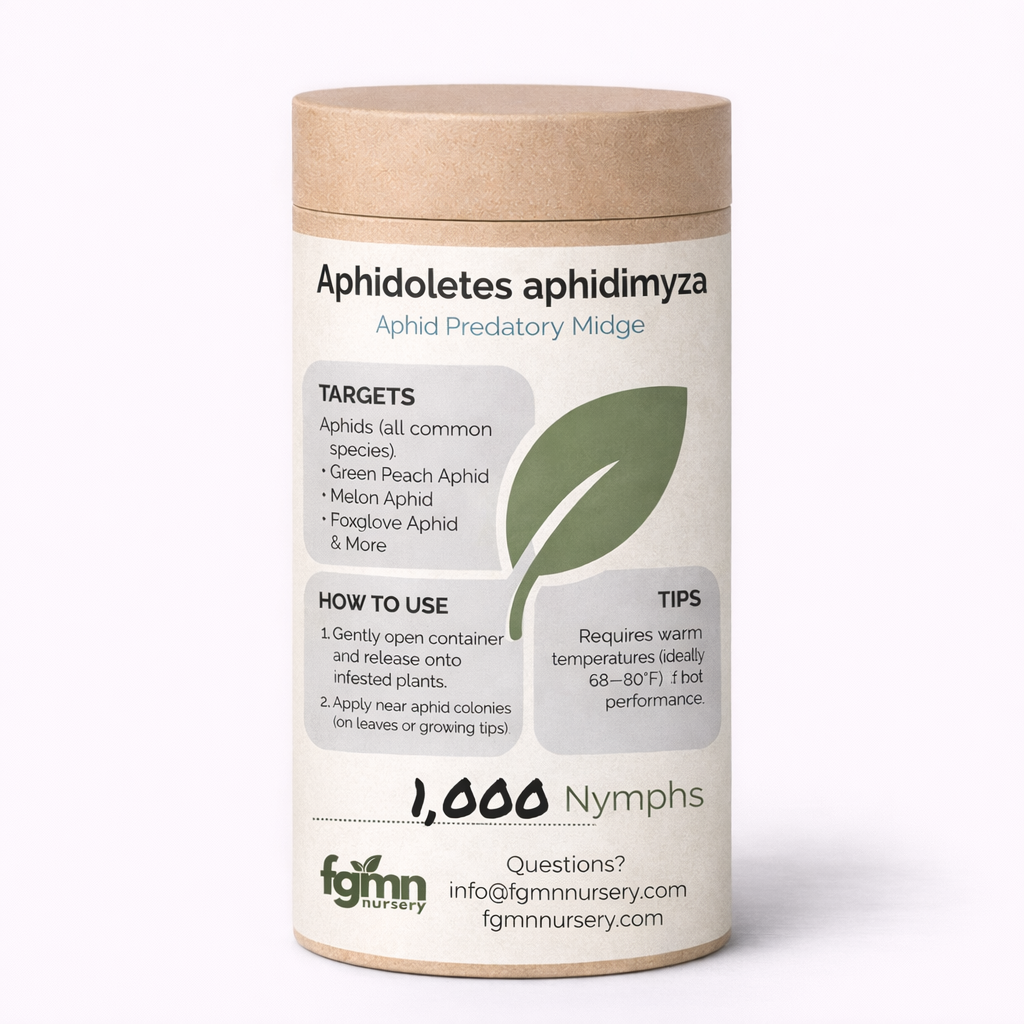
Aphidoletes aphidimyza is a predatory midge whose orange larvae paralyse aphids and feed on them. It's the specialist for dense established colonies.
Which to pick
One clear species and a visible colony: lady beetle larvae or Aphidoletes. Mixed pests, or you're not certain what you have: lacewings. Recurring problem you want to stay ahead of: Aphidius, released early and repeatedly. The full aphid treatment guide goes deeper on timing and rates.