




Too Many Options?
Try our predatory mite and insect matchmaking quiz! This 6-question interview will automatically match you to the best options for your situation.
Snake Mites
How to know it's snake mites
Tiny dark specks moving on the animal, concentrated around the eyes, the heat pits and under the chin scales. Small white flecks — mite droppings — on the snake or on your hands after handling. An animal soaking far more than usual is often the first sign, before you see a single mite. Ophionyssus natricis feeds on the animal and breeds in the substrate, which is why treating the snake alone never finishes the job.
What eats them
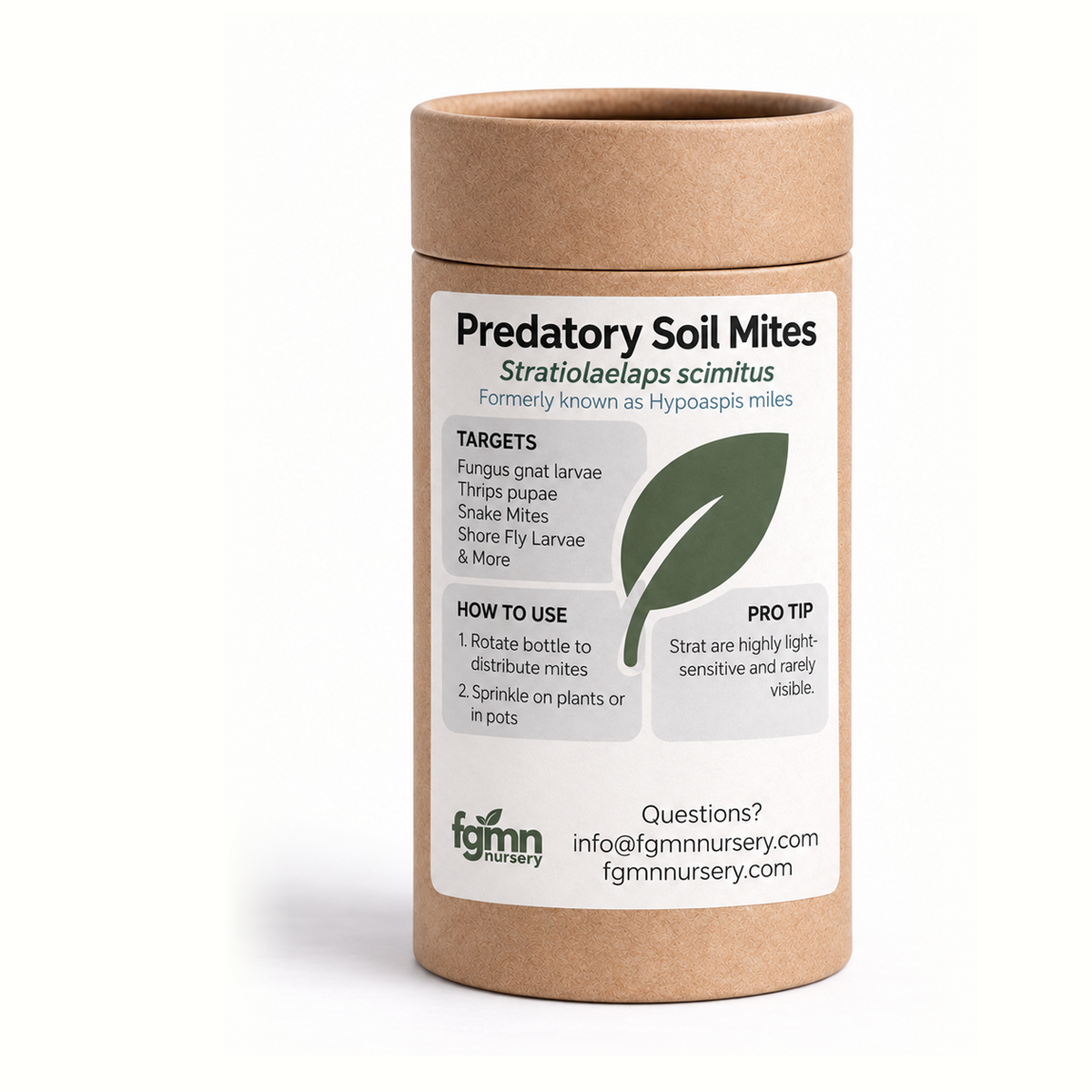
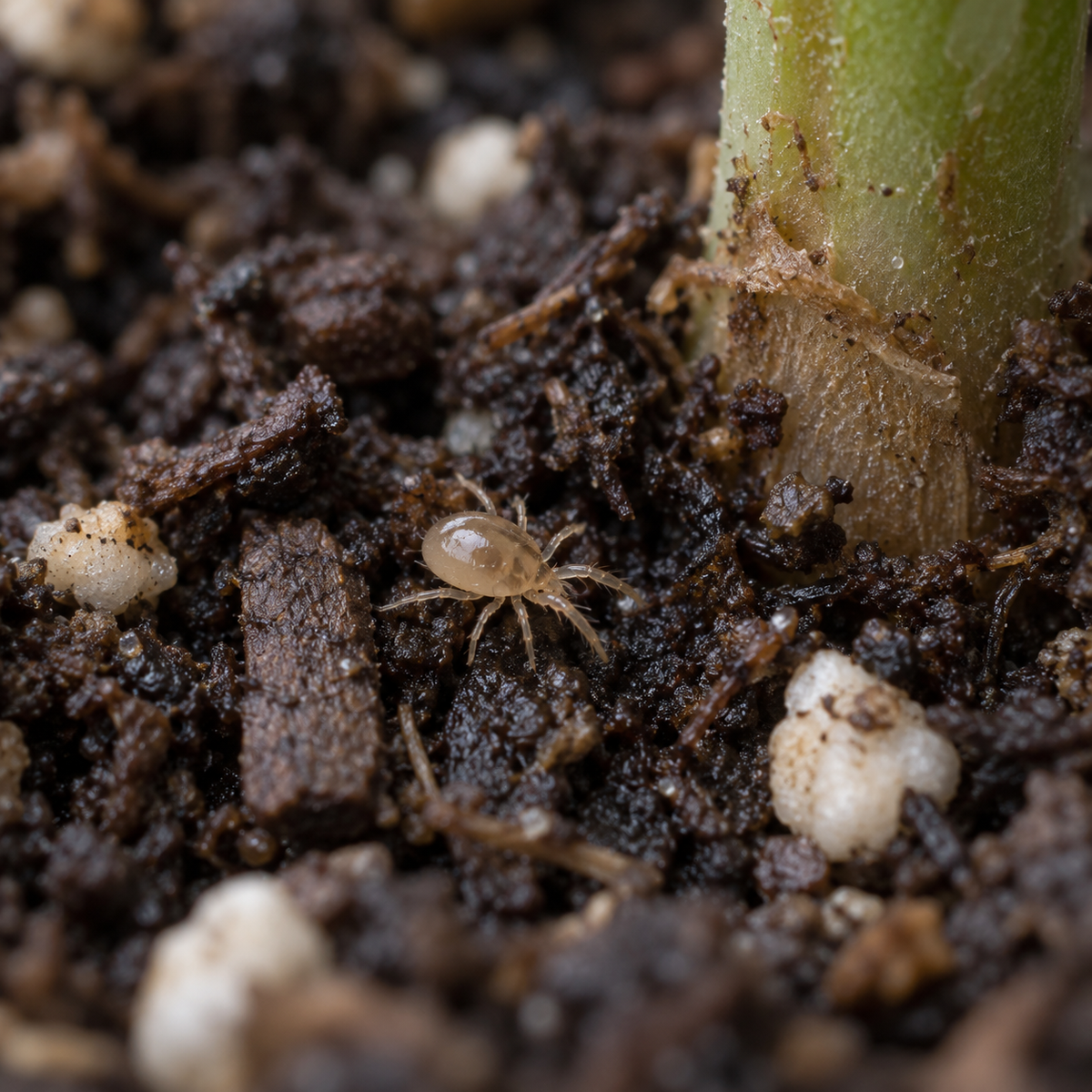
Stratiolaelaps scimitus is a predatory mite that lives in the top layer of substrate and hunts other mites, including snake mite eggs, larvae and nymphs. It works where the problem actually reproduces. It does not bite reptiles, does not feed on them, and dies out once its prey is gone.
How this fits a real treatment plan
Stratiolaelaps handles the substrate side. It is not a whole protocol on its own — the animal itself, the enclosure furniture and anything the enclosure has touched all need addressing too, and that part is a conversation with your vet or a keeper who knows the species.
What Stratiolaelaps gives you is a way to keep the substrate suppressed continuously without putting an acaricide in the same box as your animal. It's the reason keepers use it alongside conventional treatment rather than instead of it.
Bioactive setups are the best case for this — a resident Stratiolaelaps population in a planted enclosure keeps working indefinitely, and pairs well with springtails already doing cleanup duty in the same substrate.