How do I know it's fungus gnats and not something else?
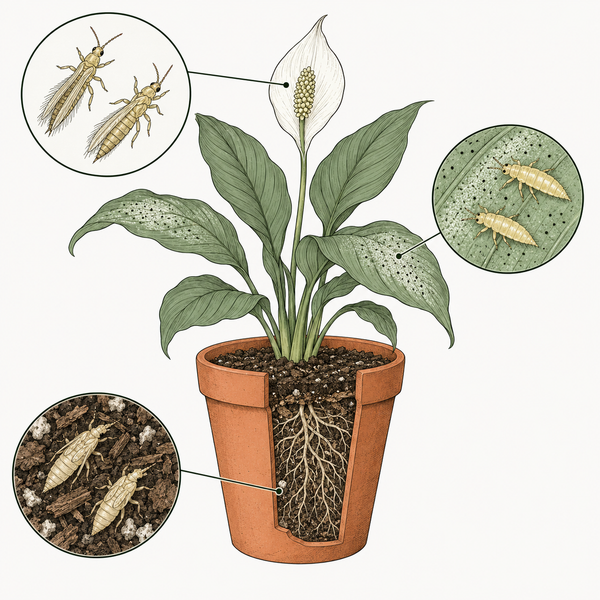
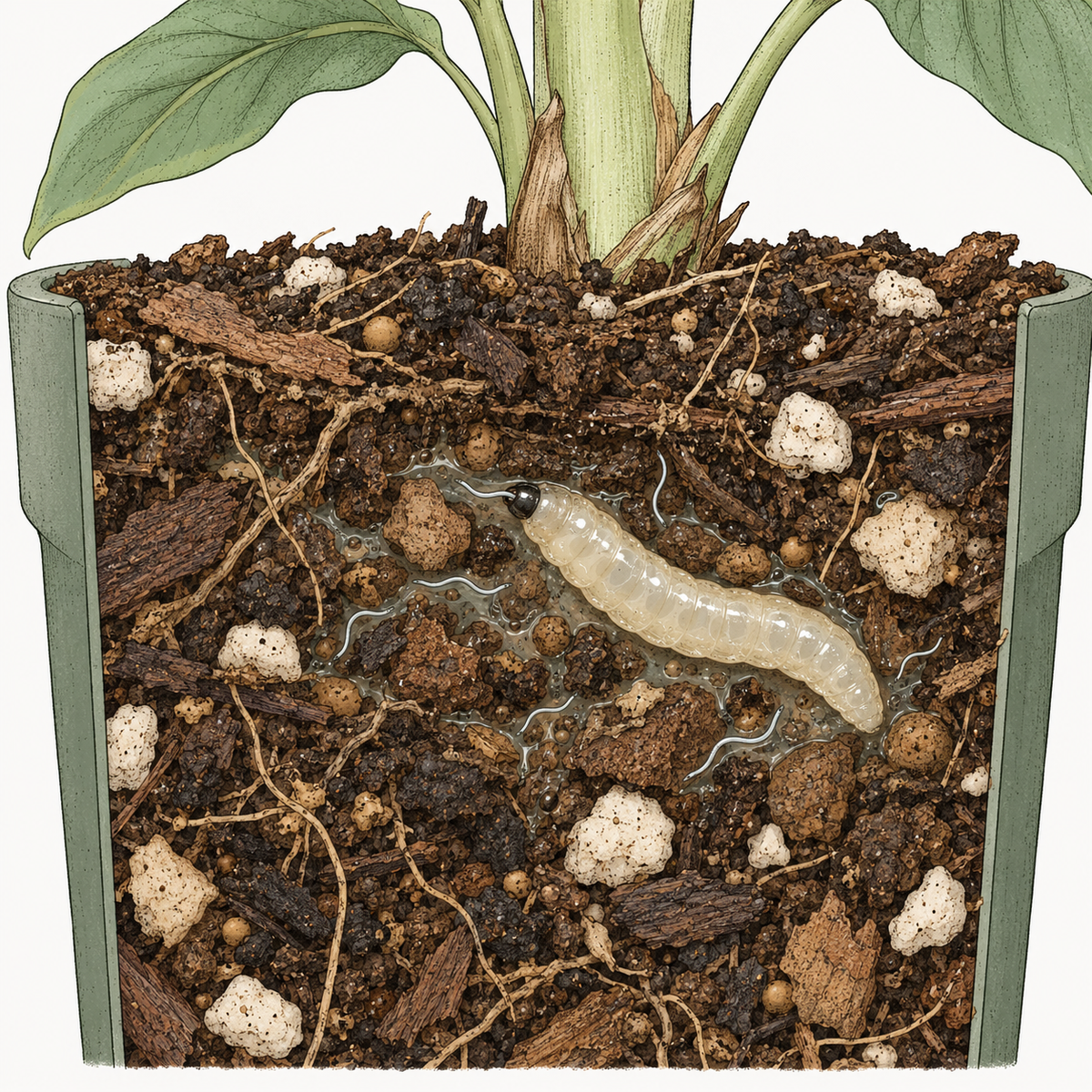
Fungus gnats are small, dark flies with long legs that hang around the soil and lift off when you water or move the pot. Their larvae live in the top inch of potting mix: clear or white, legless, with a shiny black head. Tiny insects on the leaves with silver streaks are thrips, and tan flies with red eyes around fruit or drains are fruit flies.
Are fungus gnats harmful to plants?
The adults aren't. They don't bite and they don't damage plants. The larvae eat fungi and organic matter in the soil and, in large numbers, fine roots. Seedlings, cuttings and young plants feel it most, and that's when a fungus gnat problem stops being just a nuisance.
Why are there still gnats after I treated the soil?
Soil treatments reach the larvae, not the adults already flying, and those adults live about 7–10 days. What changes first is that no new ones come up to replace them. Put a dated yellow card at soil level and replace it weekly: a count that falls card after card means it's working.
Should I use nematodes, Stratiolaelaps or rove beetles?
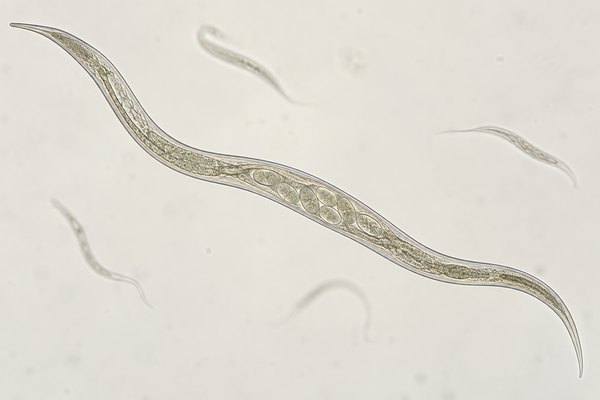
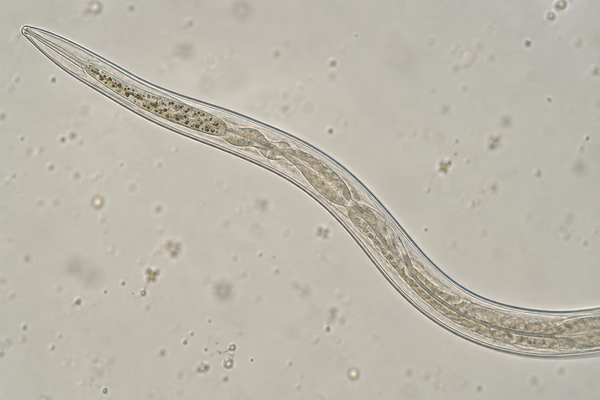
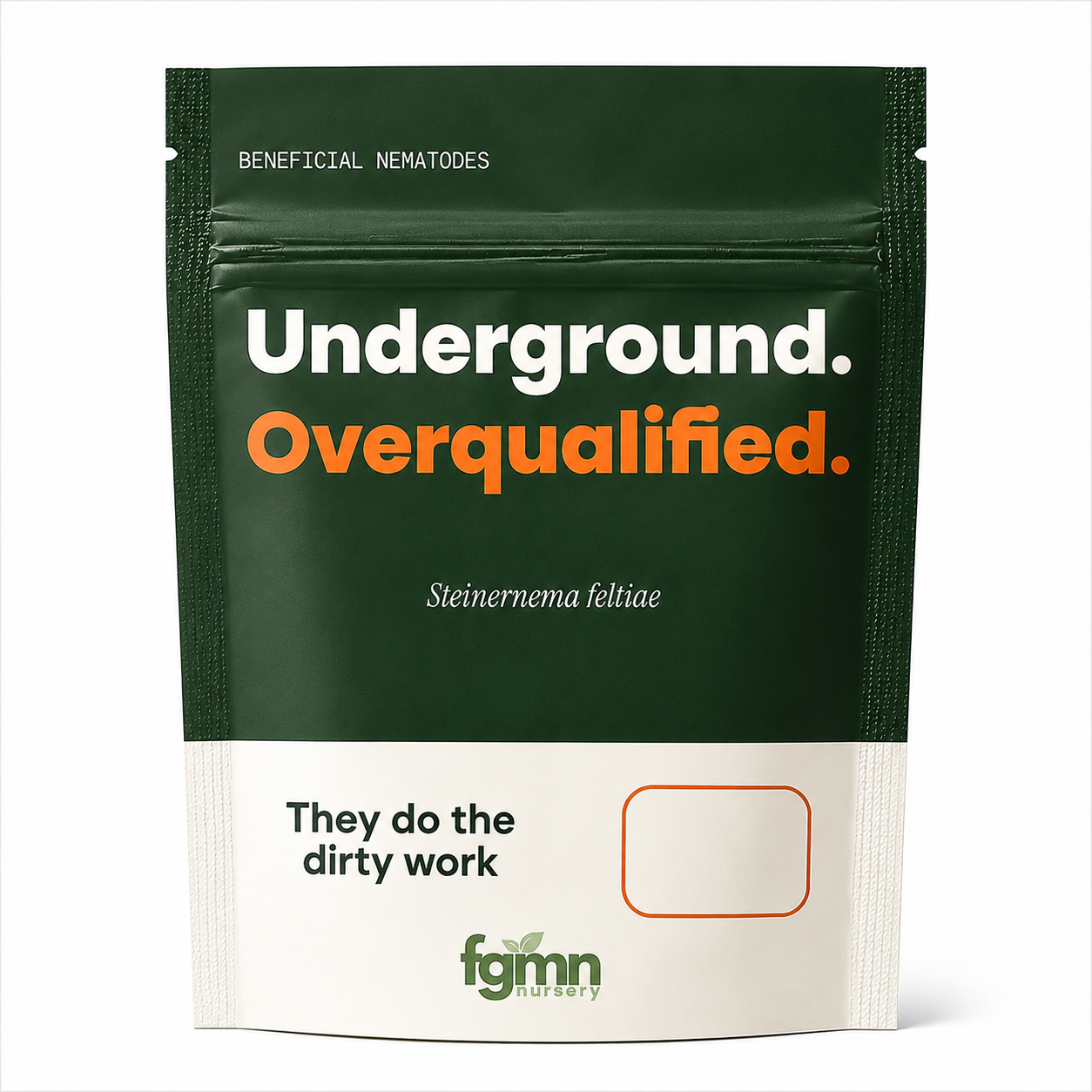
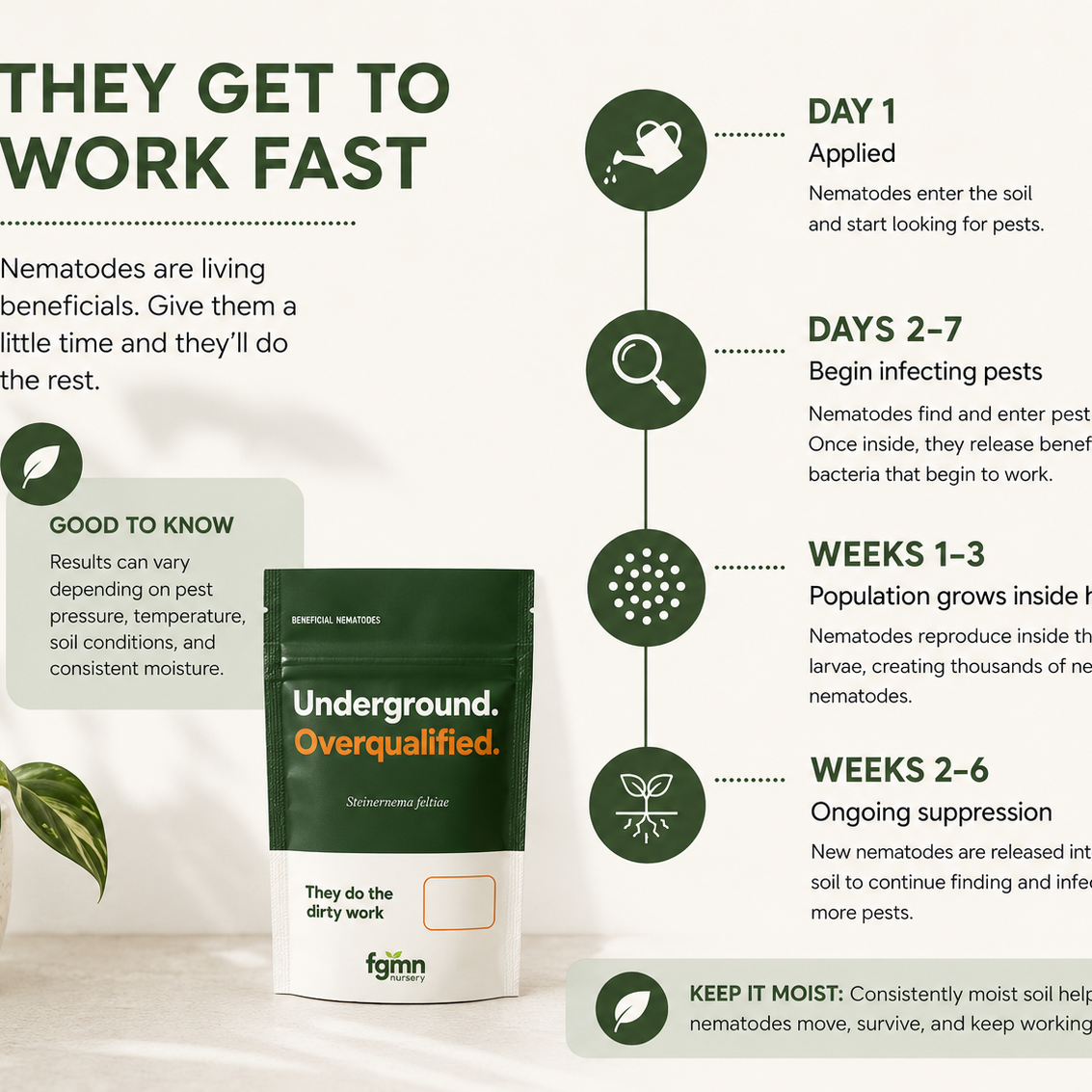
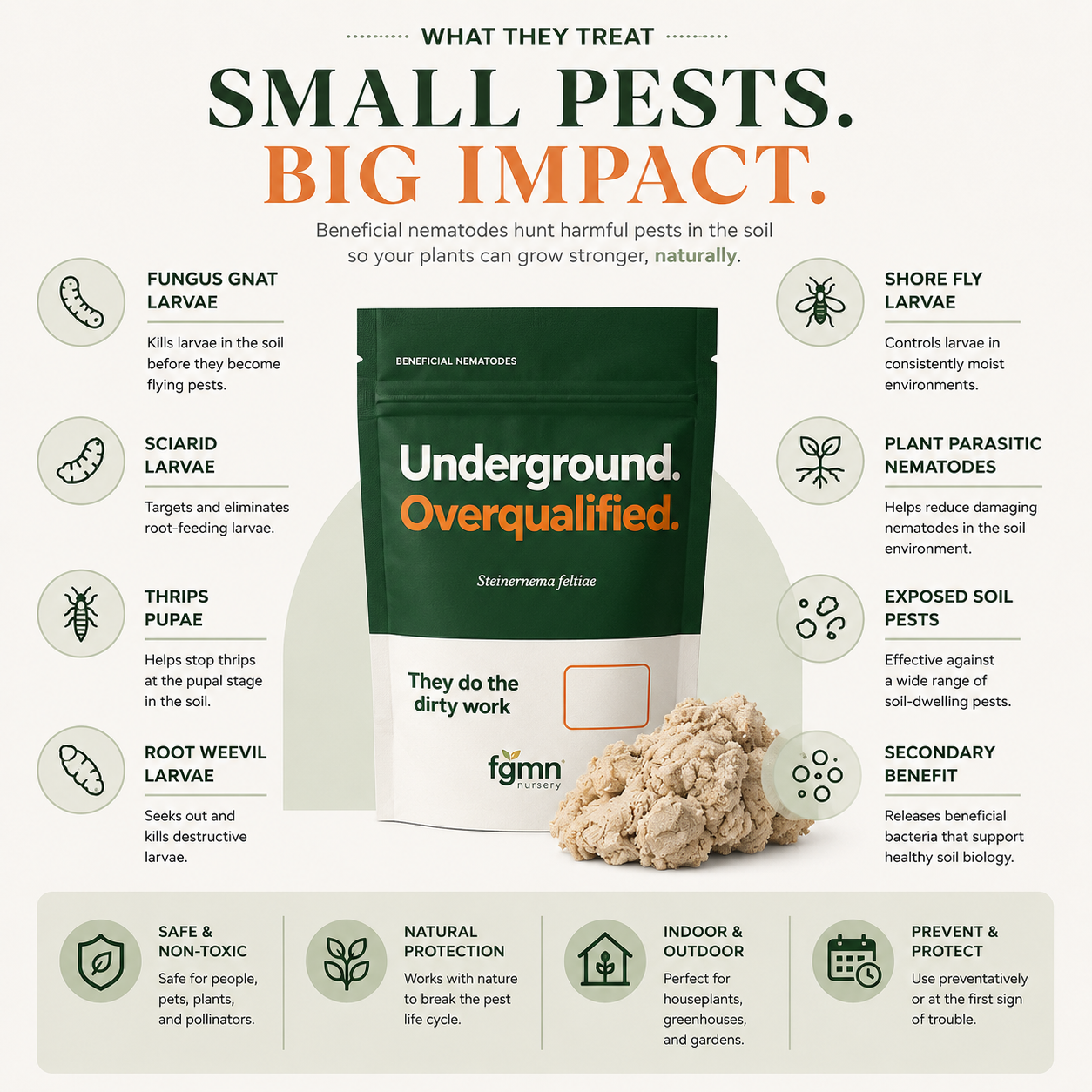
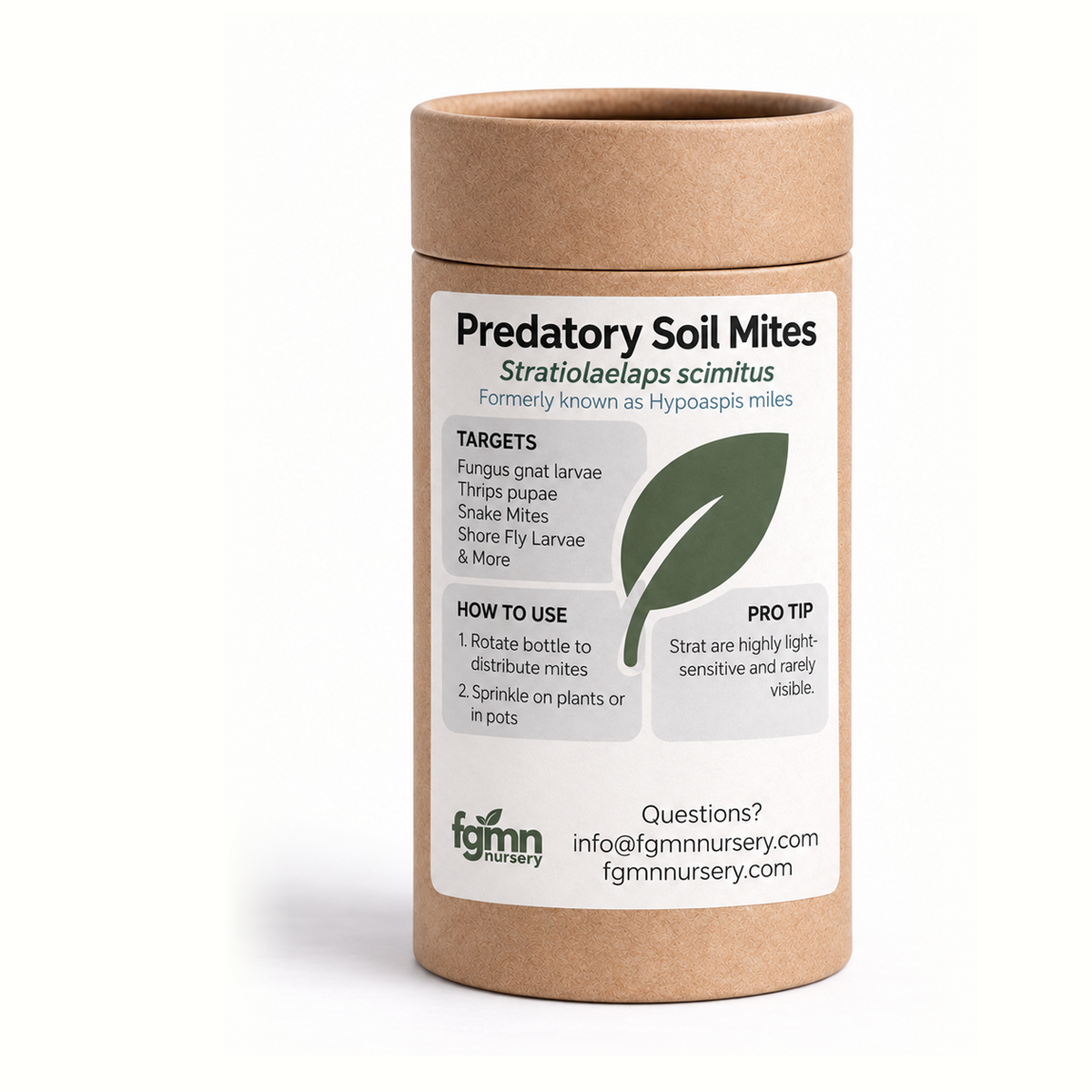
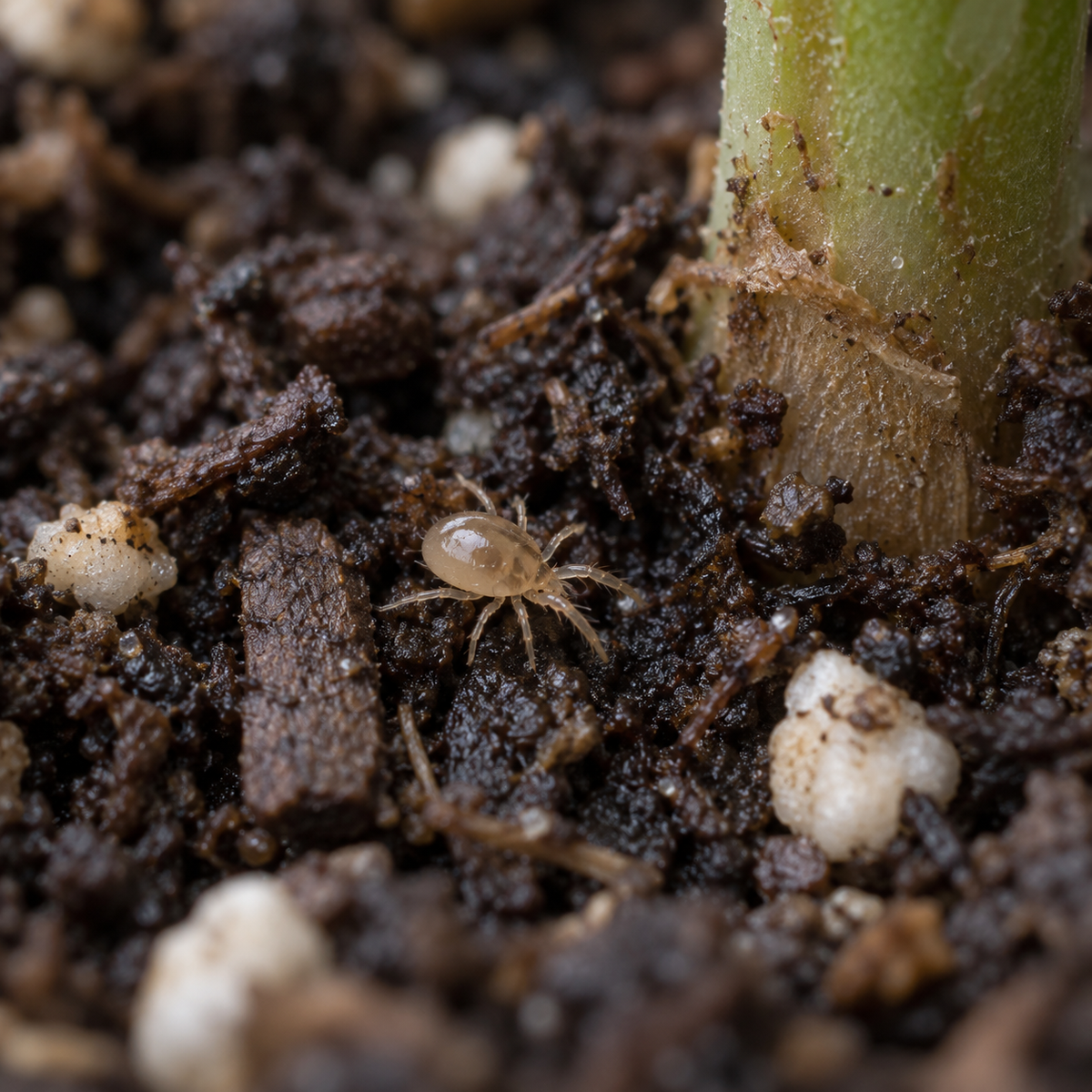
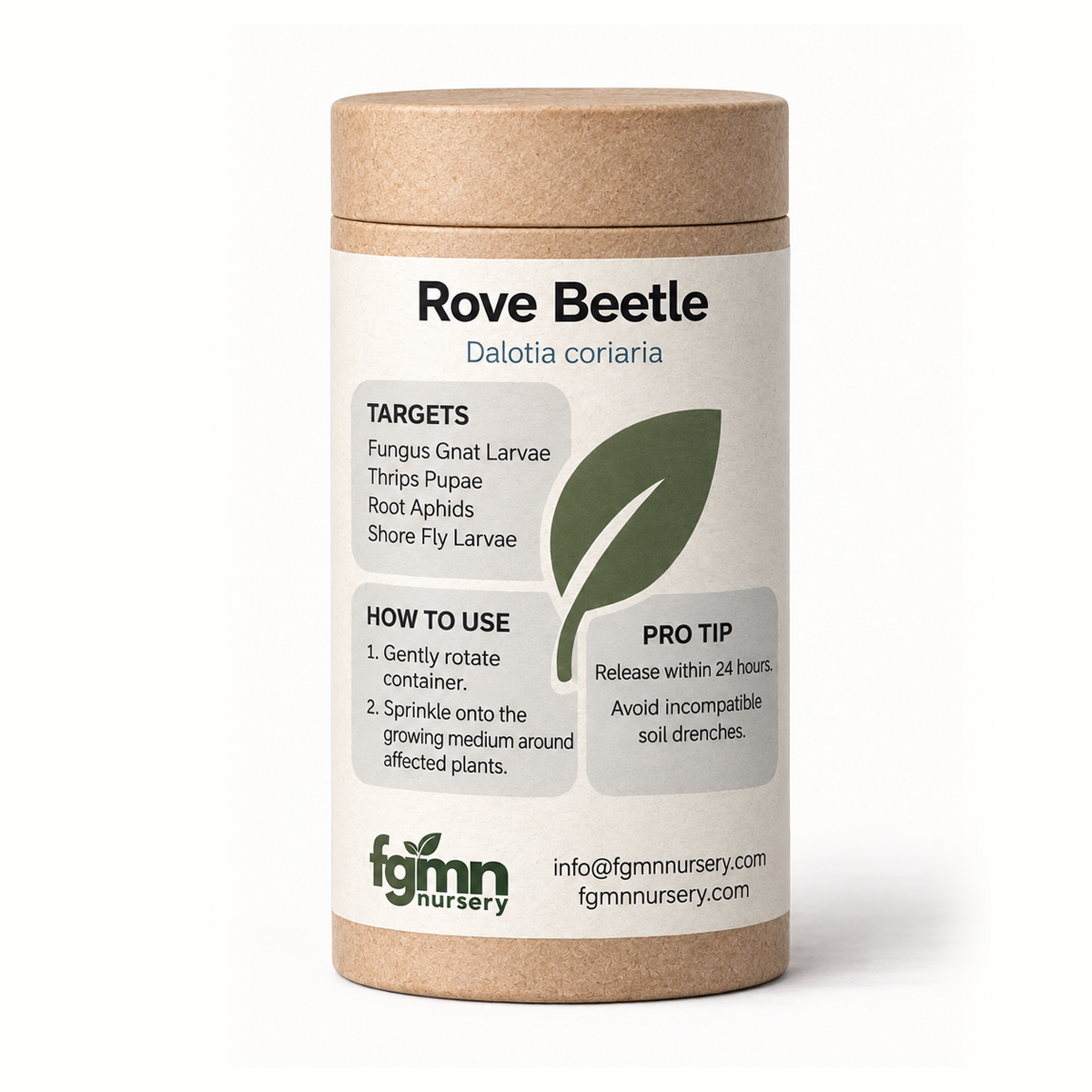
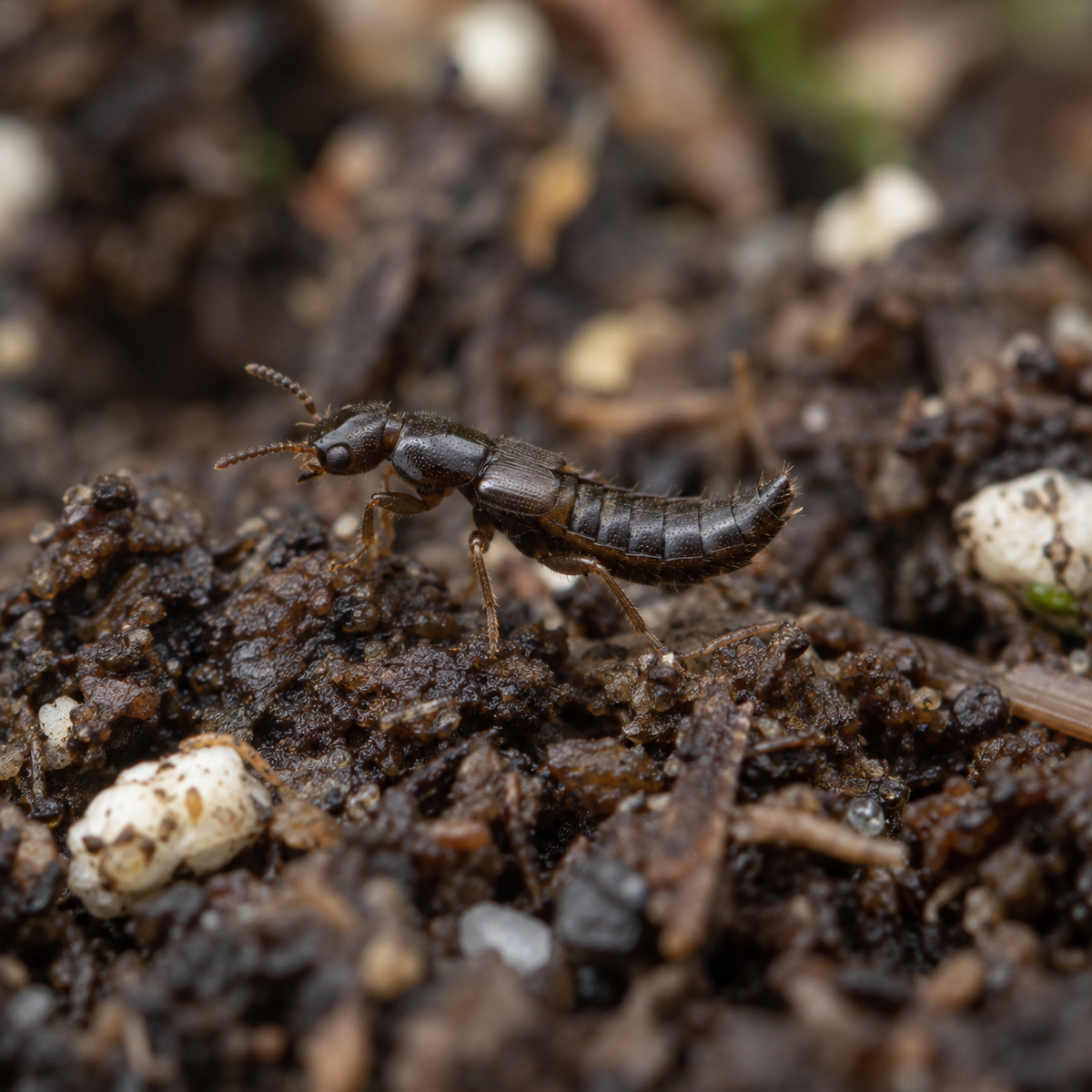
Sf nematodes for an active problem. You water them in, they reach larvae wherever the water goes, and three rounds 7–10 days apart cover the eggs that hatch behind the first. Stratiolaelaps soil mites for prevention and for holding the soil afterwards, since they live on debris between outbreaks. Rove beetles for big rooms and greenhouses, because the adults fly and find the pots you missed.
Can I use nematodes and Stratiolaelaps together?
Yes, and it's the usual pairing. The nematodes clear the larvae through the whole pot, and the soil mites stay in the top layer afterwards to keep the next wave down. They don't get in each other's way.
Do I need to treat every pot?
Yes. Adult gnats fly between plants and lay eggs in any damp pot, including ones that look fine. Size your order to cover every pot in the room, because a pot you skip is where the next generation comes from.
Does letting the soil dry out help?
Yes, and it's free. The larvae live in the top inch, which is also the part of the pot that dries first, so letting the surface dry a little between waterings takes away their nursery. Bottom watering helps too. The one exception: keep pots damp for two weeks after a nematode drench.
Do nematodes work in leca or semi-hydro?
Yes. Sf nematodes travel through the film of water between particles, so they reach larvae in leca, coco, deep pots and hydro setups. Stratiolaelaps needs a substrate to live in and does best in soil and coco.
Are they safe around kids and pets?
Yes. Sf nematodes, Stratiolaelaps and rove beetles are safe around people, pets, plants and food crops. There's nothing to spray, no residue and no wait before anyone can be near the plants.
Do I need yellow sticky traps?
Not to fix the problem, since an adult has usually laid its eggs by the time a card catches it. They're the best way to measure it, though. Keep a dated card at soil level and replace it weekly. If you're releasing rove beetles, take the cards down for 7–10 days, then hang them higher up, away from the soil, so they catch gnats and not your beetles.
How do I store nematodes until I use them?
In the fridge at 38–42°F, not the freezer, and use them within about four weeks. Nematodes are the one thing we sell that belongs in the fridge. Stratiolaelaps and rove beetles go out on the day they arrive.