


Amblydromalus limonicus
At A Glance
Amblydromalus limonicus is the apex predator of the commercial greenhouse world. While other mites like Swirskii or Cucumeris are reliable workhorses, Limonicus is a glutton. It is the only predatory mite that aggressively feeds on both Whitefly and Thrips at high rates, while also consuming Spider Mites. It eats more pests per day than almost any other species and is active at lower temperatures than Swirskii. If you have a high-value crop and need the strongest possible protection against a mixed infestation, Limonicus is the premium choice.
-
Scientific Name: Amblydromalus limonicus
-
Best For: Aggressive control of Whitefly and Thrips (Larvae & Eggs), plus Spider Mites.
-
Safe For: Plants, humans, and pets.
-
Key Feature: The "Super-Predator"—consumes significantly more prey per day than standard mites and reproduces faster.
Target Pests
Environmental Needs
Selection Guide
How to Use
How They're Shipped
Join Karen's Live Shows — Pests, Plants & Predators on PalmStreet.
Every Friday at 7pm EST — plus additional shows throughout the week. Ask your pest questions in real time — we answer everything.









FAQ
What is your Live Delivery Guarantee?
We guarantee that your beneficial insects will arrive healthy and ready to work. Because we are shipping live organisms, we use packaging and expedited shipping to ensure their safety. In the rare event that your order is compromised during transit, please take a photo of the package and contact us within 24 hours of delivery so we can make it right.
Why is Limonicus more expensive than Swirskii?
Will it eat Spider Mites?
What if my humidity drops?
Can I use it on Roses?
Does it bite humans?
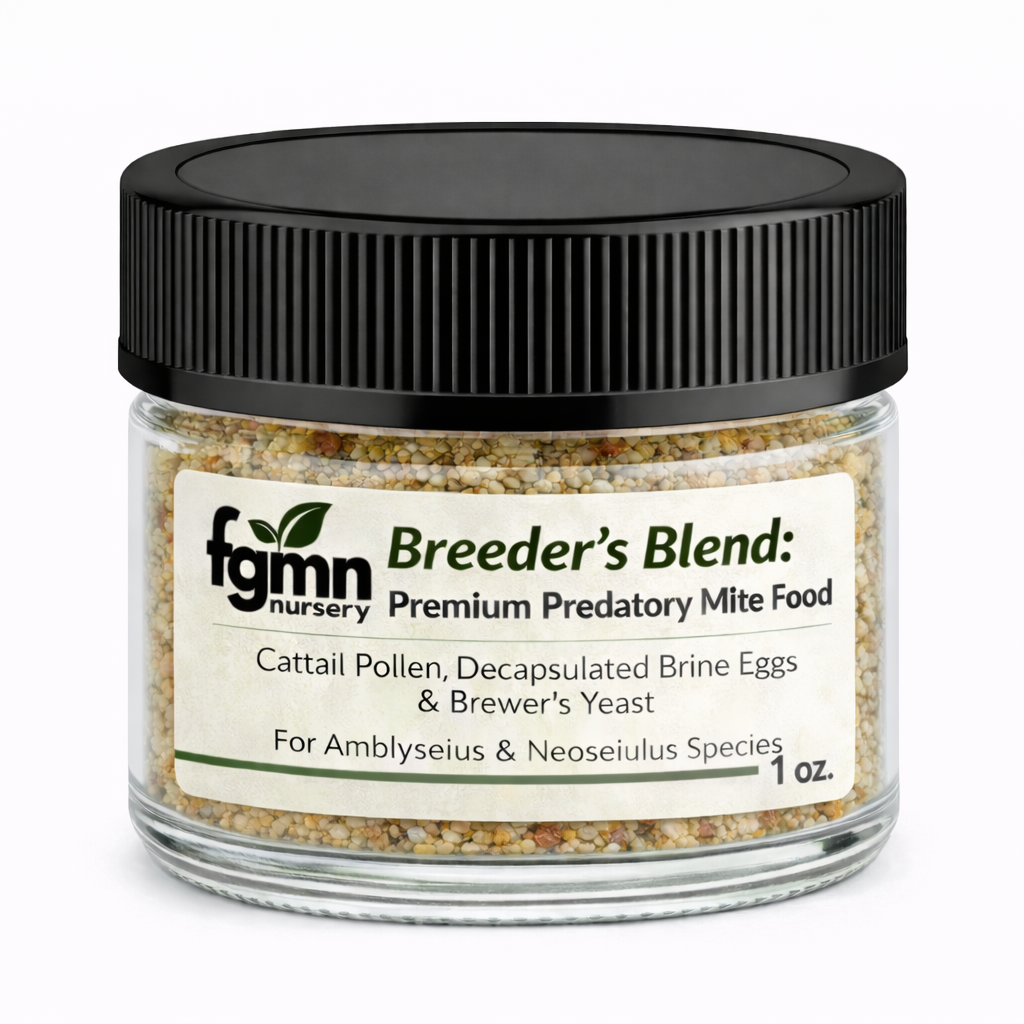
How do I apply them without getting bran in my pots?
Help! I'm overwhelmed
Yeah, it's a lot the first time you're using predatory mites. Please email us at info@fgmnnursery.com and we'll be happy to help!
I don’t see anything moving in my bottle or sachet. Does that mean they’re dead?
Not at all! In fact, go ahead and deploy them.
Predatory mites are microscopic (often less than 0.5mm) and naturally blend into their carrier medium (bran or vermiculite).
- For Bottles: The mites often huddle in the center of the bottle for insulation during transit.
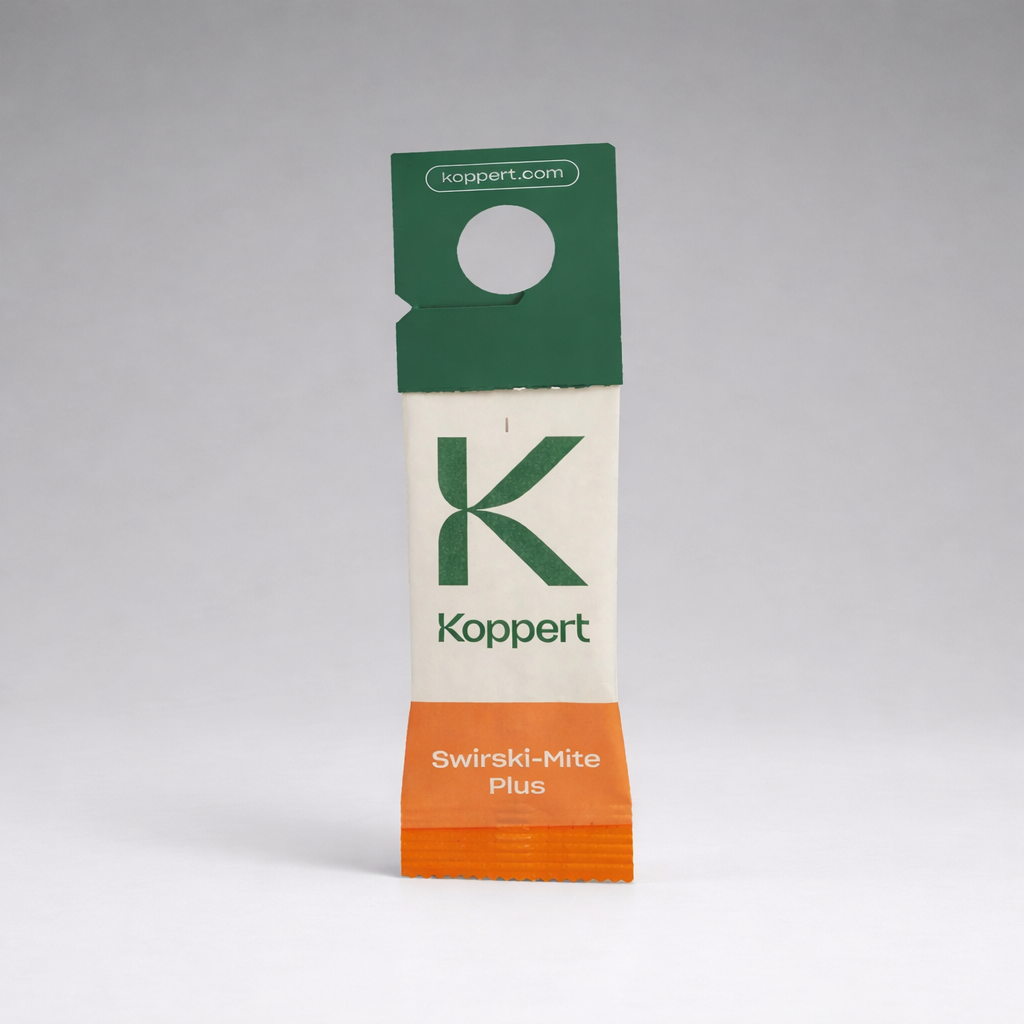
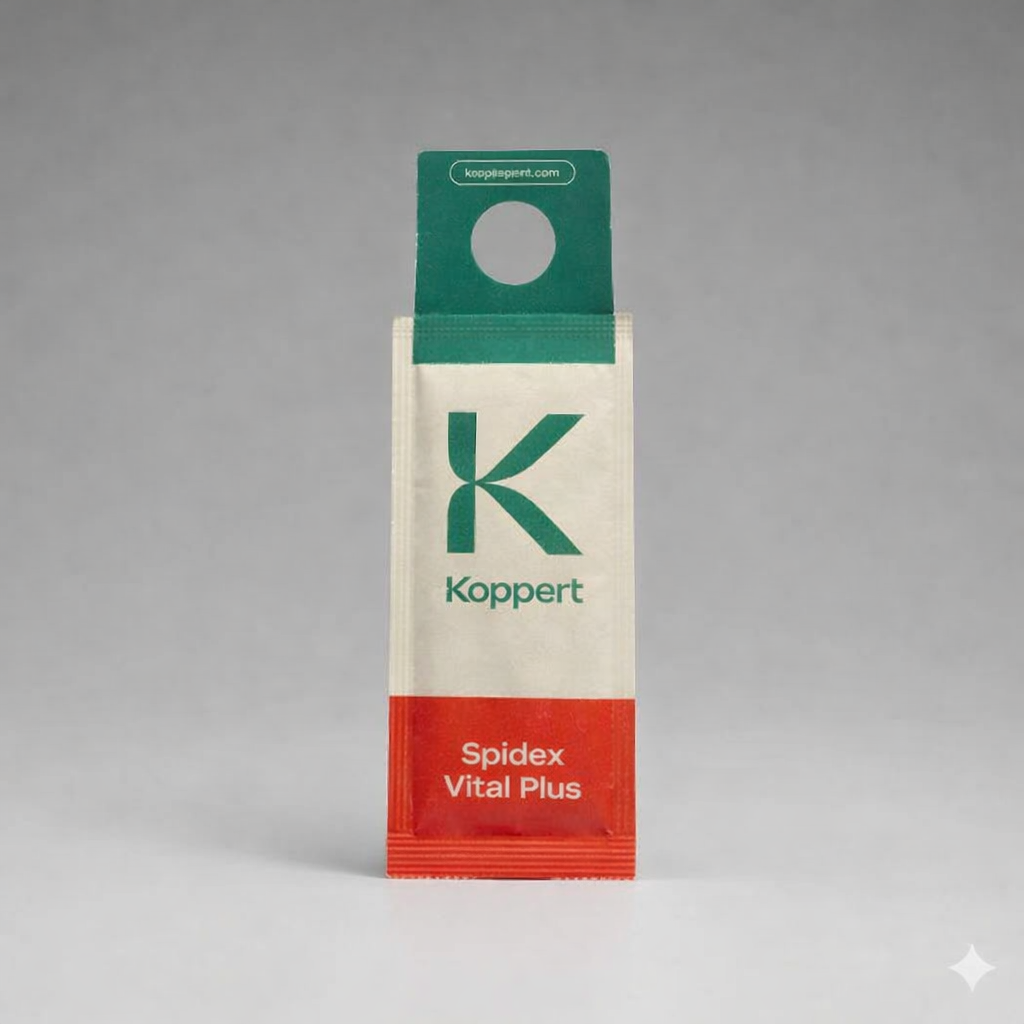
- For Sachets: These are "slow-release" nurseries. The mites stay tucked deep inside the breeding media and emerge one by one over 2–4 weeks. Seeing an "empty-looking" sachet or bottle is not proof of a loss; it is simply how they are packaged for maximum survival.
Mite Matters
They Eat Pests for a Living. You're Welcome.
Predatory mites are the biological control solution to spider mites, thrips, broad mites, fungus gnats, and more — and they don't harm plants, people, or pets. If someone has suggested you add more mites to fix your mite problem, this is the article that explains why that's actually correct.
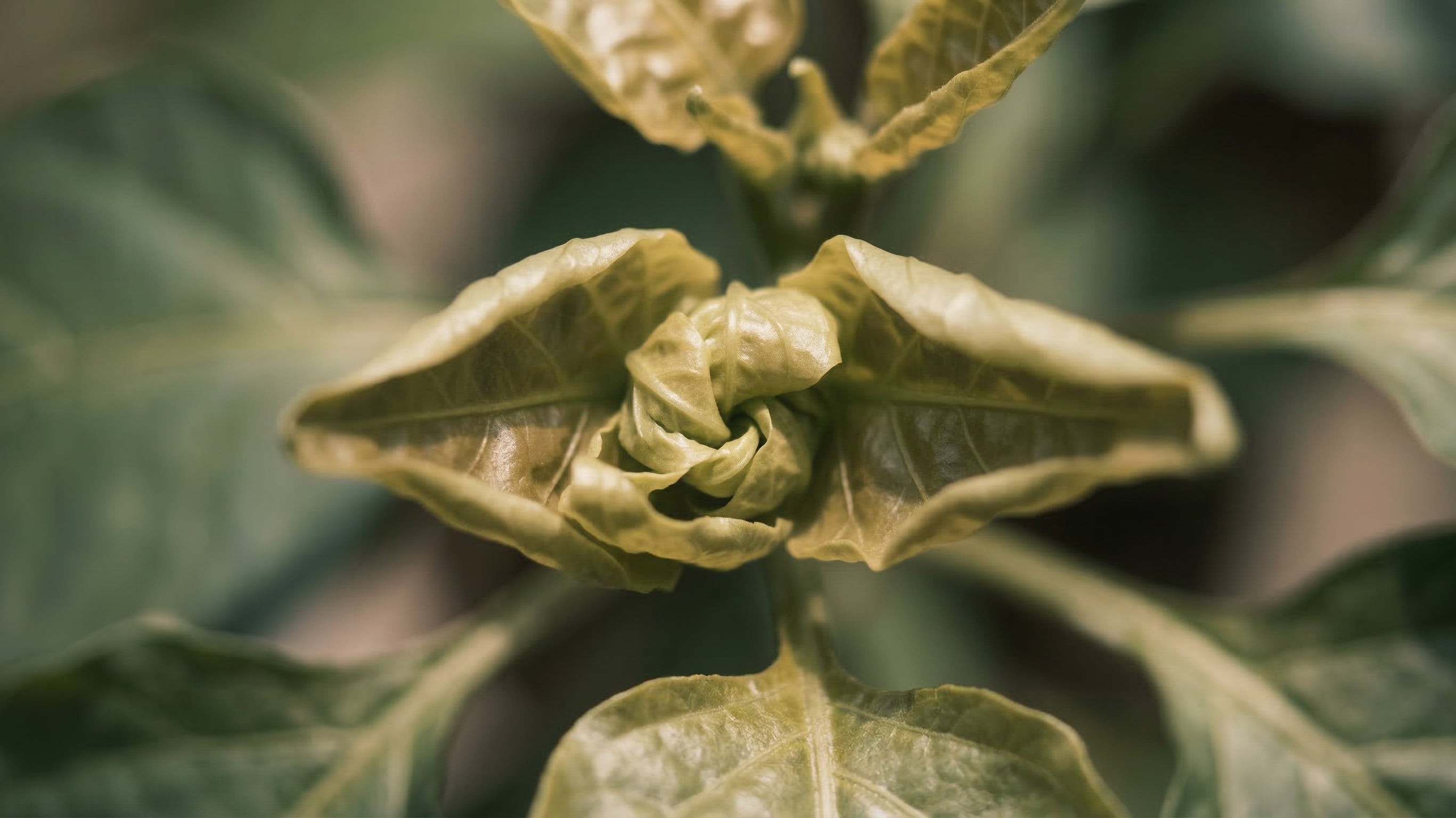
No Webbing. No Warning. No Fun.
Broad mites are microscopic pest mites that cause twisted, bronzed new growth on peppers, cannabis, hoyas, and dozens of other plants — and they're almost always misdiagnosed first. No webbing, no visible culprit, just a plant that keeps getting worse while you adjust the pH. Here's what they actually are, how to identify the damage, and how to get rid of them for good.
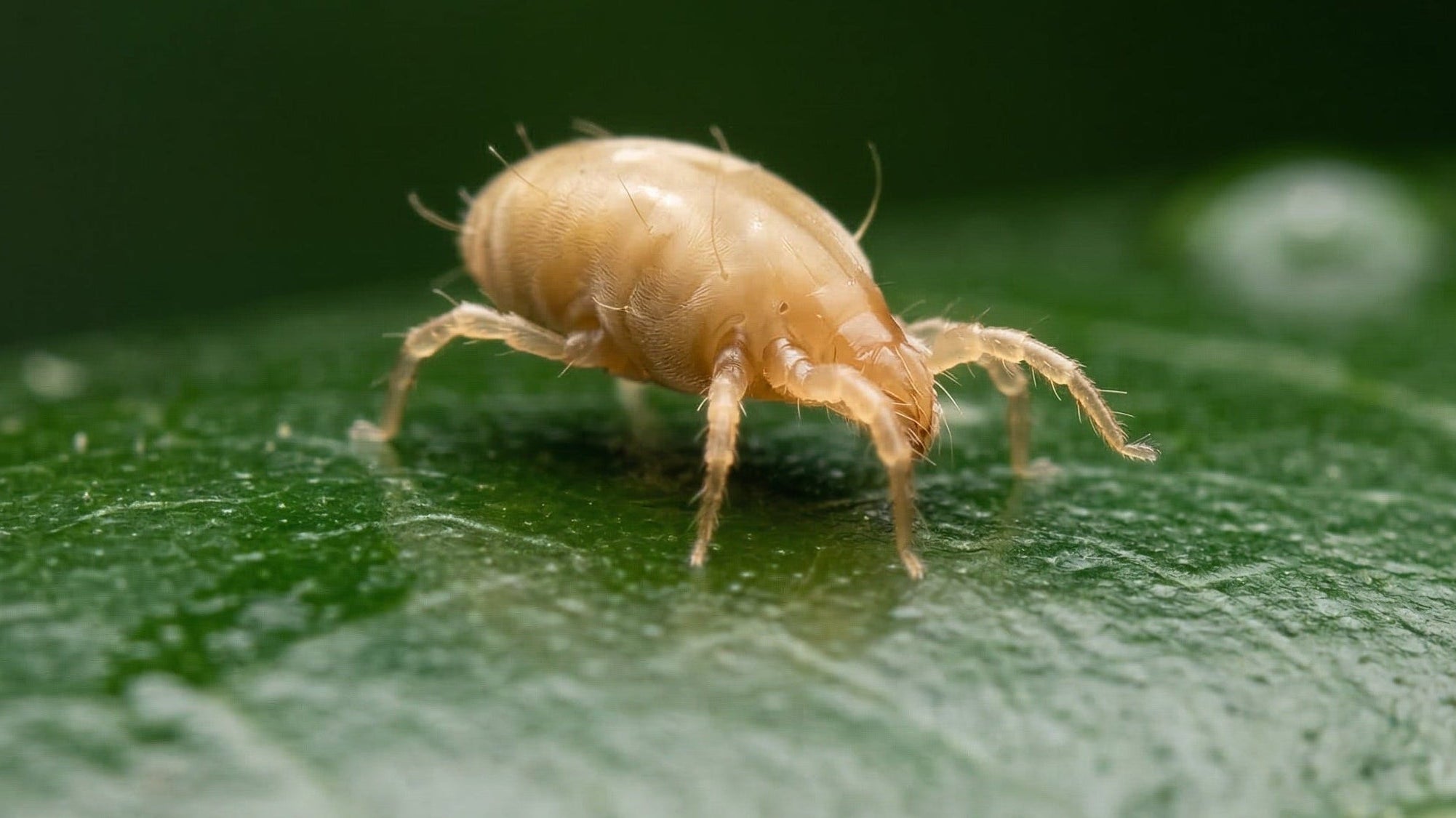
Limonicus: Late to Market, Early to Hunt
Most predatory mites do one thing well. Limonicus hunts thrips, whitefly, and spider mites — and survives on pollen when there's nothing left to kill. Meet biocontrol's most versatile generalist.