



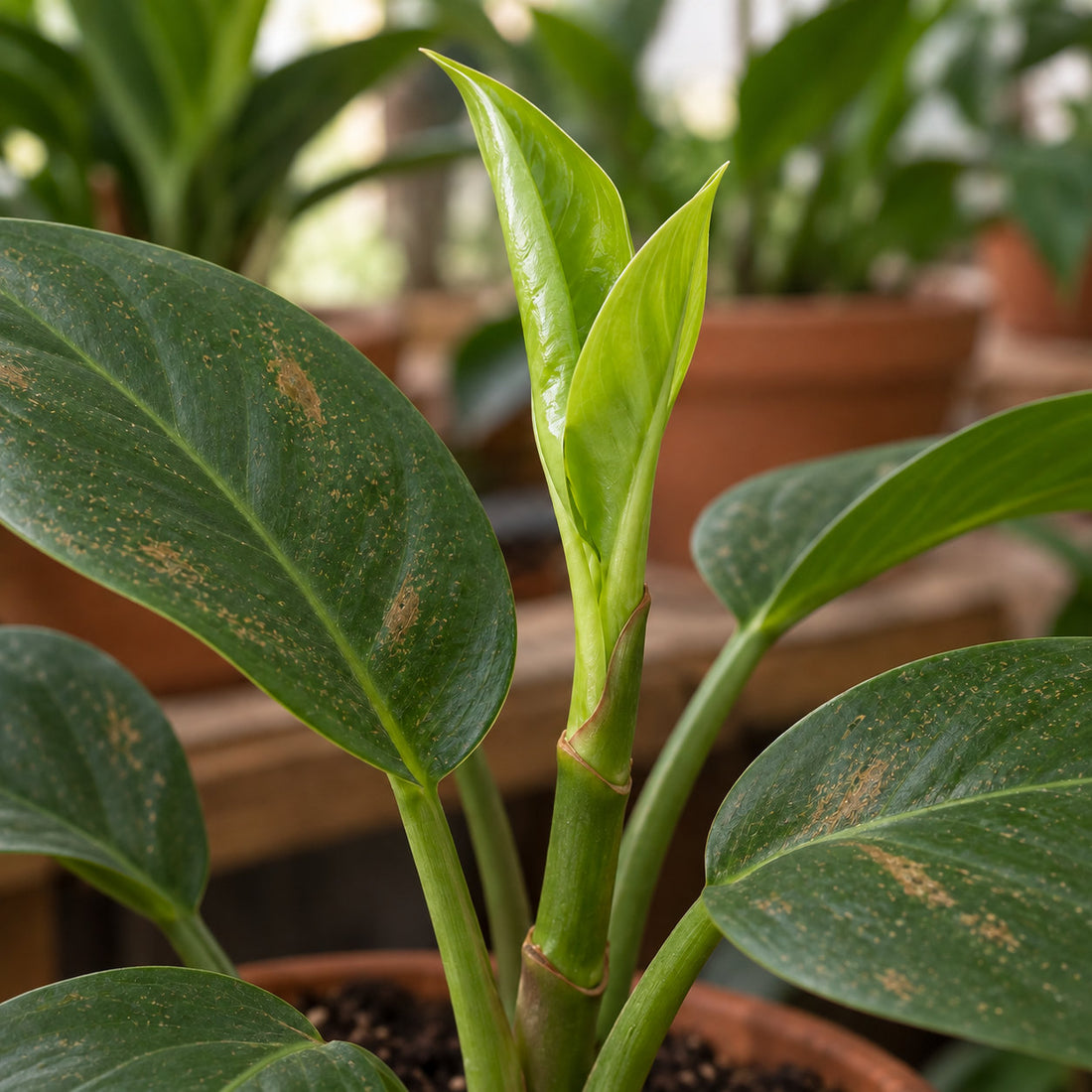
Amblydromalus limonicus for Thrips and Whitefly Control
Limonicus mite · Amblydromalus limonicus
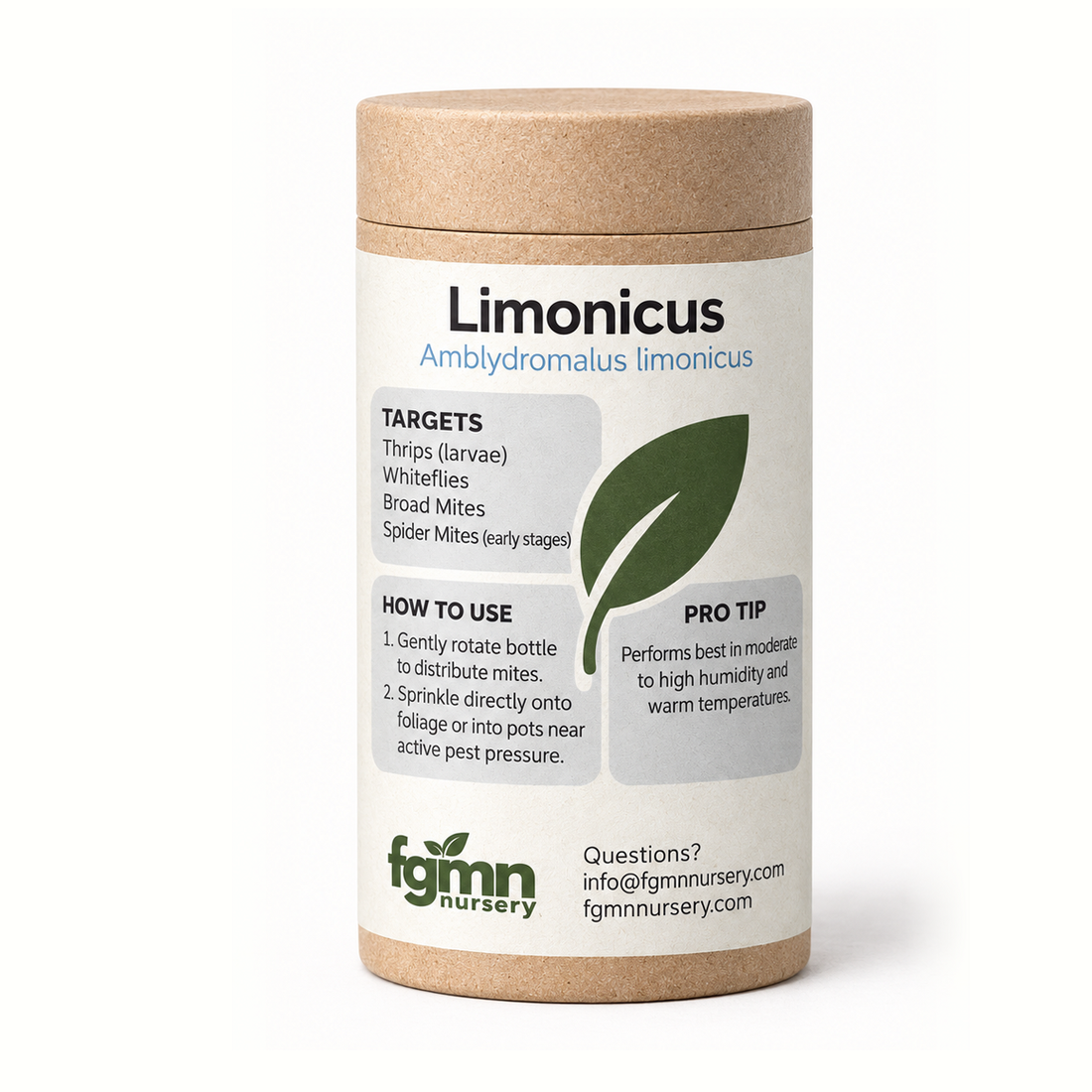
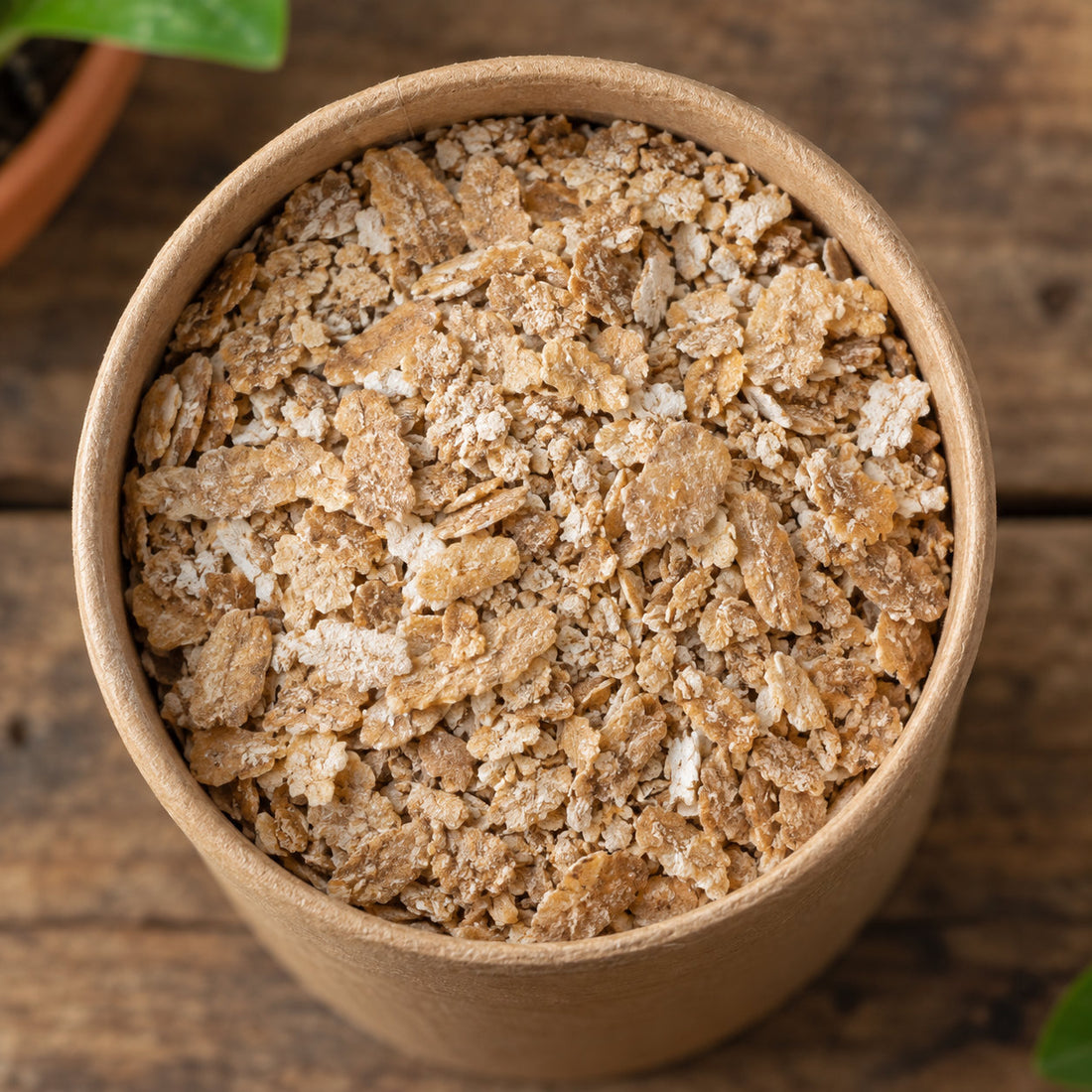
Live Amblydromalus limonicus predatory mites, a mixed-stage population with food mites in a bran and vermiculite carrier, dusted onto the tops of plants and the flowers. It takes thrips larvae and whitefly eggs and young nymphs, the pairing it's built for. It needs a humid room, 70% RH or more, to build a population, and it doesn't take adult thrips or adult whitefly.
- Best for
- Thrips, whiteflies
- Conditions
- 55–86°F, 70% RH or higher
- Good to know
- The carrier may move. Limonicus is unusually lively, so the grit might wriggle when you open it. If it looks still, that's fine too. What to expect
When to choose something else
Not for adult thrips, broad mites, russet & rust mites.
Shipping details
Shipping
| Est. ships | Est. arrives | |
|---|---|---|
| Standard | ||
| Overnight |
Raising a fresh batch for you? Add up to 7 days to both dates.
Estimates. Overnight speeds up the trip, not the packing: its one day on the truck starts once it ships.
- Monday to Thursday only. Nobody spends the weekend in a warehouse.
- Check your address at checkout. Bugs are brilliant at finding aphids and hopeless at finding a new front door.
Ordering with friends? Get group pricing
Everyone picks their own. It ships to you in one box.
Buying for a greenhouse, farm or shop? Ask about wholesale
Right for you?
Your pest, your growing space, how many you need
What it treats, and what else it eats
The main use is thrips and whiteflies. They also eat spider mites when they come across them, but don't count on that for control.
| Pest | Treats or prevents | Why |
|---|---|---|
| Thrips | Treats | Main prey. It goes looking for these first. |
| Whiteflies | Treats | Main prey. It goes looking for these first. |
| Spider mites | Prevents | Also eaten along the way, which helps keep them from taking hold. A side benefit, not dependable control on its own. |
Not for adult thrips, broad mites, russet & rust mites.
How many amblydromalus limonicus do I need?
Count the plants you want to cover.
Size guide
| Size | In the tube | Covers |
|---|---|---|
| X-Small | Up to 5 Plants | 500 Mites |
| Small | Up to 10 Plants | 1,000 Mites |
| Medium | Up to 25 Plants | 2,500 Mites |
| Large | Up to 50 Plants | 5,000 Mites |
| X-Large | Up to 75 Plants | 7,500 Mites |
| 2X-Large | Up to 100 Plants | 10,000 Mites |
| 3X-Large | Up to 150 Plants | 15,000 Mites |
- Each size is one release. The treatment plan below says when to check again.
- Count the plants you want to cover.
- Heavy pressure, go one size up; light, one size down. A large plant with a dense canopy counts as three or four plants.
Conditions for releasing amblydromalus limonicus
Amblydromalus limonicus work best when the growing space stays 55–86°F, 70% RH or higher. These are preferred conditions, not hard limits.
Best temperature55–86°F
Outside the bar it slows down. It does not stop at the edge — the bottom of the range costs pace, nothing more.
Best humidity70% RH or higher
The one that matters most. This is the field that decides the purchase.
RefrigerateBest not
If you need to wait, they're best kept at 50–55°F in the dark. Best kept from freezing.
Releasing
What to do, and what you'll see
What to expect
- The carrier may move. Limonicus is unusually lively, so the grit might wriggle when you open it. If it looks still, that's fine too.
- Then they disappear. Once on the plant they head for leaf undersides and the corners of the veins, right where young thrips and whitefly eggs sit.
- Humidity grows the next wave. In a humid room they lay eggs on the leaves and the next generation does much of the work. In dry air they still eat but build slowly.
- New leaves tell the story. Over two to three weeks new growth comes in clean and fewer whitefly turn up. Old scarring stays exactly as it is.
How to release amblydromalus limonicus
You may need to retreat
Eggs and young pests you can't see yet keep hatching after the first release. A second round catches that next wave.
You're done when you're seeing fewer pests and new growth comes in clean. Still seeing them, or fresh damage on new growth, at the check? That's your cue for another round.
Put it on a schedule and the next tube arrives on its own, 10% off the first and 15% off every one after. If it turns out you don't need it, pause or cancel anytime from your account.
Reviews
What growers say
Pairs well with
Small things that help them work
-
Add alongside
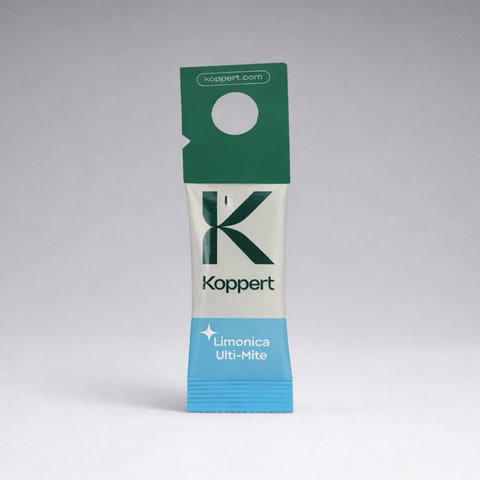
Amblydromalus limonicus Slow-Release Prevention Sachets
The weeks after the course.
$5
-
Add alongside
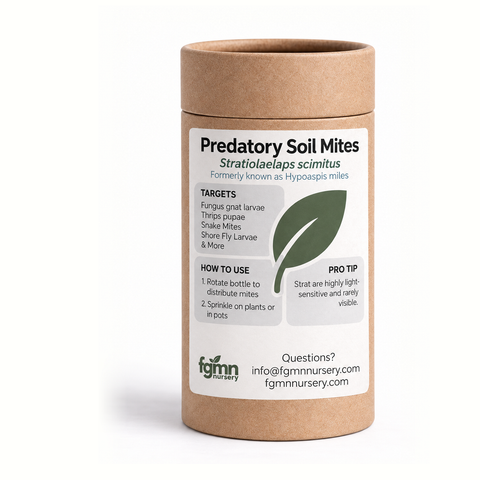
Stratiolaelaps scimitus
The stage in the soil.
from $50
-
Add alongside
Orius insidiosus
The adults already flying.
from $68
-
Add alongside
Root Network
For the roots: mycorrhizae and microbes that help roots take up water and nutrients. Use at repotting, then a monthly drench.
from $15


More to know
Ways to buy, questions and reading
Ways to buy
Once, on a schedule, with friends, or mixed with other predators.
- One time
- A single tube, this once. Free shipping on orders of $30 or more, $15 under that.
- On a schedule
- 10% off your first box, 15% off every box after. Skip, move, pause or cancel from your account.
- Group order
- Friends each pick what they want, and it ships to you in one box.
- Mix and match
- Buy several predators together and they get cheaper.
For the curious
Everything else we know about them. Tap a topic to open it.
Is this your pest?
Limonicus treats two. If neither of these looks like your plant, the product you want is a different one.
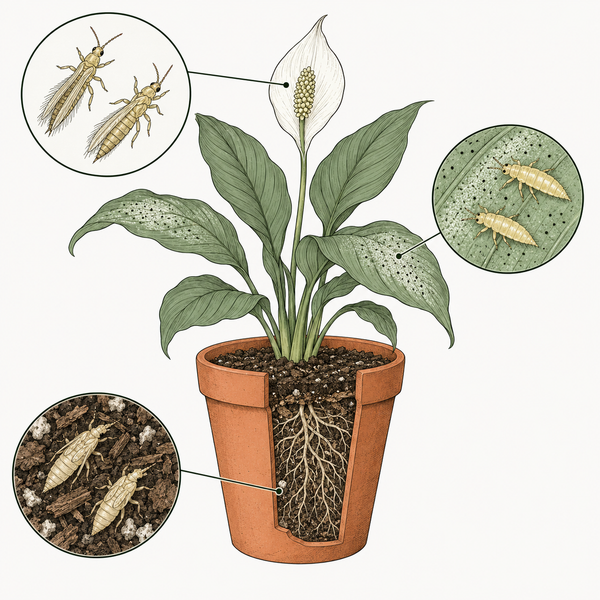
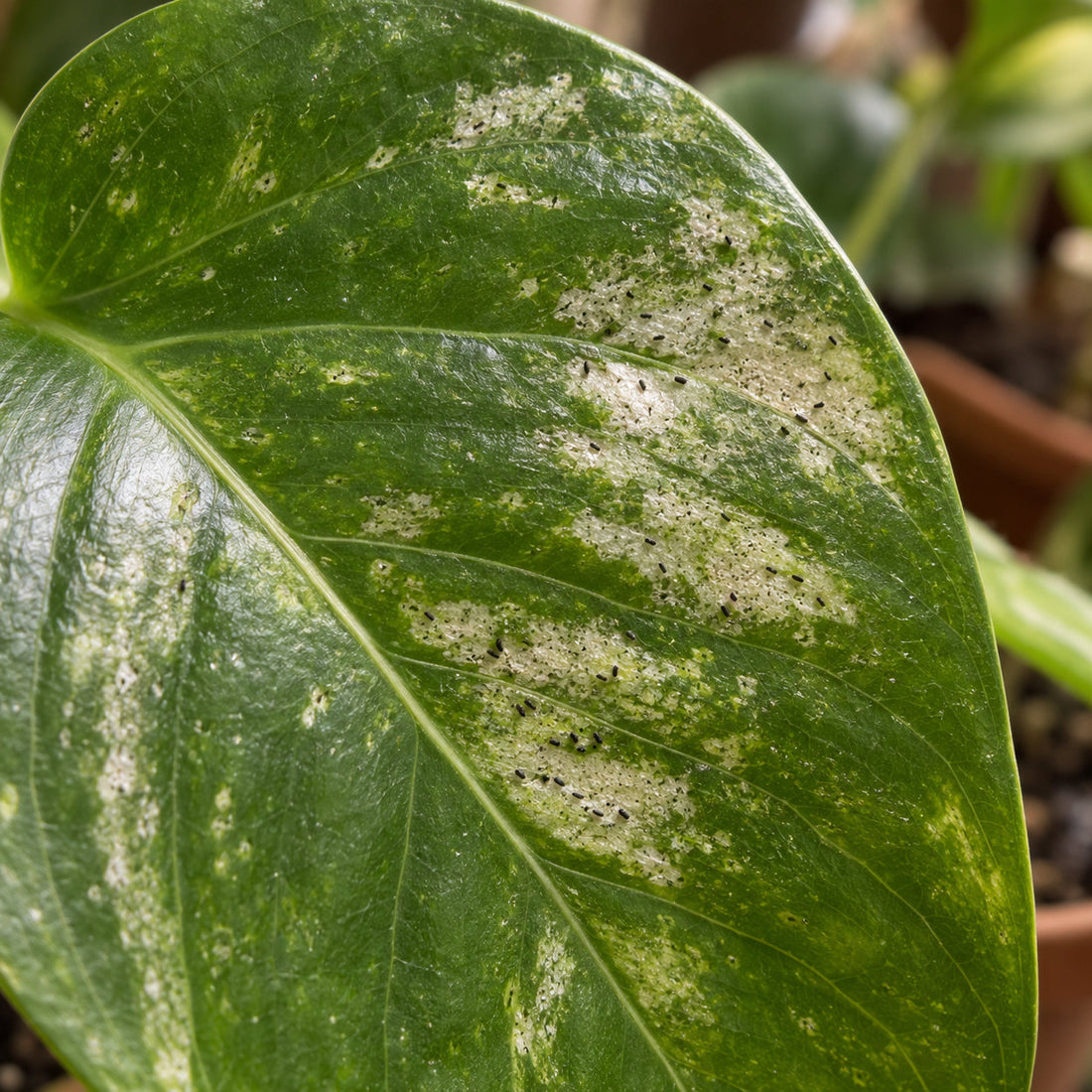
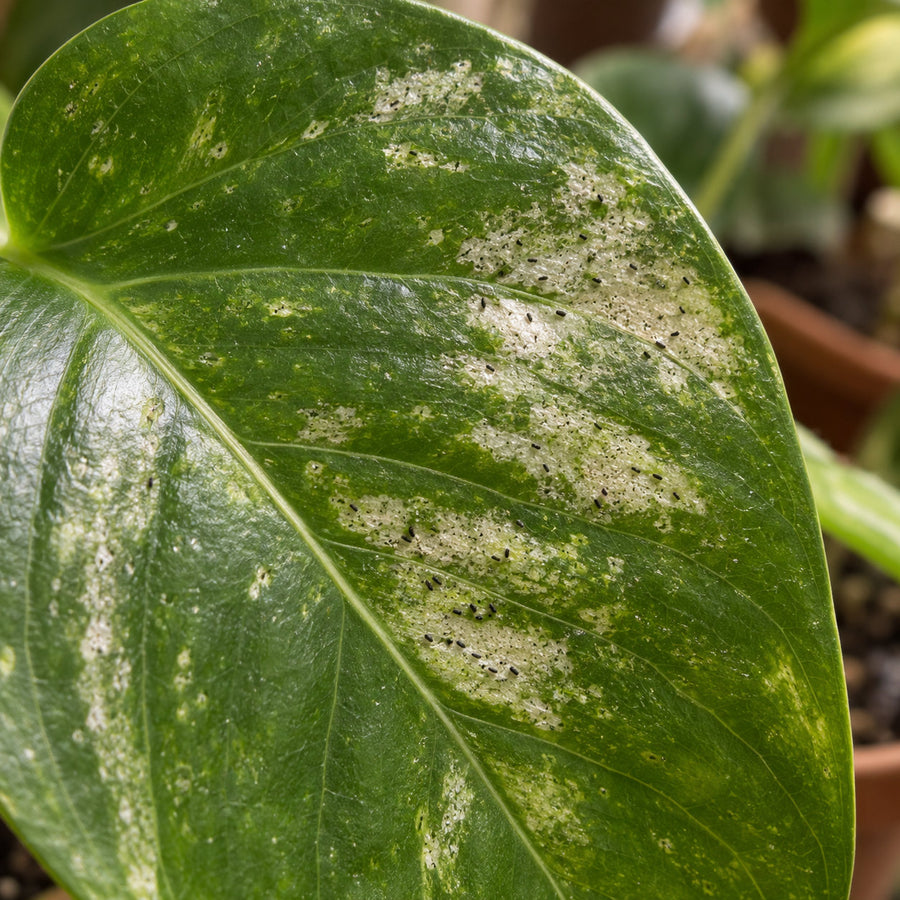
Thrips rasp the leaf surface and leave silvery scarring with black frass specks. Whitefly leave sticky honeydew, sooty mold on the leaves below, and a cloud of small white adults when you disturb the plant — the eggs and young nymphs sit on the undersides.
Limonicus takes thrips larvae and whitefly eggs and young nymphs — the stages doing the feeding and the multiplying. It does not take adult thrips: that is Orius, and the soil stages are Sf nematodes.
Then: is limonicus the right answer to it?
Choose this if
Choose limonicus for heavy thrips and whitefly pressure together on plants worth the premium, in a room you can hold above 70% humidity. It is active from 55°F, where the warm-weather mites are still slow.
Choose something else if
Humidity is the whole decision. Its eggs hatch best above about 70% RH — in drier air it will still eat pests, but it struggles to build a population, and you are paying for a population. In a dry room, cucumeris is the thrips pick, and it costs less, though it ignores whitefly entirely; outdoors or in swinging conditions choose Special Blend, because limonicus is a greenhouse specialist and dislikes fluctuation.
What it kills, and what it won't
It also feeds on pollen, which is not a pest — it is how the population holds on a clean plant between outbreaks instead of starving out.
How it works
What it does to the pest, what it does on the plant, and what that leaves you looking at.
It hunts, one at a time
Limonicus is a predator — not a poison, not a repellent, nothing systemic. It walks the leaf, finds a thrips larva or a whitefly egg, and feeds on it directly. There is no residue on the plant afterwards, and there is nothing here for a pest to become resistant to.
It breeds where it lands
What you release is the start of the population, not the whole of it. In a humid canopy they lay on the leaf and the next generation does a large part of the work. The eggs hatch best above about 70% humidity: in drier air the adults still eat, but few replace them.
Pest numbers, not mites
You will rarely watch this happen. They are under a millimeter and they work on leaf undersides. Judge it the way a grower does — new growth coming in clean, fewer adults on the cards week to week — rather than by how many predators you can find.
It is not a knockdown. The silvering already on a leaf is scar tissue and it stays there whatever happens next. The first thing that actually changes is the growth that comes after.
About limonicus
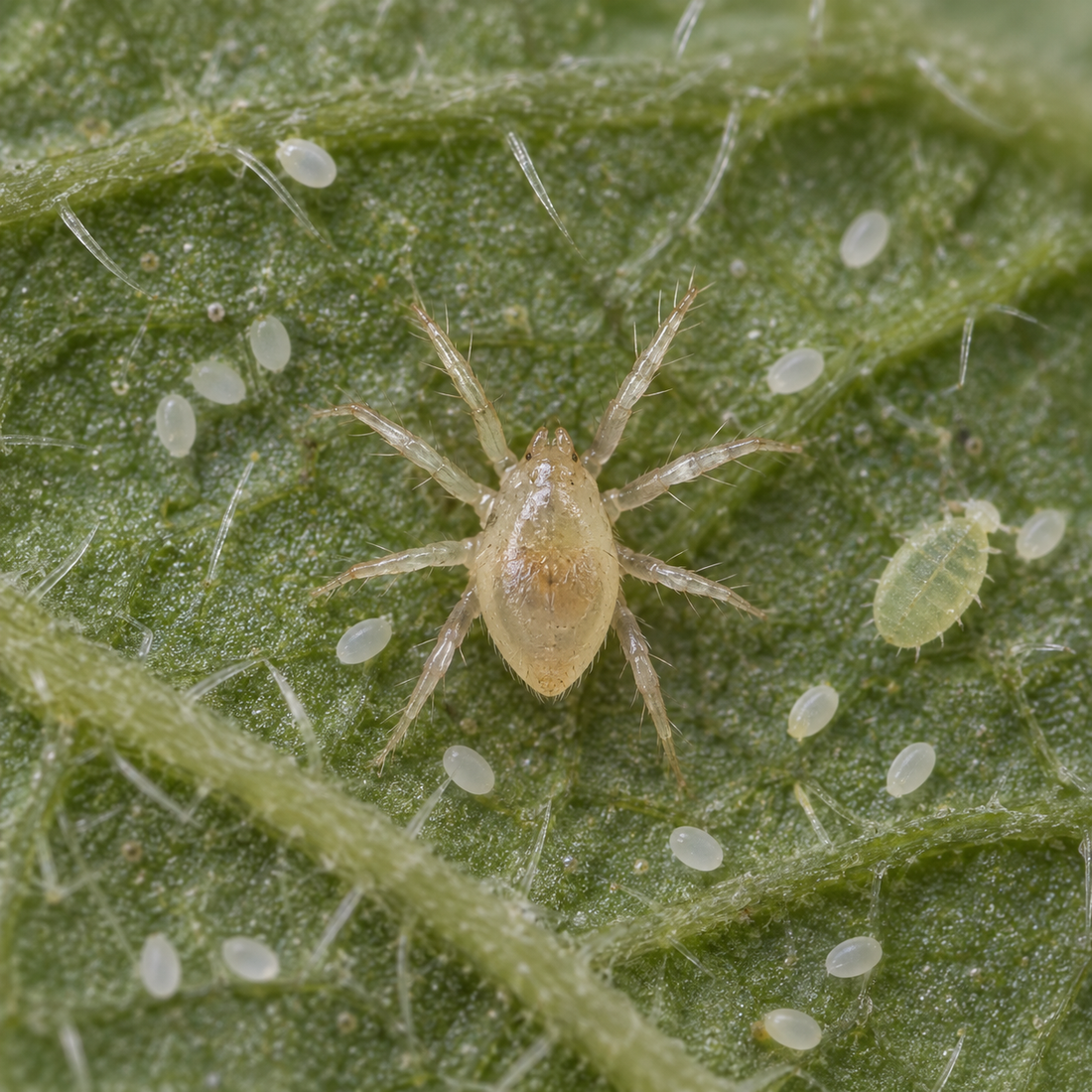
A predatory mite about half a millimeter long that hunts on leaves. It has no interest in your plant and no interest in you — it eats other arthropods, and when there are none left it eats pollen until there are.
New to beneficials?
Five things that catch almost everyone the first time.
What arrives
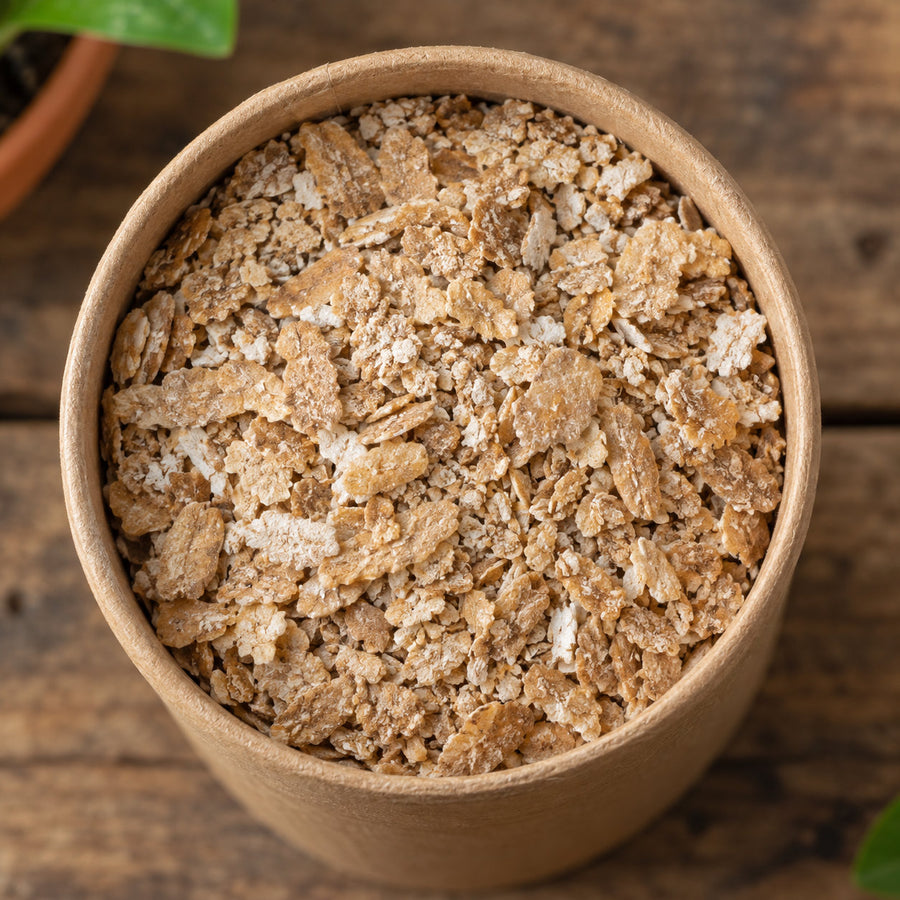
A mixed-stage population with food mites and carrier — the bran and vermiculite grit the mites travel in. The food mites are provisions, not passengers, and they keep the predators going until you release them.
Limonicus is unusually active, so unlike most of the catalog you may well see the carrier move.
Release on arrival. If you need to wait, it's best kept at 50–55°F, away from freezing, and released within about 24 hours.
When it ships, and when it lands
Shipping
We ship when they're ready to travel. Live orders go out Monday to Thursday. If a colony needs a beat to peak, or we're propagating a fresh batch, yours might hold up to a week. All mites and insects ship 2-day or Overnight depending on what's best for them.
When it lands
Open it that day. Best released on arrival; if you need to wait, they're best kept at 50–55°F, away from the freezer, and released within about 24 hours.
Why we pack extra
Two days in a van is a long trip for something this small, so we send more than you paid for.
A predatory mite is the size of a grain of table salt. It ships in a cardboard tube, in a van, for two days.
A trip like that is hard on anything this small, so we price it in: the number on the label gets counted out, and then roughly 15% more goes in on top as a cushion.
Your 500-mite tube leaves here holding more than 500. The cushion is on us.
If you can see them
Ladybugs, lacewing larvae, Orius — the minute pirate bug — and the beetles. These are the ones big enough to see.
Cold insects are very good at sitting still. That's normal. Release them as this page says, and watch the pest instead.
Something look wrong? Email info@fgmnnursery.com with your order number.
If you can't see them
Mites, nematodes, eggs — most of what we sell, this one included. A tube of carrier looks the same whether it holds 500 live mites or none, and no photograph settles that. So we don't ask you to take one.
Email info@fgmnnursery.com and our entomologist takes you through the diagnostic instead — where the box sat, what your room was doing, and then what the pest is doing about ten days later.
Limonicus is active enough that you may see the carrier move. If it looks still, that alone isn't a reason to worry.
Seventy-two hours from delivery, either way, with your order number. Replacement or store credit, your pick.
Questions about amblydromalus limonicus
Will I have bugs flying around my house?
No. They stay on the plants, where their food is.
Why is Limonicus more expensive than Swirskii?
Limonicus is much harder to rear in the lab. It requires specific diets and conditions to mass-produce. What the premium buys is one mite that covers thrips and whitefly together in a humid room.
Will it eat Spider Mites?
Some. It takes spider mites on encounter, to a lesser degree than thrips and whitefly, and heavy webbing slows it down sharply. For spider mites on their own, Persimilis is the one.
What if my humidity drops?
Humidity matters most for the eggs: if it stays below about 70% for long periods, the Limonicus eggs struggle to hatch. The adults will keep eating, but the population won't sustain itself. If you have dry air and thrips are the main problem, Cucumeris is the better pick.
Can I use it on Roses?
Yes! Limonicus has been studied in roses for whitefly, and it feeds on thrips larvae, the stage that marks petals as it feeds.
Does it bite humans?
No. It is strictly a predator of small insects and mites.
How do I apply them without getting bran in my pots?
Since Limonicus is sold as loose material, we recommend using small paper cups, "Bio-Boxes," or even coffee filters hung on the plant stems. Pour a small pile of the mite mixture into the cup. Limonicus mites are extremely active and mobile; they will quickly crawl out of the cup and onto the plant to hunt, leaving the carrier material behind in the cup. This keeps your flower sites clean while still giving you the aggressive protection you need.
Can I release them after spraying?
It depends on what you sprayed. Insecticidal soap, horticultural oil and neem oil work on contact and leave little behind once dry, so they are the easiest to release after. Many other products stay active on the leaf for much longer, so there is no one waiting period that fits everything: check the label of what you used, and if you are not sure, email info@fgmnnursery.com with the product name before you release the limonicus.
How many limonicus do I need?
Size it by plant count. Every size is built at roughly 100 mites per six-inch plant, so:
- Count the plants in the space, including the neighbors of the damaged ones, and pick the size whose plant count covers them. Count bigger plants generously.
- Heavy pressure (silvering across whole leaves, a cloud of whitefly when you brush the plant): go one size up.
- Light pressure (a few silvered streaks, one or two whitefly lifting off): one size down.
- One tube is one release. All of it goes onto the plants the day it arrives.
- Repeat every 7–14 days while the infestation is active. Check at about 14 days: new leaves coming in clean and fewer whitefly. If nothing has changed, check the humidity first.
Keep reading
Field Notes from the FGMN Nursery team.
 Limonicus Was Worth the Wait
Most predatory mites do one thing well. Limonicus hunts thrips, whitefly, and spider mites — and survives on…
Limonicus Was Worth the Wait
Most predatory mites do one thing well. Limonicus hunts thrips, whitefly, and spider mites — and survives on…
 Four Mites Apply for the Thrips Job
Compare cucumeris, swirskii, limonicus, and andersoni by the job they need to do on your plants—not just how…
Four Mites Apply for the Thrips Job
Compare cucumeris, swirskii, limonicus, and andersoni by the job they need to do on your plants—not just how…
 Whitefly Treatment That Doesn't Wear Off
Spraying whiteflies knocks back the adults you can see. It doesn't touch the eggs. The eggs hatch, the…
Whitefly Treatment That Doesn't Wear Off
Spraying whiteflies knocks back the adults you can see. It doesn't touch the eggs. The eggs hatch, the…
Sources
Published guidance from university extension services. The release tips on this page also draw on what we see shipping these every week.