


Stratiolaelaps Scimitus
Biological control is a programme, not a single release. A subscription puts the next one on its way before the last one runs out.
Skip a box, change how often it comes, or stop it — all from your account.
Heads up—this is just an estimate. We only ship when the bugs are happy and ready to travel (Mon–Thurs). If a colony needs a beat to peak, or we're propagating a fresh batch, your order might hold up to a week. Treatment bottles jump the line when you've got an active infestation.
Sizing guide
How our sizes work
Sizes are set by how many plants you are treating — not by how much material is in the container.
Every size on every product page names its own coverage right there in the dropdown, so you never have to come here to find a number. Medium — Up to 25 Plants (2,500 Mites) tells you the tier and the count in one line. This page is for the part the dropdown cannot tell you: how to pick between two of them.
These are rough middles. The ladder runs smallest to largest within each product, so a Medium of one species covers more ground than a Medium of another — a nematode drench and a beetle release are not the same job. The count on the size you are looking at is always the real answer.
Pest pressure moves you up the ladder
Plant count is only half the sum. The other half is how much pest is already there. A closed tent holding fifteen plants with thrips on every growing tip needs a larger release than a bright room holding forty plants with a few gnats — the population you are outnumbering is bigger, and the enclosed space lets it rebound faster.
Coverage figures assume a typical active infestation. Adjust from there:
Under heavy pressure, two releases beat one large one. Take the larger size and plan a second release 7–14 days later, which catches the eggs that had not yet hatched the first time.
A few things work differently
A few products read in square feet rather than plants, because that is how they are applied — the outdoor and area-scale releases. Those are Sc and Hb nematodes, and the aphid specialists Ervi, Matricariae, and Aphidoletes. Same ladder, different unit.
Sf nematodes and Triple Blend size by plants and pots, like everything else. They are soil drenches for potted plants, so count your pots rather than your floor.
Slow-release sachets have no size. They are sold by the sachet, and you place one per plant or one per few plants depending on pressure. Sachets are a prevention tool — they hold a population in place before a problem starts. If something is already established, a bottle is the correct answer.
Sizing up is cheaper than sizing twice. Predators need enough prey to establish and enough of themselves to find it. Underdosing is the most common reason a release underperforms, and it usually costs more in the end than the larger size would have. When you are between two sizes, take the larger one.
Still not sure? Tell us what you are growing and what you are seeing, and we will size it for you.
Stratiolaelaps Scimitus
At A Glance
Stratiolaelaps scimitus is a robust, soil-dwelling predatory mite that serves as a versatile biological control agent. Formerly known as Hypoaspis miles, these generalist predators are essential for both horticultural pest management and reptile husbandry. They actively patrol soil and substrates to hunt larval pests like fungus gnats and parasitic mites like snake mites. Because they are native to the soil, they are incredibly stable and can survive for weeks without a direct food source by feeding on debris, making them the industry standard for bioactive terrariums and greenhouse prevention.
-
Scientific Name: Stratiolaelaps scimitus (aka Hypoaspis miles)
-
Best For: Preventing fungus gnats in plants and eradicating snake mites in reptile enclosures.
-
Safe For: Plants, humans, and all reptiles/amphibians (non-toxic and chemical-free).
Target Pests
Environmental Needs
Selection Guide
How to Use
How They're Shipped
Deploy day, and the weeks after.
How to deploy your order, and how to read the results over the next few weeks.
-
01
Open the box right away
Bring the package indoors as soon as it arrives. Don't leave it on a hot porch, in a cold mailbox, or in direct sun. If you can't deploy immediately, set the bottle somewhere room-temperature (60–75°F) and out of direct light — it'll keep for a day or two.
-
02
Let the bottle rest 15 minutes
Mites huddle in transit for warmth. Set the bottle somewhere room-temperature for fifteen minutes before you open it. This lets them spread back through the carrier and warm up before deployment.
-
03
You probably won't see them
Predatory mites are smaller than a grain of salt. Most people can't spot them with the naked eye, and phone cameras can't focus close enough to catch them. That's expected! What you can check: the carrier material should look dry and uniform, the bottle should be intact, and there shouldn't be visible mold. A warm box is normal — don't read anything into it.
-
04
Deploy the same day
Apply in the evening or on a cloudy day to avoid UV exposure. For pests on the plant — spider mites, thrips, broad mites — sprinkle the carrier material directly onto leaves and stems where damage is visible. For soil-dwelling pests like fungus gnats, sprinkle onto the top inch of soil and lightly water afterward to help the mites settle into the medium. Either way, spread across plants instead of piling in one spot. See the product description for species-specific dosing.
-
05
Watch your plants over 1–2 weeks
The real "are they working" check isn't visual. It's whether your pest population drops. Bottled treatments typically show measurable reduction in spider mites, thrips, or other targets within one to two weeks. If pest pressure isn't easing by then, that's when to bring in our bug pros.
Something not quite right?
Reach out to our entomologist by filing a report within 72 hours of delivery, with your order number and a photo. Candidly, without a photo the team can't approve a live beneficial claim.
Read the full Live Delivery Guarantee →Join Karen's Live Shows — Pests, Plants & Predators on PalmStreet.
Every Friday at 7pm EST — plus additional shows throughout the week. Ask your pest questions in real time — we answer everything.








The Weekly Newsletter
A weekly excuse to be weird about bugs at parties.
Weekly dispatches on the quietly alarming things happening in your soil. All of it real.
No spam. Leave whenever.
You're in
The first strange true thing arrives next week.
FAQ
What is your Live Delivery Guarantee?
We guarantee that your beneficial insects arrive healthy and ready to work. They're living things, so we pack for the season and ship expedited to give them the best trip we can.
If something looks wrong when the box opens, take a photo and file a report within 72 hours of delivery, with your order number. Photos matter: candidly, without them the team can't approve a live beneficial claim.
Can I use Stratiolaelaps with diatomaceous earth (DE) or pesticides?
Will they bite me, my pets, or my plants?
I don't see them moving in the bottle. Are they dead?
Do I need to reapply them?
Can I use them in a sterile setup (like paper towels)?
How do I know if they are working?
Help! I'm overwhelmed
Yeah, it's a lot the first time you're using predatory mites. File a report and our bug pros will walk you through it!
I don’t see anything moving in my bottle or sachet. Does that mean they’re dead?
Not at all! In fact, go ahead and deploy them.
Predatory mites are microscopic (often less than 0.5mm) and naturally blend into their carrier medium (bran or vermiculite).
- For Bottles: The mites often huddle in the center of the bottle for insulation during transit.
- For Sachets: These are "slow-release" nurseries. The mites stay tucked deep inside the breeding media and emerge one by one over 2–4 weeks. Seeing an "empty-looking" sachet or bottle is not proof of a loss; it is simply how they are packaged for maximum survival.
The packaging is nice and secure and so cute!! Got it just in time and no issues!!
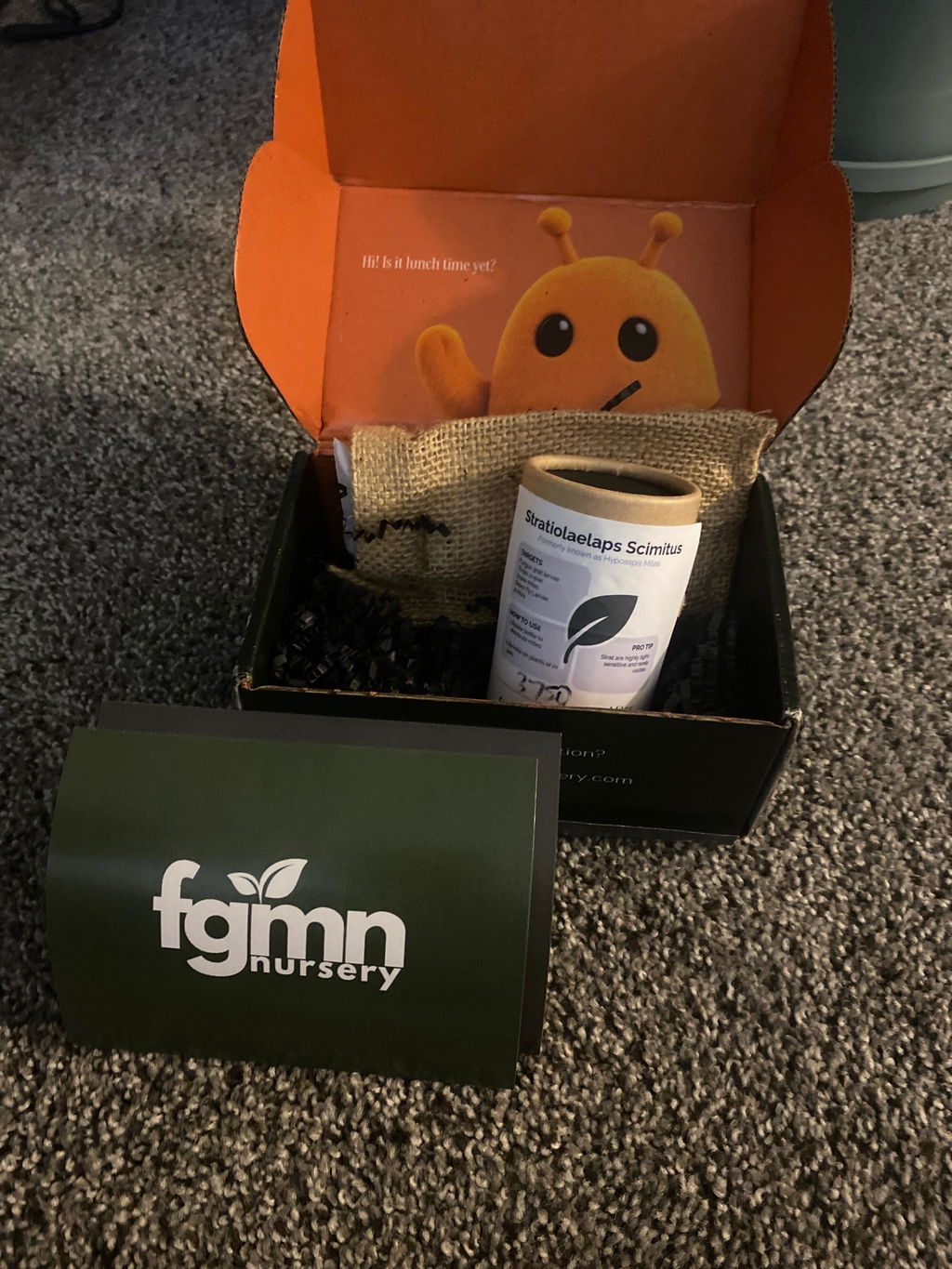
Excellent service and product. I received notifications at each step of processing and shipping.
This place was great to work with. We had a small mistake in the beginning and they communicated quickly and was very friendly. They were fast to correct the issue and was great to work with. I plan to come back in the future. The predatory mites I ordered were great. I obviously could not see them but I can see their work in my snake enclosures. I have happy snakes now. Thank you!
Arrived in great condition as per usual....but it's been two weeks in and still a bit too early to tell if the fungus gnats are decreasing in number, as I'm still catching hundreds of them on sticky traps. I assume it'll take a bit longer, so finger's crossed!
Still have a few fungus gnats but overall it worked really great. Will be getting again to help manage the gnat population
Always happy with my orders
Recommend to all plant parents. Best way to attack a big issue and to prevent future issues
Excellent customer service folks and the shipments are always bursting with live, healthy and hungry predatory mites. Very pleased with this company. Thank you, I'll be back!! ♡
Product failed to work as expevred, despite following included instructions. Disappointing and expensive.
Hi Tanya,
Sorry to hear it didn’t go the way you hoped. We don’t have any record of you reaching out to us about this order, and we’d really love the chance to help diagnose what happened — Stratiolaelaps targets soil-stage pests specifically (fungus gnat larvae, thrips pupae, soil-dwelling mites), so if the pest pressure was on foliage or another stage of the lifecycle, that would explain a mismatch in results.
Please reach out to us at customer service email (we’d include it, but Shop won’t let us) with a bit of context about what you were targeting and your setup, and we’ll work with you to figure out what went wrong and get you on the right track.
Great process..still struggling with thrips though. I’m going to reorder.
Came wonderfully packed and the mites were happy and super active upon opening! It’s been too soon to see them do their job yet, but I’ve got full faith in the lil guys
Solved my snake mite problem 🐍
Haven’t been able to see what they’ve done yet but what an awesome product, shipped and arrived in less than 2 days. Will probably try this with nematodes next time!
Arrived quickly and had great customer service
Packaged well and arrived quickly. I applied them as directed and I am awaiting the results. Hoping for the best. Will definitely purchase again from them if needed.
Came in secure and great condition
I had a great experience purchasing my predatory mites, and the only hickup I experienced due to my own mistake with the address. I emailed and explained the deal and they responded very quickly and helped come up query solutions. All my mites were alive and well.
I had some issues with my first order and Karen was more than helpful and informative. I couldn't be happier with the service and knowledge of this shop.
Il leefinitely be a returning customer :)
Highly recommend!
These worked great. Had an idea to see if these will control Chiggers/red mites here in the south east. If anyone has ever hiked thru a pine forest in the south during summertime you know exactly what i am talking about. They make mosquitos look like butterflies!
They showed up very alive (even in my AZ heat) and on time!! My snake was a rescue and came with mites. After many soaks and quarantine I just wanted to be extra safe by adding in these little guys to his newly set up enclosure. As far as I can tell they are doing their job :)
I am excited to try these! Thank you!
The H. miles are so versatile. We can't wait to hear what you choose to do with them. Sincerely, thank you for shopping with us.
These mites have definitely put a dent into the snake mite infestation my blue tongue skink had. Also Karen was very helpful throughout the whole process! Thank you Karen
Yay! So happy to hear!!! I've wondered often how it turned out after that whole shipping mishap. Keep in touch! - Karen
They don't seem to be helping. I used the whole order on 10 plants in 7 gallon buckets. I had only seen 1 root aphid in 1 of the containers, but thought it best to treat all. The 1 I did find I only saw after checking multiple times too. I removed that plant and pot and treated the area with 50% bleach and water. I have been checking all the plants 5-7 times a day and this morningI found several root aphids in plants that I hadn't seen them it before, so I would say the product has been no help at all.
Hi!
Oh no! We agree, this wouldn't be our first pick for root aphids; that would be nematodes. They'll help eventually, but they're not diehard fans of root aphids. If you'll reach out to us at info@fgmnnursery.com, I'm sure we can help you out with them in some way.
Excellent service. They came alive and very active. Thanks.
Thank you so much! Keep us apprised of how it goes and let us know if we can do anything more to help.
Arrived alive and well and have helped with my grain nights and fungus gnats in just a few days :).
Hi i placed an order for predatory mites. Is it possible to cancel my order? Its going to take to long to get them sorry
Hi Margo,
Ever so sorry, but this question block isn't our customer service team. Would you mind reaching out to them at info@fgmnnursery.com? They'll be happy to help you.
Mite Matters
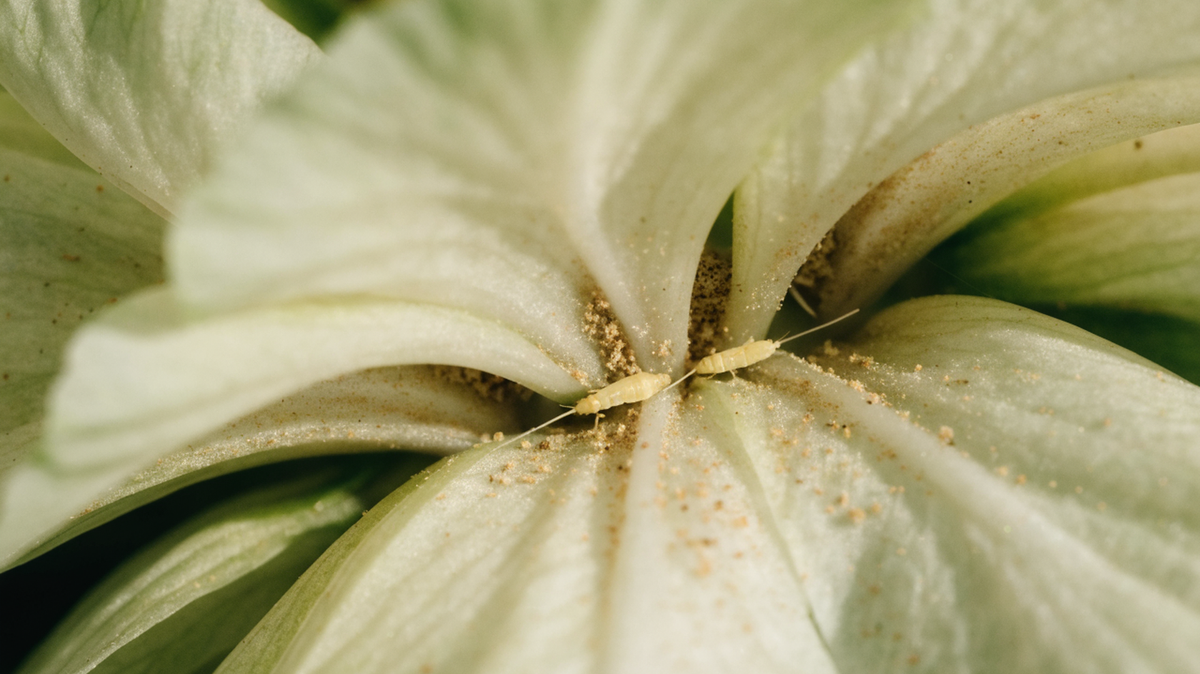
Thrips Have Six Stages. Cucumeris Reaches One.
A thrips passes through six life stages and cucumeris can kill one of them. Second instars do not just survive the attack — they fight it off, and they destroy the predator's eggs on the way past. That single fact explains the lag, the reservoir, and most of the disappointment.
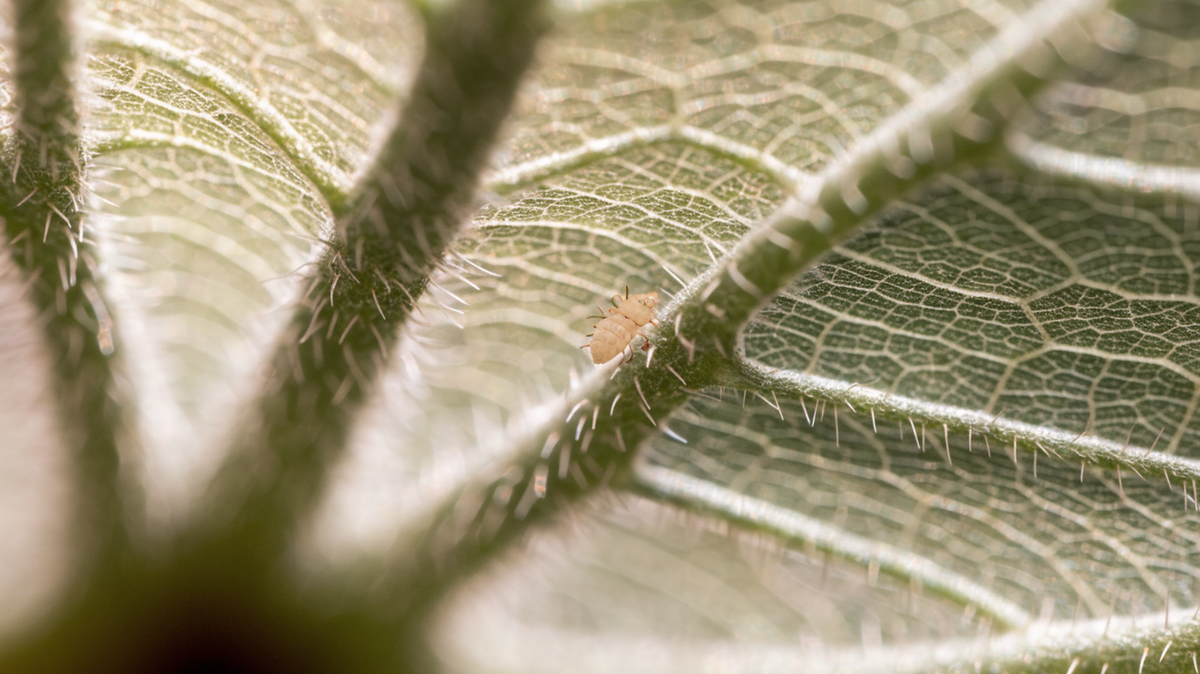
Four Predatory Mites, Compared. Two of the Columns Are Guesses.
Every supplier prints the same four-column comparison table. We went and read the papers behind each cell. One column rests on unpublished company data, one species has never been trialled against thrips at all, and the humidity row is backwards. Here is that table with the guesses marked.

Your Cucumeris Are Alive. Your Thrips Are Winning.
Your mites are alive. Your thrips are also alive. That combination has twelve documented causes, and what the mites are doing — where they are, what they are sitting next to — narrows it to one or two in about five minutes.