

Specialist · Aphids
Aphidius matricariae
The fastest thing we sell against green peach aphid — and it keeps working in a cooler room, and through a short winter.
$45.00
Free Shipping for all orders over $30
If something's wrong when it arrives, file a report within 72 hours of delivery for a replacement or store credit.
By placing your order you agree to our Shipping Policy and Live Delivery Guarantee.
How much, and how often
Two questions — how bad it is, and how many plants. You get a size and the dates to put it out.
How bad is it?
Pick the one that sounds like your room. If you are between two, take the higher.
How many square feet?
Six-inch pots. Count a large specimen with a dense canopy as three or four.
Your size and schedule
More about this dose
The three things people ask once they have their size. Open any of them.
Am I light, moderate or heavy?
Light
- A few small green aphids on one growing tip
- No honeydew yet, or one sticky leaf
- Nothing on the plants either side of it
Moderate
- Clusters on several stems and leaf undersides
- Sticky honeydew on the leaves below
- New growth coming in curled
- Aphids turning up on a second plant
Heavy
- Stems crowded end to end
- Sooty mould on the honeydew
- Winged aphids, which means they are leaving to start colonies elsewhere
- Ants running the stems
This one is at its best before a colony gets dense, so if you are between two levels the honest advice is to release sooner rather than bigger. Where the colony is already heavy, pair it with a predator that eats in volume and let the wasps work the scattered stragglers.
A colony you judged as light on Monday is a different problem by Friday. Taking the higher level costs a little more once; taking the lower one usually costs you a second release two weeks later, by which point there is more to fix. And this wasp is cheapest to use early, when there is least for it to find.
Why more than one round?
Putting it out
- Deal with ants first. Ants farm aphids for the honeydew and will kill the wasps to protect them. A bait or a barrier, two or three days ahead.
- Pull yellow sticky cards before you release, or the cards get the wasps. A few days is enough.
- Release in the morning. Searching and flying both need daylight, and high light intensity improves the searching.
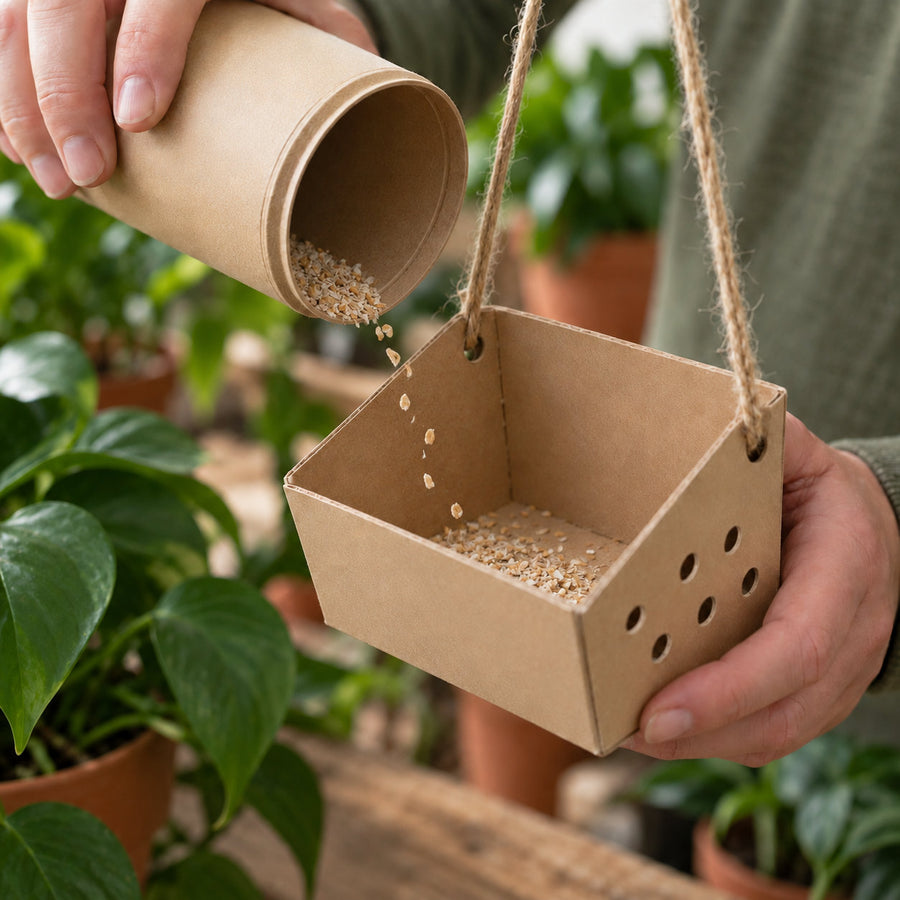
- Spread the mummies in the canopy, near the aphids — into release boxes, or onto a dry shaded surface.
- Then leave it alone, dry and undisturbed, for several days while the wasps emerge.
Everything else is optional. Get these four and the release has done what it can.
A cleaner way
On a display plant, tip small piles into bio-boxes or paper cups hung in the branches instead of dusting the foliage. Same dose, nothing visible on the leaf.
The failure is forgetting. Very few programs fail because the mite underperformed. They fail in week five, when the plants look fine, the reorder does not happen, and the population holding the line ages out with nothing behind it.
A schedule is the same decision, made once. A bottle when it looks bad, then another when it looks bad again, is already a rhythm — just one you have to remember at the exact moment the plants look fine.
Change the size or the frequency, skip a box, pause or cancel from your account at any time.
Is this the right beneficial for your problem?
Five questions, in the order a grower actually asks them: what have you got, is this the answer to it, what will it eat, how does it do the killing, and will it survive your room.
Is this your pest?
Matricariae is the specialist's specialist. Green peach aphid is its preferred host, and against that one nothing in the catalogue is faster. If your aphids are the big long-legged sort, a different wasp is the better buy.
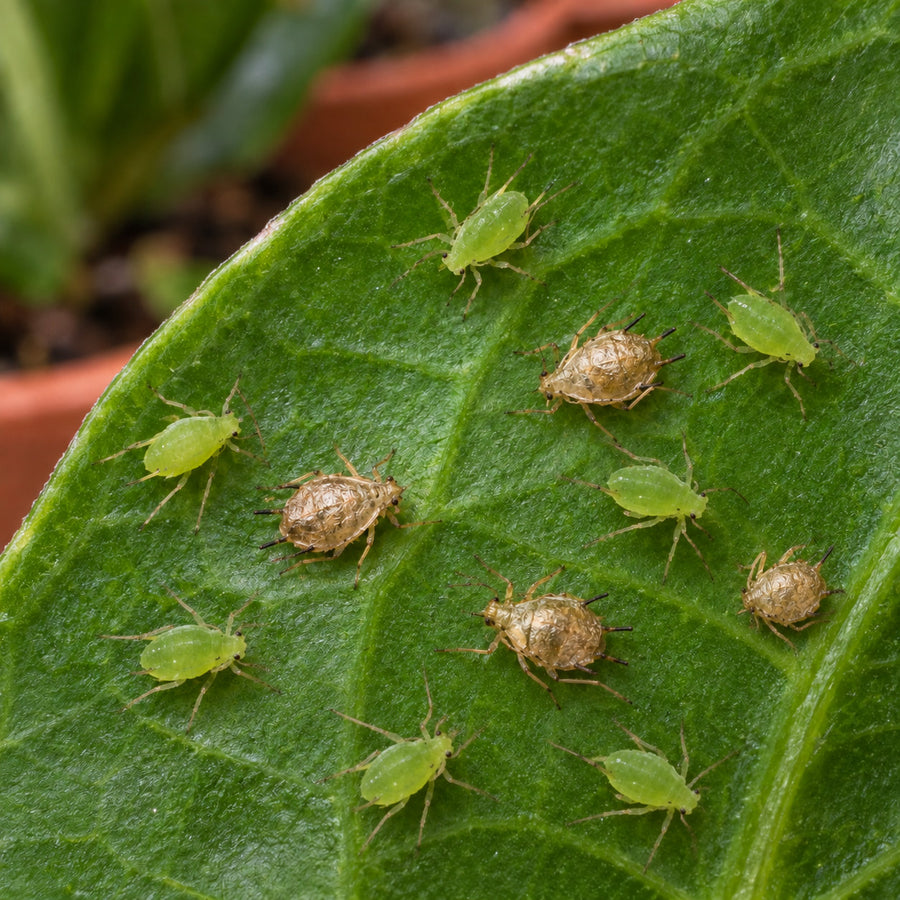
Aphids cluster on stems and the undersides of new leaves, soft and pear-shaped, in greens and pinks. Green peach aphid is small, round and pale green, and the colony leaves sticky honeydew with sooty mould following it. New growth comes in curled, and the numbers compound without anything arriving from outside.
Matricariae parasitises more than forty aphid species, with green peach and tobacco aphid at the front of the list, and cannabis aphid used in rotation for an early infestation. The large-bodied species — potato, foxglove, oleander — are poor hosts and belong to ervi.
Then: is matricariae the right answer to it?
Choose this if
Choose matricariae when green peach aphid is what you have. It is faster and more aggressive on that host than colemani, and it stays active in a cooler room than the other aphid wasps will tolerate. It is not tied to day length either, so it works right through winter. No sting, nothing to mix, no residue on the leaves and no re-entry interval.
Choose something else if
Large-bodied aphids are the limit — potato, foxglove and oleander aphid are poor hosts, and ervi is built for those. Ants will defend an aphid colony and kill the wasps, so those go first. And a systemic insecticide travels into the aphid and kills the wasp developing inside it, which is the one incompatibility that really matters here.
What it kills, and what it won't
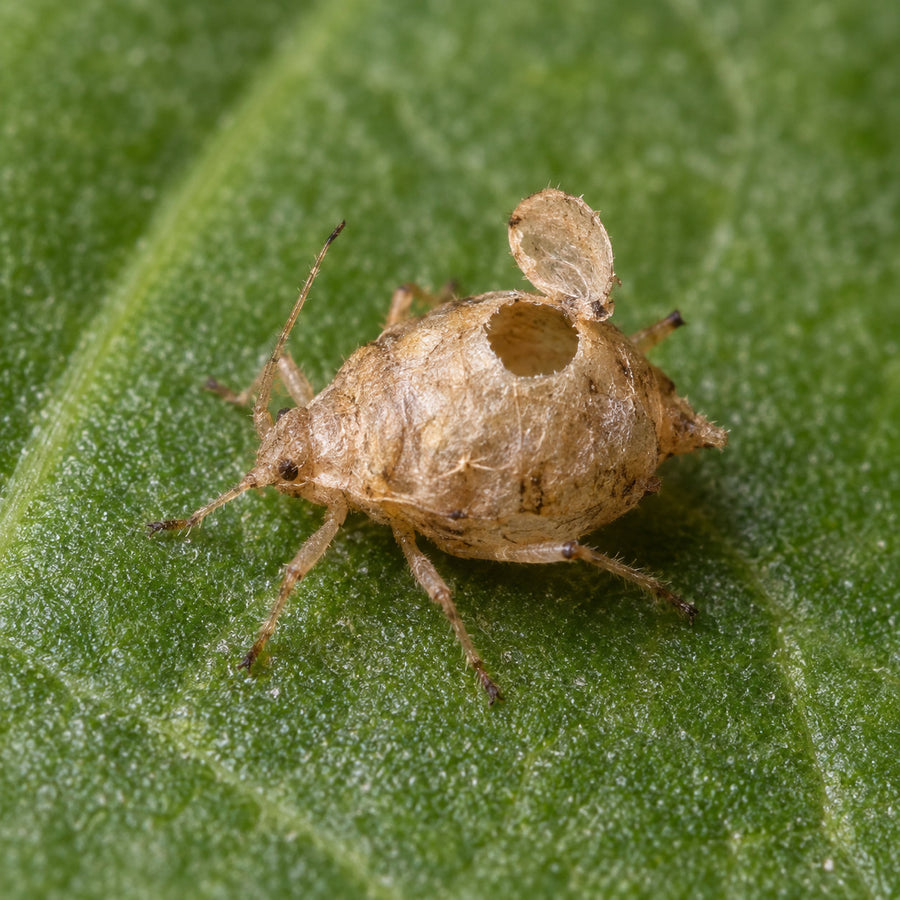
Aphid mummies are not a second pest. A parasitised aphid swells into a papery bronze shell glued to the leaf, and ten to fourteen days later a new wasp chews a neat round hole out of the back of it. Those shells are the product working.
How it works
What it does to the pest, what it does on the plant, and what that leaves you looking at.
It lays inside the aphid
The female finds a live aphid and lays a single egg inside it. The larva develops in there and kills it from the inside, and the host hardens into a bronze mummy stuck to the leaf. No poison, no residue, no re-entry interval, and nothing for an aphid to become resistant to.
Best when there is least to find
Its real edge is low density. It searches efficiently when there are only a few aphids about, which is exactly the situation where a spray wastes itself and a hungry predator cannot be bothered to hunt. That makes it the one to reach for early, and a good preventative release.
Every mummy is the next release
Ten to fourteen days in you should see bronze mummies, and a neat round hole in the back of one means another wasp has already gone hunting. That is why the release keeps working long after the adults you bought have died.
Feed the adults. Nectar and honeydew keep them alive two to three weeks. Flowering plants in the room make a measurable difference — they are functional here, not decorative.
Will it work in your room?
Deal with ants first — they farm aphids for the honeydew and will kill these wasps to protect the herd, so a bait or a barrier goes down ahead of the release. And check the aphid: if it is large and long-legged, ervi is the one that can physically handle it.
About Aphidius matricariae
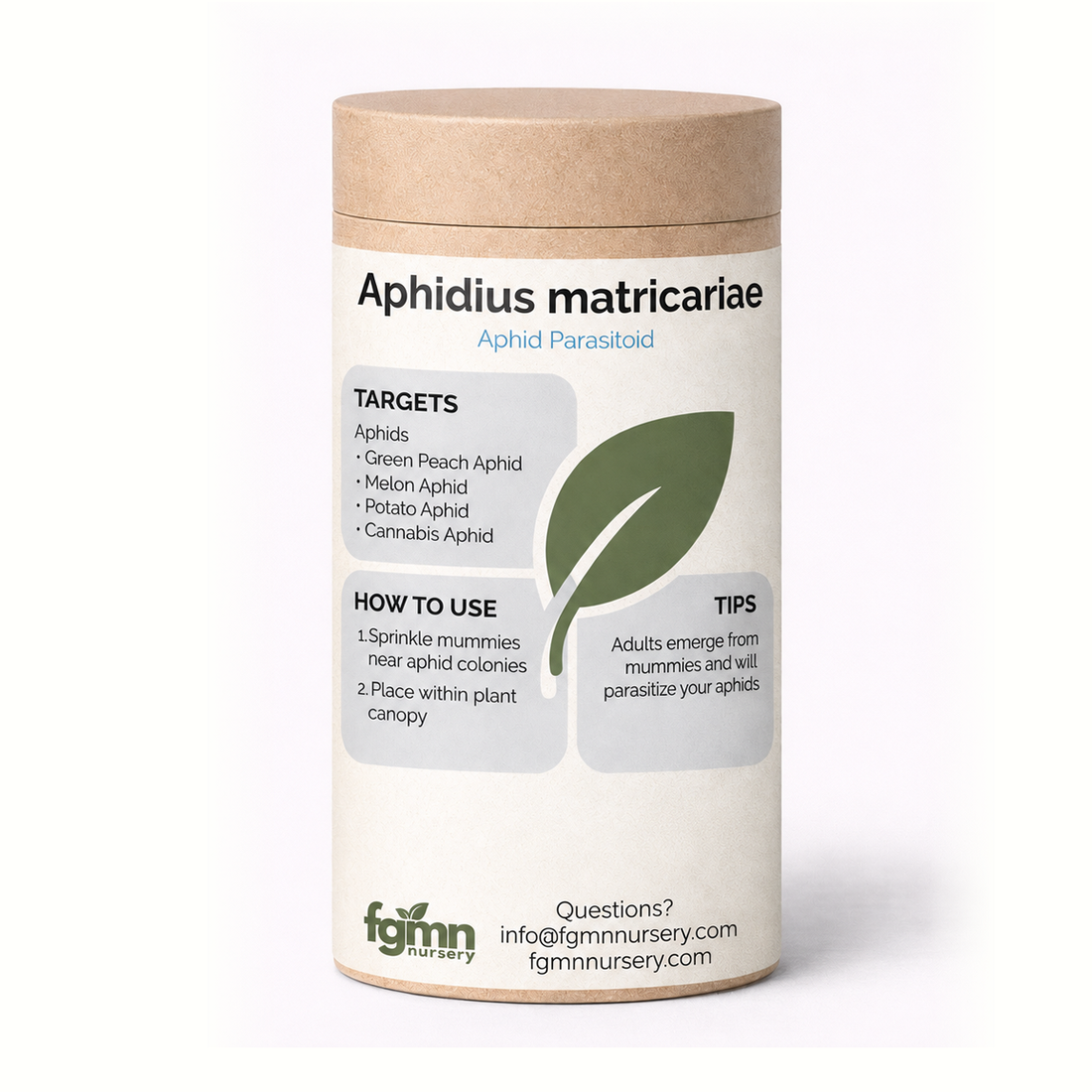
A 2 to 3mm wasp, roughly the size of a gnat, that parasitises more than forty aphid species and is unusually fast about it. It has no defensive sting, no interest in your plants, and no way to survive once the aphids are gone.
New to beneficials?
Five things that catch almost everyone the first time.
After you release it
What actually changes, how fast, and the one thing not to tidy up.
How you'll know it's working
Mummies appearing on the colony. If you see mummies, it worked — regardless of how many live aphids are still visible on the day you happen to check.
Aphid numbers fall from there as each mummy hatches, and a neat round hole in the back of one means that wasp is already out hunting the next generation. The honeydew stops before the colony looks any smaller.
Leave the mummies alone. Both the shipped material and the mummies that appear on your leaves. Tidying either one deletes the generation you already paid for.
Getting it to you
What is in the bottle, how it travels, and what happens if it arrives wrong.
What arrives
Mummies in a wood chip carrier — small bronze aphid husks with a wasp finishing development inside each one, shipped overnight in an insulated box with cold packs.
Nothing will be moving on arrival, and that is exactly right. Over the following days the adults chew out and go to work, leaving the empty husks behind.
Release the morning it arrives. These have a very high metabolism and are shipped at the peak of their cycle so they start hunting immediately. More than 48 hours in a cool dark place and their search energy drops off sharply.
When it ships, and when it lands
Shipping
We ship when they're ready to travel. Live orders go out Monday to Thursday. If a colony needs a beat to peak, or we're propagating a fresh batch, yours might hold up to a week. All mites and insects ship 2-day or Overnight depending on what's best for them.
When it lands
Open it that morning. Pull yellow sticky cards first, or the cards get the wasps. Walk the space with the bottle at about 45 degrees so any emerged adults can fly out, then spread the remaining mummies into release boxes or onto a dry shaded surface near the aphids — and leave them undisturbed for several days.
About the ones that don't make it
Some of them die on the way. That is why we send more than you paid for.
A mummy is a hardened aphid the size of a pinhead, and it ships in a bottle, in a van, overnight.
Roughly 15% will not survive that. We cannot prevent it, so we price it in: the number on the label gets counted out, and then the cushion goes in on top of it.
Your 250-wasp bottle leaves here holding more than 250. The ones that do not make it are already paid for.
If you can see them
Ladybugs, lacewing larvae, Orius — the minute pirate bug — and the beetles. Tip a few onto white paper and give them twenty minutes at room temperature before you judge anybody.
Cold insects are genuinely good at playing dead. The deceased have been known to get up and walk off the counter.
Still more than about one in seven not moving? Photograph them and file a report.
The photo is not us doubting you. It is how we tell a bad batch from a bad courier day from a mailbox that hit 104°F.
If you can't see them
Mites, nematodes, eggs — and mummies, which is what this one ships as. A bottle of bronze husks looks the same whether the wasps inside are alive or not, and no photograph settles that. So we don't ask you to take one.
You file the report and our entomologist takes you through the diagnostic instead — the tap test on dark paper, where the box sat, what your room was doing, and then what the pest is doing about ten days later.
The exit holes are the real answer here. Give it a few days and look for small neat round holes in the husks — that is the release working, and it is worth checking before you file anything.
Seventy-two hours from delivery, either way, with your order number. Replacement or store credit, your pick.
What it does not reach
Three gaps this page has already named, and the beneficial that closes each one.
Potato and foxglove aphid need the larger wasp
Matricariae is built for small-bodied aphids. Against the big long-legged ones — potato, foxglove, oleander — it is physically outmatched, and Aphidius ervi is the one that can take them. Body length is the quickest tell: a green peach aphid is about 2mm, a potato aphid closer to 4.
Pair the wasps with something that eats in volume
Matricariae is at its best hunting scattered aphids, which is the opposite of what a crowded stem needs. Green lacewing larvae handle the dense colony while the wasps work the stragglers — and the two do not interfere with one another.
Down for the release, back up to measure it
Pull yellow cards before you release, or the cards get the wasps. A few days is enough. Then put them back — winged aphids on a yellow card are the early warning that a colony has started shipping out to other plants, which is exactly when you want to know.
Two cheap things that make the rest work harder. Blue cards give you the dated count this page keeps asking you to read. Breeder's Blend is pollen and Artemia; it keeps the population fed through the lull when prey gets scarce.
Questions
Will these wasps sting me or my pets?
Absolutely not. Aphidius species are "micro-wasps," roughly the size of a gnat. They do not have a defensive sting like a yellowjacket or hornet. They are only interested in aphids and are 100% safe to release in homes, offices, and greenhouses around people, cats, and dogs.
How do I know if they are actually working?
Keep an eye on your aphid colonies. About 10–14 days after release, you should start seeing "mummies"—aphids that look bloated and have turned a papery golden-brown or bronze color. If you see a tiny, neat circular hole in the back of a mummy, it means a new wasp has already hatched and is currently patrolling your plants for more pests.
Can I use these if I’ve already sprayed my plants?
It depends on what you used. Aphidius are very sensitive to broad-spectrum chemical pesticides: pyrethroids are 8–12 weeks, bifenthrin 12–15, neonicotinoids 21 days after a foliar spray and 4 weeks after a soil drench. Soft treatments are shorter — horticultural oil is done once it has dried, insecticidal soap needs a day. Where the label says longer, the label wins.
Why am I seeing ants near my aphids, and is that a problem?
Ants are a major obstacle for biocontrol. They "farm" aphids for their sweet honeydew and will aggressively protect them by attacking and killing your Aphidius wasps. For the wasps to be effective, you must control the ant population first using baits or barriers so the wasps can access the aphids undisturbed.
What happens to the wasps once the aphids are gone?
Once the food source (aphids) is depleted, the adult wasps will naturally die off or fly away to find new colonies elsewhere. They cannot survive without aphids to parasitize, so they will not become a permanent "resident" in your home once their job is done.
Do I need to release the whole bottle at once?
Yes. These are live organisms with a very high metabolism. They are shipped at the peak of their life cycle to ensure they start hunting immediately. Storing them in the fridge for more than 48 hours significantly reduces their energy and search ability. For the best results, open the bottle and release them the same day they arrive.