



Aphidius ervi
Big aphids look scary. They're still aphids, and there's a wasp built for them.
Big aphids need a bigger wasp. Ervi takes potato, foxglove and pea aphids in a room that stays mild, short days included.
- Ships Mon–Thu2-day or overnight
- Live arrival coveredReport concerns within 72 hours
- Free shippingOn orders from $30
Buying for a group or a business? · Wholesale
01 · The problem
Is Aphidius ervi right for your aphids?
Signs it's large aphids
- Big, long-legged aphids, pale green or pink, on stems and flower spikes.
- Sticky honeydew on the leaves below.
- Yellowed or distorted leaves where they've been feeding.
Seeing these? Good catch. The sooner you start, the smaller the job.


- You receive
- Aphid mummies or adult wasps, depending on the batch
- Main target
- Large aphids: potato, foxglove and pea aphid
- Best conditions
- 64–77°F, below 86°F, 50–80% humidity. Short days don't stop it
- Not for
- Green peach or melon aphid, root aphids, or rooms using systemic sprays
Works on
- Potato aphid
- Foxglove aphid
- Pea aphid
- Glasshouse potato aphid
Not the answer for
- Green peach & melon aphid
- Root aphids
- Thrips, mites, whitefly, mealybugs
02 · Meet the beneficial
Aphidius ervi

Follows the plant's distress call. Also eavesdrops on aphid dating.
Plants under aphid attack give off scents, and ervi follows them straight to the aphids.
It eavesdrops
Ervi is drawn to the scent aphids use to attract mates. Adding that scent to an aphid-covered plant pulled in even more wasps.
The aphid keeps growing
An aphid with a wasp egg inside keeps feeding and growing for five to seven days, raising the young wasp, before it starts to shrink.
03 · How it works
Living hunters, working on their own
- Easy to start. Open, release, done. Nothing to mix or spray.
- They search for you. Most pests are too small to spot. Predators find them anyway, so you don't need to know where every one is hiding.
- They stay where the food is. For the most part they settle where the pests are and keep working.
- Another round is normal. Living things work in waves. You'll see the results as fewer pests on the plant.
Ervi multiplies on your plant: every aphid it parasitizes becomes a mummy that hatches another wasp.
Ervi temperature and storage
04 · Not your conditions?
Choose one of these instead
Not quite your situation? No problem. If your space or your pest is different, one of these fits better.
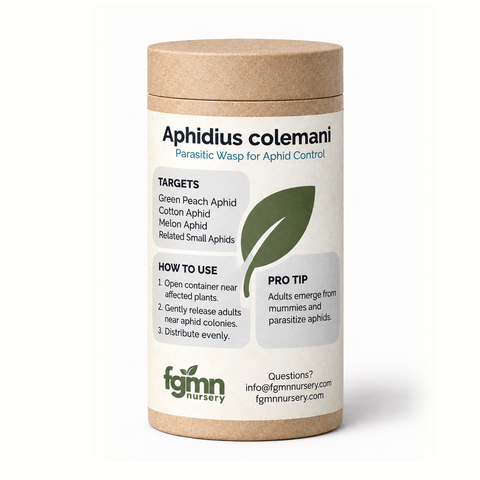 Small aphids, or you're not sure whichAphidius colemani
Our default aphid wasp, built for green peach and melon aphid
View → Small aphids in a cool roomAphidius matricariae
The small-aphid wasp that keeps working in the cold
View →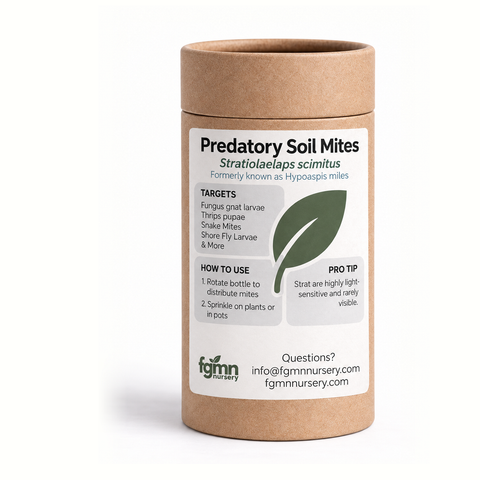 Aphids on the rootsStratiolaelaps scimitus
A soil mite worth trying for root aphids, not a cure
View →05 · The plan
How to release Aphidius ervi
No experience needed. Here's all it takes.

Ants and yellow cards first
Ants guard aphids and attack the wasps. Yellow cards catch them. Deal with both before release.

Open it in the canopy
In the morning, near the aphids. They need daylight to search and fly.

Leave the mummies be
Keep the material dry and undisturbed for several days while the wasps hatch out.


06 · What happens next
What to expect
Living things work at their own pace. Here's what normal looks like.

One egg per aphid
The female lays a single egg inside a large aphid. Even missed attacks make aphids drop off and stop feeding.
Mummies within one to two weeks
Over the next week or two you may notice puffy golden-brown shells on the leaves. Those are mummies, each one a new wasp on the way.
Fewer aphids, clean new growth
That's the real scorecard. Damaged leaves stay damaged, so judge the new ones.
Before you order
All your questions, answered
Something else? Toby's in the chat, bottom right, and happy to help.
When does it ship, and how does it arrive?
Mummies or adult wasps in a light carrier, depending on the batch. The cold pack always arrives warm, and that's expected. Live orders ship Monday to Thursday, 2-day or overnight, whichever suits them best. Free shipping from $30. Free shipping from $30; $15 under that.
What if something's wrong when it arrives?
If there's a problem when your order arrives, email info@fgmnnursery.com with your order number within 72 hours of delivery. You choose a replacement or store credit.
Will they sting me or my pets?
No. Ervi has no sting that can reach people or animals. Its only interest is large aphids.
What makes ervi different from other aphid wasps?
Size. At 4–5mm it can handle potato, foxglove and pea aphids that are too big for colemani, and it keeps working through short winter days.
I'm not sure which aphid I have.
Start with Aphidius colemani, our default aphid wasp, and add ervi if the big potato or foxglove aphids turn up.
Do I need to deal with ants first?
Yes. Ants farm aphids for honeydew and will attack the wasps. Put a bait or barrier down before you release.
Ready when you are
Aphidius ervi
You've got this. And if you get stuck, we're one email away at info@fgmnnursery.com.