


Phytoseiulus persimilis
10% off your first 4 orders, then 15% off every order after.
Heads up—this is just an estimate. We only ship when the bugs are happy and ready to travel (Mon–Thurs). If a colony needs a beat to peak, or we're propagating a fresh batch, your order might hold up to a week. Treatment bottles jump the line when you've got an active infestation.
Sizing guide
How our sizes work
Sizes are set by how many plants you are treating — not by how much material is in the container.
Every size on every product page names its own coverage right there in the dropdown, so you never have to come here to find a number. Medium — Up to 25 Plants (2,500 Mites) tells you the tier and the count in one line. This page is for the part the dropdown cannot tell you: how to pick between two of them.
These are rough middles. The ladder runs smallest to largest within each product, so a Medium of one species covers more ground than a Medium of another — a nematode drench and a beetle release are not the same job. The count on the size you are looking at is always the real answer.
Pest pressure moves you up the ladder
Plant count is only half the sum. The other half is how much pest is already there. A closed tent holding fifteen plants with thrips on every growing tip needs a larger release than a bright room holding forty plants with a few gnats — the population you are outnumbering is bigger, and the enclosed space lets it rebound faster.
Coverage figures assume a typical active infestation. Adjust from there:
Under heavy pressure, two releases beat one large one. Take the larger size and plan a second release 7–14 days later, which catches the eggs that had not yet hatched the first time.
A few things work differently
A few products read in square feet rather than plants, because that is how they are applied — the outdoor and area-scale releases. Those are Sc and Hb nematodes, and the aphid specialists Ervi, Matricariae, and Aphidoletes. Same ladder, different unit.
Sf nematodes and Triple Blend size by plants and pots, like everything else. They are soil drenches for potted plants, so count your pots rather than your floor.
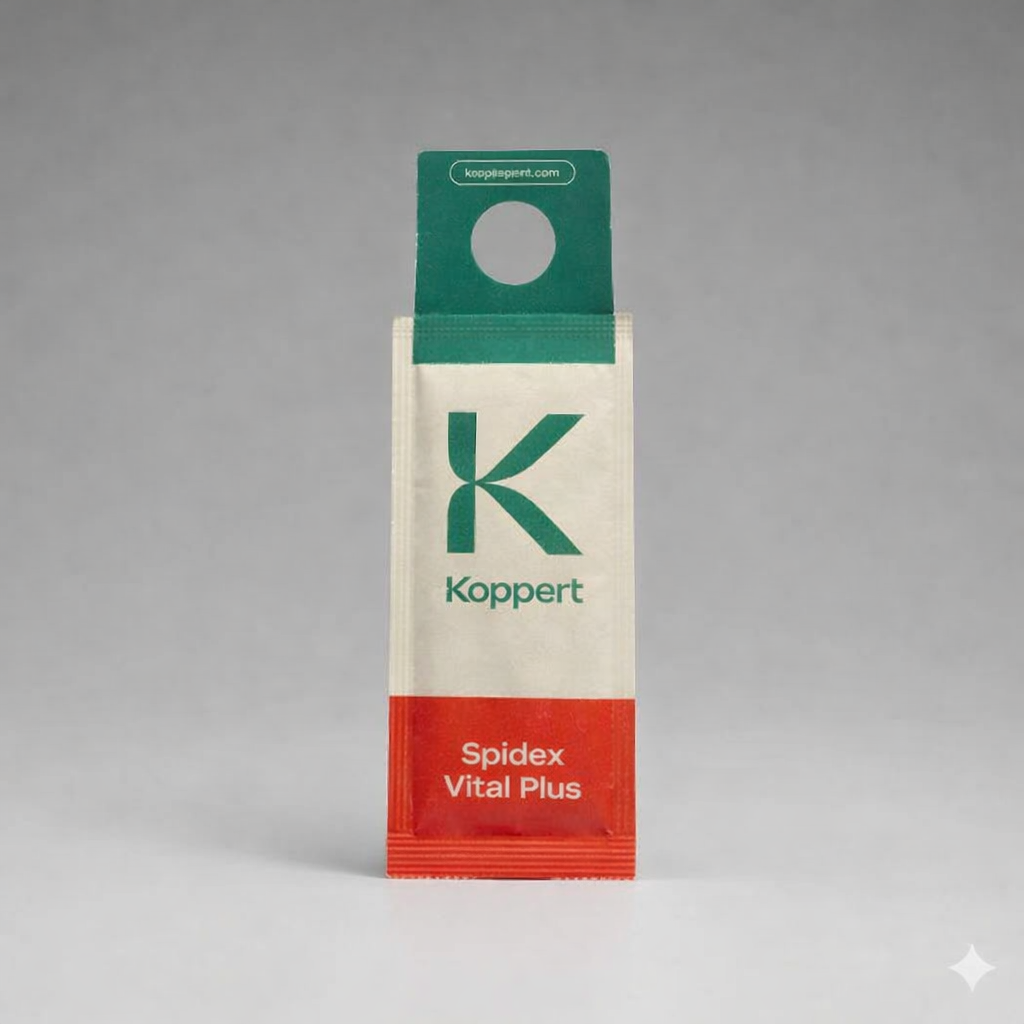
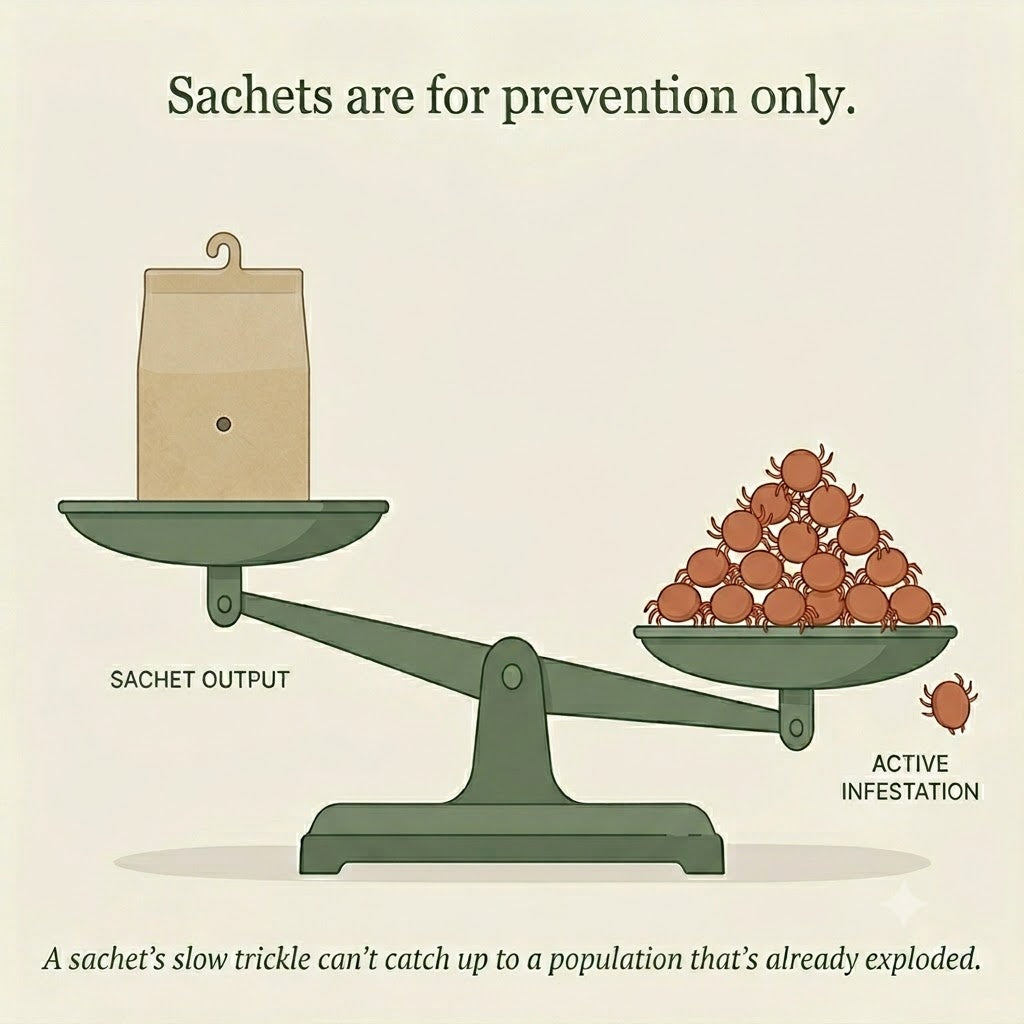
Slow-release sachets have no size. They are sold by the sachet, and you place one per plant or one per few plants depending on pressure. Sachets are a prevention tool — they hold a population in place before a problem starts. If something is already established, a bottle is the correct answer.
Sizing up is cheaper than sizing twice. Predators need enough prey to establish and enough of themselves to find it. Underdosing is the most common reason a release underperforms, and it usually costs more in the end than the larger size would have. When you are between two sizes, take the larger one.
Still not sure? Tell us what you are growing and what you are seeing, and we will size it for you.
Phytoseiulus persimilis
At A Glance
Phytoseiulus persimilis is the gold standard for eradicating Spider Mites in high humidity environments (above 60% RH). Unlike generalist mites that eat pollen or debris, Persimilis is an "obligate predator," meaning it feeds exclusively on Two-Spotted Spider Mites. It is widely known as the "shock trooper" of biological control because of its speed and voracious appetite. These bright orange, fast-moving hunters can consume up to 35 pest eggs or 7 adults per day. If you have an active outbreak with webbing, this is your best option for rapid knockdown.
-
Scientific Name: Phytoseiulus persimilis
-
Best For: Rapid eradication of Two-Spotted Spider Mites (Tetranychus urticae).
-
Safe For: Plants, humans, and pets.
-
Key Feature: The fastest reproduction rate of any predatory mite—it can multiply faster than the spider mites it eats.
- Environment Requirement: Must have sustained humidity above 60% to thrive. Please use Californicus if your humidity fluctuates.
Target Pests
Environmental Needs
Selection Guide
How to Use
How They're Shipped
Deploy day, and the weeks after.
How to deploy your order, and how to read the results over the next few weeks.
-
01
Open the box right away
Bring the package indoors as soon as it arrives. Don't leave it on a hot porch, in a cold mailbox, or in direct sun. If you can't deploy immediately, set the bottle somewhere room-temperature (60–75°F) and out of direct light — it'll keep for a day or two.
-
02
Let the bottle rest 15 minutes
Mites huddle in transit for warmth. Set the bottle somewhere room-temperature for fifteen minutes before you open it. This lets them spread back through the carrier and warm up before deployment.
-
03
You probably won't see them
Predatory mites are smaller than a grain of salt. Most people can't spot them with the naked eye, and phone cameras can't focus close enough to catch them. That's expected! What you can check: the carrier material should look dry and uniform, the bottle should be intact, and there shouldn't be visible mold. A warm box is normal — don't read anything into it.
-
04
Deploy the same day
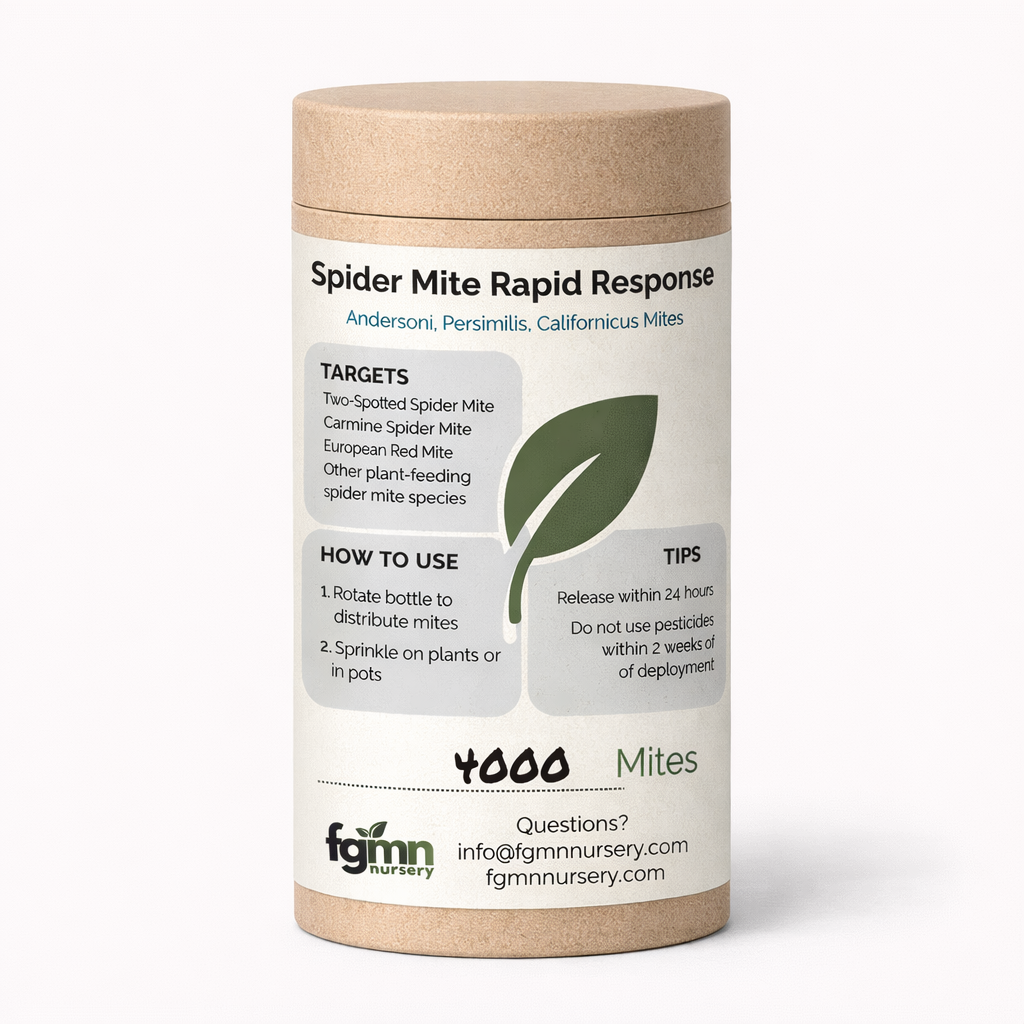
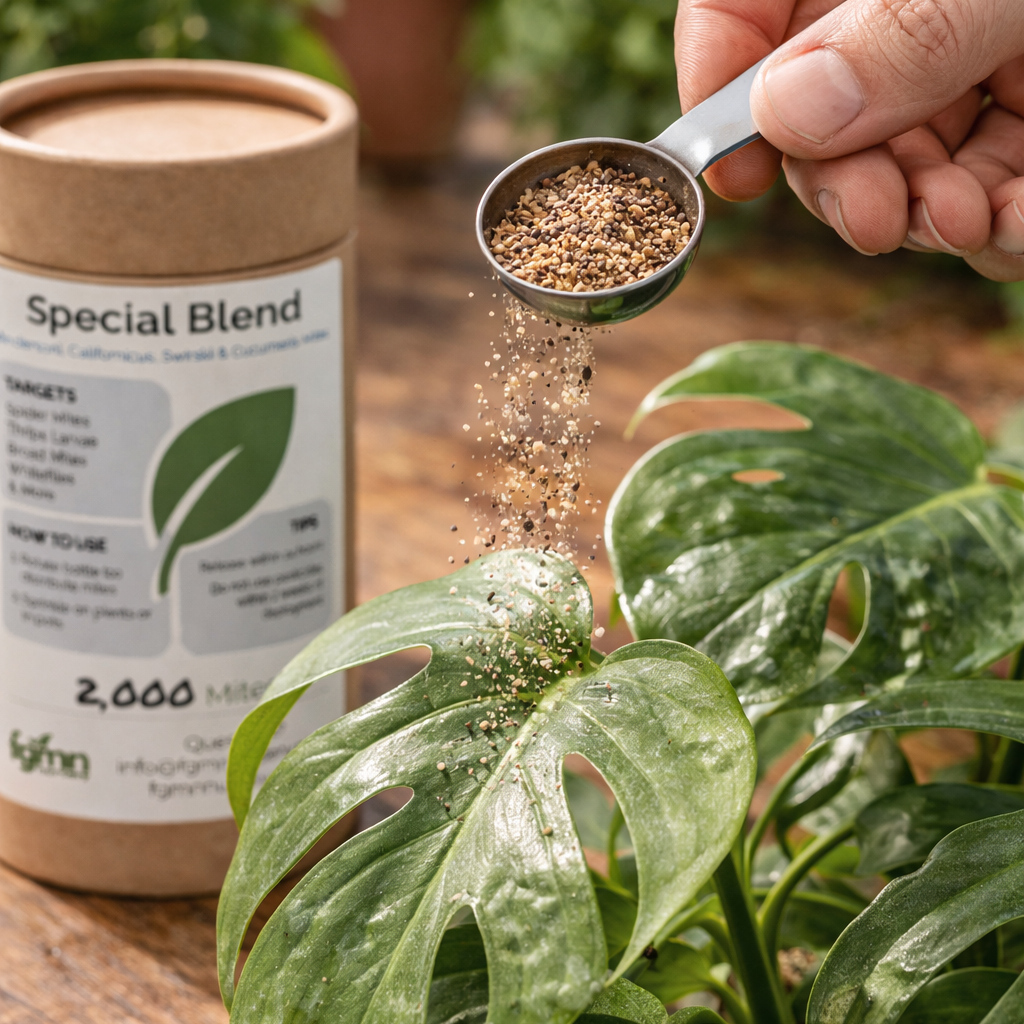
Apply in the evening or on a cloudy day to avoid UV exposure. For pests on the plant — spider mites, thrips, broad mites — sprinkle the carrier material directly onto leaves and stems where damage is visible. For soil-dwelling pests like fungus gnats, sprinkle onto the top inch of soil and lightly water afterward to help the mites settle into the medium. Either way, spread across plants instead of piling in one spot. See the product description for species-specific dosing.
-
05
Watch your plants over 1–2 weeks
The real "are they working" check isn't visual. It's whether your pest population drops. Bottled treatments typically show measurable reduction in spider mites, thrips, or other targets within one to two weeks. If pest pressure isn't easing by then, that's when to bring in our bug pros.
Something not quite right?
Reach out to our entomologist by filing a report within 72 hours of delivery, with your order number and a photo. Candidly, without a photo the team can't approve a live beneficial claim.
Read the full Live Delivery Guarantee →Join Karen's Live Shows — Pests, Plants & Predators on PalmStreet.
Every Friday at 7pm EST — plus additional shows throughout the week. Ask your pest questions in real time — we answer everything.















The Weekly Newsletter
A weekly excuse to be weird about bugs at parties.
Weekly dispatches on the quietly alarming things happening in your soil. All of it real.
No spam. Leave whenever.
You're in
The first strange true thing arrives next week.
FAQ
What is your Live Delivery Guarantee?
We guarantee that your beneficial insects and plants arrive healthy and ready to work. They're living things, so we pack for the season and ship expedited to give them the best trip we can.
If something looks wrong when the box opens, take a photo and file a report within 72 hours of delivery, with your order number. Photos matter: candidly, without them the team can't approve a live beneficial claim.
Can I use them preventatively?
Can I use Persimilis and Californicus together?
My plants have heavy webbing. Should I remove it first?
What happens when they eat all the spider mites?
Can I spray soaps or oils before releasing?
Why is humidity so important?
Help! I'm overwhelmed
Yeah, it's a lot the first time you're using predatory mites. File a report and our bug pros will walk you through it!
I don’t see anything moving in my bottle or sachet. Does that mean they’re dead?
Not at all! In fact, go ahead and deploy them.
Predatory mites are microscopic (often less than 0.5mm) and naturally blend into their carrier medium (bran or vermiculite).
- For Bottles: The mites often huddle in the center of the bottle for insulation during transit.
- For Sachets: These are "slow-release" nurseries. The mites stay tucked deep inside the breeding media and emerge one by one over 2–4 weeks. Seeing an "empty-looking" sachet or bottle is not proof of a loss; it is simply how they are packaged for maximum survival.
Fantastic! We introduced at dark and they are happily munching away.
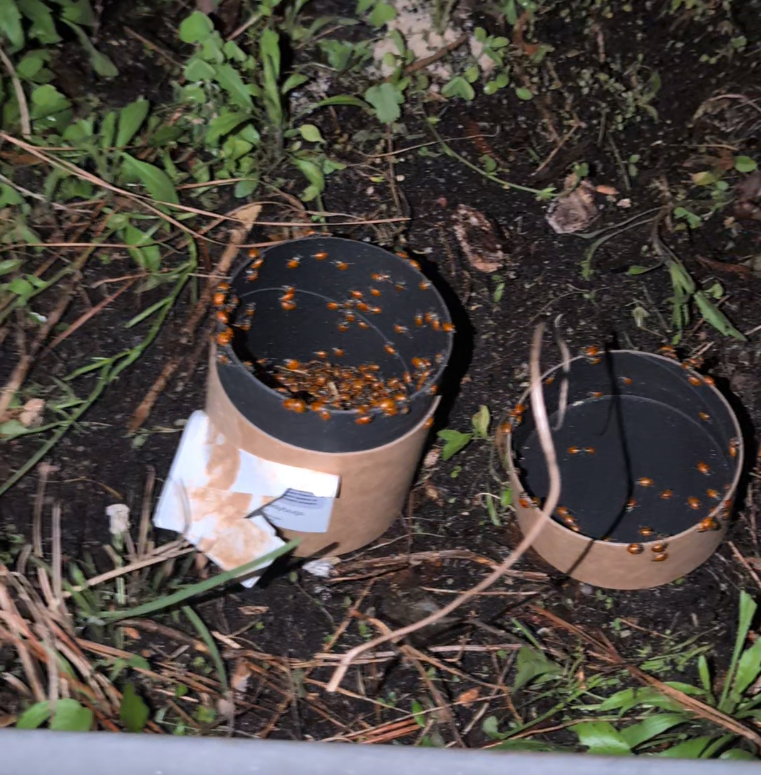
The package was misdelivered by FedEx, marked as delivered with a photo of my neighbor’s front door 4 days late.
The seller themselves confirmed the mites would be non-viable. Despite clear photo evidence of the wrong door and FedEx closing their ticket, FGMN refused a refund or to help in any way. Their only response was that I should have bought their $1 shipping insurance, something I never even saw as an option at checkout. If it’s only a dollar, I don’t understand why it isn’t just standard.
Worst customer service I’ve ever received from an online retailer. Will never order from them again.
Hi Travis,
Thank you for reaching out. At this time, you have not been refused a refund. Since your order was marked delivered, we do need FedEx to confirm it was not delivered before we reship new Persimilis to you. I realize the last few days must have felt like an eternity, but FedEx does not work weekends, and we're stuck to their timelines. Once they let us know their final decision on your order, we will happily reship the Persimilis. Hang in there! The claims can take weeks, but since you mentioned that FedEx reached out to you, we should be hearing from them in the next few days.
I followed the instructions provided on the website and was impressed by the results. Many of the plants in my greenhouse were infected, and they did not know what was in store for them. One week after the application and the battlefield was barren. New green leafy growth is what I am greeted with now upon entering the greenhouse.
It is assumption because I did not do a microscopic examination.
I've ordered from other companies before but never have I had as much support as I do with FGMN. Predator mites are newish to me and it was a huge help to be as educated as possible since everyone (human and non) has a job to do. My mites arrived in good shape and got right to work.
Got my bugs quickly. Now if she just kill the spider mites on my plants.
Karen,
I am not very tech savvy! While I was on vacation I could not understand your directions about sending you photos of the fgmn box used in shipping, from my phone to email. The box arrived in perfect condition but I ordered and paid for two sachets and received only one. Please send another. I want to let you know I am not happy with the Phytoseiulus Persimilis. I followed the directions and sprinkled water on the foliage and then sprinkled the crumbly material on the plants. Last night when I got home I saw No evidence of any creatures. I have worked for years to get a thick coverage - ground cover of my pachysandra and I am afraid it is all going to die. When I read about your product I had some hope it would help my plants. However, it does not look promising. I would not recommend your product to my friends.
Hi Anne — thank you for the note. On the missing bottle (or sachet?), please reply to your order confirmation email with a photo of what you received and we’ll take it from there. It doesn’t happen often that we miss packing something, but for anybody who reports missed items we require a photo of what was received. It doesn’t need to be anything fancy, but something to prove the missing product. :)
A couple of things that might help: persimilis are tiny, and the juveniles are translucent — they’re nearly impossible to see by eye, even mixed into the carrier you sprinkled. They also need specific conditions to establish: high humidity (60%+), moderate temperatures (70–85°F), and an active two-spotted spider mite population to feed on. Outdoor pachysandra typically doesn’t hold those conditions, and if a different pest or spider mite is behind the decline, persimilis won’t establish regardless.
If you can send close-up photos of the affected leaves (undersides especially), we’re happy to help figure out what’s actually going on.
So far so good! I've seen Less webbing and little red mites indicating that the spider mites are being eaten. Karen, who I have been back and forth with email, has been a treat to deal with! She is incredibly knowledgeable and not afraid to share that knowledge even on a beginner level with me. I have also decided to exclusively start using beneficials instead of sprays thanks to my experience and her help.
All in all this has been above expectations on every department!
Works well
It was fast delivery, I'm pretty sure that it was only 3-4 days after buying thatI received them. They got the job done! will definitely recommend this nursery to my plant friends and family! Also buying again if needed.!
Very active. Making progress, but time will tell for the spider mites.
I ordered some mites later in the day Wednesday afternoon, I wasn't sure 8f it would ship out that week because of the later order. My order was at my front door Thursday before noon, I will absolutely use this company again and recommend to everyone I know needing help with spidermite.
Can I buy these any where walking in
Hi,
Probably not. They have a very limited shelf life and eat only two-spotted spider mites, which makes keeping them in a physical retail environment very challenging. Please let us know if you find anywhere and we'll refer people there who prefer the physical retail experience!
Mite Matters

Cucumeris: Why It Works (and Why It Fails)
Cucumeris is reliable, widely researched, and genuinely effective — within a specific set of conditions. Here's what it actually does, what it won't do, and how to tell if it's the right species for your situation.

My Plant Has Webbing. Help.
Webbing on a plant isn't always spider mites — and the mite that causes the most damage indoors doesn't produce webbing at all. Here's how to tell what you're actually looking at before you treat.

Native vs Invasive Ladybugs
Most ladybugs you'll encounter are red with black dots — and that description fits native, introduced, and invasive species equally. Here's how to actually tell them apart, what the harlequin ladybug has been doing to native populations, and where the real ecological concerns are.