Biological control · Spider Mites

Spider mite treatment with the predators that eat them

Tetranychus urticae (two-spotted spider mite) and related species

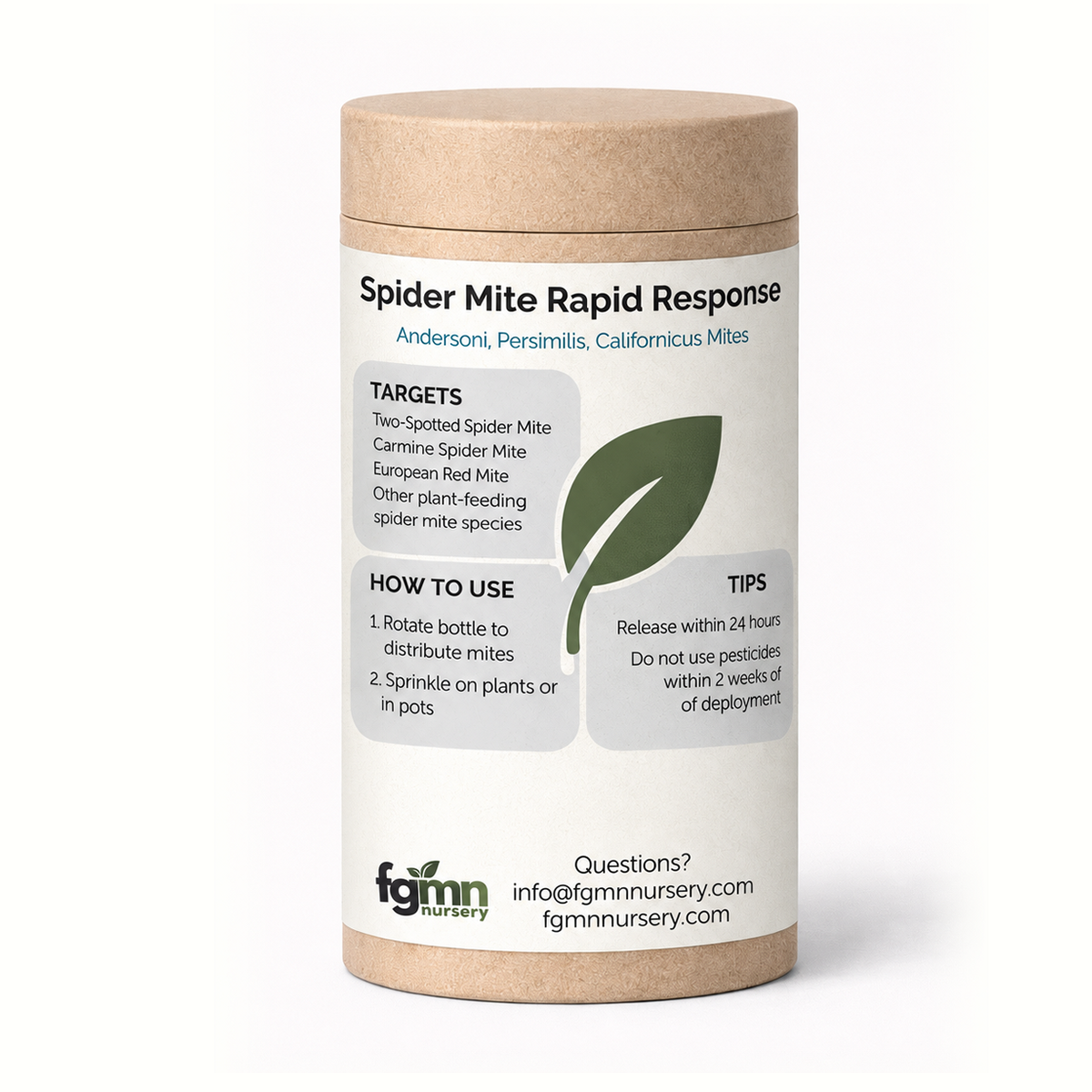
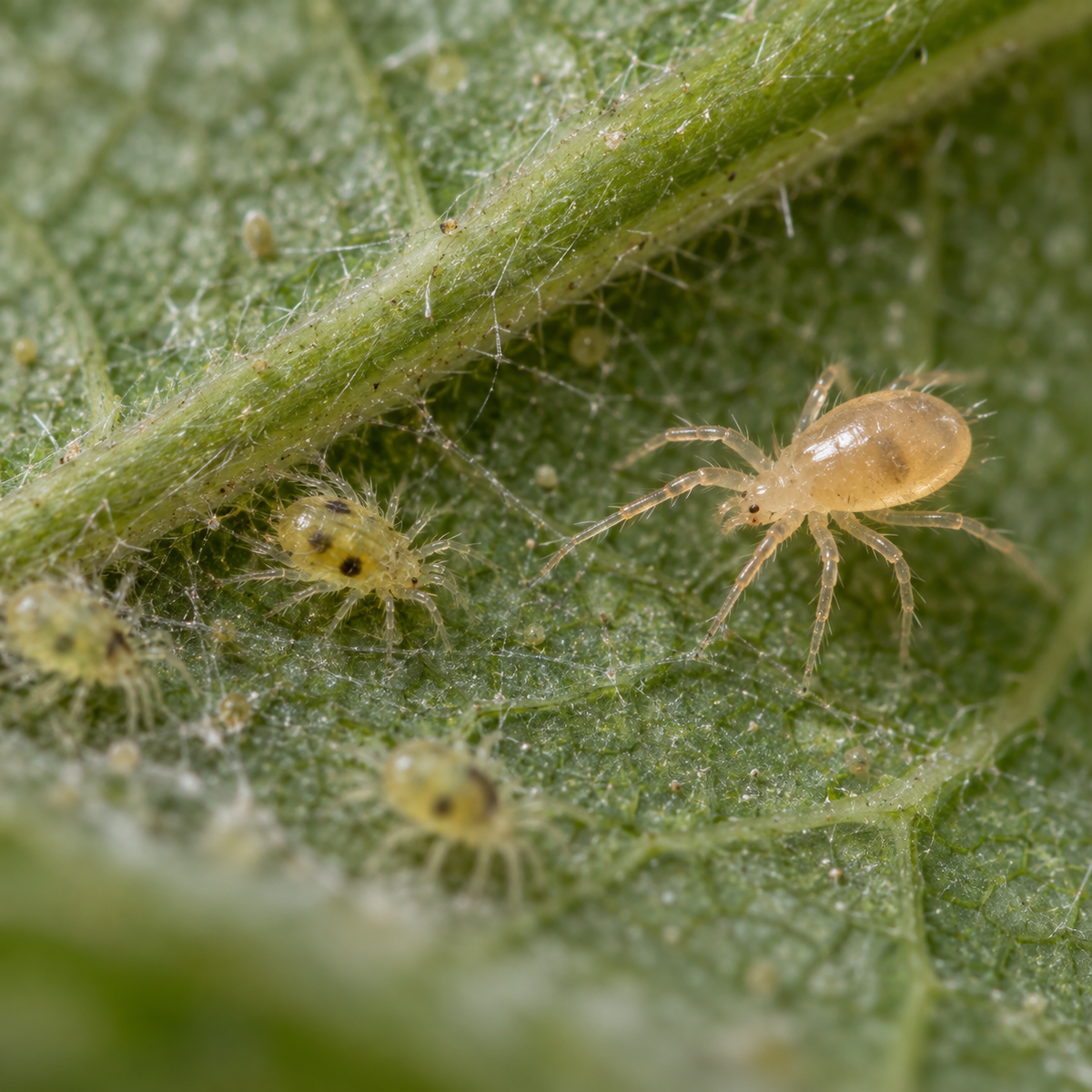
Spider mites are tiny mites that feed on the undersides of leaves, leaving fine pale speckling and, as the colony grows, webbing. They breed fast and shrug off sprays, which is why they keep coming back. Predatory mites eat every stage: persimilis goes into the webbing and clears active colonies, californicus handles warm, dry rooms and stays on the plant, and andersoni copes with swinging temperatures. Judge it by the new growth: when new leaves come in clean, it's working.

4.4 out of 5 · 88 reviews of our spider mite predators

Illustration of a leaf underside with fine speckling, webbing, spider mites and eggs, with a close-up of an adult two-spotted spider miteIllustration · not to scale
Egg to adult
about 10 days at 77°F
Where they live
the undersides of leaves
How you'll know
new growth comes in clean
Safe around
people, pets, plants and food crops
Build my spider mite plan

1Confirm it

How do I know it's spider mites?

Fine pale speckling and webbing on the undersides of leaves mean spider mites. Your phone zoom shows them moving.

Getting the pest wrong is the most common reason treatment fails. Check the signs, or answer a few quick questions.

  • Speckled leaves

    Fine pale dots, like the surface was sanded, often along the veins

  • Webbing

    Fine, dusty webs on the undersides, in leaf joints and at the tips

  • Bronzed or yellow leaves

    Speckling runs together until the leaf looks dull, bronze or yellow

  • Leaves dropping

    Heavily fed leaves dry out and fall, often starting in the warmest spots

Looks like spider mites, but isn't

Still not sure? Work backwards from the damage or send us a photo.

2Pick a plan

Which spider mite treatment do I need?

Pick by what you see: speckling only, webbing in an ordinary room, webbing in a humid room, or more than one pest.

Find what you're seeing, then add that plan to your cart.

If you see

Speckling, no webbing yet

Pale dots on the leaves and tiny moving specks underneath

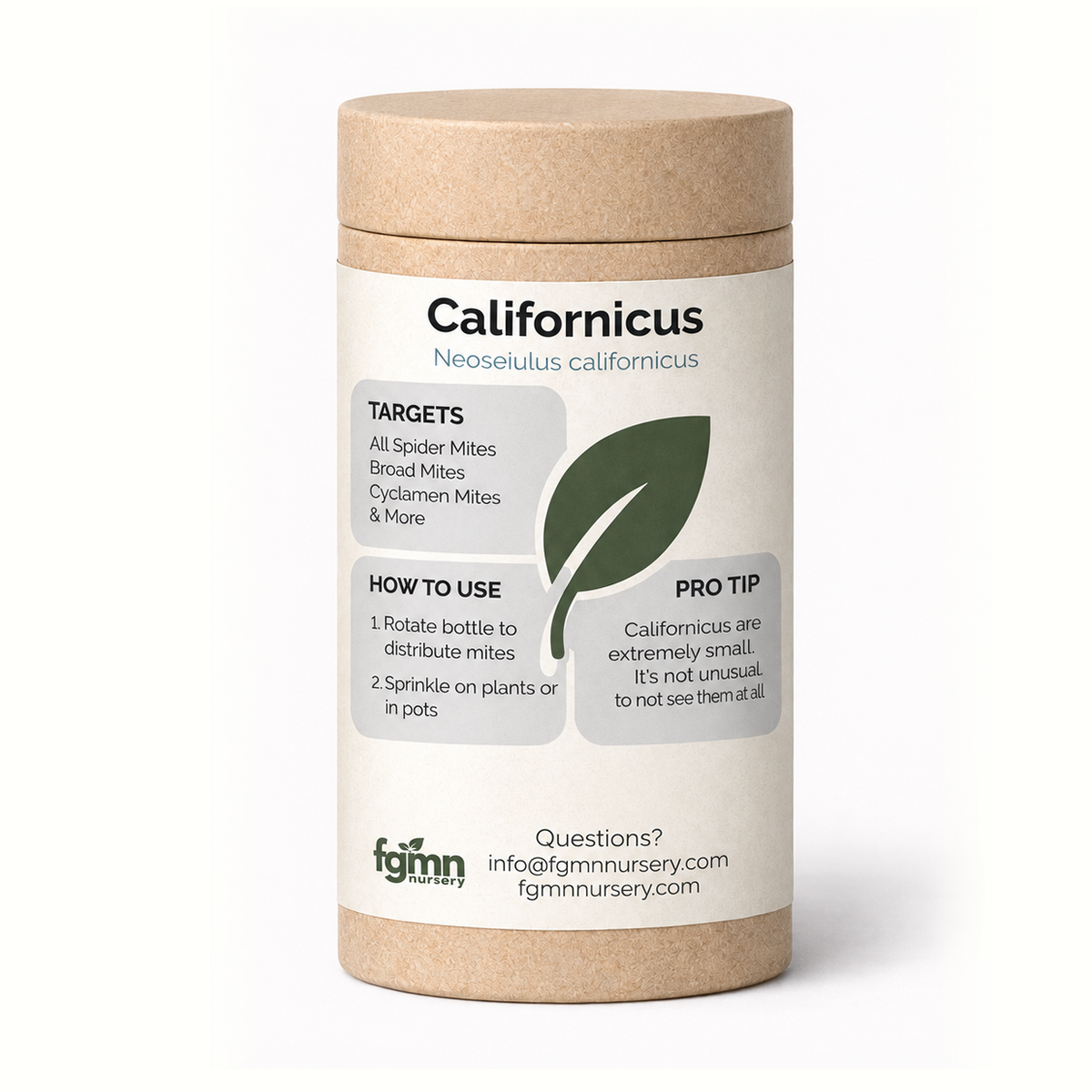
Neoseiulus californicus eats spider mites and handles warm, dry rooms. It lives on pollen when spider mites are scarce, so it stays on the plant after the first wave. Release on the speckled plants and their neighbors, and repeat every 2–4 weeks.

$75.00

Covered by our Live Delivery Guarantee

Start here

If you see

Webbing on the plants

An established colony, in an ordinary or dry room

Persimilis and californicus together. Persimilis walks into the webbing and eats every stage; californicus copes with drier air and cleans up the stragglers. Every 2–4 weeks; more than one round is normal.

$100.00

Covered by our Live Delivery Guarantee

If you see

Webbing in a humid room

About 60% humidity or more, or you can keep it there

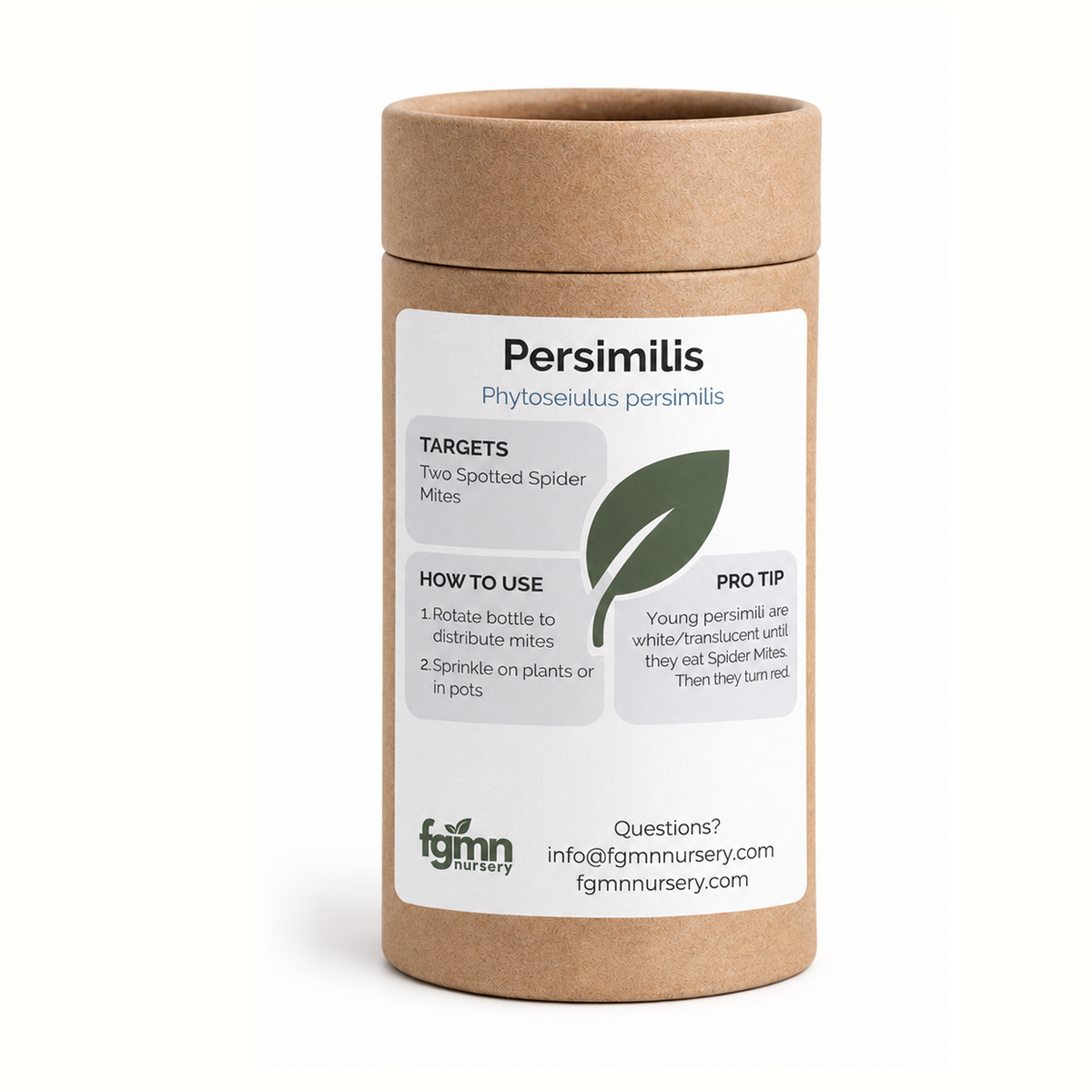
Phytoseiulus persimilis is the spider mite specialist. It goes straight into webbing that stops other predators and eats eggs, nymphs and adults. Take heavy webbing off with a jet of water first. Release again every 2–4 weeks while new leaves still pick up speckling.

$55.00

Covered by our Live Delivery Guarantee

If you see

Something else is there too

Thrips, broad mites, or you can't tell which mite

Four predatory mites in one bottle (andersoni, californicus, swirskii and cucumeris) for mixed or unclear pests. If you know it's only spider mites, persimilis or Rapid Response is the better match.

$75.00

Covered by our Live Delivery Guarantee

Good to know: Cold nights and hot days? Amblyseius andersoni works from about 43°F to 100°F and takes other pest mites too, so it's the one for rooms whose temperature swings.

Prefer to build it yourself? Shop each predator. Just want to keep spider mites out? See prevention. Not sure what you're seeing? Take the quick check.

Or build it yourself

Every spider mite treatment we sell

Every predator and parasite we ship for spider mites, with bundles first when we have them.

How it works

What eats spider mites, and where?

Persimilis clears active colonies inside the webbing, californicus holds warm, dry rooms, andersoni covers swinging temperatures.

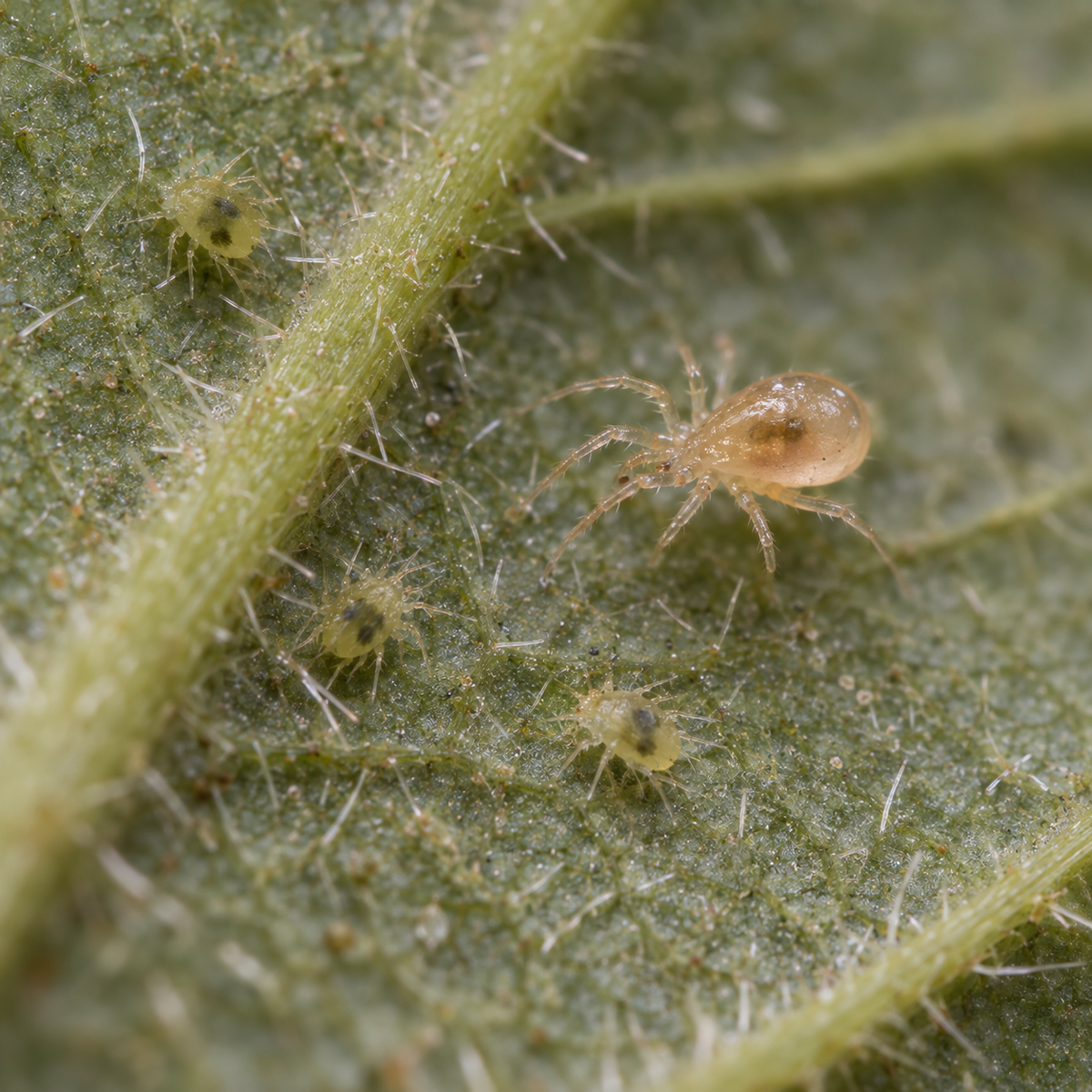
A spider mite goes from egg to egg-laying adult in about ten days in a warm room, and every stage lives on the underside of the leaf. Eggs, young and adults sit side by side, which is why one spray rarely ends it and why the predators have to eat every stage.

Illustration of a bean leaf underside with four close-ups of the spider mite life cycle: egg, six-legged larva, nymph and adult femaleIllustration · not to scale
  1. Eggs are laid on the underside of the leaf, up to about 200 per female, and hatch in about three days.
  2. The larva has six legs and starts feeding right away.
  3. Nymphs have eight legs, and the two dark spots appear on the back.
  4. Adult females start laying within a day or two and spin webbing as the colony grows.

What to release

  • Phytoseiulus persimilis
    Phytoseiulus persimilis

    Eats spider mites at every stage, inside the webbing

    Active outbreaks with webbing, in humid rooms. Every 2–4 weeks while new leaves still pick up speckling

    from $55
  • Neoseiulus californicus
    Neoseiulus californicus

    Eats spider mites, and pollen when they're scarce

    Early infestations and warm, dry rooms. Stays on the plant. Every 2–4 weeks

    from $75
  • Amblyseius andersoni
    Amblyseius andersoni

    Eats spider mites and other pest mites

    Rooms that swing between cool and hot, or when you're not sure which mite. Every 2–4 weeks

    from $57
  • Spider Mite Rapid Response
    Spider Mite Rapid Response

    Eats spider mites at every stage

    Established webbing in an ordinary room. Every 2–4 weeks

    from $100
Compare every spider mite predator in one table
Spider Mites predators: where each one works, what it eats and when to choose it
PredatorWorks onEatsBest forFrom
Phytoseiulus persimilis Leaves Spider mites at every stage, inside the webbing Active outbreaks with webbing, in humid rooms. Every 2–4 weeks while new leaves still pick up speckling $55
Neoseiulus californicus Leaves Spider mites, and pollen when they're scarce Early infestations and warm, dry rooms. Stays on the plant. Every 2–4 weeks $75
Amblyseius andersoni Leaves Spider mites and other pest mites Rooms that swing between cool and hot, or when you're not sure which mite. Every 2–4 weeks $57
Spider Mite Rapid Response Leaves Spider mites at every stage Established webbing in an ordinary room. Every 2–4 weeks $100

One generation, start to finish

  1. EggDays 0–3
  2. LarvaDays 3–5
  3. NymphDays 5–9
  4. AdultDay 9 on
What happens at each stage
Egg Days 0–3 · Leaves
Round and clear, laid on the leaf underside, up to about 200 per female
Larva Days 3–5 · Leaves
Pale, with six legs, and starts feeding right away
Nymph Days 5–9 · Leaves
Two stages with eight legs. The two dark spots appear on the back
Adult Day 9 on · Leaves
Females start laying within a day or two and live 2–4 weeks, spinning webs as the colony grows

3After it arrives

How do I release predators for spider mites?

Wait out sprays, rinse off heavy webbing, persimilis onto the hot spots, and repeat at the product's interval.

  1. Before you order

    1. Confirm it's spider mites

      Zoom in with your phone camera on the underside of a speckled leaf. Tiny moving specks, often with fine webbing, mean spider mites

  2. While it ships

    1. Mark the hot spots

      Note the plants with webbing or the heaviest speckling. That's where the first predators go

    2. Wait out sprays

      Neem and horticultural oil once dry; insecticidal soap one day. Wait 21 days after sulfur

  3. Release day

    1. Knock back heavy webbing

      Take the bulk of thick webbing off with a strong stream of water so predators reach the leaf surface. Light webbing can stay

    2. Persimilis onto the hot spots

      Tip small piles near the webbing on flat leaf tops or leaf joints, worst plants first

    3. Californicus and andersoni wider

      Tap them onto the leaves of infested plants and their neighbors. They stay on when spider mites are scarce

    4. Keep the air from drying out

      Persimilis eggs hatch best in humid air. Group plants or run a humidifier if you can

  4. After release

    1. Repeat at the product's interval

      Persimilis, Rapid Response, californicus and andersoni: every 2–4 weeks while spider mites are active

    2. Finish properly

      Keep going until new growth stays clean two weeks in a row

Conditions they like best

These are the ranges they like best, not hard limits. Short spells outside them won't hurt; only conditions that last for days slow them down.

  • Temperature60–85°FPersimilis likes about 59–86°F. Californicus takes heat up to about 95°F, and andersoni handles cool nights and hot days, about 43–100°F
  • Humidity40–80%Persimilis does best at about 60% or more. Californicus copes down to about 40%, which makes it the choice for dry rooms
  • Spray residueClear before releaseNeem and horticultural oil once dry, soap after a day, and 21 days after sulfur

What you'll see

  1. 1Right after release

    The speckling you already have stays. Those leaves were fed on before the predators arrived

  2. 2As it takes hold

    Webbing stops spreading, and new speckling slows

  3. 3Plants pick up

    New leaves come in without speckling

  4. 4When it's working

    New growth stays clean two weeks running. A few stragglers aren't a new infestation

Why spider mite treatment fails

Most failed treatments come down to spray residue, a room too dry for persimilis, or judging by the old leaves.

  • Sprayed just before release

    Residue harms predatory mites. Wait until neem or oil is dry, a day after soap, and 21 days after sulfur

  • Persimilis in a dry room

    It does best around 60% humidity or more. In a dry room, use californicus or Rapid Response

  • Judged by the old leaves

    Speckled leaves stay marked. Watch the new growth instead

  • Only the worst plant

    Spider mites reach the neighbors before they show. Check and treat the plants around it

  • Heavy webbing left on

    Thick webbing keeps predators off the leaf surface where the eggs are. Rinse the bulk of it off first

  • One round on a heavy outbreak

    Repeat at the product's interval until new growth stays clean

4Afterwards

How do I keep spider mites from coming back?

Hang prevention sachets before spider mites show up.

Spider mites usually arrive on a new plant, or build up on their own when the air turns hot and dry. Prevention sachets keep them from starting: hang one every 3 to 5 feet of shelf, or one on a large plant, and it releases predatory mites over four to six weeks, so they're already there when the first spider mites land. Persimilis sachets for humid rooms, californicus for hot, dry ones, andersoni where temperatures swing. Sachets won't catch up with webbing you can already see; that needs a bottle.

Want them on a schedule? Any prevention sachet can be set up as a subscription on its page. See the prevention sachets.

Often shows up with spider mites

Spider Mites questions

More about biological control in the Biocontrol FAQ, or ask us.

How do I know it's spider mites?

Look for fine, pale speckling on the leaves, like the surface was sanded, usually worst along the veins and on the undersides. On a heavier infestation you'll see fine, dusty-looking webbing on the undersides, in leaf joints and at the tips. Your phone camera's zoom will show tiny moving specks. Silver streaks with black specks are thrips, and twisted, hardened new growth with no webbing points to broad or cyclamen mites.

Why do spider mites keep coming back after I spray?

Spider mites breed fast and become resistant to sprays quickly; they're resistant to more pesticide ingredients than almost any other pest. Sprays also kill the predators that would otherwise keep them in check, and eggs often survive to restart the colony. Predatory mites eat every stage, and there's nothing for a spider mite to become resistant to.

Persimilis or californicus?

Phytoseiulus persimilis is the specialist: it walks into webbing and eats spider mites at every stage, and it does best when the room holds about 60% humidity or more. Neoseiulus californicus handles hot, dry rooms and can live on pollen, so it stays on the plant after the spider mites thin out. If you can see webbing, Spider Mite Rapid Response gives you both.

Will the damaged leaves recover?

No. Stippled and bronzed leaves stay marked, because those cells have been emptied. Judge the treatment by the new growth: when new leaves come in without speckling, it's working. You can trim the worst leaves once the mites are under control.

Do I need to treat every plant?

Treat every plant with stippling or webbing, and check the plants next to them. Spider mites move on hands, sleeves, tools and air currents, so neighbors are often infested before they show it. Persimilis goes only where the spider mites are; californicus and andersoni can be dusted lightly over nearby plants as a perimeter.

Does raising the humidity help?

It helps the predators more than it hurts the mites. Persimilis does best when the air stays around 60% humidity or more, so a humidifier or grouping plants makes it work better. On its own, humidity won't clear an established infestation. In a room you can't keep humid, californicus is the better choice.

Why am I seeing orange mites in late fall?

Those are probably spider mite females getting ready for winter. As nights get longer they turn orange, stop feeding and laying, and hide on pots, saucers and bench cracks, then come back in spring. Clean around the plants in fall, and if they return, release predators as soon as you see new stippling.

Are predatory mites safe around kids and pets?

Yes. Persimilis, californicus and andersoni are safe around people, pets, plants and food crops. They don't bite, can't feed on plants, and leave no residue, so there's no wait before anyone can be near the plants.

How many releases will I need?

For light to moderate spider mites, one release of persimilis is often enough; under heavy pressure, add a second 7–10 days later. Spider Mite Rapid Response runs every 7–14 days, usually two to three rounds. Californicus and andersoni repeat every 2–4 weeks. Keep going until new growth stays clean two weeks in a row.

Can I use sachets to treat spider mites?

Sachets are for prevention, not treatment. They hang on the plant and release a steady trickle of predatory mites for 4–6 weeks, which keeps spider mites from getting a foothold. For webbing or stippling you can see now, release a bottle first, then hang sachets once new growth is clean.

What growers say about our spider mite predators

Every live order is covered by our Live Delivery Guarantee.