


Green Lacewing Eggs
Eggs make you wait.
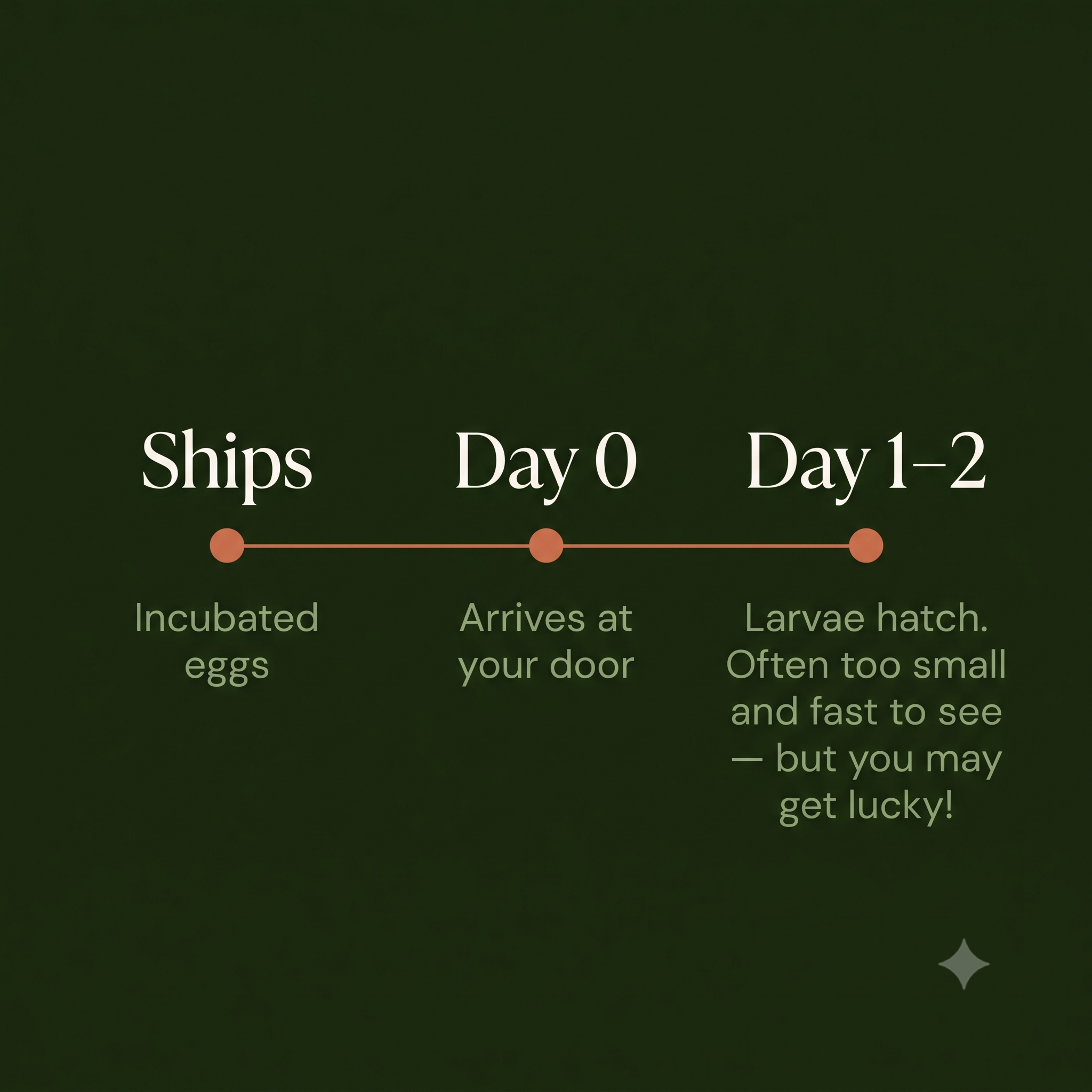
(And you might miss the hatch entirely.)
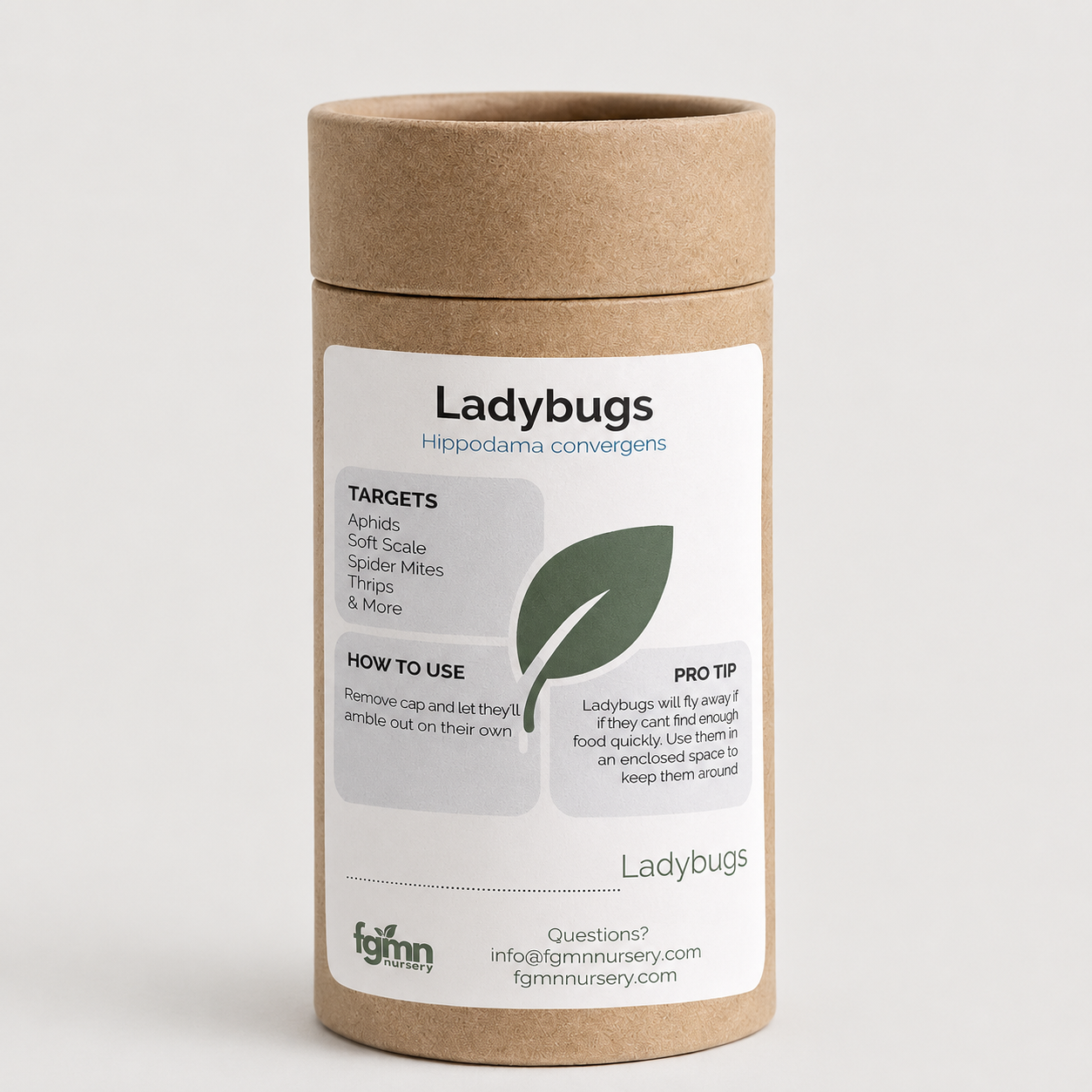
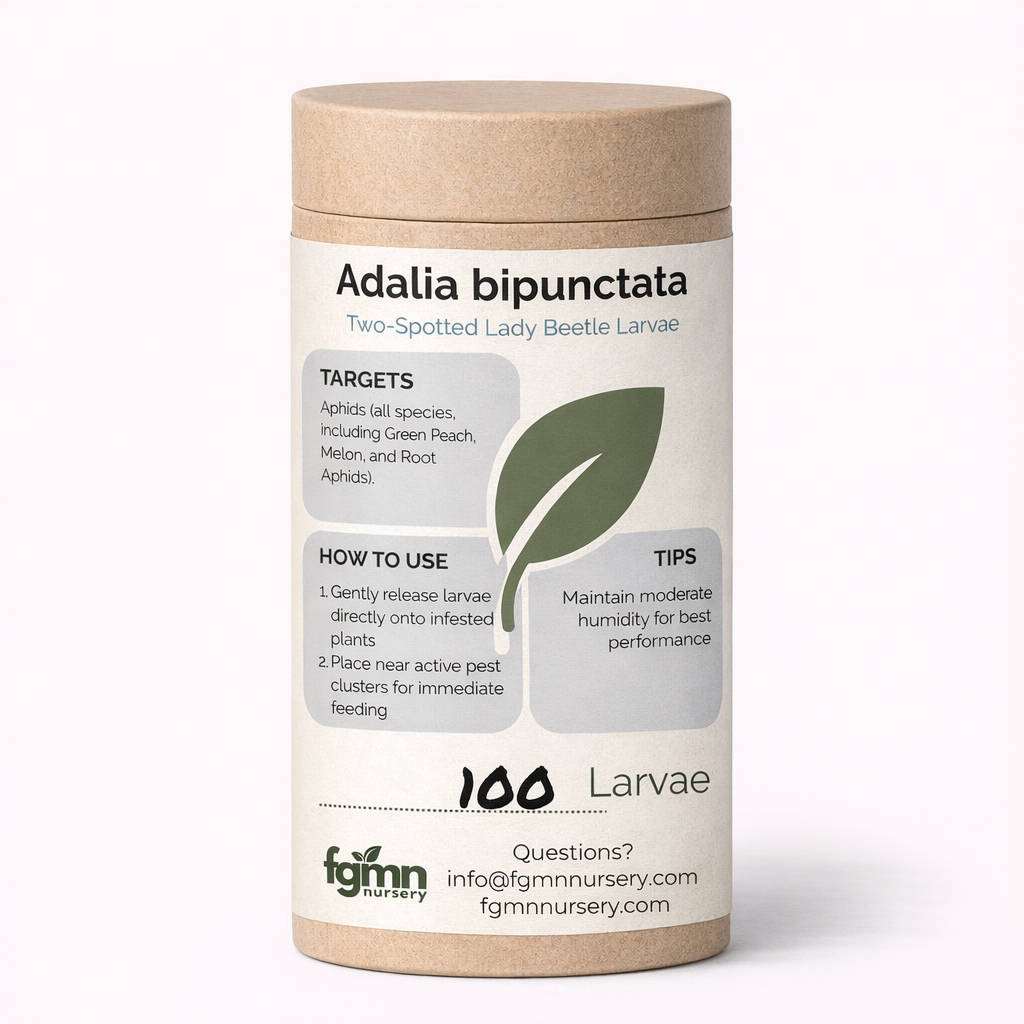
With eggs, you're watching and waiting for a hatch that happens fast — and if you blink, you might miss it. If you'd rather see exactly what you got and skip the waiting, the Coleomegilla maculata larvae arrive already hatched and hunting — flightless, visible, and working the moment you place them. Same soft-bodied-pest appetite, similar price, none of the watch-and-wait.
10% off your first 4 orders, then 15% off every order after.
Heads up—this is just an estimate. We only ship when the bugs are happy and ready to travel (Mon–Thurs). If a colony needs a beat to peak, or we're propagating a fresh batch, your order might hold up to a week. Treatment bottles jump the line when you've got an active infestation.
Green Lacewing Eggs
At A Glance
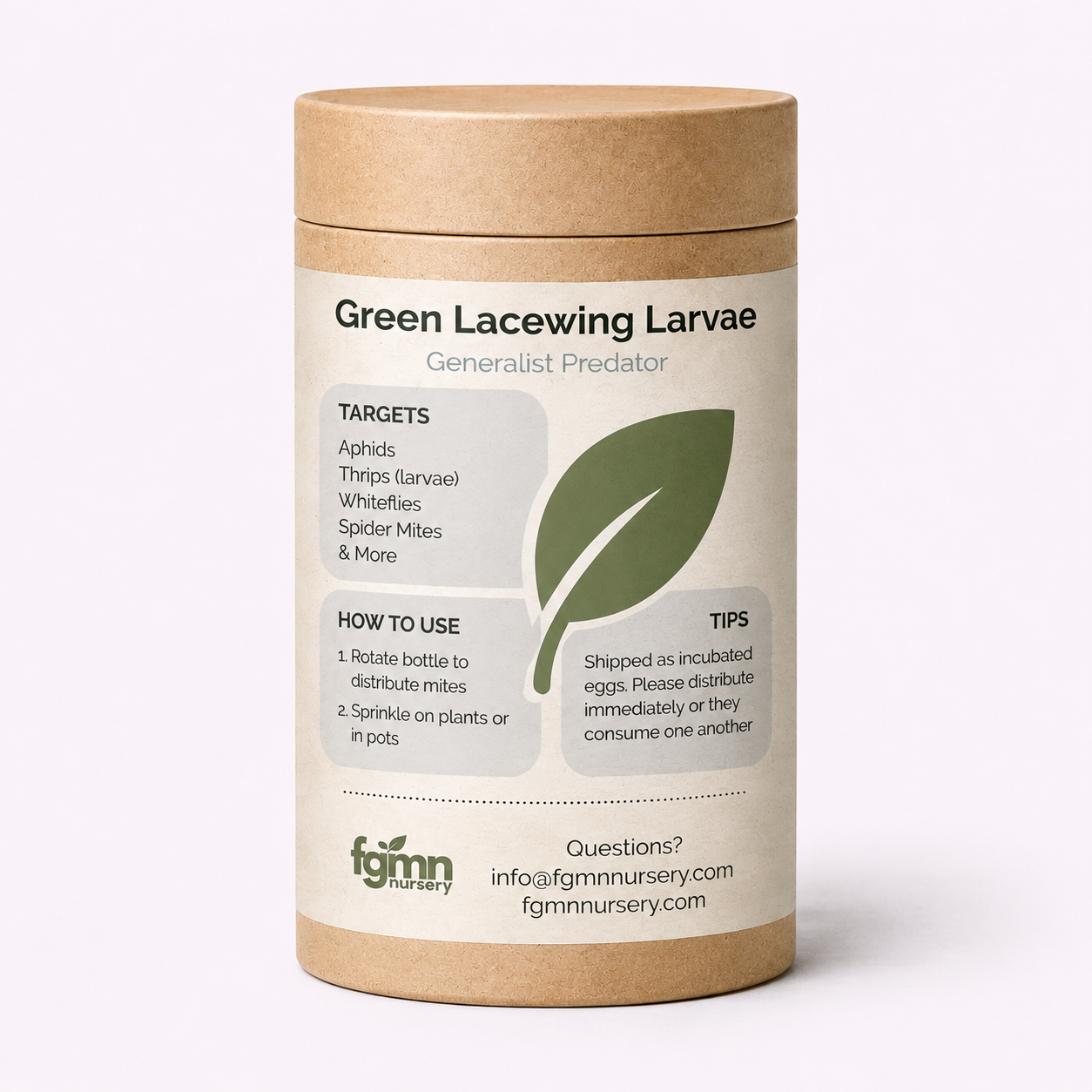
Chrysoperla carnea (Green Lacewing) eggs are a cornerstone of Integrated Pest Management (IPM). Known as the "Aphid Lion" in their larval stage, these generalist predators provide a slow-release biological control solution for a wide range of soft-bodied insects. By using eggs instead of larvae, you establish a "timed" defense system that hatches directly onto your plants, ensuring long-term protection in greenhouses, grow tents, and indoor gardens.
-
Common Name: Green Lacewing
-
Target: Generalist predator; highly effective against Aphids ("Aphid Lion").
-
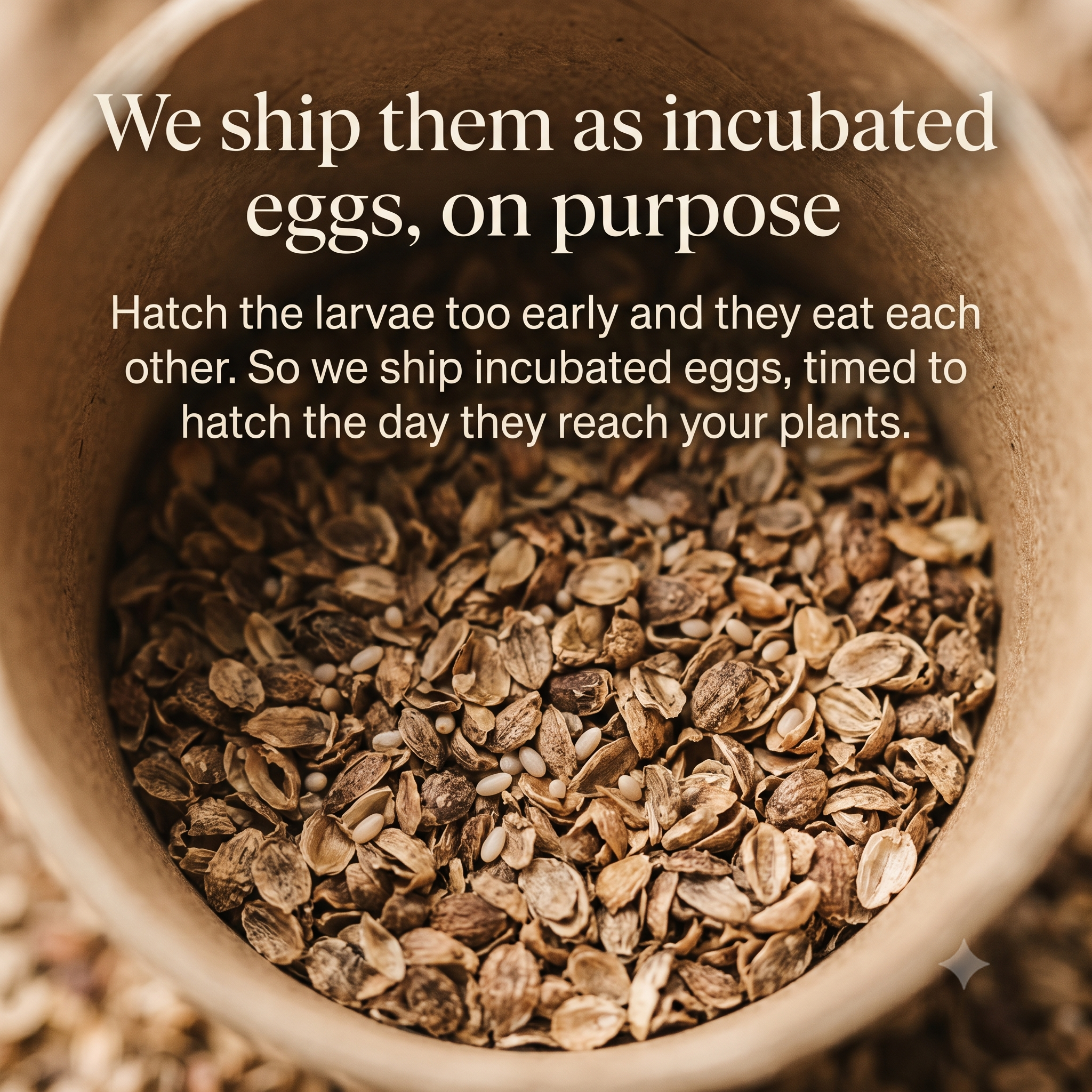
Format: Loose eggs mixed vermiculite for easy deployment.
-
Best For: Preventive or light curative control in indoor gardens, greenhouses, and grow tents.
Target Pests
Environmental Needs
Selection Guide
How to Use
How They're Shipped
Sprinkle, then watch them hatch.
How to deploy your lacewing eggs, and what to expect over the weeks that follow. Eggs hatch into voracious aphid-eating larvae once conditions are right — the routine is built around that.
-
01
Open the box right away
Bring the package indoors as soon as it arrives. Don't leave it on a hot porch, in a cold mailbox, or in direct sun. Lacewing eggs are dormant in transit and tolerate normal handling well — there's no rush to deploy the moment they arrive.
-
02
Hold or deploy within a few days
For best results, deploy within two to three days of arrival. If you need a little more time, store the unopened container in a cool spot (55–65°F is ideal) — this slows hatch development without harming the eggs. Don't refrigerate below 50°F and don't freeze.
-
03
Sprinkle near pest activity
Eggs ship mixed into buckwheat hulls — you won't usually see the eggs themselves, you'll see the hulls. Sprinkle small pinches across affected plants, into leaf axils, along stems, and into the inner canopy where aphids cluster. Spread thinly across as many plants as possible. Newly hatched larvae are cannibals, so concentrating the mix in one spot means they hatch into competition with each other instead of food. Wide and thin is the rule.
-
04
Give them time to hatch and feed
Eggs typically hatch within a week or two at room temperature, slower if it's cooler — exact timing varies with conditions, so don't worry if hatch runs long. Newly hatched larvae are tiny (about 1mm), pale brown, and alligator-shaped. They'll feed on aphids, mealybugs, thrips, and other soft-bodied pests for two to three weeks before pupating. If you're not seeing any drop in pest pressure several weeks after release, that's when to email us.
Something visibly wrong on arrival?
Crushed packaging, damp or moldy hulls, or carrier that smells sour — take a photo and email info@fgmnnursery.com within 24 hours of delivery with your order number. We'll replace or refund without question.
Read the full Live Delivery Guarantee →Join Karen's Live Shows — Pests, Plants & Predators on PalmStreet.
Every Friday at 7pm EST — plus additional shows throughout the week. Ask your pest questions in real time — we answer everything.

The Weekly Newsletter
A weekly excuse to be weird about bugs at parties.
Weekly dispatches on the quietly alarming things happening in your soil. All of it real.
No spam. Leave whenever.
You're in
The first strange true thing arrives next week.
FAQ
What is your Live Delivery Guarantee?
We guarantee that your beneficial insects will arrive healthy and ready to work. Because we are shipping live organisms, we use packaging and expedited shipping to ensure their safety. In the rare event that your order is compromised during transit, please take a photo of the package and contact us within 24 hours of delivery so we can make it right.
What exactly is Eggjuvant and how does it help?
How soon will I see results after releasing the eggs?
Can I use Lacewings alongside other beneficial insects?
Will the adult Lacewings stay in my garden and keep hunting?
What should I do if I can't release them immediately?
How many eggs do I need per 6" plant?
Help! I'm overwhelmed
Yeah, it's a lot the first time you're using predatory mites. Please email us at info@fgmnnursery.com and we'll be happy to help!
I don’t see anything moving in my bottle or sachet. Does that mean they’re dead?
Not at all! In fact, go ahead and deploy them.
Predatory mites are microscopic (often less than 0.5mm) and naturally blend into their carrier medium (bran or vermiculite).
- For Bottles: The mites often huddle in the center of the bottle for insulation during transit.
- For Sachets: These are "slow-release" nurseries. The mites stay tucked deep inside the breeding media and emerge one by one over 2–4 weeks. Seeing an "empty-looking" sachet or bottle is not proof of a loss; it is simply how they are packaged for maximum survival.
Mite Matters

Cucumeris: Why It Works (and Why It Fails)
Cucumeris is reliable, widely researched, and genuinely effective — within a specific set of conditions. Here's what it actually does, what it won't do, and how to tell if it's the right species for your situation.

My Plant Has Webbing. Help.
Webbing on a plant isn't always spider mites — and the mite that causes the most damage indoors doesn't produce webbing at all. Here's how to tell what you're actually looking at before you treat.

Native vs Invasive Ladybugs
Most ladybugs you'll encounter are red with black dots — and that description fits native, introduced, and invasive species equally. Here's how to actually tell them apart, what the harlequin ladybug has been doing to native populations, and where the real ecological concerns are.