


Biocontrol FAQ
Field Notes — Biocontrol
Everything you need
to deploy with confidence.
-
Predatory mites are arachnids in the order Mesostigmata — technically relatives of spiders, not insects. Unlike their plant-destroying cousins (spider mites, russet mites, broad mites), predatory species feed on pest mites, thrips, fungus gnats, and other small arthropods.
They're obligate predators, meaning they don't eat plants. They reproduce quickly when pest populations are high, and die off naturally when the food source is gone. No prey, no predators — the system resolves itself.
-
Matching predator to pest is the most important step. Neoseiulus californicus is a hardy generalist that tolerates warmer, drier conditions — the right starting point for most home growers with spider mites.
Amblyseius cucumeris targets immature thrips and broad mites. Stratiolaelaps scimitus goes after fungus gnat larvae and thrips pupae in the soil. Phytoseiulus persimilis is a specialist for heavy two-spotted outbreaks in cool, humid conditions.
Wrong species means poor results, not harm — reach out if you're unsure.
Quick MatchSpider mitesCalifornicusMixed mitesSpecial BlendThripsCucumerisGnat larvaeScimitus -
Sachets are slow-release prevention. Each sachet is a small breeding colony that releases predators gradually over four to six weeks — the right choice for keeping pest pressure from building before it starts.
Bottles are adult-concentrated treatment for an infestation that's already established. You distribute the carrier directly onto affected plants for an immediate working population.
The rule: sachets to prevent and maintain, bottles to knock down an active problem.
At a glanceSachetPreventionDuration4–6 weeksBottleTreatmentBottle useActive pests -
The standard IPM benchmark is a predator-to-prey ratio of roughly 1:10 to 1:20. In practice: light infestations on 1–5 plants, start with 250–500 mites. Moderate infestations or collections of 10–20 plants: 500–1,000. Heavy infestations or commercial scale: calculate by square footage.
Each product listing includes dosing guidance for common scenarios.
Starting Dose1–5 plants250–50010–20 plants500–1,000Ratio1:10–1:20 -
Not simultaneously. Neem oil, insecticidal soaps, and most contact-kill pesticides — including many "organic" options — will kill predatory mites and beneficial insects on contact.
The protocol: use chemical knockdown first, wait the full residue window (1–7 days depending on product), then introduce beneficials. This gives them a clean environment to establish without chemical mortality.
-
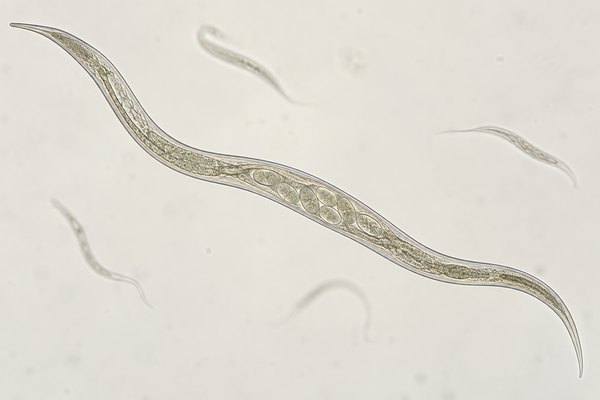
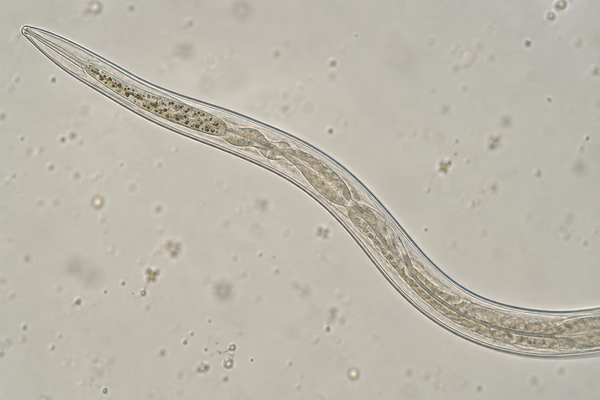
Beneficial nematodes are microscopic roundworms that hunt soil-dwelling pest stages. Steinernema feltiae targets fungus gnat larvae and thrips pupae in the medium. Steinernema carpocapsae targets surface and crown pests. Heterorhabditis bacteriophora targets deeper soil grubs.
They work in the soil, not on foliage, so they pair naturally with a foliar predator when you've got pests on both fronts.
Target by speciesSfGnat larvaeScSurface pestsHbSoil grubs -
A sealed pouch holds about 30 days at room temperature — nematodes are the most robust thing we ship, and a warm delivery is not a problem. The refrigerator at 35–45°F is how you stretch that further rather than how you rescue it. Keep them from freezing, and keep them out of heat above about 100°F.
Mix with cool or room-temperature dechlorinated water and apply the mixture within about two hours — don't hold mixed solution overnight. Drench moist (not bone-dry) soil, then water lightly to move them into the top layer. Apply in the evening or with lights off.
For an active infestation, repeat every 7–10 days for three rounds — you're breaking the life cycle, not killing every adult on day one.
HandlingStorageRoom temp ~30 daysFreeze?Best notUse mixedWithin 2 hrsRounds3 × 7–10 days -
Not in a fully inert LECA setup. Fungus gnats need organic medium to breed, so a fully inert semi-hydro system doesn't give nematodes the conditions they need to be useful for gnat control.
Where they earn their keep is in mixed collections — the ones that include potting mix or organic medium alongside the inert setups. That's where the larvae are, and that's where the nematodes go to work.
-
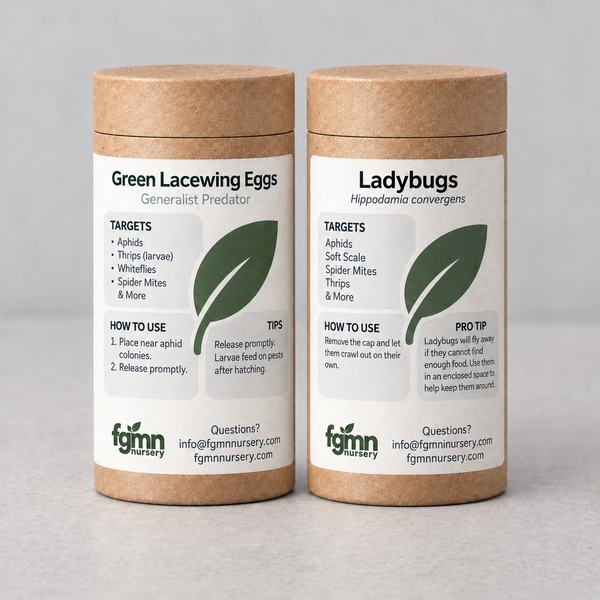
Ladybugs are aphid specialists — excellent for soft-bodied pests like aphids. A single ladybug can eat on the order of 5,000 aphids over its lifetime.
What they're not: an effective control for mealybugs or scale. For mealybugs, Montrouzieri is the right predator. For armored scale, Rhyzobius lophanthae is the specialist.
Right toolAphidsLadybugsMealybugsMontrouzieriArmored scaleRhyzobius -
Release at dusk, not in daytime heat. Ladybugs disperse far less when released into cool evening conditions. Lightly mist the plants beforehand so they have water on arrival, and release them at the base of affected plants rather than tossing them into the canopy.
Because they accumulate cold storage from collection through transit, deploy within 24–48 hours of arrival rather than holding them.
Release tipsTimingAt duskPrepMist plantsWherePlant baseDeploy by24–48 hrs
-
Green lacewing (eggs and larvae) are voracious generalists for aphids, thrips, and other soft-bodied pests. Montrouzieri is the mealybug specialist. Rhyzobius lophanthae is the armored scale predator.
Dalotia coriaria (rove beetle) is a soil predator that targets fungus gnat larvae — it complements nematodes in the medium for a two-pronged attack on gnats.
Specialist rosterLacewingAphids/thripsMontrouzieriMealybugsRhyzobiusScaleRove beetleGnat larvae
-
Trichoderma harzianum strain T-22 is a beneficial fungus that colonizes the root zone and helps protect against root rot pathogens. Root Biome Builder introduces beneficial soil bacteria to support a healthy rhizosphere.
These are root-zone amendments applied as a soil drench, not pest predators — they support plant resilience rather than hunting pests. Think of them as building the foundation the rest of your collection grows on.
-
Keep the pouch sealed in a cool, dry, dark place — humidity is the main thing to protect against. For longer-term storage, refrigeration at 35–45°F is ideal if you won't use it within several months. Don't freeze it.
To apply, mix into water and drench the root zone so it coats the rhizosphere.
StorageKeepCool/dry/darkLong-termFridge OKFreeze?Best not
-
Release them the day they arrive. You probably won't see much: most of what we ship is too small to pick out, and cold from transit slows everything down, so a still-looking carrier is normal. Watch the pest over the next week or two instead — that's the measure that tells you something.
We ship Monday through Thursday and pack with the weather in mind. If your order arrives compromised, that's what our Live Delivery Guarantee is for: contact us within 72 hours of delivery, and we'll make it right. Shipments to Alaska, Hawaii, U.S. territories, or international destinations are not covered.
If in doubtReleaseOn arrivalJudge byThe pestIssue?EmailWindow72 hrs -
We ship Monday through Thursday. Orders placed after Thursday ship the following Monday — so the organisms travel early in the week and aren't sitting in a facility over the weekend.
We pack with the weather in mind to protect temperature-sensitive shipments in transit. Processing can take up to 7 days, because we wait for the right life stage before shipping. Worth it.
ShippingShip daysMon–ThuAfter ThuNext MonProcessingUp to 7 days -
First, stabilize everything. Predatory mite bottles and sachets go to a cool, dark spot around 55–60°F and are best not refrigerated. Nematodes go in the fridge at 35–45°F and are best kept from freezing. T-22 stays sealed somewhere cool and dry.
Then contact us within 72 hours of delivery so we can make it right under the Live Delivery Guarantee. The 72-hour window is about reaching us quickly — not a waiting period. Stabilize the product right away; don't leave it out while you wait to hear back. Shipments to Alaska, Hawaii, U.S. territories, or international destinations are not covered.
Stabilize firstBottles/sachets55–60°F darkNematodesFridge 35–45°FT-22Cool/dry sealedThenEmail -
Yes. Predatory mites and beneficial insects aren't parasitic toward mammals or birds. They can't survive on warm-blooded hosts, and their mouthparts are adapted for arthropod prey, not skin.
This is precisely why biological control was developed — to replace chemical pesticides that are genuinely toxic to birds, mammals, and beneficial insects.
-
Identify the pest first, then match the tool. Spider mites on foliage: a generalist predatory mite like Neoseiulus californicus. Fungus gnats in the soil: beneficial nematodes, with a rove beetle for extra pressure. Aphids: ladybugs or lacewing. Mealybugs: Montrouzieri.
If you're not sure, our matchmaking quiz walks you through it, and you can always email us. Wrong species means poor results, not harm — but we'd rather get you to the right one the first time.