


Triple Blend Nematodes for Broad-Spectrum Soil Pest Control
Biological control is a programme, not a single release. A subscription puts the next one on its way before the last one runs out.
Skip a box, change how often it comes, or stop it — all from your account.
Heads up—this is just an estimate. We only ship when the bugs are happy and ready to travel (Mon–Thurs). If a colony needs a beat to peak, or we're propagating a fresh batch, your order might hold up to a week. Treatment bottles jump the line when you've got an active infestation.
Triple Blend Nematodes for Broad-Spectrum Soil Pest Control
At A Glance
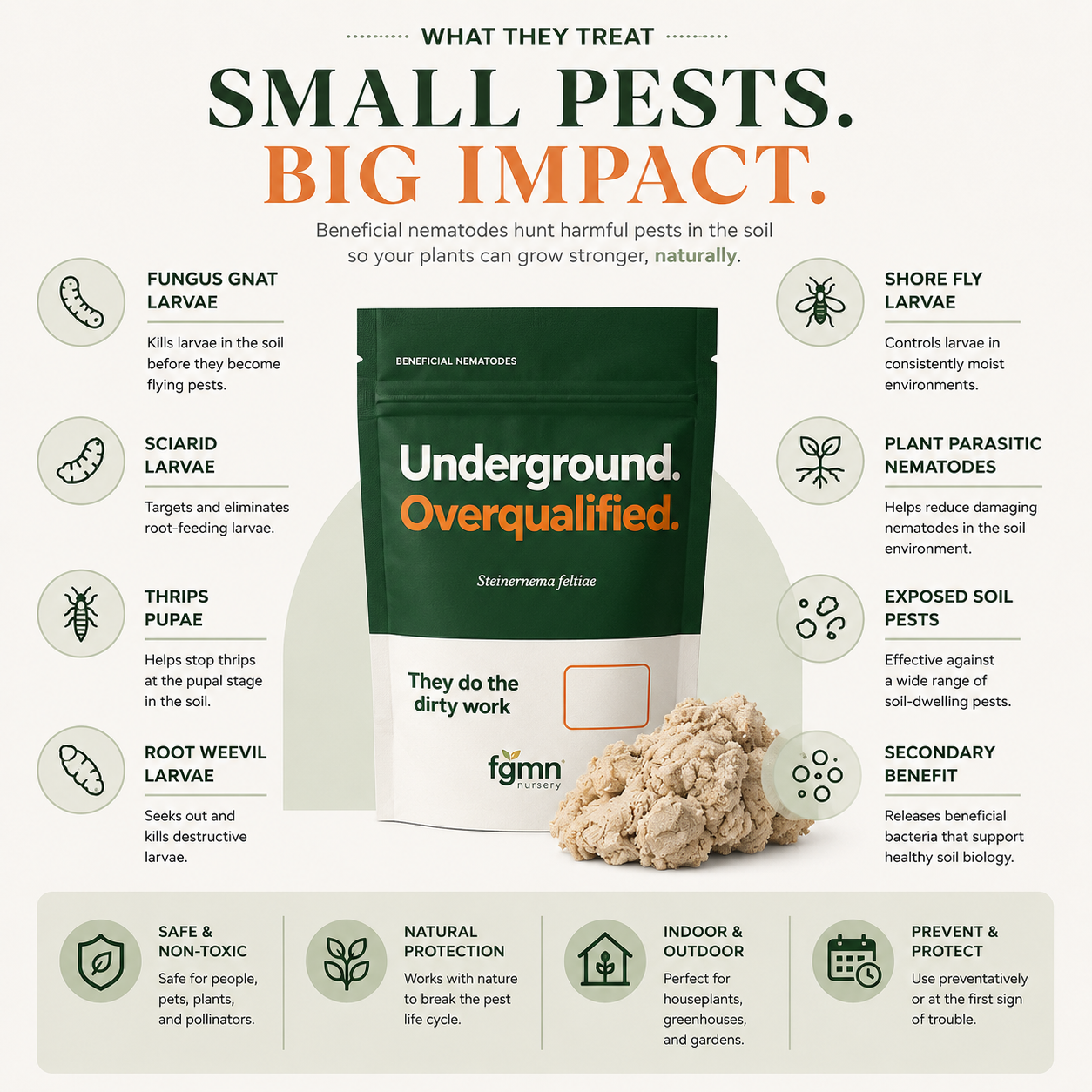
Our Triple Blend is the ultimate "all-in-one" biological control solution. It combines three distinct species of beneficial nematodes (Steinernema feltiae, Steinernema carpocapsae, and Heterorhabditis bacteriophora) into a single package to provide maximum coverage against soil pests. While some nematodes float near the surface and others dig deep, this blend covers every layer of the soil profile. It is the perfect choice for gardeners who want to treat multiple pest issues at once or those who aren't 100% sure which specific pest is causing the damage.
-
Composition: A calibrated mix of S. feltiae, S. carpocapsae, and H. bacteriophora.
-
Best For: Broad-spectrum control of Fungus Gnats, Thrips, Fleas, Grubs, and Beetles.
-
Safe For: Plants, humans, pets, and earthworms.
-
Key Feature: The "Shotgun Approach"—treats surface, shallow, and deep soil pests simultaneously.
Target Pests
Environmental Needs
Selection Guide
How to Use
How They're Shipped
Mix, drench, keep it moist.
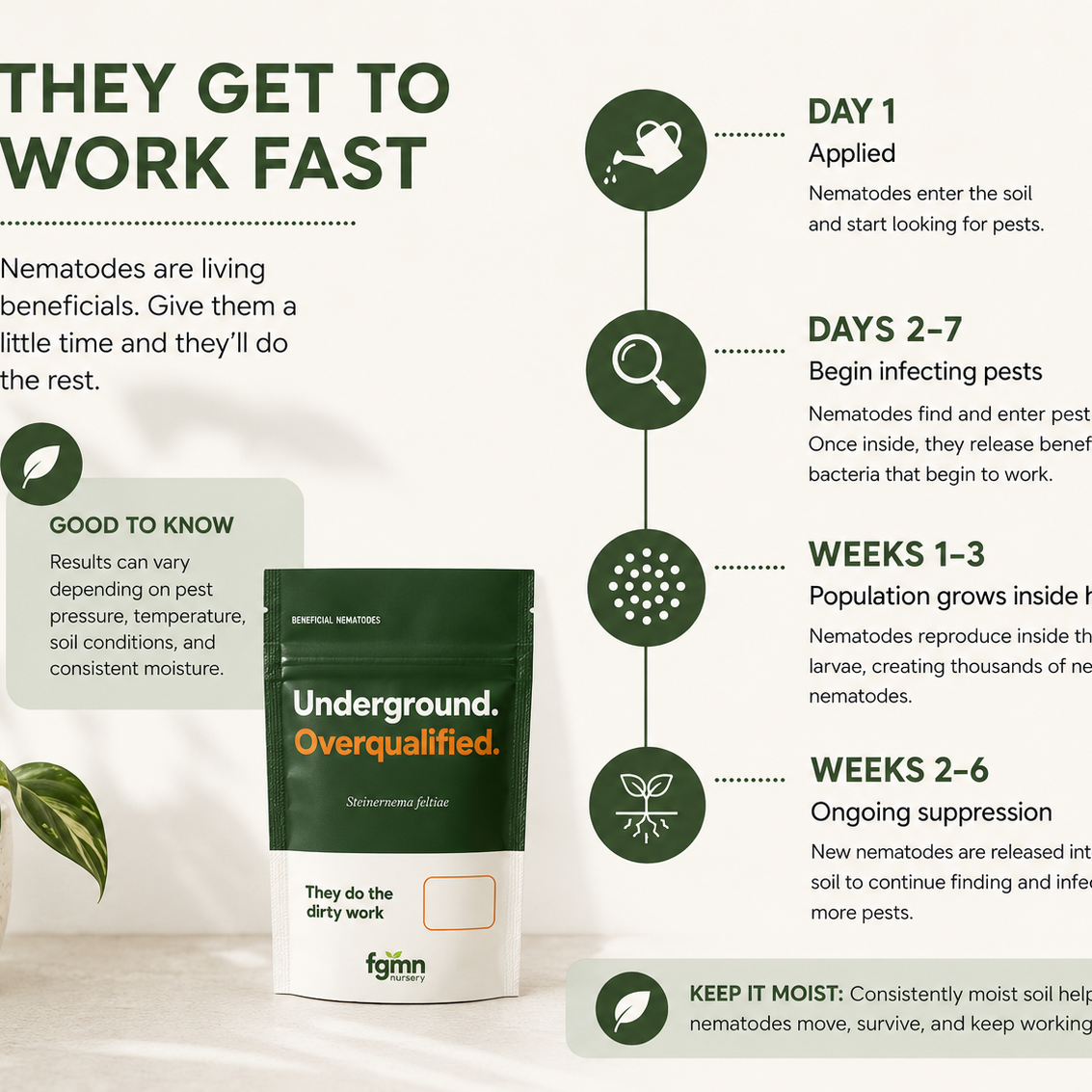
How to apply your nematodes, and how to read the results over the next few weeks. Nematodes need water to move, soil to live in, and protection from sunlight — the routine is built around all three.
-
01
Open the box right away
Bring the package indoors as soon as it arrives. Don't leave it on a hot porch, in a cold mailbox, or in direct sun. Nematodes ship in a moist carrier — sponge, gel, or clay depending on the species. A warm package is normal. Warmth speeds their metabolism up; it doesn't kill them, and a melted pack is expected. What isn't normal is a carrier that has dried out, or one that has gone the consistency of toothpaste after sitting in high humidity.
-
02
Apply now, or refrigerate
Best results come from applying the same day. If you need to wait, store the unopened package in the refrigerator (not the freezer) at 38–42°F. Most species stay viable for two to four weeks refrigerated; check the product description for the exact window. Pull from the fridge an hour before mixing to take the chill off.
-
03
Mix with cool water
Dissolve the carrier in a bucket of cool, dechlorinated water — tap water is usually fine if it's been sitting out for an hour, or use rainwater if you have it. Stir gently to suspend the nematodes evenly. Use a watering can with the rose removed, or a backpack sprayer with any fine screens taken out (mesh finer than 50 will strain them out). See the product description for water volume per package.
-
04
Drench at dusk or on a cloudy day
Nematodes die in UV light within minutes, so timing matters more here than anywhere else. Pre-water the soil so it's already damp, then drench evenly across the target area — pots, beds, or lawn. Keep stirring the bucket as you go so the nematodes don't settle to the bottom.
-
05
Keep the soil moist for two weeks
Nematodes move through water films around soil particles to find their hosts. Dry soil stops them. Water lightly every two or three days for the first two weeks — enough to keep the top few inches damp, not soaked. Pest reduction shows up over one to four weeks depending on species and pest. If you don't see improvement by week four, that's when to bring in our bug pros.
Something not quite right?
Reach out to our entomologist by filing a report within 72 hours of delivery, with your order number and a photo. Candidly, without a photo the team can't approve a live beneficial claim.
Read the full Live Delivery Guarantee →Join Karen's Live Shows — Pests, Plants & Predators on PalmStreet.
Every Friday at 7pm EST — plus additional shows throughout the week. Ask your pest questions in real time — we answer everything.



The Weekly Newsletter
A weekly excuse to be weird about bugs at parties.
Weekly dispatches on the quietly alarming things happening in your soil. All of it real.
No spam. Leave whenever.
You're in
The first strange true thing arrives next week.
FAQ
What is your Live Delivery Guarantee?
We guarantee that your beneficial insects arrive healthy and ready to work. They're living things, so we pack for the season and ship expedited to give them the best trip we can.
If something looks wrong when the box opens, take a photo and file a report within 72 hours of delivery, with your order number. Photos matter: candidly, without them the team can't approve a live beneficial claim.
Can I see them?
Will they survive the winter?
Can I use a hose-end sprayer?
Will they kill my earthworms?
Can I use fertilizer at the same time?
What if the package got warm during shipping?
Help! I'm overwhelmed
Yeah, it's a lot the first time you're using beneficial nematodes. File a report and our bug pros will walk you through it!
I don’t see anything moving in my bottle or sachet. Does that mean they’re dead?
Not at all! In fact, go ahead and deploy them.
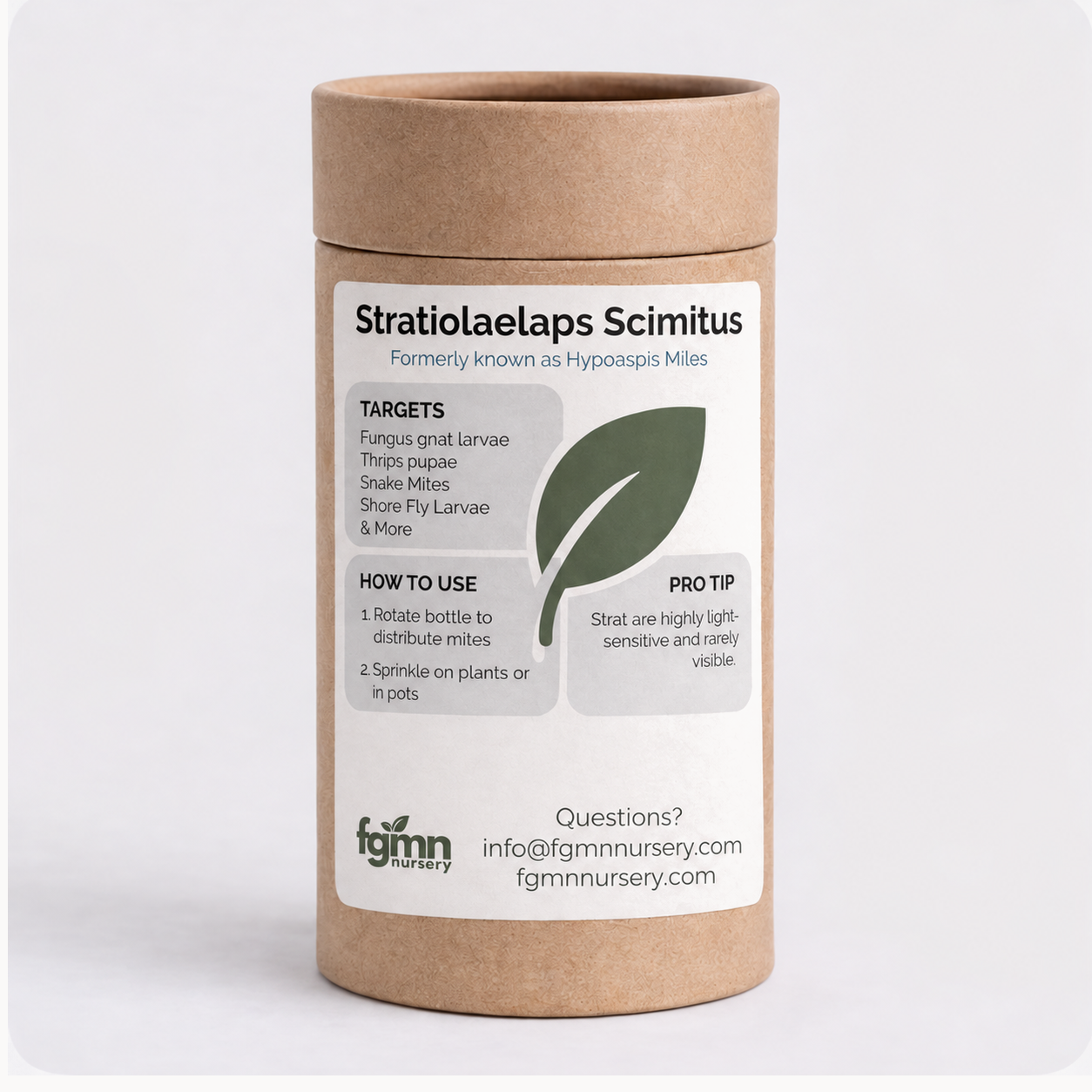
Predatory mites are microscopic (often less than 0.5mm) and naturally blend into their carrier medium (bran or vermiculite).
- For Bottles: The mites often huddle in the center of the bottle for insulation during transit.
- For Sachets: These are "slow-release" nurseries. The mites stay tucked deep inside the breeding media and emerge one by one over 2–4 weeks. Seeing an "empty-looking" sachet or bottle is not proof of a loss; it is simply how they are packaged for maximum survival.
Mite Matters
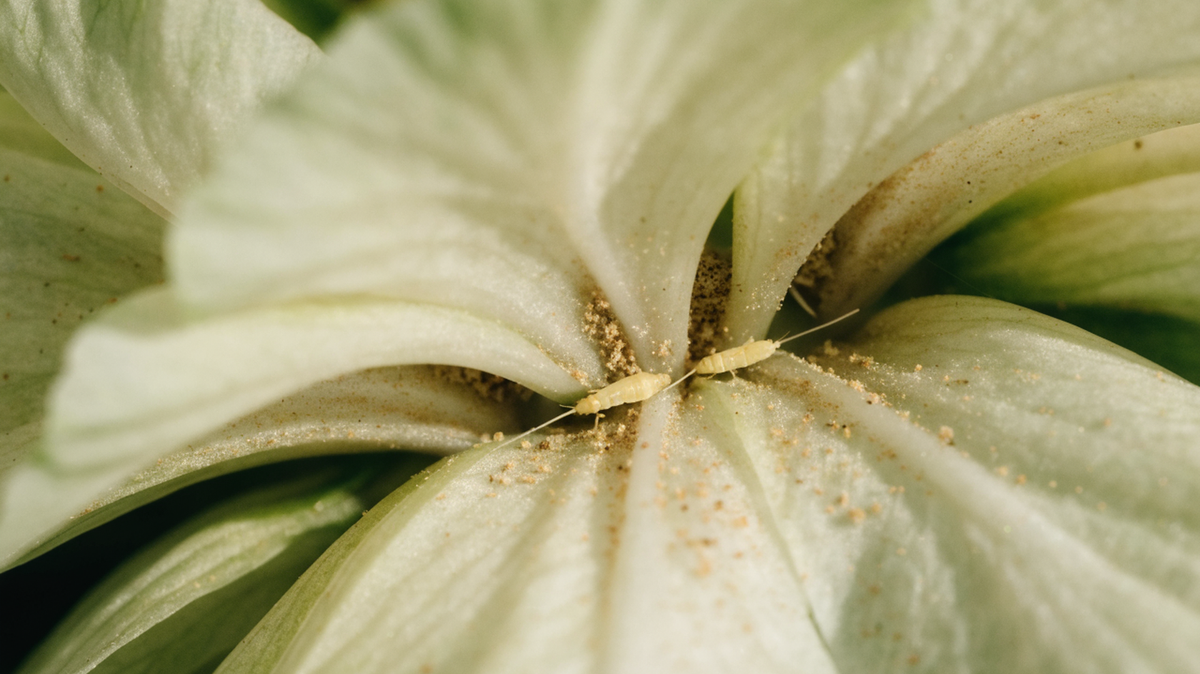
Thrips Have Six Stages. Cucumeris Reaches One.
A thrips passes through six life stages and cucumeris can kill one of them. Second instars do not just survive the attack — they fight it off, and they destroy the predator's eggs on the way past. That single fact explains the lag, the reservoir, and most of the disappointment.
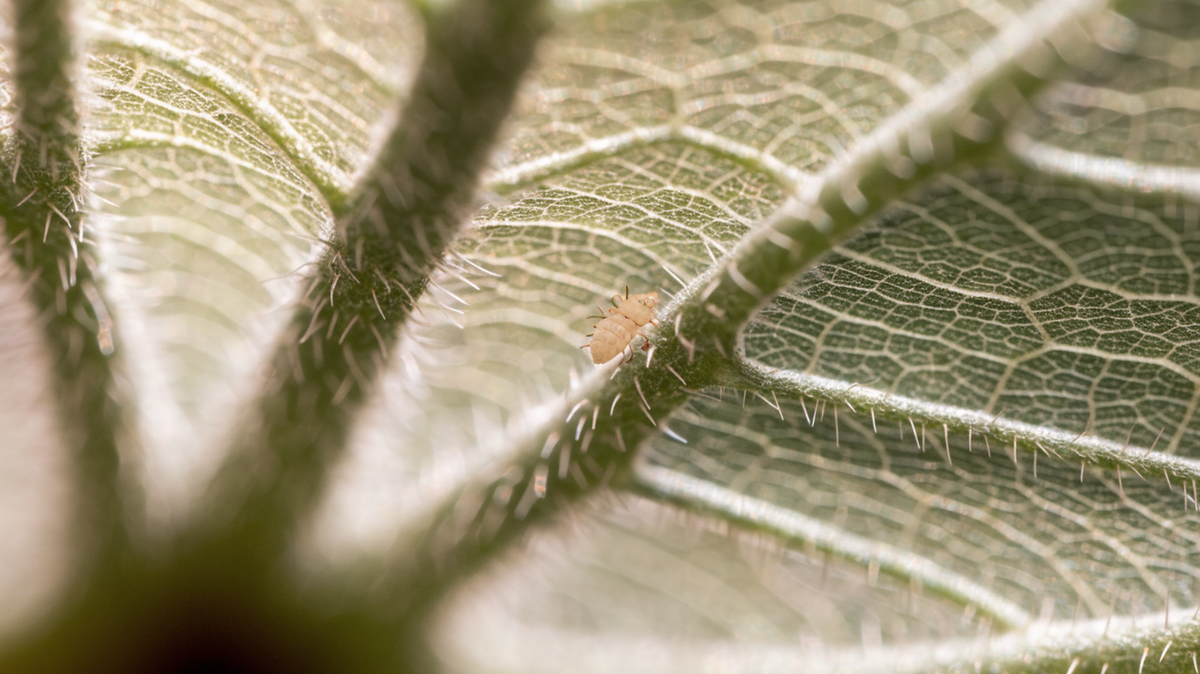
Four Predatory Mites, Compared. Two of the Columns Are Guesses.
Every supplier prints the same four-column comparison table. We went and read the papers behind each cell. One column rests on unpublished company data, one species has never been trialled against thrips at all, and the humidity row is backwards. Here is that table with the guesses marked.

Your Cucumeris Are Alive. Your Thrips Are Winning.
Your mites are alive. Your thrips are also alive. That combination has twelve documented causes, and what the mites are doing — where they are, what they are sitting next to — narrows it to one or two in about five minutes.