



Dalotia Rove Beetles for Fungus Gnat Control
Rove beetle · Dalotia coriaria
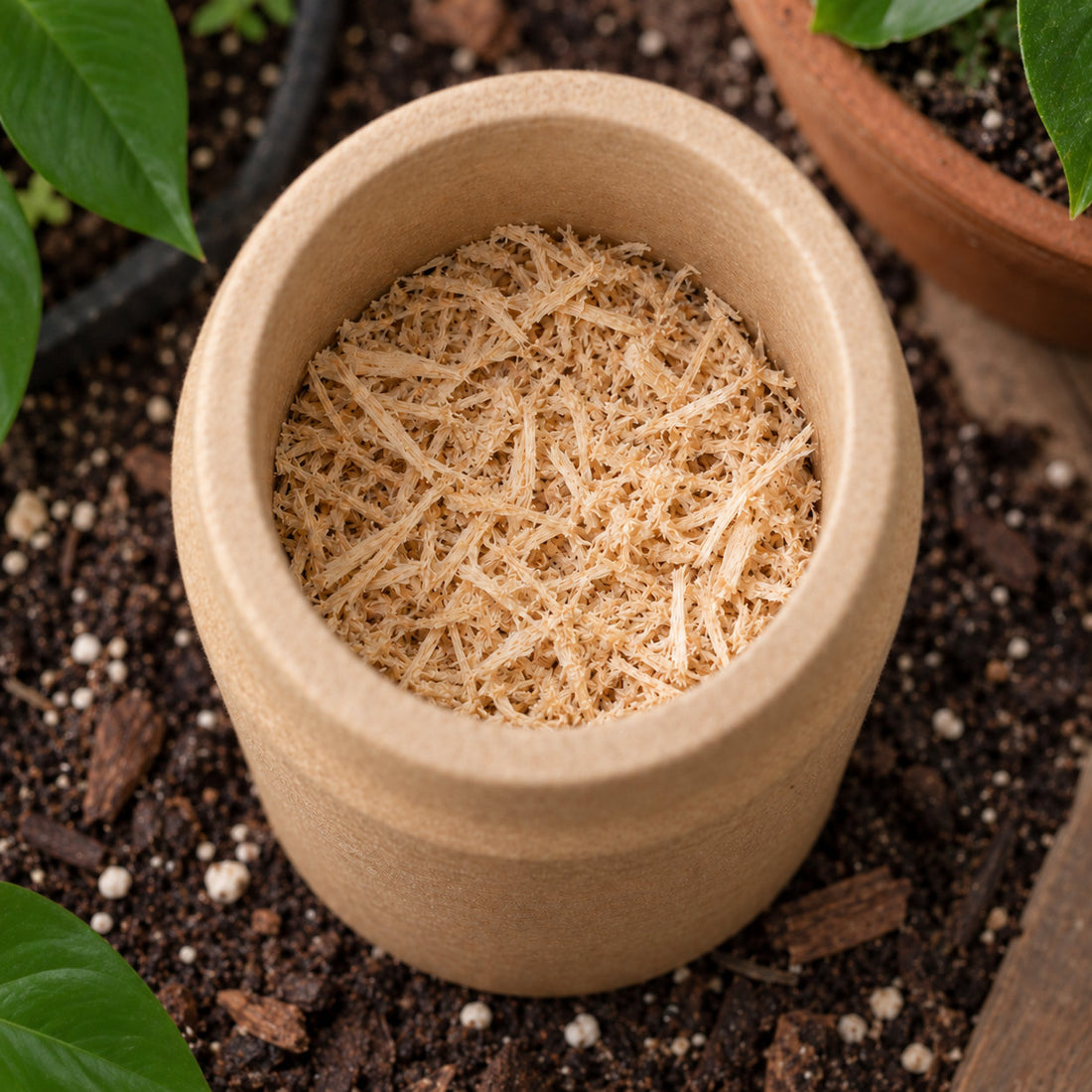
5.0 · 3 reviewsLive Dalotia coriaria rove beetles, a mix of adults and larvae in a peat and vermiculite carrier, in bottles of 50 to 1,250 beetles. Tipped onto moist potting mix in small piles, they hunt fungus gnat larvae, shore fly larvae and thrips pupae in the top layer, and the adults fly to reach pots across the room. They need damp organic media to work and breed, and they also eat springtails and soil mites like Stratiolaelaps.
- Best for
- Fungus gnats, thrips
- Conditions
- 60–85°F
- Good to know
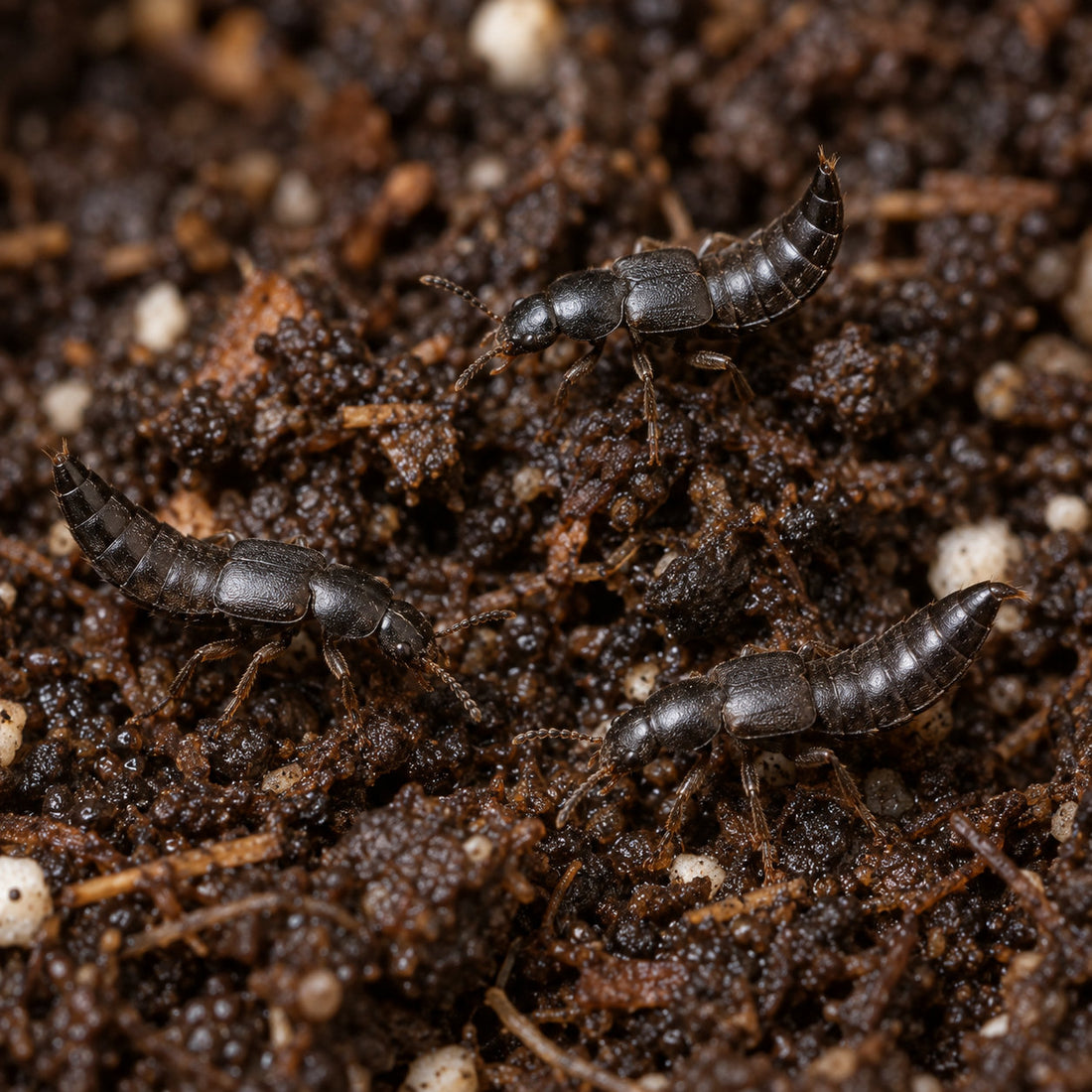
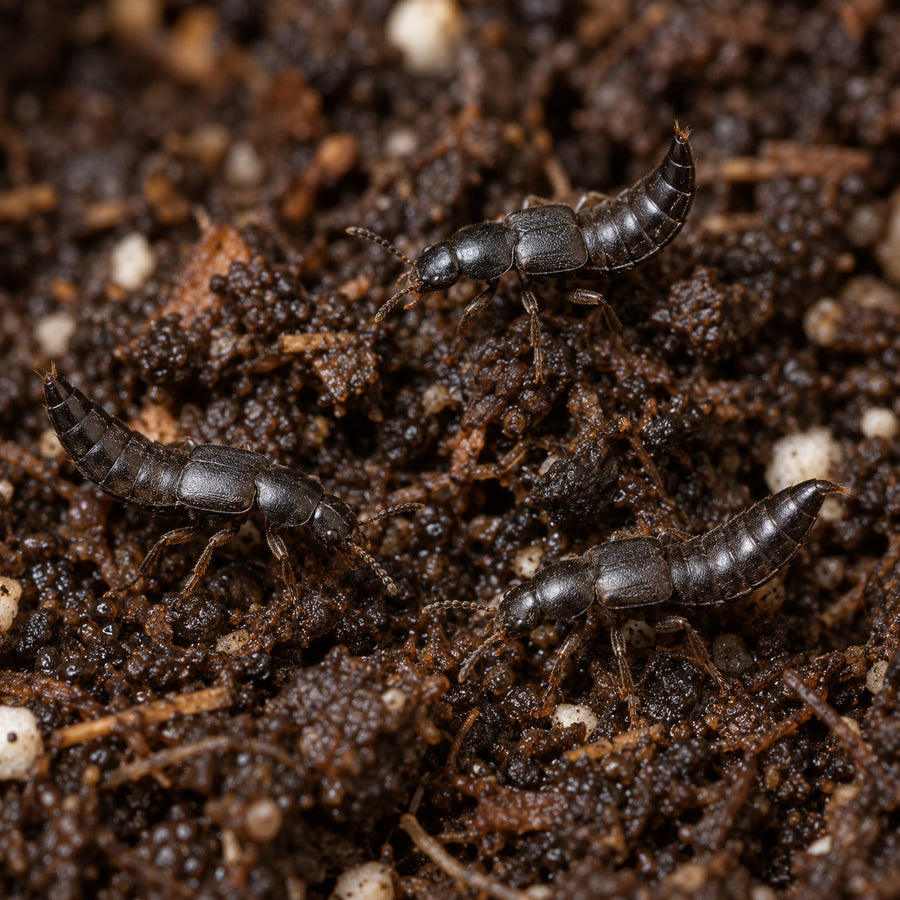
- A lively bottle. Dark, narrow beetles plus pale wormy larvae. They curl their tails up when disturbed, which is pure show. All of it goes on the soil. What to expect
When to choose something else
Not for anything on the leaves.
Shipping details
Shipping
| Est. ships | Est. arrives | |
|---|---|---|
| Standard | ||
| Overnight |
Raising a fresh batch for you? Add up to 7 days to both dates.
Estimates. Overnight speeds up the trip, not the packing: its one day on the truck starts once it ships.
- Monday to Thursday only. Nobody spends the weekend in a warehouse.
- Check your address at checkout. Bugs are brilliant at finding aphids and hopeless at finding a new front door.
Ordering with friends? Get group pricing
Everyone picks their own. It ships to you in one box.
Buying for a greenhouse, farm or shop? Ask about wholesale
Right for you?
Your pest, your growing space, how many you need
What beetles treat, and what else they eat
The main use is fungus gnats and thrips. They also eat shore fly larvae when they come across them, but don't count on that for control.
| Pest | Treats or prevents | Why |
|---|---|---|
| Fungus gnats | Treats | Main prey. It goes looking for these first. |
| Thrips | Treats | Main prey. It goes looking for these first. |
| Shore fly larvae | Prevents | Also eaten along the way, which helps keep them from taking hold. A side benefit, not dependable control on its own. |
Not for anything on the leaves.
Or choose instead
When one of these fits your situation better than dalotia coriaria - rove beetle.
-
Choose this instead
Sf Nematodes
If you need it gone this week.
from $15

How many beetles do I need?
Measure the area your plants sit on, not the whole room or yard. A 4 × 4 ft tent or bench is 16 sq ft; a 3 × 10 ft bed is 30 sq ft.
Size guide
| Size | In the bottle |
|---|---|
| X-Small | 50 Beetles |
| Small | 125 Beetles |
| Medium | 250 Beetles |
| Large | 375 Beetles |
| X-Large | 500 Beetles |
| 2X-Large | 750 Beetles |
| 3X-Large | 1000 Beetles |
| 4X-Large | 1,250 Beetles |
- Each size is one release. The treatment plan below says when to check again.
- Measure the planted area, not the whole room: a 4 × 4 ft tent or bench is 16 sq ft.
- Heavy pressure, go one size up; light, one size down. A large plant with a dense canopy counts as three or four plants.
Conditions for releasing beetles
Beetles work best when the growing space stays 60–85°F. These are preferred conditions, not hard limits.
Best temperature60–85°F
A wide, forgiving band — most rooms that suit houseplants suit these beetles.
MediaMoist organic
Soil, coco, peat or moss, kept damp in the top layer. They need it to lay in, and their prey needs it too. Dry substrate is the one thing that stops this working.
RefrigerateBest not
High-energy hunters with a short shelf life. If you need to wait: best kept at 50–60°F and released within about 18 hours.
Releasing
What to do, and what you'll see
What to expect
- A lively bottle. Dark, narrow beetles plus pale wormy larvae. They curl their tails up when disturbed, which is pure show. All of it goes on the soil.
- Then they disappear. They hunt at night and hide in the soil by day, so a quiet-looking pot surface is a working one.
- They find the hot spots. They fly and move pot to pot on their own, right down to the wet pot in the corner.
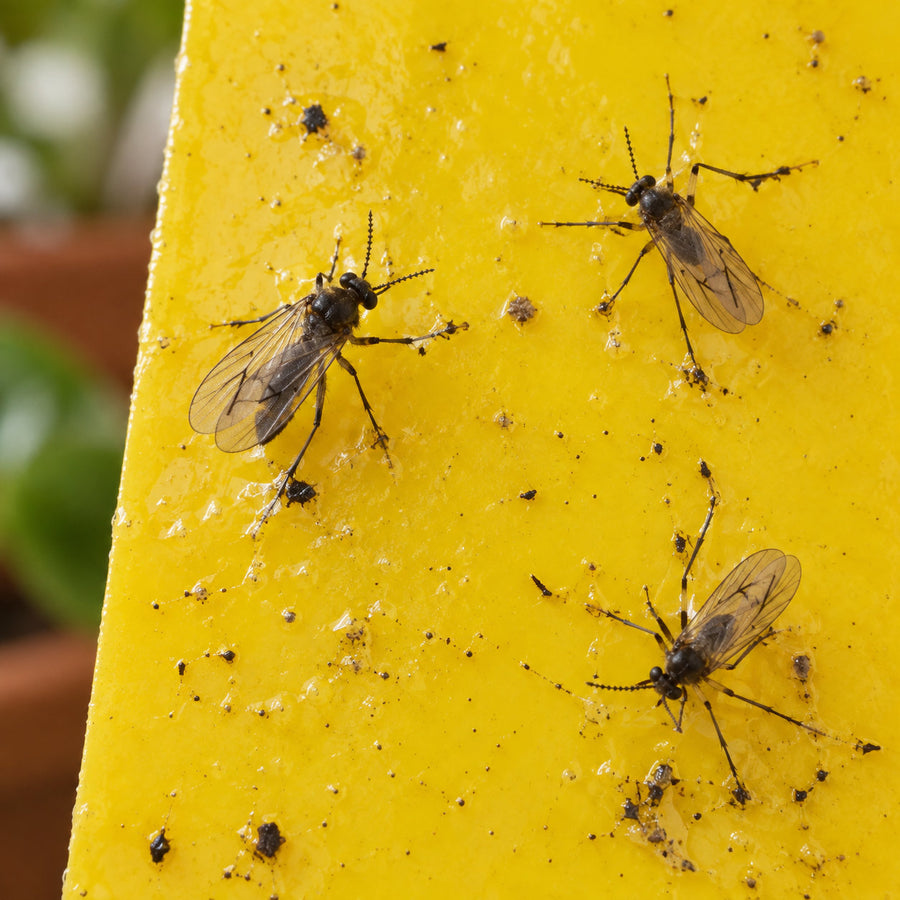
- How to tell. Fewer gnats on a yellow card, and the count keeps dropping as they settle in and breed.
How to release beetles
You may need to retreat
Eggs and young pests you can't see yet keep hatching after the first release. A second round catches that next wave.
You're done when you're seeing fewer pests and new growth comes in clean. Still seeing them, or fresh damage on new growth, at the check? That's your cue for another round.
Put it on a schedule and the next bottle arrives on its own, 10% off the first and 15% off every one after. If it turns out you don't need it, pause or cancel anytime from your account.
Reviews
What growers say
What people say
5.0 out of 5, from 3 reviews.
My bugs arrived safely and quickly..they were packaged with so much care and kept happy the whole trip..upon opening the package I immediately put them to work..iys been one week and already a calm happy vibe in the grow..thank you fgmn
Worked great, within wk, not seen another knat.
They arrived 'on time', respective to the emails from FGMN and UPS tracking number guidance, within the two day frame. The Larvae hatched within 12-36 hours, I would say and I found a few of them thriving the next day.
Pairs well with
Small things that help them work
-
Add alongside
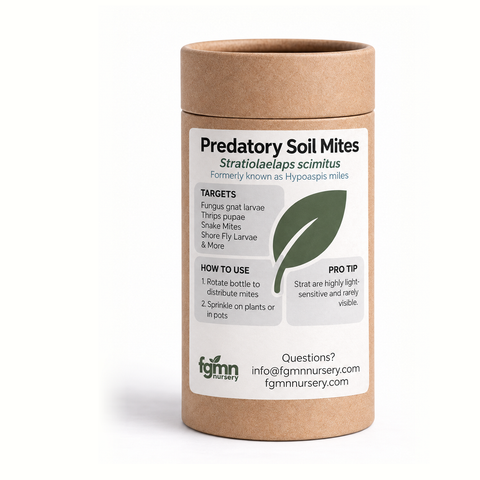
Stratiolaelaps scimitus
The deeper soil.
from $50
-
Add alongside
Horiver Professional Sticky Traps
How you'll measure it.
from $11
-
Add alongside
Root Network
For the roots: mycorrhizae and microbes that help roots take up water and nutrients. Use at repotting, then a monthly drench.
from $15


More to know
Ways to buy, questions and reading
Ways to buy
Once, on a schedule, with friends, or mixed with other predators.
- One time
- A single bottle, this once. Free shipping on orders of $30 or more, $15 under that.
- On a schedule
- 10% off your first box, 15% off every box after. Skip, move, pause or cancel from your account.
- Group order
- Friends each pick what they want, and it ships to you in one box.
- Mix and match
- Buy several predators together and they get cheaper.
For the curious
Everything else we know about them. Tap a topic to open it.
Is this your pest?
Everything this beetle hunts lives in the top layer of your media. If your problem is on the leaves, the product you want is a different one.
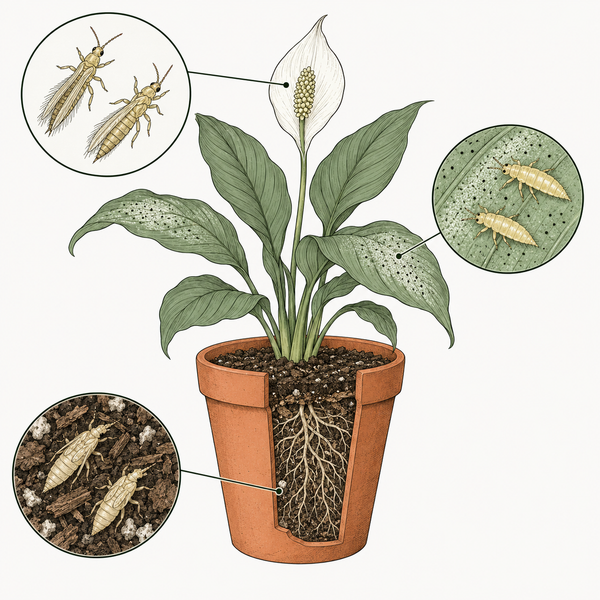
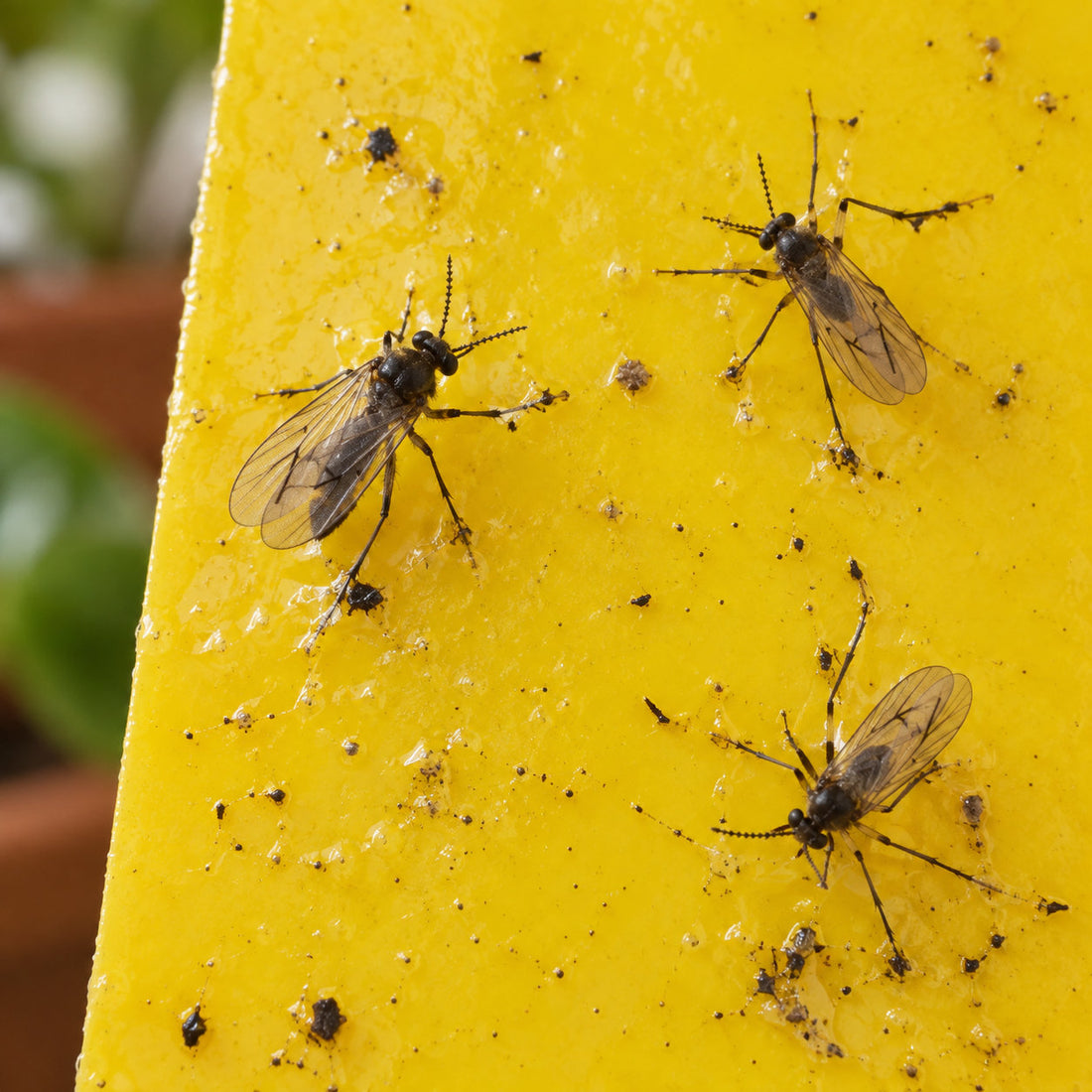
Fungus gnats are the small dark flies that lift off the soil when you water. The adults are harmless and annoying; the larvae in the media are the ones eating fine roots. Shore flies look similar but stockier, with pale spots on the wings, and many predators ignore them entirely.
And the third thing down there is thrips. Most thrips drop off the leaf to pupate in the top few centimeters of soil — the stage that survives everything you spray on the canopy. This beetle reaches all three.
Then: is Dalotia the right answer to it?
Choose this if
Choose rove beetles for a large tent, a greenhouse, or shelves that are not next to each other — they fly, so one release point colonizes a whole room without your help. Both the adults and the larvae hunt, and they take shore fly larvae, which most fungus gnat treatments handle poorly. In moist media they can breed and build a colony.
Choose something else if
They need moist organic media — soil, coco, peat, moss — to reproduce, and they will not work a dry substrate. They are nocturnal and hide from bright light, so you will rarely see them. And if you keep a springtail culture in the same pots, know that rove beetles eat springtails on encounter.
What it kills, and what it won't
One honest note: rove beetles also take springtails and other soil decomposers on encounter. That is a fact about them rather than a reason to buy them — and a reason not to run them in a pot that is carrying a springtail culture.
How it works
What it does to the pest, what it does on the plant, and what that leaves you looking at.
It hunts, it does not wait
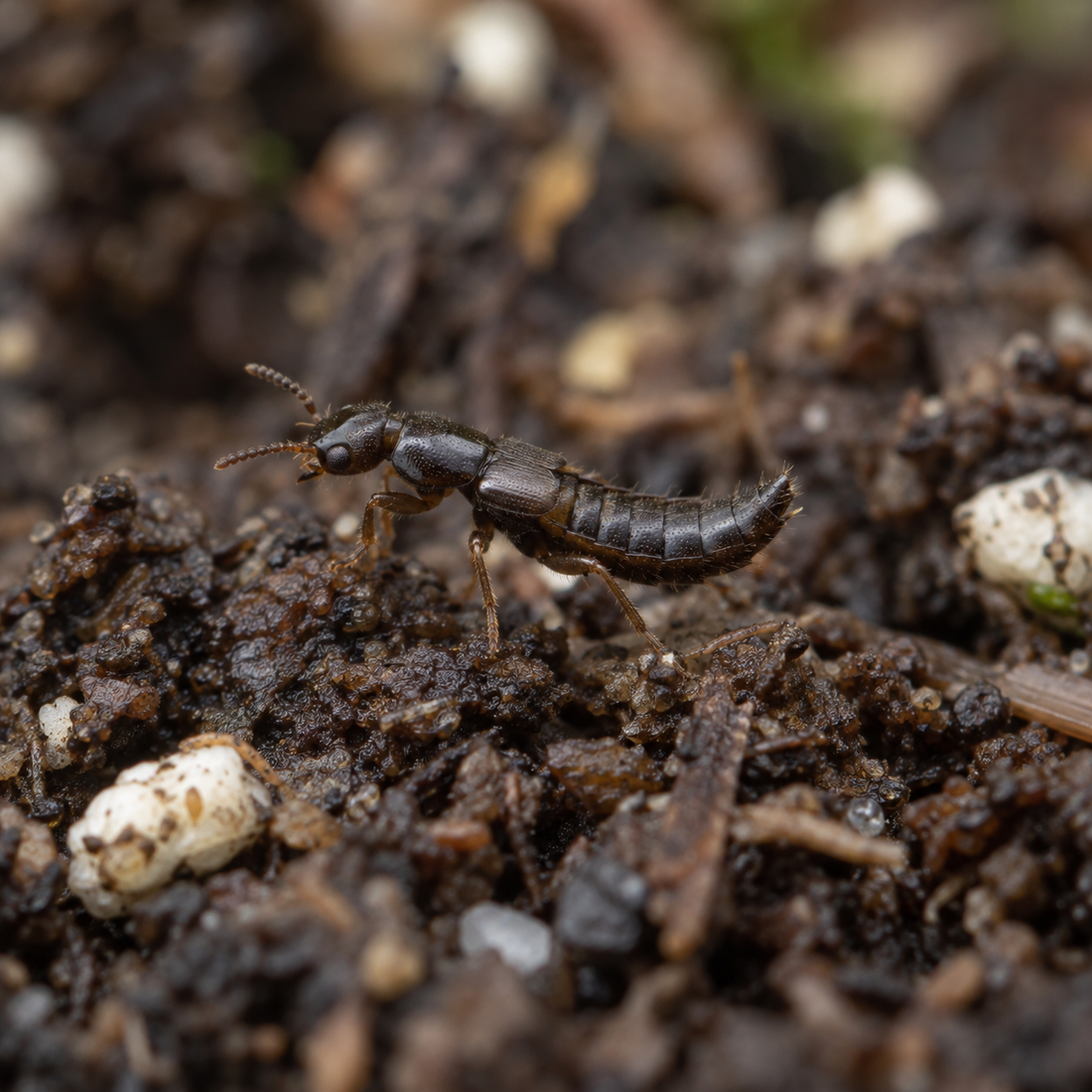
A 3 to 4mm beetle that searches actively through the top layer of the media. The larvae — pale, thin, dark-headed, and easily mistaken for something unpleasant in the bottle — are just as ferocious and do a great deal of the hunting.
It colonizes the room
The adults fly, so one release point finds hot spots across a whole room, moves between disconnected shelves, and gets to the wet pot in the corner you had not thought about.
A population, not a treatment
In the lab, egg to adult takes about two to three weeks and adults live about seven to nine, so in moist media the numbers can build rather than run out. That is why this keeps working long after a one-shot drench would have finished.
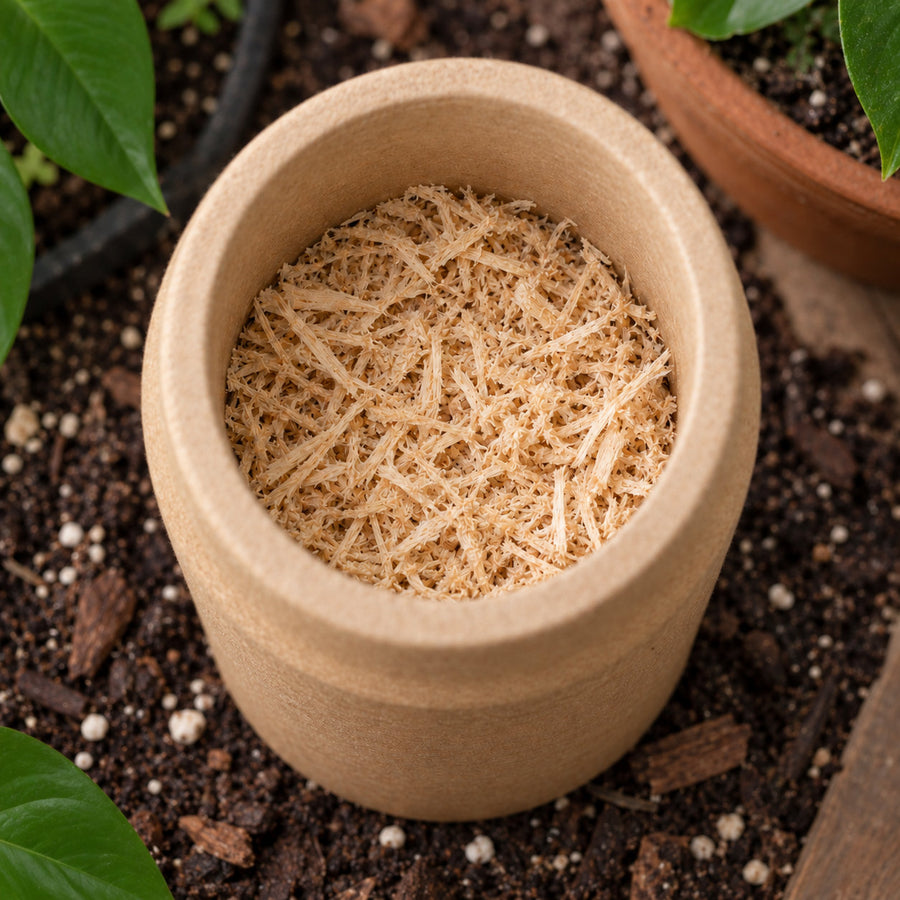
Do not spread the carrier thin. Small piles on the soil surface act as breeding centers — they help the beetles find each other and establish a colony sooner, and they fan out from there on their own.
About Dalotia coriaria
A 3 to 4mm rove beetle that hunts through the top layer of your media. Dark, narrow and fast, nocturnal, and entirely uninterested in you or your plants.
New to beneficials?
Five things that catch almost everyone the first time.
What arrives
A mix of life stages — adult beetles, pale worm-like larvae and pupae — in a peat and vermiculite carrier, shipped 2-day express.
They are dark, narrow and fast, and they curl their tails up when disturbed, which reads as menacing and is entirely for show. The whole carrier goes onto the soil.
Release the evening it arrives. These are high-energy hunters and do best released rather than held in a container. Turn intense grow lights down first, or they fly at the bulbs.
When it ships, and when it lands
Shipping
We ship when they're ready to travel. Live orders go out Monday to Thursday. If a colony needs a beat to peak, or we're propagating a fresh batch, yours might hold up to a week. All mites and insects ship 2-day or Overnight depending on what's best for them.
When it lands
Open it that evening, lights low. Tap small piles of the carrier onto moist soil surfaces — near the base of plants, near drain holes, in the corners of grow beds — concentrating on the wettest pots, because that is where the gnat larvae are. Then leave them alone: no watering directly over the piles for 24 hours while they burrow in.
Why we pack extra
Two days in a van is a long trip for something this small, so we send more than you paid for.
A 3mm beetle with a very high metabolism ships in a bottle, in a van, for two days.
A trip like that is hard on anything this small, so we price it in: the number on the label gets counted out, and then roughly 15% more goes in on top as a cushion.
Your 250-beetle bottle leaves here holding more than 250. The cushion is on us.
If you can see them
Ladybugs, lacewing larvae, Orius — the minute pirate bug — and the beetles. These are the ones big enough to see.
Cold insects are very good at sitting still. That's normal. Release them as this page says, and watch the pest instead.
Something look wrong? Email info@fgmnnursery.com with your order number.
If you can't see them
Mites, nematodes, eggs — most of what we sell. Not this one: rove beetles are visible, so the section above applies to you. A cold beetle sits very still, and that's normal on arrival.
Email info@fgmnnursery.com and our entomologist takes you through the diagnostic instead — where the box sat, what your room was doing, and then what the pest is doing about ten days later.
We spell the other half out here so you can see the policy is the same either way.
Seventy-two hours from delivery, either way, with your order number. Replacement or store credit, your pick.
Questions about beetles
Will I have bugs flying around my house?
Not so you'd notice. You may see them on the first day; then they scatter to hunt, and you're unlikely to spot them again. They stay where the pests are.
Do they fly? Will they infest my house?
Yes, they fly to hunt, but they prefer to stay near the soil where the food is. They are beneficial insects, not pests, and will naturally die off or disperse once their food source (the pests) is eliminated. They do not infest furniture or pantries.
I see "worms" in the bottle. Are those pests?
No! Those are the Rove Beetle larvae. They look like tiny, pale worms with a darker head. They are just as ferocious as the adults and do a significant amount of the hunting in the soil.
Are they safe for my reptile or terrarium?
Yes. Dalotia coriaria are harmless to vertebrates. Just know that in a bioactive enclosure they also eat springtails, so they will thin out a springtail cleanup crew.
Why do they curl their tails up?
When threatened, Rove Beetles curl their abdomen up like a scorpion. This is purely a bluff to look scary! They do not have a stinger and cannot bite or harm humans.
Can I use sticky traps with them?
Use caution. Because Rove Beetles fly, they can get caught on yellow sticky traps. We recommend removing sticky traps for 7–10 days after release to allow the beetles to establish. Afterward, place traps higher up (away from the soil line) to catch adult gnats without trapping your beetles.
How long do they live?
In one lab study, adult rove beetles lived about seven to nine weeks, and it took about two to three weeks to go from egg to adult. That's individual beetles, well fed in a lab, not a promise about your pots. What matters more is that they breed in the soil, so with food in front of them the colony keeps renewing itself. What ends it is the food running out, the media drying out, or a spray going on.
How many rove beetles do I need?
The sizes work out to five beetles per pot, so count every pot in the room, not just the ones you've seen gnats around. The beetles will find the others, but only if there are enough to go round.
- Match: pick the size whose pot count covers your number (X-Small up to 10 pots, up to 4X-Large for 250).
- Heavy pressure (gnats in the air without touching a plant, cards filling between checks, shore flies too): go one size up.
- Light pressure: one size down is fine.
- One bottle is one release. In damp media they breed and stay. In a large room seeded from one end, a second release into the far end saves them the walk.
- Check again after about four weeks: fewer gnats on a yellow card hung above the soil line.
Keep reading
Field Notes from the FGMN Nursery team.
 Four Ways to Kill a Fungus Gnat. Two of Them Fight.
No published trial has ever put predatory mites, beneficial nematodes, rove beetles and Bti head to head under…
 Fungus Gnat Larvae Live in One Inch of Soil. That's the Whole Game.
Soil isn't a material a predator moves through. It's a three-dimensional maze of pores, films and dead ends,…
 The Gnats You Can See Are Not the Ones You Treated.
You treated the soil and there are still gnats in the air. That is what a working treatment…
Sources
Published guidance from university extension services. The release tips on this page also draw on what we see shipping these every week.