



Prevention



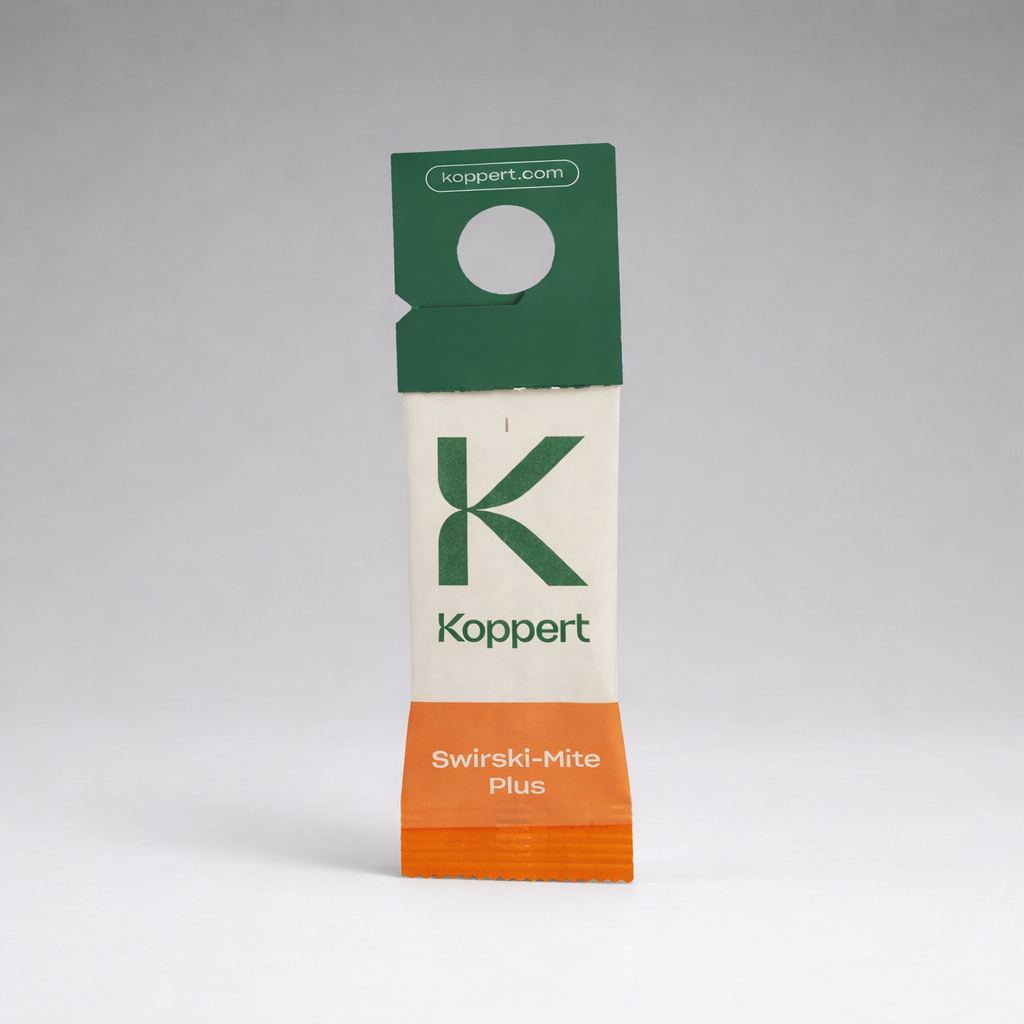
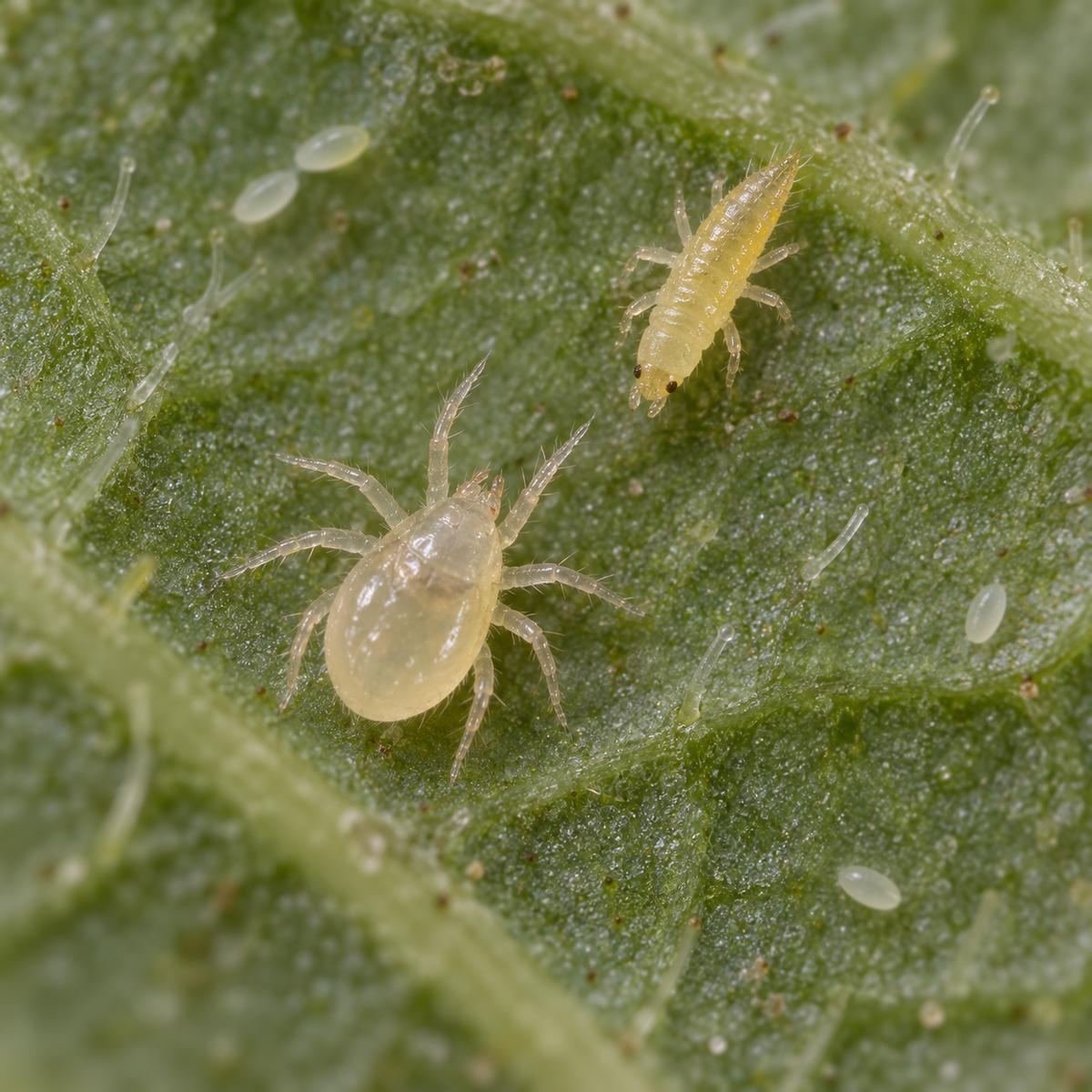

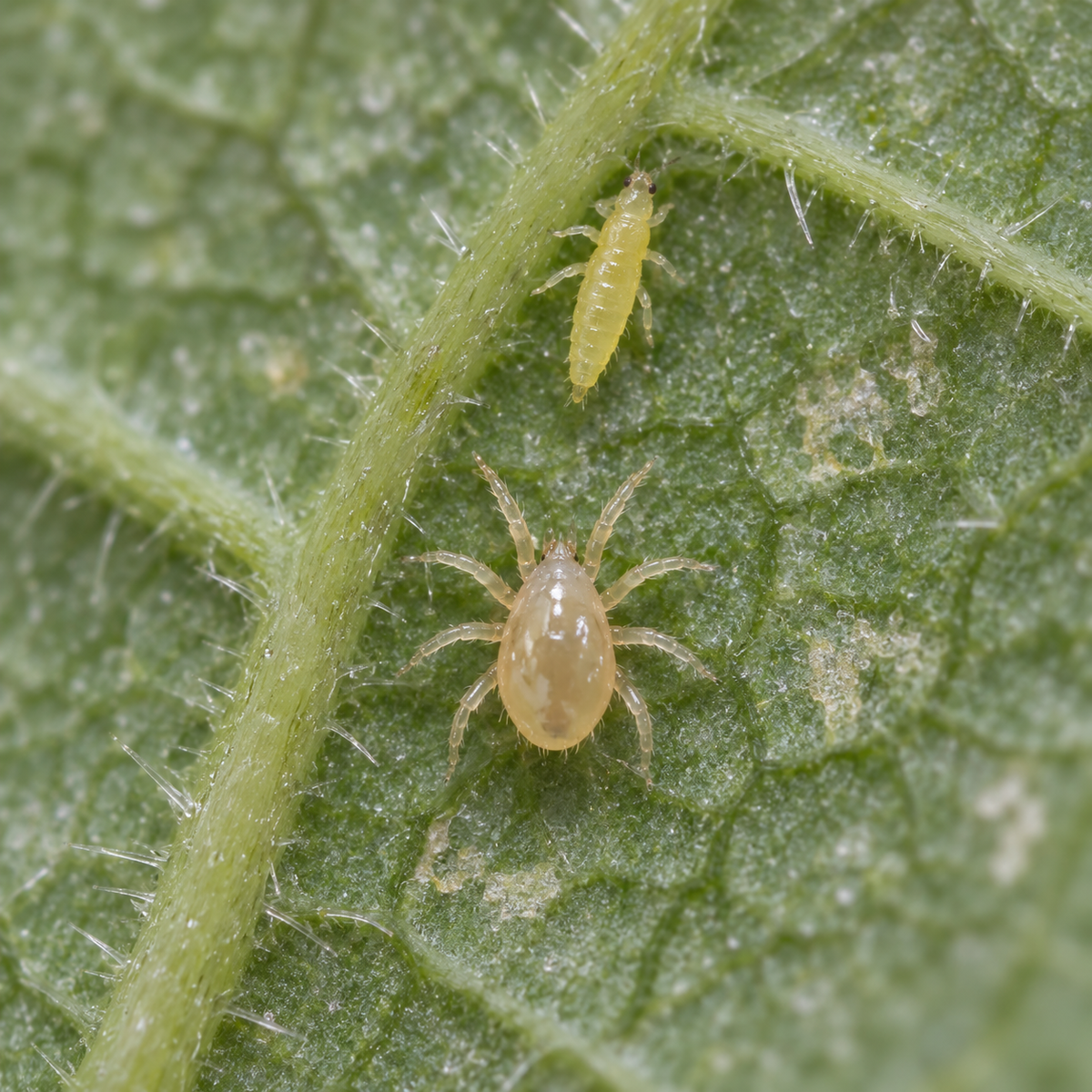
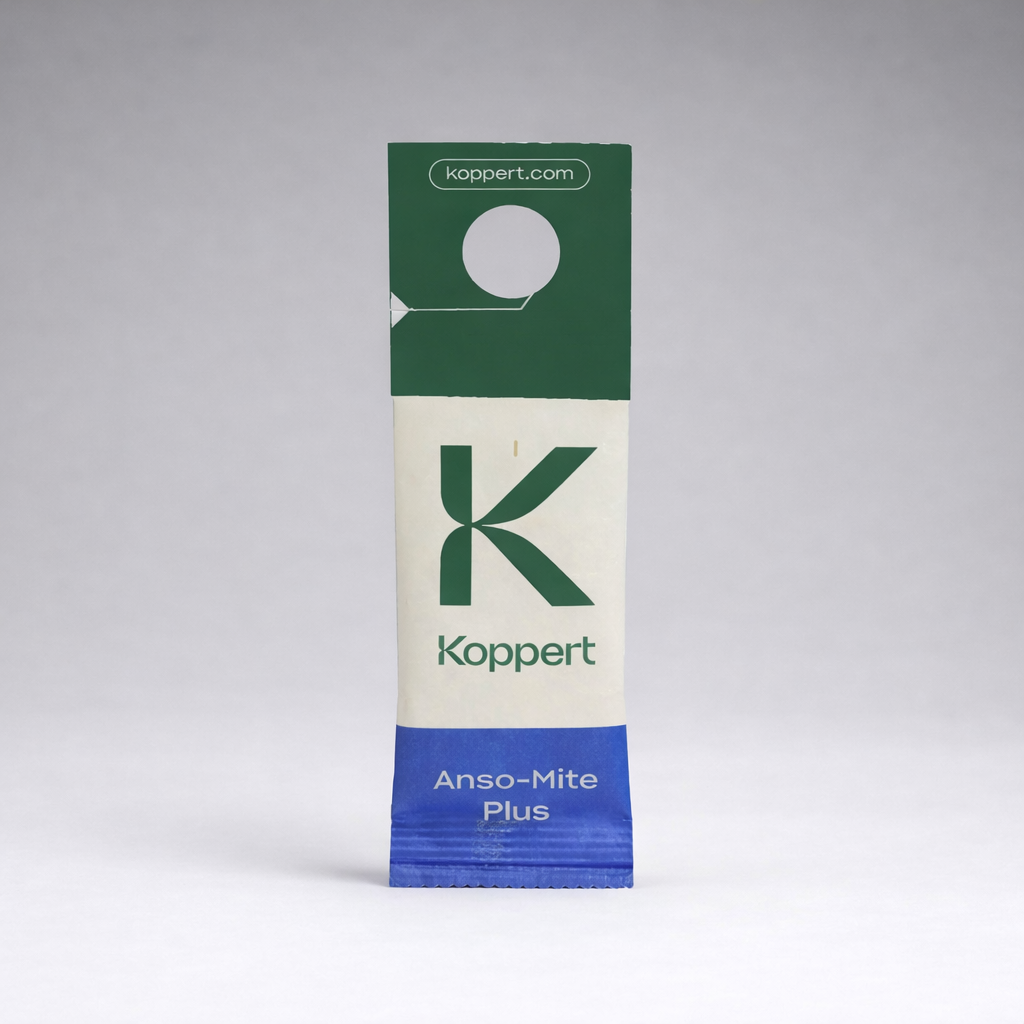
Prevention is a different product, not a smaller dose
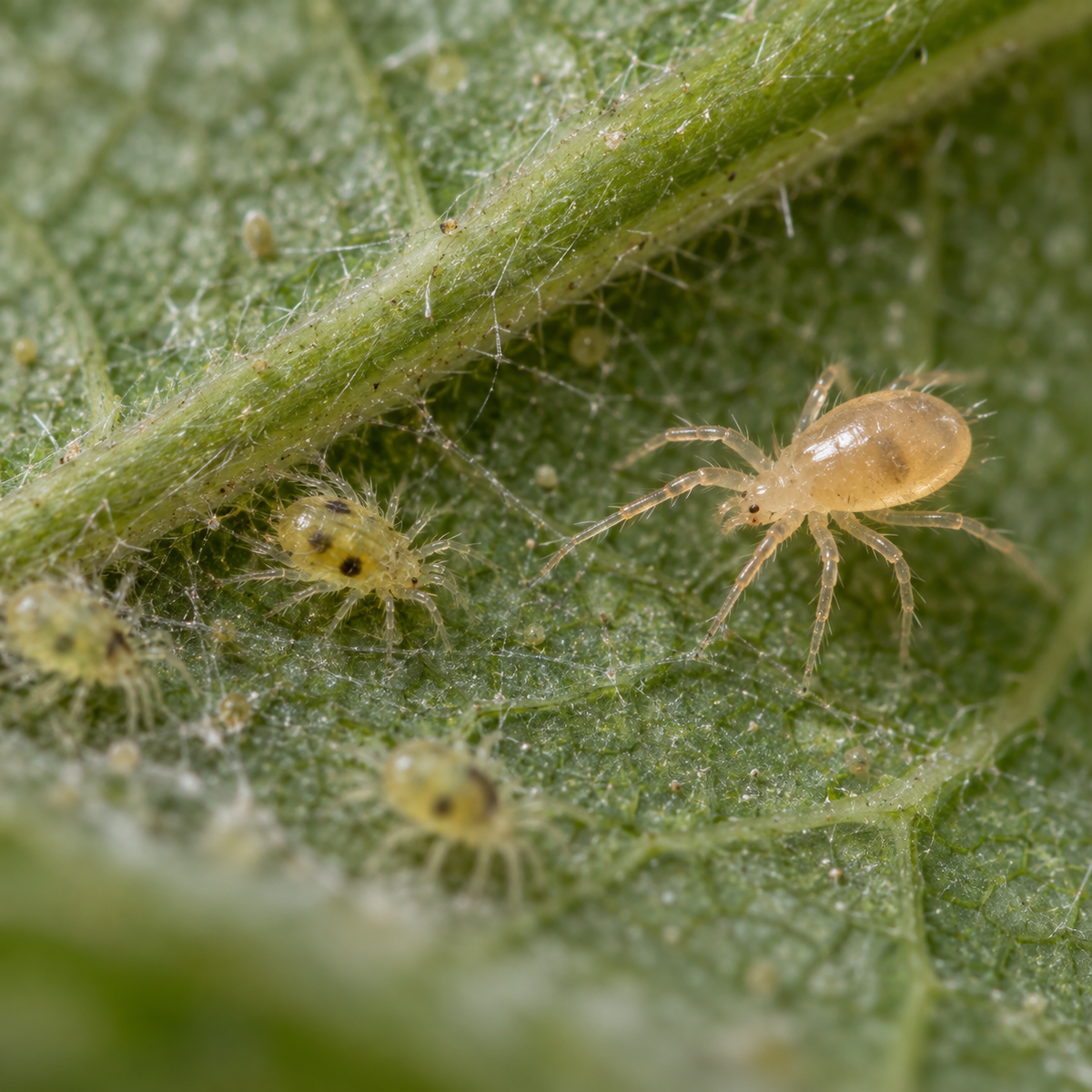
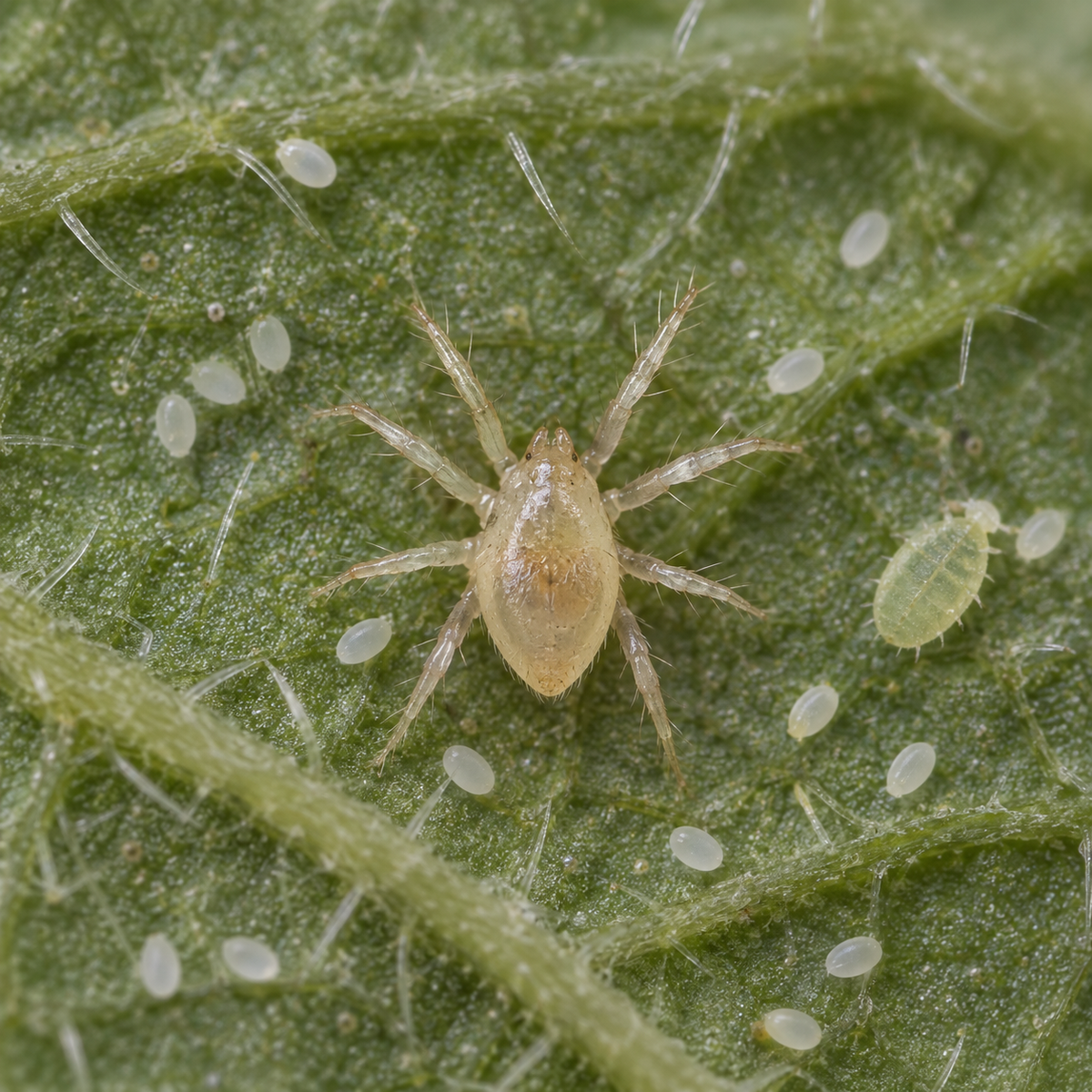
Treatment and prevention aren't the same thing sold in different sizes. A treatment release is a concentrated number of hungry predators dropped onto a problem that exists right now. A prevention product is a small breeding population that establishes and keeps working for weeks, so a problem never gets a foothold.
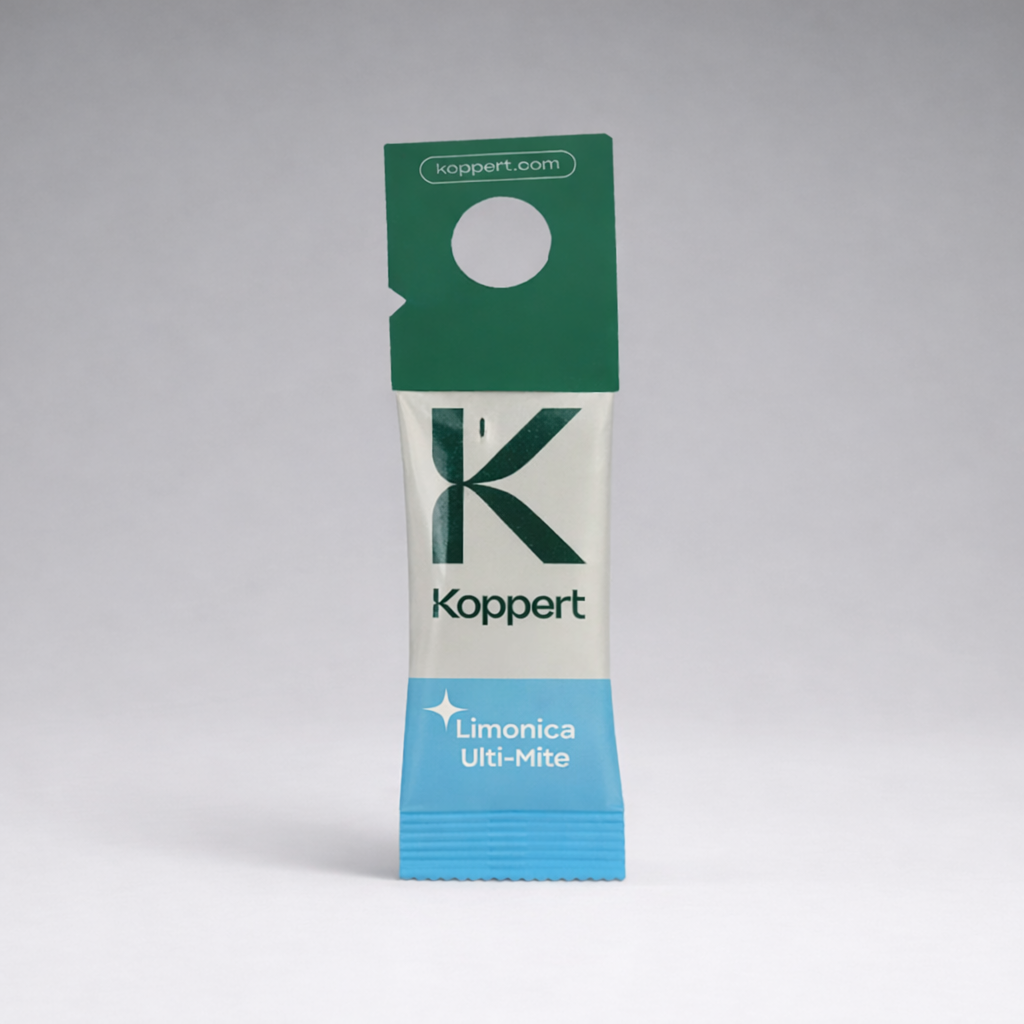
Prevention sachets
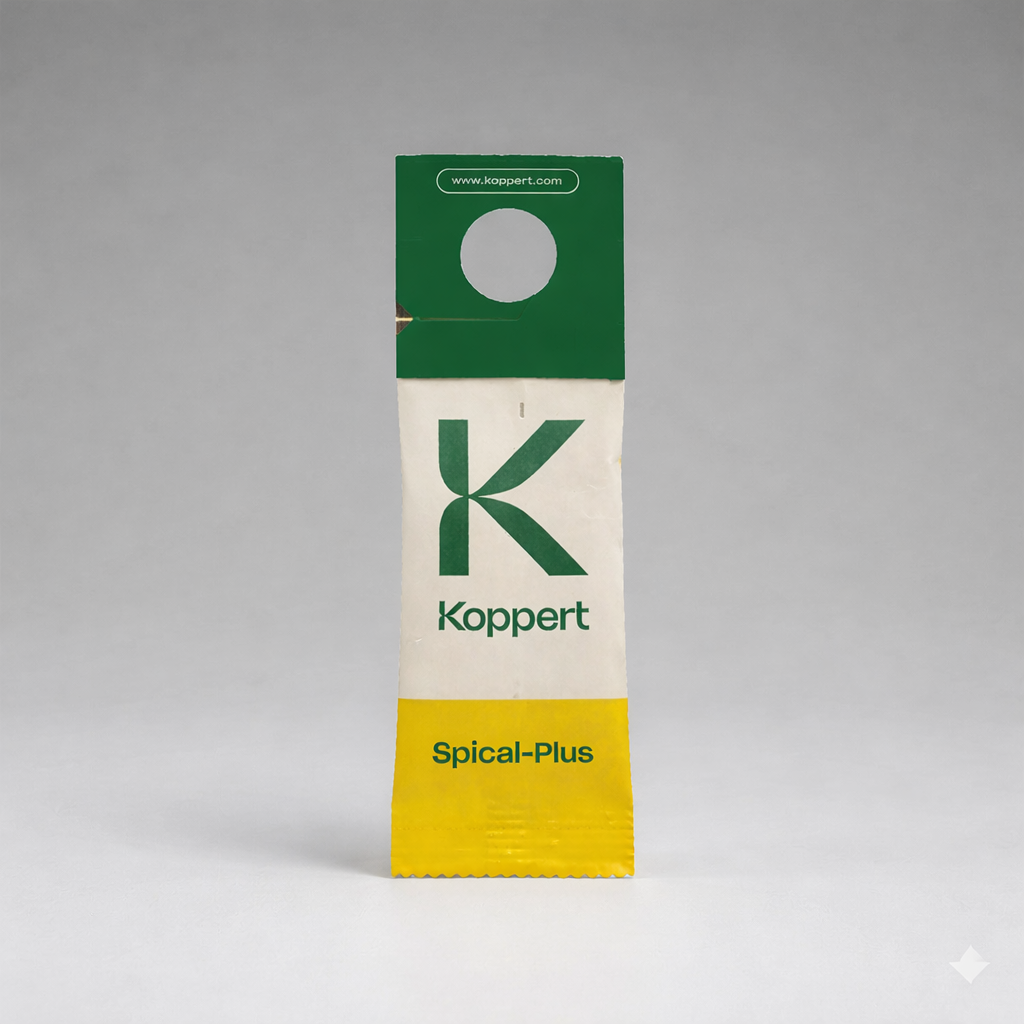
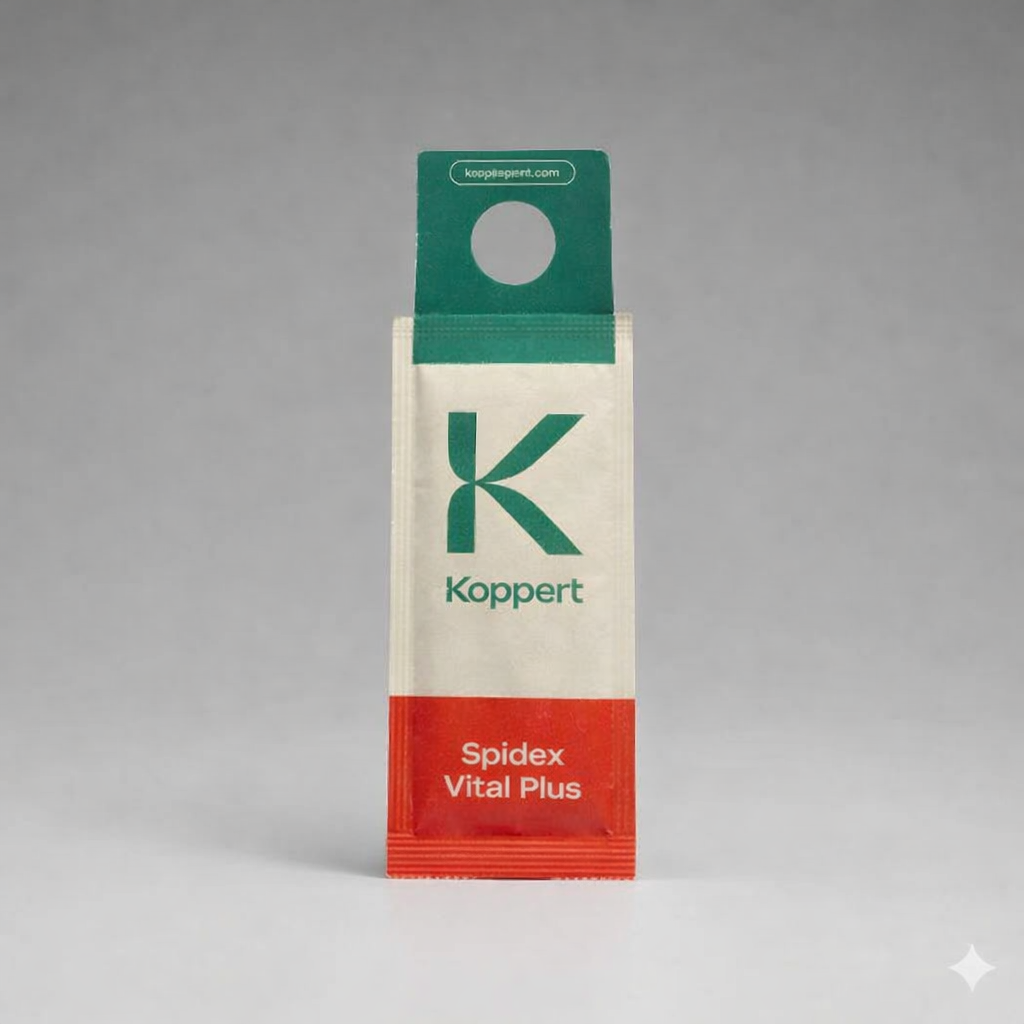
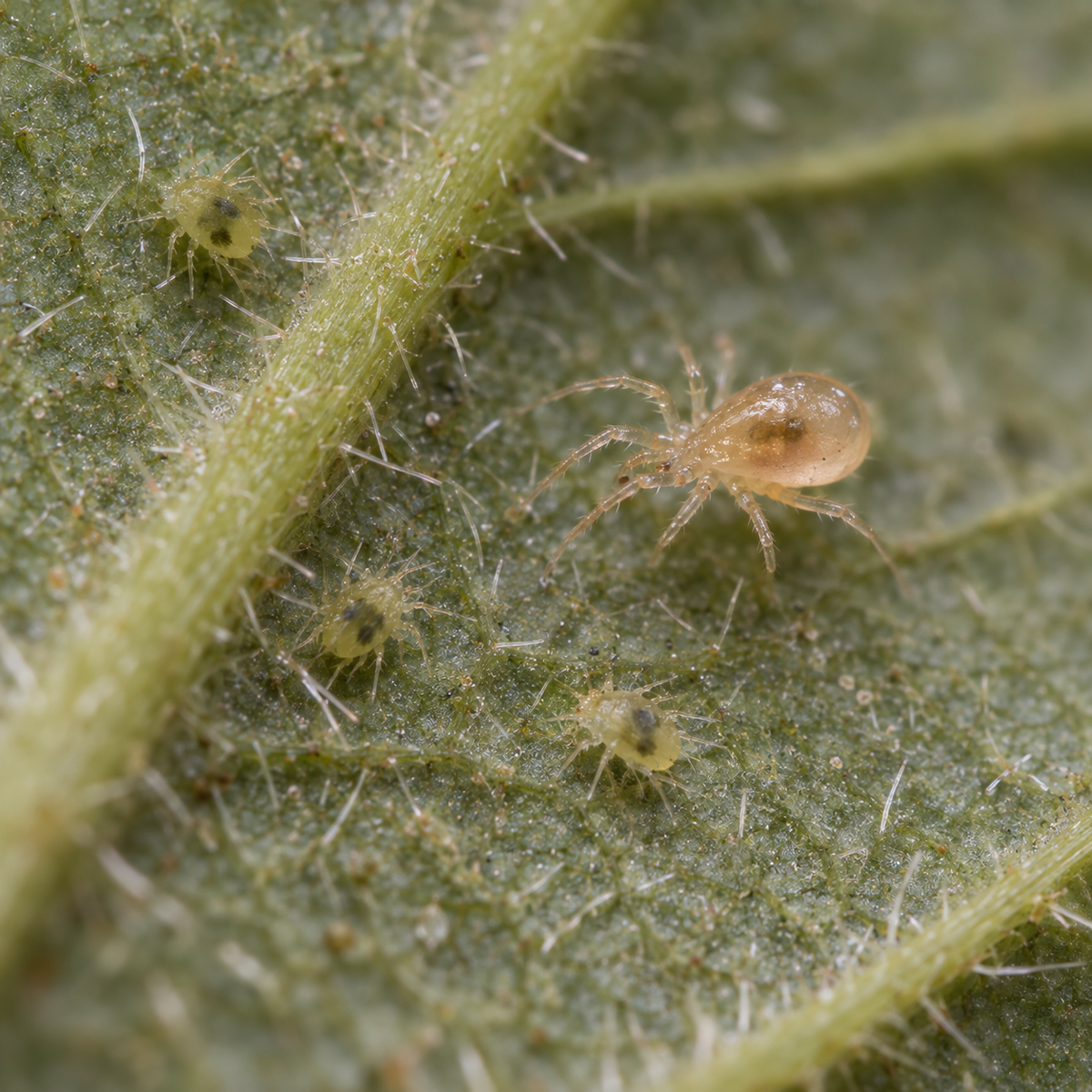
A prevention sachet is a small paper packet containing predatory mites, a food source, and a breeding substrate. Mites emerge gradually through a hole in the seal over several weeks, walking out onto the plant a few at a time. You hang it and forget it.
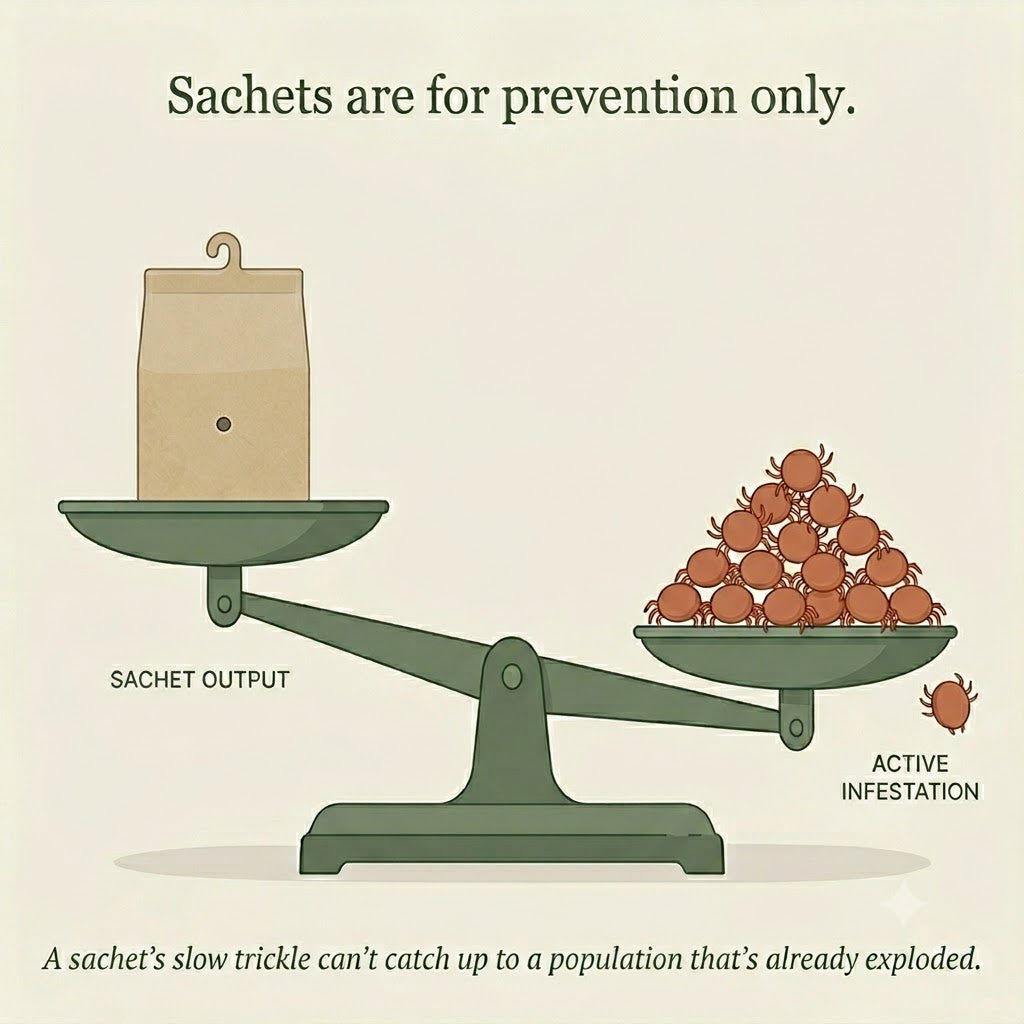
Because a sachet releases slowly, it does very little against an outbreak already underway — the arithmetic doesn't work. Sachets go up before there is anything to see. And more is always better: undersized coverage is the single most common reason a preventative programme underperforms.
The rest of the preventative kit
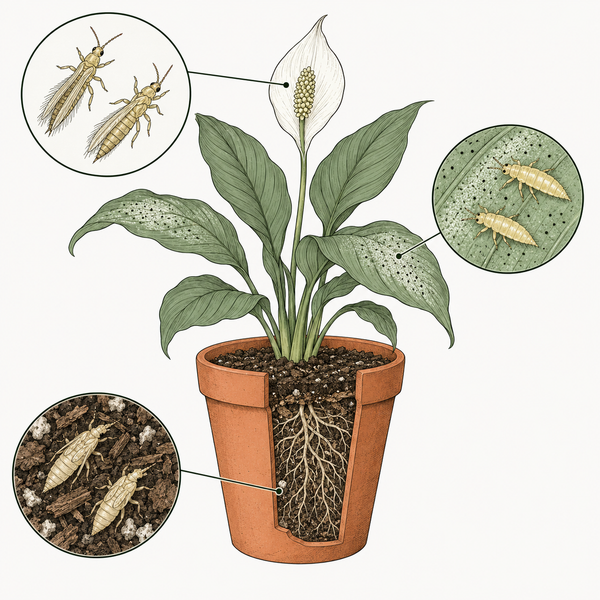
Soil predators. A resident Stratiolaelaps scimitus population in the top layer of media intercepts fungus gnat larvae and thrips pupae before they emerge.
Beneficial fungus and bacteria. Trichoderma and soil bacteria colonise the root zone at potting, occupying territory before a pathogen can.
Sticky traps. Monitoring cards aren't a control, but they're how you find out early enough for prevention still to be the right answer.
The honest case for it
Prevention is unsatisfying. Nothing visibly happens, which is exactly the point, and it's why people stop doing it and then have a thrips year.
Keep reading
What is actually inside a predatory mite sachet — the colony, what it eats and the carrier it lives in, and why a packet that looks empty is the one doing the work.