
Mite Matters

Are You Trying to Eradicate Your Pests — or Live With Them Strategically?
Most growers release predatory mites with a vague goal of "getting rid of the pests." But eradication and ongoing protection are different strategies, requiring different species, different formats, and different expectations. One is a campaign with an end. The other is a programme that runs alongside your plants. Here's how to know which one you're actually running — and how to make it work.

The Beetle That Looks Like Its Prey
The larvae of Cryptolaemus montrouzieri look so much like mealybugs that growers routinely try to wipe them off their plants. That's the beetle they just released, eating the pest they paid to eliminate. Here's how to tell them apart — and everything else you need to know before you release the most effective biological mealybug control in existence.

They Started the Moment You Released Them. You Just Can't Tell Yet.
You released the predatory mites three days ago and the spider mites are still there. The nematodes went in a week ago and the fungus gnats are still flying. This is the moment most growers reach for a spray — and it's usually the wrong move, because the beneficials have already started. Here's what's actually happening after a release, and how to read the signs that it's working.

Whitefly Treatment That Doesn't Wear Off
Spraying whiteflies knocks back the adults you can see. It doesn't touch the eggs. The eggs hatch, the nymphs are harder to kill, and three weeks later you're back where you started — except the population is slightly more resistant. Here's how predatory mites and Orius break that cycle by targeting the stages your spray misses.

One Eats Aphids. One Eats Mites. Carry On.
Ladybugs and predatory mites can run in the same space without meaningfully interfering with each other — but they're not doing the same job, and one won't cover for the other. Here's when the combination makes sense and when it's just extra cost.
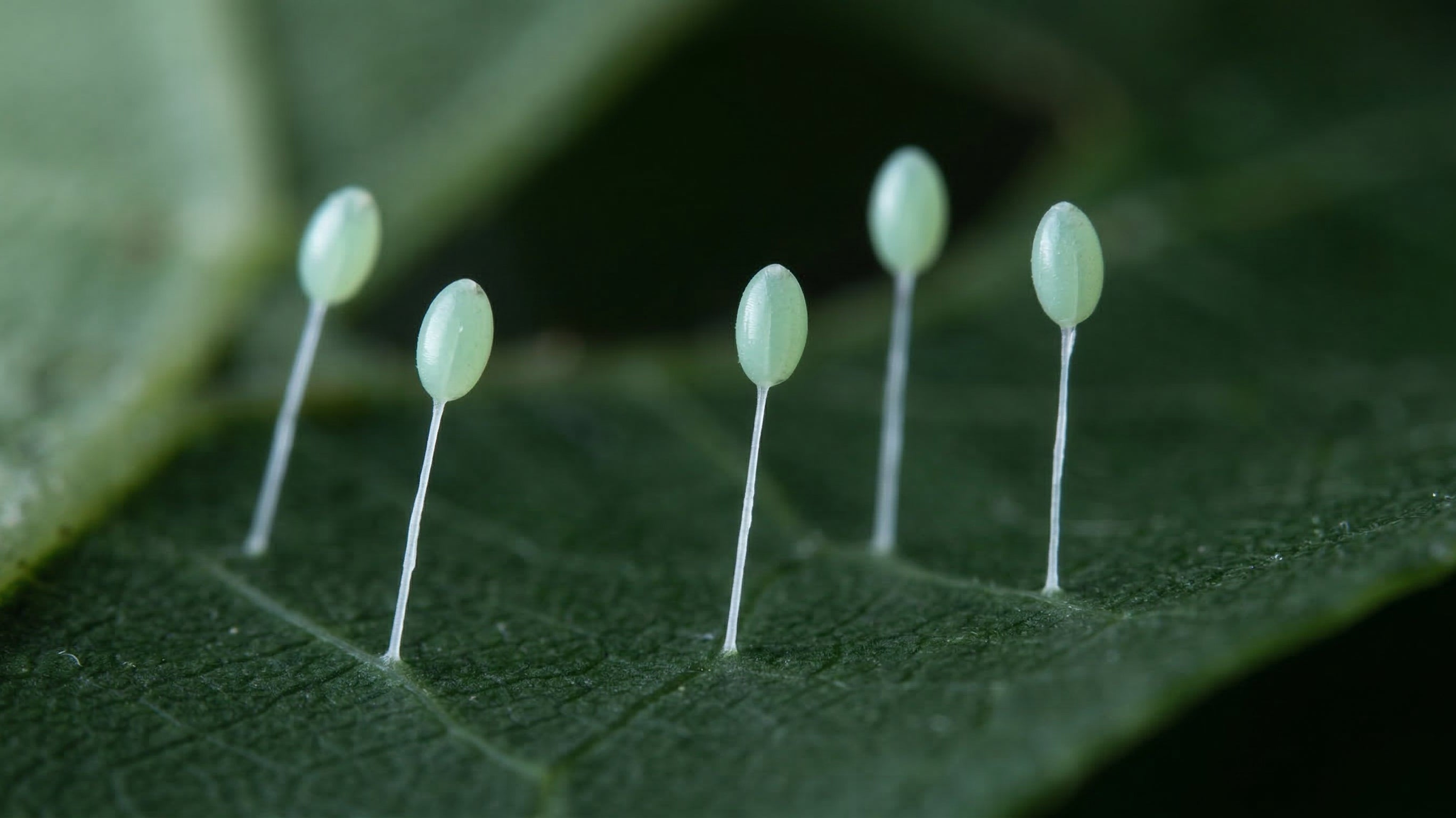
Eggs on Stalks: The Unusual Biology of Green Lacewing Eggs
Green lacewing eggs are laid on silken stalks — an evolutionary solution to two problems at once. Here's the biology behind the structure, what happens inside the egg as it develops, and how to deploy them effectively against aphids, mealybugs, thrips, and more.