


Green Lacewing Larvae
Lacewing larvae are a strike team.
(They hit hard, then they're done.)
Lacewing larvae are superb for an active outbreak — they eat ferociously for a couple of weeks, then pupate, and the adults move on to flowers instead of pests. If your problem is one clear infestation, that's exactly what you want. If it's low-grade and recurring instead — a few pests here, a flare-up there — one release won't hold the line on its own. Space two or three out rather than buying one big one.
10% off your first 4 orders, then 15% off every order after.
Heads up—this is just an estimate. We only ship when the bugs are happy and ready to travel (Mon–Thurs). If a colony needs a beat to peak, or we're propagating a fresh batch, your order might hold up to a week. Treatment bottles jump the line when you've got an active infestation.
Sizing guide
How our sizes work
Sizes are set by how many plants you are treating — not by how much material is in the container.
Every size on every product page names its own coverage right there in the dropdown, so you never have to come here to find a number. Medium — Up to 25 Plants (2,500 Mites) tells you the tier and the count in one line. This page is for the part the dropdown cannot tell you: how to pick between two of them.
These are rough middles. The ladder runs smallest to largest within each product, so a Medium of one species covers more ground than a Medium of another — a nematode drench and a beetle release are not the same job. The count on the size you are looking at is always the real answer.
Pest pressure moves you up the ladder
Plant count is only half the sum. The other half is how much pest is already there. A closed tent holding fifteen plants with thrips on every growing tip needs a larger release than a bright room holding forty plants with a few gnats — the population you are outnumbering is bigger, and the enclosed space lets it rebound faster.
Coverage figures assume a typical active infestation. Adjust from there:
Under heavy pressure, two releases beat one large one. Take the larger size and plan a second release 7–14 days later, which catches the eggs that had not yet hatched the first time.
A few things work differently
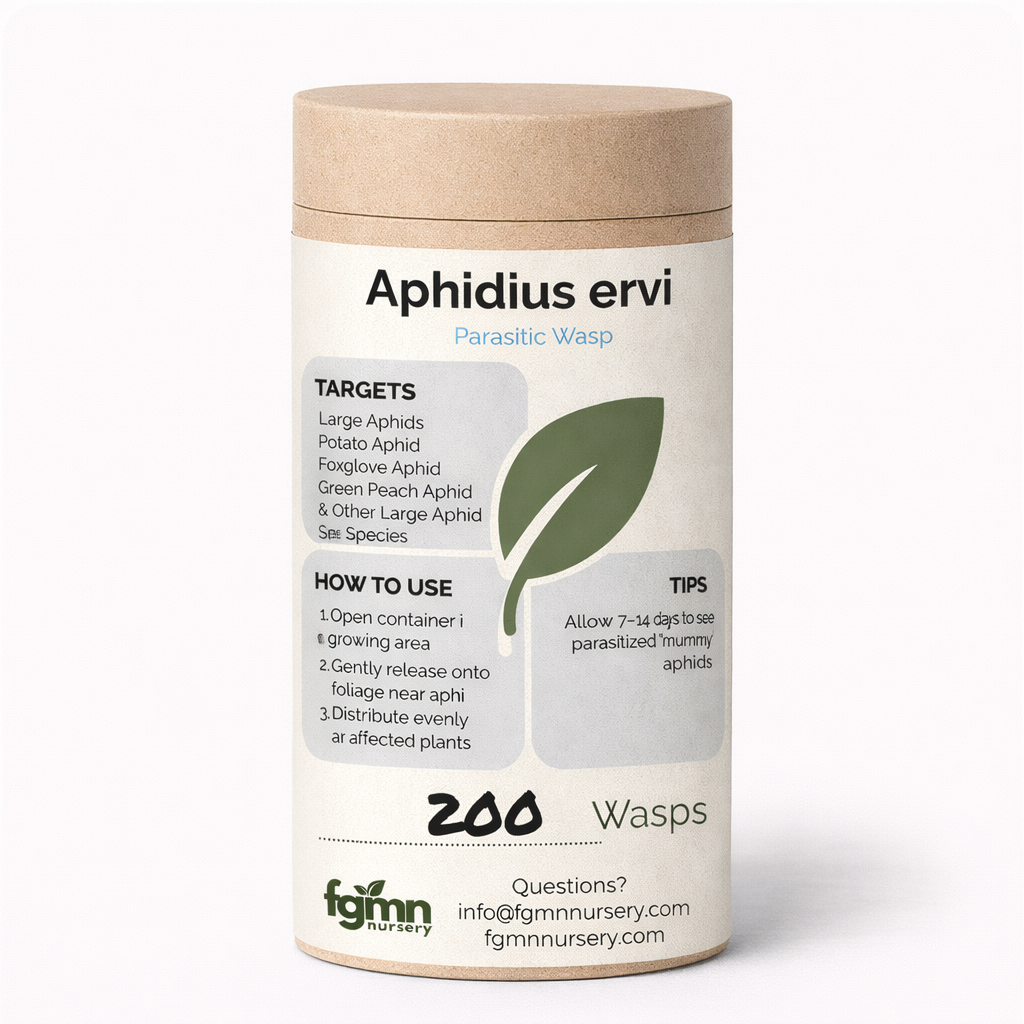
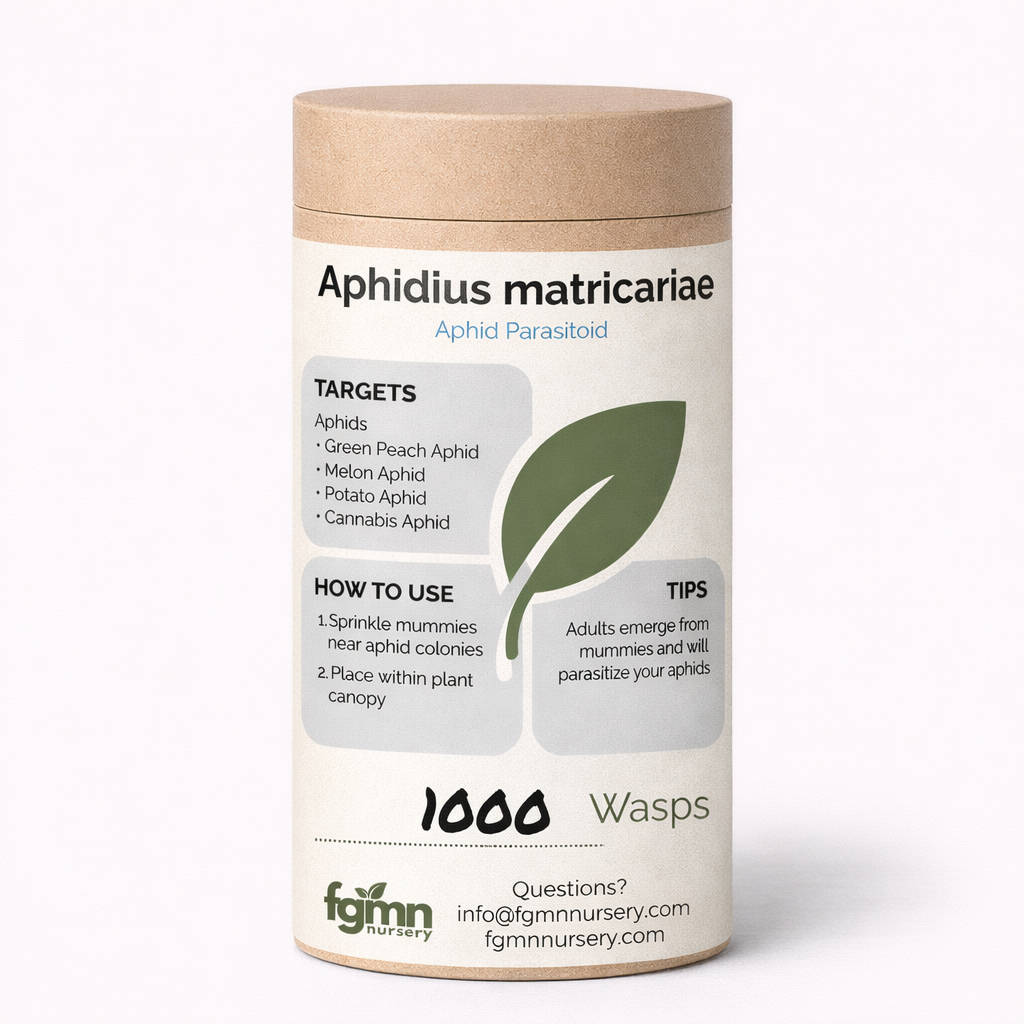
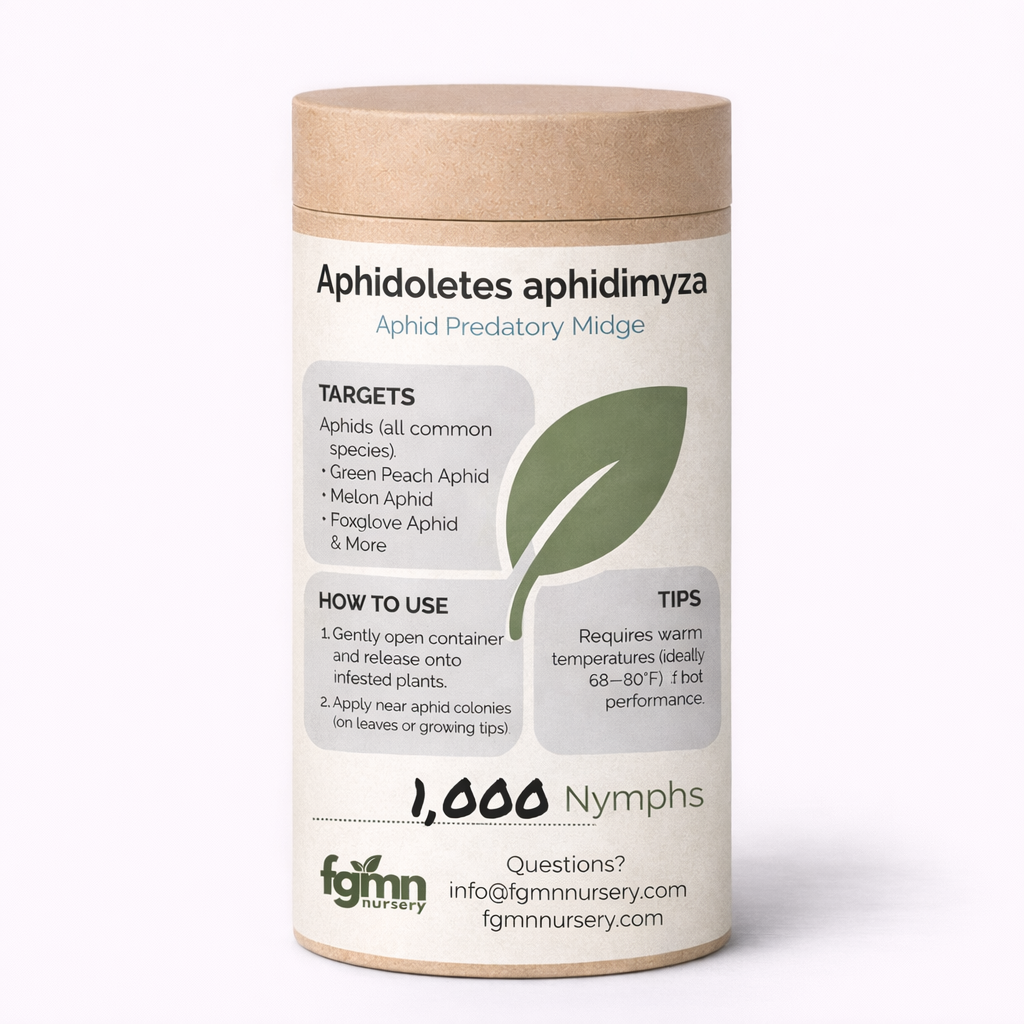
A few products read in square feet rather than plants, because that is how they are applied — the outdoor and area-scale releases. Those are Sc and Hb nematodes, and the aphid specialists Ervi, Matricariae, and Aphidoletes. Same ladder, different unit.
Sf nematodes and Triple Blend size by plants and pots, like everything else. They are soil drenches for potted plants, so count your pots rather than your floor.
Slow-release sachets have no size. They are sold by the sachet, and you place one per plant or one per few plants depending on pressure. Sachets are a prevention tool — they hold a population in place before a problem starts. If something is already established, a bottle is the correct answer.
Sizing up is cheaper than sizing twice. Predators need enough prey to establish and enough of themselves to find it. Underdosing is the most common reason a release underperforms, and it usually costs more in the end than the larger size would have. When you are between two sizes, take the larger one.
Still not sure? Tell us what you are growing and what you are seeing, and we will size it for you.
Green Lacewing Larvae
At A Glance
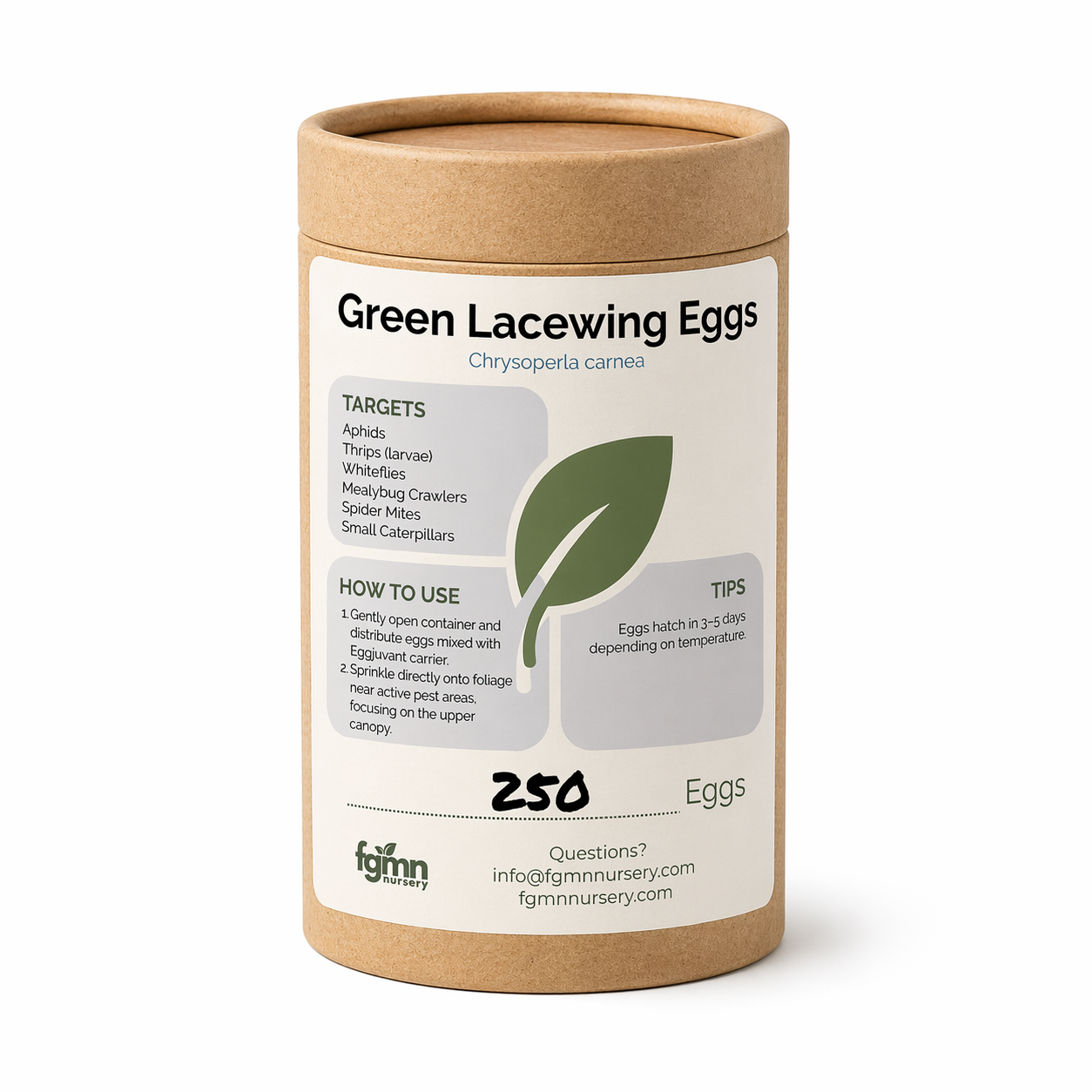
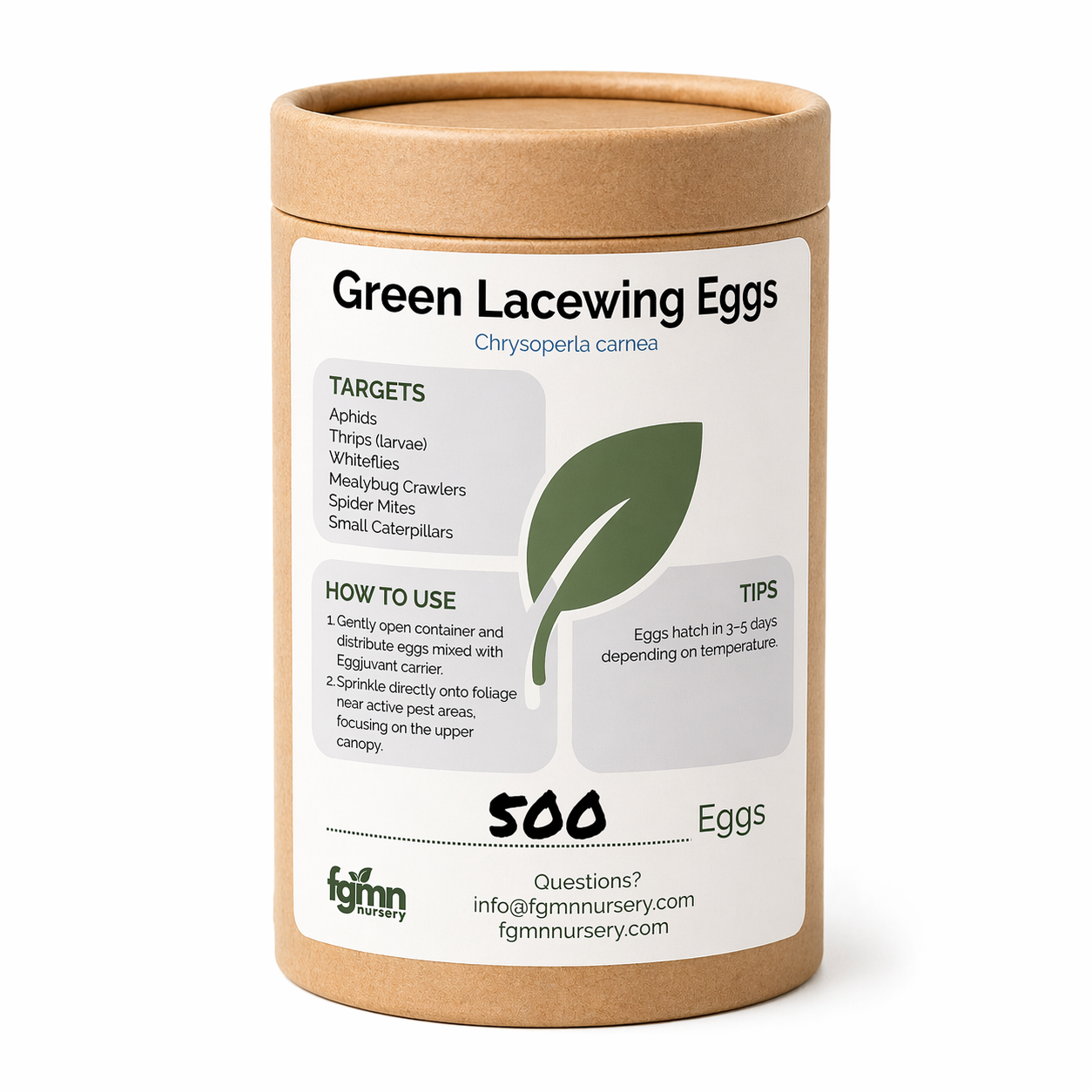
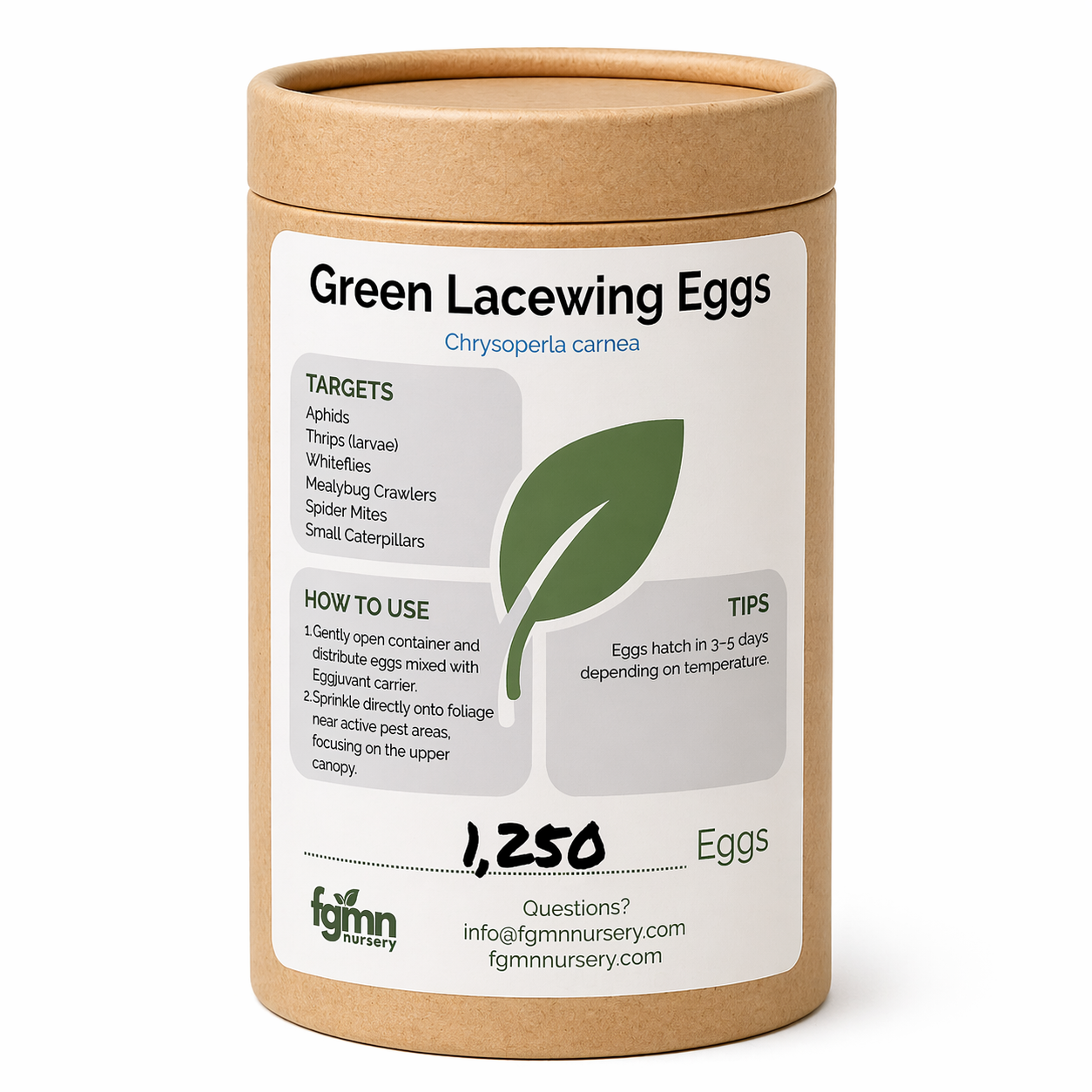
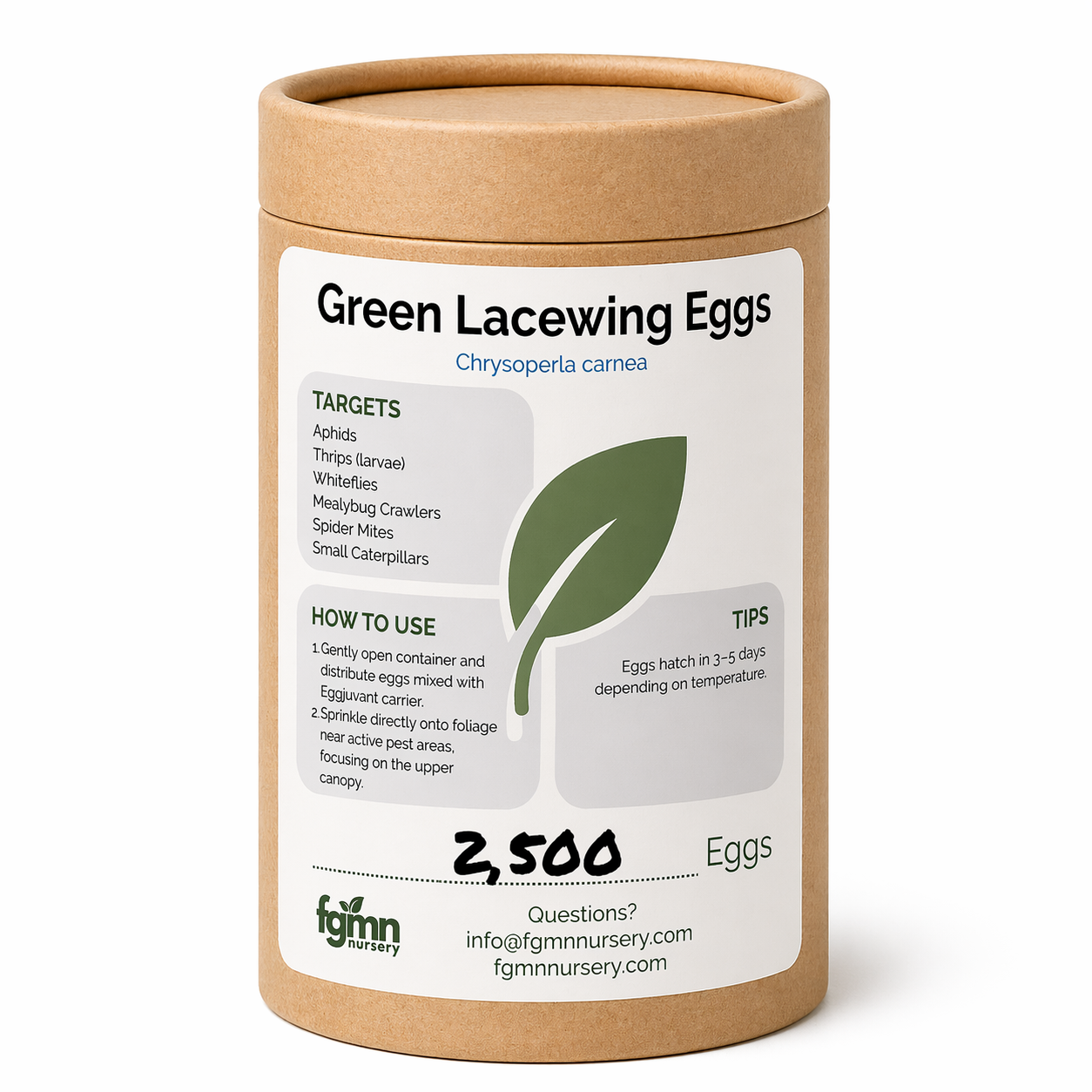
Green lacewing larvae are what you reach for when the aphids are already there. They ship as incubated eggs, timed to hatch about 24 hours after they arrive — so instead of waiting on a fresh egg stage, you get larvae right at the point they emerge hungry and start hunting. The nickname "aphid lion" is earned: aphids are what these larvae are built to clear, and they'll work leaf by leaf through an active population. They'll opportunistically pick at other soft-bodied pests they bump into — thrips, mealybug crawlers, spider mites, whitefly — but don't buy them for those. They're not a reliable treatment for anything but aphids; for the others you want the specialist. This is the pick for active aphid outbreaks and hot spots on high-value plants — when you want the problem handled now, not weeks out.
- Common Name: Green Lacewing Larvae (aphid lions)
- Target: Aphids. That's the job. Other soft-bodied pests may get eaten incidentally, but lacewing larvae are not a dependable treatment for thrips, mealybug crawlers, spider mites, or whitefly — use the specialist for those.
- Format: Incubated eggs in a protective carrier material, timed to hatch about 24 hours after delivery.
- Best For: Curative treatment of active aphid outbreaks and hot-spot cleanup on high-value plants.
- Key Advantage: Timed to hatch on arrival. The eggs are pre-incubated, so larvae emerge and start feeding about a day in — no long wait for a fresh egg stage.
Target Pests
Environmental Needs
Selection Guide
How to Use
How They're Shipped
Hatch is hours away. Be ready.
Lacewing larvae ship as pre-incubated eggs. They're timed to hatch within 24 hours of delivery, instead of the 7-10 days regular eggs can take. Why? Lacewing larvae are aggressive predators from the moment they hatch, and they don't distinguish between aphids and their siblings. Shipping incubated eggs keeps the colony intact in transit; hatching just as you're placing them onto your plants. Plan your release for the same day or the next morning.
-
01
Open the box right away
Bring the package indoors as soon as it arrives. Don't leave it on a hot porch, in a cold mailbox, or in direct sun. If your delivery was delayed by a day, the eggs are still fine — the incubation timing has a small margin built in to absorb a one-day delay.
-
02
Sprinkle the carrier across your plants
You won't usually see the eggs themselves, and you'll see the carrier media they're mixed in. Sprinkle across affected plants, into leaf axils, along stems, and into the inner canopy where aphids cluster. Spread thinly across as many plants as possible. The single most important thing is distribution: concentrating the mix in one spot means the larvae hatch into competition with each other instead of food. Wide and thin is the rule.
-
03
Watch for results over 1–2 weeks
Newly hatched larvae are tiny (about 1mm), pale brown, and alligator-shaped — they'll feed on aphids, mealybugs, thrips, and other soft-bodied pests for two to three weeks before pupating. Aphid populations typically start dropping within the first week. If pest pressure isn't easing by week two, that's when to bring in our bug pros.
Something not quite right?
Reach out to our entomologist by filing a report within 72 hours of delivery, with your order number and a photo. Candidly, without a photo the team can't approve a live beneficial claim.
Read the full Live Delivery Guarantee →Join Karen's Live Shows — Pests, Plants & Predators on PalmStreet.
Every Friday at 7pm EST — plus additional shows throughout the week. Ask your pest questions in real time — we answer everything.








The Weekly Newsletter
A weekly excuse to be weird about bugs at parties.
Weekly dispatches on the quietly alarming things happening in your soil. All of it real.
No spam. Leave whenever.
You're in
The first strange true thing arrives next week.
FAQ
What is your Live Delivery Guarantee?
We guarantee that your beneficial insects and plants arrive healthy and ready to work. They're living things, so we pack for the season and ship expedited to give them the best trip we can.
If something looks wrong when the box opens, take a photo and file a report within 72 hours of delivery, with your order number. Photos matter: candidly, without them the team can't approve a live beneficial claim.
Can I use these if I recently sprayed Neem oil or insecticidal soap?
What happens to the larvae after they finish eating all the pests?
Do the larvae bite humans or pets?
How do I know the larvae are still alive in the carrier material?
Are these effective for pests in the soil?
Will my circulating fans blow the larvae off the plants?
Help! I'm overwhelmed
Yeah, it's a lot the first time you're using green lacewings. File a report and our bug pros will walk you through it!
I don’t see anything moving in my bottle or sachet. Does that mean they’re dead?
Not at all! In fact, go ahead and deploy them.
Predatory mites are microscopic (often less than 0.5mm) and naturally blend into their carrier medium (bran or vermiculite).
- For Bottles: The mites often huddle in the center of the bottle for insulation during transit.
- For Sachets: These are "slow-release" nurseries. The mites stay tucked deep inside the breeding media and emerge one by one over 2–4 weeks. Seeing an "empty-looking" sachet or bottle is not proof of a loss; it is simply how they are packaged for maximum survival.
Arrived quickly and you can tell everything was done with care and intention. Can’t wait to see them in action!
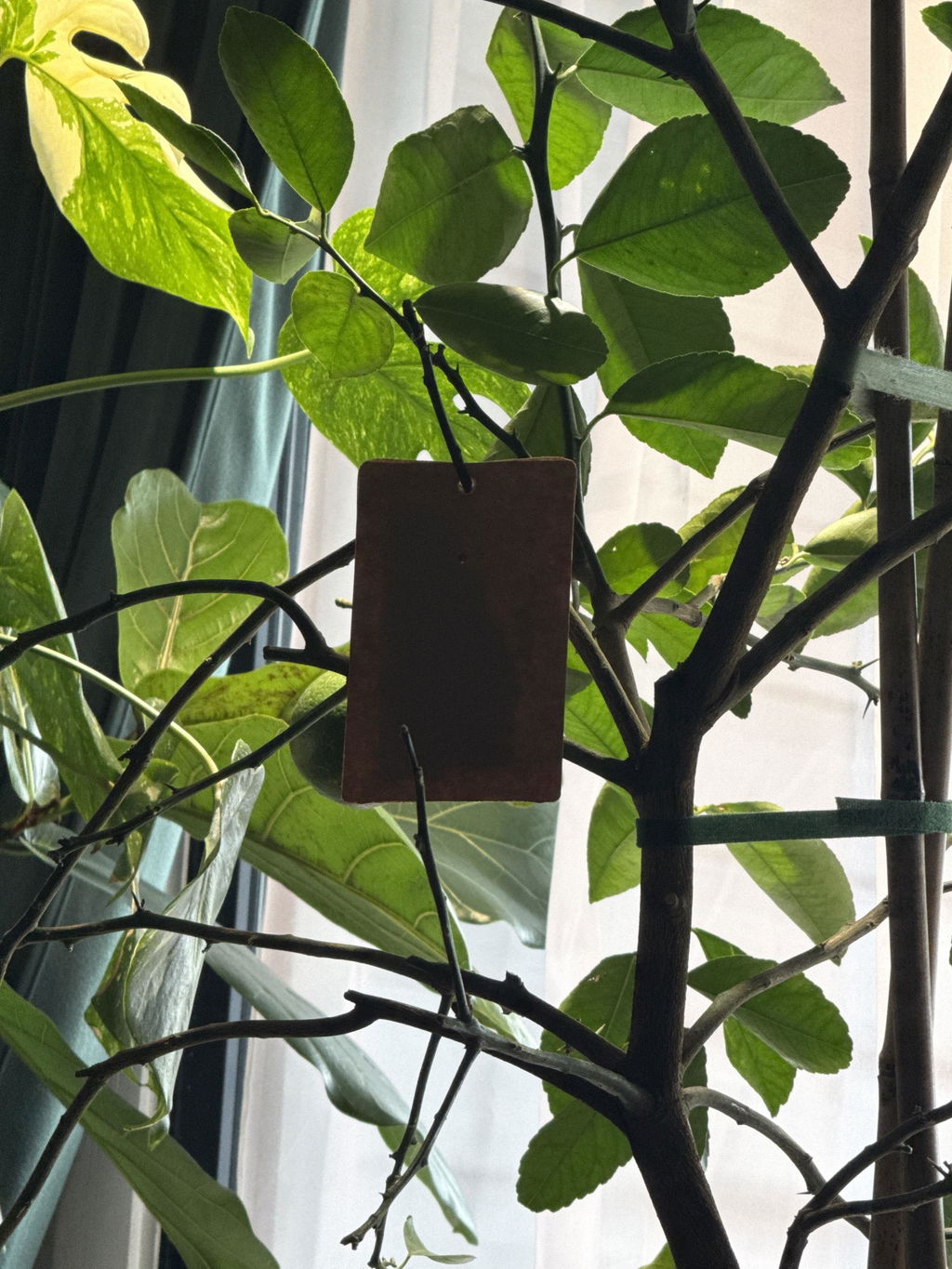
Larvae arrived on rice hulls. I distributed them on my grapevine and watermelon patch. Within a day or two the larvae were out scavenging. So very happy with this product! I've already made a note to order them every season.
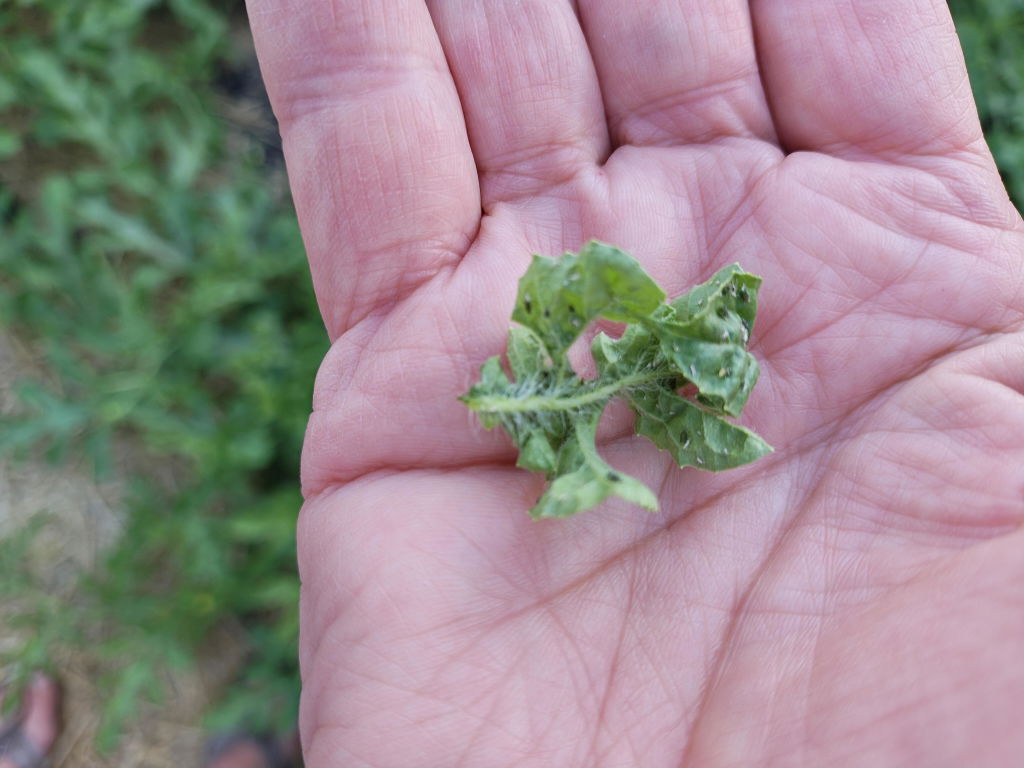
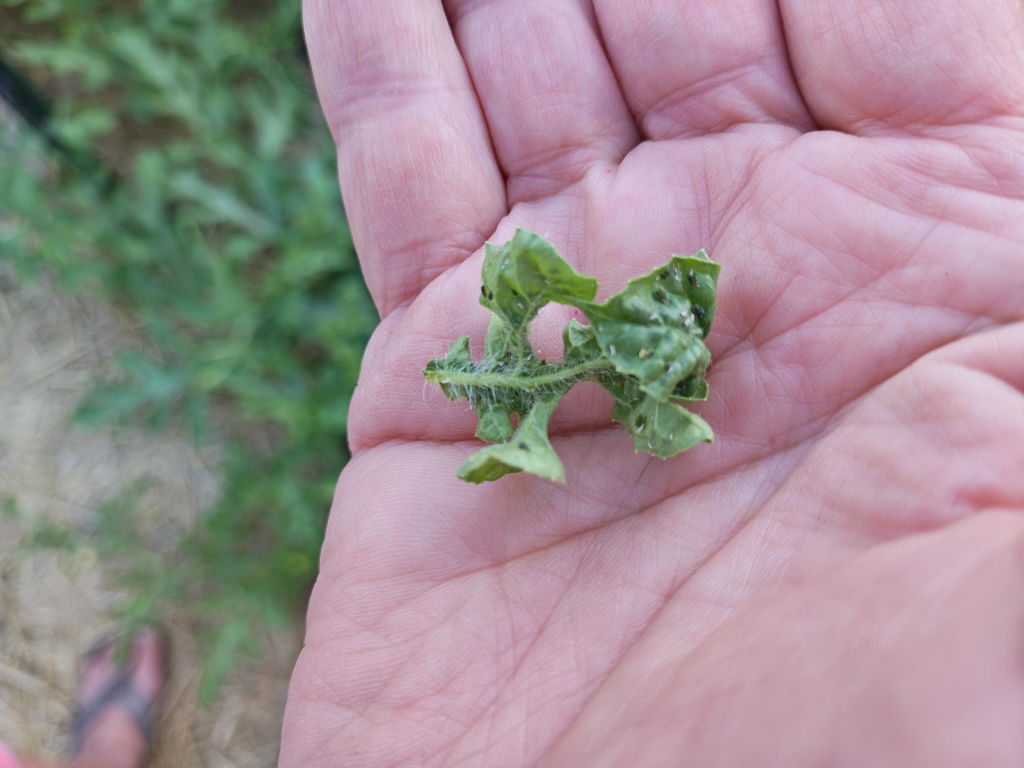
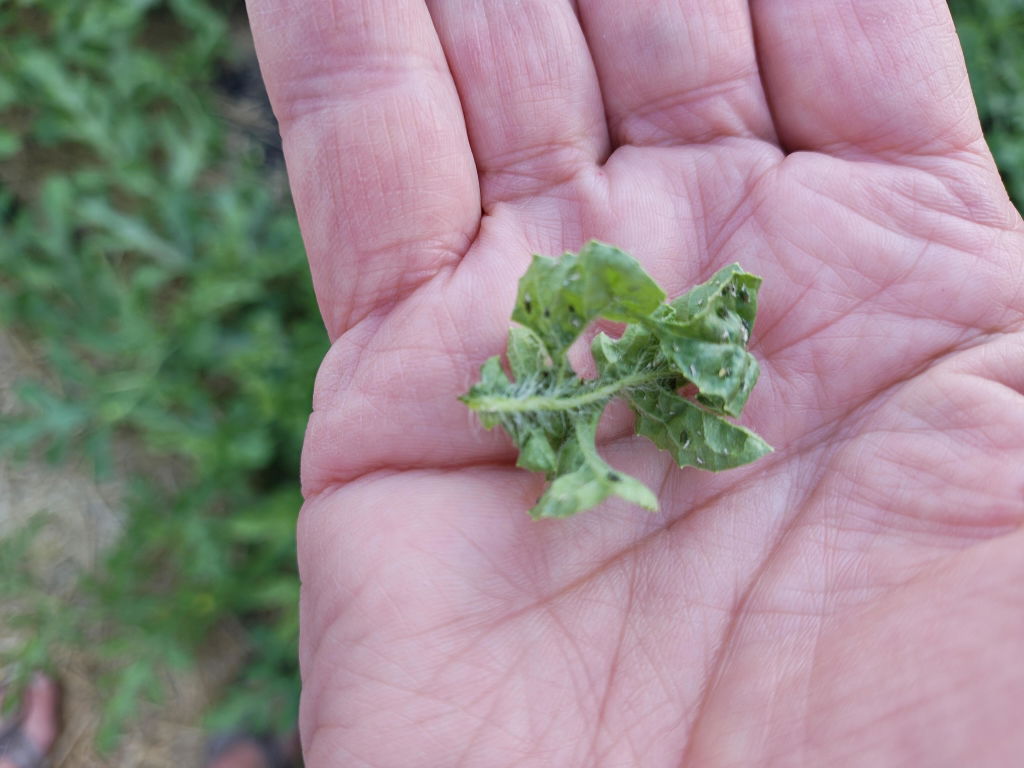
Go larvae, go! I love watching them run around and eating up all the pests. Thank you for your patronage and support. :)
after a week zero results (going after white flies) I see a couple of miniscule white dots, guessing these are the bugs, that don't look like they could eat one white fly.
Hi there, Ragface. Sorry to hear you're not seeing the results you expected. For persistent whiteflies, sometimes multiple applications or complementary methods can help. Feel free to reach out if you need more advice or alternative solutions. Thanks for your feedback!
It worked! Very impressed, this will be our go to!
Very helpful staff and responsive. Could use a little better instructions on the website for novice gardeners like me who have no idea what they are doing. Product did not work for me unfortunately.
I am SO pleased with my purchase. My gladiolus and roses have been plagued by thrips and aphids the past few years. I'd tried a bunch of other home remedies to get them gone, but nothing really worked. Two orders of the lacewings, and not a thrip or aphid to be seen, and my glads are finally coming up healthy!
I have had great success years previously all with other companies. Unfortunately after 3 weeks my infestations were significantly worse than better. I lost most of my plants. The response from customer service was basically sorry and they could do nothing. I have used two other companies for the last 5 years with great success ordering lady bugs and green lacewings. Unfortunately this will be my last order from FGMN. I will stick with companies that back their products.
Hi Erica, thank you for the feedback, and we're sorry this didn't go the way your past orders did. I did check with the customer service team and have a bit of an answer as to what happened. The most important window for us to help is the first 7 to 10 days after arrival -- that's when we can troubleshoot, assess what arrived and how, and step in while there's still time to change the outcome. It's not that we didn't want to help; it's that reaching out 3 weeks later, with no supporting evidence, makes it impossible for us to diagnose fairly or even help. Reaching out early and working with us to diagnose the challenge is genuinely the best thing you can do with live predators — it's when we're able to do the most for you. We'd welcome the chance to help you get a strong result next time, and we're always reachable at info@fgmnnursery.com.
They are my aphids right up.
Being new at this type of outbreak I am still watching for results. I can say things have slowed.
Shipping, communication and response time from you have been awesome. Just hope my new army is making it happen.
Thank you 😊
Between these Green Lacewings and the parasitic wasps I also ordered from FGMN, my green peach aphid problem has completely vanished. I couldn't be more satisfied!
My review is for Mia and Karen. They really are so helpful and try to answer all you questions. I love those two 💕
I feel like I paid $71 for a tube of vermiculite. Absolutely saw no change. 2 plants in a tent.
Hi!
That's disappointing to hear! Have you reached out to Mia or Karen at info@fgmnnursery.com? They'll be happy to help. I don't have the details on your order to do more than a general reply here.
I know it says this on the product page and bottle, and sorry to repeat, but it can be a point of confusion -- our larva are shipped as incubated eggs. If we ship them as 1st instar larva, they often consume one another before they even get to you. There is always the chance that happened anyway which is why I ask if you reached out. We'll be happy to ship another bottle in that case.
While being in a tent is great! There's also the possibility it got too hot for the larva or eggs.
There's, of course, also the possibililty that they don't eat whatever it is you're treating, or that the pest pressure is higher than you estimated and they are there eating, but it's not making a dent.
We're always happy to help. Please reach out at info@fgmnnursery.com and Karen or Mia can really dive in and help. :)
These little ones make quick work of all my pests, and I love seeing them teetering around carrying all the carcasses. They were ready to go straight from the shaker, and I'm seeing lots of adults, eggs, and larvae (it's been about 2 weeks since i released them in the yard). Will buy again!!!
Timely shipping, outstanding customer service. All in all an excellent experience.
Prompt delivery. Good packaging. Hoping for the best!
It arrived incredibly quickly, and they quickly developed and ate all the aphids!
I’ve been ordering from another company. Shipping through you was much quicker, lacewings arrived in great condition.
Thank you!! Admittedly, that can be time of week. Order Monday through Wednesday and shipping is most often same day or next day. It can feel like an eternity from Thursday evening to the next Monday, but there's no one that delivers reliably over the weekend. :/ Irregardless, I'm so glad the lacewings got to you well and ready to rumble!
Wonderful customer service but unsure if they did much I released them and I still see aphids eating up my peppers unsure if any survive the transfer but I released as soon as I got them on mail as verified per email.
Hi!
Thank you for the customer service compliment. The larvae can take a few days to show results, and if they don't the issues are often that too few were released for your issue, the aphids are in hiding in heavy foliage and the larvae haven't gotten to them, or the weather conditions aren't right for lacewing larvae yet. I believe someone offered to replace them if you haven't seen the effects in a week or two, but if you believe it's any of the above affecting it, you may want to switch to another predatory solution for aphids as you're likely to have the same issue again-- especially if it's weather or foliage density related. Simply let the team know what's going on and they'll be happy to help you.
Mite Matters

Cucumeris: Why It Works (and Why It Fails)
Cucumeris is reliable, widely researched, and genuinely effective — within a specific set of conditions. Here's what it actually does, what it won't do, and how to tell if it's the right species for your situation.

My Plant Has Webbing. Help.
Webbing on a plant isn't always spider mites — and the mite that causes the most damage indoors doesn't produce webbing at all. Here's how to tell what you're actually looking at before you treat.

Native vs Invasive Ladybugs
Most ladybugs you'll encounter are red with black dots — and that description fits native, introduced, and invasive species equally. Here's how to actually tell them apart, what the harlequin ladybug has been doing to native populations, and where the real ecological concerns are.