


Thrips Total Control - Three Stage System
10% off your first 4 orders, then 15% off every order after.
Heads up—this is just an estimate. We only ship when the bugs are happy and ready to travel (Mon–Thurs). If a colony needs a beat to peak, or we're propagating a fresh batch, your order might hold up to a week. Treatment bottles jump the line when you've got an active infestation.
Thrips Total Control - Three Stage System
At A Glance
Thrips Total Control is our premier eradication system. We have removed the guesswork by bundling the three most effective biological agents into one cohesive system. This bundle attacks thrips at every stage of their life cycle—on the leaves, in the flowers, and in the soil—ensuring that no generation survives to plague your plants.
-
Primary Benefit: Full-spectrum defense that breaks the thrips life cycle entirely.
-
The Strategy: Use Swirskii to protect the foliage, Orius to hunt down flying adults, and SF Nematodes to sanitize the soil.
-
Compatibility: All three agents work in harmony and can be released simultaneously.
The Thrips Total Control System
-
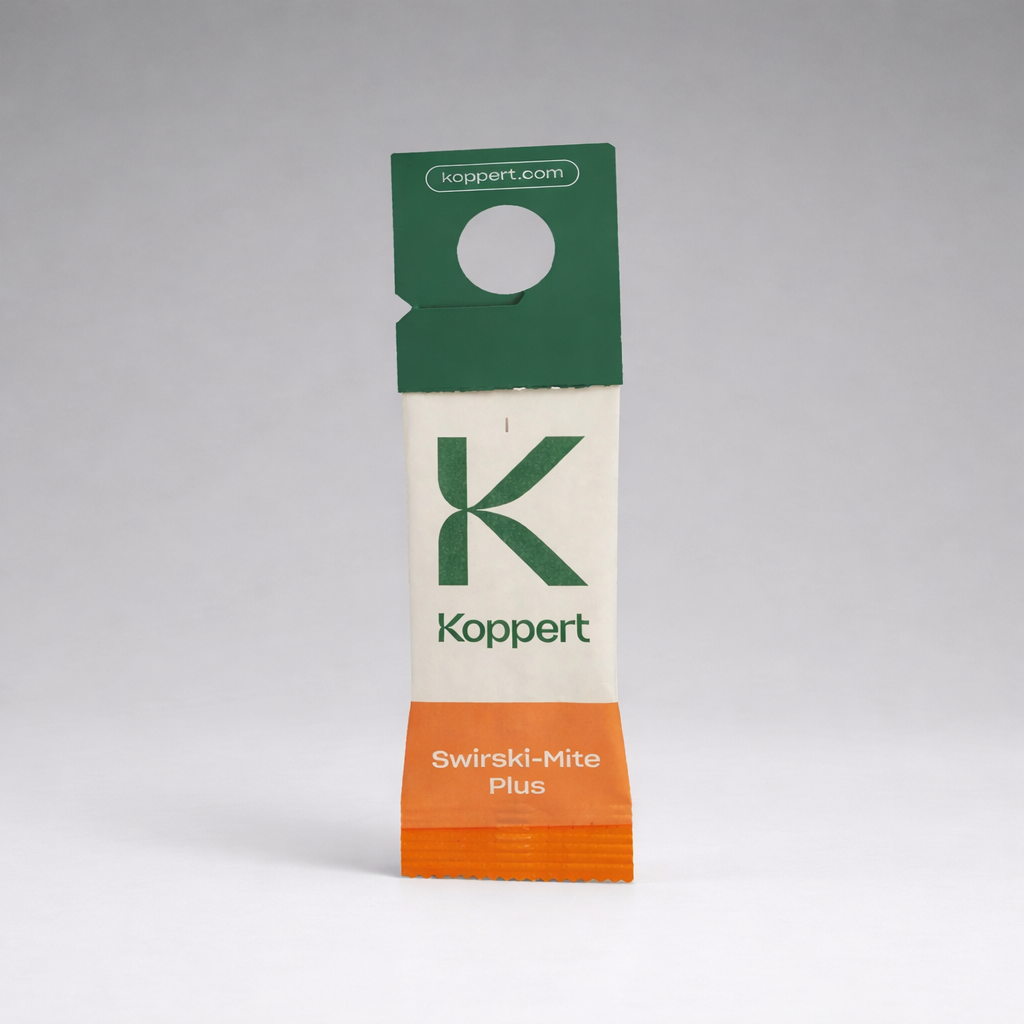
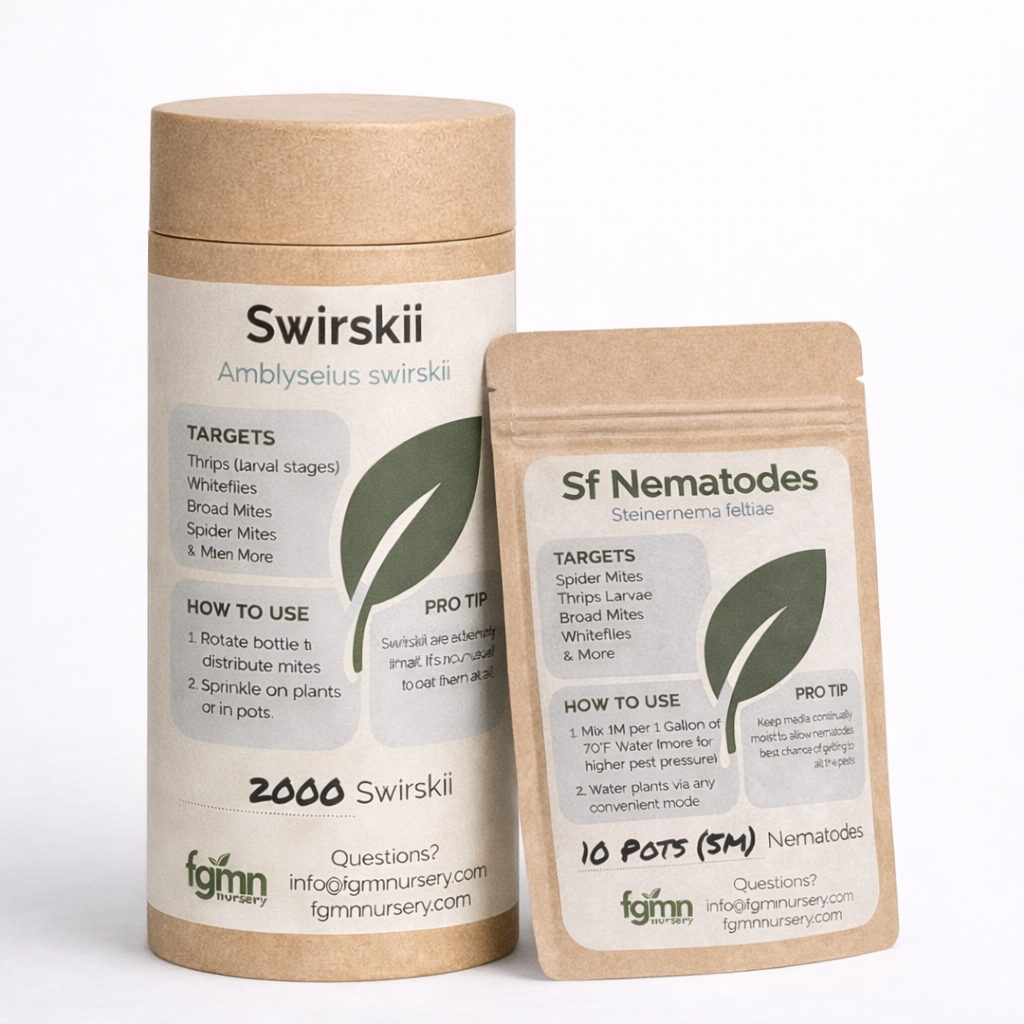
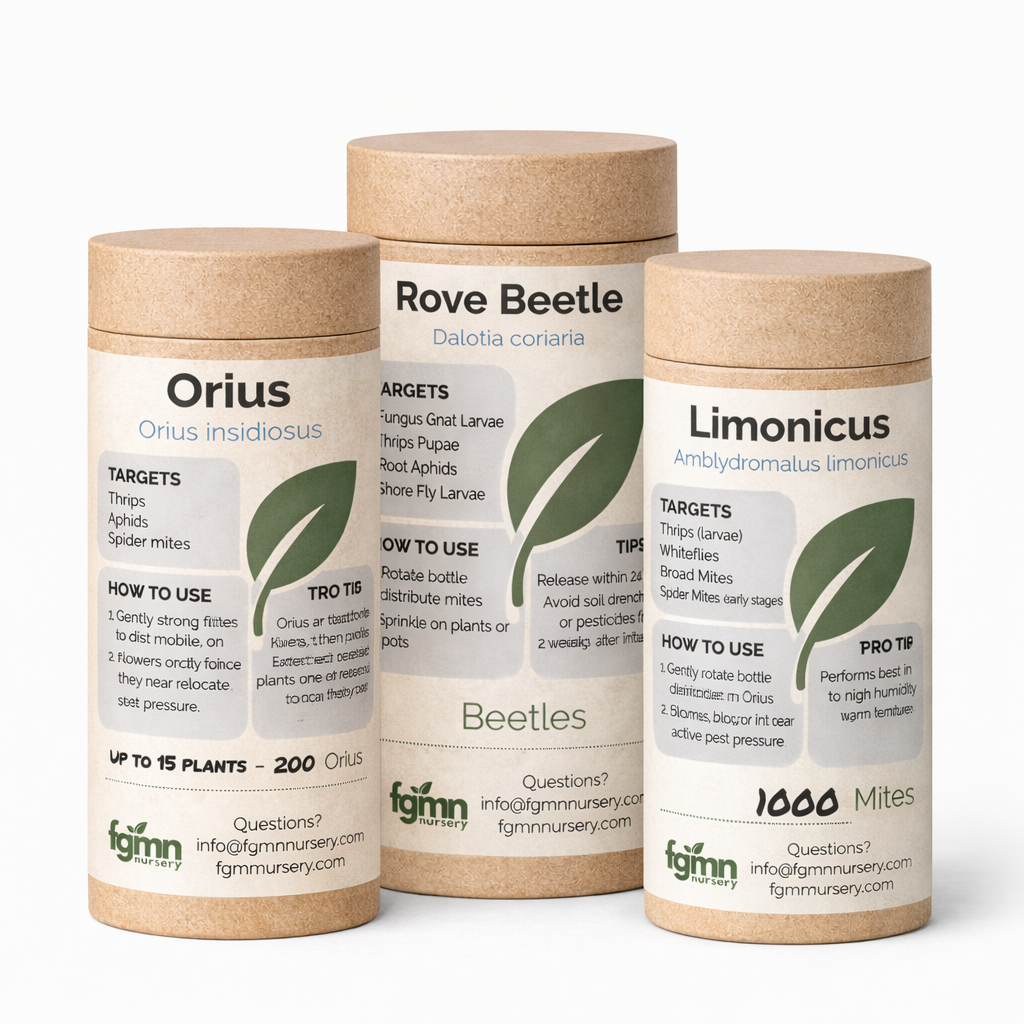
Amblyseius swirskii: Your persistent foliage patrol. These predatory mites establish a breeding colony that hunts thrip larvae and eggs 24/7.
-
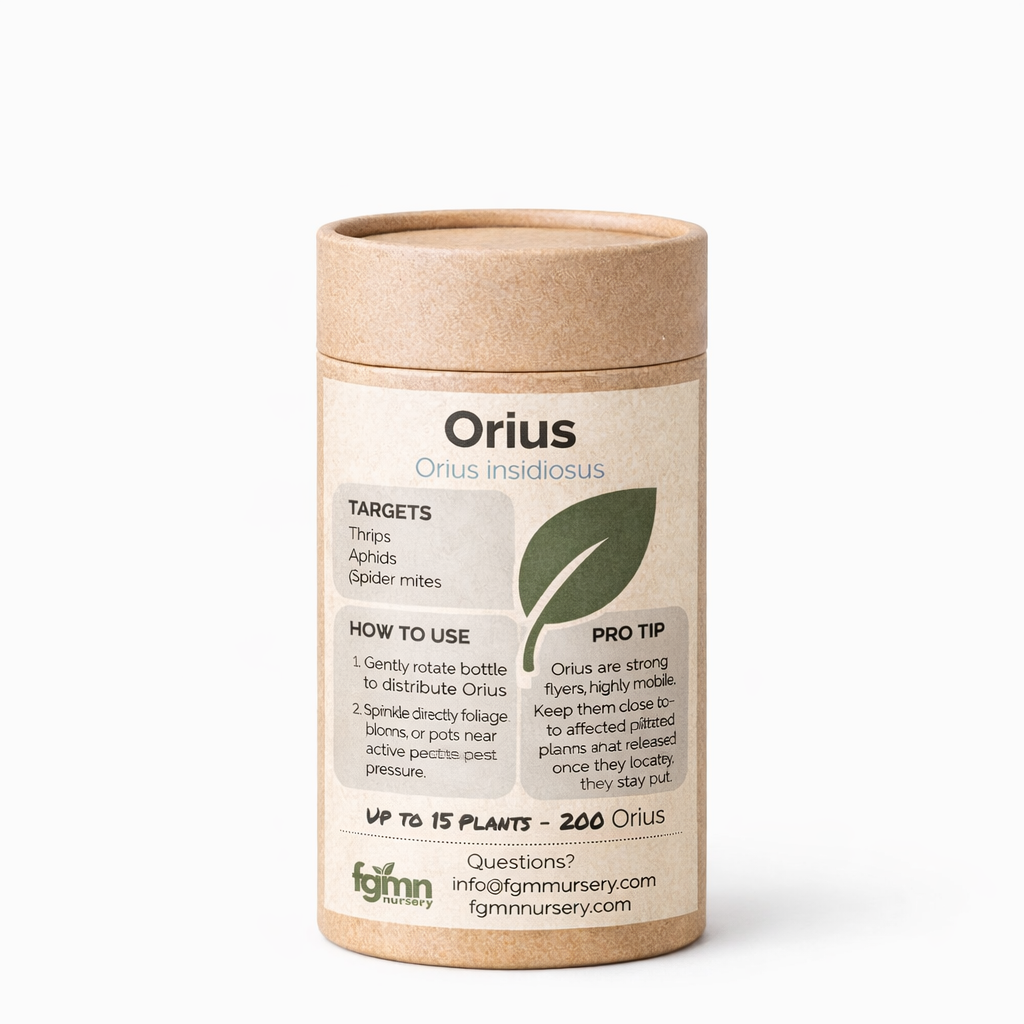
Orius insidiosus: The Pirate Bug. This is your heavy-duty hunter. Orius is one of the few predators capable of taking down the adult flying thrips that are too large for mites to handle.
-
SF Nematodes: Your root-zone sanitation crew. They hunt down the larvae and pupae hiding in the soil, stopping the infestation cycle where it starts.
Bundle Contents by Coverage Tier
Select the bundle that matches your grow size. Each tier is calibrated to provide the precise density needed for total population collapse:
10-Plant Bundle
-
1,000 Amblyseius swirskii
-
200 Orius insidiosus
-
5 Million SF Nematodes
25-Plant Bundle
-
2,500 Amblyseius swirskii
-
500 Orius insidiosus
-
10 Million SF Nematodes
50-Plant Bundle
-
5,000 Amblyseius swirskii
-
1,000 Orius insidiosus
-
25 Million SF Nematodes
100-Plant Bundle
-
10,000 Amblyseius swirskii
-
2,000 Orius insidiosus
-
33 Million SF Nematodes
250-Plant Bundle
-
25,000 Amblyseius swirskii
-
5,000 Orius insidiosus
-
100 Million SF Nematodes
Target Pests
Environmental Needs
Selection Guide
How to Use
How They're Shipped
Join Karen's Live Shows — Pests, Plants & Predators on PalmStreet.
Every Friday at 7pm EST — plus additional shows throughout the week. Ask your pest questions in real time — we answer everything.




The Weekly Newsletter
A weekly excuse to be weird about bugs at parties.
Weekly dispatches on the quietly alarming things happening in your soil. All of it real.
No spam. Leave whenever.
You're in
The first strange true thing arrives next week.
FAQ
What is your Live Delivery Guarantee?
We guarantee that your beneficial insects will arrive healthy and ready to work. Because we are shipping live organisms, we use packaging and expedited shipping to ensure their safety. In the rare event that your order is compromised during transit, please take a photo of the package and contact us within 24 hours of delivery so we can make it right.
Do these predators eat each other?
Can I use this if I already have sticky traps up?
Is this safe for my plants?
When should I re-apply?
Can I use chemical sprays, Neem oil, or essential oils with this bundle?
How soon will I see results?
Help! I'm overwhelmed
Yeah, it's a lot the first time you're using predatory mites. Please email us at info@fgmnnursery.com and we'll be happy to help!
I don’t see anything moving in my bottle or sachet. Does that mean they’re dead?
Not at all! In fact, go ahead and deploy them.
Predatory mites are microscopic (often less than 0.5mm) and naturally blend into their carrier medium (bran or vermiculite).
- For Bottles: The mites often huddle in the center of the bottle for insulation during transit.
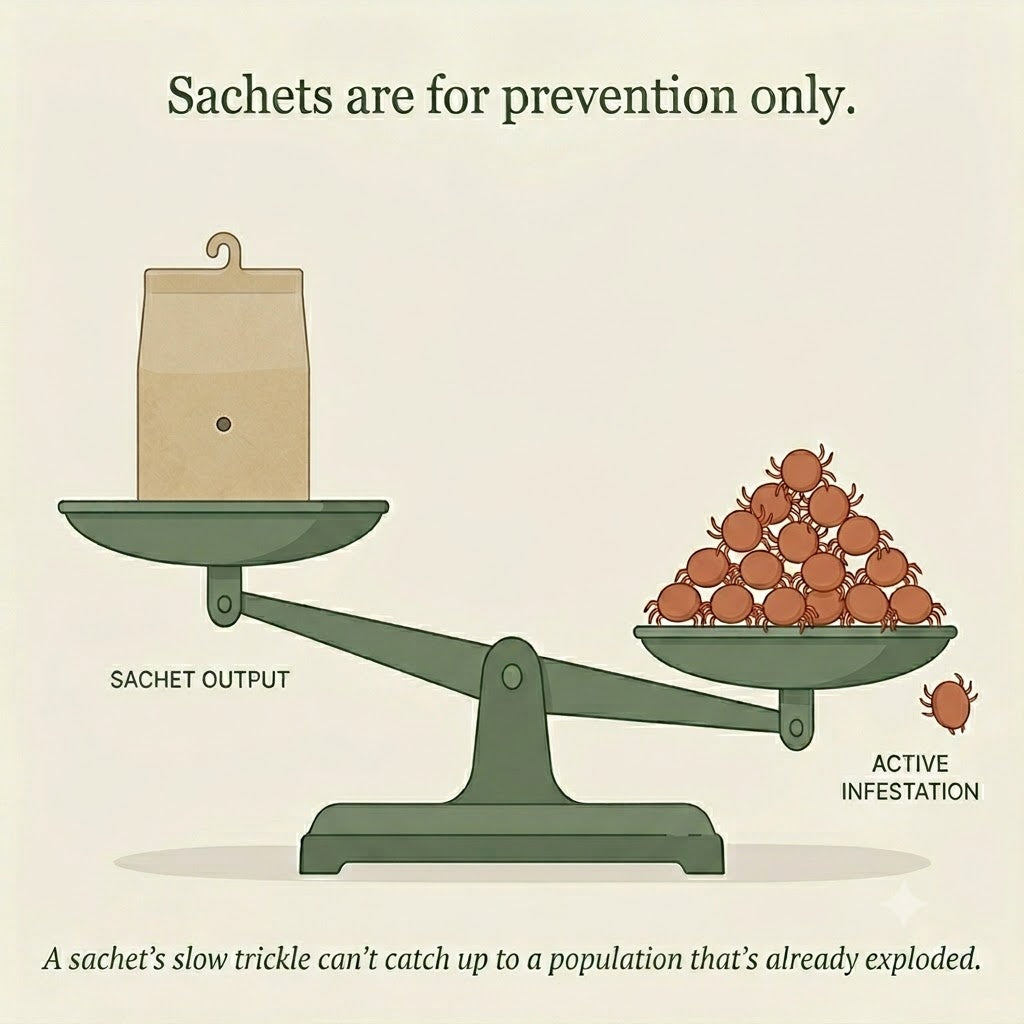
- For Sachets: These are "slow-release" nurseries. The mites stay tucked deep inside the breeding media and emerge one by one over 2–4 weeks. Seeing an "empty-looking" sachet or bottle is not proof of a loss; it is simply how they are packaged for maximum survival.
Mite Matters

Cucumeris: Why It Works (and Why It Fails)
Cucumeris is reliable, widely researched, and genuinely effective — within a specific set of conditions. Here's what it actually does, what it won't do, and how to tell if it's the right species for your situation.

My Plant Has Webbing. Help.
Webbing on a plant isn't always spider mites — and the mite that causes the most damage indoors doesn't produce webbing at all. Here's how to tell what you're actually looking at before you treat.

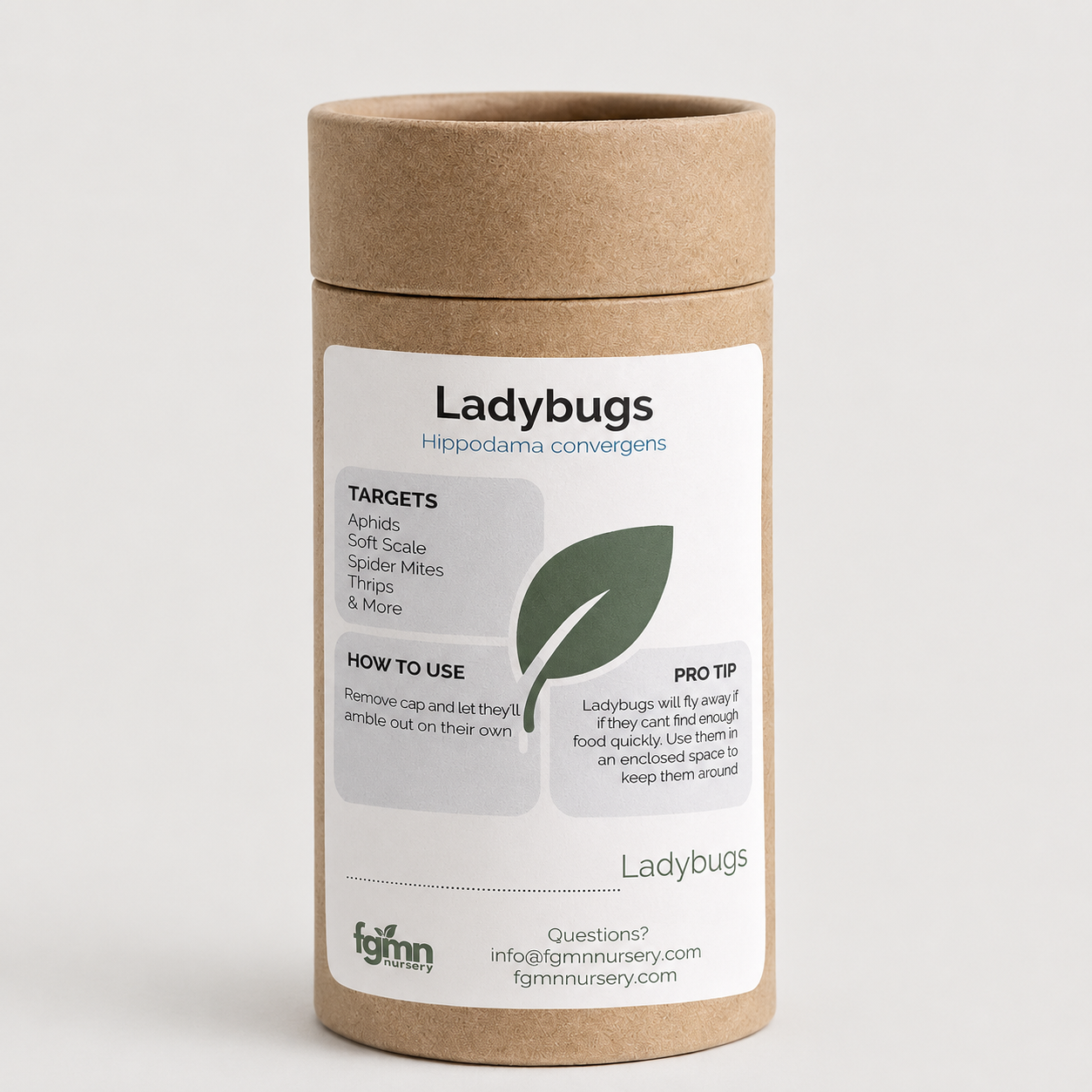
Native vs Invasive Ladybugs
Most ladybugs you'll encounter are red with black dots — and that description fits native, introduced, and invasive species equally. Here's how to actually tell them apart, what the harlequin ladybug has been doing to native populations, and where the real ecological concerns are.