
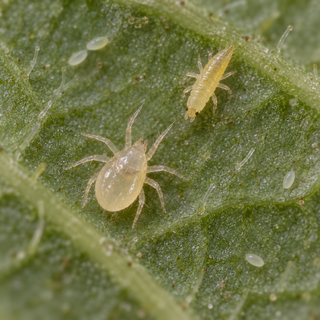
Generalist · Thrips
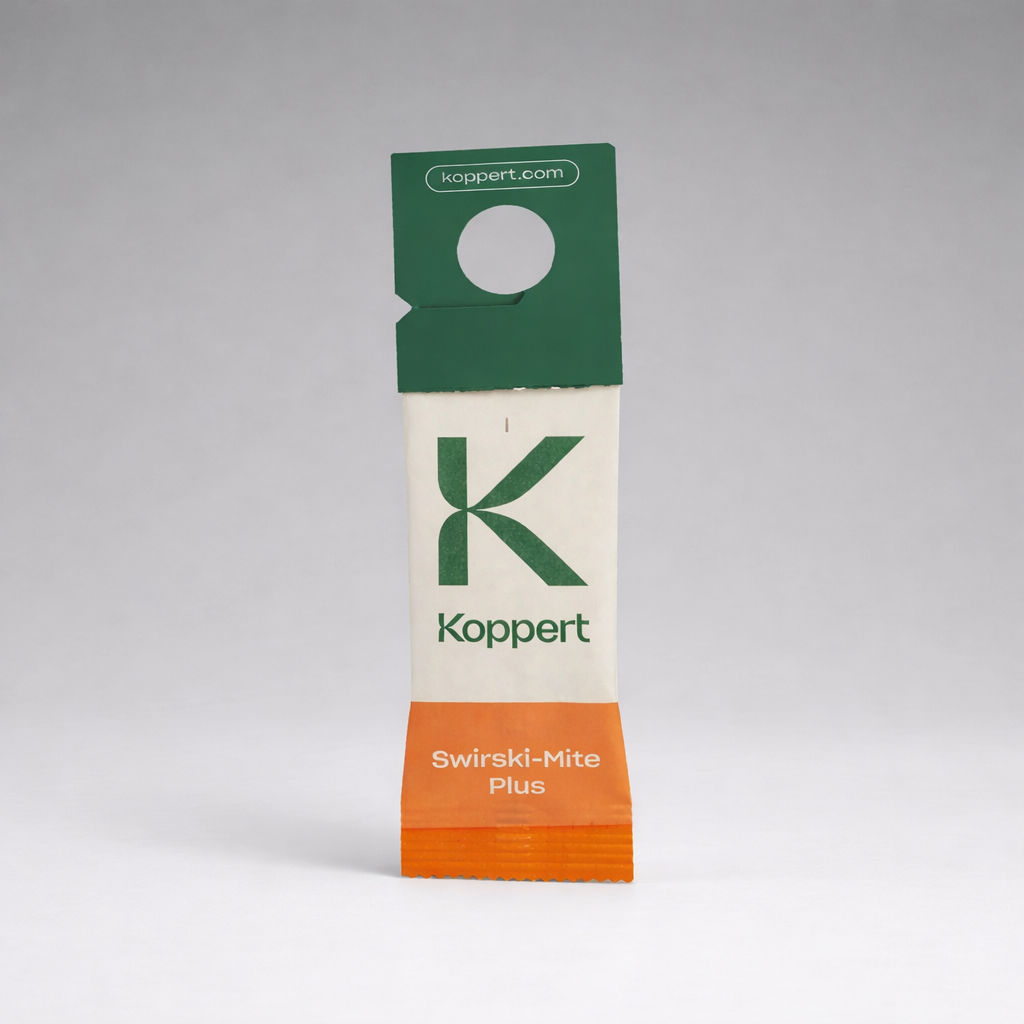
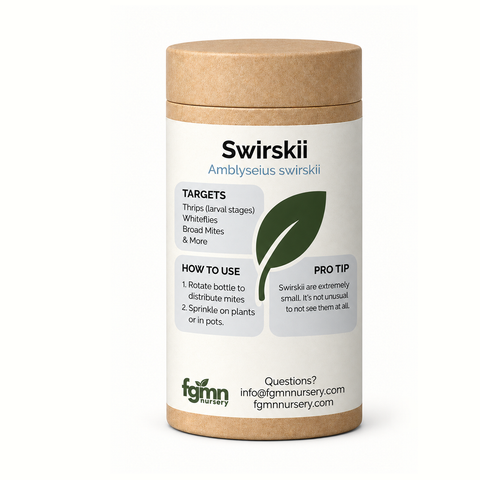
Amblyseius swirskii Slow-Release Prevention Sachets
Warm rooms invite thrips and whitefly, so these release predators for weeks to keep either from taking hold. Prevention, not a rescue for an outbreak you can already see.
$4.75
Free Shipping for all orders over $30
If something's wrong when it arrives, email info@fgmnnursery.com within 72 hours of delivery for a replacement or store credit.
By placing your order you agree to our Shipping Policy and Live Delivery Guarantee.

Goes well with
-
Amblyseius swirskii
If it is already running.
from $65
-
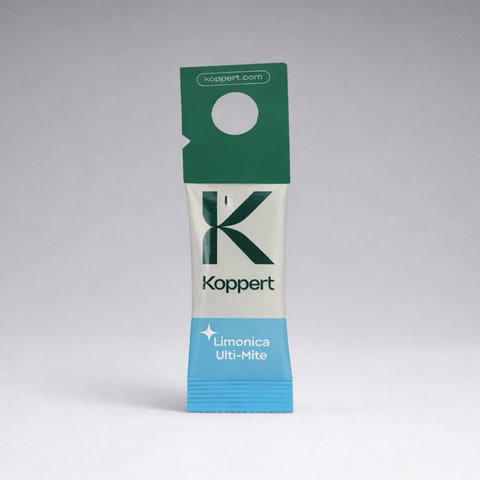
Amblydromalus limonicus Slow-Release Prevention Sachets
If the room runs cool.
$5
-
Amblyseius andersoni Slow-Release Prevention Sachets
If it is russet or rust mites.
$3.50
-
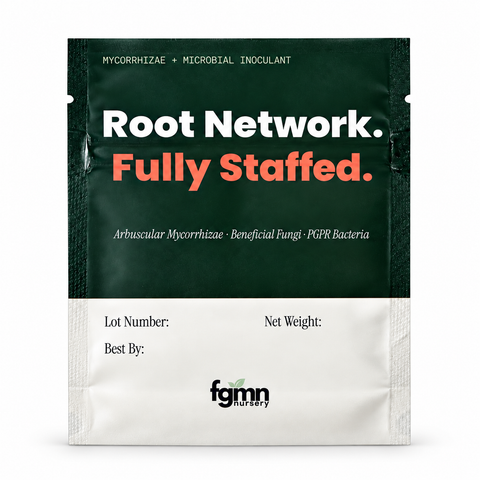
Root Network
For the roots: mycorrhizae and microbes that help roots take up water and nutrients. Use at repotting, then a monthly drench.
from $15

How many, and how often
One sachet every three to five linear feet. Replace every four to six weeks.
More about this dose
The three things people ask once they have their size. Open any of them.
Why more than one round?
Putting it out
- Hang it on a branch or stem in the middle of the canopy. Not laid on the soil — a sachet resting on wet media wicks moisture and the colony inside stops producing.
- Put it in shade. Avoid direct, intense hot spots of light, and avoid anywhere it will get soaked when you water.
- Do not open it. Every sachet has a pre-drilled exit hole. The mites emerge through it at their own pace over four to six weeks.
- One every three to five linear feet, not one per pot.
- Replace every four to six weeks while the season is running. Water at the soil line in the meantime, and mist the leaves rather than the paper.
Everything else is optional. Get these four and the release has done what it can.
A cleaner way
On a display plant, tip small piles into bio-boxes or paper cups hung in the branches instead of dusting the foliage. Same dose, nothing visible on the leaf.
Is this the right beneficial for your problem?
Five questions, in the order a grower actually asks them: what have you got, is this the answer to it, what will it eat, how does it do the killing, and will it survive your room.
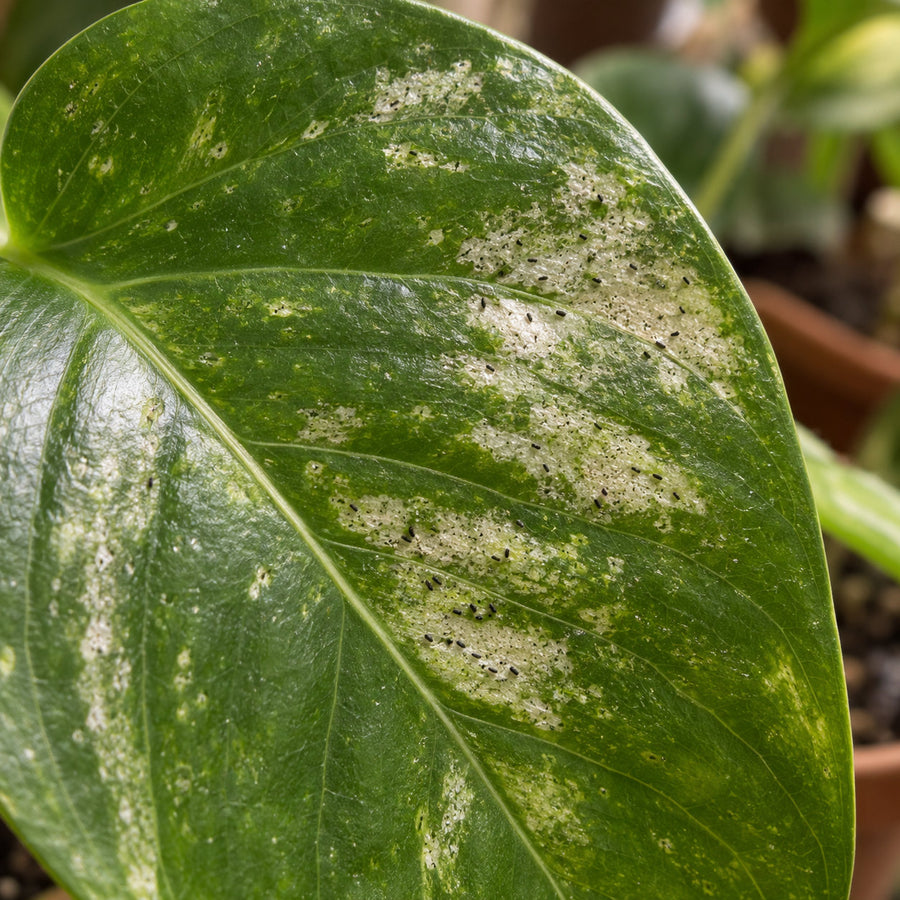
Is this your pest?
A sachet is prevention, so the honest question is what you are guarding against rather than what you are looking at. Swirskii covers the three soft-bodied pests that get into a warm, humid room and start breeding before anyone notices.
Thrips rasp the leaf and leave silvery scarring with black frass specks on the newest tissue. Whitefly leave sticky honeydew and a cloud of small white adults when you disturb a plant, with eggs and crawlers on the undersides. Broad mites leave nothing visible at all — you read them from new growth that comes in small, hardened and twisted.
Swirskii takes thrips larvae, whitefly eggs and crawlers, and broad mites in the tight new growth where they breed. Spider mites and tarsonemids get taken on encounter. What it does not take is adult thrips, and it does not control russet or rust mites — those are eriophyids, it has been tested against them, and andersoni is the predator for that job.
Then: is a swirskii sachet the right answer to it?
Choose this if
Choose swirskii sachets for a room that runs genuinely warm — consistently above 70°F — and where thrips and whitefly are both on the worry list. It is the most aggressive generalist in the range and the one with the broadest diet, it gets faster as the room gets hotter, and it holds on pollen alone when there is nothing to hunt, which is what makes a preventative sachet work at all. And because the mites walk out and the medium stays in the paper, there is no carrier left on your leaves or in your flowers.
Choose something else if
Cool and dry are the limits: below about 68°F limonicus or cucumeris keep working where this one slows. Russet and rust mites are andersoni's job, not this one's. And if you already have visible damage and a running population, a sachet releases at the wrong speed entirely — that wants bottles first.
What it kills, and what it won't
Swirskii can survive and breed on plant pollen alone. That is the single most important thing about a preventative sachet: the colony stays active and the mites stay on the plant when there are no pests at all, waiting rather than starving out.
How a sachet works
What is actually inside it, how the mites get out, and what that buys you over a bottle.
A breeding colony, not packaging
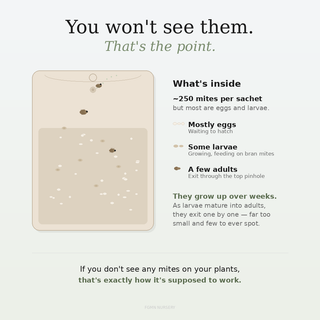
The sachet is a nursery. Inside is a bran medium, a founding population of predators and a food source that keeps them laying for weeks. It is not a bag of mites waiting to be tipped out, which is why the one instruction that matters is do not open it.
Through a vent already built in
Every sachet has an exit hole in the seam. The mites leave through it at their own pace, a few at a time, day after day. That trickle is the whole point: a bottle gives you one wave and a sachet gives you a standing population.
A clean leaf, and nothing else
Because the mites walk out and the medium stays in the paper, there is no bran or vermiculite left on your foliage or in your flowers. If you have ever picked carrier out of a leaf sheath, that difference is worth something on its own.
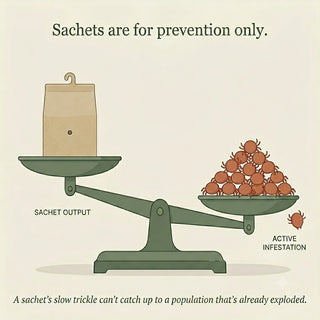
Prevention, not rescue. A sachet releases over weeks, which is exactly the wrong speed for an infestation that is already running. Bottles are the knockdown; sachets are what holds the line afterwards.
Will it work in your room?
Two checks. If the mites you are worried about are russet or rust mites, this is the wrong sachet — swirskii has been tested against them and did not control them, and andersoni is what does. And if there is already visible damage spreading, hang these behind a bottle release rather than instead of one.
About swirskii sachets
A breeding colony in a paper sachet. Swirskii are generalists with a broad appetite — thrips larvae, whitefly eggs, broad mites — and they will hold on pollen when there is nothing left to hunt.
New to sachets?
Five things that catch almost everyone the first time.
After you hang it
What changes, how you would know, and when to replace it.
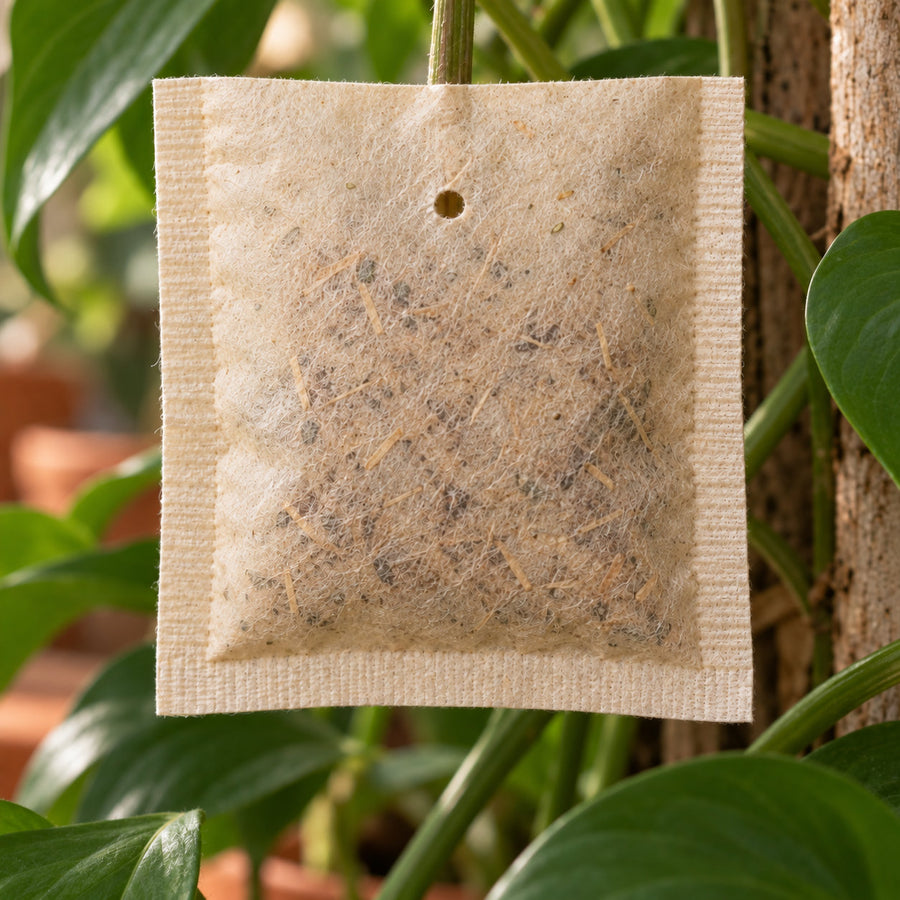
How you'll know it's working
Nothing visible, which is the point. New thrips scarring stops appearing and the leaf undersides stay clean, and the sachet looks identical from the outside the entire time.
Judge it on new damage rather than on mites you can spot. At half a millimeter, tan against a green leaf, and hiding on undersides by preference, these are not a thing you find by looking.
Mark four weeks on a calendar when you hang them. The failure people actually have with sachets is not a bad colony — it is a good one that ran out three weeks ago on a plant nobody has checked since.
Getting it to you
What is in the packet, how it travels, and what happens if it arrives wrong.
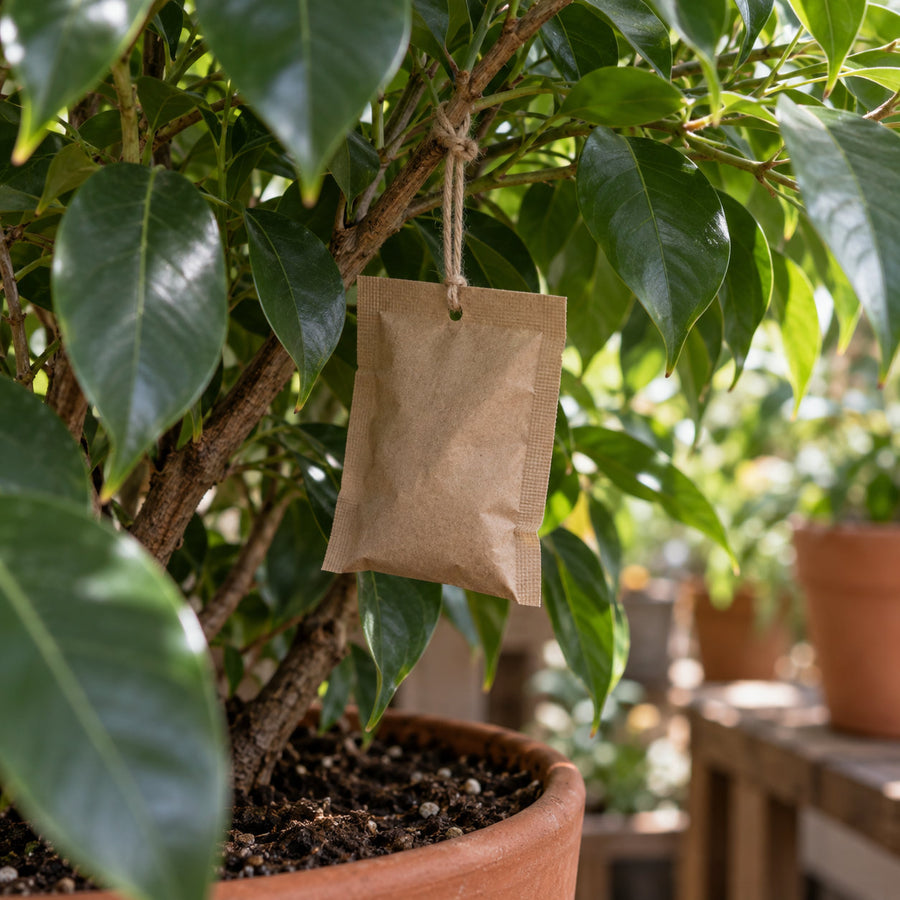
What arrives
Sachets of paper, each one a live breeding colony on a bran medium with a food source sealed in beside it.
Nothing about the outside tells you anything. There is no window, no movement to look for, and no test you can run — the mites are half a millimeter and they are inside.
Hang them the day they arrive. These are living colonies rather than shelf stock, and every day in the box is a day off the release window you paid for.
When it ships, and when it lands
Shipping
We ship when they're ready to travel. Live orders go out Monday to Thursday. If a colony needs a beat to peak, or we're propagating a fresh batch, yours might hold up to a week. All mites and insects ship 2-day or Overnight depending on what's best for them.
When it lands
Unpack and hang the same day. One every three to five linear feet. On a stem in the middle of the foliage, in shade, above the soil line — not in a hot spot of direct light, and not where watering will soak it. Then leave it alone for four to six weeks.
Why we pack extra
Two days in a van is a long trip for something this small, so we send more than you paid for.
A predatory mite is the size of a grain of table salt, and a sachet is a breeding colony in a paper packet, in a van, for two days.
A trip like that is hard on anything this small, so we price it in: the founding population gets counted out, and then roughly 15% more goes in on top as a cushion.
Your sachet leaves here holding more than the label says — and unlike a bottle, the mites in a sachet keep breeding, so the number that matters is the one a week from now.
If you can see them
Ladybugs, lacewing larvae, Orius — the minute pirate bug — and the beetles. These are the ones big enough to photograph, and a picture tells us a lot.
Cold insects are very good at sitting still. That's normal. Release them as this page says, and watch the pest instead.
Something look wrong? Photograph them in the container and email the photo to info@fgmnnursery.com.
The photo is not us doubting you. It is how we tell a bad batch from a bad courier day from a mailbox that hit 104°F.
If you can't see them
Mites, nematodes, eggs — and sachets more than any of them. A sealed paper packet looks identical whether the colony inside is thriving or gone, and no photograph settles that. So we don't ask you to take one.
Email info@fgmnnursery.com and our entomologist takes you through the diagnostic instead — where the box sat, what your room was doing, whether the paper arrived damp, and then what the pest is doing about ten days later.
Please do not open a sachet to check. It is the one thing that guarantees the outcome you were worried about, and we cannot replace it afterwards.
Seventy-two hours from delivery, either way, with your order number. Replacement or store credit, your pick.
What it does not reach
Three gaps this page has already named, and the beneficial that closes each one.
Sachets hold a line; bottles take ground
A sachet releases a trickle over four to six weeks, which is the right speed for keeping a clean plant clean and the wrong speed for a colony that is already breeding. A bottle puts the whole population on the leaf the day it arrives. If there is visible damage spreading, run the bottle first and hang the sachets behind it to hold what you won back.
Below about 68°F this one is working uphill
Swirskii is a heat mite — it gets faster as the room warms, and slower as it cools. Amblydromalus limonicus covers the same two headline pests, thrips and whitefly, and keeps working through the moderate and cool end where swirskii is already slowing. It also runs four to six weeks per sachet, which is longer than most.
Eriophyids are a different family and a different predator
Being straight about a limit: swirskii has been tested against russet and rust mites and did not control them. They are eriophyids — a different family from spider mites, and almost nothing preys on them. Amblyseius andersoni is the sachet for that problem, and it also covers broad and cyclamen mites.
Two cheap things that make the rest work harder. Blue cards give you the dated count this page keeps asking you to read. Breeder's Blend is pollen and Artemia; it keeps the population fed through the lull when prey gets scarce.
Keep reading
Written by the people who raise and ship them.
- Is Your Swirskii Sachet WorkingHow to distinguish a living sachet colony from useful delivery onto plants, and what to observe without opening the packet.Read it
- Swirskii Does Better With a Head StartIn a zucchini greenhouse, swirskii alone finished the season at 12.27 whiteflies per leaf against 41.97 for twice-weekly conventional spraying. The same trial measured…Read it
- Swirskii Needs More Than a Warm RoomHow warmth, drying air, and sachet placement interact, and why to measure the environment near the foliage.Read it
Questions
How long do the sachets last?
Under ideal conditions, a sachet will release mites for 4 to 6 weeks.
Can I get the sachets wet?
Rain is fine — the paper sheds it, and sachets hung outdoors keep working through it. What ends a colony is water with nowhere to go: a sachet lying on wet soil, sitting under an emitter, or caught by a foliar spray aimed at the leaves. The medium inside stays damp and the colony stops producing. Hang it rather than lay it, water at the soil line, and mist the leaves rather than the paper.
Will the mites stay on the plant?
Yes, as long as there is food (pests or pollen).
Is it safe for my pets?
Yes. These mites are 100% harmless to humans, dogs, cats, and other animals.
Can I use them with other beneficials?
Absolutely. They are the perfect base layer for an IPM program.
When should I start using them?
Start as soon as your plants have enough foliage to support a sachet.