
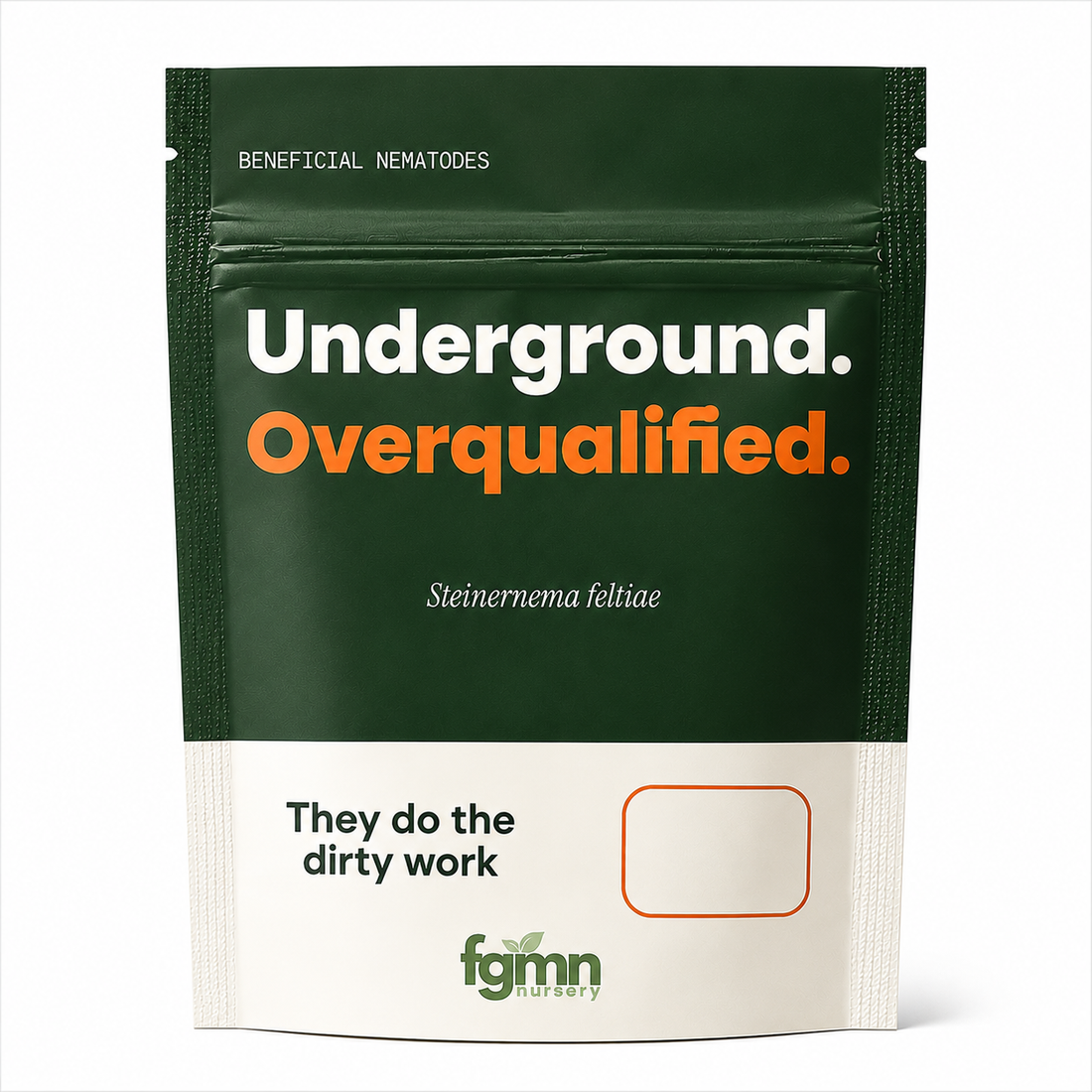


Generalist · Fungus Gnats
Sf Nematodes
The only thing that reaches the thrips pupae in your soil — and the fastest knockdown we sell on fungus gnat larvae.
$15.00
Free Shipping for all orders over $30
If something's wrong when it arrives, file a report within 72 hours of delivery for a replacement or store credit.
By placing your order you agree to our Shipping Policy and Live Delivery Guarantee.

How much, and how often
Two questions — how bad it is, and how many plants. You get a size and the dates to put it out.
How bad is it?
Pick the one that sounds like your room. If you are between two, take the higher.
How many plants?
Six-inch pots. Count a large specimen with a dense canopy as three or four.
Your size and schedule
More about this dose
The three things people ask once they have their size. Open any of them.
Am I light, moderate or heavy?
Light
- A few gnats lifting off when you water
- One or two on a yellow card a week
- Only the wettest pot affected
Moderate
- Gnats up whenever you disturb a pot
- Cards filling steadily between checks
- Several pots affected across a shelf
- Thrips on the leaves as well, which means pupae in the soil
Heavy
- Gnats in the air without anyone touching a plant
- Cards black between checks
- Larvae visible in the top layer when you scrape it back
- Seedlings or cuttings collapsing
There is no single correct nematode dose, and anyone who gives you one is guessing. Prevention runs at roughly one to two million per gallon of water; an active infestation at five to fifteen. The size you want is the one that covers every pot in the room, because a pot you skip is where the next generation comes from.
What flies up when you water is a fraction of what is in the media, so a fungus gnat population is almost always heavier than it looks. Nematodes are also cheap per plant compared with the alternative of losing seedlings. Taking the higher level costs a little more once; taking the lower one usually means the drench never quite gets ahead of the hatch.
Why more than one round?
Putting it out
- Dechlorinate the water first. Tap water stood out for 24 hours, or a dose of dechlorinator. Chlorine and chloramine kill nematodes on contact.
- Water the pots before you drench. Dry media pulls the solution straight through and strands them below the root zone.
- Dissolve the carrier in room-temperature water. There is no ratio to hit — the clay they are mixed into is a measuring aid, not a recipe, so a thick paste and a heavily watered-down sprayer both work. Stir gently, and apply within two hours; they drown in standing water without aeration.
- Any applicator is fine. Watering can, jug or sprayer — use whatever you have. Just pull out any filter finer than 0.5mm, because a fine screen strains them out.
- Drench at dusk or with the lights off, swirling the can between pots so they do not all settle into the first plant — then keep the soil damp for a fortnight.
Everything else is optional. Get these four and the release has done what it can.
A cleaner way
On a display plant, tip small piles into bio-boxes or paper cups hung in the branches instead of dusting the foliage. Same dose, nothing visible on the leaf.
The failure is forgetting. Very few programs fail because the mite underperformed. They fail in week five, when the plants look fine, the reorder does not happen, and the population holding the line ages out with nothing behind it.
A schedule is the same decision, made once. A pack when it looks bad, then another when it looks bad again, is already a rhythm — just one you have to remember at the exact moment the plants look fine.
Change the size or the frequency, skip a box, pause or cancel from your account at any time.
Is this the right beneficial for your problem?
Five questions, in the order a grower actually asks them: what have you got, is this the answer to it, what will it eat, how does it do the killing, and will it survive your room.
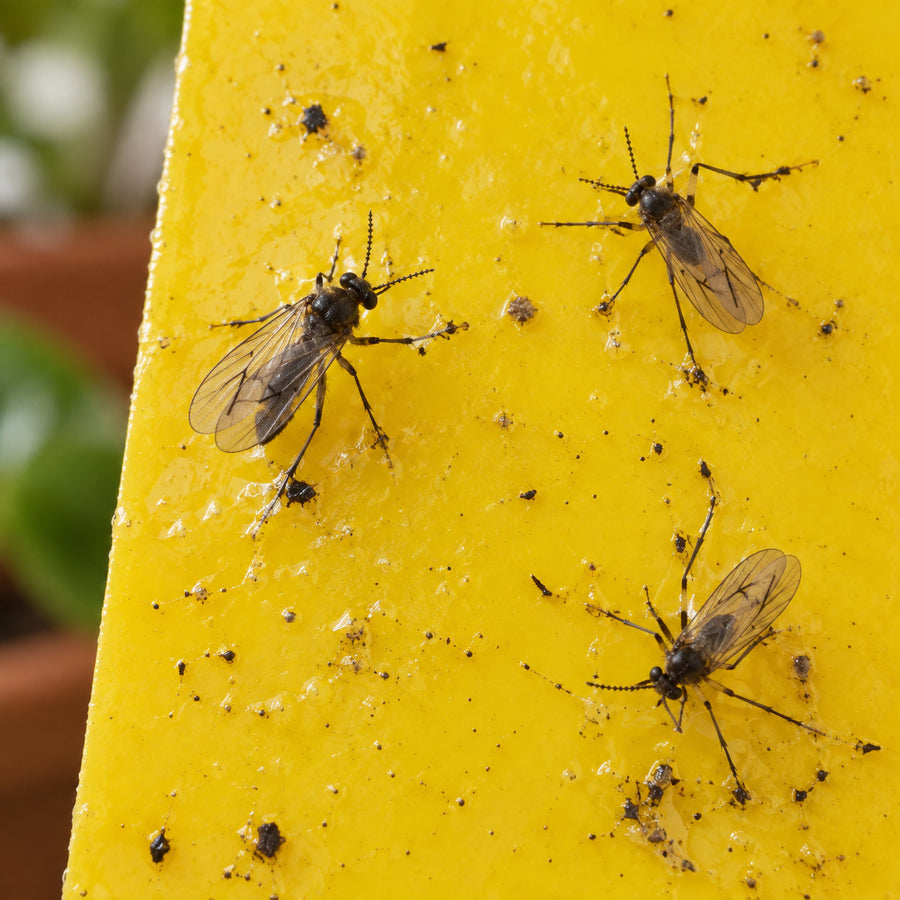
Is this your pest?
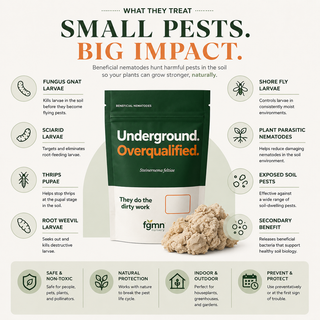
Everything Sf hunts is in the soil. If your problem is on the leaves, this is half the answer at most — but for two pests it is the half nothing else covers.
Fungus gnats are the small dark flies that lift off the soil when you water. The adults are harmless; the larvae in the media eat organic matter and root hairs, and seedlings and cuttings are where that actually costs you something.
The second one is thrips. Most thrips drop off the leaf to pupate in the top inch of soil — the stage that survives everything you spray on the canopy, and the reason a thrips problem you thought you had solved comes back a fortnight later. Sf intercepts them down there.
Then: is Sf the right answer to it?
Choose this if
Choose Sf for an active soil problem you want down fast. Nematodes actively track their prey by carbon dioxide and vibration rather than waiting to be met, and they are inside the larvae within 24 to 48 hours of the drench. It is the cool-season species — more mobile and more aggressive than the others at ordinary indoor and greenhouse temperatures, which makes it the one for houseplants. Completely harmless to plants, mammals and surface beneficials like ladybugs, and there is no re-entry interval.
Choose something else if
It is a treatment rather than a population: nematodes clear what is in the soil now and then die back. For lasting cover a soil mite is the better buy, and most people run both. They also need real moisture to move, chlorinated tap water kills them, and UV kills them — so this is an evening job with dechlorinated water, not a five-minute one.
What it kills, and what it won't
Pest eggs are armoured and cannot be infected, which is the single most useful thing to know about nematodes. It is why one drench is rarely enough on an active infestation, and why the schedule runs in rounds.
How it works
What it does to the pest, what it does on the plant, and what that leaves you looking at.
It hunts inside the water film
Microscopic roundworms that swim the film of water between soil particles, track larvae by their carbon dioxide and finish them from the inside. Grim to describe and very effective. No poison, no residue, and nothing for a pest to become resistant to.
Nothing at all, deliberately
These are entomopathogenic nematodes — programmed to infect specific insects and nothing else. They cannot harm roots, plants, mammals or the ladybugs on your leaves, which is what makes them a clean substitute for a chemical soil drench in a house with people in it.
Recruitment, not the air
Adult gnats keep flying for a week after a drench — those are already out of the soil and beyond reach. What changes is that no new ones emerge to replace them. The air clears as the current generation dies of old age.
Two applications, not one. The first drench clears the larvae that are in the soil now. The second, seven to ten days later, greets whatever hatched from the eggs in the meantime.
Will it work in your room?
Three things decide whether this works. Dechlorinated water — chlorine and chloramine kill nematodes on contact, so let tap water stand 24 hours or dose it. An evening application, because UV kills them quickly. And soil you can keep damp for a fortnight afterwards.
About Sf nematodes
Microscopic roundworms that hunt in soil rather than on leaves. Millions of them arrive in something that looks like almost nothing, and they are alive.
New to beneficials?
Five things that catch almost everyone the first time.
After you release it
What actually changes, in what order, and why the air is the last thing to clear.
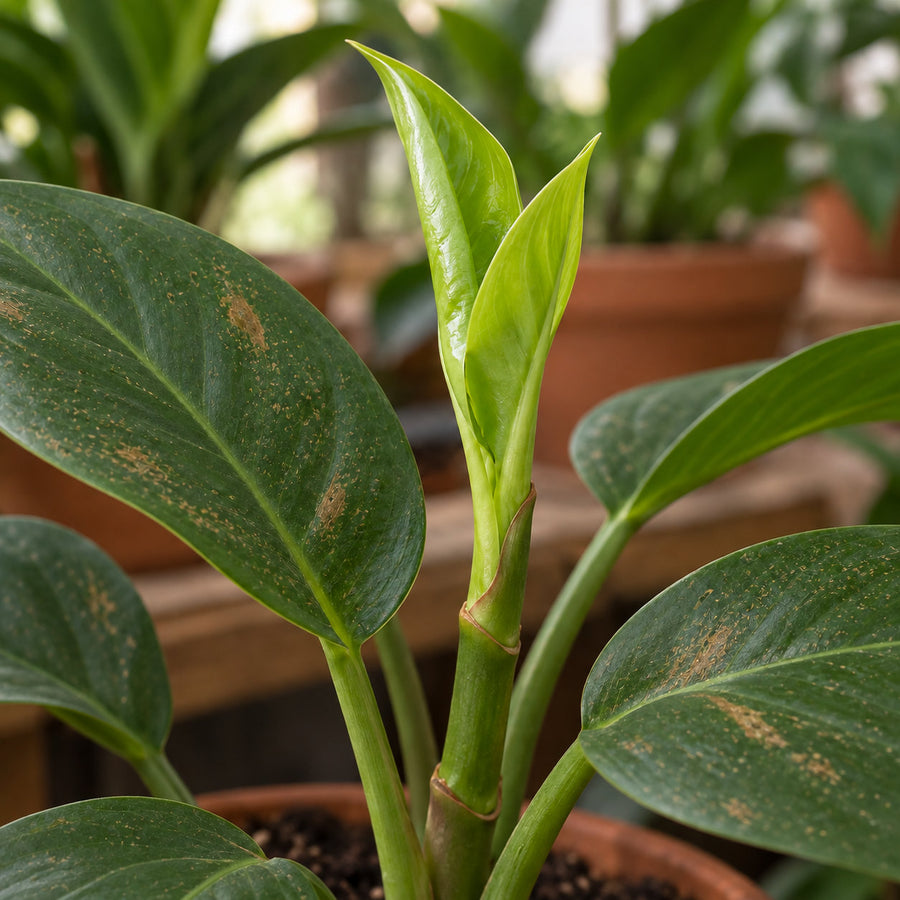
How you'll know it's working
Adult gnats keep flying for about a week, and that is not a failure — those are already out of the soil and beyond anything you pour on it.
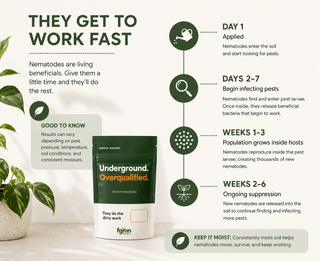
What changes first is recruitment: no new adults emerging. Then sticky traps stop filling, and the air clears as the current generation dies off. Judge it on trap counts over successive weeks rather than on what is flying tomorrow.
The nematodes are inside the larvae within 24 to 48 hours of the drench. Everything after that is you waiting for the flyers to age out.
Getting it to you
What is in the pack, how it travels, and what happens if it arrives wrong.
What arrives
A sealed pouch holding a clay, gel or powder carrier. The damp sponge or pale powder is the nematodes — millions of them, in something that looks like almost nothing.
They are shipped dormant in an inert carrier, and they are alive. There is nothing to see and nothing to check.
Into the fridge on arrival. 38–42°F, and never the freezer — freezing is the one storage mistake there is no recovering from. They keep about four weeks chilled and decline quickly at room temperature.
When it ships, and when it lands
Shipping
We ship when they're ready to travel. Live orders go out Monday to Thursday. If a colony needs a beat to peak, or we're propagating a fresh batch, yours might hold up to a week. All mites and insects ship 2-day or Overnight depending on what's best for them.
When it lands
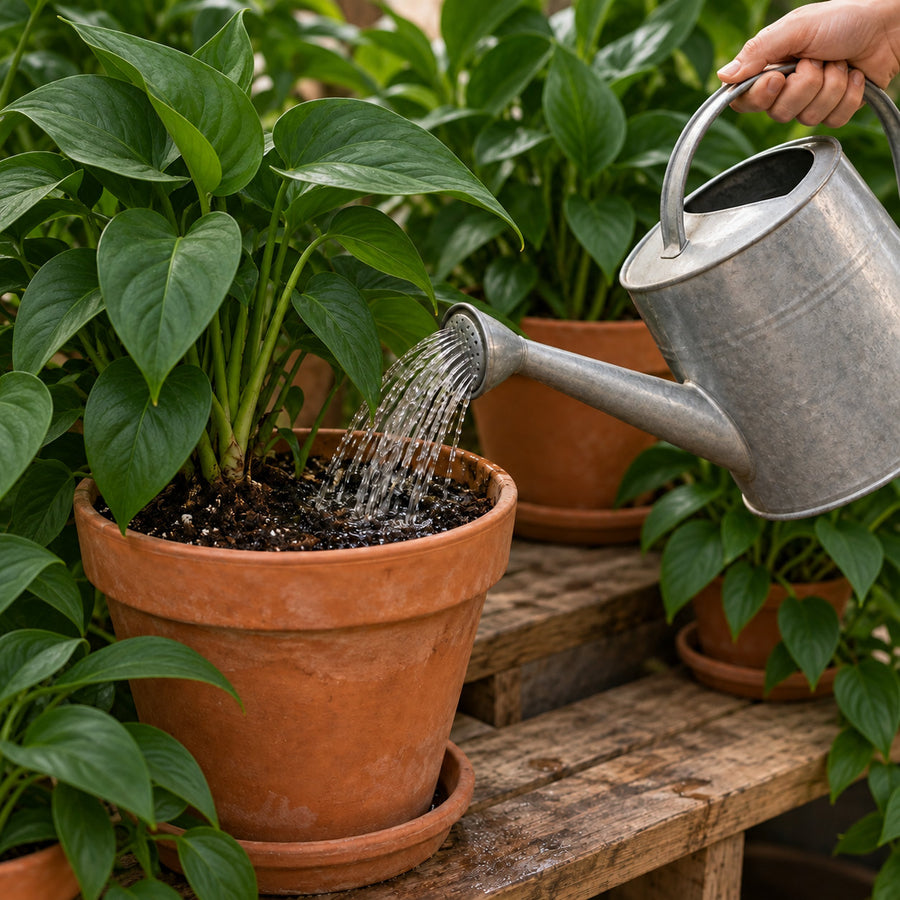
Fridge first, drench later. Water the pots so the media is already damp. Dissolve the carrier in room-temperature dechlorinated water and stir gently. Apply within two hours, at dusk or with the lights off, through a watering can or a sprayer with any screen finer than 0.5mm removed — and swirl the can between pots, because they settle to the bottom in minutes.
About the ones that don't make it
Some of them die on the way. That is why we send more than you paid for.
A nematode is microscopic, and it ships dormant in a pouch, in a van, for two days.
Roughly 15% will not survive that. We cannot prevent it, so we price it in: the number on the label gets counted out, and then the cushion goes in on top of it.
Your 25-million pack leaves here holding more than 25 million. The dead ones are already paid for.
If you can see them
Ladybugs, lacewing larvae, Orius — the minute pirate bug — and the beetles. Tip a few onto white paper and give them twenty minutes at room temperature before you judge anybody.
Cold insects are genuinely good at playing dead. The deceased have been known to get up and walk off the counter.
Still more than about one in seven not moving? Photograph them and file a report.
The photo is not us doubting you. It is how we tell a bad batch from a bad courier day from a mailbox that hit 104°F.
If you can't see them
Mites, nematodes, eggs — most of what we sell, and this one more than any of it. A pouch of carrier looks identical whether it holds 25 million live nematodes or none, and no photograph settles that. So we don't ask you to take one.
You file the report and our entomologist takes you through the diagnostic instead — the tap test on dark paper, where the box sat, what your room was doing, and then what the pest is doing about ten days later.
Worth saying plainly: a pack that spent an afternoon in a hot mailbox is a real failure mode, and it is one we would rather hear about than have you drench and wonder.
Seventy-two hours from delivery, either way, with your order number. Replacement or store credit, your pick.
What it does not reach
Three gaps this page has already named, and the beneficial that closes each one.
Soil and foliage are two halves of the same job
If you are fighting thrips on the leaves, Sf in the soil is not optional — it is the half that stops them emerging again. A predatory mite takes the larvae on the foliage; the nematodes intercept them when they drop to pupate. Run one without the other and the cycle simply closes somewhere you cannot see.
Nematodes are a treatment; mites are a population
Nematodes swim the water film and reach the depth of the pot; Stratiolaelaps hunts the top layer and stays there for months afterwards, living on debris when there is nothing left to catch. Together they cover every soil depth, and the mites are what stops the problem coming back once the drench has done its work.
Sf is the indoor species. Sc is the summer one.
Sf is more mobile and more aggressive at ordinary indoor and greenhouse temperatures, which is why it is the gold standard for houseplants. For beetles or fleas in outdoor summer soil above 80°F, Steinernema carpocapsae is the species built for that heat and those hosts.
Two cheap things that make the rest work harder. Blue cards give you the dated count this page keeps asking you to read. Breeder's Blend is pollen and Artemia; it keeps the population fed through the lull when prey gets scarce.
Questions
How many million nematodes should I use per gallon of water?
For a standard Prevention application, we recommend 1 to 2 million nematodes per gallon of water. If you are dealing with an Active Problme (a heavy infestation), increase this to 5 to 15 million per gallon. Because nematodes are microscopic, the goal is to ensure the water you pour is saturated enough to create a "search-and-destroy" grid within the top two inches of your medium.
How soon will I see results after a drench?
Biological control is a game of lifecycles. Within 24 to 48 hours of application, the nematodes will have infected the larvae in the soil. However, you won’t see a reduction in "flying" pests immediately. Since the nematodes only target the larvae, the adult population collapses as the current generation of flyers dies off and no new adults emerge to replace them. How long that takes depends on how heavy the infestation is.
Can I use Sf Nematodes in hydroponic or rockwool setups?
Yes. Steinernema feltiae thrives in any medium that stays moist. In hydroponic systems or rockwool, they are highly effective at navigating the slabs or clay pebbles to find Fungus Gnat larvae. Just ensure your reservoir is well-aerated and that you aren't using high-pressure pumps or fine-mesh filters (under 50 mesh) that could mechanically damage or trap the nematodes.
Why is dechlorinated water a "non-negotiable" for application?
Nematodes are living, breathing organisms. Tap water is treated with chlorine specifically to kill microorganisms. While a quick splash might not kill every nematode, it can "stun" them, slowing down their ability to hunt. For the best ROI, let your water sit out for 24 hours to off-gas or use a filter to ensure your "workforce" hits the soil at 100% capacity.
Will Sf Nematodes harm my plants, pets, or family?
Absolutely not. These are entomopathogenic nematodes, meaning they are genetically programmed to only infect specific insects. They are completely harmless to plants, mammals, and even other beneficial "surface" insects like ladybugs. They are a clean, non-toxic alternative to chemical soil drenches, making them safe for use in homes and high-traffic nurseries.
Do I need to re-apply them, or is one drench enough?
If you have an active infestation, one drench is rarely enough. Pest eggs in the soil are "armored" and cannot be infected by nematodes. We recommend that you apply every 7–10 days for three rounds. This ensures that as the eggs hatch, a fresh wave of hungry nematodes is waiting to greet the new larvae.
Nematodes are the way to go. I purchase every grow and never get any gnats ever since using this.Greatest find ever.
The nematodes were ready for action
Shipped fast and was easy to use. The package was sturdy and the instructions were very clear.
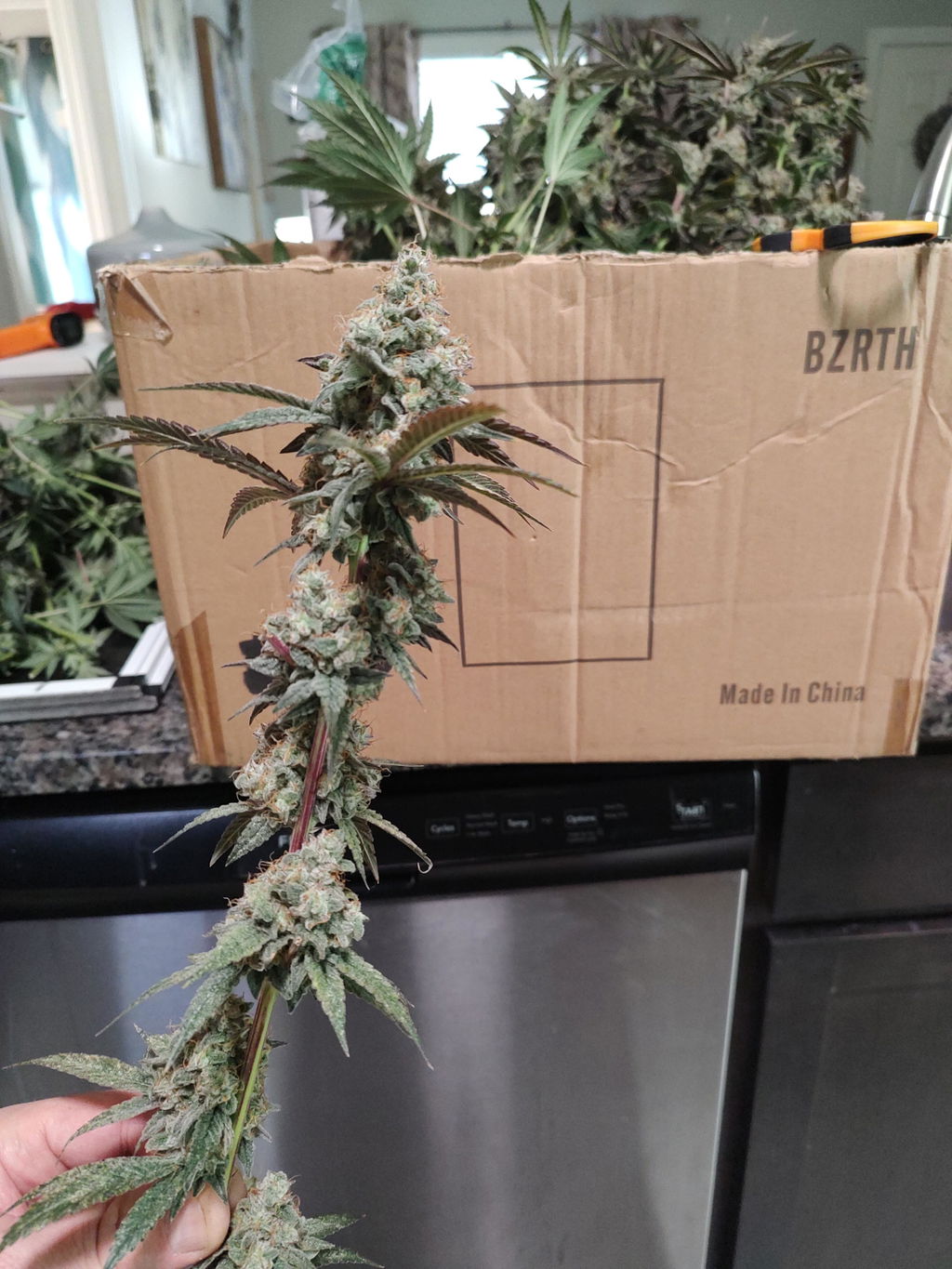
Had a fungus gnat infestation from bringing home a clone from the dispensary. So I got some of this to get rid of the problem. After about a week my fungus gnat problem got worse from me having to keep the soil moist for the nematodes. Well it seems I kept the soil too moist because now I have bud rot and all my plants are dying. (Ive never gotten budrot indoors.) And yes the clone is still infested. Now I have 5 dying plants and I'm going to have to start over. Next time I'm just gonna go with mammoth control. Because its omri listed and works like a charm. After about 2 weeks the gnats started to dissappear. But at that point the plant was already starting to die. So if you use this stuff make sure you dont over water.
Hi there, so sorry if you get this twice! I could swear I already replied. :) So sorry to hear about your plants!
Yes, nematodes need moist soil to move around and hunt. Generally, this should be more like a wrung-out wet sponge than soaking wet, but if your soil has harmful bacteria or fungus, either condition can cause rot.
Luckily, beneficials come in many shapes and sizes, and if you fear a plant is too compromised to withstand moist soil, I'd suggest using Stratiolaelaps. It's a soil mite that doesn't require moist conditions. They're a bit slower at consuming fungus gnat larvae, but still effective.
If you ever have any questions or concerns, please feel free to reach out at info@fgmnnursery.com
I was amazed. I had to leave town on a family emergency the day I received my nematodes. So I followed the directions, mixed with a gallon of water and fed it to 10 plants. Some were severely affected. I left town for 2 days and when I came back, there was marked improvement. Plants that were stunted and yellowing had already turned around. I love this product. Thank you. I've been fighting these knats for a long time.
Doing a great job!!
These works great! Finally I had some relief on my gnats problem!
Super easy to use I immediately dumped them into my plant right after a watering day and I can’t wait to see the real progress!!!!
I've used nematodes on houseplants previously and was amazed by how well they work. Got these little guys, mixed them up, and about 8 days later the infestation is under control. I was worried b/c my kid put the package in the freezer, not the fridge, when it was delivered. I caught it quickly and they must not have been any worse for wear.
Critters did their jobs! I don’t see any more shiny little varmints running around anymore. Thank you!
Works as intended. Swell things to have in your soil.
Very excited about using nematodes for the fungal gnats we’ve been living with for 8 months.
Company was wonderful. Great, timely, and fun communication.
Package came as expected.
Shipping was great, but I've dosed these buggers three times already, and I'm still struggling with fungus gnats....so, not sure it's working...
Hi Jacqueline, thank you for the feedback, and we’d genuinely like to help you get to the bottom of this. After three rounds, a fungus gnat problem that’s still hanging on usually points to something specific we can pinpoint rather than just needing more time. It may be that the size you’ve been choosing is under what your infestation actually calls for, or that something in your soil or setup — moisture levels, media type, or how the nematodes are being applied and watered in — is cutting into their ability to establish and hunt. Those are all fixable once we know what’s going on. If you’ll reach out to us at info@fgmnnursery.com with a bit about your setup and how you’ve been applying them, we’ll help you figure out the adjustment that actually gets you on top of the gnats.
definitely worked as intended haha.
Easy to use and incorporate, hard to say how much they've helped our gnat problem but optimistic
Fungus knats seem to be dead or their larva have been eaten. Idk…haven’t seen anymore.
Hi Rachel, we're so glad to hear the nematodes are helping control the fungus gnats! Thanks for sharing your experience.
They seem to have done what they are supposed to do.
Hi Christine, we're glad to hear the nematodes are doing their job!
Great product....even better communication.. I'll be buying from them again... Very professional...and their email updates had a touch of humor . Well done guys.
Everything arrived very well packaged & very quickly, as promised! Wonderful instructions, highly recommend the company! A+++
Fungus gnats are gone, and I haven’t even used all of the nematodes yet. Excellent experience. Fast shipping. Love the cute and humorous updates.
Thank you. Communication was amazing throughout the entire order process
Worth it! Would buy again but hopefully won’t need too. Thanks!
So far the little rascals are doing there job..I had a severs case of gnats flying around..there are a few left but I am totally surprised at how fast this has worked..thank you so much.
The fungus gnat are all gone! Thanks nematodes!
Very happy with my nematodes. I am already seeing less fungas gnats. Shipping was super fast and packaging was great.
It worked wonders!!
I appreciate the steady updates on shipping. I didn’t notice any changes in my plants but could have been something I did wrong.
Super easy to use and works great!
Nematodes are always a safe and effective plan for not only fungus gnats but other possible pests
A must for plant parents
Can they be used in soilless soil
Hi!
They can! I use them in semi hydro with leca myself.