




Diglyphus isaea
Leafminers are common in sunny rooms, and they're beatable. A tiny wasp does the work.
Winding trails inside leaves, in a room with daylight? That's leafminers, and this tiny wasp reaches the larva in its mine and stops it.
- Ships Mon–Thu2-day or overnight
- Live arrival coveredReport concerns within 72 hours
- Free shippingOn orders from $30

Wasps clear the mines; White Dry cards track flies, not wasps
White Dry Card - 10 Pack ·$30Buying for a group or a business? · Wholesale
01 · The problem
Is Diglyphus right for your leafminers?
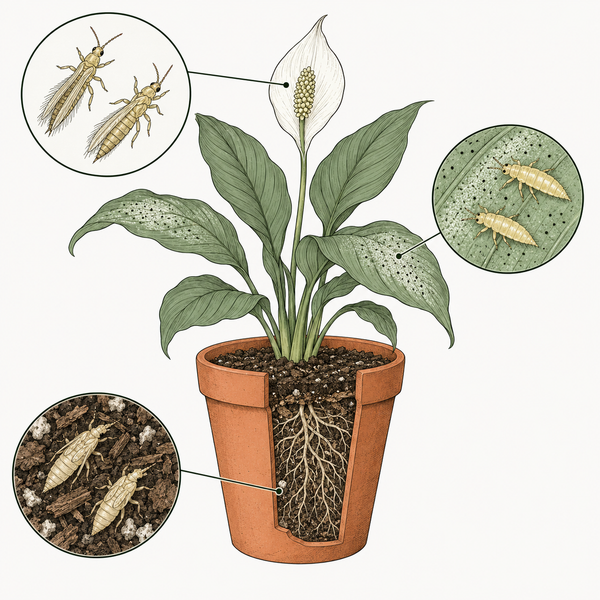
Signs it's leafminers
- White winding trails through the leaf that widen as they go
- A larva still inside: a small speck at the wide end of the trail
- Pinprick dots where the adult flies feed and lay
Seeing these? Good catch. The sooner you start, the smaller the job.


- You receive
- Live adult wasps, about 2 mm, ready to hunt
- Main target
- Leafminer larvae inside active, widening trails
- Best conditions
- 68–86°F, 50–70% humidity, real daylight
- Not for
- Fresh pinprick mines, empty mines, adult flies, a dark room
Works on
- Leafminer larvae in the mine (Liriomyza and Chromatomyia)
Not the answer for
- Thrips, aphids, mites, whitefly or fungus gnats
- Adult leafminer flies or eggs
- Mines the larva has already left
02 · Meet the beneficial
Diglyphus isaea

Listens through the leaf. Then knocks.
Leafminers are grubs that tunnel inside leaves. The wasp most likely finds one by feeling its vibrations travel along the tunnel.
Dressed in metallic green
These wasps are metallic green with red eyes and only about 1/16 inch long. A tiny jewel with a very specific job.
Not a picky eater
It attacks at least 18 different kinds of leafminer fly, so it's useful whichever one is tunneling in your leaves.
It grows up in the tunnel
Its young grow up right inside the leafminer's tunnel. In the resting stage before adulthood it starts clear green, then turns black.
03 · How it works
Living hunters, working on their own
- Easy to start. Open, release, done. Nothing to mix or spray.
- They search for you. Most pests are too small to spot. Predators find them anyway, so you don't need to know where every one is hiding.
- They stay where the food is. For the most part they settle where the pests are and keep working.
- Another round is normal. Living things work in waves. You'll see the results as fewer pests on the plant.
Diglyphus flies and hunts by daylight, so release in the day and keep yellow cards down for about a week.
Diglyphus temperature and storage
04 · Not your conditions?
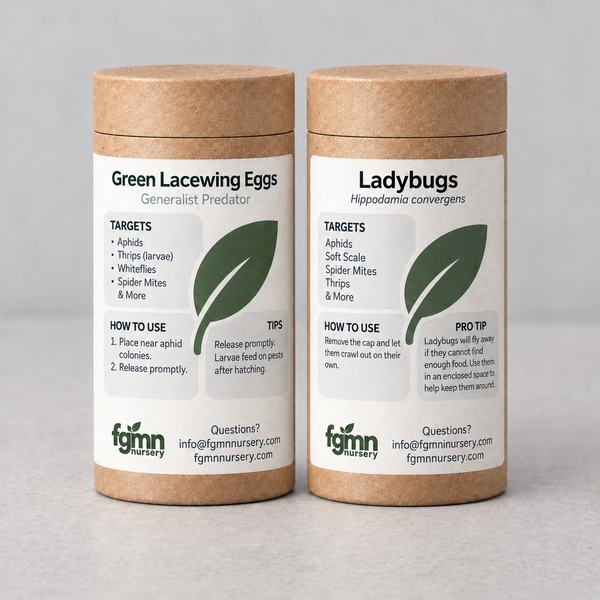
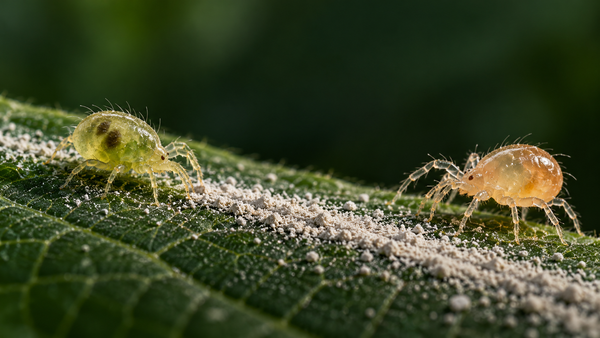
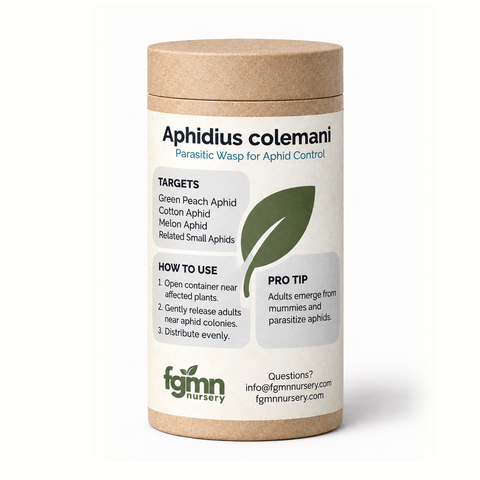
Choose one of these instead
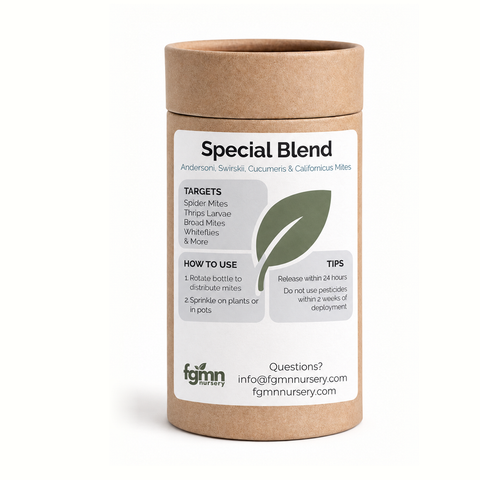
Not quite your situation? No problem. If your space or your pest is different, one of these fits better.
05 · The plan
How to release Diglyphus
No experience needed. Here's all it takes.

Take yellow cards down
Yellow cards catch the wasps. Take them down for about a week, then rehang at canopy height.

Release in daylight
Open the container the day they arrive, in daylight. They search by light.

Open at the worst leaves
Hold it in the canopy where trails are widening and let them fly out.

Repeat every 2 to 4 weeks
Release again every 2 to 4 weeks while new mines keep appearing.


06 · What happens next
What to expect
Living things work at their own pace. Here's what normal looks like.

Trails stop short
A mine that ends abruptly and stays pale is a stopped larva. That's Diglyphus working.
Quick and easy to lose
A tiny wasp, about 2 mm, dark with a metallic green sheen and red eyes. You'll lose sight of them in seconds.
Old trails stay
The leaf doesn't repair. Watch the new leaves: fewer fresh trails is the result you're after.
07 · Reviews
What growers say
Before you order
All your questions, answered
Something else? Toby's in the chat, bottom right, and happy to help.
When does it ship, and how does it arrive?
Live adult wasps, shipped 2-day or overnight, Monday to Thursday. Expect movement when you open the container. Free shipping from $30; $15 under that.
What if something's wrong when it arrives?
If there's a problem when your order arrives, email info@fgmnnursery.com with your order number within 72 hours of delivery. You choose a replacement or store credit.
Do these wasps sting people or pets?
No. They have no defensive sting and no interest in people or animals. Leafminer larvae are all they're after.
Can I keep sticky traps up?
Take yellow cards down for about a week at release, since the wasps are drawn to them, then rehang at canopy height. White Dry cards can stay up the whole time.
How long does a release last?
While leafminers are present, Diglyphus breeds, with a new generation every 10–14 days. When the leafminers run out, the wasps move on.
Can I use them with lacewings or predatory mites?
Yes. Diglyphus works inside the leaf and they work on it, so they don't get in each other's way.
Can I spray?
No systemics: they move into the mine and reach the young wasps. Neem and horticultural oil: once dry. Insecticidal soap: one day. Sulfur: 21 days. For anything else, see our spray-wait table.
Ready when you are
Diglyphus isaea
You've got this. And if you get stuck, we're one email away at info@fgmnnursery.com.