


Specialist · Scale
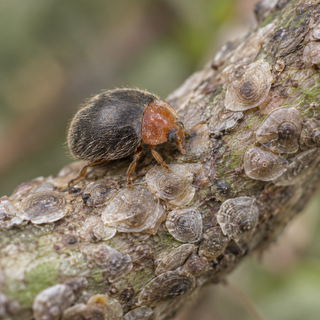
Rhyzobius lophanthae
Hard bumps that sprays can't get through are armored scale. This lady beetle chews through the cover, and its larvae develop underneath.
$65.00
Free Shipping for all orders over $30
If something's wrong when it arrives, email info@fgmnnursery.com within 72 hours of delivery for a replacement or store credit.
By placing your order you agree to our Shipping Policy and Live Delivery Guarantee.

Goes well with
-
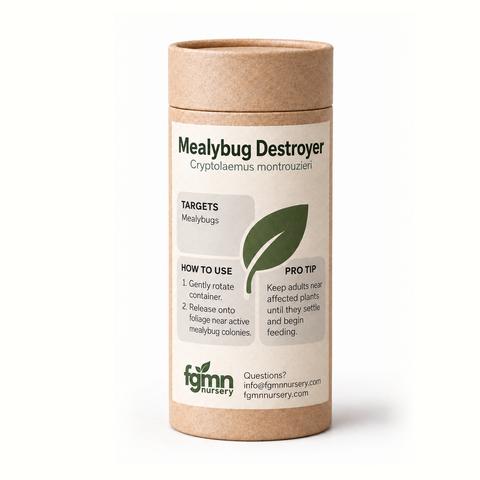
Cryptolaemus montrouzieri
If the scale squashes.
from $25
-
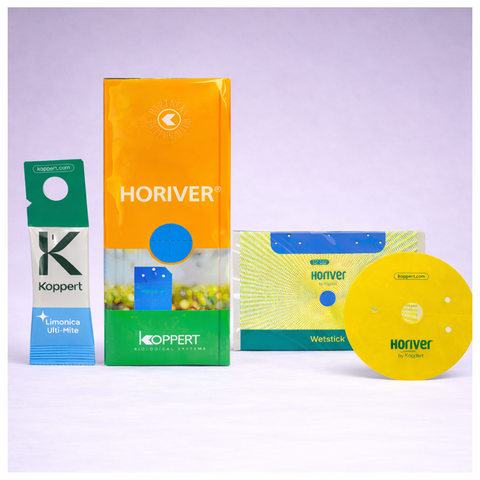
Horiver Professional Sticky Traps
Your yellow cards.
from $11
-
Root Network
For the roots: mycorrhizae and microbes that help roots take up water and nutrients. Use at repotting, then a monthly drench.
from $15

How much, and how often
Two questions — how bad it is, and how many plants. You get a size and the dates to put it out.
How bad is it?
Pick the one that sounds like your room. If you are between two, take the higher.
How many plants?
Six-inch pots. Count a large specimen with a dense canopy as three or four.
Your size and schedule
More about this dose
The three things people ask once they have their size. Open any of them.
Am I light, moderate or heavy?
Light
- A few scale on one stem or leaf underside
- Nothing on the plants either side of it
- No new raised bumps on the newest growth
Moderate
- Scale lined up along several stems
- Bumps on leaf undersides as well as stems
- Yellow blotches on the leaves above the clusters
- A second plant affected
Heavy
- A crust of overlapping covers on woody stems
- Leaves dropping from the branches worst affected
- Scale on the newest growth as it opens
- Dieback at the tips
Count only the plants that actually have scale on them. These beetles work the colony they are put on — proximity is most of the outcome — so the dose that matters is beetles per infested plant, not beetles per plant you own.
What you can see is never all of it. Every visible cover may be sheltering eggs, and crawlers are barely visible at all, so a colony that looks moderate on the stem is usually heavier than it reads. Taking the higher level costs a little more once; taking the lower one means watching it come back from the part you could not count.
Why more than one round?
Putting it out
- Take yellow sticky cards down. The adults fly, and cards catch them.
- Release in the evening, onto foliage you have misted first. Under bright light they head for the nearest window instead of the plant.
- Do not scatter them. Open the container directly against the infested stems and let them walk out, or move them onto the worst clusters with a small brush.
- Put them on the worst plant. They need a colony in front of them to stay and breed, and the breeding is where most of the result comes from.
- Never release into a wet oil spray. Neem and horticultural oil leave nothing behind once dry, so wait for the foliage to dry first. Insecticidal soap needs a day.
Everything else is optional. Get these four and the release has done what it can.
A cleaner way
On a display plant, tip small piles into bio-boxes or paper cups hung in the branches instead of dusting the foliage. Same dose, nothing visible on the leaf.
The failure is forgetting. Very few programs fail because the mite underperformed. They fail in week five, when the plants look fine, the reorder does not happen, and the population holding the line ages out with nothing behind it.
A schedule is the same decision, made once. A container when it looks bad, then another when it looks bad again, is already a rhythm — just one you have to remember at the exact moment the plants look fine.
Change the size or the frequency, skip a box, pause or cancel from your account at any time.
Is this the right beneficial for your problem?
Five questions, in the order a grower actually asks them: what have you got, is this the answer to it, what will it eat, how does it do the killing, and how will it do in your room.
Is this your pest?
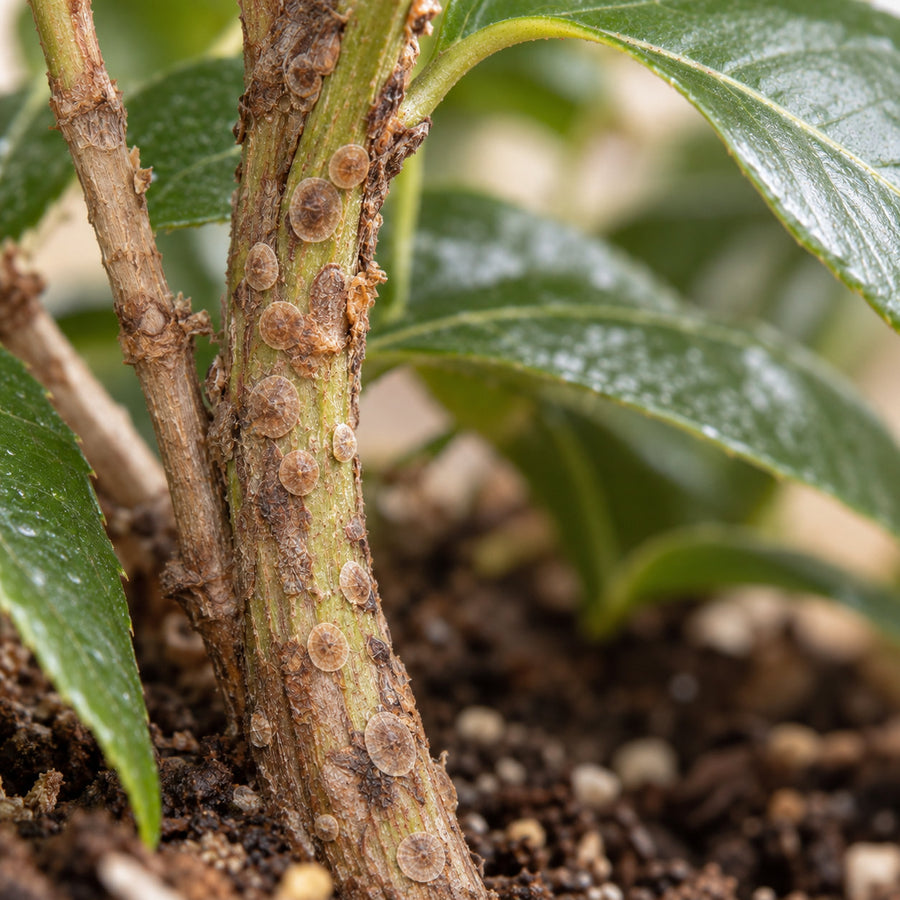
Armored scale is the one almost nothing eats, which is exactly why this beetle exists. Get the identification right first, because the answer for soft scale is a different beetle.
Armored scale looks like small raised limpets stuck to stems and leaves — gray, brown or white, often lined up along a stem. The cover is a separate shield the insect lives under, not part of its body, and that shield is what defeats most predators and most sprays.
The quick test is a fingernail. Armored scale pops off dry. Soft scale squashes wet and sticky, and there is honeydew on the leaves below it — that is a job for Cryptolaemus instead.
Then: is Rhyzobius the right answer to it?
Choose this if
Choose Rhyzobius for an active armored scale outbreak. The adults chew straight through the cover — the thing that makes armored scale so hard to treat — and the larvae develop underneath it on the eggs and crawlers. Adults fly and larvae crawl, so you get the whole plant covered, which matters on a big indoor tree or a dense bench. And where a parasitic wasp is easily overwhelmed, a beetle eats a great deal more per day.
Choose something else if
It wants warmth: 70 to 85°F, and it works best above 65°F — and it is the breeding that does most of the work, so a cool room costs you the compounding. If the scale squashes wet, it is soft scale and Cryptolaemus is the better buy. And a systemic insecticide travels into the scale and reaches the beetle feeding on it, so there is no both-at-once here.
What it kills, and what it won't
Soft scale, brown soft scale, black scale and mealybugs get taken on encounter — eaten when met, but not the job the beetle is for. If those are your actual problem, buy the beetle that specializes in them.
How it works
What it does to the pest, what it does on the plant, and what that leaves you looking at.
It gets under the armor
The adult chews through the scale cover and eats the insect beneath it. The larvae — small, grayish and scruffy, like tiny alligators — develop underneath the cover itself, feeding on the eggs and crawlers where they hatch. Often they are the more aggressive of the two.
Adults fly, larvae crawl
Between them that is 360 degrees of a plant: the beetles find the colonies on a big branching specimen, and the larvae work the cluster they were born into. Dense foliage and heavy branching are exactly where scale congregates, and exactly where these do their best work.
Dry, chewed, empty covers
Scale is a slow pest and this is a slow fix. What changes is that live scale gives way to dry flaky shells and no new crawlers — not a plant that visibly transforms in two weeks.
Give it four weeks before judging. Egg to adult runs four to six weeks. The first generation cleans up what it can reach; the second is what actually finishes a heavy infestation.
Will it work in your room?
Press one scale with a fingernail first. If it pops off dry, this is your beetle. If it squashes wet and sticky, that is soft scale and Cryptolaemus is the one that does it properly. And expect to release twice, two to three weeks apart — established scale on woody stems rarely goes down in one.
About Rhyzobius lophanthae
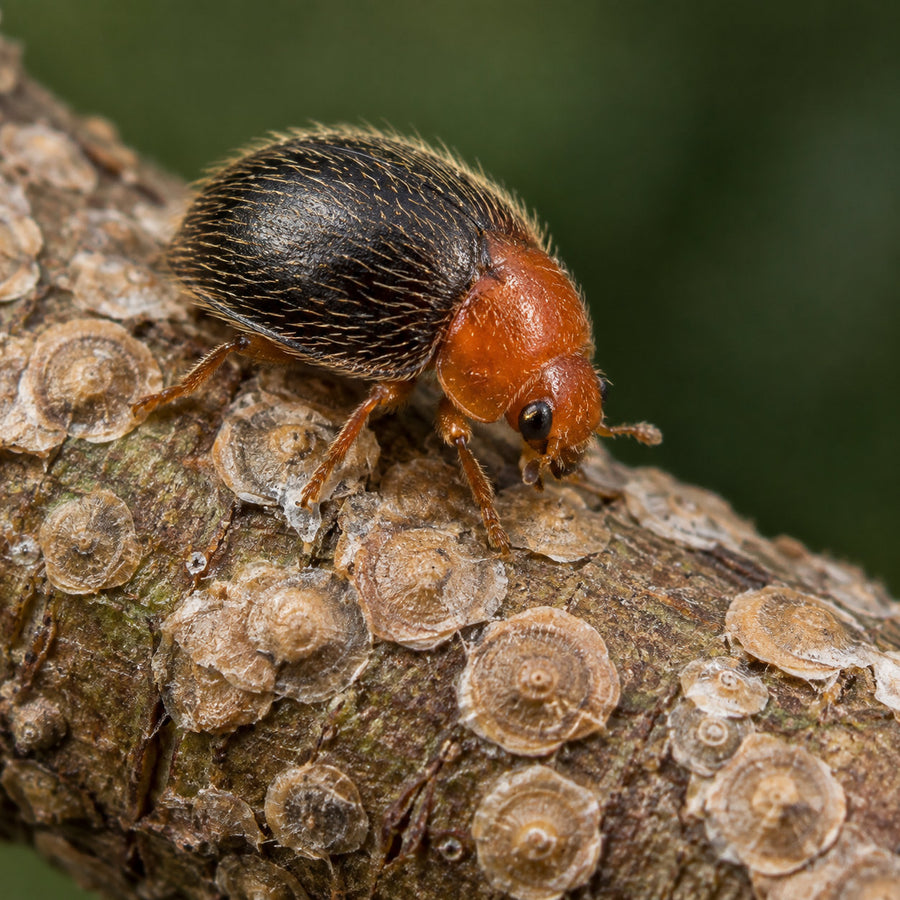
A 2 to 3mm dark beetle with a reddish head that does not read as a ladybug at all. It eats armored scale, the hard-shelled kind nothing else will touch, and it has no interest in your plants or in you.
New to beneficials?
Five things that catch almost everyone the first time.
After you release it
What actually changes, how slowly, and how to check rather than guess.
How you'll know it's working
Slowly, because scale is slow. What you are looking for is empty chewed covers and no new crawlers — not a plant that visibly changes over two weeks.
Old casings stay stuck to the stems even after the insect inside is gone, which is why a plant can look identical while the treatment is working perfectly. Scrape one with a fingernail and look underneath rather than judging from a distance.
The second generation is the one that finishes a heavy infestation. Egg to adult is four to six weeks, so a plant that looks unchanged at three weeks is usually on schedule.
Getting it to you
What is in the container, how it travels, and what happens if it arrives wrong.

What arrives
Live adults in a buckwheat hull carrier. Small, dark and easy to lose track of, and they start moving as they warm up.
Tip the beetles out at the infested stems; the hulls that come with them do not need placing anywhere in particular.
Release the day they arrive. High metabolism, highly active, and best released rather than held in a container. Evening or a low-light period is best — released under bright light they head for the nearest window instead of the plant.
When it ships, and when it lands
Shipping
We ship when they're ready to travel. Live orders go out Monday to Thursday. If a colony needs a beat to peak, or we're propagating a fresh batch, yours might hold up to a week. All mites and insects ship 2-day or Overnight depending on what's best for them.
When it lands
Open it that evening, at the scale. Take yellow sticky cards down first and mist the foliage. Then open the container directly against the infested stems and let them walk out, or move them onto the worst clusters with a small brush. Do not scatter them across the room — proximity to a colony is most of the outcome.
Why we pack extra
Two days in a van is a long trip for something this small, so we send more than you paid for.
A 2mm beetle with a high metabolism ships in a container, in a van, for two days.
A trip like that is hard on anything this small, so we price it in: the number on the label gets counted out, and then roughly 15% more goes in on top as a cushion.
Your 100-beetle container leaves here holding more than 100. The ones that do not make it are already paid for.
If you can see them
Ladybugs, lacewing larvae, Orius — the minute pirate bug — and the beetles. These are the ones big enough to photograph, and a picture tells us a lot.
Cold insects are very good at sitting still. That's normal. Release them as this page says, and watch the pest instead.
Something look wrong? Photograph them in the container and email the photo to info@fgmnnursery.com.
The photo is not us doubting you. It is how we tell a bad batch from a bad courier day from a mailbox that hit 104°F.
If you can't see them
Mites, nematodes, eggs — most of what we sell. Not this one: Rhyzobius is a visible beetle, so the section above applies to you. A cold beetle sits very still, and that's normal on arrival.
Email info@fgmnnursery.com and our entomologist takes you through the diagnostic instead — where the box sat, what your room was doing, and then what the pest is doing about ten days later.
We spell the other half out here so you can see the policy is the same either way.
Seventy-two hours from delivery, either way, with your order number. Replacement or store credit, your pick.
What it does not reach
Three gaps this page has already named, and the beneficial that closes each one.
Soft scale is a different beetle's job
Press one with a fingernail. Armored scale is a hard little limpet and the cover pops off dry; soft scale squashes wet and sticky, and there is usually honeydew under the plant to go with it. Soft scale and mealybug are what Cryptolaemus is built for. Rhyzobius will eat soft scale on encounter, but it is not the job it does well.
These beetles fly, and cards catch them
Take yours down around a release and put them back once the beetles have settled onto the plants. Cards are not how you measure a scale treatment — that is done by scraping a cover and looking underneath — but they are how you notice everything else arriving in the room while your attention is on one pest.
Two small add-ons that make the rest work harder. Blue cards give you the dated count this page keeps asking you to read. Breeder's Blend is pollen and Artemia; it keeps the population fed through the lull when prey gets scarce.
Keep reading
Written by the people who raise and ship them.
- They Are Shipped Cold So They Do Not Move.You open the box and the tube is a motionless ball of beetles. Nothing is walking, nothing is flying, and the obvious conclusion is…Read it
- Your Beneficials Started the Moment You Released Them. You Just Can't Tell Yet.You released the predatory mites three days ago and the spider mites are still there. The nematodes went in a week ago and the…Read it
- How Long Do Predatory Mites (and Other Beneficials) Work?The lifespan on the label is not what decides how a release goes. What does is whether the beneficials leave, starve, dry out, get…Read it
Questions
How long does it take to see results?
Scale is a slow-moving pest, and biological control takes time. Live scale gives way to dry, flaky shells as the beetles work through the colony — how long that takes depends on how heavy the infestation is.
Can I use this with Neem Oil?
Yes, with timing. A wet oil spray will coat the beetles and kill them, so never release into fresh spray. Neem and horticultural oil leave nothing behind once dry, so wait until the foliage is dry before you release. Insecticidal soap needs a day.
Will they fly away?
If there is an abundance of food (scale), they will stay. Once the food source is gone, the adults will fly to find new colonies.
Do the larvae look like the adults?
No. The larvae look like tiny, grayish, "scruffy" alligators. Do not remove them! They are often more aggressive hunters than the adults.
Is this safe for indoor plants?
Yes. They are harmless to humans, pets, and furniture. They only care about eating scale.
Can I use them with Aphytis wasps?
Yes. This is a common "dual-attack" strategy. The wasps parasitize the young, while the beetles eat the adults.