
Ladybugs & Lady Beetles



Why we ship larvae, not adults
The bag of adult ladybugs sold at garden centres is a famously poor purchase. Adults have wings, arrive in a dispersal mood, and mostly leave. The larva has no wings and one job. It's also the hungrier stage by a wide margin.
A lady beetle larva looks nothing like the beetle — it's elongated, spiny and dark with orange markings, and it's routinely mistaken for a pest and squashed by the person who ordered it. Learn to recognise it before you release. The care guide shows you what to look for.
The squad
Adalia bipunctata, the two-spotted ladybug, is a native aphid specialist and the general-purpose choice for aphids on indoor plants.
Montrouzieri (Cryptolaemus montrouzieri) is the mealybug destroyer. Its larva grows a white waxy coat and infiltrates the colony looking like an oversized mealybug.
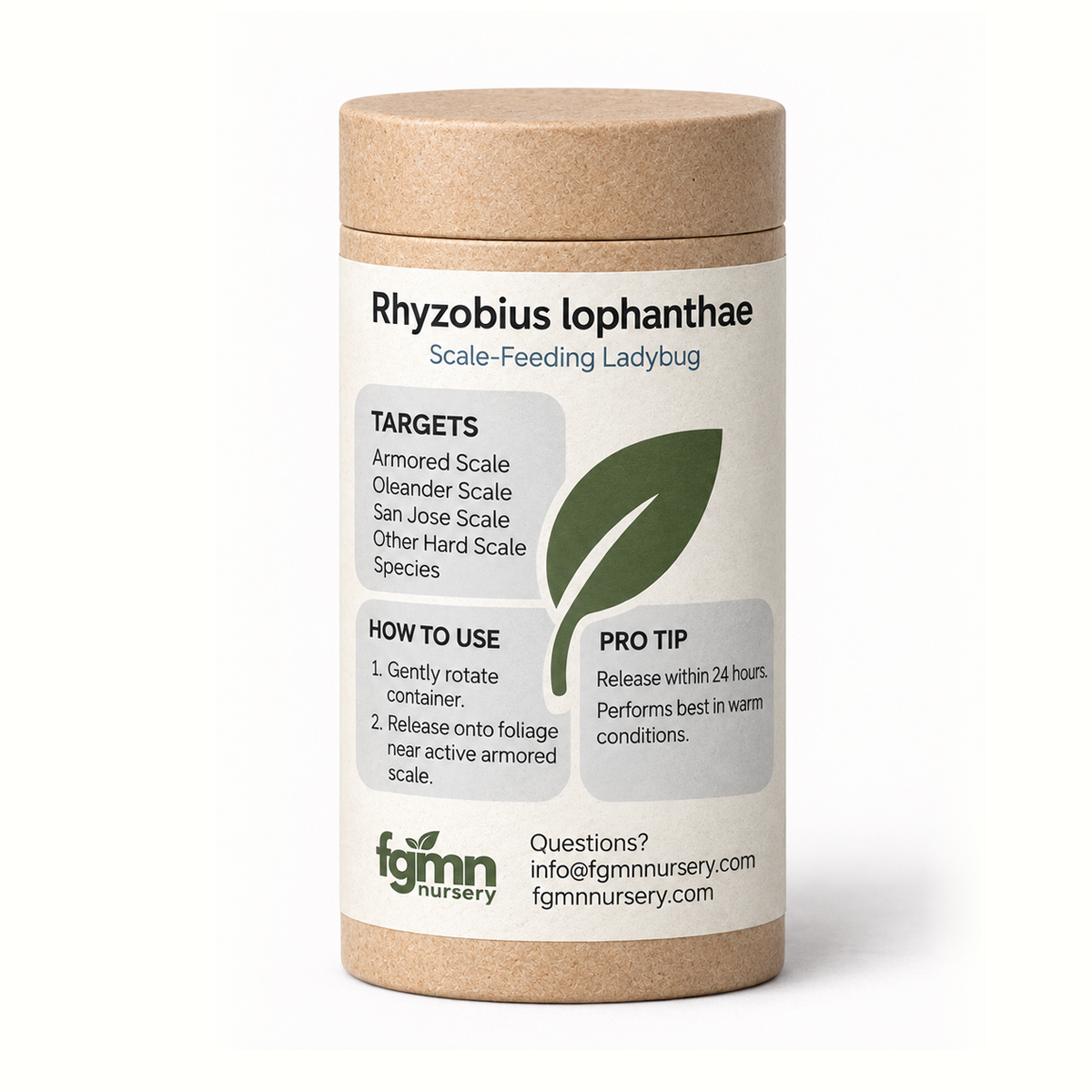
Rhyzobius lophanthae is the scale specialist, small and dark, feeding underneath armored scale covers.
Getting the most from a release
Release directly onto the colony — larvae walk, and the shorter the walk the better. Do it in the evening, when it's cooler and they settle rather than wander. And check for ants: ants farm aphids for honeydew and will actively defend them against lady beetle larvae, which is why a release sometimes fails for reasons that have nothing to do with the beetles.