
Biological control · Aphids

Aphid treatment that keeps up with how fast they breed

Green peach, melon, potato, foxglove and other aphids

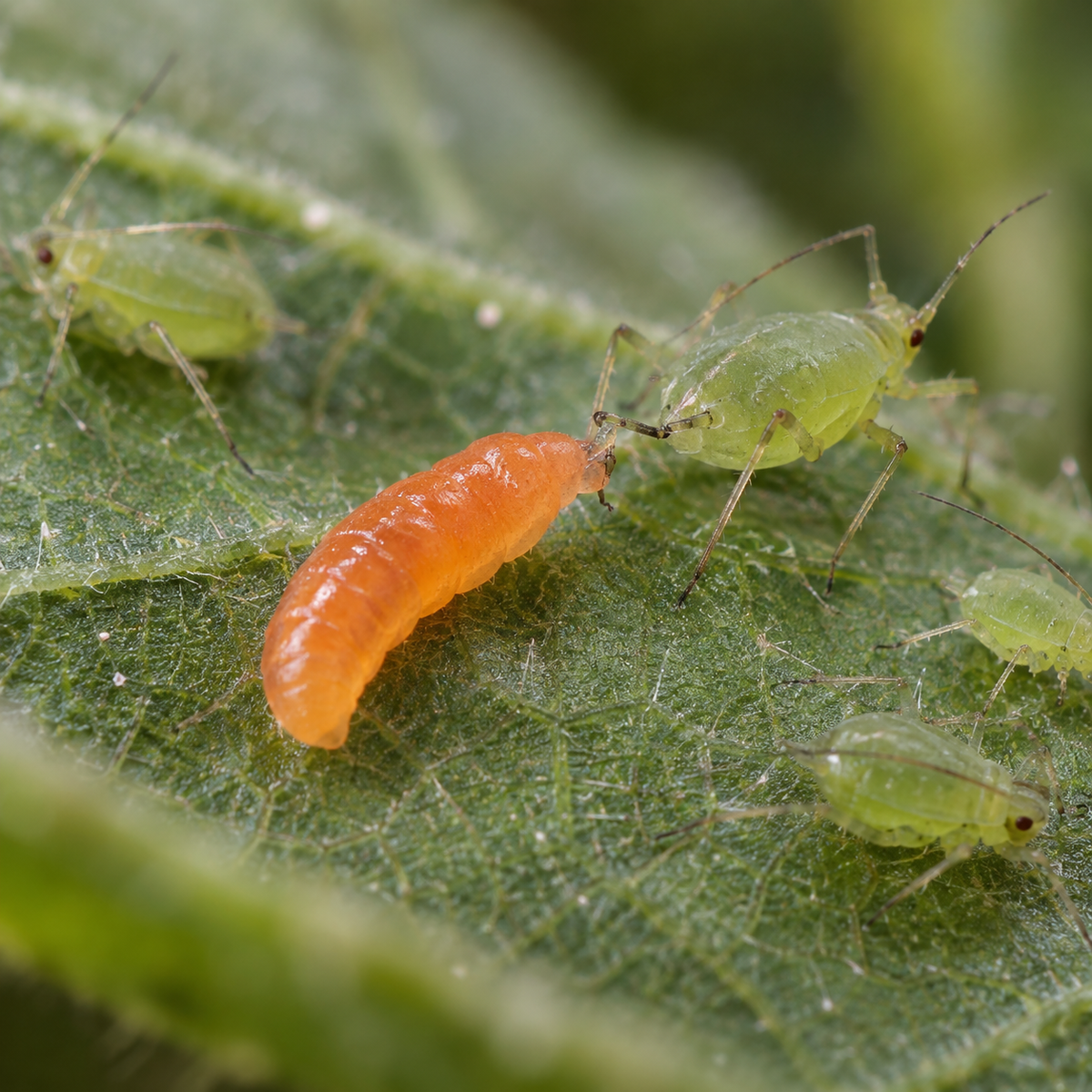
Aphids give birth to live young without mating, so a few on a new shoot become a colony in about a week. Biological control matches that speed: Aphidius wasps turn aphids into mummies that hatch more wasps, Aphidoletes midge larvae clear dense colonies, and lacewing larvae and ladybugs eat them outright. Keep the ants off, pick the predator that fits your aphid, and repeat until new growth stays clean.

4.6 out of 5 · 211 reviews of our aphid predators

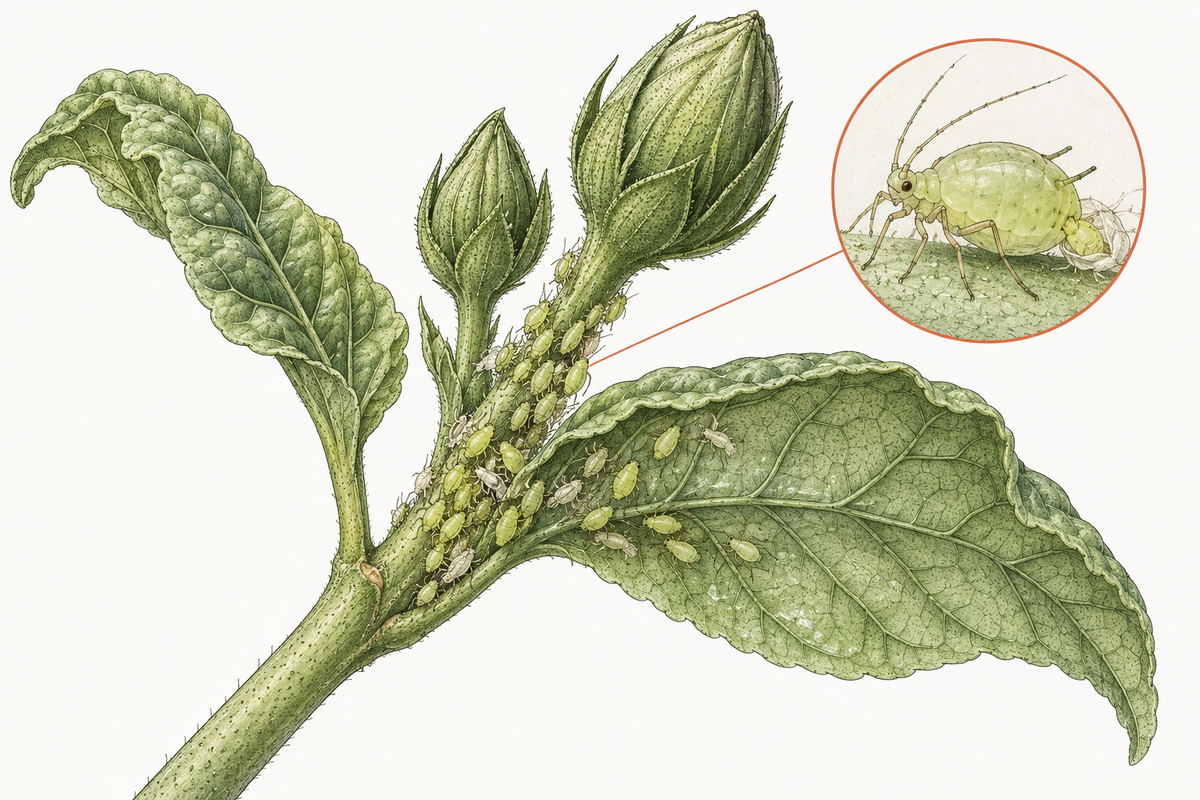
Ink drawing of a hibiscus shoot tip crowded with green aphids, with one wingless aphid giving birth shown enlarged in a circle
Life cycle
newborn to breeding in about a week
How you'll know
two tiny tubes at the back end
Ants
keep them off first, or they guard the aphids
Safe around
people, pets, plants and food crops
Build my aphid plan

1Confirm it

How do I know it's aphids?

Two tiny tubes at the back end mean aphids, whatever the color. Size and where they sit tell you which wasp to use.

Getting the pest wrong is the most common reason treatment fails. Check the signs, or answer a few quick questions.

  • Clusters on new growth

    Soft, pear-shaped insects packed on tips, buds and leaf undersides

  • Sticky leaves

    Shiny honeydew on the leaves below, sometimes with black sooty mold

  • Curled new growth

    Leaves pucker and twist where colonies feed

  • Winged ones appear

    A sign the colony is crowded and starting to spread

Which aphid is it?

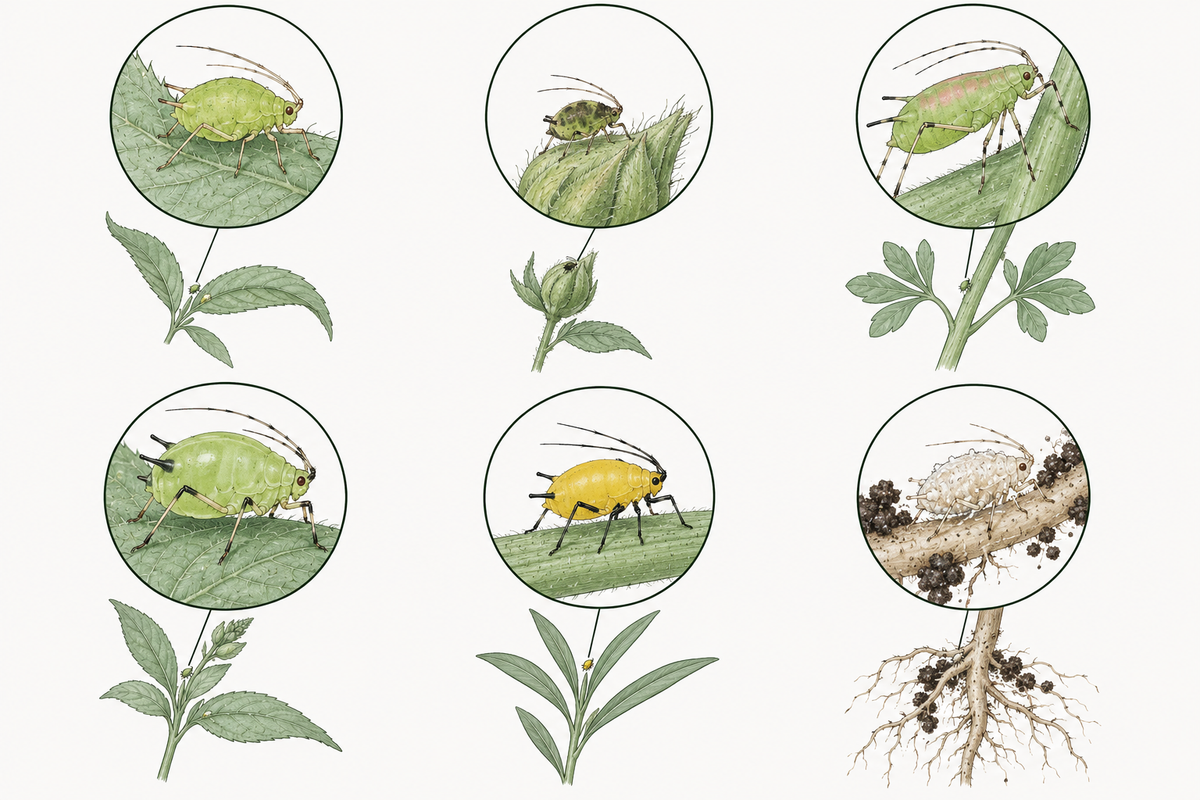
Size, color and where they sit tell you which one you have, and that decides which predator works. Drawn to the same scale.

Six common aphids drawn to the same scale: green peach, melon, potato, foxglove, oleander and root aphid
Common aphids: size, how to spot each one, where it sits and what works on it
TypeSizeHow to spot itWhere it sitsWhat works
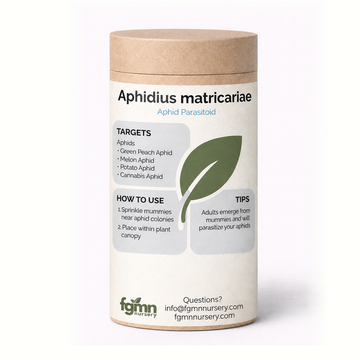
Green peach aphidMyzus persicae 1.2–2.3 mm Small and pear-shaped. Pale green to yellowish, sometimes pink, with medium-length cornicles Packed on new growth, buds and leaf undersides Aphidius colemaniAphidius matricariaeMatricariae if the room runs cool
Melon or cotton aphidAphis gossypii 0.9–1.8 mm Small and round. Mottled dark green to yellow, with short dark cornicles New growth and flower buds. A regular on hibiscus and citrus Aphidius colemani
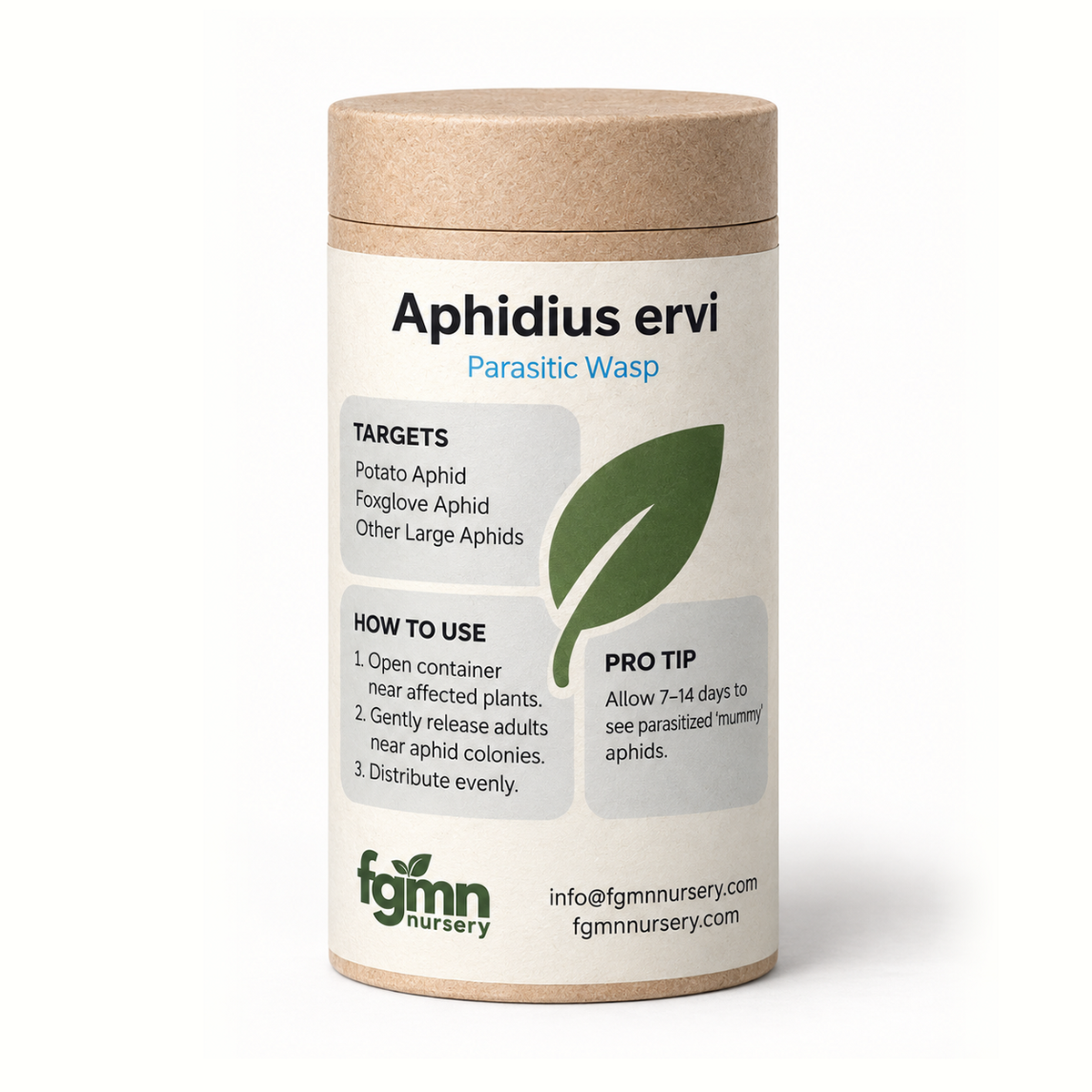
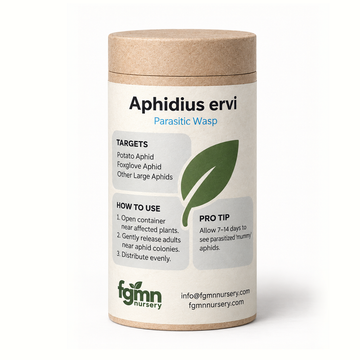
Potato aphidMacrosiphum euphorbiae 1.7–3.6 mm Large and wedge-shaped. Green or pink, with long legs and long cornicles Spread along stems and flower spikes Aphidius ervi
Foxglove aphidAulacorthum solani 1.8–3.0 mm Large and glossy pale green, with a darker patch at the base of each cornicle and dark leg joints Lower leaves and stems. Drops off the plant when disturbed Aphidius ervi
Oleander aphidAphis nerii 1.5–2.6 mm Bright yellow, with black legs, antennae and cornicles Stems and new growth of hoyas and oleander Aphidoletes aphidimyzaGreen Lacewing LarvaeA generalist is the better match than the wasps
Root aphidsSeveral species 1.5–2.5 mm Pale white or tan, often dusted with white wax On the roots and at the soil line, not on the leaves Send us a photoDifferent treatment, so we'll help you plan it

A mix, or can't tell which? Aphidoletes takes over 60 aphid species, so you don't need to know.

Looks like aphids, but isn't

Still not sure? Work backwards from the damage or send us a photo.

2Pick a plan

Which aphid treatment do I need?

Pick by what you see: early colonies, spreading ones, one big colony, or a hot, dry room.

Find what you're seeing, then add that plan to your cart.

If you see

Early, small colonies

A few clusters on new growth, and you know which aphid
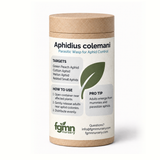
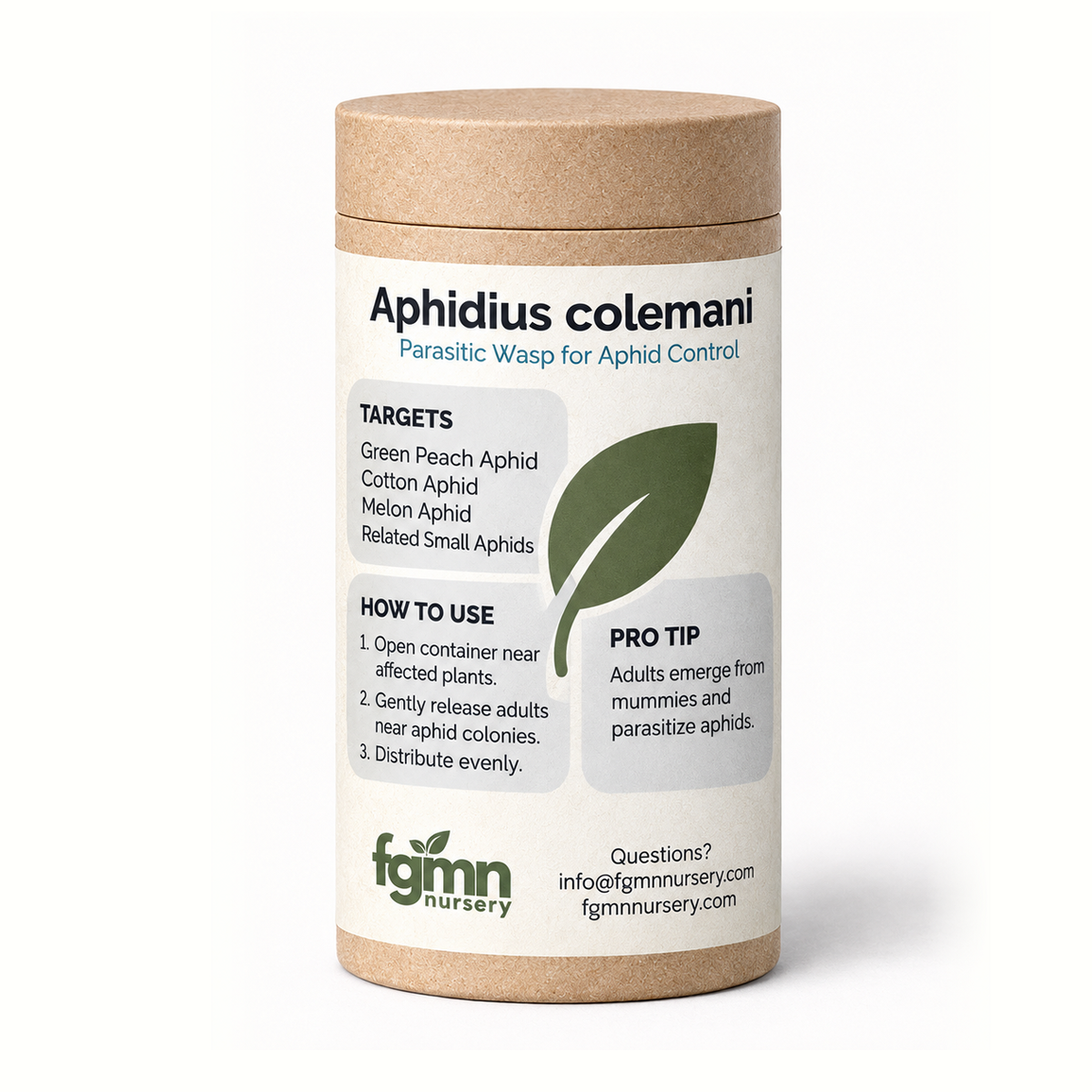
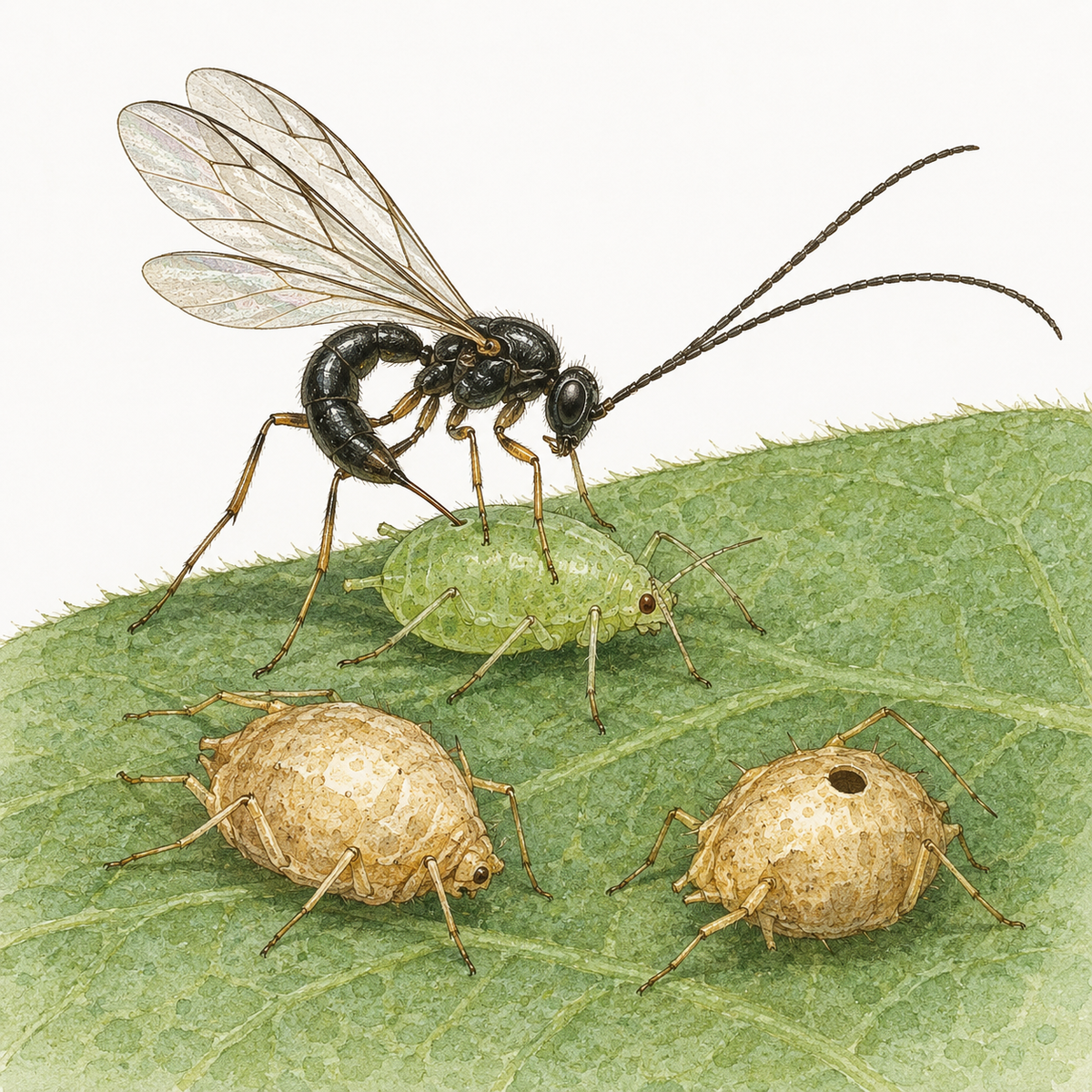
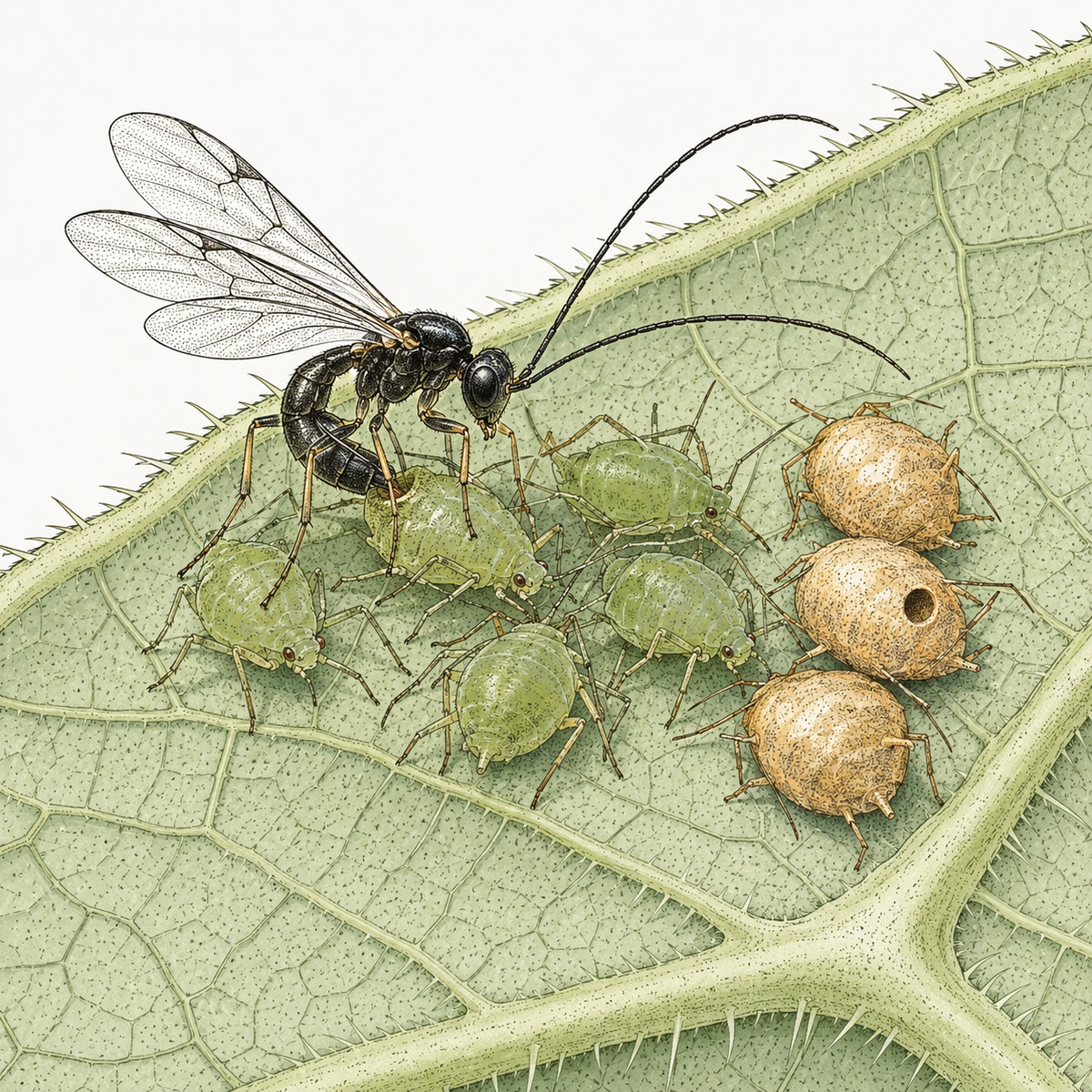
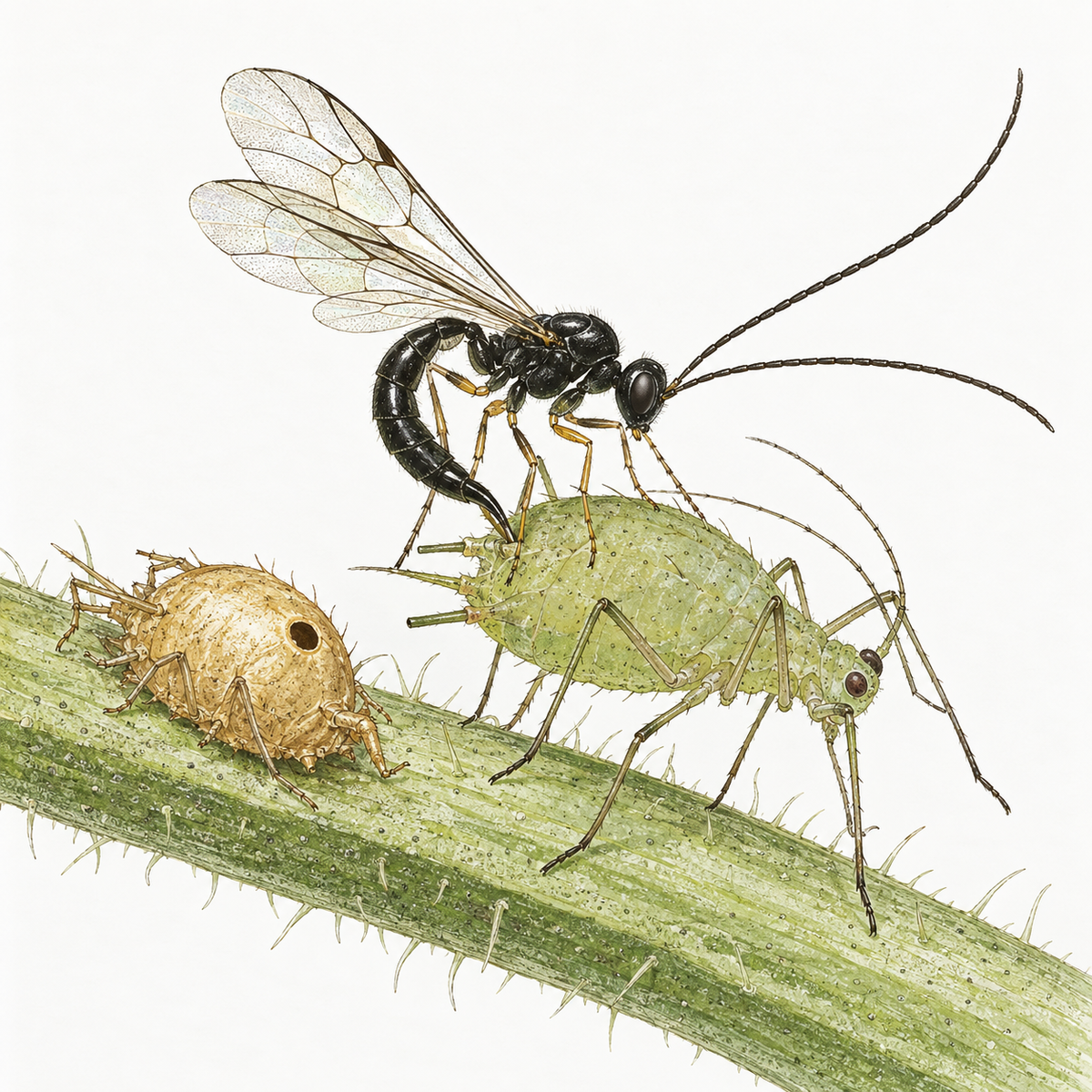
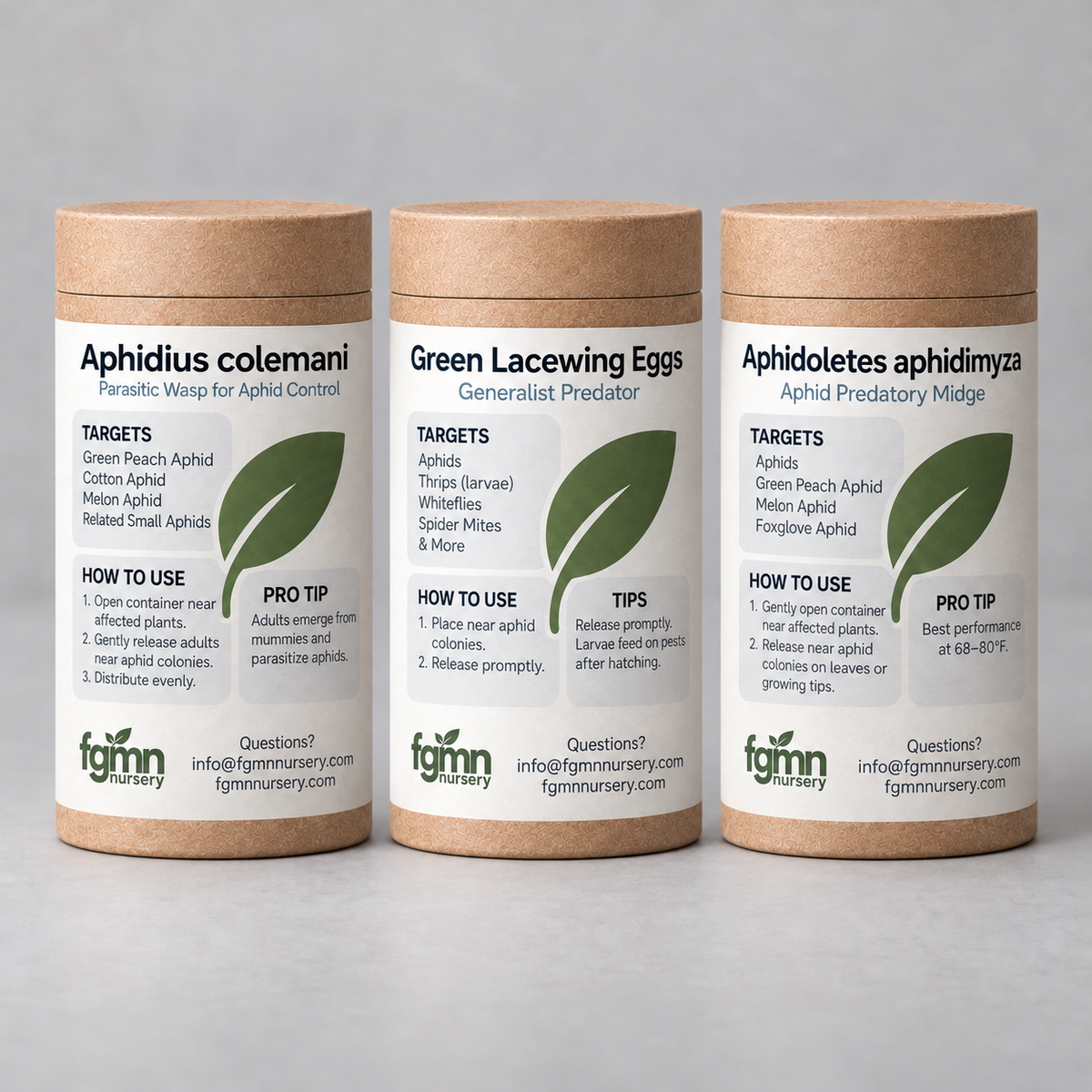
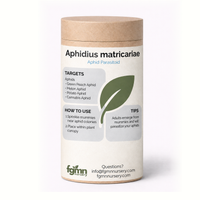
Aphidius colemani is a tiny, stingless wasp that lays an egg inside each aphid. The aphid turns into a tan, papery mummy and a new wasp hatches out to keep going. Best on green peach and melon aphid caught early. For potato or foxglove aphid choose Aphidius ervi, and in a cool room, matricariae.
$54.00

Arrives alive or we reship it

Start here

If you see

Colonies spreading

Dense clusters on several plants, or you can't tell which aphid

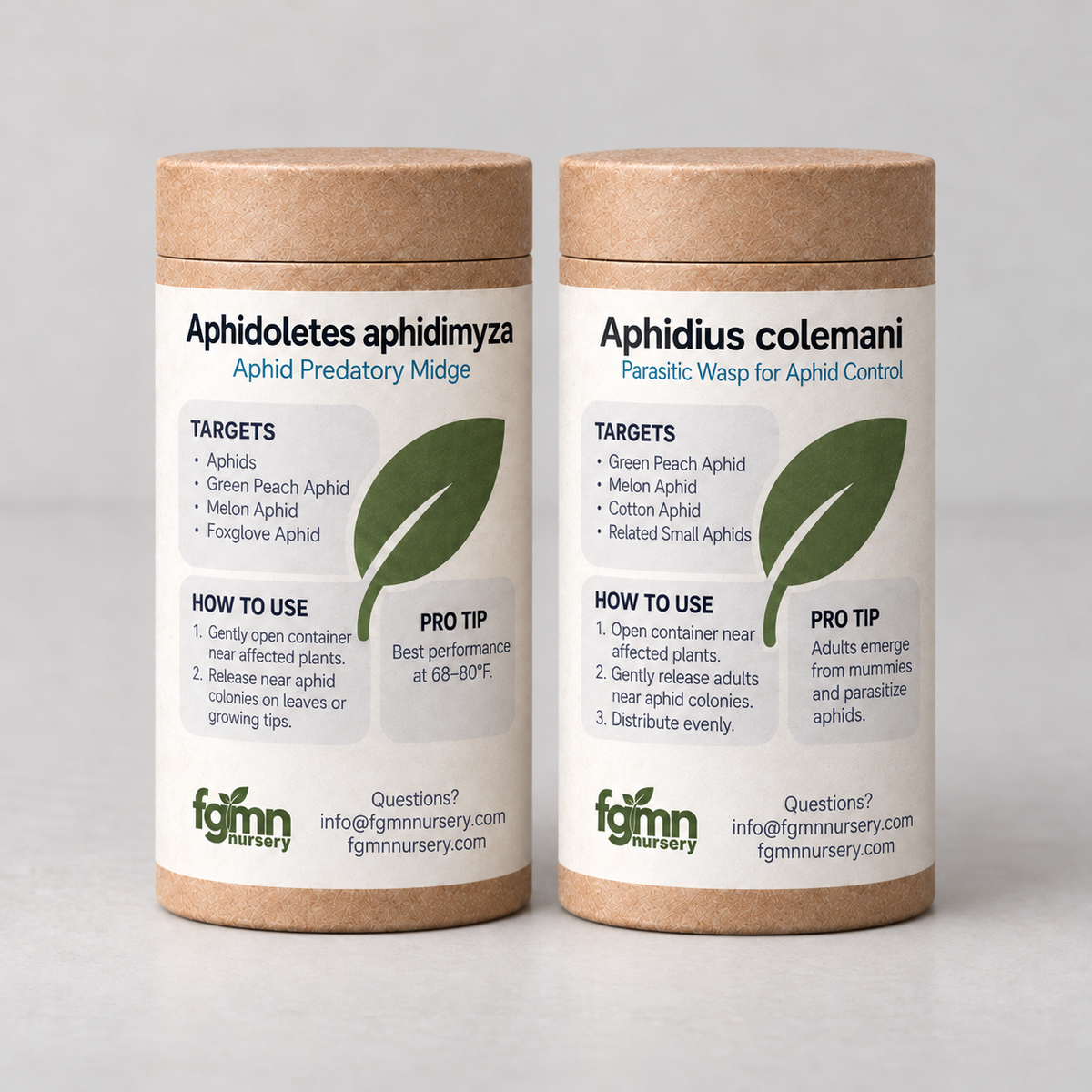
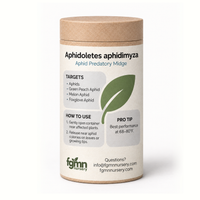
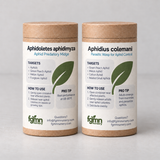
The two aphid specialists in one kit: Aphidius colemani wasps for the small aphids, and Aphidoletes midges, which find colonies by scent and work on over 60 aphid species. The pick for a mixed infestation or an aphid you can't identify, for 15% less than buying them separately.

$85.00

Arrives alive or we reship it

If you see

Heavy, and everywhere

Dense colonies across the whole collection

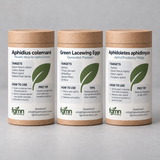
Adds green lacewing eggs to the wasp and midge kit. The larvae that hatch eat every aphid species and handle heat and drier air, so all three are working the plant at once. 15% less than buying them separately.

$127.00

Arrives alive or we reship it

If you see

Your first beneficials

A big, visible colony you want knocked back now

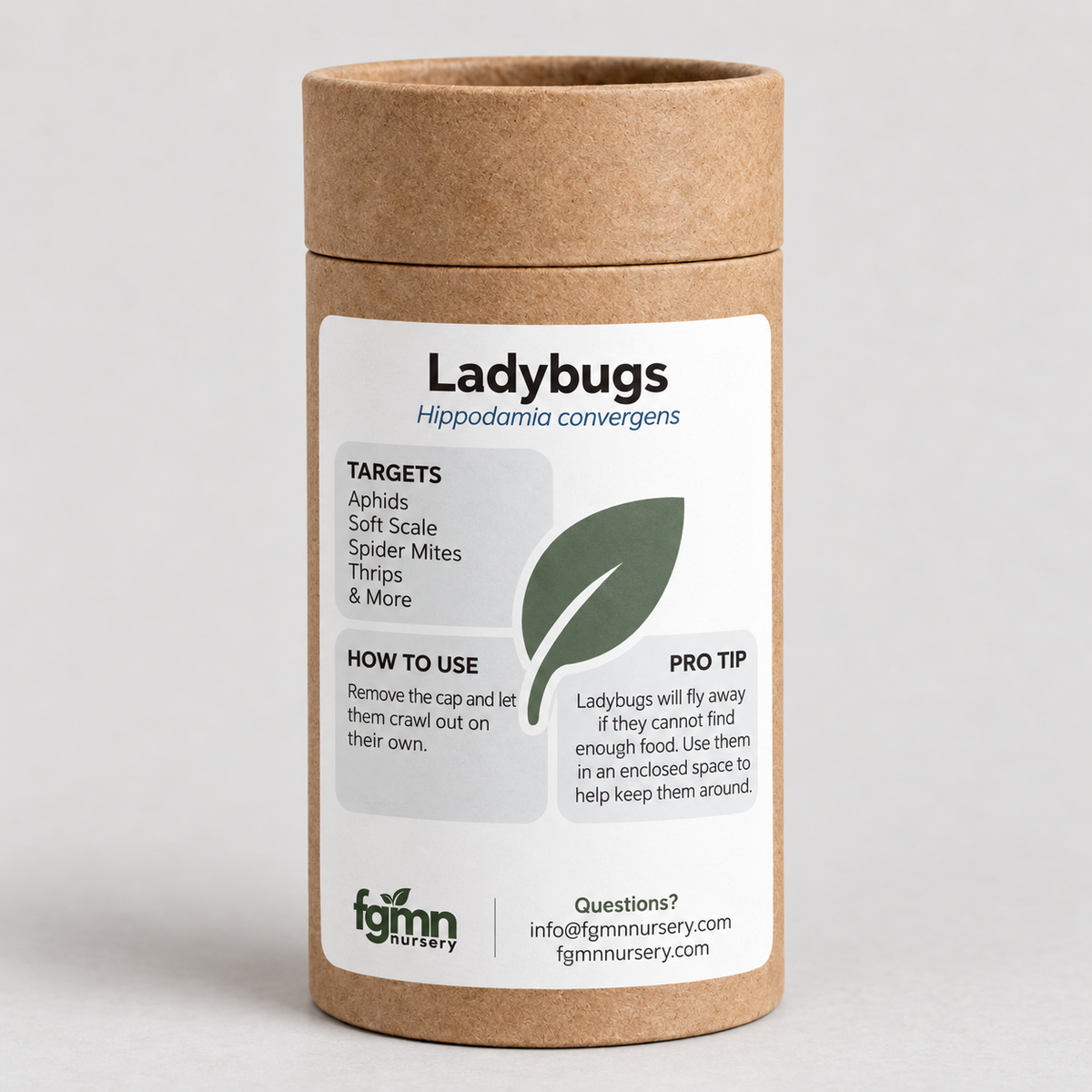
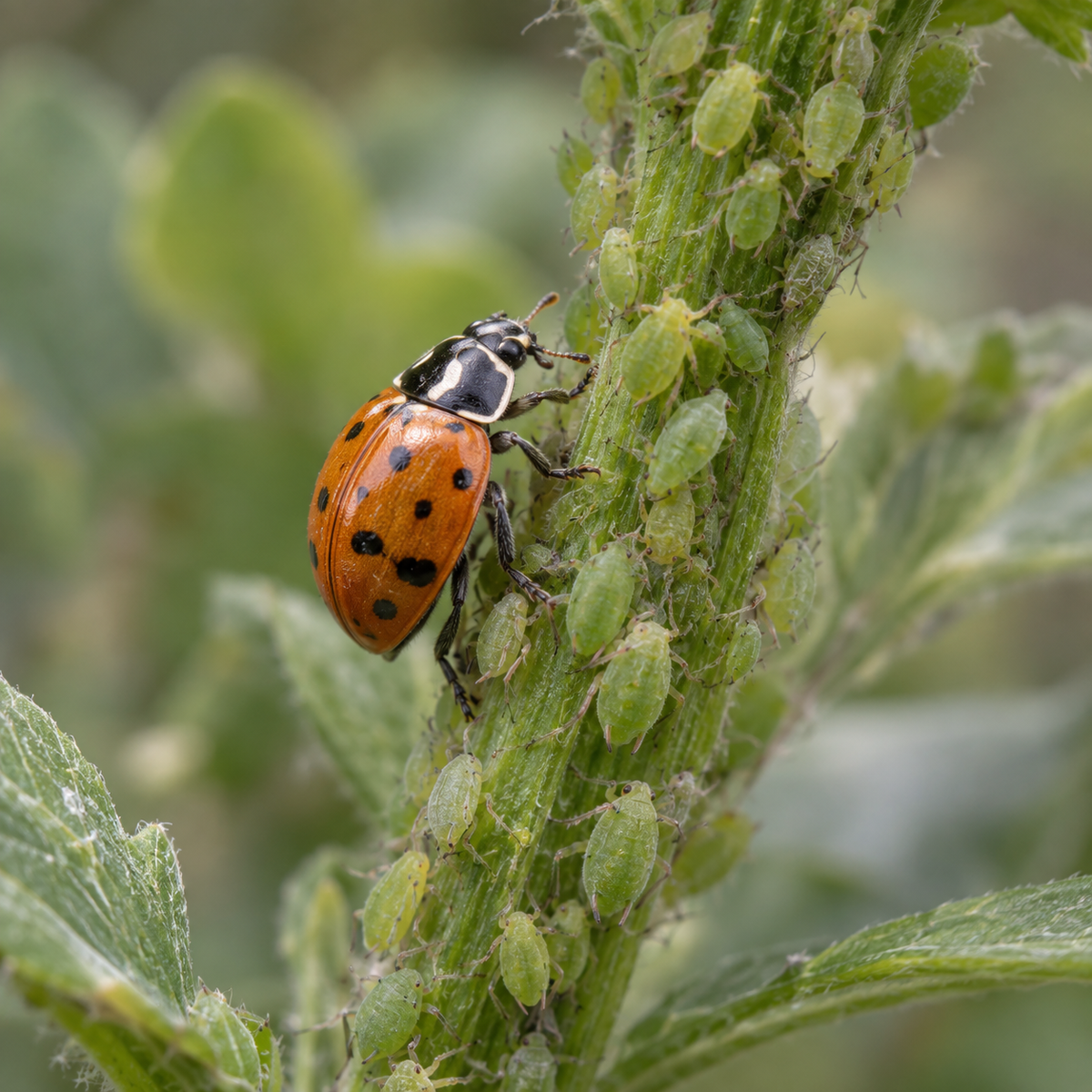
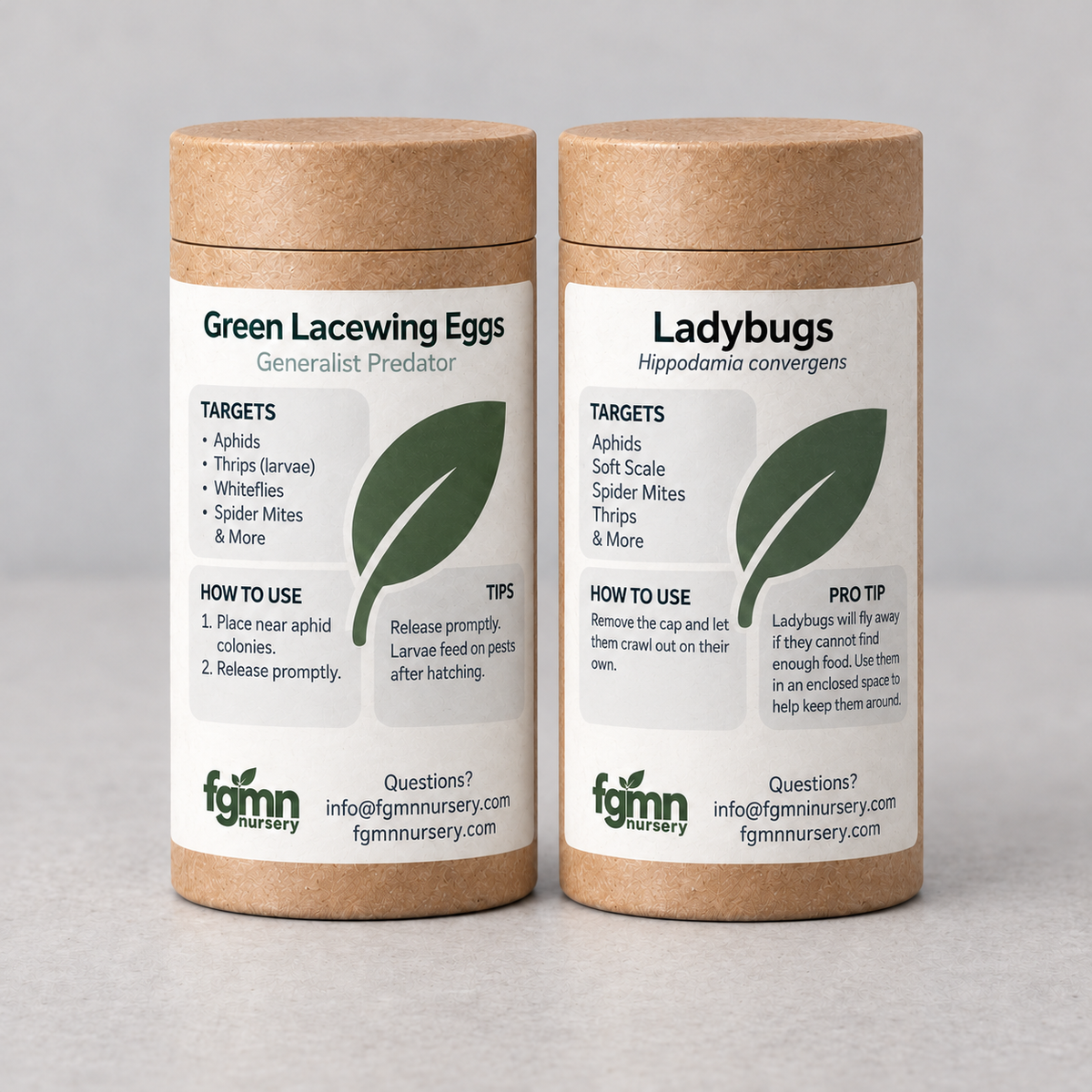
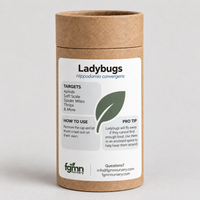
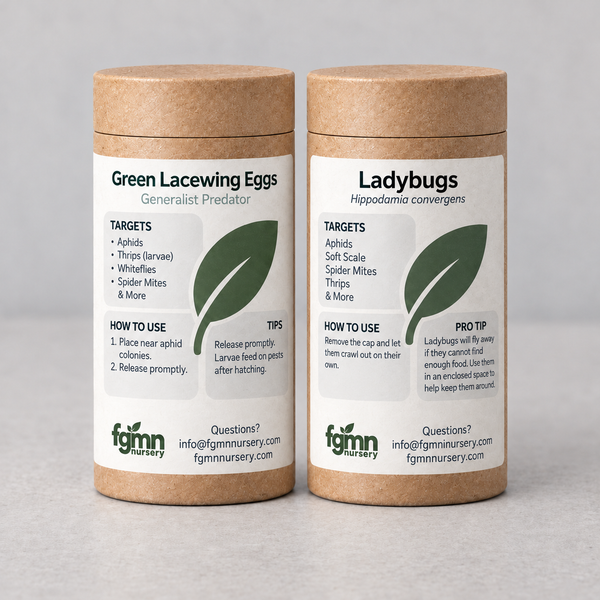
Ladybugs for the quick knockdown: release them at dusk on the lower stems and they head straight for the aphids. Most fly off within a day or two, so green lacewing eggs come with them and hatch into larvae that keep hunting after the ladybugs move on. 15% less than buying them separately.

$71.00

Arrives alive or we reship it

If you see

A warm or dry room

Aphids where it runs hot or the air is dry

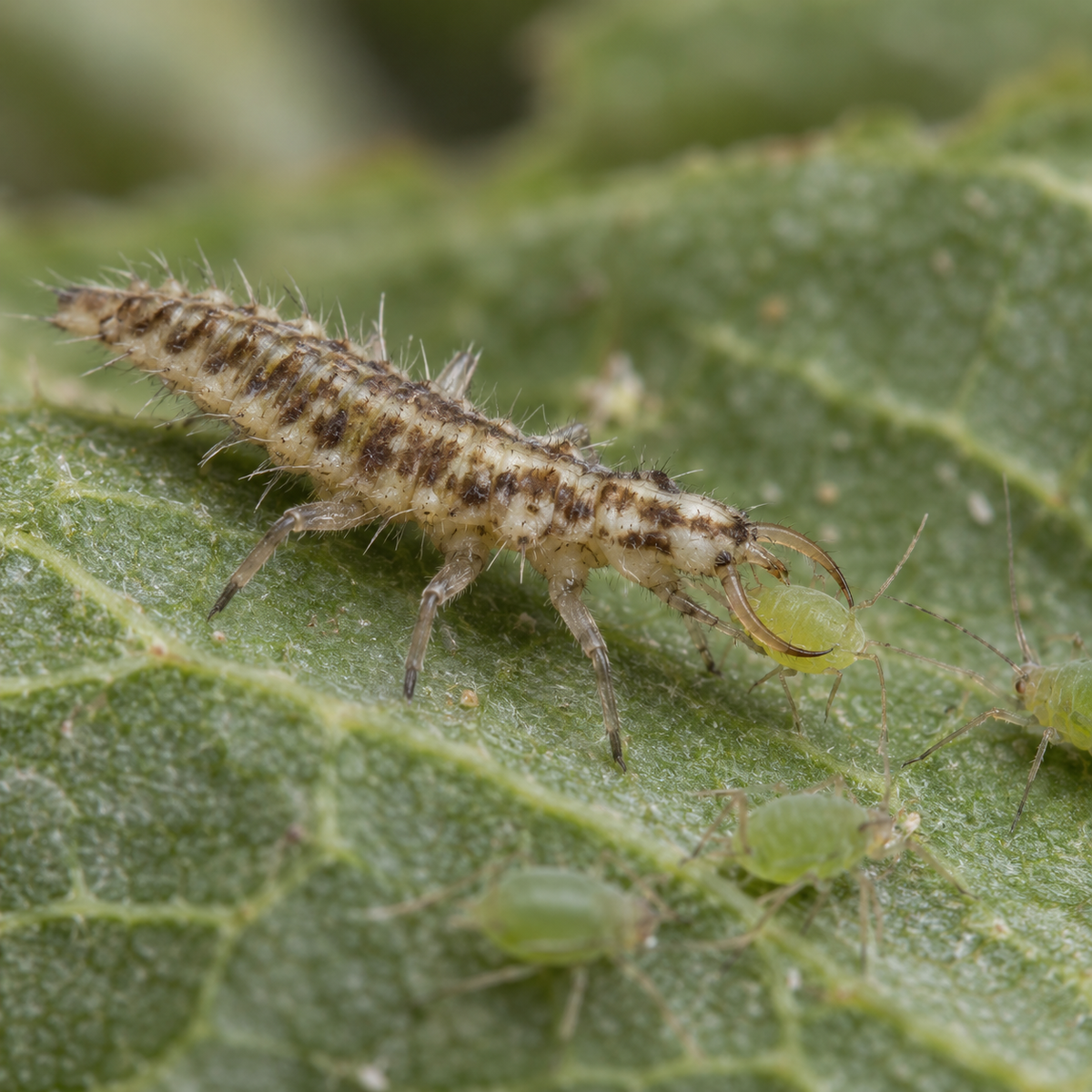
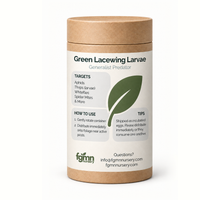
Lacewing larvae eat every aphid species and handle heat and drier air well. They arrive as eggs that hatch about a day after delivery. Tip them across the whole plant in the evening, and they work best in dense foliage.

$45.00

Arrives alive or we reship it

Good to know: Ants first. Ants farm aphids for their honeydew and drive predators off, so ring the base of each stem with sticky tape or a line of diatomaceous earth before you release anything.

Prefer to build it yourself? Shop each predator. Just want to keep aphids out? See prevention. Not sure what you're seeing? Take the quick check.

Or build it yourself

Every aphid treatment we sell

Every predator and parasite we ship for aphids, with bundles first when we have them.

How it works

What eats aphids, and where?

Wasps multiply as fast as aphids do, midges clear dense colonies, and ladybugs and lacewings eat them outright.

Indoors, aphids skip the egg. Females give birth to live daughters without mating, and those daughters are already carrying the next generation. Warm rooms cancel the switch that would end it in autumn, so an indoor colony keeps going all year. That's why the predators that work best either multiply as fast as the aphids do, like the Aphidius wasps, or clear whole colonies at once.

Ink drawing of a potted hibiscus with aphids on the shoot tips and leaves, with close-ups of live birth, growing nymphs, a wingless adult and a winged adult
  1. Indoors there are no eggs. A wingless female gives birth to live young without mating.
  2. The young (nymphs) feed on new growth and leaf undersides, shedding white skins as they grow.
  3. In about a week they're adults and start giving birth themselves.
  4. When a colony gets crowded, winged adults appear and fly off to start new colonies on other plants.

What to release

  • Aphidius colemani
    Aphidius colemani

    Eats green peach and melon aphid

    Early colonies. Leaves mummies that hatch more wasps. Release in daylight

    from $54
  • Aphidius ervi
    Aphidius ervi

    Eats potato, foxglove and pea aphid

    The bigger aphids colemani can't develop in

    from $55
  • Aphidius matricariae
    Aphidius matricariae

    Eats green peach aphid

    A cooler room

    from $45
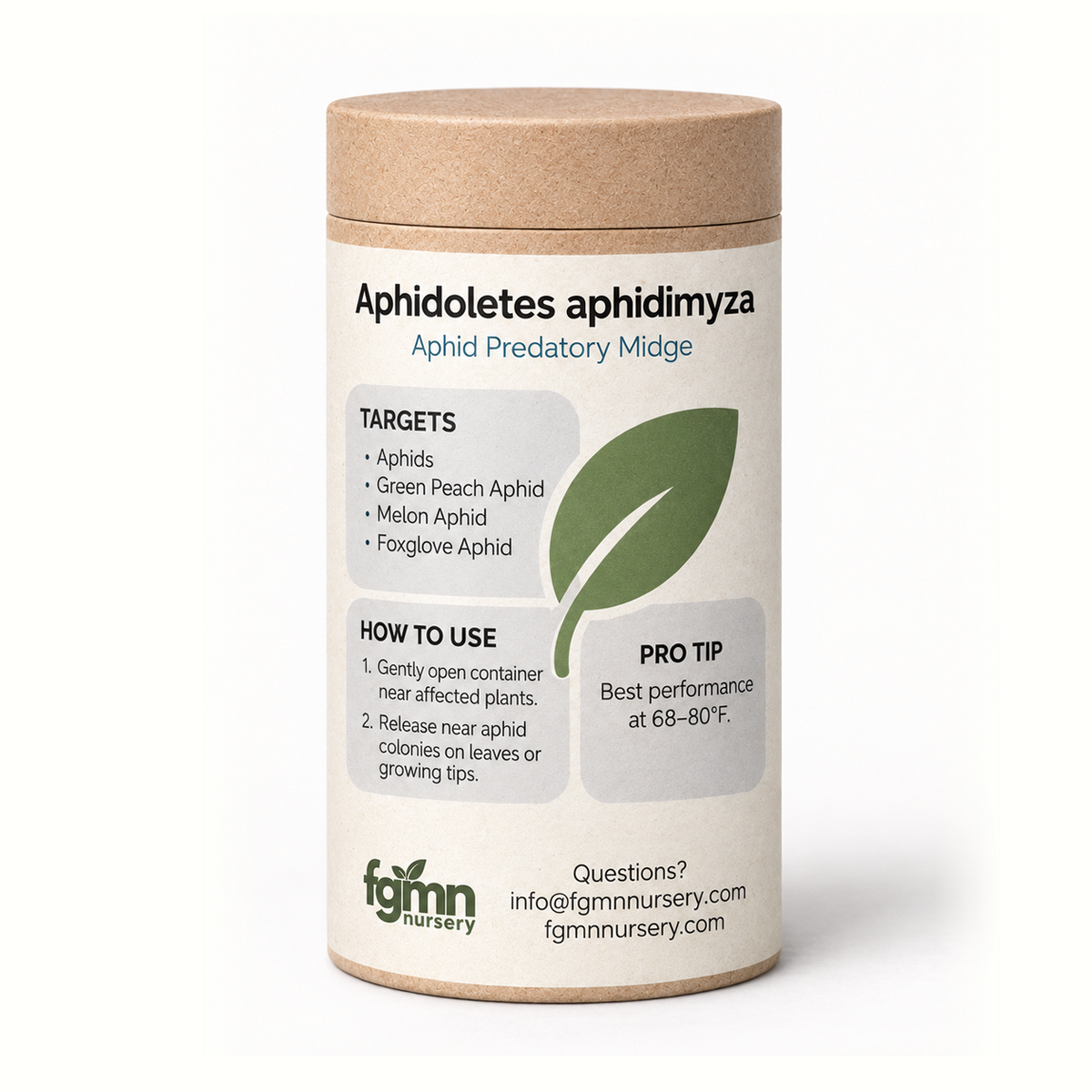
  • Aphidoletes aphidimyza
    Aphidoletes aphidimyza

    Eats over 60 aphid species

    Dense or mixed colonies, or an aphid you can't identify

    from $25
  • Green Lacewing Larvae
    Green Lacewing Larvae

    Eats every aphid species

    Warm or drier rooms. Arrive as eggs that hatch in about a day

    from $45
  • Ladybugs
    Ladybugs

    Eats aphids, plus soft scale and young mealybugs

    A quick knockdown on a visible colony. Release at dusk

    from $25
Compare every aphid predator in one table
Aphids predators: where each one works, what it eats and when to choose it
PredatorWorks onEatsBest forFrom
Aphidius colemani Leaves Green peach and melon aphid Early colonies. Leaves mummies that hatch more wasps. Release in daylight $54
Aphidius ervi Leaves Potato, foxglove and pea aphid The bigger aphids colemani can't develop in $55
Aphidius matricariae Leaves Green peach aphid A cooler room $45
Aphidoletes aphidimyza Leaves Over 60 aphid species Dense or mixed colonies, or an aphid you can't identify $25
Green Lacewing Larvae Leaves Every aphid species Warm or drier rooms. Arrive as eggs that hatch in about a day $45
Ladybugs Leaves Aphids, plus soft scale and young mealybugs A quick knockdown on a visible colony. Release at dusk $25

One generation, start to finish

  1. NewbornDay 0
  2. Growing nymphFirst week
  3. Wingless adultAbout a week on
  4. Winged adultWhen crowded
What happens at each stage
Newborn Day 0 · Leaves
Born live, often already carrying the start of the next generation
Growing nymph First week · Leaves
Feeds on sap at the tips and leaf undersides, molting as it grows
Wingless adult About a week on · Leaves
Gives birth to several young a day, no mating needed
Winged adult When crowded · Air
Appears when the colony is crowded or the plant declines, and flies to new plants

3After it arrives

How do I release predators for aphids?

Ants off first, wasps in the morning, everything else at dusk, and repeat every 2–4 weeks.

  1. Before you order

    1. Confirm it's aphids

      Look for two tiny tubes pointing back from the rear end

  2. While it ships

    1. Keep the ants off

      A ring of sticky tape or diatomaceous earth around each stem base

    2. Clear the way

      Take down yellow sticky cards, skip systemic sprays, and wait one day after neem oil or insecticidal soap. Never sulfur

  3. Release day

    1. Wasps in the morning

      Release Aphidius in daylight, close to the colonies

    2. Midges and lacewings at dusk

      Aphidoletes low down on damp, shaded soil; lacewing eggs across the whole plant

    3. Ladybugs at dusk, low down

      Mist the plant first, then set them on the lower stems or soil, never on top

  4. After release

    1. Repeat releases

      Every 2–4 weeks while aphids are active

    2. Finish properly

      Keep going until new growth stays clean two weeks in a row

Conditions they like best

These are the ranges they like best, not hard limits. Short spells outside them won't hurt; only conditions that last for days slow them down.

  • Temperature60–90°FHappiest in the 65–80s. A cool night or a hot afternoon won't hurt them
  • Humidity40–80%Aphidoletes does best above about 50%, and short dry spells are fine as long as the soil under its bottle stays damp. The wasps and lacewings are fine in an ordinary room
  • LightDaylight for the waspsAphidius search by day, so release them in the morning. Midges, lacewings and ladybugs go at dusk
  • Day length (Aphidoletes)Longer days are bestIn short winter days, a dim night light that isn't red keeps it working
  • AntsKept off the plantA sticky band on each stem is all it takes

What you'll see

  1. 1Right after release

    Not much to see. The wasps and midges are small, and the aphids keep breeding for a bit

  2. 2As it takes hold

    Tan, papery mummies appear among the colonies. That's the wasps working, so leave them to hatch

  3. 3Colonies shrink

    Fewer aphids on the tips and less fresh honeydew on the leaves below

  4. 4When it's working

    New growth comes in clean. Curled leaves stay curled, so judge by the new ones

Why aphid treatment fails

Most failed aphid releases come down to ants, the wrong wasp, or stopping after one round.

  • Ants left in charge

    Ants guard aphids and drive predators off. Band the stems before you release

  • The wrong wasp for the aphid

    Colemani can't develop in potato or foxglove aphid. Use ervi, or Aphidoletes if you're not sure

  • Yellow cards and systemics

    Cards catch the wasps and midges, and systemic sprays poison the aphids they develop in

  • One release and done

    Aphids breed every week. Repeat every 2–4 weeks until new growth stays clean

  • Short winter days for Aphidoletes

    It can stop breeding when days get short. A dim night light that isn't red keeps it going

4Afterwards

How do I keep aphids from coming back?

Release Aphidius while colonies are small and scattered, before winged aphids spread them.

Aphids ride in on new plants and through open windows, and a colony left alone starts making winged spreaders. Keep new plants apart for a couple of weeks, check the tips and leaf undersides when you water, and if you spot a few, release Aphidius while the colonies are small and scattered. That's the easiest moment to win.

Often shows up with aphids

  • Mealybugs

    Same sticky honeydew, same ants. Lacewing larvae and ladybugs take young mealybugs too

  • Whiteflies

    Honeydew and sooty mold on the same plants. Check the undersides for flat, still nymphs

  • Fungus gnats

    Winged root aphids land on the same yellow cards as gnats. If cards fill up, check the roots

Aphids questions

More about biological control in the Biocontrol FAQ, or ask us.

How do I know it's aphids and not something else?

Look at the back end. Aphids have two tiny tubes (cornicles) pointing backward from the rear, and nothing else on a houseplant does. Color doesn't tell you much, since aphids can be green, black, pink, yellow or grey. White wax with no tubes is usually mealybugs, and flat, still ovals on the leaf undersides are whitefly nymphs.

Which Aphidius wasp do I need?

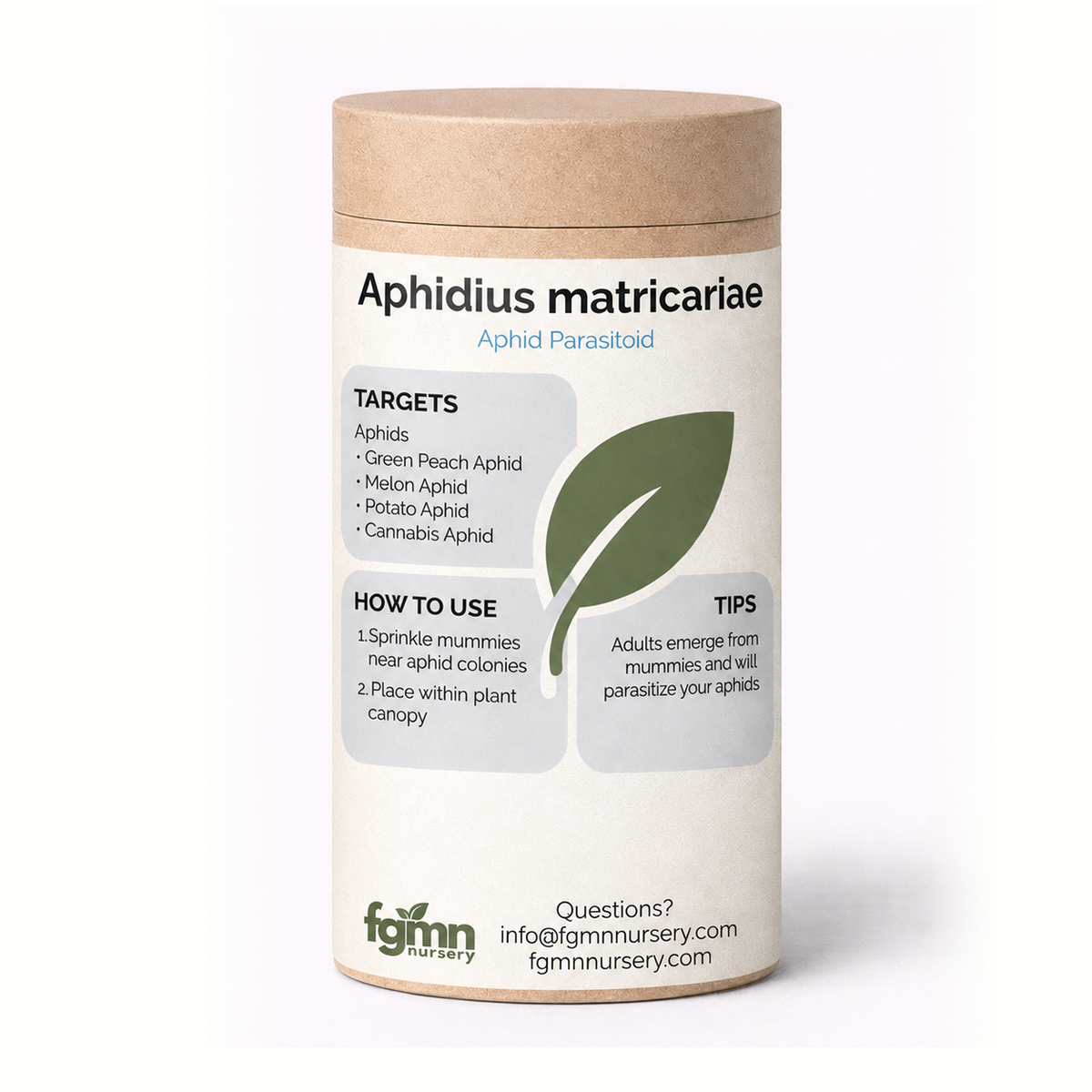
It depends on the aphid, not its size. Aphidius colemani is for green peach and melon aphid. Aphidius ervi is for potato, foxglove and pea aphid, which colemani can't develop in. Aphidius matricariae is for green peach aphid in a cooler room. If you can't tell which aphid you have, choose Aphidoletes, which works on over 60 species.

Why did my ladybugs fly away?

That's normal. Most adult ladybugs leave within a day or two, even when there are plenty of aphids, and it says nothing about your plant. Release them at dusk on the lower stems after misting the plant, and they eat a lot of aphids before they go. They're a quick knockdown, not a standing guard, so follow up with Aphidius.

What are the tan, papery aphids on my plant?

Those are mummies, and they mean the Aphidius wasps are working. Each one has a wasp developing inside. Leave them on the plant until you see a small round exit hole, because every one that hatches goes on to parasitize more aphids.

Do I really need to deal with the ants?

Yes. Ants farm aphids for their honeydew and defend the colony, carrying off or killing the predators you release. A ring of sticky tape or a line of diatomaceous earth around the base of the stem stops them. Do it before you release anything.

How often should I release predators for aphids?

Every 2 to 4 weeks while aphids are active. Aphids breed fast, so one release rarely finishes them. Keep going until the new growth stays clean two weeks in a row.

Can I use sticky cards and sprays with aphid predators?

Take yellow sticky cards down, because they catch the wasps and midges. Neem oil and insecticidal soap are fine to follow after one day. Skip systemic insecticides, which poison the aphids the wasps develop in, and never use sulfur with these predators.

Will aphids die off in winter indoors?

No. Outdoors, shortening days switch aphids to laying eggs that overwinter. Indoors, warmth cancels that switch, so an indoor colony keeps giving birth all year.

Do these predators work on root aphids?

Root aphids live on the roots, out of reach of predators that hunt on leaves, and there's little research on treating them. White wax on the roots and winged aphids turning up on sticky cards are the usual signs. Isolate the plant, check the root ball, and isolate new plants before they join the rest.

What are the spiky black-and-orange bugs on my plant?

Those are ladybug larvae, and they eat even more aphids than the adults. They hatch from eggs your ladybugs laid before leaving. Don't spray them.

Are aphid predators safe around pets and people?

Yes. Aphidius wasps are tiny and can't sting people or pets, and none of the predators we sell damage plants. Ladybugs, lacewing larvae and aphid midges feed on aphids and other small insects, not on you.

What growers say about our aphid predators

4.6 211 reviews across 4 products Read reviews

Every order arrives alive or we reship it. Live Delivery Guarantee