
Predatory Mites






















What a predatory mite actually is
A mite that eats other mites and small soft-bodied pests. Most are around half a millimetre — roughly a grain of sand — and most sold for biocontrol belong to the family Phytoseiidae. They live on the leaf, hunt continuously, reproduce on your plant, and pests cannot develop resistance to being eaten.
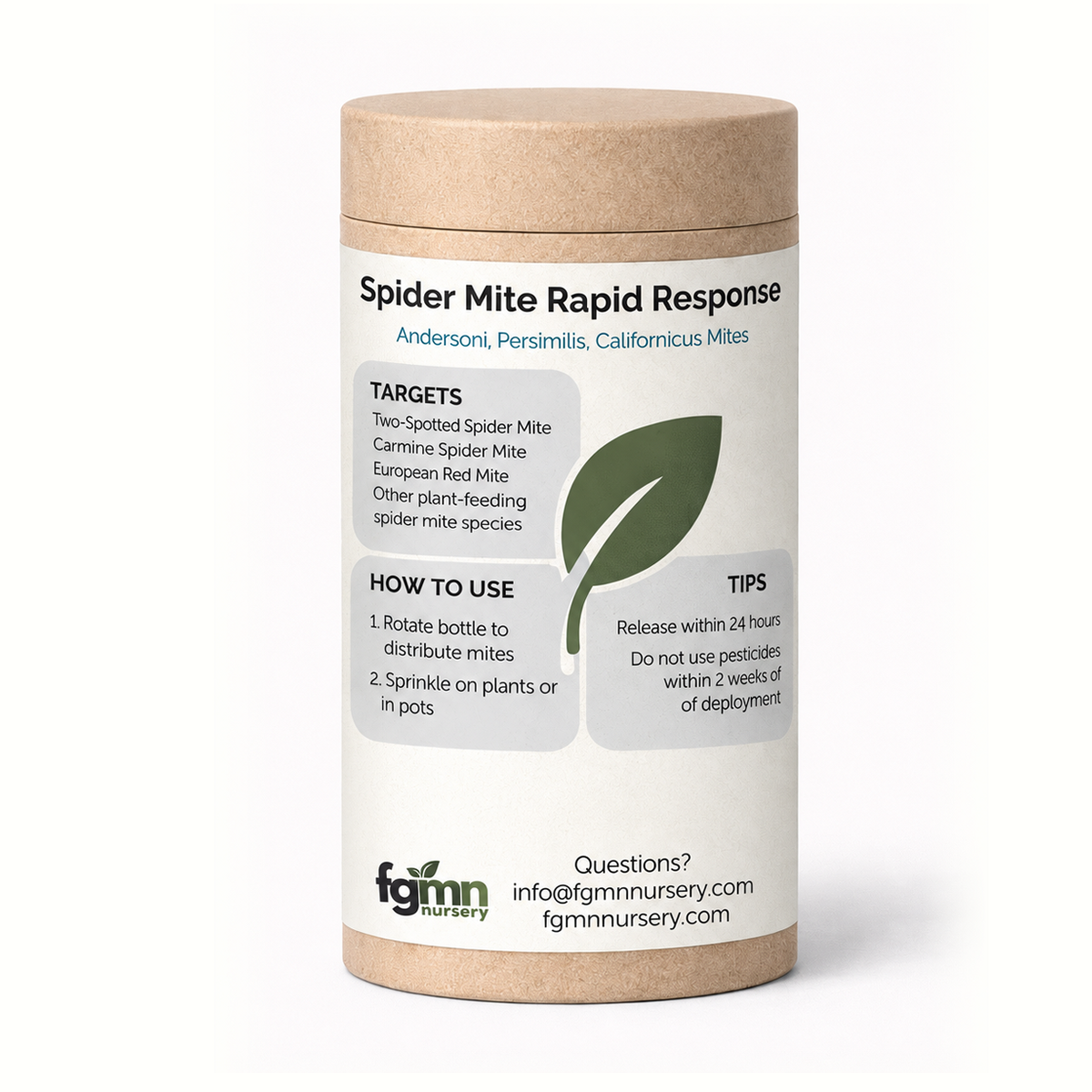
Eats one thing exceptionally well, then disappears. Phytoseiulus persimilis is the clearest case: spider mites only, fast, and gone once they are.
Use when you know exactly what you have and it is actively spreading.
Takes several pests and persists on pollen when prey runs low. Swirskii, californicus, cucumeris and limonicus all work this way.
Use for ongoing protection, mixed pests, or when you are not sure what is going on.
Bottles or sachets
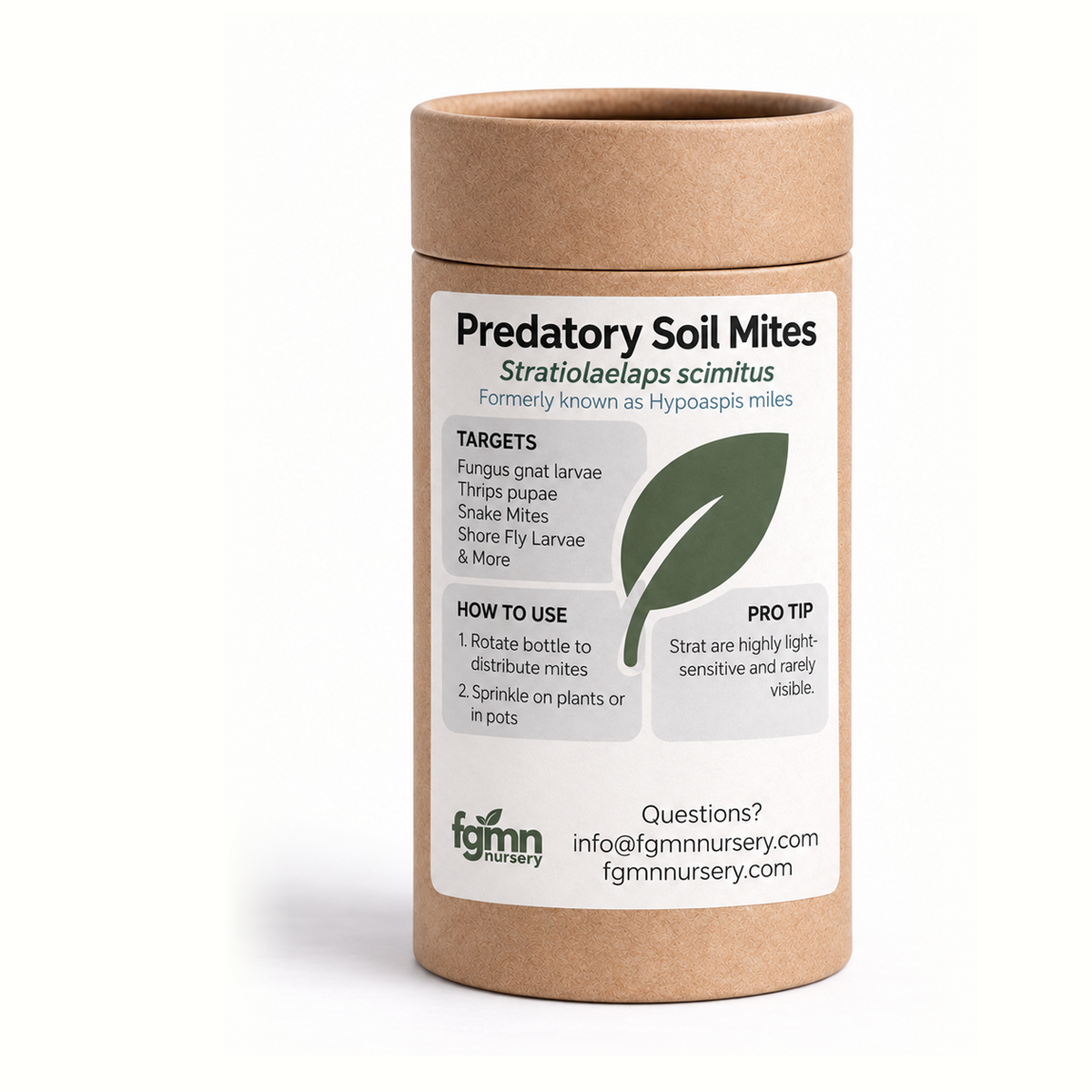
- Bottle
- A dose. A large number of predators released onto a problem that exists right now. That is treatment.
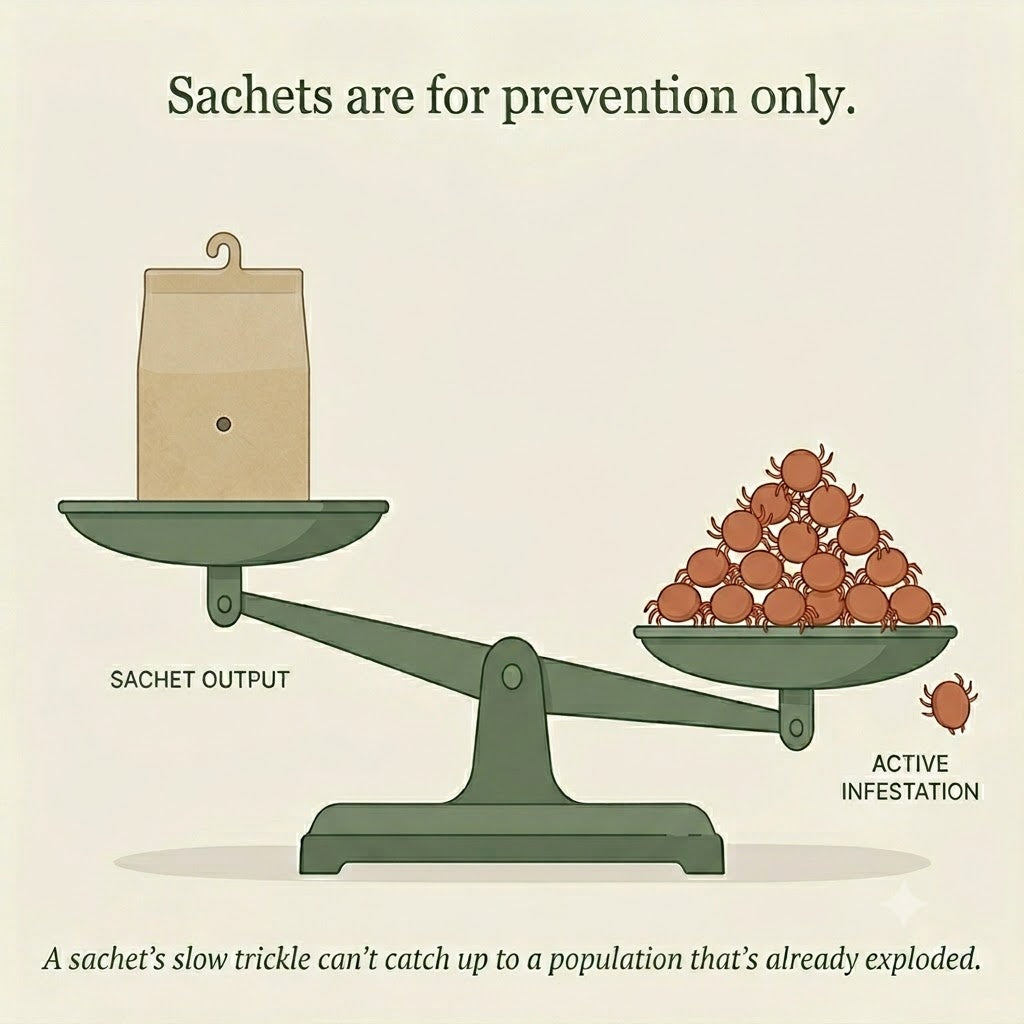
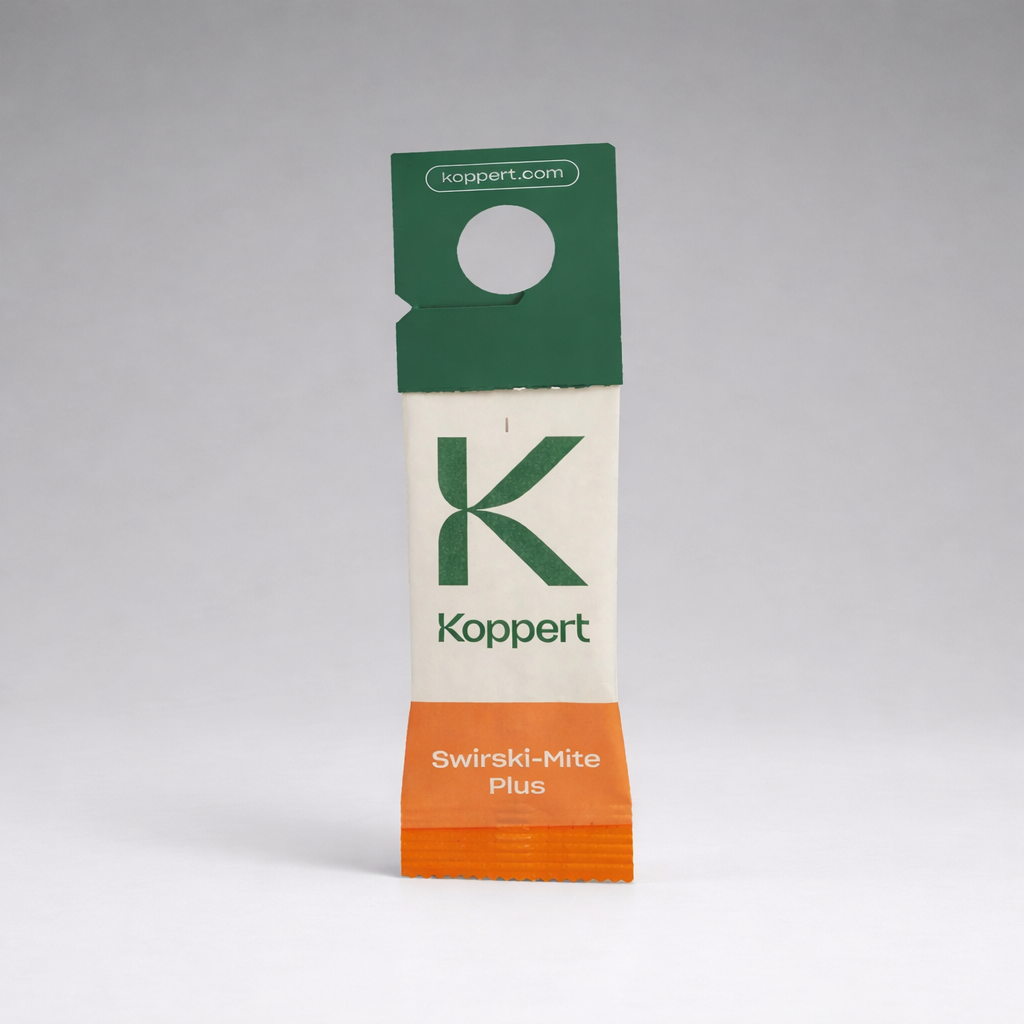
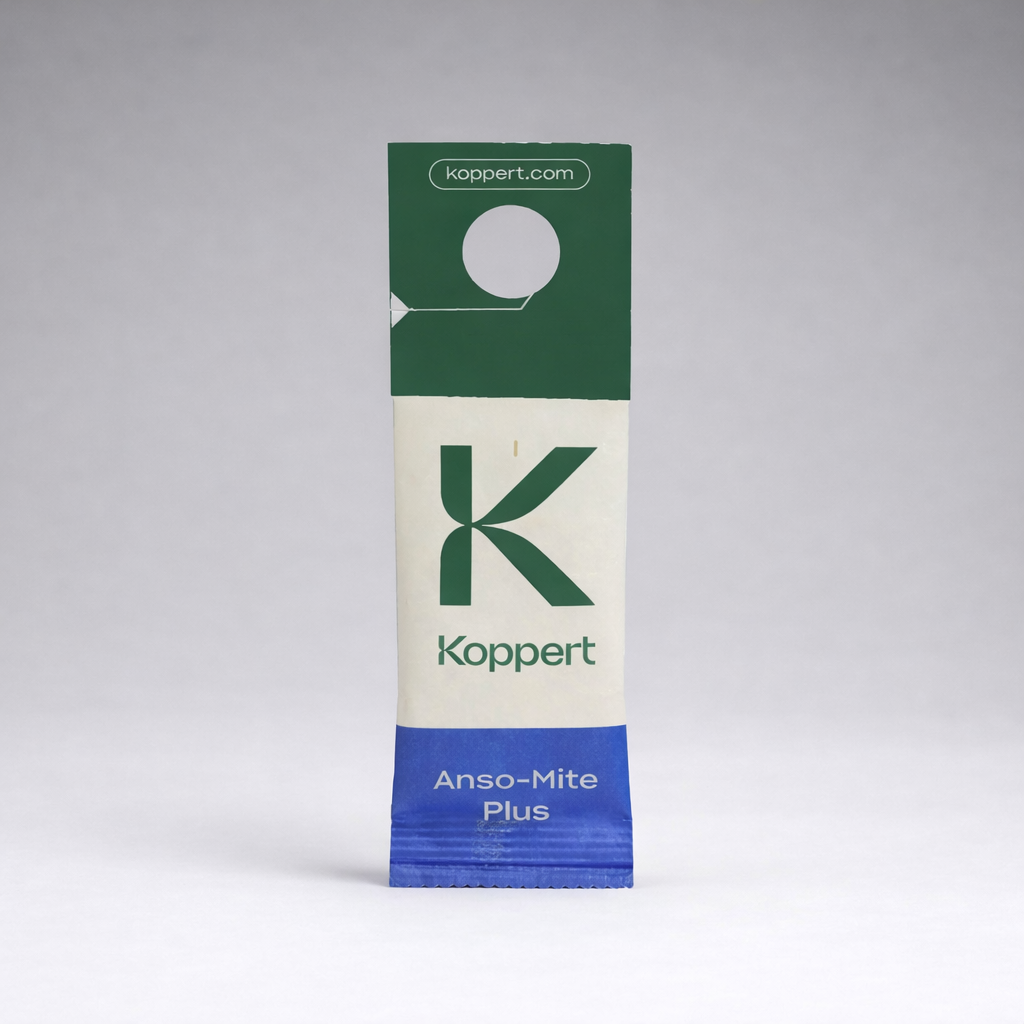
- Sachet
- A colony. A breeding population with a food source, releasing a steady stream for several weeks. That is prevention — hang them before anything is wrong, and more is always better.
Match the mite to your room
Species differ in what they tolerate, and this is most of the difference between a release that works and one that quietly does not.
| Swirskii | Wants warmth. Slows noticeably in a cool room. |
|---|---|
| Californicus | Handles dry air better than the others. |
| Cucumeris | Thrips first. Works across a wide, ordinary room temperature. |
| Limonicus | Stays active in a cool, less humid house. |
| Persimilis | Spider mites only. Dies out when they are gone — by design. |
One honest limit. Predatory mites reach the stages that sit on the leaf. They do not touch adult thrips, late-stage whitefly, or anything under wax or armour. Those need beneficial insects.