
Too Many Options?
Try our predatory mite and insect matchmaking quiz! This 6-question interview will automatically match you to the best options for your situation.
Whiteflies


How to know it's whitefly
Tiny white moth-like insects that lift off in a cloud when you disturb the plant, then settle straight back down. The adults are the obvious part and the least important part. The damage comes from the scale-like nymphs stuck to the underside of leaves, feeding, dropping honeydew, and being almost completely untouched by anything you spray at the adults.
What eats them
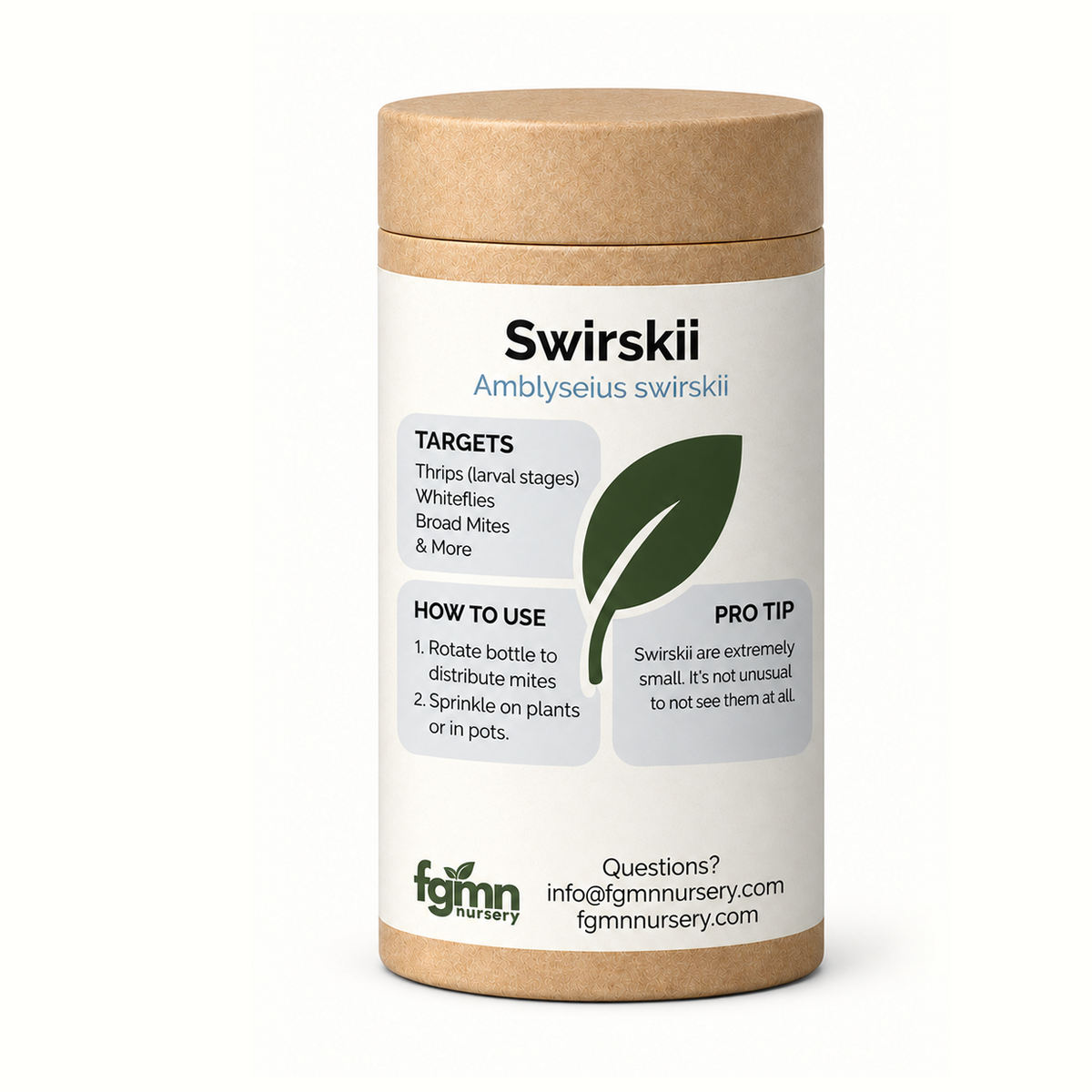
Amblyseius swirskii is the primary whitefly predator. It feeds on whitefly eggs and first-instar nymphs — the stages that actually matter — and it does the same for thrips larvae at the same time. Swirskii likes warmth; below about room temperature it slows down noticeably.
Amblydromalus limonicus covers the same ground and tolerates cooler, less humid conditions better than swirskii, which makes it the more reliable pick for a house rather than a greenhouse.
Green lacewing larvae take whitefly nymphs along with everything else soft-bodied in reach. Useful when whitefly has arrived alongside aphids or thrips.
Why this works when sprays don't
Whitefly generations overlap continuously — eggs, four nymph stages and adults all present at once. A spray hits whichever stage is exposed on the day and leaves the rest to mature. Predators live on the leaf and keep eating through every stage as it appears, which is why the population curve bends instead of bouncing.
Hang yellow sticky traps alongside a release. They won't control whitefly on their own, but they tell you honestly whether adult numbers are falling.