


Broad, Russet & Cyclamen Mites






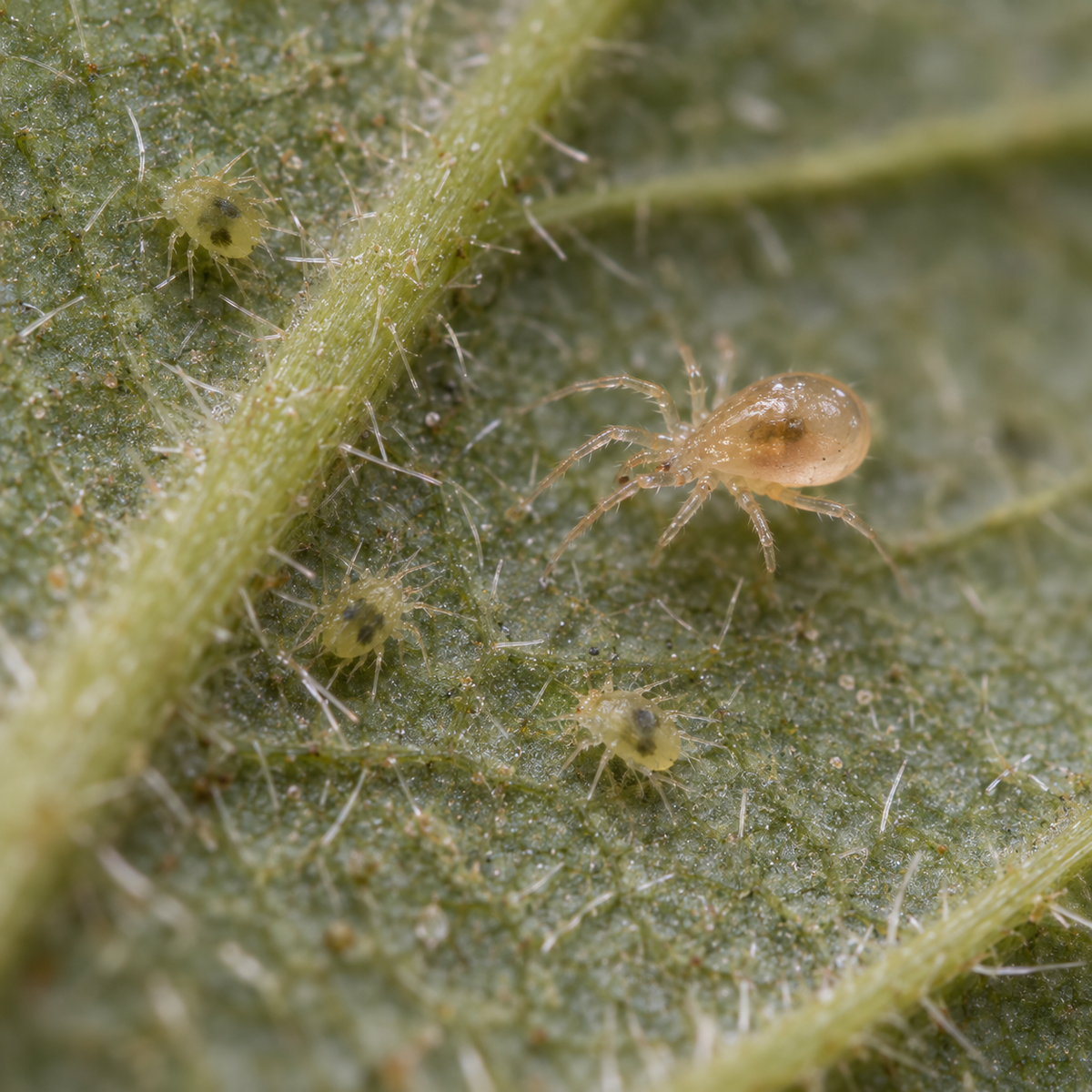



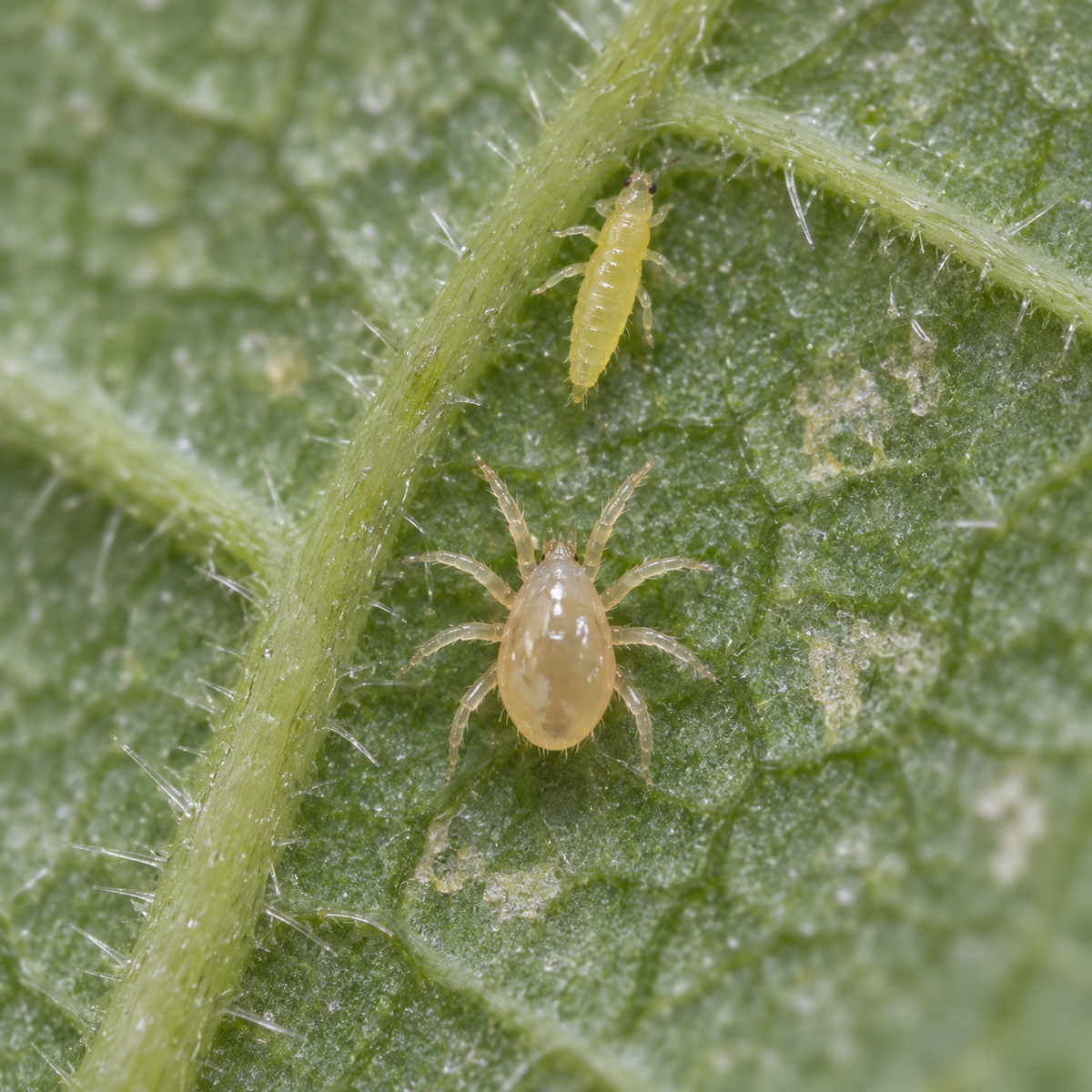
The pest you can't see
Broad mites (Polyphagotarsonemus latus), cyclamen mites (Phytonemus pallidus) and russet or rust mites are far too small to see without magnification, and by the time you notice them you're not looking at mites — you're looking at damage.
The signature is distorted new growth. Leaves emerge puckered, cupped, narrowed or bronzed. Growing points stall. New foliage comes out looking scarred and hardened, often with a glossy or rusty cast. People spend weeks treating this as a nutrient problem, a light problem or a virus. It is almost always mites, and they are already several generations ahead.
What eats them
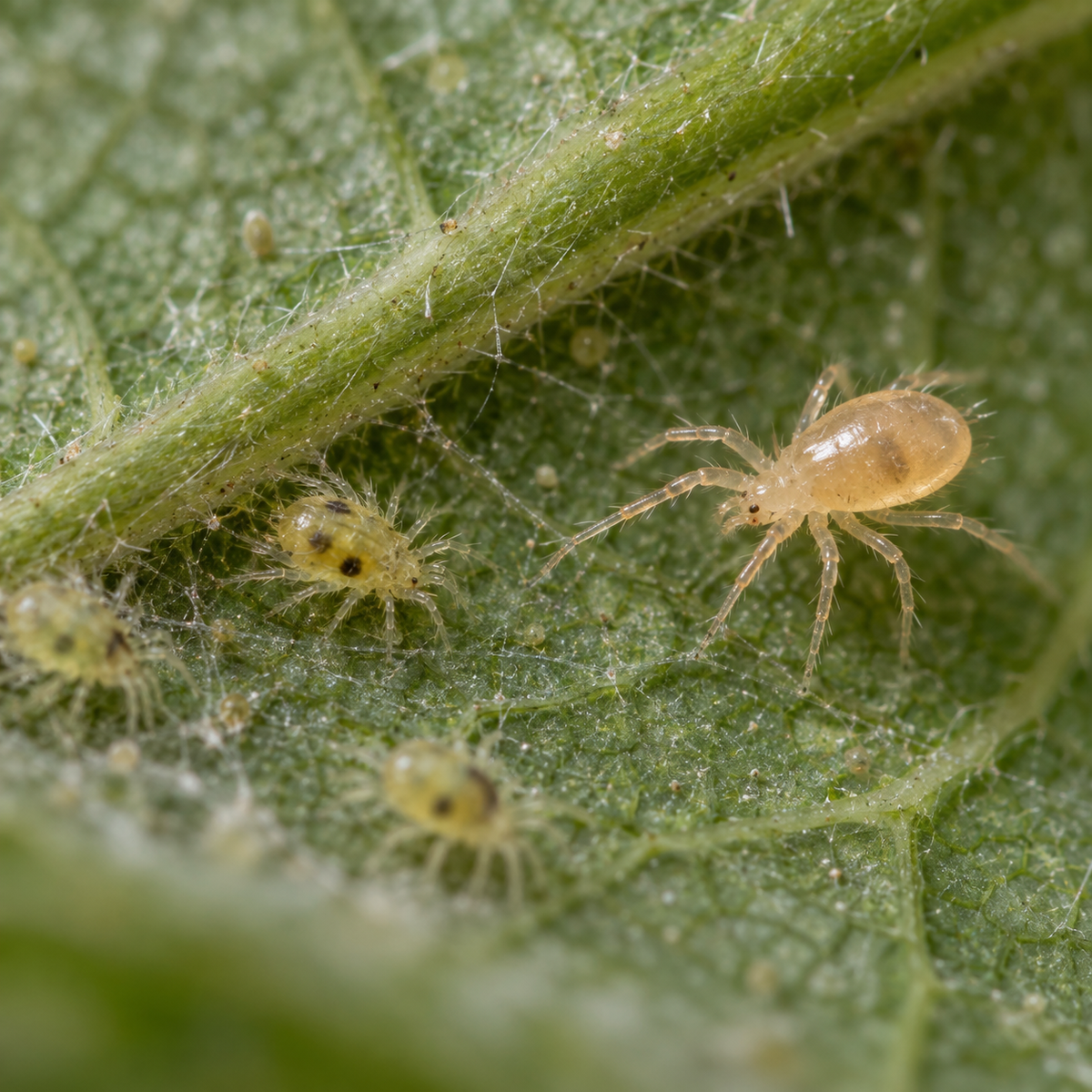
Neoseiulus californicus is our first recommendation for eriophyid and russet mites. It's tough, tolerates lower humidity, and persists when prey numbers are low — which matters, because these populations are hard to detect and easy to declare beaten too early.
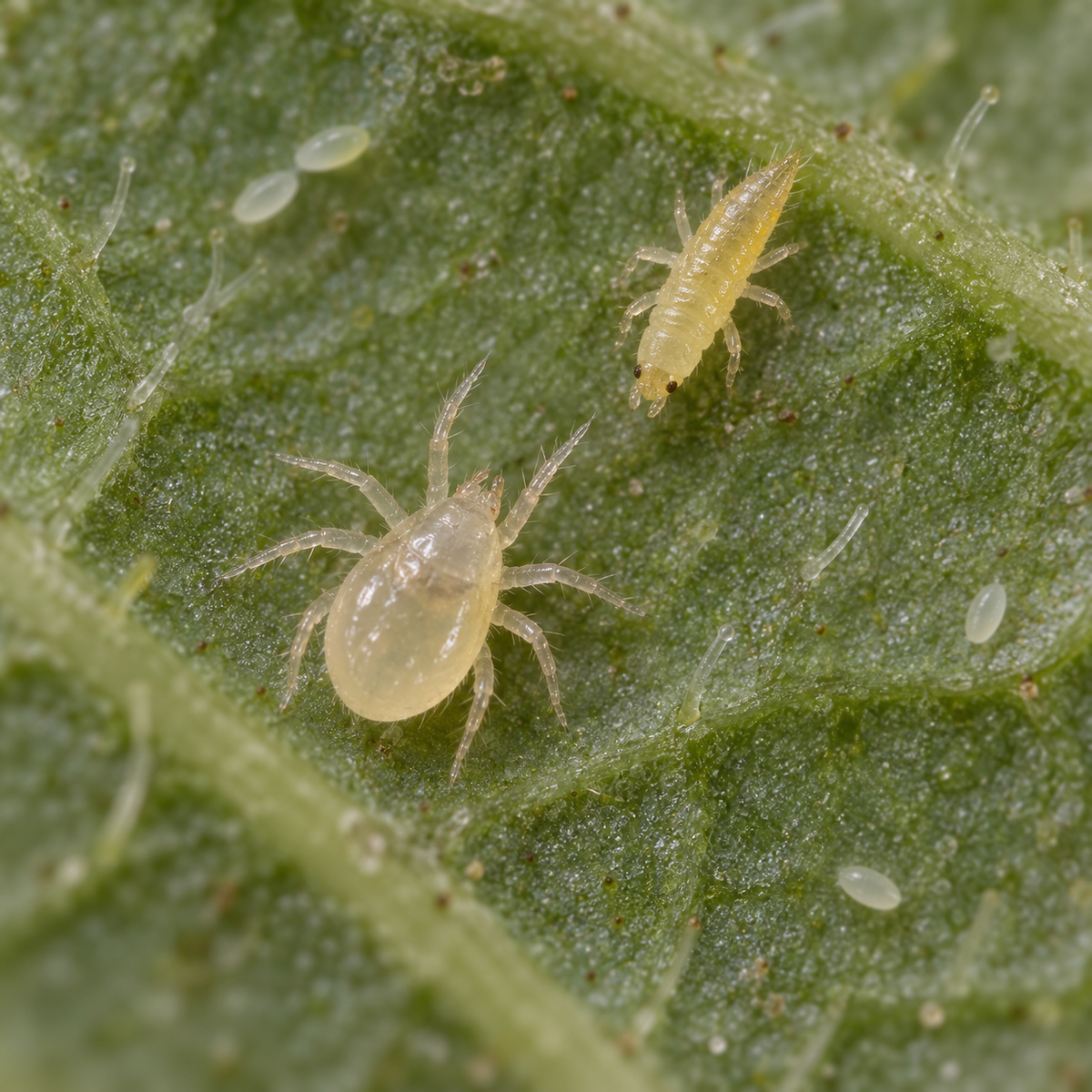
Amblyseius cucumeris works well on broad and cyclamen mites and is the more economical choice for larger collections, particularly in sachet form where a slow continuous release matches a slow hidden pest.
The Special Blend covers several tarsonemid and eriophyid species at once. It's the sensible choice when you know something is wrong with the new growth but you can't say which mite is doing it.
Two things to expect
Damaged leaves will not recover. Judge the release by what the next flush of growth looks like, not by the leaves already scarred. And treat the neighbours — broad mites travel on hands, tools and whitefly, and rarely stay on one plant.
Keep reading
How to identify broad mite damage, and how to get rid of it — the long version in Field Notes, including why this pest is almost always misdiagnosed first.