
Leafminers

How to know it's leafminers
Pale winding tunnels traced through the leaf tissue, widening as they go. Sometimes a blotch rather than a trail. The tunnel is a record of one larva eating its way between the upper and lower leaf surfaces — which means the pest is sealed inside the leaf, protected from anything applied to the outside of it.
The adults are small dark flies. The females also puncture leaves to feed, leaving neat rows of pale stipples that are often the first sign, before any mine appears.
What eats them
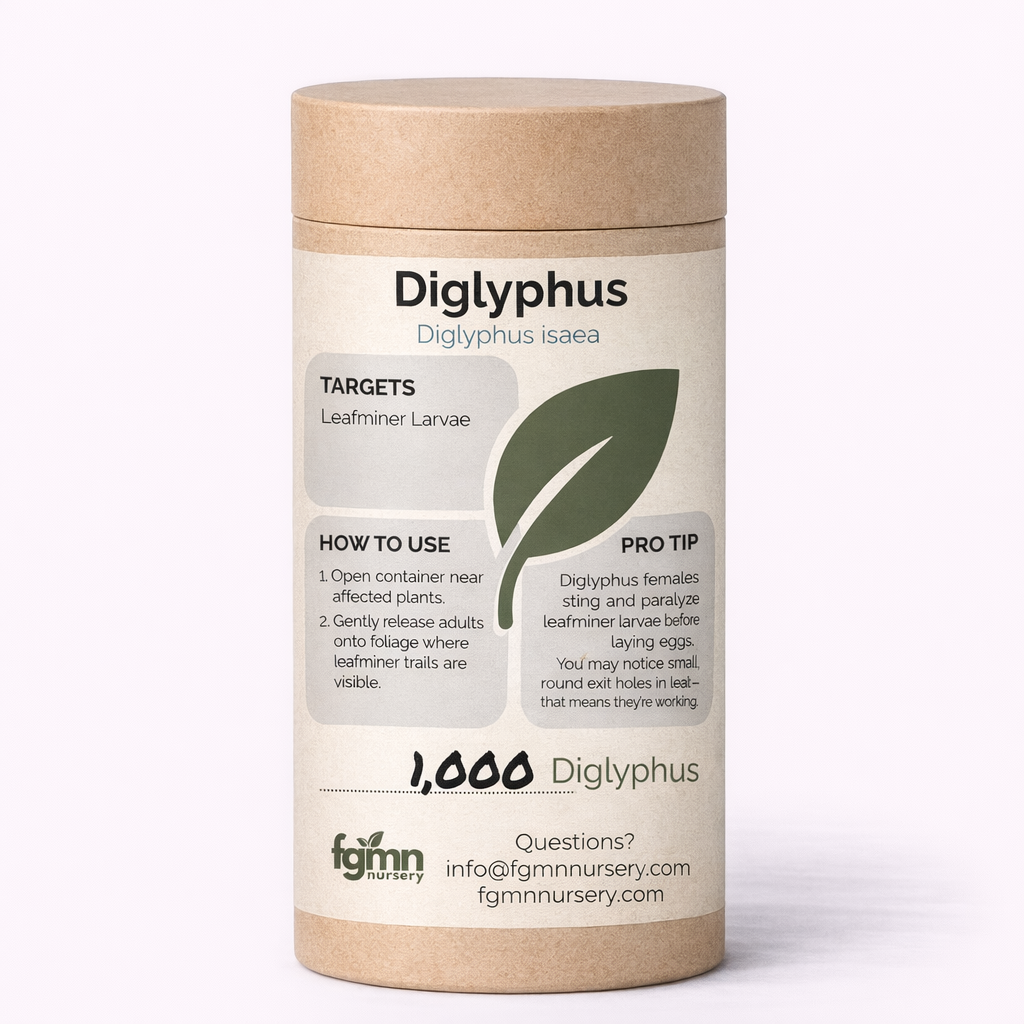
Diglyphus isaea is a parasitoid wasp that solves the sealed-inside problem directly. The female locates a larva through the leaf, paralyses it inside its own mine, and lays an egg beside it. Her larva then feeds on the paralysed leafminer and pupates in the mine.
It's stingless, it's about two millimetres long, and it is one of the few things that reaches a pest a systemic can only get to slowly and a contact spray can't get to at all.
What to expect
Existing mines stay in the leaf permanently — the tissue is gone. Success looks like no new mines appearing over the following weeks.
Hang yellow sticky traps to track adult leafminer flies, but keep them away from where you release the wasps, since the traps don't discriminate. Release early: Diglyphus works best against a population that's starting, not one that's peaked.