


Parasitic Wasps
They do not sting you
Worth saying first, because the name puts people off. These wasps are one to three millimetres long, have no interest in humans, and cannot sting. What they have instead is an ovipositor for laying eggs in other insects, and that is the entire point.
How a parasitoid works
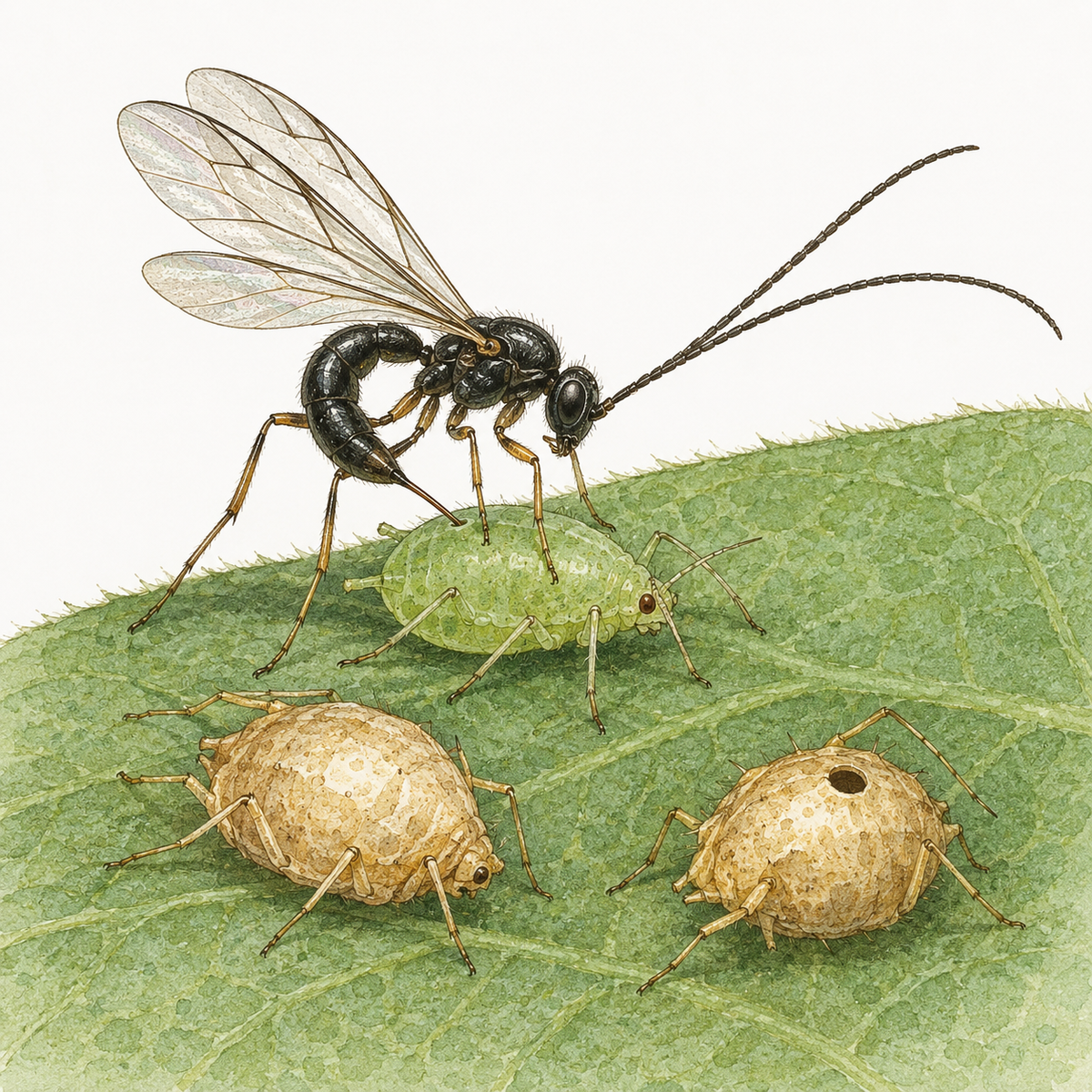
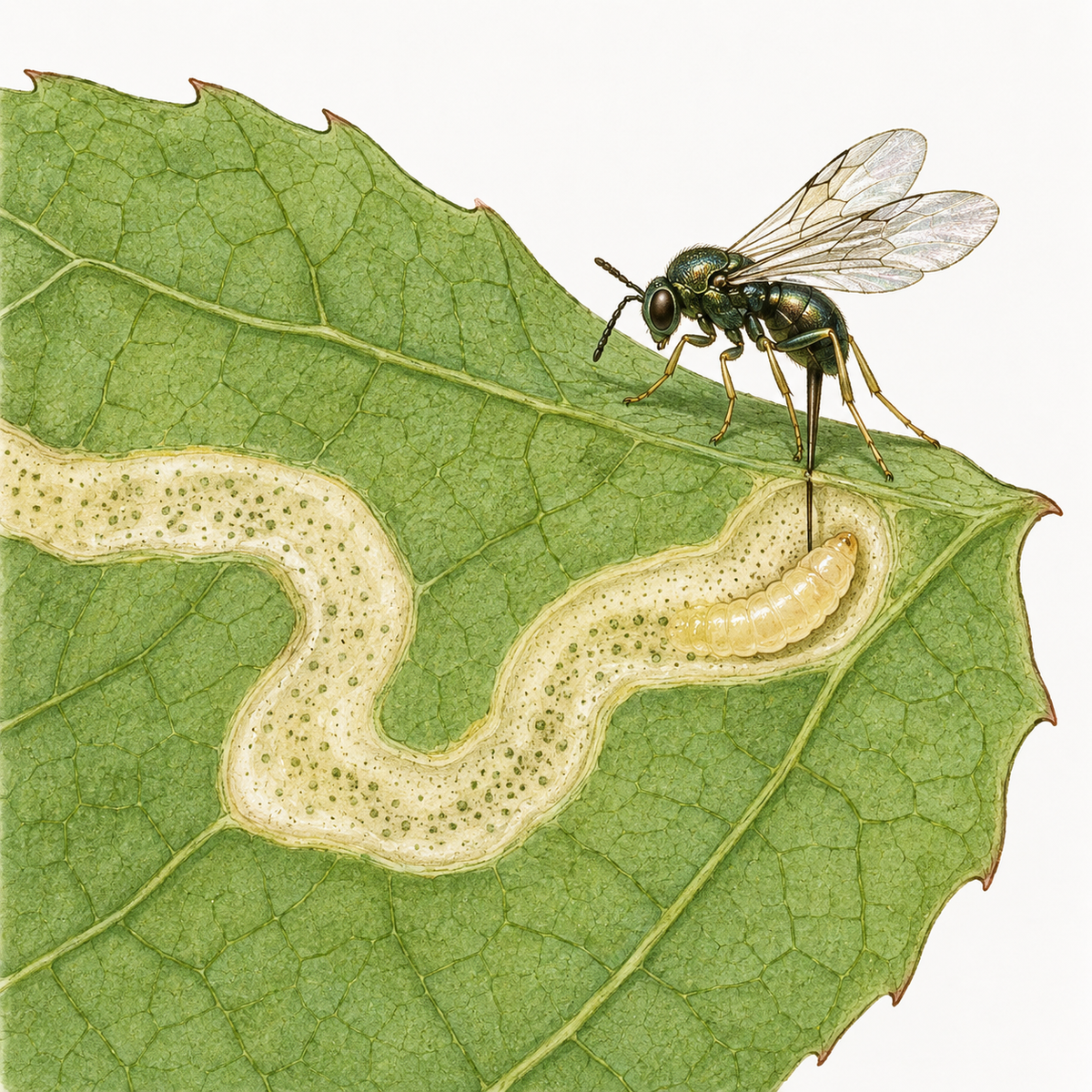
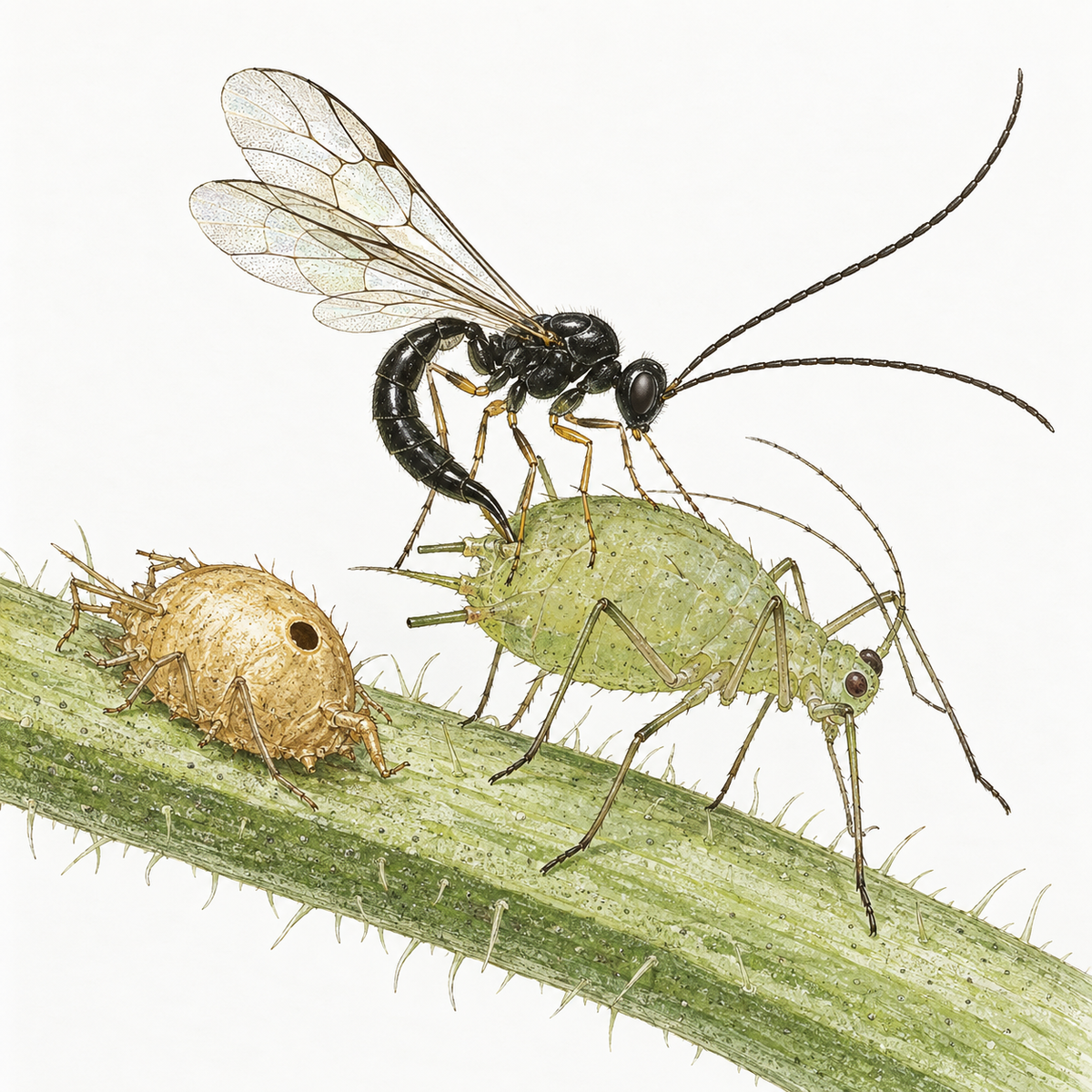
A predator eats its prey. A parasitoid develops inside it. The female finds a host, lays an egg in or beside it, and her larva consumes the host from within before pupating. One wasp accounts for one pest — but a single female will find and parasitise dozens, and the next generation emerges from your own plants and keeps going.
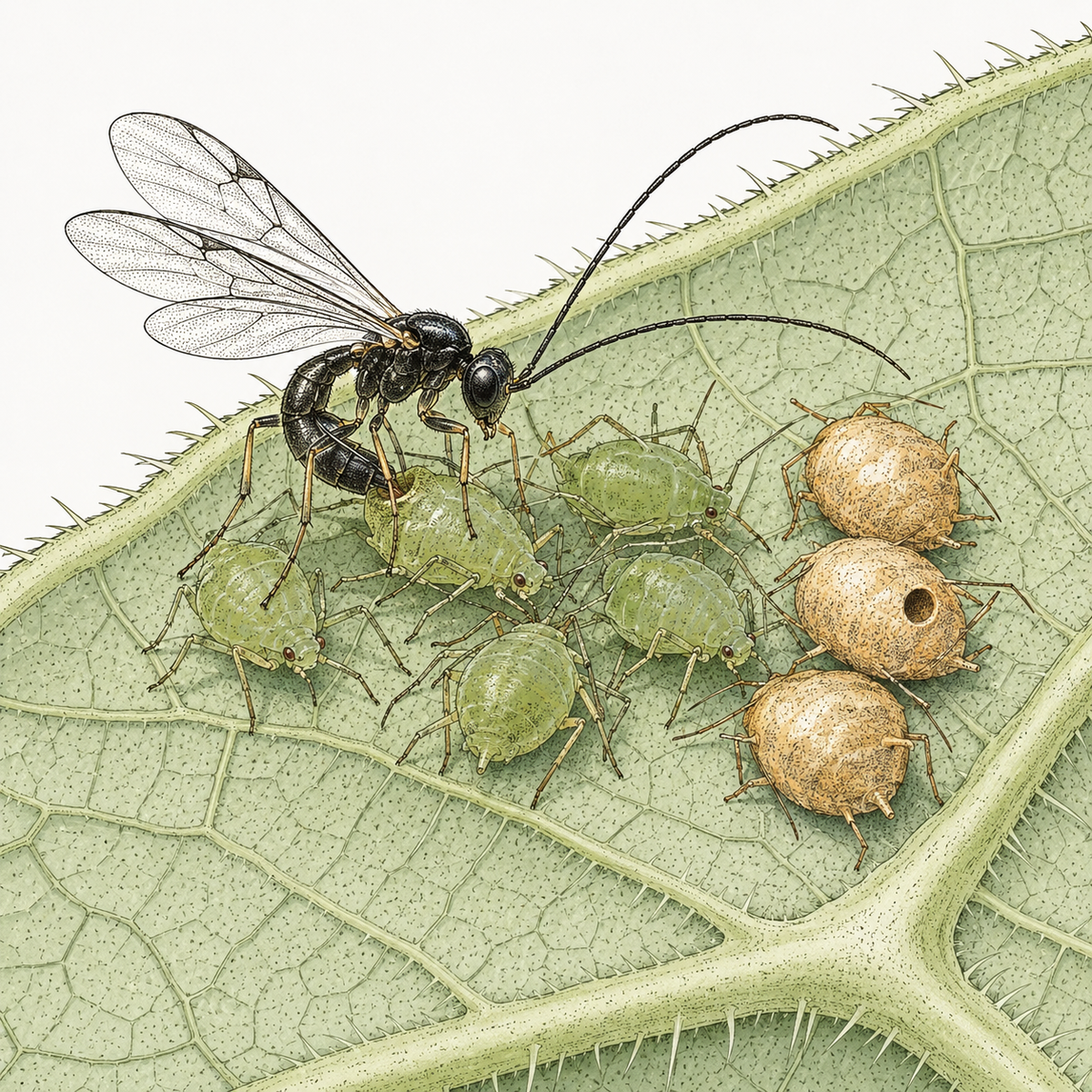
With aphids the evidence is unmistakable: a parasitised aphid turns into a swollen, papery, bronze-brown mummy glued to the leaf. Mummies mean it's working. Leave them alone — the next generation of wasps is inside them.
Choosing a species
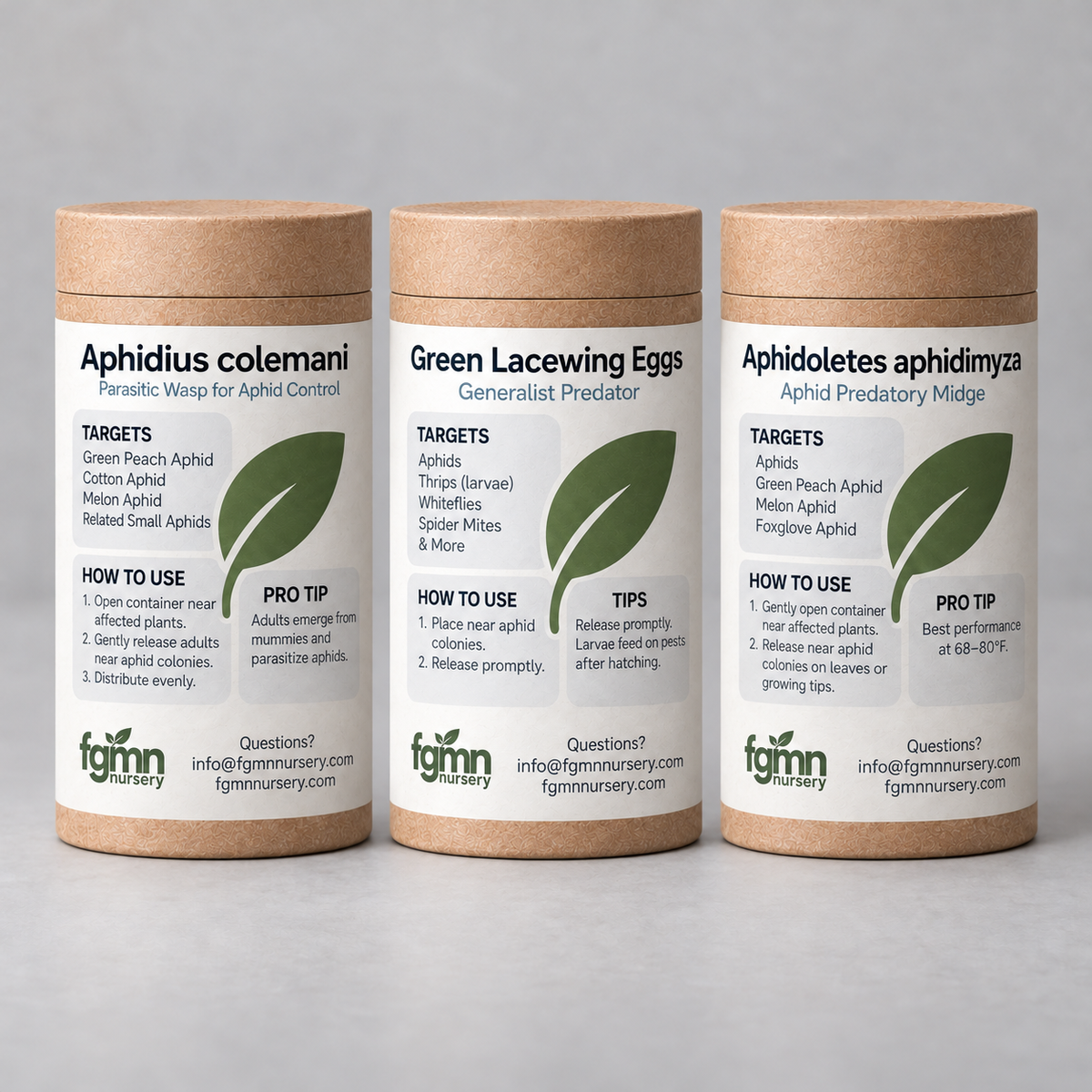
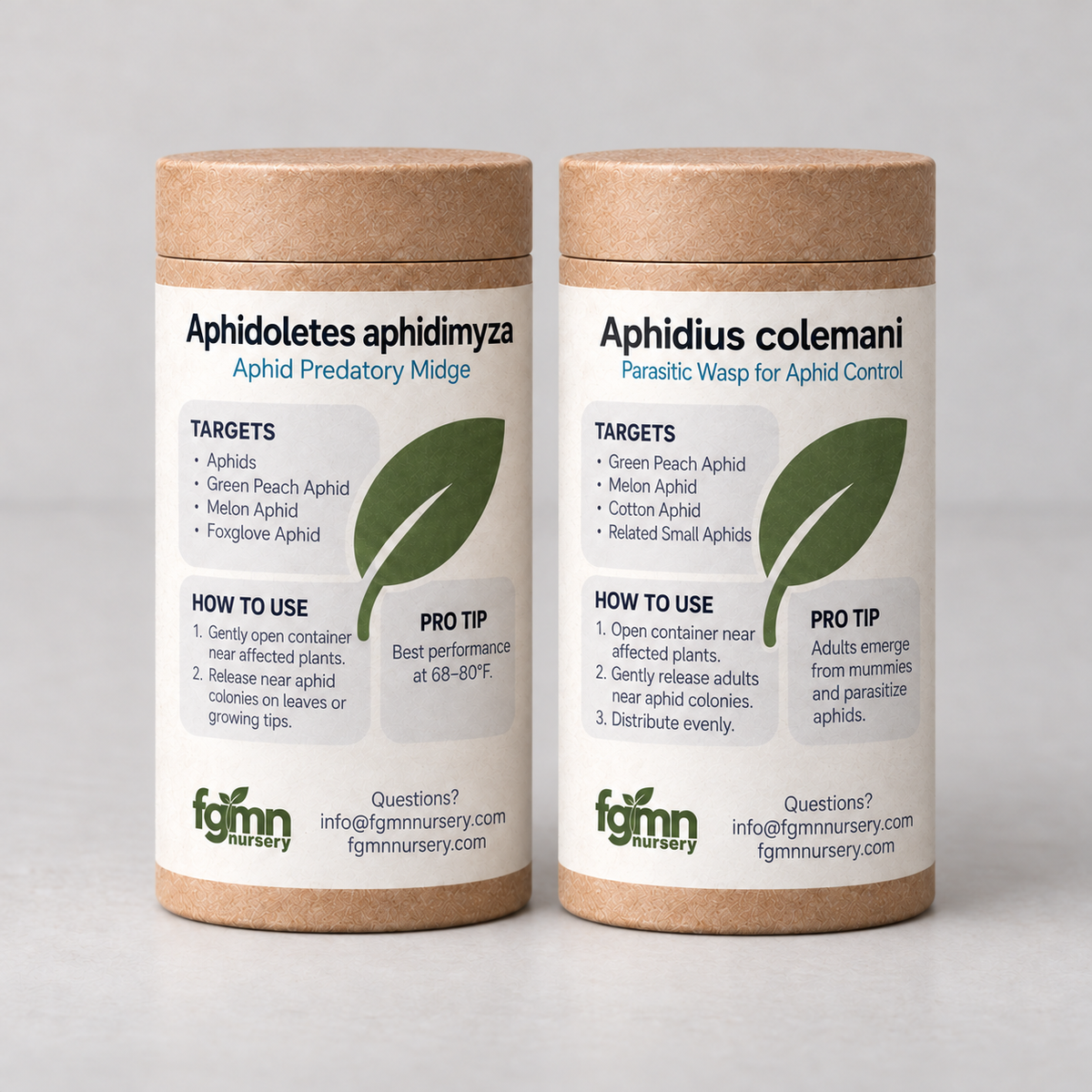
Aphidius colemani targets smaller aphids, including green peach aphid and cotton aphid. The default for most houseplant situations.
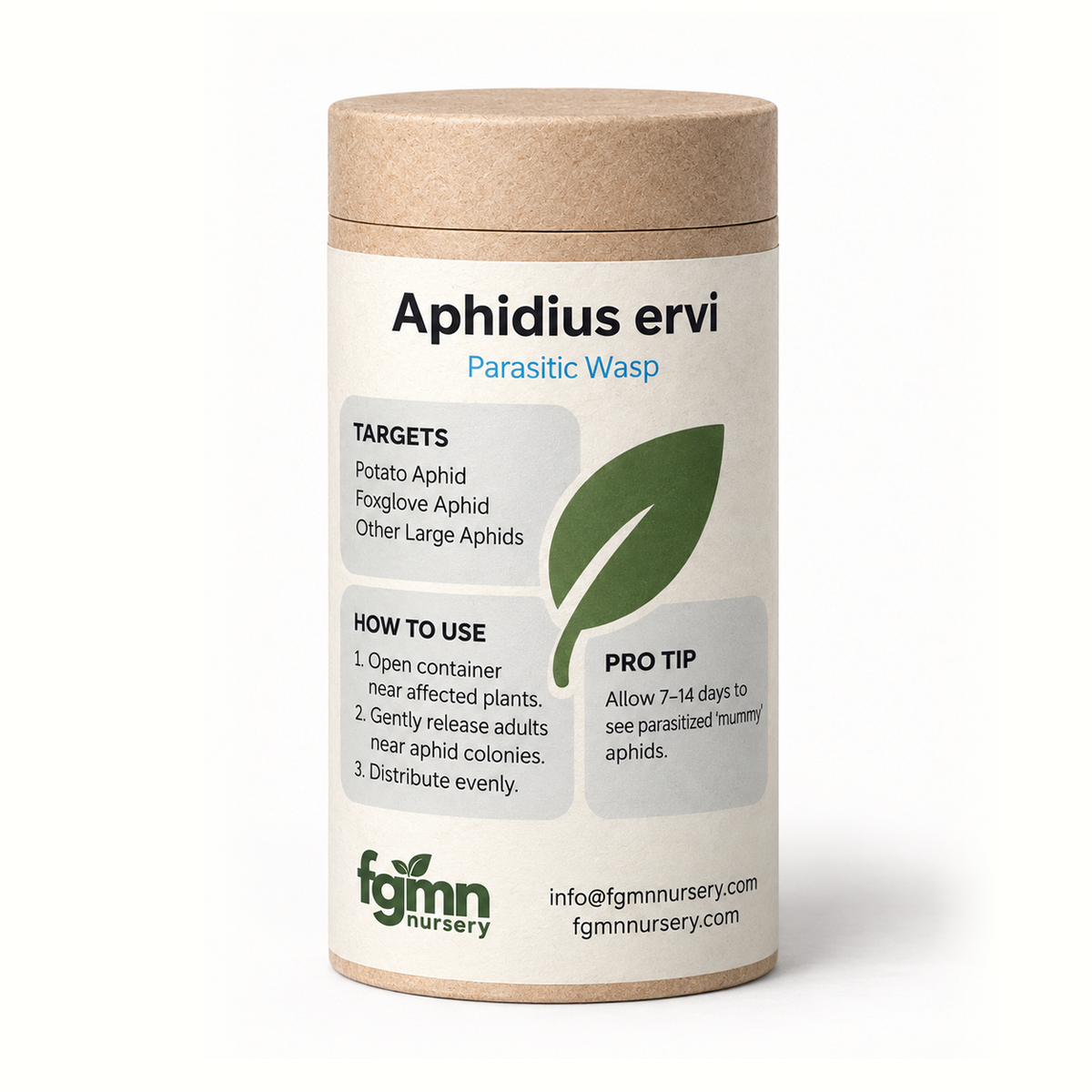
Aphidius ervi handles the larger species colemani struggles with, such as potato and foxglove aphid.
Aphidius matricariae overlaps with colemani and is particularly good on green peach aphid, useful as a second species when pressure is sustained.
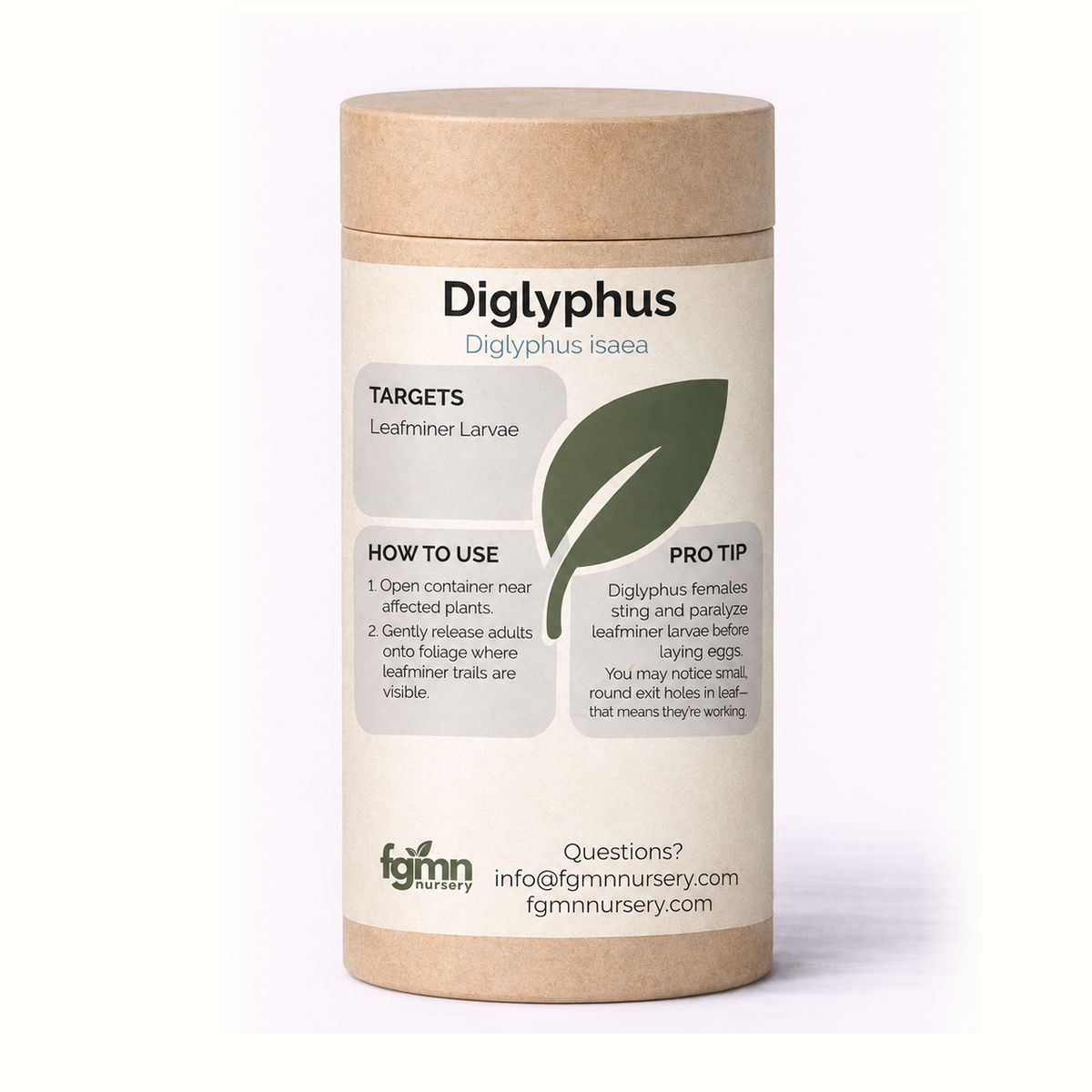
Diglyphus isaea is not an aphid wasp at all — it targets leafminer larvae inside the mine.
Release early
Parasitoids work by compounding over generations, so they reward being used before a colony is established. Against a full-blown outbreak, pair them with a fast chewing predator like lacewing larvae that reduces numbers now while the wasps build.