



Amblydromalus limonicus
Two pests in one room feels like a lot. One predator covers both.
Thrips larvae and whitefly in the same humid room? Limonicus hunts both at once.
- Ships Mon–Thu2-day or overnight
- Live arrival coveredReport concerns within 72 hours
- Free shippingOn orders from $30
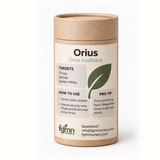
Limonicus takes larvae on the leaves; Orius takes the flying adults
Up to 5 Plants ·$68Buying for a group or a business? · Wholesale
01 · The problem
Is limonicus right for your thrips?
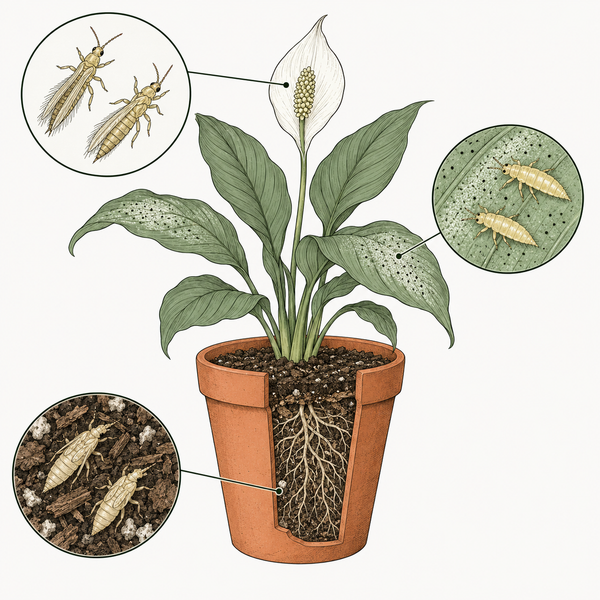
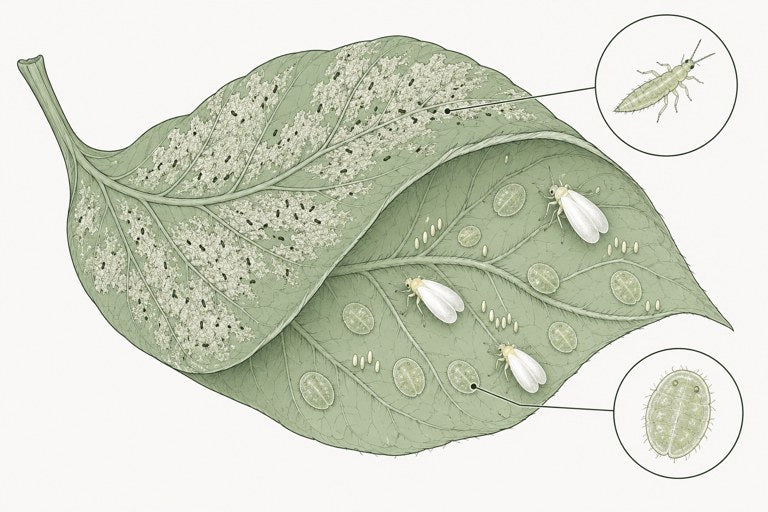
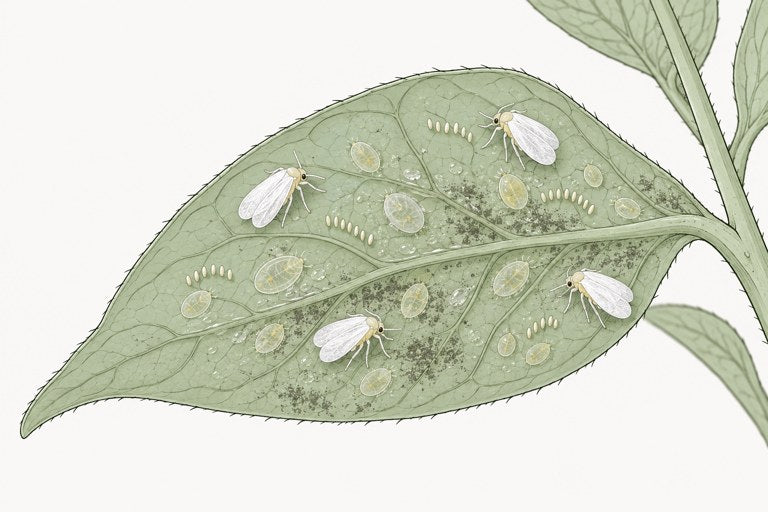
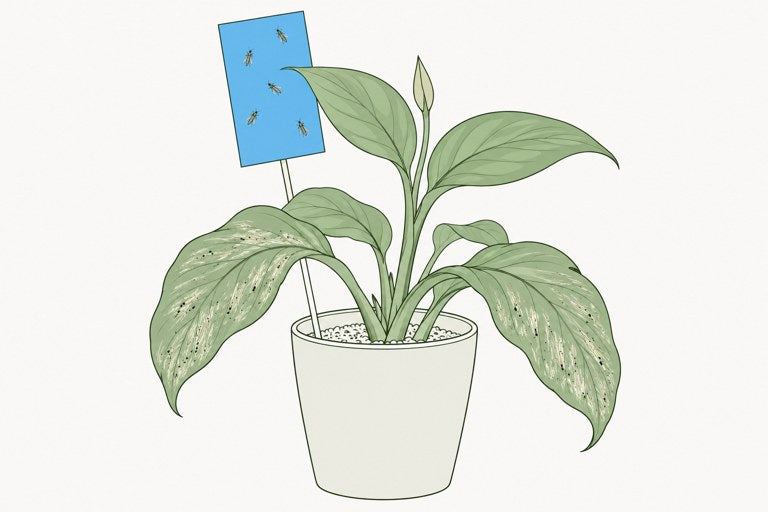
Signs it's thrips and whitefly
- Silvery streaks on the leaves, flecked with tiny black specks
- Sticky leaves and a puff of tiny white flies when you brush the plant
- Both at once, on the same plants, in a humid room
Seeing these? Good catch. The sooner you start, the smaller the job.
- You receive
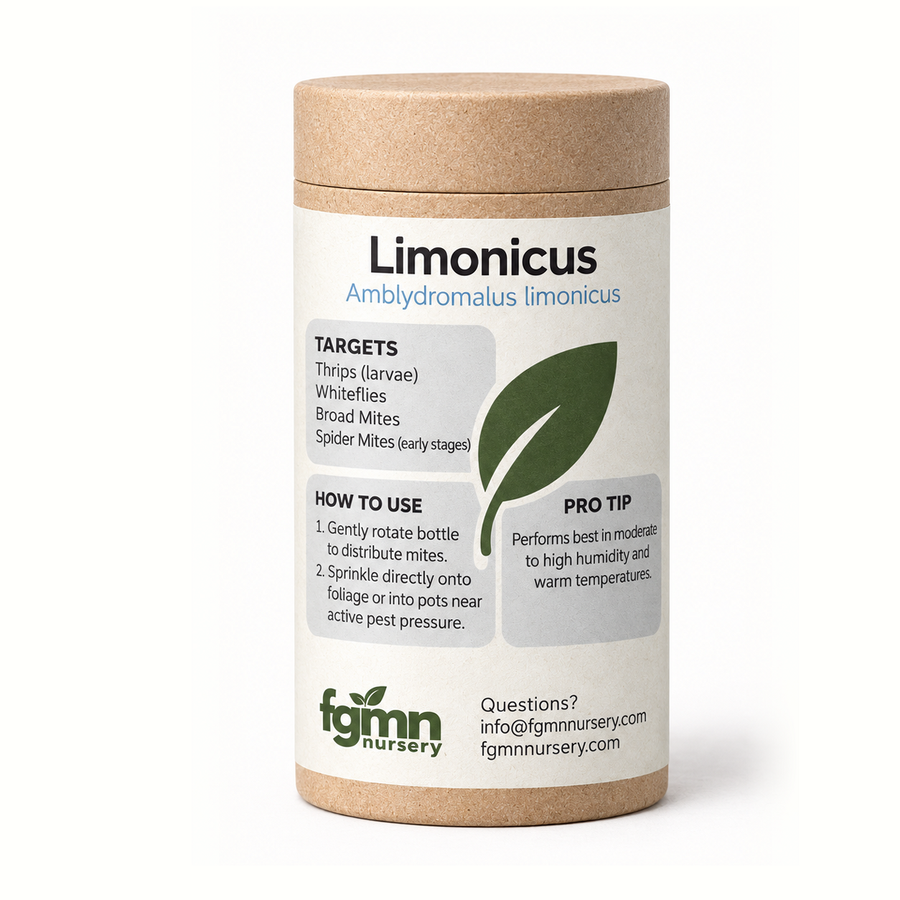
- Live mites of all ages, with food mites, in a carrier
- Main target
- Thrips larvae, plus whitefly eggs and young nymphs
- Best conditions
- 55–86°F, 70% humidity and up
- Not for
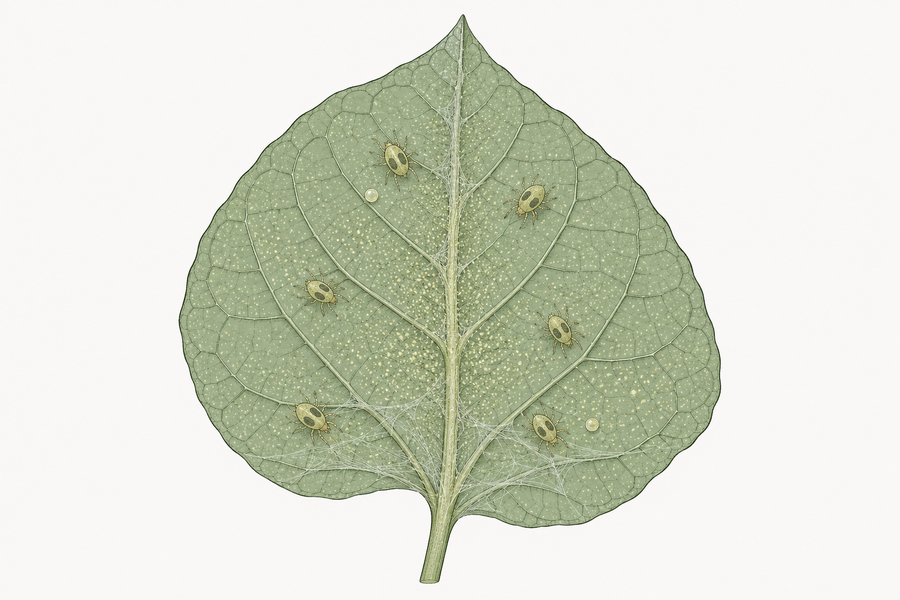
- Dry rooms, broad or russet mites, webbed spider mites
Works on
- Thrips larvae, first and second stage
- Whitefly eggs & young nymphs
- Spider & cyclamen mites, on encounter
- Pollen, between meals
Not the answer for
- Adult thrips or whitefly
- Broad mites
- Russet & rust mites
- Webbed spider mite colonies
- Dry rooms
02 · Meet the beneficial
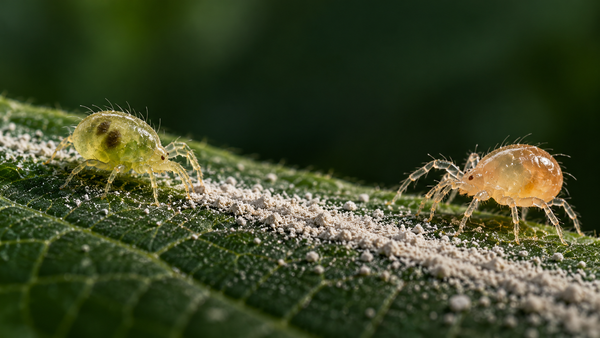
Amblydromalus limonicus
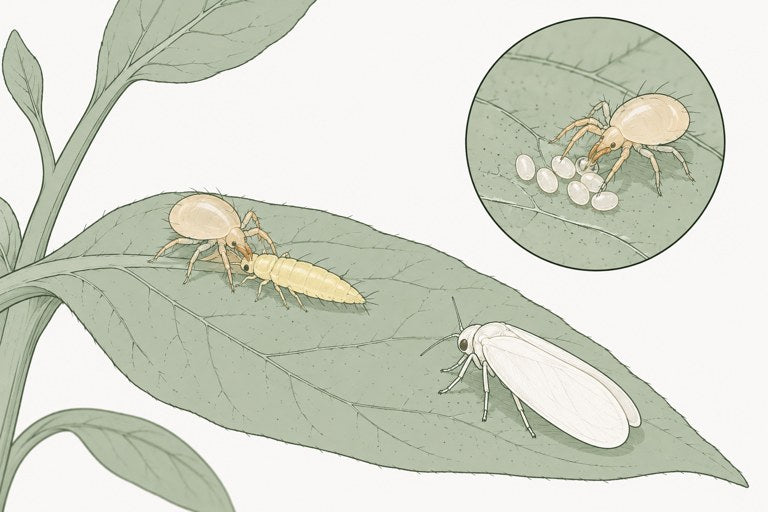
Hired for spider mites in the 1960s. Turned out better at thrips.
In the 1960s, fruit growers first noticed it eating spider mites on their trees. Its talent for thrips was discovered later.
Likes it a little cooler
It does its best work in a somewhat cooler room than swirskii, another thrips-eating mite, so the two cover each other's gaps.
Among the hungriest tested
Put to work on thrips side by side, limonicus and swirskii ate the most and laid the most eggs of all the pest-eating mites tried.
03 · How it works
Living hunters, working on their own
- Easy to start. Open, release, done. Nothing to mix or spray.
- They search for you. Most pests are too small to spot. Predators find them anyway, so you don't need to know where every one is hiding.
- They stay where the food is. For the most part they settle where the pests are and keep working.
- Another round is normal. Living things work in waves. You'll see the results as fewer pests on the plant.
Limonicus temperature and storage
04 · Not your conditions?
Choose one of these instead
Not quite your situation? No problem. If your space or your pest is different, one of these fits better.

05 · The plan
How to release limonicus
No experience needed. Here's all it takes.
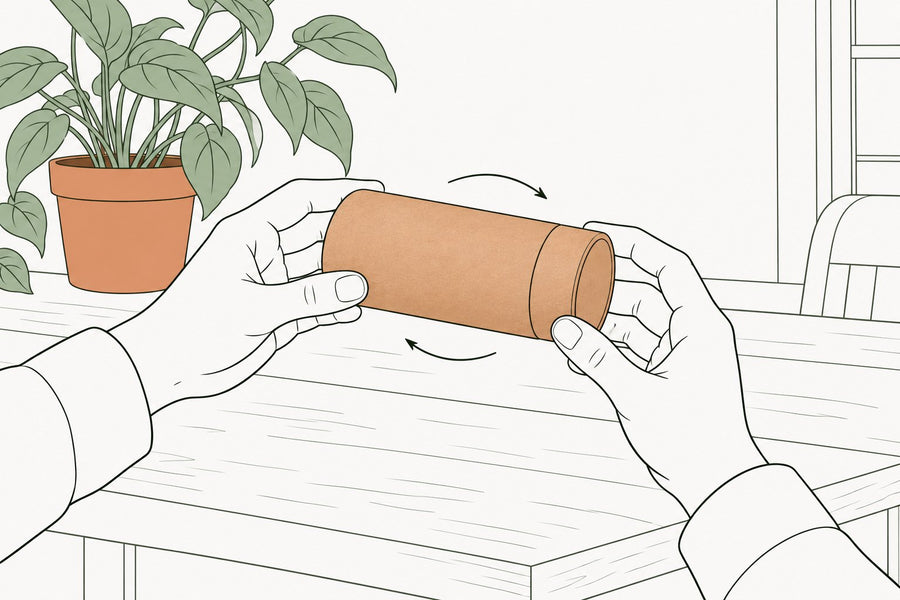
Open it the day it arrives
Turn the bottle gently so the mites mix evenly through the carrier.
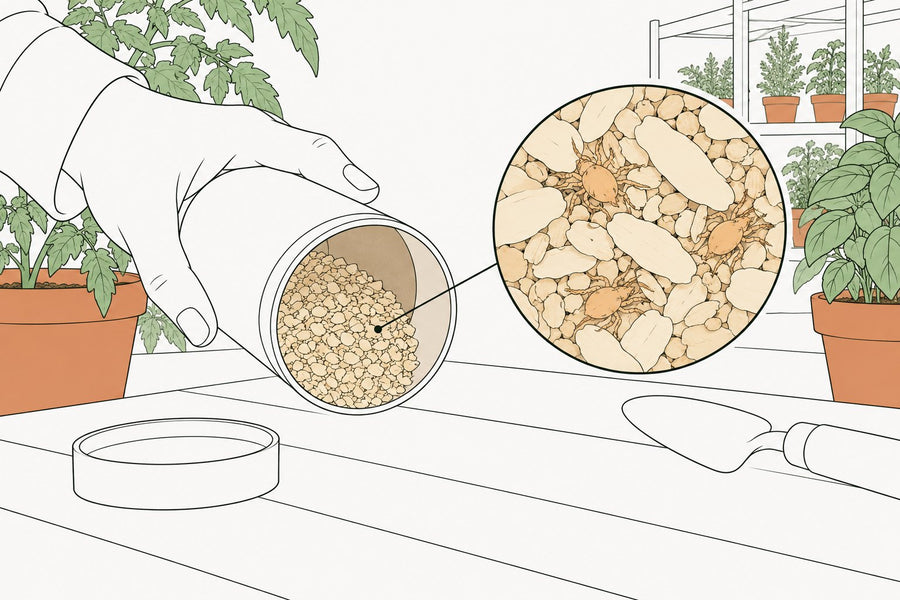
Looks like just carrier
The mites are smaller than a pinhead and the color of the carrier, so a still bottle is normal. Fewer pests and clean new growth tell you they're working.

Raise the humidity
Give the canopy a humid few days. This mite leans on humidity more than most.

Dust over new growth
Shake it thinly over plant tops and flower sites, or into paper cups hung on stems to keep carrier off flowers.
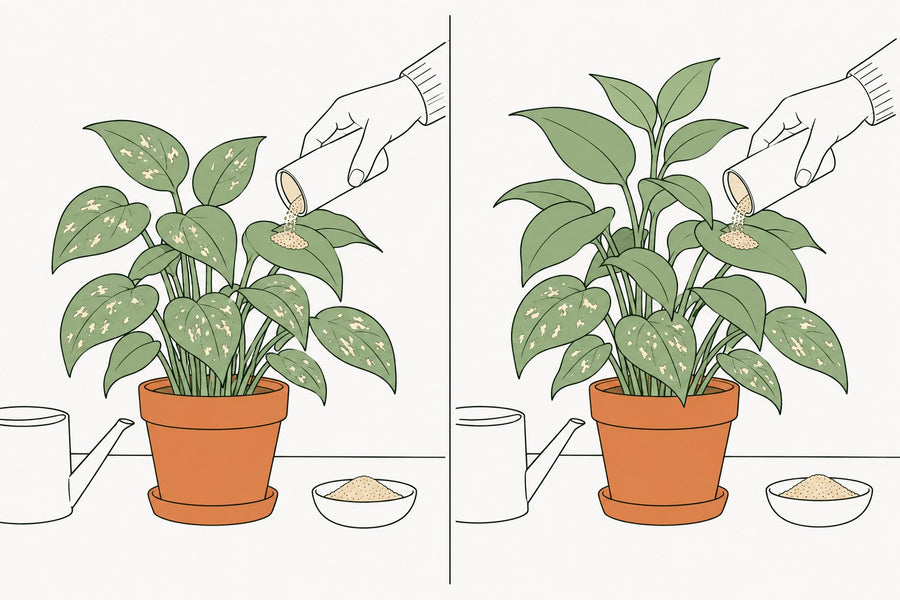
Repeat every 2 to 4 weeks
Every 2 to 4 weeks while pests are active. Then hang limonicus prevention sachets to keep the plants clean.
06 · What happens next
What to expect
Living things work at their own pace. Here's what normal looks like.
Our strongest thrips predator
Top of seven species ranked on one protocol, and it takes second-stage larvae that other mites leave behind.
Whitefly is where it pulls ahead
In one greenhouse comparison it cut whitefly 99%, against swirskii's 88%.
New growth comes in clean
Old silvering is scar tissue and stays. Judge it by new leaves and fewer whitefly week on week.
Spider mites on encounter
It takes the spider mites it meets. A webbed colony is a job for persimilis.
You may see the carrier move
Limonicus is unusually active. If the bottle looks still, that alone isn't a reason to worry.
Before you order
All your questions, answered
Something else? Toby's in the chat, bottom right, and happy to help.
When does it ship, and how does it arrive?
Live predatory mites, sent Monday to Thursday by 2-day or overnight, whichever suits them best. We ship when they're ready to travel, and pack extra on top of what you paid for. Free shipping from $30; $15 under that.
What if something's wrong when it arrives?
If there's a problem when your order arrives, email info@fgmnnursery.com with your order number within 72 hours of delivery. You choose a replacement or store credit.
Why is limonicus more expensive than swirskii?
It's much harder to rear, needing specific diets and conditions. What the premium buys is one mite that covers thrips and whitefly together in a humid room.
Can I use it on roses?
Yes. Limonicus has been studied in roses for whitefly, and it feeds on the thrips larvae that mark petals.
How do I keep carrier out of my flowers?
Pour small piles into paper cups or coffee filters hung on the stems. The mites crawl out onto the plant and leave the carrier behind in the cup.
Does it bite?
No. It's strictly a predator of small insects and mites, and harmless to people and pets.
Ready when you are
Amblydromalus limonicus
You've got this. And if you get stuck, we're one email away at info@fgmnnursery.com.