


Generalist · Aphids
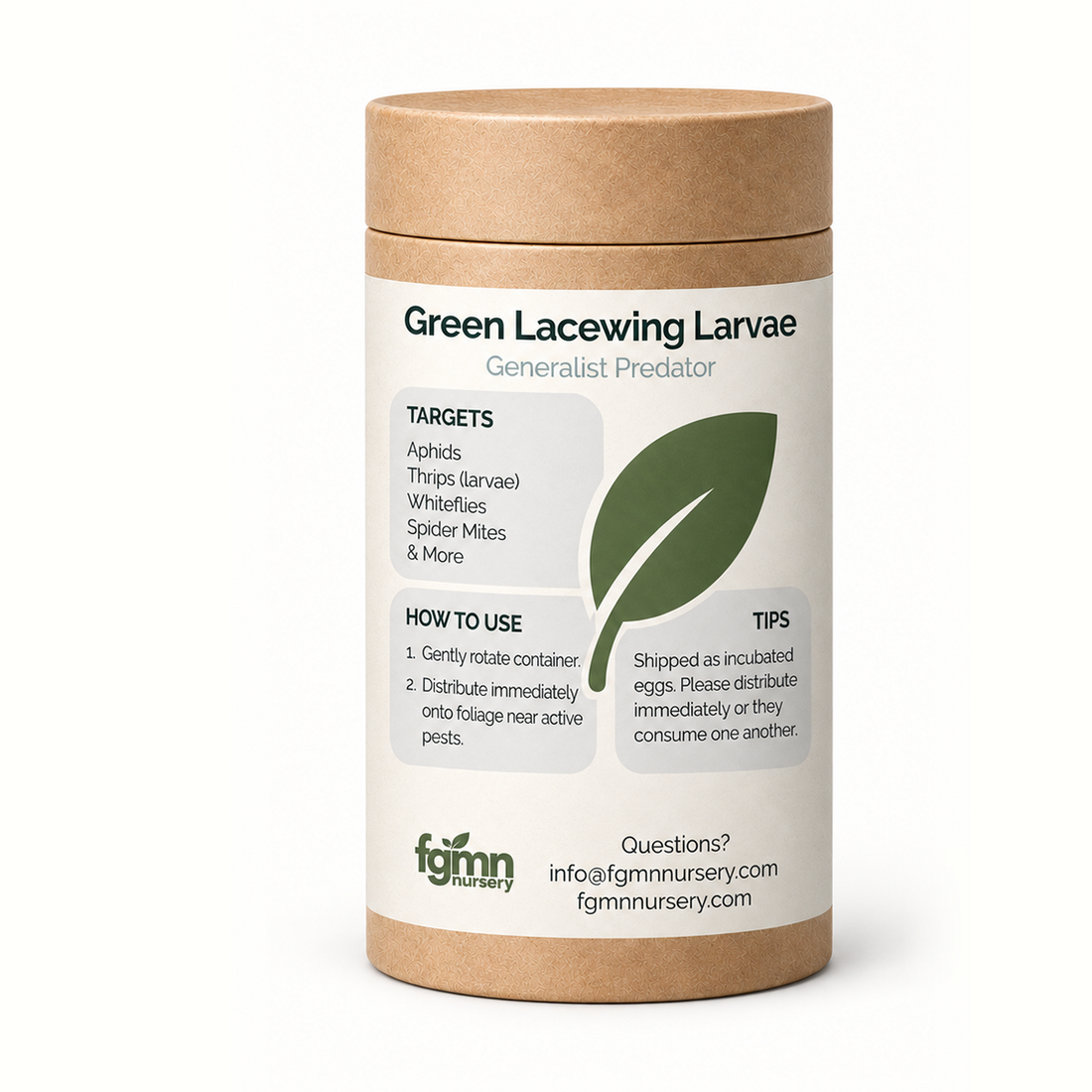
Green Lacewing Larvae
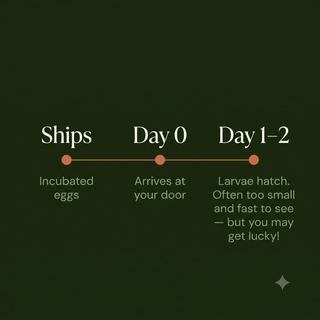
Pre-incubated to hatch about a day after they land — so the larvae emerge already hungry, onto the plant you chose.
$45.00
Free Shipping for all orders over $30
If something's wrong when it arrives, file a report within 72 hours of delivery for a replacement or store credit.
By placing your order you agree to our Shipping Policy and Live Delivery Guarantee.

How much, and how often
Two questions — how bad it is, and how many plants. You get a size and the dates to put it out.
How bad is it?
Pick the one that sounds like your room. If you are between two, take the higher.
How many plants?
Six-inch pots. Count a large specimen with a dense canopy as three or four.
Your size and schedule
More about this dose
The three things people ask once they have their size. Open any of them.
Am I light, moderate or heavy?
Light
- A few aphids on one growing tip
- No honeydew yet, or one sticky leaf
- Nothing on the plants either side of it
Moderate
- Clusters on several stems and leaf undersides
- Sticky honeydew on the leaves below
- New growth coming in curled
- Aphids turning up on a second plant
Heavy
- Stems crowded end to end
- Sooty mould on the honeydew
- Winged aphids, which means they are leaving to start colonies elsewhere
- Growing tips deformed and stalled
Count only the plants you will actually place larvae on. These walk rather than fly, so a plant you skip gets nothing — which is the opposite of how the flying beneficials work, and the thing people most often get wrong with lacewings.
Under-dosing has a specific failure mode here. Larvae that cannot find enough aphids wander off the plant, and crowded ones eat each other, so the useful window is narrow at both ends. Taking the higher level on an active colony is what keeps them fed and on the plant; the lower one mostly funds a walk.
Why more than one round?
Putting it out
- Let the container sit an hour at room temperature. Cold larvae move slowly and hunt badly.
- Mist the foliage lightly. It helps the eggs through the hatch and gives the neonates a drink — they arrive thirsty.
- Go at dusk, or with the grow lights dimmed. Midday sun sends them looking for shade instead of dinner.
- Sprinkle the whole mix onto the infested plants, under leaves, near new growth, and inside the leaf sheaths of aroids. Spread it across leaves and stem crotches — in one pile they find each other before they find aphids.
- Turn strong oscillating fans off for the night. A newly hatched larva gets blown off the canopy before it can grip.
Everything else is optional. Get these four and the release has done what it can.
A cleaner way
On a display plant, tip small piles into bio-boxes or paper cups hung in the branches instead of dusting the foliage. Same dose, nothing visible on the leaf.
The failure is forgetting. Very few programs fail because the mite underperformed. They fail in week five, when the plants look fine, the reorder does not happen, and the population holding the line ages out with nothing behind it.
A schedule is the same decision, made once. A container when it looks bad, then another when it looks bad again, is already a rhythm — just one you have to remember at the exact moment the plants look fine.
Change the size or the frequency, skip a box, pause or cancel from your account at any time.
Is this the right beneficial for your problem?
Five questions, in the order a grower actually asks them: what have you got, is this the answer to it, what will it eat, how does it do the killing, and will it survive your room.
Is this your pest?
Aphids. That is the job, and we would rather say so plainly than take an order for something this will not fix.
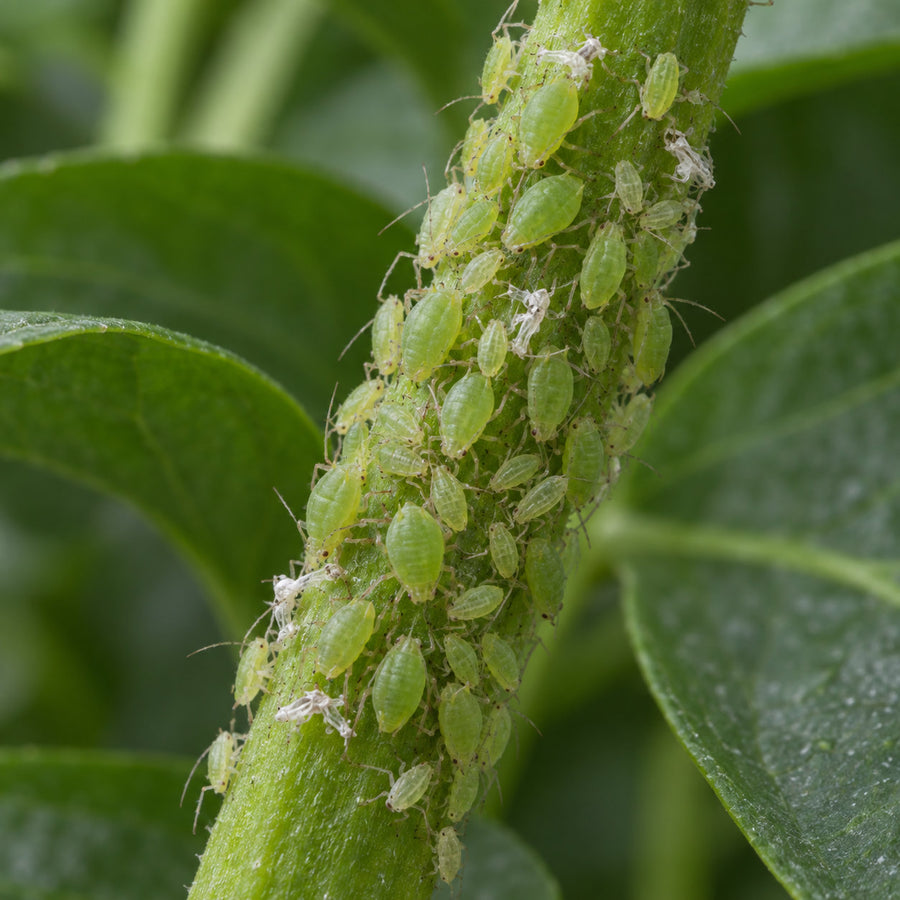
Aphids cluster on stems and the undersides of new leaves, soft and pear-shaped, in greens and pinks and blacks. They leave sticky honeydew with sooty mould behind it, and new growth comes in curled and distorted. Every species is on the list — green peach, melon, potato and the rest.
They will also eat, on encounter, thrips larvae in the canopy, mealybug crawlers, two-spotted spider mites, and whitefly eggs and sessile nymphs. That second list is not a reason to buy them. You will genuinely see it happen on your plant, which is why the claim keeps coming back — but opportunistic feeding is not control, and a lacewing that runs out of aphids leaves rather than settling for the rest.
Then: are lacewing larvae the right answer to it?
Choose this if
Choose these for something happening now — curling leaves, visible clusters, a hot spot on a plant you care about. They are pre-incubated: the eggs are timed to hatch about a day after they land rather than several, which shortens the gap between paying and hunting. Aphid lions is marketing, but it is earned; a larva emerges already hungry and works whatever plant you set it on. Harmless to people and pets, nothing to mix, no residue.
Choose something else if
Plant size is the real limit. The field trials got genuine reduction on small open plants at rate, and none on large plants under cover or on trees — so on a big established specimen, expect help rather than a clearance. And if the problem is thrips, mealybug or spider mites rather than aphids, buy the specialist; this is not a reliable treatment for any of them.
What it kills, and what it won't
Taken on encounter, and not worth buying them for: thrips larvae, mealybug crawlers and younger nymphs, two-spotted spider mites, whitefly eggs and sessile nymphs. Real, observable, and not control.
How it works
What it does to the pest, what it does on the plant, and what that leaves you looking at.
It hatches hungry
A newly emerged larva is feeding within minutes. It grips an aphid, punctures it and drains it, then moves to the next one. No poison, no residue on the leaves, no re-entry interval, and nothing for an aphid to become resistant to.
It works where you put it
Larvae walk; they do not fly. Whatever plant you set them on is the plant they hunt, which makes placement the single most important thing you do — and makes them ideal for a specific hot spot rather than a whole room.
Almost nothing, then fewer aphids
A neonate is about the size of this comma, translucent and pale, and it favours leaf undersides and the sheltered interior of the canopy. The window to see one is short and it is actively tucking itself away the whole time. Aphid numbers thinning over the following days is how you know they arrived.
Spread the carrier out. Neonates disperse within minutes partly because they will eat each other if they do not. In one pile they find each other before they find aphids, which is the one mistake that costs you the release.
Will it work in your room?
Two things worth knowing. Dense foliage suits them best — an Alocasia or a Philodendron canopy gives the larvae somewhere to shelter and hunt. And do not hold them back hoping to watch the hatch: neonates eat each other within hours if they are still confined, and that is the one failure we cannot replace.
About green lacewings
Sold as aphid lions, which is marketing, but earned. What arrives is pre-incubated eggs, timed so the larvae emerge already hungry about a day after they land.
New to beneficials?
Five things that catch almost everyone the first time.
After you release it
What actually changes, and why you will almost certainly never see it happen.
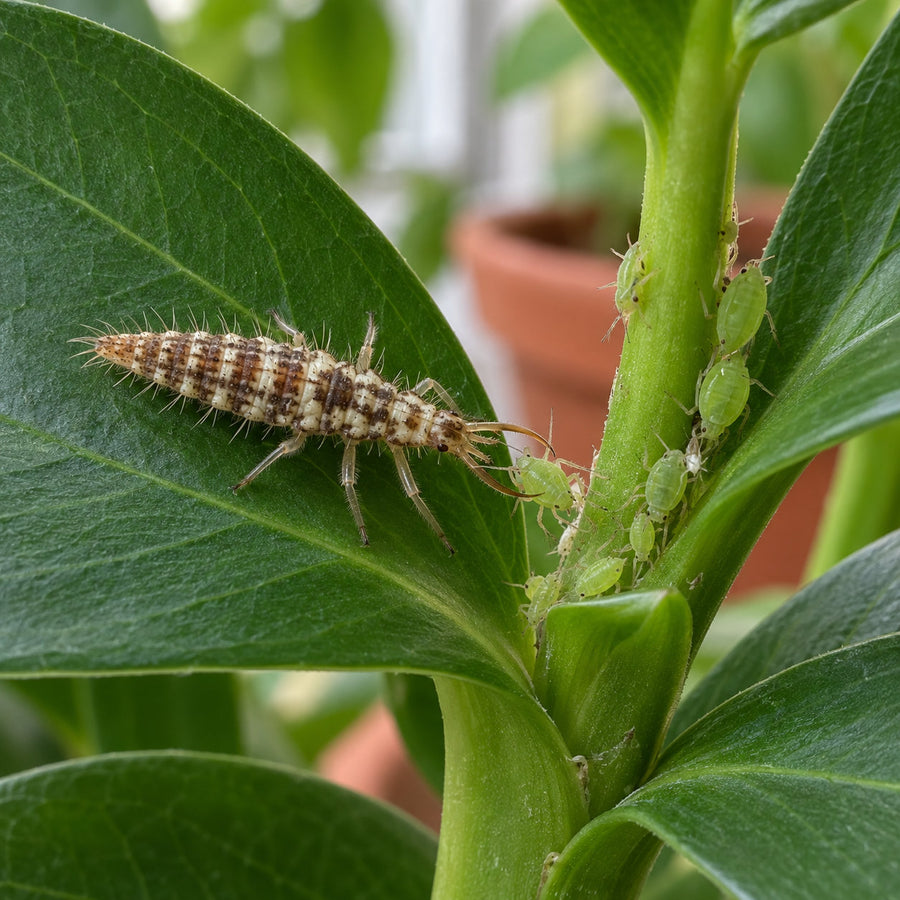
How you'll know it's working
You will not catch them working. A neonate is the size of a comma, translucent, and it disperses within minutes into leaf undersides and crevices where it stays out of sight.
What you notice is aphid numbers quietly collapsing — fewer sticky leaves, fewer new colonies at the growing tips — and then the larvae vanishing altogether as they pupate. There is no dramatic before-and-after moment with this one.
Turn high-powered oscillating fans off for the first night after release, not just an hour or two. These hatch about a day after you put them out, and strong airflow moves a newly hatched larva off the canopy before it gets a grip. Ordinary background ventilation is fine.
Getting it to you
What is in the container, how it travels, and what happens if it arrives wrong.
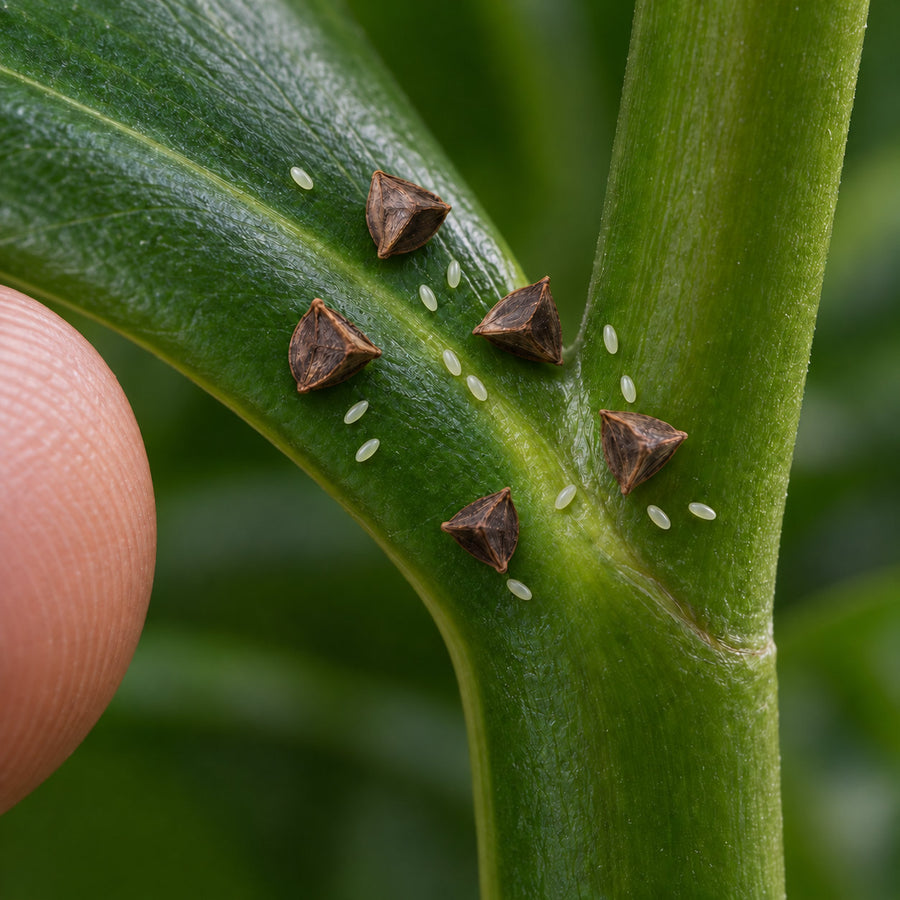
What arrives
Pre-incubated eggs in a protective carrier — the dry loose medium filling the container, which is what stops them crushing each other on the way to you.
It looks like packing debris. It is not. Deploy the whole mix, eggs and carrier together, and do not try to pick the eggs out. Nothing in there will be moving, and nothing should be.
Release the evening it arrives. These hatch on a schedule that started before they shipped, so today rather than tomorrow. And do not hold them back hoping to watch: neonates eat each other within hours if they are still confined, and we cannot replace them in that case.
When it ships, and when it lands
Shipping
We ship when they're ready to travel. Live orders go out Monday to Thursday. If a colony needs a beat to peak, or we're propagating a fresh batch, yours might hold up to a week. All mites and insects ship 2-day or Overnight depending on what's best for them.
When it lands
Bring it inside and open it. Let it sit an hour at room temperature — cold larvae move slowly and hunt badly. Mist the foliage, then at dusk sprinkle the carrier across the leaves, stem crotches and leaf sheaths of the plants that actually have aphids, concentrating under leaves and near new growth. Spread it; do not dump it in a pile.
About the ones that don't make it
Some of them die on the way. That is why we send more than you paid for.
A lacewing egg is smaller than a grain of sand, and it ships in a container, in a van, on a hatching clock that is already running.
Roughly 15% will not survive that. We cannot prevent it, so we price it in: the number on the label gets counted out, and then the cushion goes in on top of it.
Your 500-larvae container leaves here holding more than 500. The ones that do not make it are already paid for.
If you can see them
Ladybugs, lacewing larvae, Orius — the minute pirate bug — and the beetles. Tip a few onto white paper and give them twenty minutes at room temperature before you judge anybody.
Cold insects are genuinely good at playing dead. The deceased have been known to get up and walk off the counter.
Still more than about one in seven not moving? Photograph them and file a report.
The photo is not us doubting you. It is how we tell a bad batch from a bad courier day from a mailbox that hit 104°F.
If you can't see them
Mites, nematodes, eggs — and this one ships as eggs, so there is nothing moving in the carrier and no test you can do on a sheet of paper. The eggs are minute and pale and read as part of the carrier material. So we don't ask you for a photograph.
You file the report and our entomologist takes you through the diagnostic instead — the tap test on dark paper, where the box sat, what your room was doing, and then what the pest is doing about ten days later.
Please do not hold them in the container to watch for the hatch. Neonates consume one another within hours, and that is the one circumstance we will not replace.
Seventy-two hours from delivery, either way, with your order number. Replacement or store credit, your pick.
What it does not reach
Three gaps this page has already named, and the beneficial that closes each one.
Same insect, different timing — and more plants for the money
Both products arrive as eggs. These are pre-incubated to hatch about a day after they land; the plain eggs take several. If you are getting ahead of aphids on a clean plant rather than answering an outbreak, that wait costs you nothing and the eggs cover far more plants per pound.
They will eat thrips. They will not control thrips.
You will genuinely see a lacewing larva take a thrips larva, which is why the claim keeps circulating. But opportunistic feeding is not control, and a lacewing that runs out of aphids leaves rather than settling for the rest. For thrips, buy the mite that does nothing else.
These larvae climb toward the light, never down
Lacewing larvae are canopy dwellers — biologically programmed to climb upward to find prey on leaves. Fungus gnat larvae and root mealybugs are in the media, where a lacewing will never go looking. A soil mite works that layer and stays there for months.
Two cheap things that make the rest work harder. Blue cards give you the dated count this page keeps asking you to read. Breeder's Blend is pollen and Artemia; it keeps the population fed through the lull when prey gets scarce.
Questions
Can I use these if I recently sprayed Neem oil or insecticidal soap?
Neem and horticultural oil kill on contact and leave nothing behind once dry. Insecticidal soap needs a day. While these treatments have no residual "poison," their physical coating can hamper the larvae's ability to move or breathe. Always rinse your plants with fresh water and let them dry before introducing beneficials.
What happens to the larvae after they finish eating all the pests?
If the food source runs out, the larvae will instinctively wander to find more. In a contained indoor environment or grow tent, they may attempt to cannibalize other larvae if they remain crowded. Once they finish their growth cycle (about 2 weeks), they will spin a small, white silk cocoon and pupate.
Do the larvae bite humans or pets?
While they are "lions" to aphids, they are harmless to humans and pets. Occasionally, if a larva is handled or crawls on your skin, you might feel a tiny "pinch" as they investigate if you are prey, but they have no venom and cannot break human skin.
Nothing in the container is moving. Is it dead?
No — that is what this product looks like on arrival. These ship as pre-incubated eggs, not as larvae, so there is nothing to see moving in the carrier and no test you can do on a sheet of paper. The eggs are minute and pale and read as part of the carrier material.
They hatch about 24 hours after they reach you. The larvae that emerge are barely bigger than the eggs — roughly the size of a comma, translucent — and they disperse within minutes, so you are unlikely to see those either.
Do not hold them back to watch for the hatch. Neonates eat each other within hours if they are still confined, and we cannot replace them in that case. Release the whole container onto the plant the evening it arrives. Aphid numbers falling over the following one to two weeks is how you know they worked.
Are these effective for pests in the soil?
No. Chrysoperla carnea larvae are canopy-dwellers. They are biologically programmed to climb upward toward the light to find aphids and thrips on leaves. For soil-borne pests like Fungus Gnats or Root Mealybugs, we recommend pairing these with our Nematodes or Hypoaspis miles.
Will my circulating fans blow the larvae off the plants?
Yes, if they are running hard. Newly hatched lacewing larvae are very small and strong airflow will move them off the canopy before they get a grip. Turn high-powered oscillating fans off for the first night after release — not just an hour or two, since these hatch about a day after you put them out. Ordinary background ventilation is fine.
Arrived quickly and you can tell everything was done with care and intention. Can’t wait to see them in action!
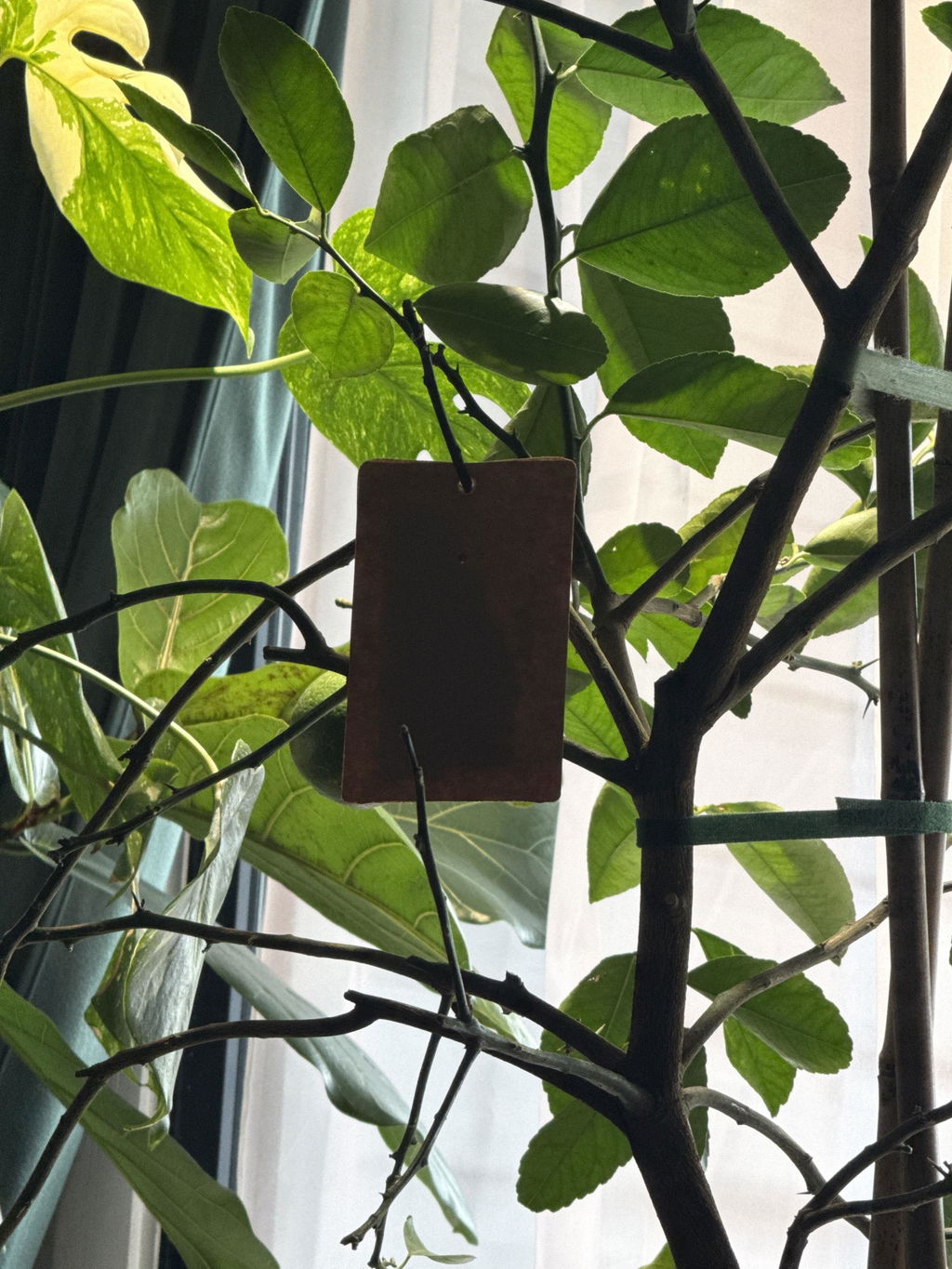
Larvae arrived on rice hulls. I distributed them on my grapevine and watermelon patch. Within a day or two the larvae were out scavenging. So very happy with this product! I've already made a note to order them every season.
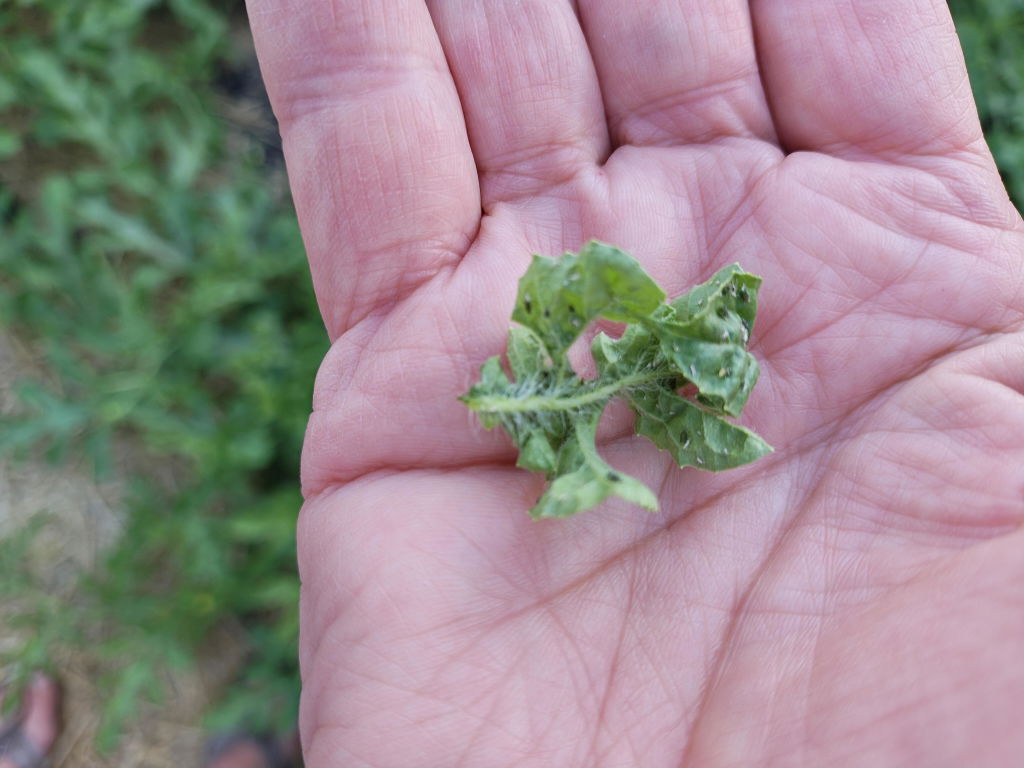
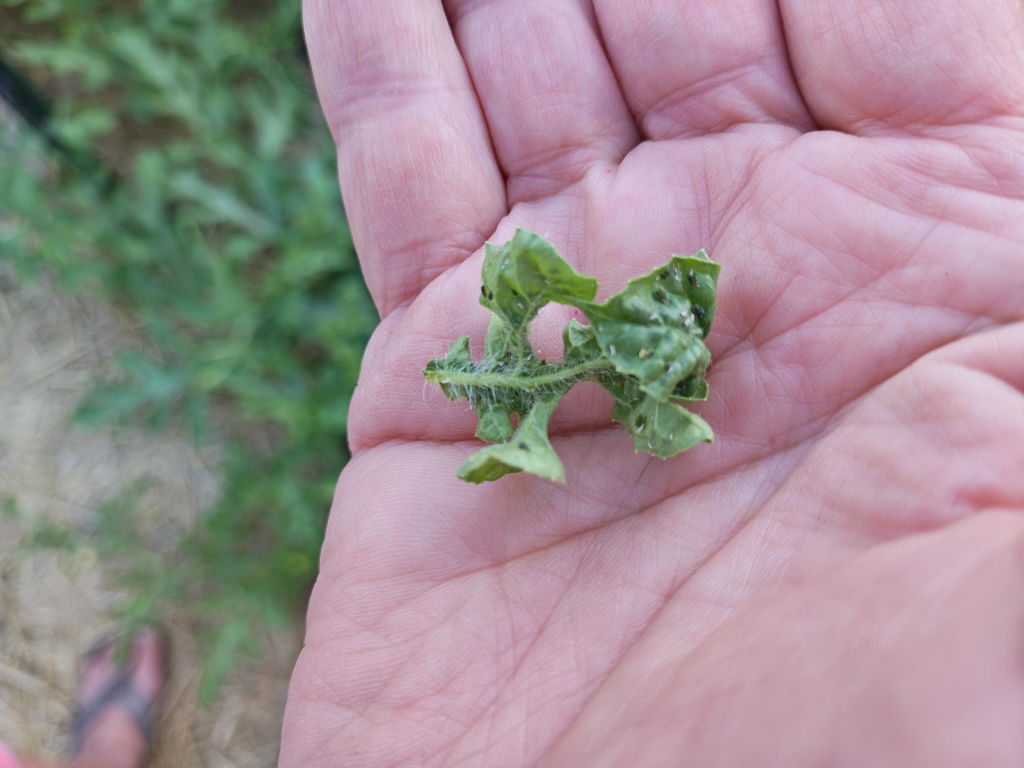
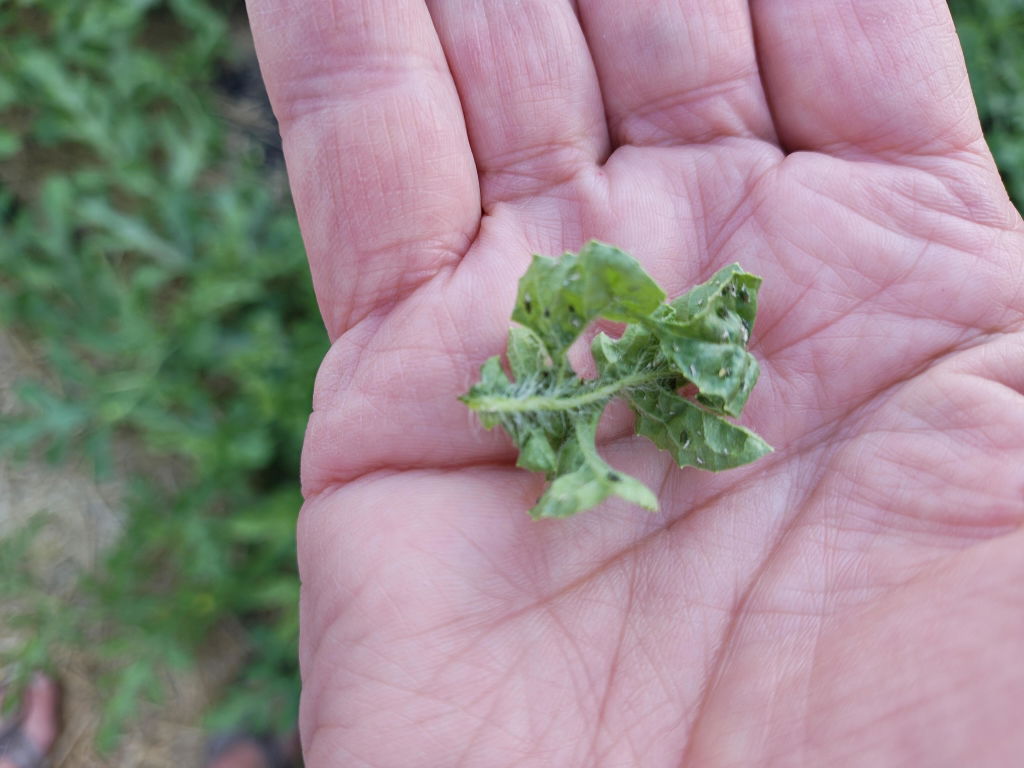
Go larvae, go! I love watching them run around and eating up all the pests. Thank you for your patronage and support. :)
It arrived quickly and the packaging was great. I spread the larvae and have not seen any lacewings. I live in the Phoenix area so maybe it’s the heat? Too hot?
Hi!
Thank you for the review! Are you looking for adult lacewings? It’s very unusual that they will get to adulthood. They need an enormous amount of food in order to pupate, and in order for this to happen generally have long left the immediate area to find that food. They’re amazing at eating what they do crawl by on their way to whatever destination they have, though!
after a week zero results (going after white flies) I see a couple of miniscule white dots, guessing these are the bugs, that don't look like they could eat one white fly.
Hi there, Ragface. Sorry to hear you're not seeing the results you expected. For persistent whiteflies, sometimes multiple applications or complementary methods can help. Feel free to reach out if you need more advice or alternative solutions. Thanks for your feedback!
It worked! Very impressed, this will be our go to!
Very helpful staff and responsive. Could use a little better instructions on the website for novice gardeners like me who have no idea what they are doing. Product did not work for me unfortunately.
I am SO pleased with my purchase. My gladiolus and roses have been plagued by thrips and aphids the past few years. I'd tried a bunch of other home remedies to get them gone, but nothing really worked. Two orders of the lacewings, and not a thrip or aphid to be seen, and my glads are finally coming up healthy!
I have had great success years previously all with other companies. Unfortunately after 3 weeks my infestations were significantly worse than better. I lost most of my plants. The response from customer service was basically sorry and they could do nothing. I have used two other companies for the last 5 years with great success ordering lady bugs and green lacewings. Unfortunately this will be my last order from FGMN. I will stick with companies that back their products.
Hi Erica, thank you for the feedback, and we're sorry this didn't go the way your past orders did. I did check with the customer service team and have a bit of an answer as to what happened. The most important window for us to help is the first 7 to 10 days after arrival -- that's when we can troubleshoot, assess what arrived and how, and step in while there's still time to change the outcome. It's not that we didn't want to help; it's that reaching out 3 weeks later, with no supporting evidence, makes it impossible for us to diagnose fairly or even help. Reaching out early and working with us to diagnose the challenge is genuinely the best thing you can do with live predators — it's when we're able to do the most for you. We'd welcome the chance to help you get a strong result next time, and we're always reachable at info@fgmnnursery.com.
They are my aphids right up.
Being new at this type of outbreak I am still watching for results. I can say things have slowed.
Shipping, communication and response time from you have been awesome. Just hope my new army is making it happen.
Thank you 😊
Between these Green Lacewings and the parasitic wasps I also ordered from FGMN, my green peach aphid problem has completely vanished. I couldn't be more satisfied!
My review is for Mia and Karen. They really are so helpful and try to answer all you questions. I love those two 💕
I feel like I paid $71 for a tube of vermiculite. Absolutely saw no change. 2 plants in a tent.
Hi!
That's disappointing to hear! Have you reached out to Mia or Karen at info@fgmnnursery.com? They'll be happy to help. I don't have the details on your order to do more than a general reply here.
I know it says this on the product page and bottle, and sorry to repeat, but it can be a point of confusion -- our larva are shipped as incubated eggs. If we ship them as 1st instar larva, they often consume one another before they even get to you. There is always the chance that happened anyway which is why I ask if you reached out. We'll be happy to ship another bottle in that case.
While being in a tent is great! There's also the possibility it got too hot for the larva or eggs.
There's, of course, also the possibililty that they don't eat whatever it is you're treating, or that the pest pressure is higher than you estimated and they are there eating, but it's not making a dent.
We're always happy to help. Please reach out at info@fgmnnursery.com and Karen or Mia can really dive in and help. :)
These little ones make quick work of all my pests, and I love seeing them teetering around carrying all the carcasses. They were ready to go straight from the shaker, and I'm seeing lots of adults, eggs, and larvae (it's been about 2 weeks since i released them in the yard). Will buy again!!!
Timely shipping, outstanding customer service. All in all an excellent experience.
Prompt delivery. Good packaging. Hoping for the best!
It arrived incredibly quickly, and they quickly developed and ate all the aphids!
I’ve been ordering from another company. Shipping through you was much quicker, lacewings arrived in great condition.
Thank you!! Admittedly, that can be time of week. Order Monday through Wednesday and shipping is most often same day or next day. It can feel like an eternity from Thursday evening to the next Monday, but there's no one that delivers reliably over the weekend. :/ Irregardless, I'm so glad the lacewings got to you well and ready to rumble!
Wonderful customer service but unsure if they did much I released them and I still see aphids eating up my peppers unsure if any survive the transfer but I released as soon as I got them on mail as verified per email.
Hi!
Thank you for the customer service compliment. The larvae can take a few days to show results, and if they don't the issues are often that too few were released for your issue, the aphids are in hiding in heavy foliage and the larvae haven't gotten to them, or the weather conditions aren't right for lacewing larvae yet. I believe someone offered to replace them if you haven't seen the effects in a week or two, but if you believe it's any of the above affecting it, you may want to switch to another predatory solution for aphids as you're likely to have the same issue again-- especially if it's weather or foliage density related. Simply let the team know what's going on and they'll be happy to help you.