




They do fly away. This is not a rumor, it is not bad luck, and it is not something better technique fixes. Most of a bought ladybug release leaves the plant within a day or two.
The part that is usually missed is the clause University of California attaches to it: they leave “even if aphids are plentiful.” A release that vanishes is not telling you the plant was wrong, the humidity was wrong, or the beetles were weak. It is telling you what the insect does.
Which raises a fair question, and it is the one in the title. If they go, what exactly are you buying?
The short version
- How fast they go
- Most within 1–2 days. Roughly 95% inside 48 hours, the rest over four or five days
- Whether food keeps them
- No. The measured departure happens with aphids still on the plant
- Why
- Not established. What is established is that prey on the plant does not hold them
- What the visit is worth
- About 100 aphids a day, per beetle, for the day or two it is there
- What stays behind
- Eggs, if the colony was dense enough to lay in. The larvae cannot fly
- Indoors
- Shut windows and the arithmetic changes. Bright lamps undo it again
- What they treat
- Aphids. That is the pest to buy them for
- What they also eat
- Other soft-bodied insects and insect eggs, opportunistically — a treat, not a treatment
How fast they actually go
Three sources, three ways of counting, and they agree.
University of California IPM: “Most will fly away from the release site within 1 or 2 days after they are released even if aphids are plentiful.” The only peer-reviewed trial of bought ladybugs on a garden ornamental found the same thing — beetles left on average one to two days after release, whether or not prey remained. University of California extension puts a figure on it: about 95 percent gone within 48 hours, the remainder over the following four or five days.
The oldest measurement is also the bluntest. In 1919 W.M. Davidson marked beetles, released them into barley, and came back a week later to find 10 percent of them still there. A century of better methods has not moved that number much.
Leaving is not feedback
Why they leave is not established. Nobody has measured the mechanism, and this article is not going to supply one.
What has been measured is more useful than a mechanism anyway, and it is the clause every source attaches: they go with prey still on the plant. That single observation rules out the whole family of explanations people reach for — that the plant was wrong, that the colony was too small, that the humidity was off, that the beetles were thirsty, that the tub was a bad batch. None of those can be the reason for a departure that happens when the reason is absent.
The useful part
Departure carries no information about your plant. It is not a verdict, it is not a symptom, and it is not something better technique prevents. A vanished release is not evidence that you did anything wrong, and chasing it with better conditions next time chases something that is not there.
Where these beetles come from does matter, in its own lane, and not as the explanation. They are wild-caught. UC IPM's wording is that commercially available Hippodamia are “field collected from their overwintering sites using portable vacuum devices.” So what arrives is an adult taken out of a winter cluster and chilled. What else being caught rather than farmed means for what turns up in the tub is a separate piece. It is not an account of why they fly.
What a two-day visit buys
An adult convergent lady beetle eats about a hundred aphids a day before it disperses. That is the number to put against the two days.
A hundred a day for two days is two hundred aphids per beetle. It is why a hundred beetles measurably cleared aphids off a five-gallon potted rose in the trial, and why the rate that worked on a full shrub was around fifteen hundred. The feeding is real; it is simply front-loaded into the first forty-eight hours, and it is priced per beetle rather than per month.
Which makes the number you buy the variable that matters, and it is much higher than the figure on most labels. The published rates, and the hundredfold gap between them and what sellers suggest, are a separate piece.
The part that cannot leave
The beetles are the half of the release that goes. The other half does not have wings yet.
A female lays in clusters of ten to thirty on leaves and green stems next to prey, several hundred over a season. What hatches is a larva: a quarter-inch dark, spiky, alligator-shaped thing that stays on the plant it hatched on for about two weeks and eats 30 to 50 aphids a day while it is there. It has no choice about staying, which is exactly why it ends up eating more aphids in its life than the adult that laid it ate on your plant.
So the durable part of a release is what gets laid before the beetles go, not what gets eaten while they are there. What the larvae look like and how to read them week by week is its own article, because the first time somebody finds one they usually think it is a pest and spray it.
Indoors versus outdoors
Every dispersal figure above comes from an open garden, and dispersal is the one term that a closed room changes. In the same rose trial, beetles caged so they could not leave controlled aphids at roughly a quarter of the rate needed in the open.
A room with the windows shut is closer to that cage than to the garden. It is not the cage, and there is no published release rate for houseplants indoors, so treat any specific indoor number — including one from us — as an estimate.
The thing that undoes indoor containment is light. Released adults orient to the brightest thing available, and in a grow tent or a plant room that is a lamp or a window rather than your plant. Beetles gathering on a light fitting have not died; they have found the brightest horizon in the room.

What genuinely slows them down
There is one piece of release-night advice with a university publication behind it, and it is worth quoting exactly rather than upgrading: “Wetting plants first and releasing beetles on the ground near the trunk and beneath plants in the late evening when it is cooler may slow beetle dispersal.”
May slow. That is the strength of the claim, and it is stronger than anything else on offer. Three parts, all inexpensive: wet the foliage, put them on the ground or the lower stems rather than on the leaves, and do it late in the day when it is cool. They climb on their own — that is how they find the colonies.

Common versions of this advice that go further than the evidence: that misting works because the beetles are thirsty and a drink holds them; that a mesh bag over the plant for a day or two converts a release into a resident population. The first is a mechanism nobody has shown. The second is a cage, which does work while it is on, and is a different thing from the beetles choosing to stay.
When ladybugs are the wrong tool
A great deal of ladybug disappointment is not about dispersal at all. It is about buying them for a pest they do not eat.
UC IPM's prey list for the convergent lady beetle is soft-bodied insects, insect eggs, and “especially aphids.” The useful distinction is not which of those is on the menu — several are — but which of them a release will fix.
Aphids are the pest to buy them to treat. Other soft-bodied insects and insect eggs get taken when a beetle walks into them: young mealybugs, scale crawlers, thrips larvae, moth eggs. That is real, and it is a bonus rather than a plan. An opportunistic meal is a treat; it is not a treatment, and it will not break an infestation of that pest. So if the problem you are trying to solve is mealybug or scale, buy the beetle that specializes in it — Cryptolaemus for mealybug, Rhyzobius for armored scale — and treat any ladybugs you also have as incidental help.
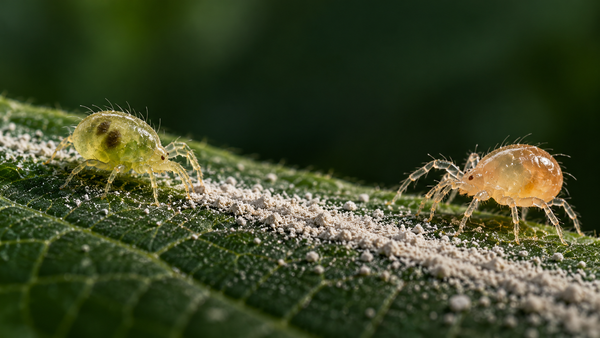
Spider mites are a separate case and the honest answer is that we do not know. Spider mites are not insects, so “soft-bodied insects and insect eggs” does not cover them, and I could not find a source either way for whether Hippodamia convergens takes them in any quantity worth mentioning. Do not buy ladybugs for spider mites on the strength of a claim nobody can point at a paper for. Which pest goes with which predator is the better route.
Two further cases where they are the wrong shape of tool rather than the wrong species. Prevention: a beetle lays next to a colony worth laying next to, so releasing onto clean plants gets you almost nothing. Ladybugs answer an infestation. A spreading problem: aphids give birth to live daughters that are already carrying daughters of their own, so a single cohort of predators that does not reproduce on your plant is always racing something that does. That is the case for pairing them with a parasitoid wasp that breeds inside the colony instead of escalating the beetle count.
And one species note, because it is the question we get asked: what is in the tub is Hippodamia convergens, a North American native, not the multicolored Asian lady beetle that overwinters in people's houses. The difference, and why it matters for what you release.
On release night
Release at dusk, or after lights-out indoors. Adults are strong fliers and a warm bright afternoon is an invitation. In cool falling light they walk instead, and walking across the plant is how they find aphids.
Wet the foliage first and release low. On the lower stems or the soil at the base, not on the infested leaves. They climb. This is the combination UC IPM says “may slow beetle dispersal,” and the hedge is theirs.
Release in batches over several evenings rather than all at once. You are buying two-day visits. Spreading them buys more days of feeding from the same tub, and more chances that one of those evenings is a good laying night.
Indoors, deal with the lamps and the windows before you open the tub. The brightest point in the room is where they will gather. Turning the lights off for the night is the whole trick.
Do not judge it on how many beetles you can still see. Most will be gone in two days whatever you do. Count aphids on one marked shoot instead, the same way each time, and look for egg clusters and spiky larvae rather than beetles.
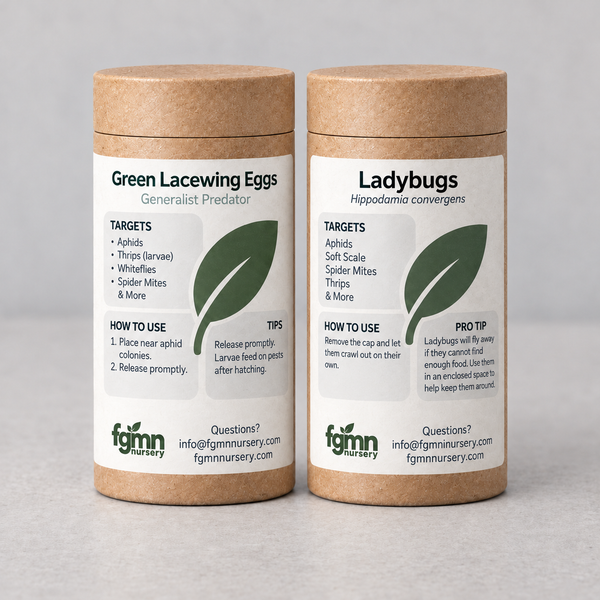
Use them within 24 hours of delivery, and do not put them in the fridge. We ship everything to be used within 24 hours of delivery; the packaging is for the trip, not for storage. If you cannot release this week, order for the week you can.
Common questions
Do ladybugs fly away after you release them?
Yes. Most leave the release site within one or two days, and University of California extension puts it at roughly 95 percent gone within 48 hours. The important detail is that they do this even when aphids are still plentiful on the plant, so it is not a response to conditions you can fix.
Is there any way to make ladybugs stay?
Not reliably. The one piece of advice with a university source behind it is that wetting the plants, releasing the beetles on the ground beneath them, and doing it in the cool of late evening “may slow beetle dispersal.” It is worth doing and it is a hedge. A mesh cover keeps them in while it is on, which is containment rather than persuasion.
Then why buy them at all?
Because an adult eats about a hundred aphids a day for the day or two it is present, and because the ones that lay leave behind larvae that cannot fly away and eat 30 to 50 aphids a day each for about two weeks. A release is a burst of feeding plus a chance at a generation that stays, priced per beetle. It is not an occupying force, and the rate you need is much higher than most labels suggest.
Did my ladybugs leave because something was wrong with my plant?
No. Every source that has measured it found them leaving with prey still on the plant. Departure carries no information about your conditions.
Why are my ladybugs all over the window and the grow light?
They orient to the brightest thing in the room. Indoors that is usually a lamp or a window rather than the plant. Releasing after lights-out, and covering or switching off the brightest source for the night, is what stops it.
Will ladybugs eat spider mites, thrips, mealybugs or scale?
Thrips larvae, young mealybugs, scale crawlers and moth eggs are all soft-bodied and all get taken opportunistically, so the answer for those is yes — but opportunistically is the operative word. Aphids are the pest a release will actually fix; anything else is a treat rather than a treatment, and buying ladybugs to break a mealybug or scale infestation will disappoint you. Spider mites are a different question again: they are not insects, UC IPM's prey list does not cover them, and I could not find a source either way, so treat any claim in either direction with suspicion.
Are these the ladybugs that get into houses in winter?
No. The species sold for release in North America is the convergent lady beetle, Hippodamia convergens, which is native. The ones that cluster indoors over winter are usually the multicolored Asian lady beetle, Harmonia axyridis, which is a different insect and not what is in the tub.
References
- Flint, M.L. & Dreistadt, S.H. (2005). Interactions among convergent lady beetle (Hippodamia convergens) releases, aphid populations, and rose cultivar. Biological Control 34(1): 38–46. The measured dispersal — beetles leave on average one to two days after release even when aphids are present — the caged comparison, the potted-rose and shrub rates, and the Davidson (1919) mark-release figure of 10% remaining after a week, which is reported there rather than read directly. Free to read as a PDF on the UC IPM site. doi.org
- University of California Statewide IPM Program. Convergent Lady Beetle, Natural Enemies Gallery. Almost everything quoted above: the “within 1 or 2 days … even if aphids are plentiful” statement, the 100-aphids-a-day adult rate, collection “from their overwintering sites using portable vacuum devices,” the egg clusters of 10 to 30, the prey list, and the release-night wording. Free to read. ipm.ucanr.edu
- Fordyce, L. (2025). Releasing Ladybugs in the Garden. UC ANR, Pests in the Urban Landscape, 23 April 2025. The roughly 95%-within-48-hours figure and the up-to-500-aphids lifetime figure for larvae. Extension guidance rather than a primary measurement — the post attributes the dispersal figure to research it does not name — and cited here for what it reports. ucanr.edu
- Sartwell, T. & Hodges, A. (2014, rev.). Convergent Lady Beetle, Hippodamia convergens. University of Florida IFAS Extension EENY-592. The 30 to 50 aphids a day taken by larger larvae, the four larval instars, the egg counts, and the commercial collection lots of 1,500 to 72,000 adults. Free to read. ifas.ufl.edu
- Flint, M.L., Dreistadt, S.H. & Zagory, E.M. (2022). Aphids. UC IPM Pest Notes Publication 7404. The aphid side of the last section — live young without mating, newborn to reproducing adult in seven to eight days — and the 1,500-beetles-per-bush figure restated for a home garden. Free to read. ipm.ucanr.edu
They leave. The question is how many you release before they do.
