
Generalist · Soil Health
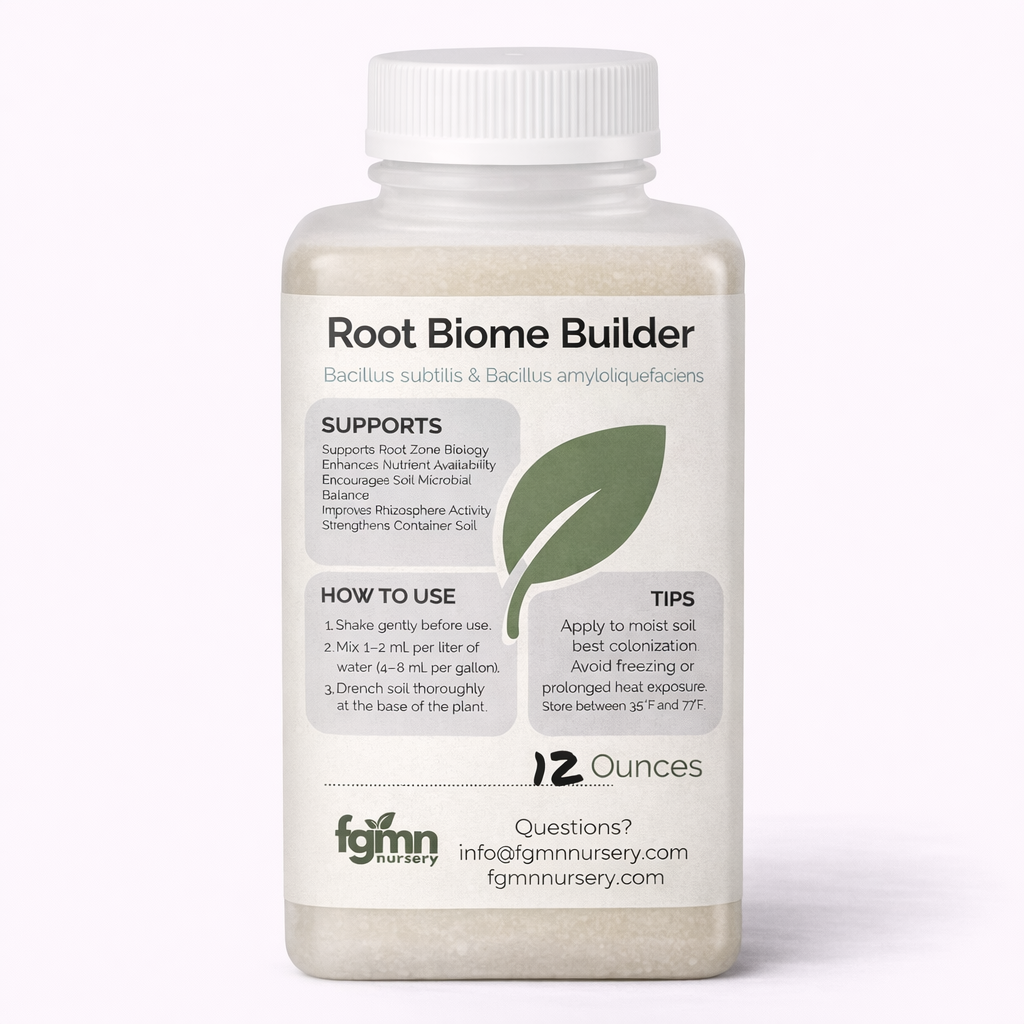
Root Biome Builder
Fresh mix starts sterile. This is the living biology a natural soil would already have around the roots.
$80.00
Free Shipping for all orders over $30
If something's wrong when it arrives, file a report within 72 hours of delivery for a replacement or store credit.
By placing your order you agree to our Shipping Policy and Live Delivery Guarantee.
How much, and how often
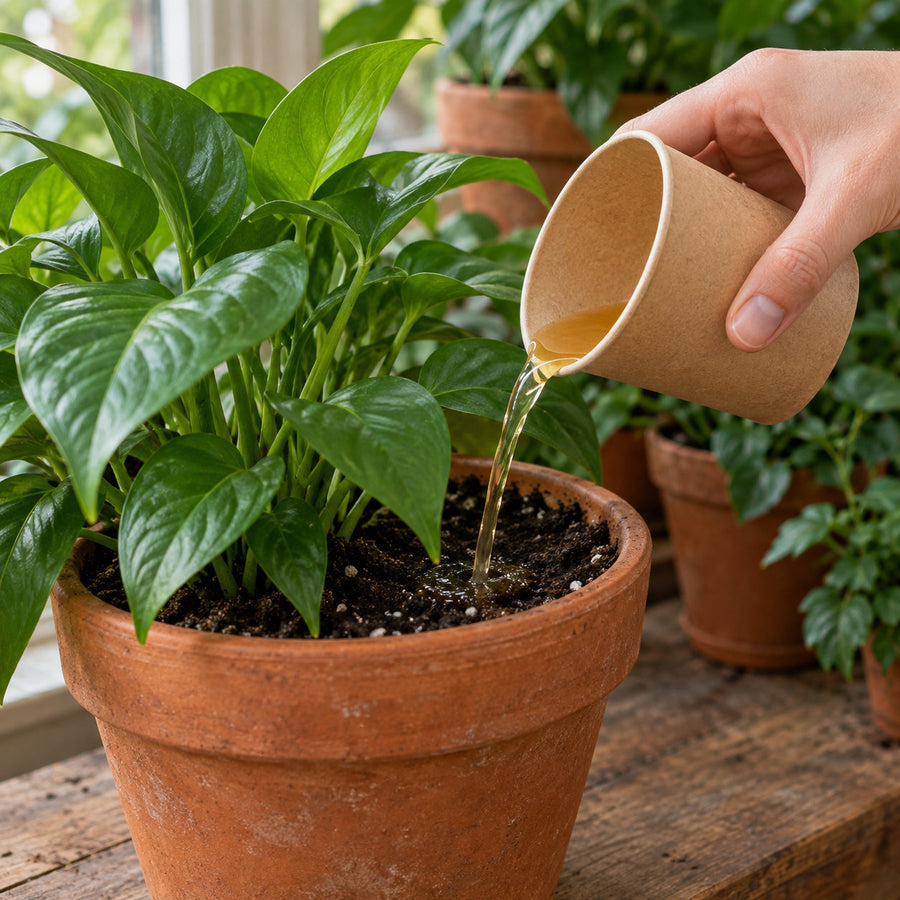
Four to eight millilitres per gallon of water, or one to two per litre. Drench until the medium is evenly saturated, and reapply every three to four weeks during active growth — or immediately after a repot.
More about this dose
The three things people ask once they have their size. Open any of them.
Why more than one round?
Putting it out
- Shake the bottle gently. It is a live culture and it settles.
- Dilute 4–8 mL per gallon of water, or 1–2 mL per litre.
- Mixing nutrients too? Add this last. Most synthetic and organic fertilisers are compatible — mix those first and put this in at the end.
- Drench until the medium is evenly saturated, rather than wetting the surface. The rhizosphere is the point.
- Keep it away from anything bactericidal. Disinfectants, high-strength peroxide and concentrated flush products will kill it outright.
- Reapply every three to four weeks in active growth, and immediately after any repot. On semi-hydro, rinse self-watering reservoirs every four to six weeks so organic matter does not build up.
Everything else is optional. Get these four and the release has done what it can.
A cleaner way
On a display plant, tip small piles into bio-boxes or paper cups hung in the branches instead of dusting the foliage. Same dose, nothing visible on the leaf.
Is this the right thing to put in the pot?
Four questions, in the order a grower actually asks them: what is the situation, is this the answer to it, what does it actually do, and where does it work.
Is this your situation?
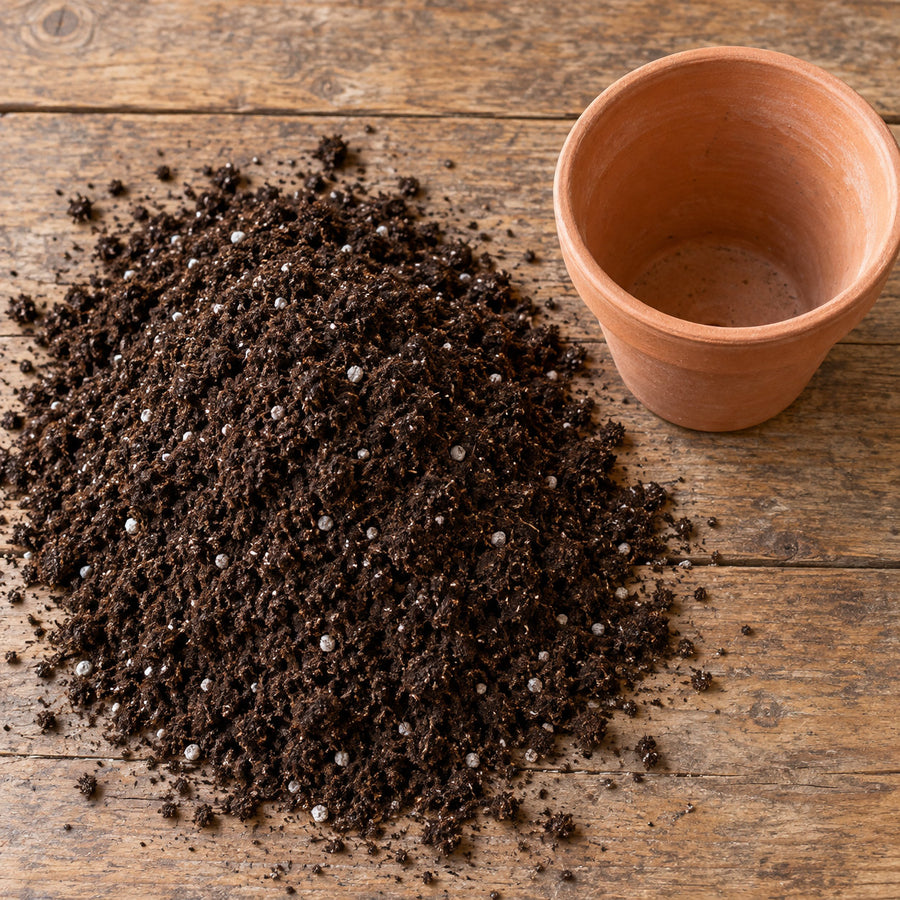
There is no pest on this page. Root Biome Builder is an inoculant: it puts living bacteria into a root zone that does not have any, which is the ordinary state of every bag of fresh mix you have ever opened.
A bag of fresh potting mix is close to sterile, and so are coco, rockwool, perlite and LECA. The roots go into it with nothing living alongside them. A natural soil would already have a working microbial community around the roots; a container starts without one and only gets one by accident.
This is a concentrated liquid culture of Bacillus subtilis and Bacillus amyloliquefaciens that establishes that community deliberately — supporting nutrient breakdown and availability in the root zone, keeping biological activity steady rather than boom-and-bust, and giving the plant a more resilient foundation to grow into.
Then: is Root Biome Builder the right answer to it?
Choose this if
Choose it for the moments when the root zone is a blank slate and new roots are about to grow into it. Potting and repotting is the one with the most to claim. Deflasked tissue culture during acclimation is the next, because a plantlet out of a sterile jar has no root-zone biology at all. Inert media — coco, rockwool, perlite, LECA, and semi-hydro most of all, where constant moisture meets nothing established. And long-term pots that have sat in the same container for years. Applying it is one watering: shake, measure, dilute, drench. Nothing to spray, no residue, no re-entry interval, no odour to speak of once diluted, and nothing to keep children or pets away from. It mixes with most synthetic and organic fertilisers — add it last, after the nutrients — and runs alongside beneficial nematodes, predatory mites, springtails and Trichoderma T-22 without interference, because they occupy different niches.
Choose something else if
Being clear about what it is: an inoculant, not a treatment. It is not a pesticide, it does not kill pathogens, and it will not rescue a plant that is already rotting — use it before there is a problem rather than after. If root rot specifically is the worry, Trichoderma T-22 is the product built for that. And it cannot be run alongside strong disinfectants, bactericides, high-strength peroxide or concentrated flush products, which are designed to kill bacteria and will.
What it does, and what it does not
The right-hand list is the honest one and it is worth reading before you buy. This is not a pesticide and not a fertiliser. What it does is put biology where there was none, so that the root zone behaves more like soil and less like a sterile box — and that is a foundation, not a fix.
How it works
Where it goes, what it changes, and how long that takes.
It colonises the rhizosphere
The rhizosphere is the active zone immediately around the roots, and in a container it usually starts empty. These Bacillus species establish there and stay, which is why the product is worth most at the moment the roots are new.
It works on availability, not supply
Bacteria in the root zone support the breakdown and availability of the nutrients that are already there. That is a different job from feeding the plant — this is not a fertiliser, and it does not replace one.
It takes two or three goes
Expect to see the difference after two or three applications rather than one. A colony has to establish before it does anything, and in a container there is nothing to establish from except what you put in.
Add it last. Mix your nutrients first and put this in at the end — and keep it away from disinfectants, bactericides, peroxide and flush products entirely. Those are built to kill bacteria and they do not make exceptions.
Will it work in your room?
Two things. This is approved for sale in forty-one US jurisdictions — AL, AR, AZ, CA, CO, CT, DC, DE, FL, GA, ID, IA, IL, IN, KY, LA, ME, MA, MD, MI, MN, MO, MS, MT, NJ, NY, NC, ND, NV, OH, OR, PA, RI, SC, TN, TX, UT, VA, WA, WV and WI — so if you are outside them, get in touch before ordering. And if a plant is already rotting, this is not the product: T-22 is.
About Root Biome Builder
A liquid biological inoculant — a concentrated culture of beneficial soil bacteria, diluted and poured into the pot. Not a pesticide, not a fertiliser, not a treatment.
New to inoculants?
Five things that catch almost everyone the first time.
After you pour it
What changes, how long it takes, and when to pour again.
How you'll know it's working
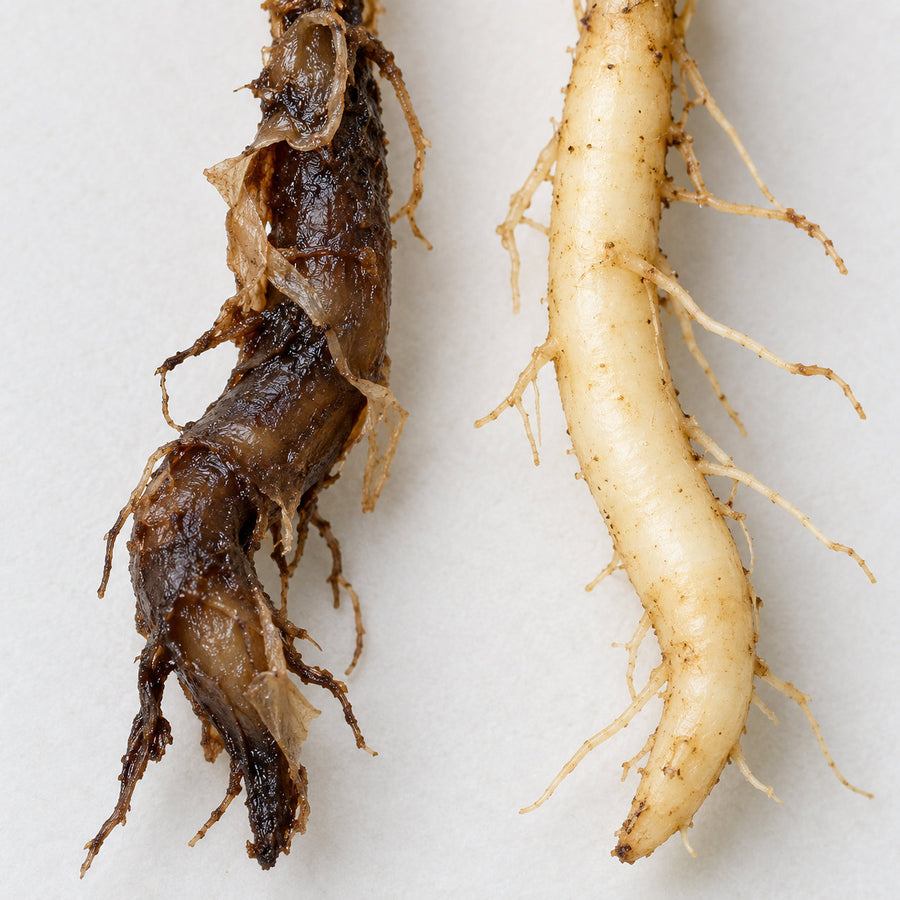
Slowly, and cumulatively. Expect to see the difference after two or three applications rather than after the first — the colony has to establish before it does anything.
What you are looking for is a plant that roots into new medium confidently and holds through the stresses that usually set one back: a repot, a deflask, a move onto semi-hydro.
Reapply every three to four weeks in active growth, and again straight after any repot. A repot is a reset — new medium is new blank territory, and whatever had established is now in the old pot.
Getting it to you
What is in the bottle, how it travels, and how to keep it.
What arrives
A bottled liquid concentrate, sold by volume — 8, 12, 16 or 32 ounces.
It ships as goods rather than as livestock: no live-arrival window, no cold chain, no clock running. Shake gently before use.
Nothing urgent on arrival. Store it sealed between 35 and 77°F, out of direct sunlight, and it is ready whenever you are.
When it ships, and when it lands
Shipping
This one just ships. No live-arrival window, no cold chain, no Monday-to-Thursday dispatch rule and no clock running when it lands. It goes out as ordinary goods, which makes it the easiest thing on the site to order alongside something else.
When it lands
Put it on the shelf until you need it. When you use it: shake gently, dilute four to eight millilitres per gallon — one to two per litre — and drench until the medium is evenly saturated. If you are mixing nutrients in the same can, mix those first and add this last. Then reapply every three to four weeks through active growth, and immediately after any repot.
About keeping it alive on the shelf
Nothing here has to survive a van. What it has to survive is your cupboard.
Nothing in this bottle has to survive a van in two days. It ships as goods, with no live-arrival window and no cold chain in transit.
What shortens its life is storage rather than shipping: freezing, prolonged heat, direct sunlight, or a cap left loose.
Sealed and kept in that band, it holds for its stated shelf life. Use it within that after opening for best results.
If something goes wrong
A bottle that arrives leaking, frozen solid, or after a week in a hot van is worth telling us about, and so is one that has clearly separated or gone off.
There is no tap test for bacteria. The honest check is how the plants behave over two or three applications.
Tell us anyway when the bottle itself looks wrong. That is something we can see, and it is how we tell a bad batch from a bad courier day.
Why we will not ask for a photo
Mites, nematodes, eggs — and bacteria, which is what this is. A bottle of liquid looks the same whether the culture in it is active or not, and no photograph settles that. So we don't ask you to take one.
You file the report and we take you through the diagnostic instead — how the bottle was stored, what temperature it saw, and what else went into the watering can alongside it.
What we will ask about is storage and what else went in the can: a bottle that froze, one that sat in a hot car, or a drench mixed alongside peroxide or a flush product.
Seventy-two hours from delivery, either way, with your order number. Replacement or store credit, your pick.
What it does not reach
Three gaps this page has already named, and the beneficial that closes each one.
Trichoderma T-22 is the one built for that
This is an inoculant and it does not attack pathogens. If what you are actually worried about is Pythium, Fusarium or the rest of the root-rot family, T-22 is the biological fungicide built for it — it takes the root surface before they can and parasitises them directly. The two run together happily; they occupy different niches.
Stratiolaelaps, the soil-dwelling predatory mite
Bacteria do nothing about arthropods. If there are fungus gnats coming off the surface or thrips pupating in the media, Stratiolaelaps scimitus lives in the top inch and hunts them continuously — and it does not interfere with this, because they occupy different niches.
Springtails, for the layer bacteria cannot reach
The same logic one size up. Bacteria work at the microbial scale; springtails work on the decaying organic matter and surface mould that a container also starts without. They are compatible with this, with T-22 and with beneficial nematodes, and between them they turn a sterile pot into something that behaves like soil.
Two cheap things that make the rest work harder. Blue cards give you the dated count this page keeps asking you to read. Breeder's Blend is pollen and Artemia; it keeps the population fed through the lull when prey gets scarce.
Questions
Can I use Root Biome Builder in semi-hydroponics (LECA or Pon)?
Yes. While designed for soil-based containers, the Bacillus strains in Root Biome Builder are highly effective in inorganic media like LECA or Pon. They help break down organic debris (like old root sheaths) and maintain a clean, biologically active reservoir.
Will this product cause a biofilm or "slime" in my self-watering pots?
When used at the recommended dilution, Root Biome Builder promotes a healthy microbial balance. However, because it contains live cultures, we recommend rinsing your reservoirs every 4–6 weeks to prevent any natural organic buildup, especially if using organic-based fertilizers alongside it.
Is Root Biome Builder safe for propagation and "rehab" plants?
Absolutely. In fact, it is highly recommended for props. Introducing beneficial bacteria early in the rooting process—whether in moss, perlite, or water—helps establish a protective "biome" around emerging root initials, making the transition to a permanent potting mix much smoother.
Can I use this alongside my regular liquid fertilizers?
Yes, it is compatible with most synthetic and organic fertilizers. For the best results, mix your nutrients first and add Root Biome Builder last. Avoid mixing it with concentrated "flush" products or high-strength peroxide treatments, as these are designed to sterilize the environment.
How soon will I see results in my aroids?
While the bacteria begin colonizing the roots immediately, visible results (such as increased vigor or larger leaf pushes) are typically seen after 2–3 applications. The goal is to build long-term "rhizosphere resilience" rather than a temporary chemical spike.
Does this product have a strong odor?
Root Biome Builder is a clean, liquid formulation with a very mild, earthy scent that is virtually unnoticeable once diluted. Unlike some fish-based or heavy organic fertilizers, it is perfectly suited for use on indoor shelving and in living spaces.