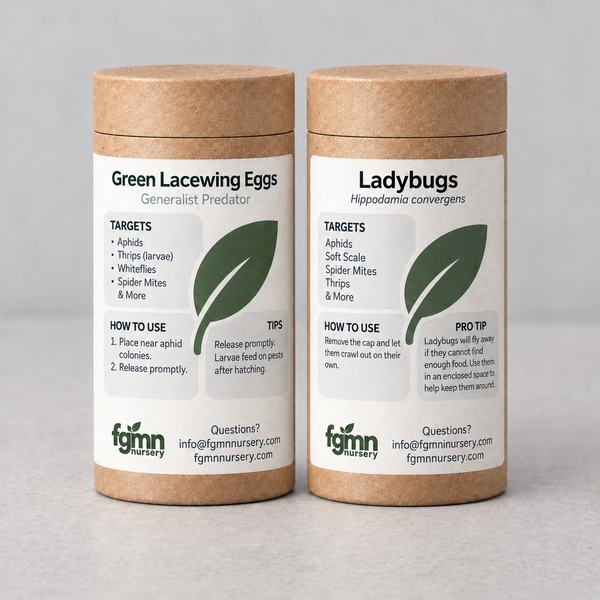

Green Lacewing Eggs

Regular price $21.00

15 reviews
KH Karen's Hint

Eggs make you wait.
(And you might miss the hatch entirely.)

With eggs, you're watching and waiting for a hatch that happens fast — and if you blink, you might miss it. If you'd rather not guess at the timing, the Green Lacewing Larvae are the same insect with the incubating already done — they hatch a day or two after they arrive, on the plant, instead of on a schedule you have to watch for. Same appetite, less waiting.

While uncommon, order processing can take up to 7 days depending on hatching rates and life stages.
Live Delivery Guaranteed

Free Shipping for all orders over $30
All mites and insects ship 2-day or Overnight depending on what's best for them.


How it arrives

Heads up—this is just an estimate. We only ship when the bugs are happy and ready to travel (Mon–Thurs). If a colony needs a beat to peak, or we're propagating a fresh batch, your order might hold up to a week. Treatment bottles jump the line when you've got an active infestation.


Green Lacewing Eggs

At A Glance

Chrysoperla carnea (Green Lacewing) eggs are the economical way to get lacewing larvae onto a plant. You are buying the stage before the predator and paying accordingly: the eggs hatch on the foliage over a few days, and the larvae — the "aphid lions" — hunt from there. The adults eat pollen and nectar and take no pests at all.

Aphids are the job. The field work behind that got real reduction on small, open plants at rate, and none on large plants under cover or on citrus trees — so on a big established specimen, expect help rather than a clearance. The larvae will take other soft-bodied pests on encounter, but that is not a reason to buy them.

One thing to weigh before choosing eggs over larvae: where the two have been compared directly, released eggs underperformed released larvae. The eggs hatch — that part works, and it has been checked under a microscope — but many of the neonates never reach a pest, because they emerge hungry among their own siblings and eat each other. Spread them thin and wide, use them when pressure is low or you are getting ahead of it, and reach for the incubated Larvae product when there is an active outbreak to clear.

Field Notes

Green Lacewing Eggs


The animal

Species
Chrysoperla sp., either rufilabris or carnea, depending on the batch
Larva size
About 1mm on hatching, translucent — effectively invisible. They grow to 8mm by the final instar
What does the work
The larvae. Adults are pollen and nectar feeders and don't eat pests
Feeding window
2–3 weeks of larval life, then pupation

What it eats

Hunts
Aphids above all. Larvae actively search foliage for them. Demonstrated on small, open plants at rate — released lacewings did not reduce aphids on large protected plants, or on citrus trees at any rate tried
Eats opportunistically
Thrips larvae, spider mites, mealybugs, whitefly nymphs, scale crawlers, small caterpillars, insect eggs, psyllids. Taken on encounter, and not a reason to buy them — opportunistic feeding is not control. Whitefly especially: the larvae cannot complete development on whitefly alone
Won't touch
Adult scale, armored scale, anything in the soil, adult whitefly

What arrives

Format
Non-incubated eggs, loose with a rice hull or similar carrier
Role
Treatment, delayed. Eggs hatch after arrival, then the larvae feed
Sold by
Count
Ships as
Small pale eggs. Not yet hatched — nothing will be moving
Eggs or larvae?
Eggs are the cheaper stage and the weaker release. Where the two have been compared, egg releases underperformed larval ones — the eggs hatch, but many neonates never reach a pest. Eggs for low pressure and getting ahead of it; the incubated Larvae product for an active outbreak
Hatch window
Variable. Days rather than hours, and slower than the incubated Lacewing Larvae product. Cold transit extends it

Where it works

Optimal temp
70–85°F. Hatch and development both slow below 65°F
Humidity
Moderate. No high-RH requirement
Establishes
No. Adults emerge and disperse — this is a release, not a population

Running it

Deploy
On arrival. Distribute eggs across foliage, or leave the container open in the canopy and let larvae exit as they hatch
Release timing
Evening. Spread thin and wide — larvae are cannibalistic and will eat each other at high density
Reapply
Every 7–14 days while pests are active
Refrigerate
No
Compatible with
Predatory mites, Stratiolaelaps scimitus, beneficial nematodes, Aphidius, Cryptolaemus, Diglyphus, springtails
Keep separate from
Broad-spectrum insecticides. Ants — they defend aphid colonies and will attack larvae. Sticky cards will catch adults
Chemical interval
One day after neem oil or insecticidal soap. Never with sulfur, at any dilution
Safe around
Pets, children, plants
Target Pests

Chrysoperla carnea is an aggressive generalist predator, and there is one job it is for.

  • Aphids: every species — Green Peach, Melon, Potato and the rest. This is what you are buying.

Once they hatch, the larvae will also eat, on encounter:

  • Two-spotted spider mites
  • Mealybug and scale crawlers
  • Thrips, early instar larvae
  • Whitefly eggs and nymphs
  • Small moth eggs and young caterpillars

That second list is not a reason to buy them. Opportunistic feeding is not control, and a lacewing released where there is nothing to eat leaves rather than waiting. Eggs need aphids on the plant, or arriving soon, to be worth releasing at all. They are not a reliable treatment for anything but aphids, and we would rather say so than take the order.

Environmental Needs

To maximize the hatching rate and predatory activity of your Lacewing eggs, maintain the following conditions:

  • Optimal Temperature: 64°F – 82°F. Temperature is what sets the hatch time. In the upper half of that range they hatch in a few days; in cooler conditions it can stretch to two weeks.
  • Critical Humidity: Above 60% RH. High humidity is vital to prevent egg desiccation (drying out).
  • Lighting: Active during natural or supplemental daylight hours; effective in year-round indoor cultivation.

If your space runs cold and you need the larvae hunting sooner, order the Green Lacewing Larvae instead. Those ship pre-incubated and almost always hatch the day after they arrive.

Selection Guide

Both of our lacewing products arrive as eggs. What separates them is the hatch clock.

  • These hatch on your room's schedule: a few days when it is warm, and up to two weeks when it is cool. That is the trade you are making for the lower price.
  • The Larvae product is pre-incubated and hatches about a day after delivery, near enough regardless of the weather. If aphids are already climbing, that difference is the whole decision.
  • Choose eggs when time is not the constraint: getting ahead of a problem, covering more plants for the money, or keeping pressure off something that is currently clean.

Aphids are the job either way. The larvae will take other soft-bodied pests they run into, but that is not a reason to buy them, and we would rather say so than sell you a clean-up crew that is only really an aphid predator.

How to Use

Acclimation: Allow the container to reach room temperature before application.

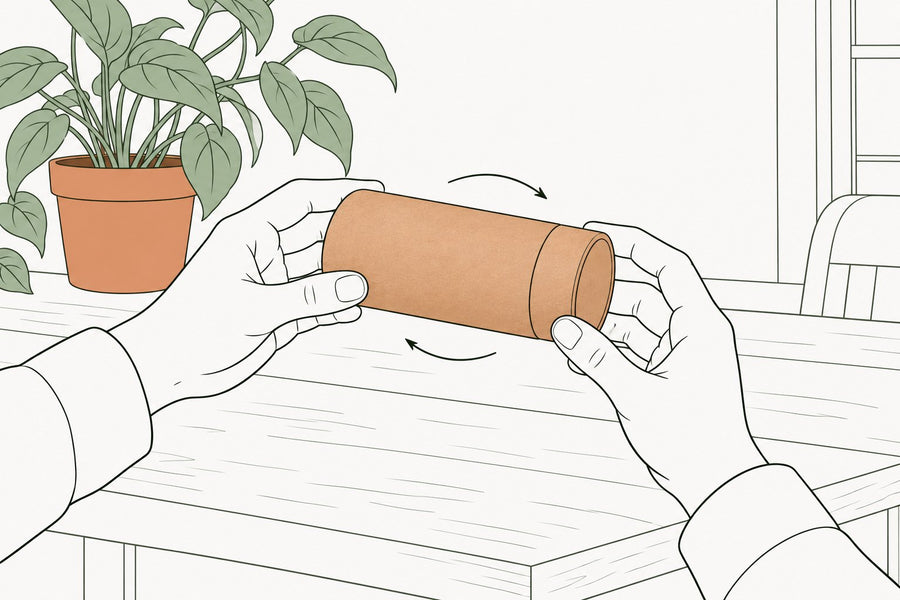
Application: Gently rotate the bottle to distribute the eggs through the carrier, then sprinkle the mixture onto the foliage. There is no adhesive, so concentrate on leaf axils, stem crotches and the upper canopy, where it will settle rather than roll off.

Deployment: Apply during periods of low light or after grow lights are dimmed to reduce stress on emerging larvae.

Frequency: For maintenance, release every 2–4 weeks. For light infestations, release weekly for three consecutive weeks.

How They're Shipped

Formulation: Shipped as dormant eggs loose through a dry carrier material. There is no adhesive, so where you place them matters — see the release notes.

Protection: Packaged in breathable, temperature-regulated containers to ensure viability during transit.

Storage: Beneficial insects are "perishable" live goods. Release immediately upon delivery. If storage is unavoidable, keep at 46°F – 50°F for no more than 24 hours.

When Your Order Arrives

Sprinkle, then watch them hatch.

How to deploy your lacewing eggs, and what to expect over the weeks that follow. Eggs hatch into voracious aphid-eating larvae once conditions are right — the routine is built around that.

  1. 01

    Open the box right away

    Bring the package indoors as soon as it arrives. Don't leave it on a hot porch, in a cold mailbox, or in direct sun. Lacewing eggs are dormant in transit and tolerate normal handling well — there's no rush to deploy the moment they arrive.

  2. 02

    Hold or deploy within a few days

    For best results, deploy within two to three days of arrival. If you need a little more time, store the unopened container in a cool spot (55–65°F is ideal) — this slows hatch development without harming the eggs. Don't refrigerate below 50°F and don't freeze.

  3. 03

    Sprinkle near pest activity

    Eggs ship mixed into buckwheat hulls — you won't usually see the eggs themselves, you'll see the hulls. Sprinkle small pinches across affected plants, into leaf axils, along stems, and into the inner canopy where aphids cluster. Spread thinly across as many plants as possible. Newly hatched larvae are cannibals, so concentrating the mix in one spot means they hatch into competition with each other instead of food. Wide and thin is the rule.

  4. 04

    Give them time to hatch and feed

    Eggs typically hatch within a week or two at room temperature, slower if it's cooler — exact timing varies with conditions, so don't worry if hatch runs long. Newly hatched larvae are tiny (about 1mm), pale brown, and alligator-shaped. They'll feed on aphids, mealybugs, thrips, and other soft-bodied pests for two to three weeks before pupating. If you're not seeing any drop in pest pressure several weeks after release, that's when to bring in our bug pros.

Something not quite right?

Reach out to our entomologist by filing a report within 72 hours of delivery, with your order number and a photo. Candidly, without a photo the team can't approve a live beneficial claim.

Read the full Live Delivery Guarantee →

Join Karen's Live Shows — Pests, Plants & Predators on PalmStreet.

Every Friday at 7pm EST — plus additional shows throughout the week. Ask your pest questions in real time — we answer everything.

Bookmark our shows →

The Weekly Newsletter

A weekly excuse to be weird about bugs at parties.

Weekly dispatches on the quietly alarming things happening in your soil. All of it real.

No spam. Leave whenever.

You're in

The first strange true thing arrives next week.

FAQ

What is your Live Delivery Guarantee?

We guarantee that your beneficial insects arrive healthy and ready to work. They're living things, so we pack for the season and ship expedited to give them the best trip we can.

If something looks wrong when the box opens, take a photo and file a report within 72 hours of delivery, with your order number. Photos matter: candidly, without them the team can't approve a live beneficial claim.

Will the eggs stay on the leaves?

Not on their own. These ship loose through a dry carrier with no adhesive, and on smooth foliage — which is most aroids — a share of them will roll off and end up on the soil.

So put them where they settle rather than slide: leaf axils, the crotch where the petiole meets the stem, textured or crumpled new growth, and flatter upper leaves. Leaf undersides sound right, and hold nothing.

Eggs that reach the soil are not wasted. The larvae hatch and climb toward the light, which is where the aphids are. Placing them on foliage just starts them closer to the job.

How soon will I see results after releasing the eggs?

These are eggs, so there is a wait — and it runs on temperature rather than on a fixed number of days. In a warm room they hatch in a few days. In cooler conditions it can be up to two weeks. That is normal and it is not a fault; nothing will look like it is happening in the meantime.

Once they hatch the larvae hunt straight away and feed for two to three weeks. Aphid numbers falling quietly over that period is how you know it worked — you are unlikely to ever see a larva.

If the wait is the problem — aphids already climbing, a plant you are worried about — buy the Larvae instead. Those ship pre-incubated and hatch about a day after they reach you, whatever the weather is doing.

Can I use Lacewings alongside other beneficial insects?

Yes. Lacewings are excellent team players in an Integrated Pest Management (IPM) program. They work well alongside soil-dwelling predators like Hypoaspis miles and can be used in the same canopy as Aphidius wasps. However, because they are generalists, they may occasionally snack on other beneficial larvae, so we recommend spacing out releases by 24–48 hours.

Will the adult Lacewings stay in my garden and keep hunting?

The larvae are the "workhorses" that eat the pests. Once they mature into adults (the iconic green winged insects), they shift their diet to nectar and pollen. To encourage them to stay and lay a second generation of eggs in your garden, we recommend providing a food source like our Breeder’s Blend or having flowering plants nearby.

What should I do if I can't release them immediately?

Beneficial insects are live organisms and are happiest when released the day they arrive. If you must wait, store the container horizontally in a cool, dark place (46°F – 50°F) for no more than 24 hours. Do not refrigerate below 41°F, as this can kill the developing embryos.

How many eggs do I need per 6" plant?

Preventative: roughly 5–10 eggs per 6" plant, to have something on patrol before a colony forms.

Active aphids: increase to 25–50 eggs per 6" plant — and spread them across as many leaves as you can. Newly hatched larvae eat each other before they find aphids if they come out in a pile.

Pro Tip: these ship without an adhesive, so expect some roll-off on smooth leaves. Aim for leaf axils and stem crotches rather than flat surfaces, and count what lands on the soil as still in play — the larvae climb.

Help! I'm overwhelmed

Yeah, it's a lot the first time you're using green lacewings. File a report and our bug pros will walk you through it!

I don’t see anything moving in my bottle or sachet. Does that mean they’re dead?

Not at all! In fact, go ahead and deploy them.

Predatory mites are microscopic (often less than 0.5mm) and naturally blend into their carrier medium (bran or vermiculite).

  • For Bottles: The mites often huddle in the center of the bottle for insulation during transit.
  • For Sachets: These are "slow-release" nurseries. The mites stay tucked deep inside the breeding media and emerge one by one over 2–4 weeks. Seeing an "empty-looking" sachet or bottle is not proof of a loss; it is simply how they are packaged for maximum survival.
  • 5 stars: 8 (53%)
  • 4 stars: 3 (20%)
  • 3 stars: 2 (13%)
  • 2 stars: 0 (0%)
  • 1 star: 2 (13%)
A
Amanda f.
Effective lil guys!

I can see them crawling around, knocking out the bad guys ☺️🥰

A
Anonymous
Arrived timely

Arrived timely. Live little guys are visible.

J
Jennifer D.
As advertised

As advertised. Don’t know if they hatched

T
Timi F.
Arrived ready to party

Amazing little eaters. Arrived and transitioned to the next stage shortly after I added them to the plants. They have been busy and I have hope they can get the aphid issue under control.

B
Brandon T.

I originally had lady bugs in mind to combat a spider mite issue but upon ordering fgmn suggested lacewing eggs to avoid flying critters that I didn't want in my home. I ordered around 11am on Thursday and realized that the green lacewings will eventually fly as well. This is not what I want. I contacted customer service less than, 24 hours after the original order to discuss other options. Narrowed it down to predator mites. Customer service refused to take returns even though I didn't receive the product. No offer to rectify the situation. I'm still dealing with a prolific spider mite situation and I don't see any larvae that hatched from the eggs. I feel like I paid 50 bucks for nothing. I will not be revisiting this company.

Hi Brandon,

I'm sorry to hear that our prompt processing of your order and prompt replies to your emails were upsetting to you. We strive to process every order within 24 hours if at all possible. I'm happy to hear that yours was processed promptly after receiving it, but I understand this created frustration when you changed your mind the following morning.

C
Calvin A.
Worked even better than I

Worked even better than I expected!

E
Erin S.
VERDICT IS STILL OUT

The verdict is still out as I don’t know if the eggs hatched, or whether I successfully dispersed the eggs correctly as I have not seen any Green Lacewings in my garden. That’s why I only gave the product 4 stars. If rating the purchase & status updates—totally 5 stars.

Hi Erin, thanks for sharing your experience! I just wanted to stop by and let you know that it takes about 3 months from the eggs to go from eggs to adult lacewings, but don't worry -- those larvae are eating all of the pests along the way. Thank you so much!!!!

C
Chelsi

Eggs never hatched. Sachets had dead mites all over the bags. Not packed properly.

Hi Chelsi,

I’m sorry to hear about your experience. There are no sachets nor mites with green lacewing eggs. Would you mind reaching out to our customer service team to help understand what may have occurred? Unfortunately, on the Shop app I cannot list their email here, but you’re welcome to reply to your receipt.

S
Sarah F.
They worked

They worked well!

B
Brittany A.
Ordering was easy - results just not what was expected

Ordering was easy and arrived very timely - eggs seemed to be intact but nothing seemed to ever hatch. We have seen minimal activity in our area they were released on our covered porch and have checked daily. So not sure if it was our mistake or if there was an issue with the shipment.

Hi Brittany, thank you for your feedback. I'm sorry the eggs didn't hatch as expected. Sometimes environmental factors can affect their success. For instance, temperature can delay their hatch for up to 14 days. Please reach out to us and we'll be happy to diagnose the problem with you! The customer service team is at info@fgmnnursery.com

R
Reyna J.
Great

Great so far!!

M
Martha C.
Not so sure

Not so sure. I put them out, top of the canopy. The eggs and carrier material were there a few days,then we had a rain. I never saw one lacewing and seem to have more aphids than before.

Hi Martha,

Thanks for sharing your experience. A few things worth knowing for outdoor lacewing releases that might help on your next try. Apologies for not successfully making this clearer to you before buying!

Weather is one of the biggest variables outdoors — rain in the days after release can disrupt eggs before they hatch, which is why we usually recommend checking the forecast for a 3-4 day dry window before applying. Lacewing larvae are also extremely small and well camouflaged once they hatch, so not seeing them is normal even on successful releases — pest decline over 2-3 weeks is the real measure, not visible larvae. Completely understand you’re not seeing that right now…. Which likely means the rain washed away the scent of the aphids and they got a bit lost trying to find them, and possibly wandered away. If you’d like to talk through a more effective setup for your situation, reach out anytime at info@fgmnnursery.com — happy to help.

A
Anonymous
Review

The package arrived on good shape -
We hung packets in our trees and shrubs- put some food in and let them go
We put the unused in the refrigerator.

To date, we’ve seen no little helpers. Not sure if maybe our temps are too high? We usually have daytime highs in the 90-100 range….
Thanks!
Sheila Gansch

Thank you for your thoughtful review and for giving the green lacewing eggs a try! The hot daytime temperatures you mentioned (90–100°F) can definitely impact how quickly the eggs hatch and how active the larvae are once they emerge. Sometimes it takes a little longer for them to become visible, since the first instar larvae are quite tiny and easy to miss at first.

You did everything right by hanging the packets and refrigerating the extras — that helps a lot. With the heat, you may notice a bit of a delay, but once they start moving, they’ll get right to work.

A
Anonymous
Great so far

Great so far. This is the third company I’m trying. Karen responds promptly and professionally. I told the prior two companies that delivery could not be on Wednesdays. I told them several times. They delivered each time on a Wednesday. I told Karen once and they were delivered on a different day 👍🏼