

Generalist · Mold
White Temperate Springtails — Folsomia candida
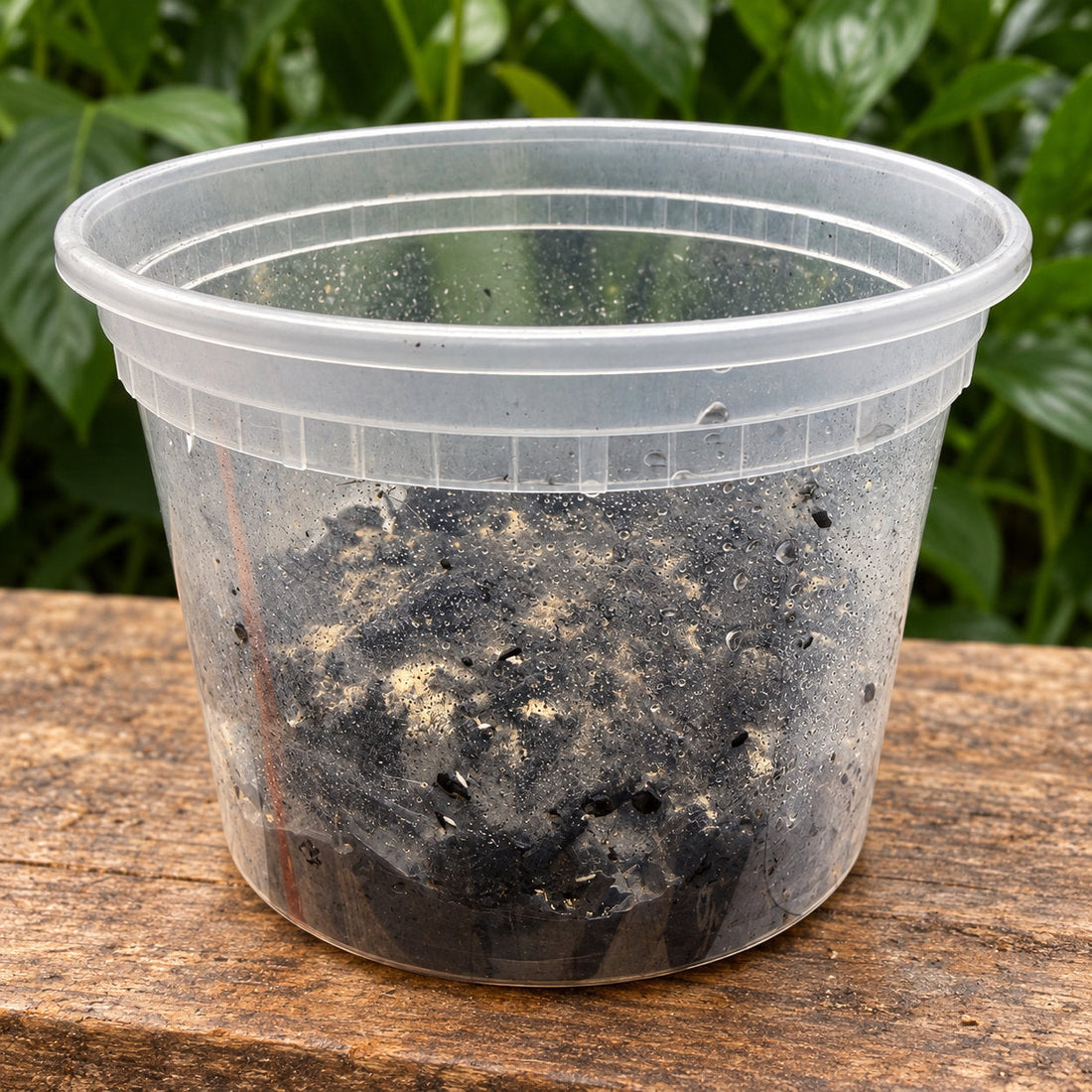
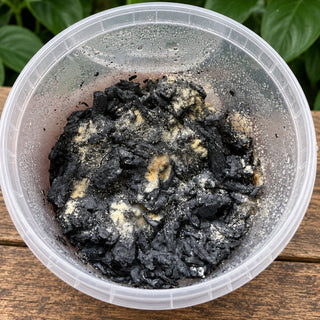
The only thing in the catalogue you buy once. One culture is a complete founding population — it is all female and breeds without mating. It ships on a slab of lab-grade plaster of Paris, which is what makes them easy to see and easy to get out.
$15.00
Free Shipping for all orders over $30
If something's wrong when it arrives, file a report within 72 hours of delivery for a replacement or store credit.
By placing your order you agree to our Shipping Policy and Live Delivery Guarantee.
How much, and how often
One culture seeds several standard pots or one mid-size enclosure — and that is the whole intervention. There is no dose to get right, no schedule, and nothing to reapply.
More about this dose
The three things people ask once they have their size. Open any of them.
Why more than one round?
Putting it out
- Tap the container. They jump when disturbed — small, white and easy to spot against the dark slab. This is one of the few things we sell where you can see the beneficial without a loupe.
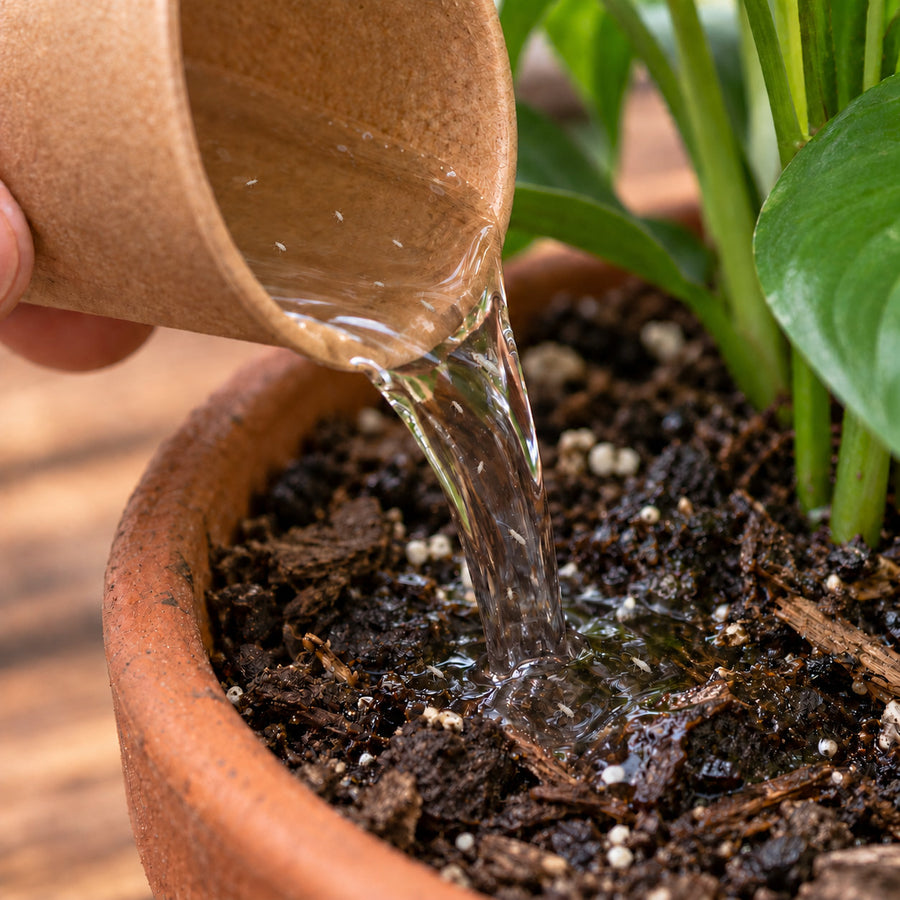
- Float them off, or knock them out. Add water to the container, wait a minute and pour off the top — springtails are hydrophobic and rise. That is the standard harvest method and it spreads them thin, which is what you want. Or tap the container over the pot and knock them straight out. Either way the plaster slab stays in the container.
- Feed once, if there is nothing to eat. A pinch of brewer's yeast, a couple of grains of uncooked rice, a scrap of mushroom. Soil with visible mould or real leaf litter already has dinner covered.
- Keep it moist and let it run. Establishment takes a few weeks and looks like very little while it is happening. You will start noticing them at night, on the surface, after a watering.
- Ongoing: in an established terrarium, nothing — the enclosure feeds them. In plain potting soil with little organic matter, a pinch of yeast or a rice grain every few weeks keeps the population up.
Everything else is optional. Get these four and the release has done what it can.
A cleaner way
On a display plant, tip small piles into bio-boxes or paper cups hung in the branches instead of dusting the foliage. Same dose, nothing visible on the leaf.
Is this the right beneficial for your problem?
Five questions, in the order a grower actually asks them: what have you got, is this the answer to it, what will it eat, how does it do the killing, and will it survive your room.
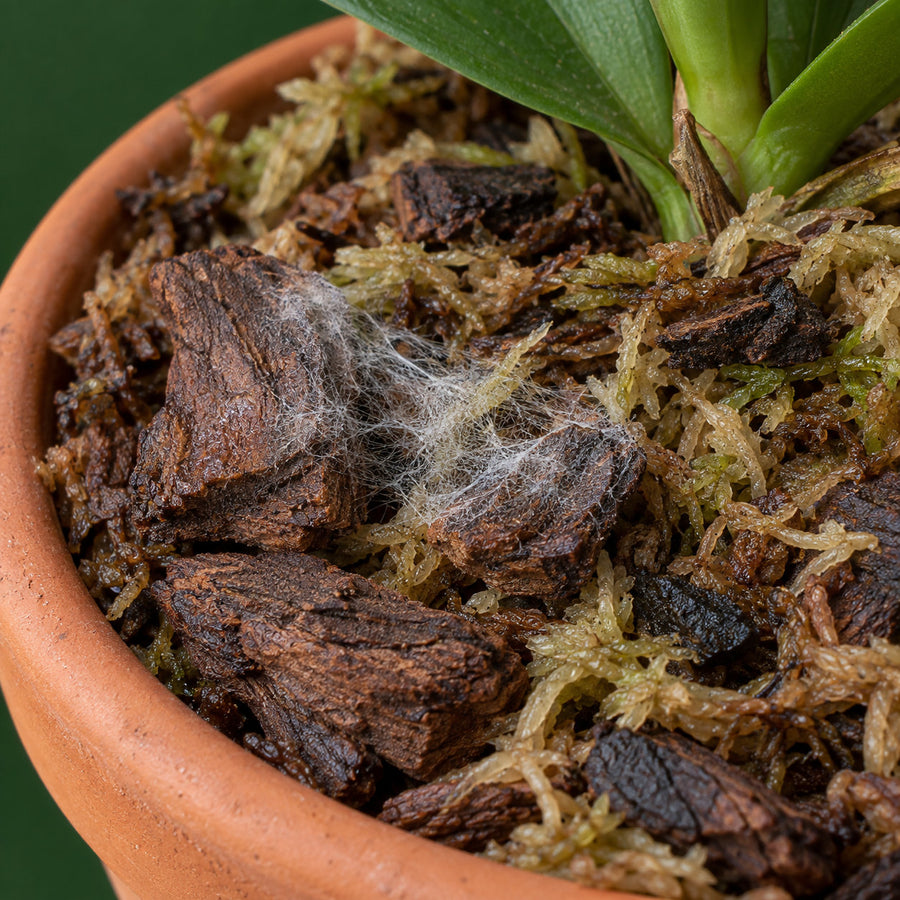
Is this your problem?
Springtails do not hunt anything, so there is no pest on this page. What they consume is what is breaking down in the top half-inch of your substrate.
White fuzz on the soil surface. Green film on the inside of the pot. Undecomposed bark and coco that never quite finishes breaking down. Agar residue on a deflasked plantlet under a dome. Frass and shed skin and uneaten feeder insects in an enclosure. All of that is dinner.
They process the material that shows up before a pest problem does, and the material left behind after one. Maintenance staff rather than a response — there is no infestation to time this against, and no window where they are useful and then are not.
Then: are springtails the right answer to it?
Choose this if
Choose springtails for a prop box, a sphagnum or semi-hydro setup, a chunky bark mix, a bioactive terrarium, or tissue culture hardening off under a dome — anywhere humidity is constant and organic matter is breaking down. It is the least demanding thing we sell: nothing to mix, nothing to spray, no dose to get right, no schedule, and nothing to reapply. One culture is a complete founding population, because Folsomia candida is parthenogenetic — all female, reproducing without mating.
Choose something else if
They are not fungus gnat control. The overlap looks convincing — same soil layer, some of the same fungus — but competing for food does not reliably suppress a gnat population, and springtails do not feed on gnat larvae. And they cannot share a pot with Stratiolaelaps scimitus, rove beetles, or any other soil-dwelling predator: springtails are prey, and the predator wins.
What it eats, and what it leaves alone
Folsomia candida is the designated test organism in ISO 11267, the international standard for measuring how soil contaminants affect soil fauna. A strange credential for something going into a Monstera — but it means this species has been studied harder than most of the plants you own.
How it works
What it does in the substrate, what it does for the plant, and what that leaves you looking at.
It grazes the top half-inch
A 1 to 2mm wingless arthropod, white and soft-bodied, that jumps when startled using a spring-loaded appendage under its abdomen. It lives in the surface layer and eats what is decomposing there. It has been doing this for roughly 400 million years.
Nothing, directly — and that is the point
They do not touch living plant tissue or roots. What they do is keep the decomposition layer turning over, which is why the conditions that make cuttings root — constant humidity, constant organic input — stop also being the conditions that grow surface mould.
A surface that stays clean
No white fuzz coming back between waterings, no green film building on the pot wall. You will start noticing the springtails themselves at night, on the surface, usually just after you have watered.
There is no failure mode here beyond letting the substrate dry out. Moist and never saturated, and they hold indefinitely. A pot that goes fully dry between waterings loses its population.
Will it work in your room?
Two things. If the pot is already running Stratiolaelaps scimitus or rove beetles, springtails will be eaten — give them separate pots. And if what you actually want is fungus gnat control, this is not it: that is scimitus or Sf nematodes, and we would rather say so than take the order.
After you put them in
The three things everyone asks once the container is open.
Getting them out of the container, fed, and still alive
These are the questions that actually come in, answered properly.
Float them off, or knock them out
It lives on lab-grade plaster of Paris, and that is deliberate. The slab is cast into the bottom of the container, and it earns its place twice over: a 1–2mm white springtail is easy to see against a dark surface, and it is easy to get them off one. The slab itself stays in the container — nothing about the plaster goes into your pot. Two ways to get the springtails out, both fine. Float them: add water to the container, wait a minute, and pour off the top. Springtails are hydrophobic and rise, which is the standard harvest method in the dart frog world and spreads them thin, which is exactly what you want. Or knock them out: tap the container over the pot and let them fall. Either way you are not leaving the colony behind — every springtail is female and breeds without mating, so what lands is a founding population on its own. Wide and thin establishes faster than all in one place.
Usually nothing
In an established terrarium, nothing at all — the enclosure feeds them. Soil with visible mould, or real leaf litter, already has dinner covered. Where they need help is plain potting soil with little organic matter in it: there, a pinch of brewer's yeast, a couple of grains of uncooked rice, or a scrap of mushroom every few weeks keeps the population up. Feed once on arrival only if there is genuinely nothing for them to eat.
Disturb the surface and look for movement
Absence of sightings is not evidence — they live under the surface and come up at night, so seeing none at noon means nothing. The real check is the same one you do on the container: disturb the surface after a watering and watch for the jumping. If there is nothing after a few weeks, work through the three things that actually end a colony — a substrate that dried out completely, a soil predator sharing the pot, or a room running too hot. Establishment itself takes a few weeks and looks like very little while it is happening.
Worth saying plainly: a container can look sparse on opening. Tap it and watch for movement, which is far easier to spot than the ones sitting still — and a good share of any culture at a given moment is eggs and juveniles rather than the adults you can pick out by eye. Movement means it is ready to go. The population grows after it lands, not before.
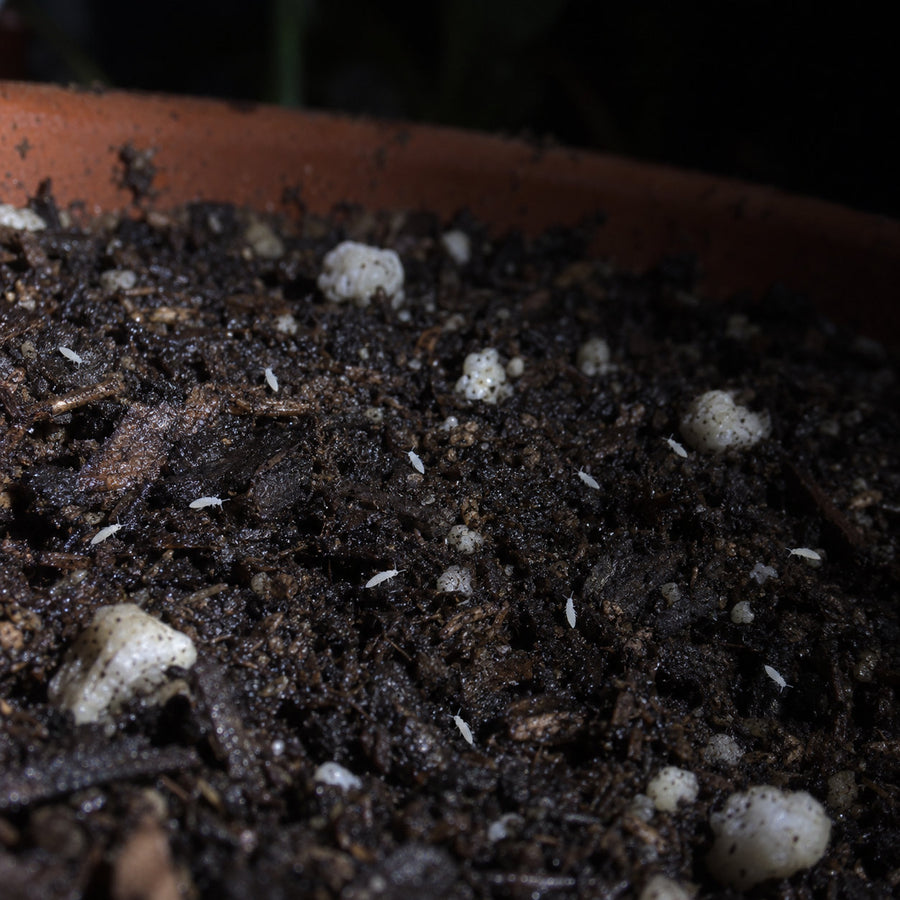
How you'll know it's working
Establishment takes a few weeks and looks like very little while it is happening. Then you start noticing them: at night, on the surface, usually just after a watering.
The other measure is negative. White fuzz that stops coming back between waterings, a pot wall that stops greening, a prop box that stops needing to be opened and wiped.
There is no reapplication and no schedule. One culture per enclosure is the whole intervention — which makes this the only thing in the catalogue you buy once.
Getting it to you
What is in the container, how it travels, and what happens if it arrives wrong.
What arrives
A living 8 oz culture on a slab of lab-grade plaster of Paris — adults, juveniles and eggs together. Sold by volume rather than by count, because the density shifts daily as eggs hatch.
Why lab-grade plaster of Paris. The slab is black to grey, solid, and cast into the base of the container. It is the floor the colony lives on rather than anything you plant, and it does two jobs for you. It makes them easy to see — a 1–2mm white springtail against that dark surface is one of the few beneficials in this catalogue you can assess by eye. And it makes them easy to get out — you float them off the top or knock them out over the pot, and the plaster stays behind. The pale cream patches across the slab are brewer's yeast — their food, not mould.
Room temperature, start to finish. Keep the container somewhere ordinary with the lid on and slightly loose, mist lightly if the slab looks dry, and deploy within a few days of arrival.
A container can look sparse when you open it. Tap it and watch for movement — far easier to spot than the ones sitting still, and a good share of any culture at a given moment is eggs and juveniles rather than the adults you can pick out by eye. Movement means it is ready.
When it ships, and when it lands
Shipping
We ship when they're ready to travel. Live orders go out Monday to Thursday — orders placed on or after Wednesday often ship the following Monday. If a colony needs a beat to peak, or we're propagating a fresh batch, yours might hold up to a week.
When it lands
No rush, and no fridge. Somewhere ordinary with the lid slightly loose is fine for a few days. When you are ready, float the springtails off the top of the container or knock them out onto the surface of several pots or one enclosure, feed once if there is nothing there to eat, keep it moist, and leave it alone.
About the ones that don't make it
Some of them die on the way. That is why we send more than you paid for.
A springtail is one to two millimetres long, and a culture ships in a container, in a van, for two days.
Roughly 15% will not survive that. We cannot prevent it, so we price it in: the volume on the label gets measured out, and then the cushion goes in on top of it.
Your 8 oz culture leaves here holding more than 8 oz of working population. The dead ones are already paid for — and unlike most of this catalogue, the survivors breed, so the number that matters is the one a fortnight from now.
If you can see them
Ladybugs, lacewing larvae, Orius — the minute pirate bug — and the beetles. Tip a few onto white paper and give them twenty minutes at room temperature before you judge anybody.
Cold insects are genuinely good at playing dead. The deceased have been known to get up and walk off the counter.
Still more than about one in seven not moving? Photograph them and file a report.
The photo is not us doubting you. It is how we tell a bad batch from a bad courier day from a mailbox that hit 104°F.
If you can't see them
Mites, nematodes, eggs — most of what we sell. This one sits in between: springtails are small, but at one to two millimetres and bright white against the dark slab they are one of the few beneficials you can assess without a loupe. Tap the container and watch for jumping.
You file the report and our entomologist takes you through the diagnostic instead — the tap test on dark paper, where the box sat, what your room was doing, and then what the pest is doing about ten days later.
Do not judge the container by how crowded it looks. A culture is mostly eggs and juveniles you will not pick out by eye at any given moment, and the population grows after it lands rather than before.
Seventy-two hours from delivery, either way, with your order number. Replacement or store credit, your pick.
What it does not reach
Three gaps this page has already named, and the beneficial that closes each one.
Springtails are not gnat control, and we will not pretend otherwise
The overlap looks convincing — same soil layer, some of the same fungus — and the claim is everywhere. But competing for food does not reliably suppress a gnat population, and springtails do not feed on gnat larvae. For gnats it is Sf nematodes for a fast knockdown, or Stratiolaelaps scimitus for standing cover — and note that scimitus eats springtails, so those two do not share a pot.
Everything above the soil line is still open
Springtails work the decomposition layer and nothing else, so a canopy predator is a clean pairing rather than a competing one. Foliar predatory mites, lacewings, ladybugs, Aphidius, Cryptolaemus and nematodes are all fine in the same pot. The only things that are not are the soil predators — scimitus and rove beetles — which eat them.
Two cheap things that make the rest work harder. Blue cards give you the dated count this page keeps asking you to read. Breeder's Blend is pollen and Artemia; it keeps the population fed through the lull when prey gets scarce.