



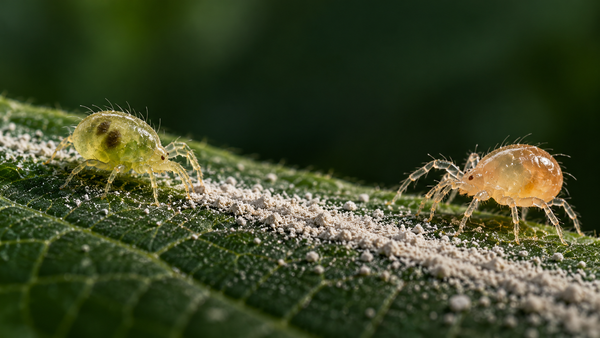


Predatory mites don’t have voices, wings, or antennae, yet they are constantly in communication. Their language is chemistry—fleeting signals released into the air or left behind on leaves. These cues are invisible to us, but they shape how mites hunt, cooperate, and ultimately keep pest populations in check.
Plants as the Loudspeakers
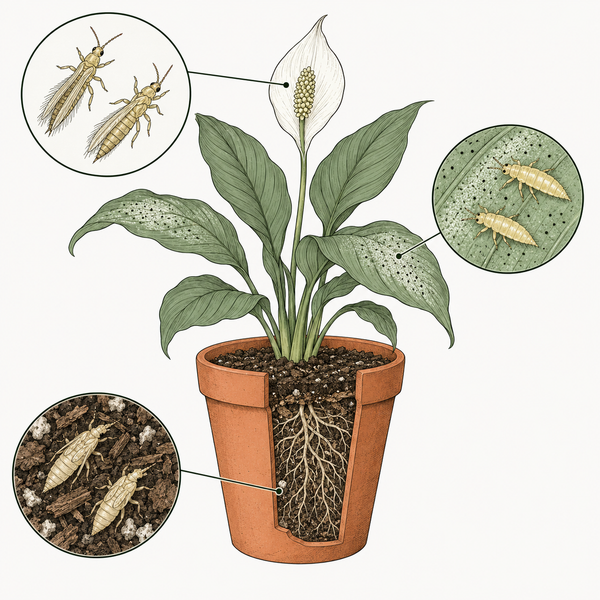
When pests like spider mites or thrips attack a plant, the damage doesn’t go unnoticed. Wounded plants release herbivore-induced plant volatiles (HIPVs)—chemical distress calls that waft into the air. Predatory mites like Phytoseiulus persimilis detect these signals and move toward the source, using the plant’s broadcast as a map.
From the plant’s perspective, this is a clever defense strategy. By signaling to predators, it increases the odds of pests being suppressed before the damage spreads.

Mite-to-Mite Messaging
Predatory mites also communicate directly with each other:
-
Trail markers discourage redundant hunting, guiding others to fresh ground.
-
Alarm pheromones scatter nearby mites when danger looms, keeping them from clustering in one vulnerable spot.
-
Aggregation signals recruit reinforcements when prey is abundant, concentrating their collective power against outbreaks.
Together, these signals allow mites to hunt more efficiently than they ever could alone.
Generalists vs. Specialists
Chemical communication differs depending on the type of predator:
-
Specialists like Persimilis are tuned to very specific signals, such as spider mite–related plant volatiles.
-
Generalists like Swirskii or Andersoni respond to a broader set of cues, from plant stress compounds to pest odors.
This distinction explains why some mites thrive in very targeted scenarios, while others adapt well to environments with multiple pest threats.

A Three-Way Conversation
It’s not just plants and predators. Pests themselves can detect and react to these signals, sometimes shifting where they feed or lay eggs to avoid detection. What results is a constant back-and-forth: plants send distress calls, pests adjust, and predators follow.
This chemical cross-talk creates a dynamic battlefield, where survival depends on who interprets the signals best.
Why It Matters
For anyone working with plants—whether in greenhouses, collections, or research—understanding these chemical conversations makes sense of what you see in the canopy. Predators don’t spread evenly across leaves because they’re following plant signals. Their numbers rise and fall not at random, but in response to invisible cues of food, danger, and opportunity.
The world of predatory mites may be microscopic, but the way they communicate is anything but small. It’s a reminder that even in the quietest corners of a greenhouse, conversations are happening—conversations that keep entire ecosystems in balance.
