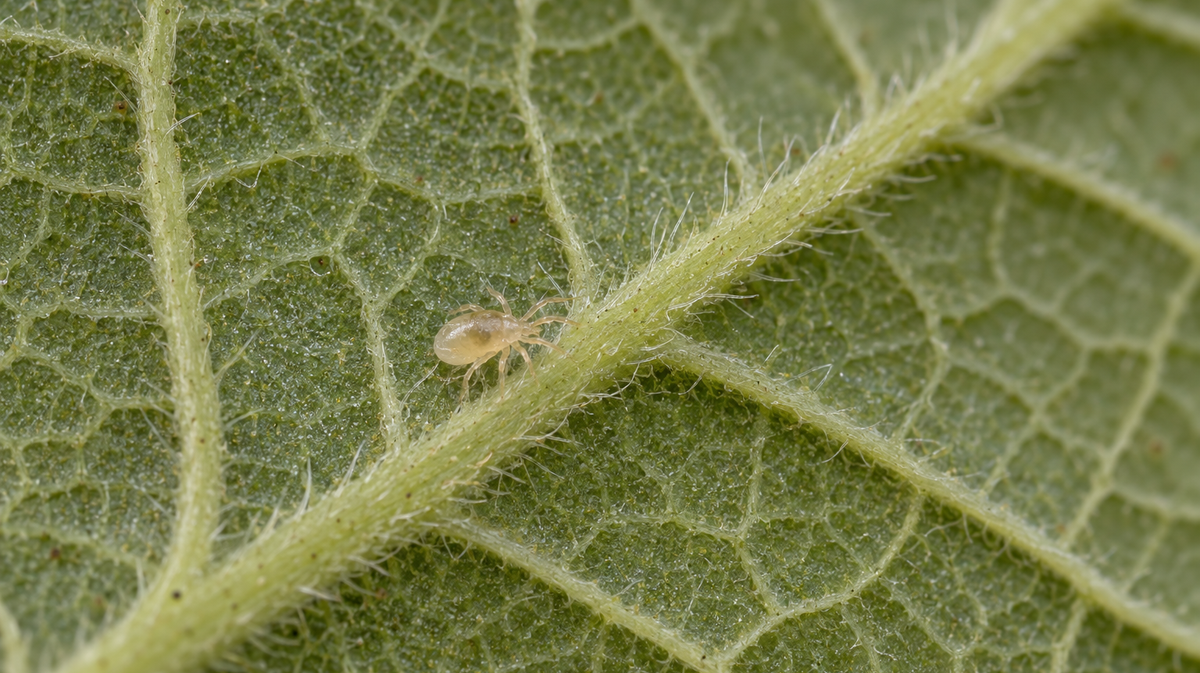
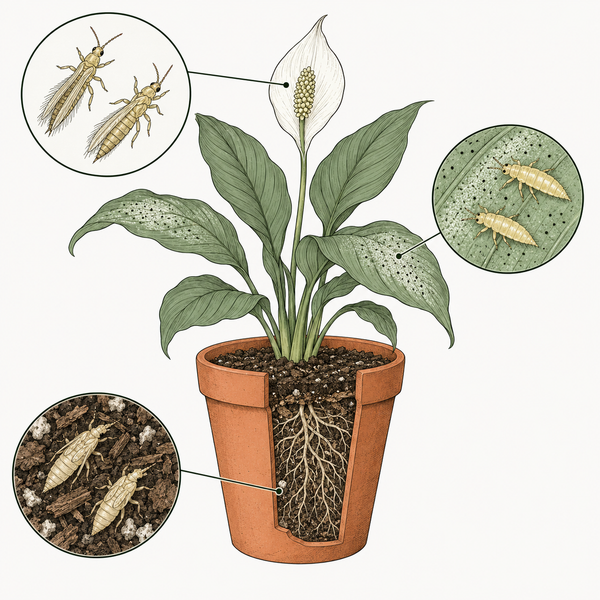
Macro looking into the throat of a pale flower, with two small slender pale thrips tucked into the crevice where the petals meet

Thrips Have Six Stages. Cucumeris Reaches One.

A thrips passes through six life stages and cucumeris can kill one of them. Second instars do not just survive the attack — they fight it off, and they destroy the predator's eggs on the way past. That single fact explains the lag, the reservoir, and most of the disappointment.

Read more
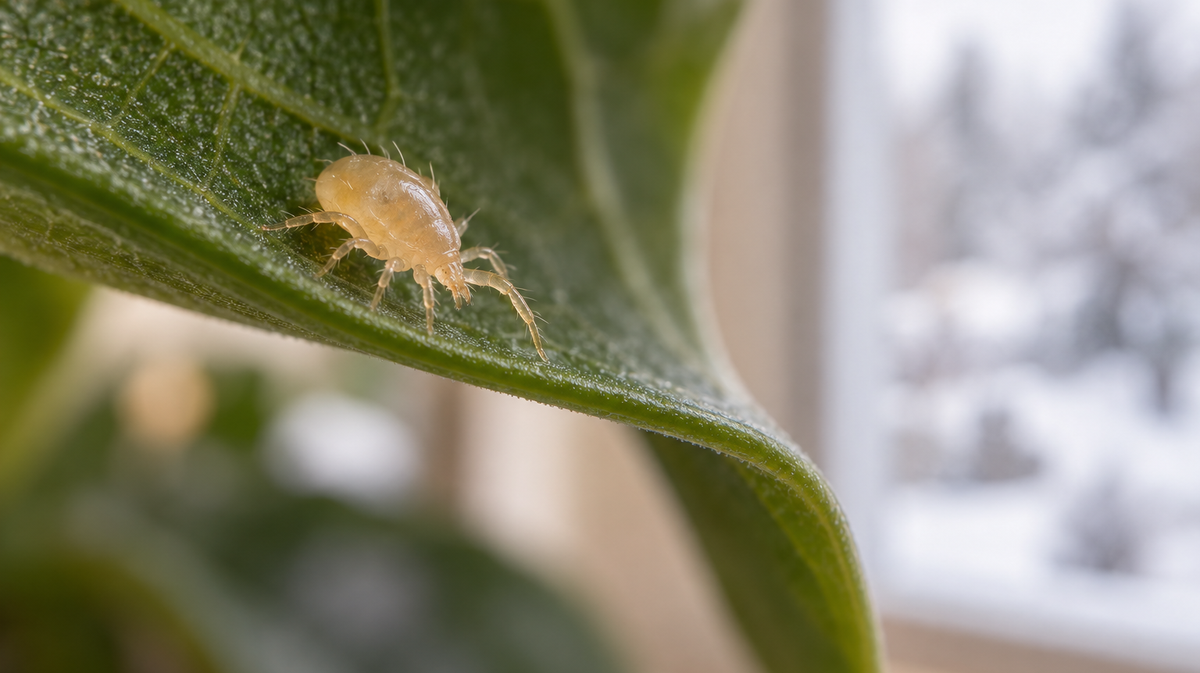
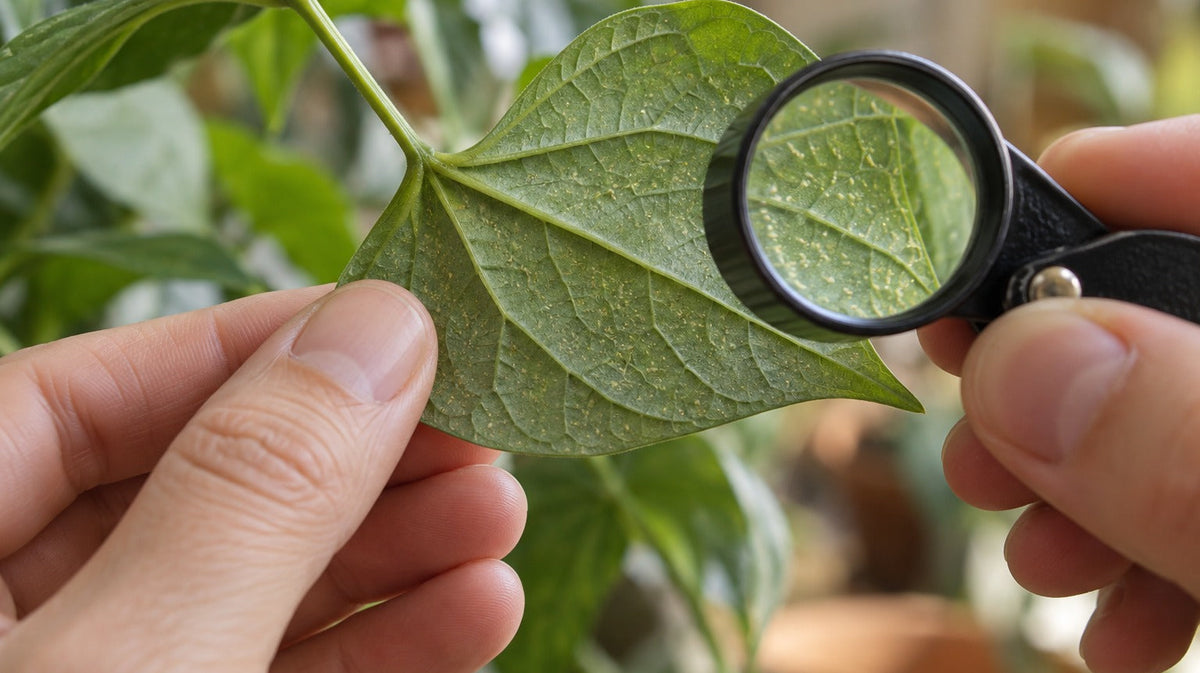
Extreme macro of a leaf underside showing veins and fine hairs, with a single pale tan predatory mite walking across the surface

Four Predatory Mites, Compared. Two of the Columns Are Guesses.

Every supplier prints the same four-column comparison table. We went and read the papers behind each cell. One column rests on unpublished company data, one species has never been trialled against thrips at all, and the humidity row is backwards. Here is that table with the guesses marked.

Read more
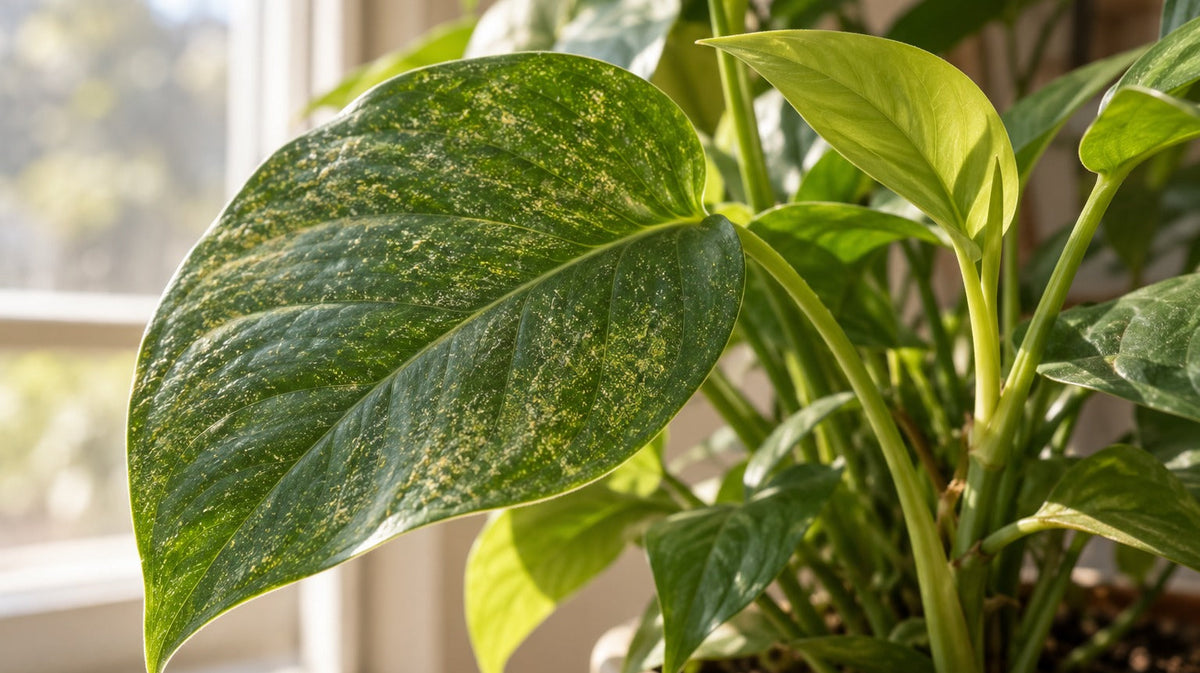
Close view of a houseplant leaf with irregular silvery patches where thrips have rasped away the tissue, scattered with tiny dark frass specks

Your Cucumeris Are Alive. Your Thrips Are Winning.

Your mites are alive. Your thrips are also alive. That combination has twelve documented causes, and what the mites are doing — where they are, what they are sitting next to — narrows it to one or two in about five minutes.

Read more
A paper predatory mite sachet hanging from a stem deep inside a houseplant's leaf canopy, shaded by the surrounding foliage

A Cucumeris Sachet Is a Placement, Not a Product.

Hang the same sachet on a bench instead of in the canopy and you have bought a different product — one that empties in a week and stops breeding. Where to put them, how many you need, and why nobody in the trade will tell you how many mites are actually in the box.

Read more
Pale granular carrier poured from a bottle onto dark potting substrate in a terracotta pot

You Bought the Wrong Predatory Mite. So Did Everyone Else.

The soil mite you buy for fungus gnats has been sold under another species' name for fifty years, and it's credited with a prey list the science only partly supports. Here's what it is, what it eats, where it lives in the pot, and which claims on the label survive contact with the studies.

Read more
Hands tipping a bottle of pale granular carrier over the dark soil of a houseplant

Stratiolaelaps Is Shake, Sprinkle, and Wait. Mostly Wait.

Soil mites are sold by the thousand and applied by the tablespoon, which makes it hard to know whether you've used enough. Here's where the numbers come from, how they convert into pots, and what the first month should look like on a sticky card.

Read more
A yellow sticky trap staked in a houseplant pot, covered in caught fungus gnats

Your Stratiolaelaps Didn't Fail. Something Else Did.

Almost every "the mites didn't work" story traces back to one of nine causes, and most of them were decided before the bottle was opened. Here's each failure mode, the mechanism behind it, and the fingerprint that tells them apart.

Read more
Fungus gnats in the air around a potted houseplant on a windowsill in low light

Four Ways to Kill a Fungus Gnat. Two of Them Fight.

No published trial has ever put predatory mites, beneficial nematodes, rove beetles and Bti head to head under one protocol. What exists is a set of single-agent results answering different questions — how fast, how long, which life stages, and which of them eat each other.

Read more
Close-up of the surface of dark peat substrate flecked with pale perlite granules

Fungus Gnat Larvae Live in One Inch of Soil. That's the Whole Game.

Soil isn't a material a predator moves through. It's a three-dimensional maze of pores, films and dead ends, and the size of those pores decides who hunts where. This is the physics underneath every soil biocontrol instruction you've ever been given.

Read more
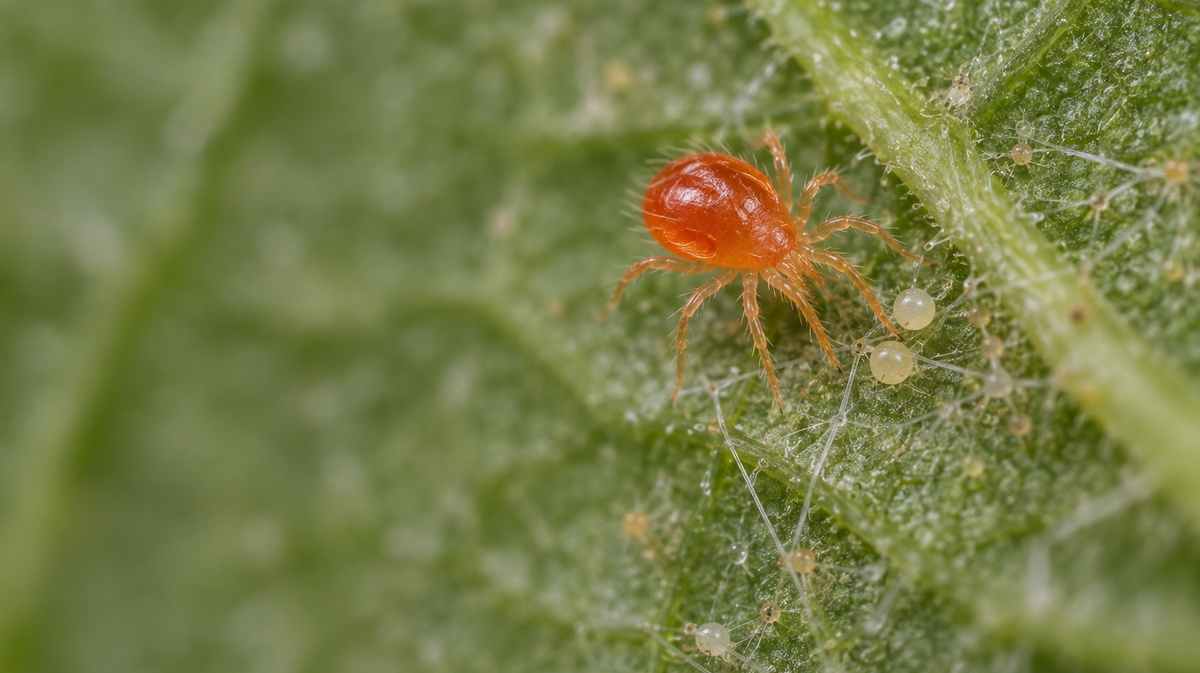
Amblyseius cucumeris on a leaf looking for a 1st instar thrips larva to eat

Cucumeris: Why It Works (and Why It Fails)

Karen Horn

The thrips mite everyone starts with, and the one most likely to end up alive on your plant doing nothing. What it actually eats, the humidity it actually needs, and how to work out whether your room is inside the band or just outside it — before you buy, rather than three weeks after.

Read more
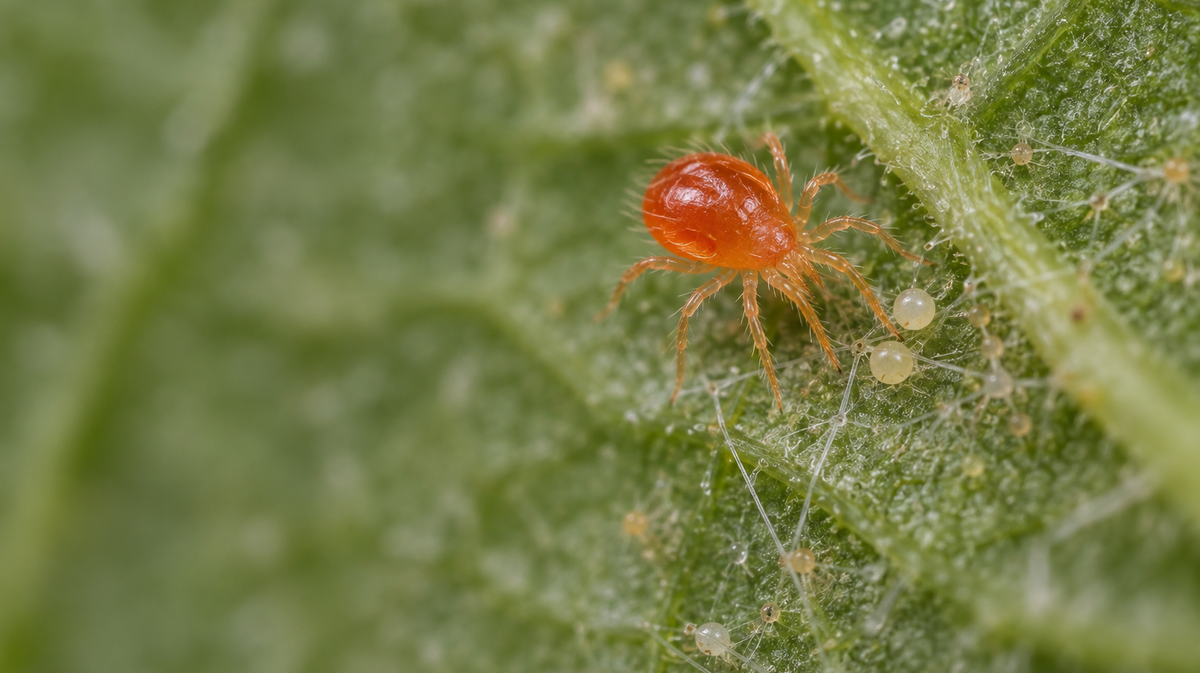
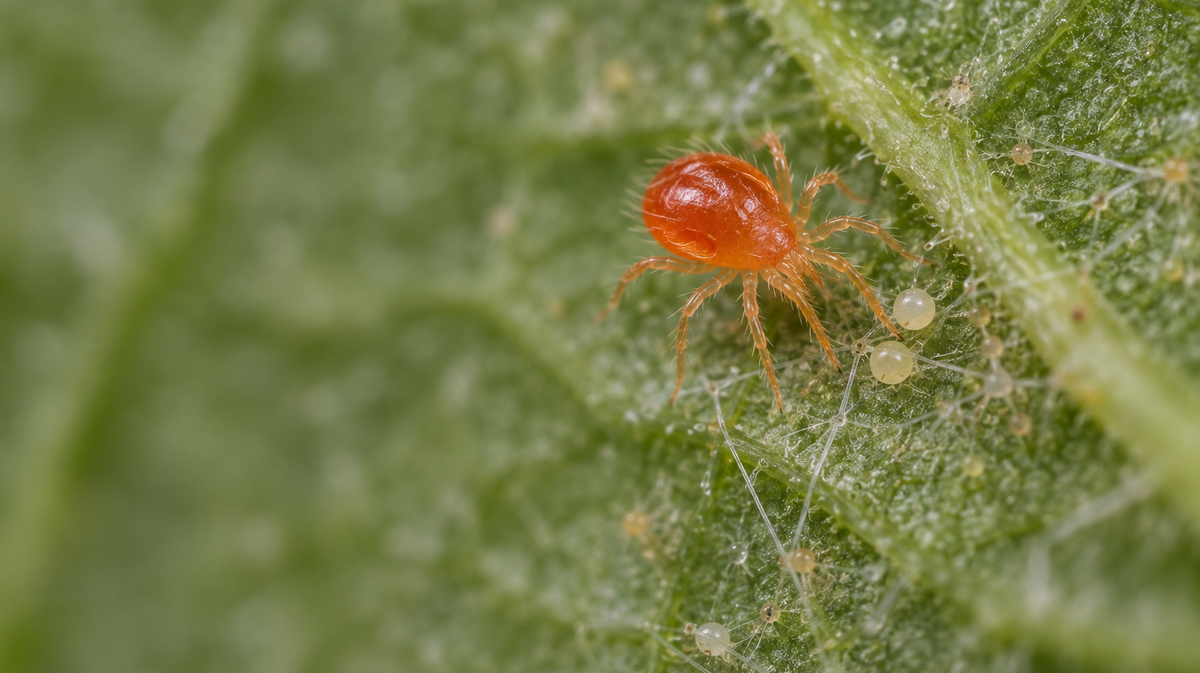
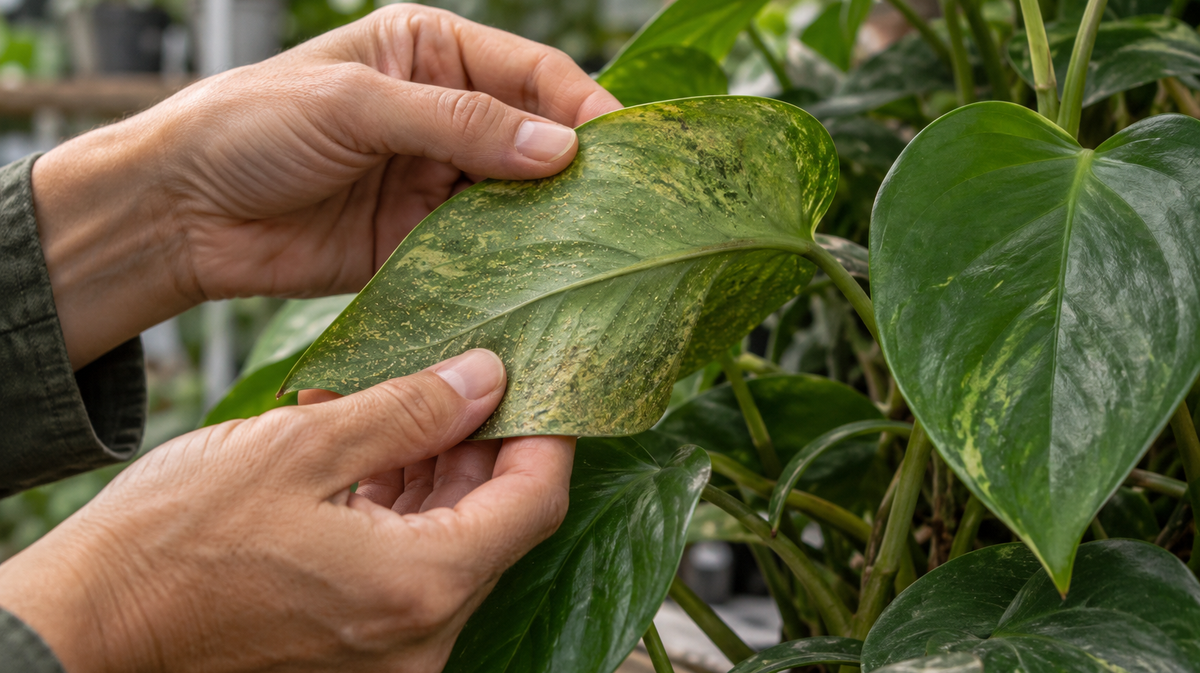
My Plant Has Webbing. Help.

My Plant Has Webbing. Help.

Karen Horn

Webbing on a plant isn't always spider mites — and the mite that causes the most damage indoors doesn't produce webbing at all. Here's how to tell what you're actually looking at before you treat.

Read more
Your Grow Light Isn't Killing Your Predatory Mites. Your Humidity Might Be.

Your Grow Light Isn't Killing Your Predatory Mites. Your Humidity Might Be.

UV gets all the attention, but it's rarely the problem under standard LEDs. The variables that actually determine whether predatory mites thrive in a lit grow space are humidity, heat, and photoperiod — and all three are fixable once you know what to look for.

Read more