



Before you remove the last leaves from beneath a shrub, consider how many things fit underneath one.
For a lady beetle, that layer can be winter shelter. A predatory mite may occupy a nearby crevice. The garden’s summer activity has become less visible, but some of the predators that helped control pests are still there.
In a cold climate, much of outdoor winter care involves preserving those places until activity resumes. In a mild climate, predators and pests may continue feeding through the season. Both are winter gardens. They need rather different advice.
Under the leaves and behind the bark
Winter changes more than the air temperature. Deciduous plants lose foliage, prey becomes less available, and exposed surfaces experience wind and large temperature swings. Small sheltered spaces can offer a different set of conditions from the open garden.
The predatory mite Neoseiulus fallacis, for example, can overwinter as adult females in protected places such as bark crevices. Research in orchards has also found overwintering populations associated with ground cover. A predator that hunts on foliage during the growing season may spend winter somewhere else entirely. [1] [2]

Leaf litter, standing stems, and sheltered soil also support overwintering insects, including some natural enemies of garden pests. Retaining suitable patches under shrubs or at bed edges gives those beneficials places to remain. A clear path and a less thoroughly tidied border can coexist quite happily. [3]
Habitat management still has to account for the plant’s health. Material associated with a diagnosed disease or a known overwintering pest may need removal. A blanket instruction to leave everything is no more useful than a blanket instruction to remove everything. Some of the winter residents are the ones you spent summer trying to evict.

They do not all spend winter the same way
Persimilis is a useful example of why “predatory mites survive winter” is too broad an answer. Phytoseiulus persimilis does not enter diapause, the seasonal developmental or reproductive pause used by many arthropods. It can remain active where climate and prey permit, including suitable greenhouses and mild outdoor conditions. That is different from being adapted to spend a freezing winter in an exposed garden. [4]
In contrast, short days can induce reproductive diapause in Orius insidiosus, a predatory bug. Survival through winter and reproduction during winter are separate biological achievements. A beneficial may survive the season without providing the level of pest suppression expected from a growing summer population. [5]
There is another distinction between a beneficial already living in the garden and one newly introduced. Resident populations may have responded to seasonal cues and moved into protected locations. Freshly released beneficials should not be assumed to share their preparation or shelter. Release decisions need the species’ requirements and the conditions it will encounter after release.

A green winter garden may still have hungry pests
In mild regions, spider mites and other pests can remain active through winter. Evergreen foliage and protected growing spaces may continue to provide food. If you see fresh injury, identify the pest and follow whether its activity is increasing instead of treating the season as proof that the problem must be dormant. [6]
Where temperatures remain suitable for a particular beneficial, releases can still have a role. Some programs need repeated introductions because the released predators do not establish a lasting population or cannot reproduce quickly enough to match continuing pest activity. A repeat release has a purpose when it addresses that shortfall. It does not become useful simply because another week has passed.
Check conditions across the coming days and nights. An unheated greenhouse may warm dramatically in sunshine and become cold again after sunset. A species’ ability to survive a low temperature also tells you less than you might hope about how much it will eat or reproduce there. In prolonged unsuitable cold, preserving habitat and managing affected plant material may be more useful than introducing additional predators.
Where another treatment is necessary, check its compatibility with the beneficial species in the plan, including effects from residues. “Natural” on a spray label does not explain what it does to a predatory mite. [7]
A safe journey needs somewhere suitable to end
Beneficials can arrive in good condition and still encounter unsuitable conditions when released outdoors. Packaging protects them during transport; that protection ends when they enter the garden.
Insulated shipping containers and cold packs manage temperature during transit. Controlled cooling reduces activity and metabolism, while insulation slows heat exchange. A winter journey can include warmer surroundings as well as cold ones, so the outside forecast alone does not describe conditions inside a package. Species, life stage, temperature, and duration of exposure all affect the outcome. [8]

Before arranging a winter release, consider both the journey and the release window. A mild delivery afternoon is not enough if the following nights fall outside the chosen organism’s suitable conditions. If weather closes that window, storage is not an unlimited extension of the plan: use the specific handling limits for that organism and product. Do not keep beneficials in a refrigerator until spring or improvise warming to compensate for a cold shipment. [9]
When the garden starts again
Spring does not restart every population on the same day. Plants resume growth at different times, pest activity changes with weather and host plants, and beneficials differ in when they become active or return. One warm weekend tells only part of that story.
As growth begins, revisit the plants that had problems the previous season. Look for the pest itself and new feeding injury, distinguishing these from damage left on older leaves. Keep track of the affected plants and the direction of change. Those observations help establish whether intervention is needed and which pest a release would need to target.
If a release is warranted, match the beneficial to that pest and the expected conditions over the following days and nights. There is no single spring date or outdoor temperature that works for every mite and insect. Continue to retain suitable shelter as the garden becomes active; clearing every refuge at the first warm spell can remove habitat just as its occupants begin to use the surrounding plants again.
The garden can have a tidy path without having an eviction policy.
For heated rooms and houseplants, read Your Indoor Beneficials Have Winter Requests.
Sources
- Cornell Biological Control — Neoseiulus fallacis.
- Orchard research on overwintering predatory mites and ground cover.
- Xerces Society — Leaf litter and natural pest control.
- UC IPM — Phytoseiulus predatory mites.
- Research on photoperiod and reproductive diapause in Orius insidiosus.
- UC IPM — Spider mites.
- UMass Extension — Integrated pest management and pesticide compatibility.
- Casada, Ram, and Flinn — Thermal design of shipping containers for beneficial insects.
- North Central Regional Extension — Biological control of insects and other pests of greenhouse crops.
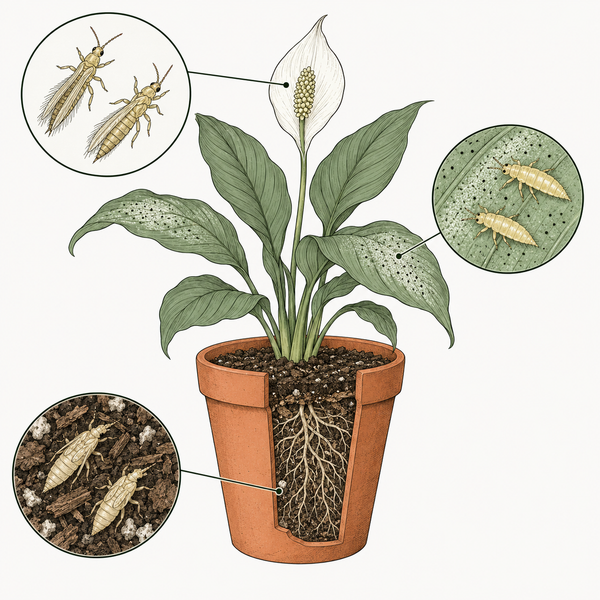
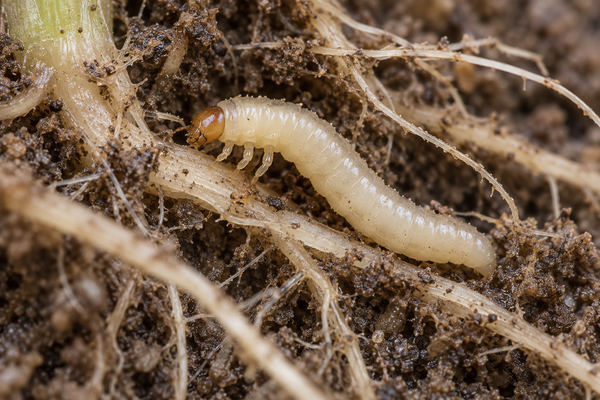
AI-generated photographs and conceptual illustrations. Organisms in the shelter illustration are enlarged and not shown to a shared scale.
