



There are worse things than a neighbor who forgets your name. A neighbor who considers you lunch, for instance.
Among young Phytoseiulus persimilis, familiarity can influence who gets eaten. In cannibalism experiments, older young mites—the feeding nymphs—were more likely to eat unfamiliar larvae, the first stage after hatching, than larvae they had encountered earlier. [3] Growing up together offered an advantage, though clearly the neighborhood had other problems.
These predatory mites normally hunt spider mites, but the other Persimilis around them are part of their lives too. Earlier encounters can affect more than cannibalism: adult females also make choices about where to settle and lay eggs based on familiar company. [1]
Researchers offered females a choice between prey patches occupied by familiar or unfamiliar groups. The females preferred familiar groups and laid more of their eggs there. That preference persisted across the prey-density differences tested, so the choice was not simply a matter of picking whichever patch had more food. [1]
“Familiar” meant mites encountered before; they did not have to be relatives. A separate test offered group odors and found that females were more attracted to familiar-group odor. [1] They could distinguish the company before joining it.

Knowing the neighbors changes the search
Another study followed familiar and unfamiliar groups across connected leaflets and whole plants with limited prey. Familiar groups explored more, left their original prey patch earlier, occupied more leaves, and depleted prey faster. Familiar juveniles also survived better in the experiment. [2]
The authors interpreted the movement and feeding patterns as better coordination of food use. No hunting committee is required: changes in individual behavior can alter how a group spreads out and uses a patch.
A familiar group was therefore doing more than remaining close together. Its members moved into other patches sooner. Knowing the neighbors could change when a mite left them. [2]
The first introductions happen early
But how does another mite become familiar in the first place? Experiments place an important part of that process just after hatching, while Persimilis is still a nonfeeding larva. Encounters during this period influenced later behavior after the mite molted into a feeding nymph. [3,4]
That timing helps explain the cannibalism result we started with. The mites encountered one another before they began feeding; later, as nymphs, they preferentially ate unfamiliar larvae. [3] The effect of an early introduction carried across a molt and into a stage when the young predator could act on its appetite.
Females in the same research adjusted the clustering of their eggs according to their relatedness to eggs already present. Egg placement could thus affect which larvae met during that sensitive period. [3] The mother influenced the setting in which familiarity developed, without needing to remain there and introduce everyone.
Familiarity is part of the habitat
A patch of prey contains food, competitors, and a history of encounters. The experiments separated those influences so researchers could ask what earlier association changed. Their results give us reasons to look beyond the number of predators on a leaf and consider how those predators have experienced one another.
Those laboratory results do not establish that every familiar group will control an infestation faster in every home. They do show why counting mites alone cannot tell us everything about how a group will behave.
For a mite, knowing the neighbors can influence where to settle, when to leave, and whether the smaller mite nearby becomes lunch. Some introductions are worth making early.
Sources
- Muleta & Schausberger (2013). Smells familiar: group-joining decisions of predatory mites are mediated by olfactory cues of social familiarity.
- Zach et al. (2012). Social familiarity governs prey patch-exploitation, -leaving and inter-patch distribution of the group-living predatory mite Phytoseiulus persimilis.
- Schausberger (2005). The predatory mite Phytoseiulus persimilis manipulates imprinting among offspring through egg placement.
- Schausberger & Croft (1999). Activity, feeding, and development among larvae of specialist and generalist phytoseiid mite species.
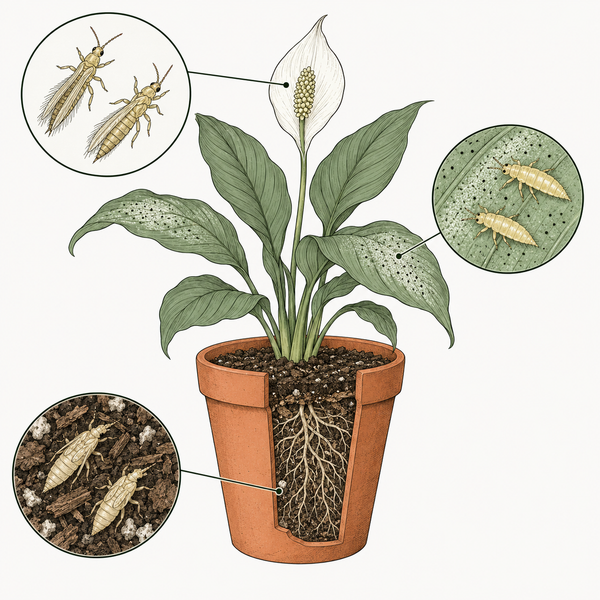
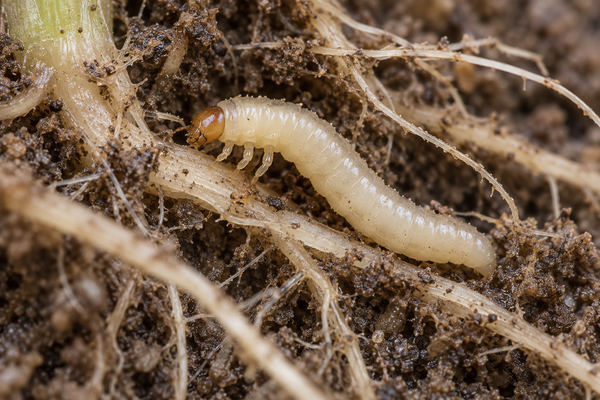
The header and teaching illustrations are AI-generated, not field photographs. Conceptual scenes enlarge specimens and simplify their surroundings; they are not identification measurements or drawings of numerical results.
