
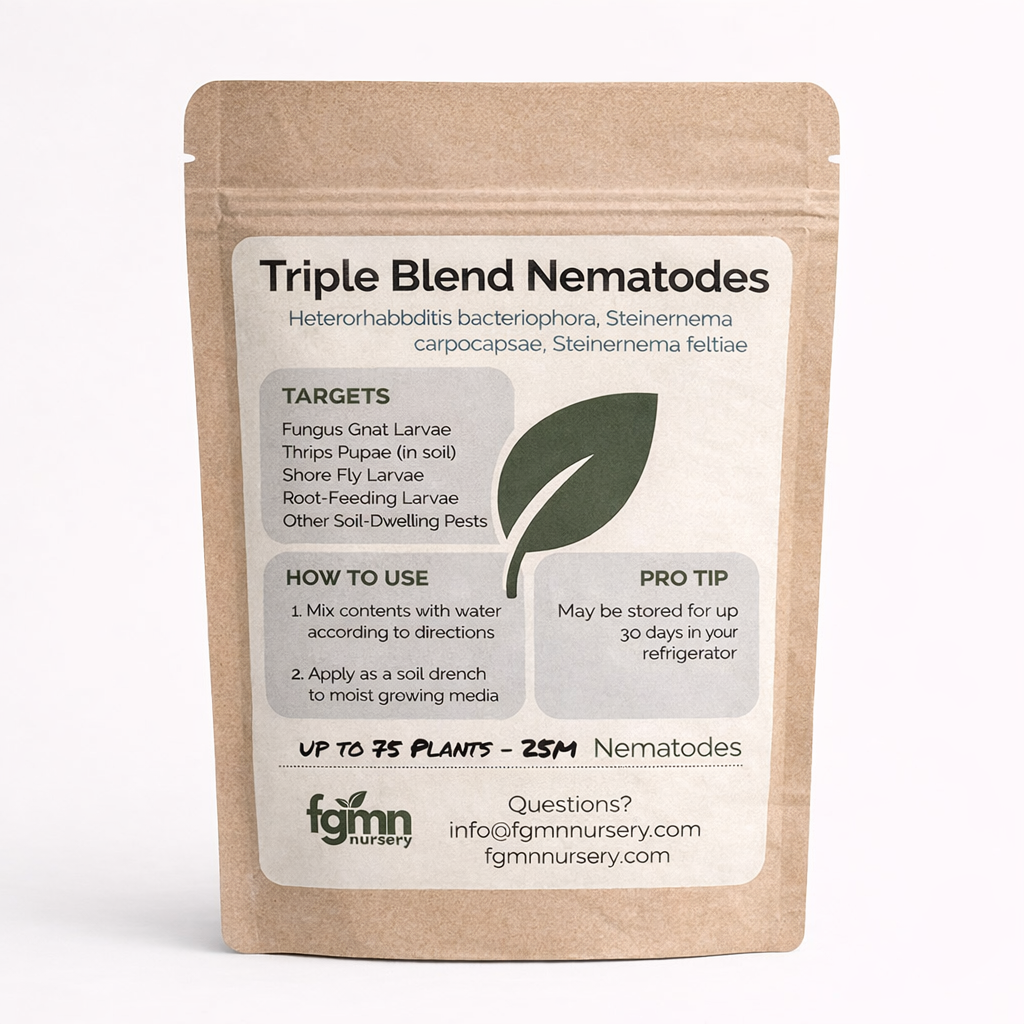


Generalist · Soil Pests
Triple Blend Nematodes for Broad-Spectrum Soil Pest Control
Three species, three soil depths, one drench — for when you know something is down there but not what.
$40.00
Free Shipping for all orders over $30
If something's wrong when it arrives, file a report within 72 hours of delivery for a replacement or store credit.
By placing your order you agree to our Shipping Policy and Live Delivery Guarantee.

How much, and how often
Two questions — how bad it is, and how many plants. You get a size and the dates to put it out.
How bad is it?
Pick the one that sounds like your room. If you are between two, take the higher.
How many pots?
Six-inch pots. Count a large specimen with a dense canopy as three or four.
Your size and schedule
More about this dose
The three things people ask once they have their size. Open any of them.
Am I light, moderate or heavy?
Light
- A few gnats lifting off when you water
- One or two on a yellow card a week
- You are treating ahead of the season
Moderate
- Gnats up whenever you disturb a pot
- Something chewing at the surface as well
- Cards filling steadily between checks
- More than one kind of damage, or none you can identify
Heavy
- Gnats in the air without anyone touching a plant
- Seedlings cut off at the base overnight
- Turf yellowing and lifting where the roots have gone
- Plants wilting with nothing visible on them
This is the pack for an uncertain diagnosis, so if you are torn between two levels, take the higher one — the blend splits three ways by design, which means any single depth gets a third of what a pure species would put there.
The curative rate is not a bigger pack — it is the same pack over half the area, repeated. Spreading a preventative dose across an active infestation is the classic way to spend the money and not fix the problem: the nematodes are real, there are simply too few per square foot to meet anything.
Why more than one round?
Putting it out
- Dechlorinate the water. Tap water stood out overnight, or a dose of dechlorinator. This is the step people skip and then wonder about.
- Water every pot first. Dry media channels the solution straight out of the drainage holes and takes the nematodes with it.
- Dissolve the carrier in a bucket and stir vigorously to break up clumps. There is no ratio to hit — the carrier is a measuring aid, not a recipe, so a thick paste or a full watering can both work. Mix only what you will use within a few hours.
- Pull every filter finer than 50 mesh out of a sprayer, or you will spray water and never know. Apply in the evening or on a cloudy day — direct sunlight kills them instantly.
- Agitate as you go, then water in. They sink within minutes, so stir between pots. Water again straight afterwards to carry them down, and keep the soil moist for a fortnight.
Everything else is optional. Get these four and the release has done what it can.
A cleaner way
On a display plant, tip small piles into bio-boxes or paper cups hung in the branches instead of dusting the foliage. Same dose, nothing visible on the leaf.
The failure is forgetting. Very few programs fail because the mite underperformed. They fail in week five, when the plants look fine, the reorder does not happen, and the population holding the line ages out with nothing behind it.
A schedule is the same decision, made once. A pack when it looks bad, then another when it looks bad again, is already a rhythm — just one you have to remember at the exact moment the plants look fine.
Change the size or the frequency, skip a box, pause or cancel from your account at any time.
Is this the right beneficial for your problem?
Five questions, in the order a grower actually asks them: what have you got, is this the answer to it, what will it eat, how does it do the killing, and will it survive your room.
Is this your pest?
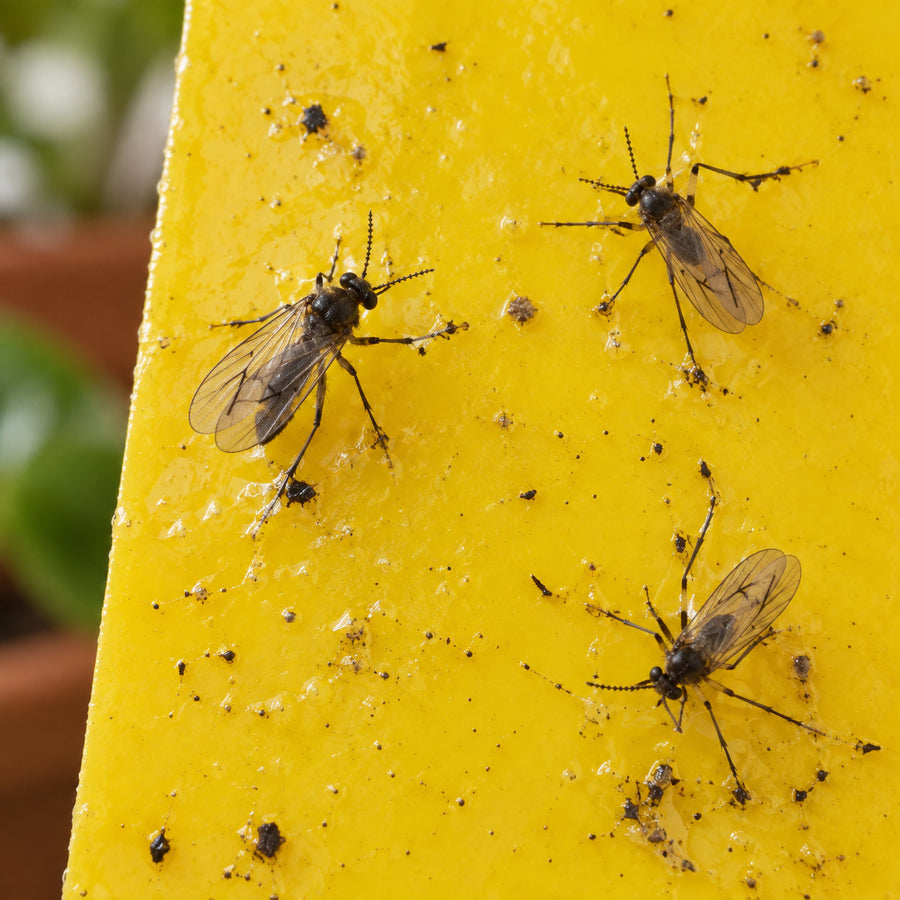
This is the one for when you know something is in the soil but not what. Three species, three depths, one drench.
Soil pests do not all live at the same depth, which is why choosing a single nematode species means committing to a diagnosis. Fungus gnat larvae and thrips pupae sit in the top inch. Fleas, cutworms and webworms cross the surface. Beetle grubs and root weevils are six inches down and never come up.
The signs read differently too: gnats lifting off a pot when you water, seedlings cut off at the base overnight, a lawn yellowing in patches and lifting like a carpet. If more than one of those is happening, or you are honestly not sure which it is, this pack covers all three without asking you to choose.
Then: is the Triple Blend the right answer to it?
Choose this if
Choose the blend when you have more than one pest, or no confirmed identification. Sf patrols the root zone, Sc ambushes anything mobile near the surface, and Hb cruises deep after grubs — so every depth is covered in a single application. It is the best general preventative we sell for lawns and gardens, completely harmless to mammals and earthworms, and there is no re-entry interval.
Choose something else if
If you have identified one pest, a single species puts every nematode you paid for on that job and usually costs less. The three species also do not share a temperature range, so at any given soil temperature one or two of them are working and the others are not — which is the honest trade you are making for the breadth.
What it kills, and what it won't
Earthworms are safe. Beneficial nematodes are specific to insect pests, and an earthworm is both far larger and biologically a different proposition — they are ignored.
How it works
What it does to the pest, what it does in the soil, and what that leaves you looking at.
Two ways in, one result
The two Steinernema species enter a pest through its natural body openings; Heterorhabditis bores straight through the cuticle. Either way they release symbiotic bacteria and the host dies within 24 to 48 hours. No poison on your soil, no residue, nothing to become resistant to.
Three depths at once
Sf works the root zone, Sc holds the top inch and thatch, Hb tunnels six to eight inches down. A single-species drench covers one of those three bands; this covers all of them, which is the entire argument for the blend.
What stops happening
Adult gnats keep flying for a week because those are already out of the soil. Grub damage stops before anything above ground looks different. The measure is trap counts falling and new damage ceasing, not a change you can see tomorrow.
The three species do not all work at once. Sf covers the cool end at 50–80°F, Sc runs 60–85°F, Hb wants 65–90°F. At any given soil temperature some of the pack is working and some is waiting — which is the cost of not having to identify the pest.
Will it work in your soil?
Three things decide whether this works. Dechlorinated water — chlorine and chloramine kill nematodes outright. An evening or early morning application, because direct sunlight kills them instantly. And soil you can keep moist for a fortnight afterwards. No high-nitrogen fertiliser, fungicide or herbicide within three days either side.
About the Triple Blend
Three nematode species in one pack, because soil pests do not all live at the same depth. Millions of live infective juveniles in something that looks far too small for the number on the label.
New to beneficials?
Five things that catch almost everyone the first time.
After you apply it
What actually changes, in what order, and why the air clears last.
How you'll know it's working
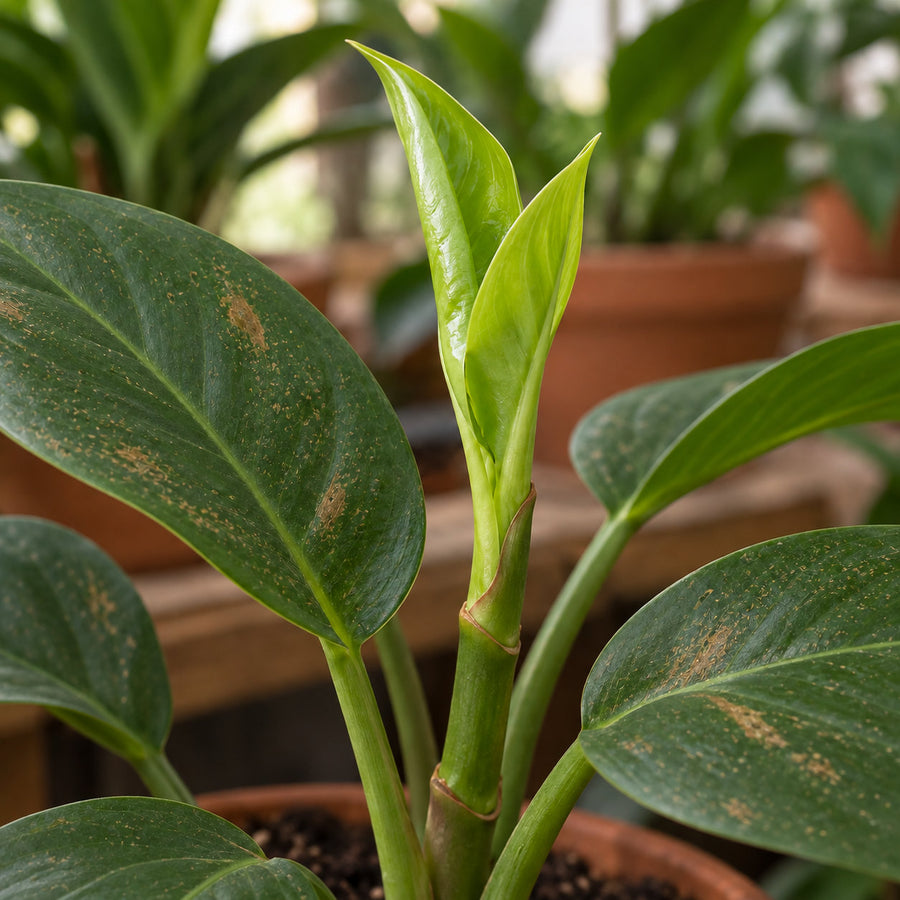
Adult gnats keep flying for about a week, and that is not a failure — those are already out of the soil and beyond anything you pour on it.
What changes first is recruitment: no new adults emerging. Then trap counts fall. Grub damage stops before anything above ground looks any different, and plants that were wilting for no visible reason quietly stop.
In most climates the nematode population drops away over winter or through a hot dry summer, so outdoor protection is a seasonal job — spring and autumn — rather than a permanent one.
Getting it to you
What is in the pack, how it travels, and what happens if it arrives wrong.
What arrives
Millions of live infective juveniles on a moist inert carrier, shipped dormant. It looks like a dusty paste or powder, and it becomes active only when mixed with water.
The pack will look far too small for the number on the label. That is normal — a nematode is microscopic, and there is nothing to see in there.
Into the fridge on arrival. 38–42°F, and never the freezer — that is the one mistake there is no recovering from. A warm package or a melted ice pack is not a problem; a carrier that has dried out, or gone the consistency of toothpaste, is worth photographing and reporting.
When it ships, and when it lands
Shipping
We ship when they're ready to travel. Live orders go out Monday to Thursday. If a colony needs a beat to peak, or we're propagating a fresh batch, yours might hold up to a week. All mites and insects ship 2-day or Overnight depending on what's best for them.
When it lands
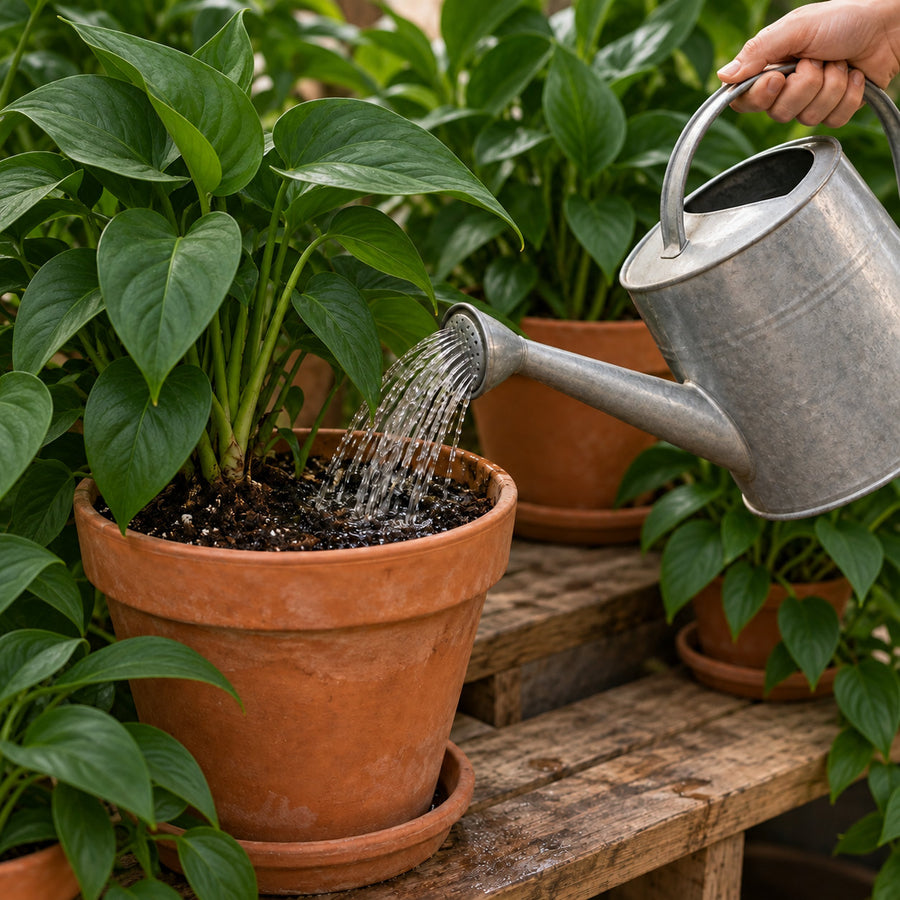
Fridge first, then an evening job. Water the soil thoroughly beforehand. Dissolve the carrier in a bucket of dechlorinated water and stir vigorously to break up clumps. Drench with a watering can or a hose-end sprayer set to free flow, every filter finer than 50 mesh removed, stirring every few minutes because they sink. Then water again immediately, and keep the soil moist for two weeks.
About the ones that don't make it
Some of them die on the way. That is why we send more than you paid for.
A nematode is microscopic, and it ships dormant in a pouch, in a van, for two days.
Roughly 15% will not survive that. We cannot prevent it, so we price it in: the number on the label gets counted out, and then the cushion goes in on top of it.
Your 25-million pack leaves here holding more than 25 million. The dead ones are already paid for.
If you can see them
Ladybugs, lacewing larvae, Orius — the minute pirate bug — and the beetles. Tip a few onto white paper and give them twenty minutes at room temperature before you judge anybody.
Cold insects are genuinely good at playing dead. The deceased have been known to get up and walk off the counter.
Still more than about one in seven not moving? Photograph them and file a report.
The photo is not us doubting you. It is how we tell a bad batch from a bad courier day from a mailbox that hit 104°F.
If you can't see them
Mites, nematodes, eggs — most of what we sell, and this one more than any of it. A pouch of carrier looks identical whether it holds 25 million live nematodes or none, and no photograph settles that. So we don't ask you to take one.
You file the report and our entomologist takes you through the diagnostic instead — the tap test on dark paper, where the box sat, what your room was doing, and then what the pest is doing about ten days later.
Two things here we can read from a photo: a carrier that has dried out, and one that has gone the consistency of toothpaste. Either of those, send us the picture.
Seventy-two hours from delivery, either way, with your order number. Replacement or store credit, your pick.
What it does not reach
Three gaps this page has already named, and the beneficial that closes each one.
A confirmed pest wants a sniper, not a shotgun
The blend earns its money when you do not know what is down there. If you have identified fungus gnats in indoor pots and nothing else, pure Steinernema feltiae puts every nematode you paid for on that one job, at the cooler temperature an indoor pot actually sits at — and it usually costs less.
Nematodes are the bomb; mites are the shield
Nematodes take out what is in the soil now and then die back — fast, complete, and finite. Stratiolaelaps released a fortnight later moves in and stays, living on debris when there is nothing left to catch, so the problem does not simply restart. Bomb first, shield after, is the sequence that ends it rather than repeating it.
One confirmed pest, one concentrated species
Turf lifting like a carpet, skunks digging, grubs under every square foot — that is a confirmed single problem, and pure Heterorhabditis bacteriophora puts the whole pack six to eight inches down where the grubs are, rather than splitting it three ways across depths that have nothing in them.
Two cheap things that make the rest work harder. Blue cards give you the dated count this page keeps asking you to read. Breeder's Blend is pollen and Artemia; it keeps the population fed through the lull when prey gets scarce.
Questions
Can I see them?
No. Beneficial nematodes are microscopic. You will not see them in the package or in the soil. The carrier material (powder/gel) is visible, but the worms are not.
Will they survive the winter?
Generally, no. In most climates, nematode populations will drop significantly over winter or during hot, dry summers. We recommend seasonal applications (Spring and Fall) for outdoor lawn protection.
Can I use a hose-end sprayer?
Yes! This is the easiest way to treat lawns. Set the dial to a high ratio (like 1:15 or "free flow") and remove the internal filter screen. If you leave the screen in, you will filter out the nematodes and spray only water.
Will they kill my earthworms?
No. Beneficial nematodes are specific to insect pests. They generally ignore healthy earthworms, which are much larger and have different biology.
Can I use fertilizer at the same time?
Yes, standard fertilizers are fine. However, avoid high-nitrogen chemical fertilizers or pesticides (fungicides/herbicides) within 3 days of application, as these can stress or kill the nematodes.
What if the package got warm during shipping?
Nematodes are tougher than people think, and a warm package is normal rather than a problem. Warmth speeds their metabolism up; it doesn't kill them. A melted ice pack is expected — the pack is there for humidity, not cooling. If it arrives melted, put them straight into the fridge and carry on.
What is worth reporting: a carrier that has dried out, or one that has gone the consistency of toothpaste after sitting in high humidity. Either of those, take a photo and file a report.