
Monitoring · Flying Pests
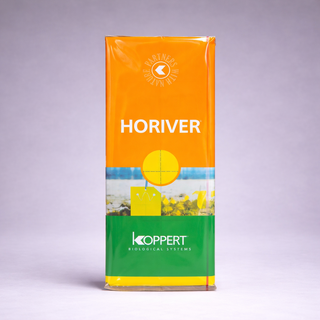
Horiver Professional Sticky Traps
You cannot manage what you cannot count — and most problems turn up on a card a week before they turn up on a leaf.
$11.00
Free Shipping for all orders over $30
If something's wrong when it arrives, file a report within 72 hours of delivery for a replacement or store credit.
By placing your order you agree to our Shipping Policy and Live Delivery Guarantee.
How many, and where
One card per 100–200 square feet to watch a room; one every 20 to 50 to trap a hot spot. Hang them two to four inches above the canopy, raise them as the plants grow, and replace every four to six weeks.
More about this dose
The three things people ask once they have their size. Open any of them.
Why more than one round?
Putting it out
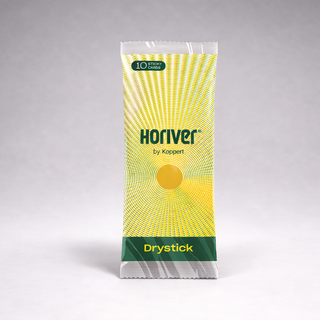
- Pick the color for the pest. Blue for thrips. Yellow for fungus gnats, whitefly, shore flies and winged aphids. White Dry for leafminers, and it is the only one you can leave up through a release of beneficial wasps.
- Write the date on it before it goes up. An undated card tells you nothing, because the comparison is the whole point.
- Handle it by the edges. The glue is exceptionally sticky; oil or alcohol takes it off your hands, water will not.
- Hang two to four inches above the canopy, and raise it as the plants grow. Add some near doors, intake fans and vents to intercept pests on the way in.
- Check weekly and write the number down. Same position, same day. Fifteen this week against forty last week is data; a card that looks busy is not.
- Take them down for a week when flying beneficials go out, then put them straight back up.
Everything else is optional. Get these four and the release has done what it can.
A cleaner way
On a display plant, tip small piles into bio-boxes or paper cups hung in the branches instead of dusting the foliage. Same dose, nothing visible on the leaf.
What they are for
Four questions, in the order a grower actually asks them: what is this for, which one do I need, what will it catch, and where does it go.
Why hang a card at all?
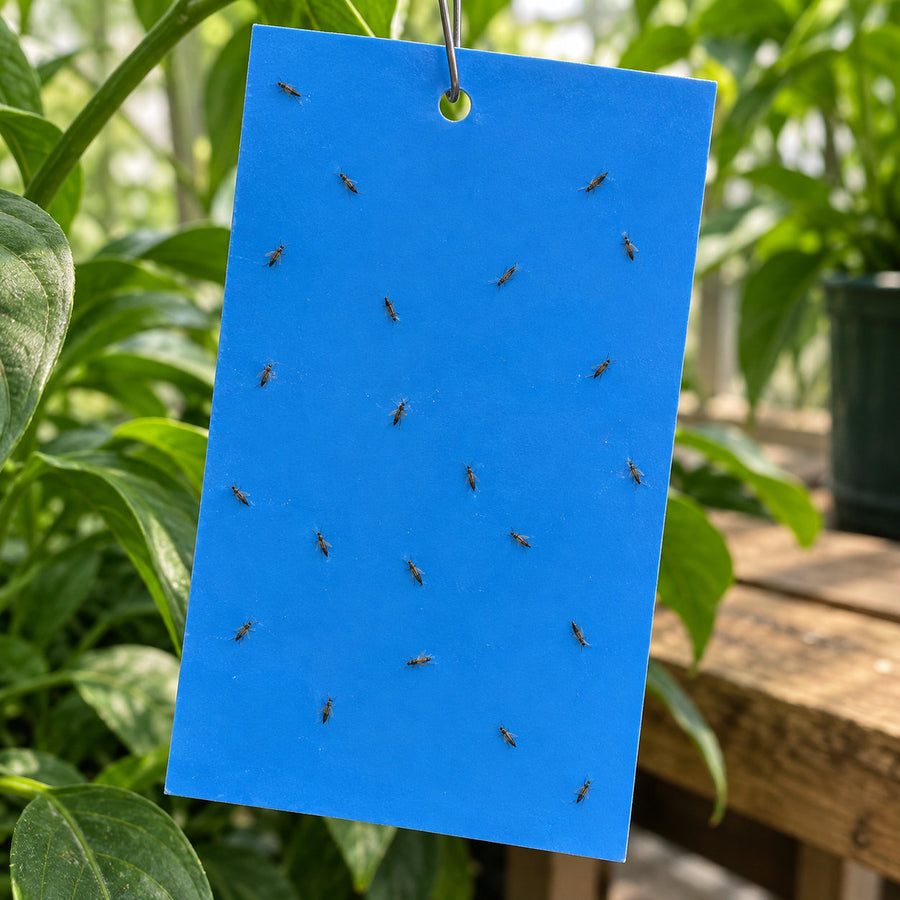
You cannot manage what you cannot count. These are the standard tool for seeing what is actually flying in your space: which pest, where, and whether the number is going up or down.
Most pest problems turn up on a card a week or two before they turn up on a leaf. That is the whole argument for hanging them: the card tells you which pest you have before you buy a predator for it, and it tells you afterwards whether the release did anything.
What makes these worth the money over a supermarket trap is the glue. It is high-tack and non-drying, so it holds its grip in a hot tent and a humid greenhouse instead of skinning over in two weeks, and it does not drip. There is nothing to mix, nothing to spray, no pesticide of any kind and no re-entry interval — you hang the card and read it.
Which card do you need?
Choose this if
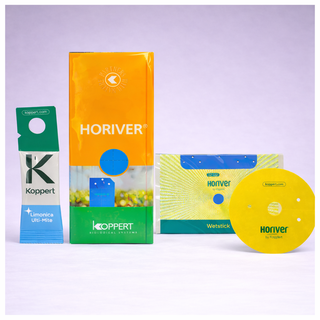
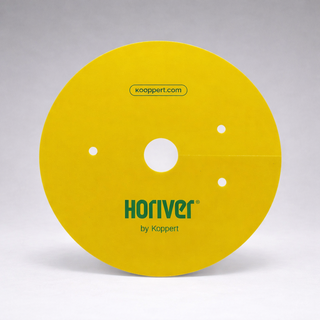
Blue is the thrips card. Tuned to the wavelength western flower thrips respond to, and the one to use for monitoring or knocking back flying adults. Small (10×25cm) and large (25×40cm). Yellow is the generalist — fungus gnats, whitefly, shore flies and winged aphids — as a 10×25cm card or as discs. White Dry is the leafminer card, and it is deliberately blind to the beneficial wasps that yellow and blue confuse, which makes it the one you can keep up through a Diglyphus release. Discs are the same technology in a small circle, for individual pots, cloning trays and tight corners where a full card will not fit.
Choose something else if
Color is not decoration. Pest attraction is wavelength-specific, and using the wrong color is the difference between catching everything and catching nothing — running only yellow underestimates thrips badly. And no card cures anything: this is a monitoring and suppression tool. Mass trapping helps at the margin, but nothing caught on a card was going to be stopped by that card. The treatment is what you release afterwards.
What it catches, and what it won't
Everything on the right-hand list has one thing in common: it does not fly. A card that stays clean while the plant keeps getting worse is not a broken card — it is a strong hint that what you have is mites, and mites never touch a trap. That is a useful reading in itself.
How it works
What does the attracting, what does the holding, and what does the actual work.
Color does the attracting
Pest attraction is wavelength-specific. Each color is tuned to the wavelength a particular group of flying pests responds to, which is why the choice of card matters more than where you buy it.
Glue does the holding
High-tack and non-drying. It keeps its grip through the heat and humidity that make cheaper traps skin over, and it does not drip onto foliage. It is also exceptionally sticky on skin — handle the cards by the edges or the non-sticky border, and take glue off with oil or alcohol, because water absolutely will not.
Counting does the work
Fifteen gnats this week against forty last week is data. A card that merely looks busy is not. Write the date on every card you hang, check weekly, and count rather than glancing and forming an impression.
Rising counts on blue after a mite release is a specific, useful reading. It means the larvae are being handled and the adults are not — which tells you exactly what to order next.
Where they go, and how many
One thing, and it is not optional. Orius, the Aphidius wasps, Aphidoletes midges, Dalotia rove beetles, lacewing adults and Diglyphus all get caught on a yellow or blue card as efficiently as the pests do. Take the cards down for about a week whenever you release flying beneficials, then hang them straight back up — a room with no cards in it is a room with no data. For leafminer work, the White Dry card lets you keep monitoring right through a release.
About Horiver traps
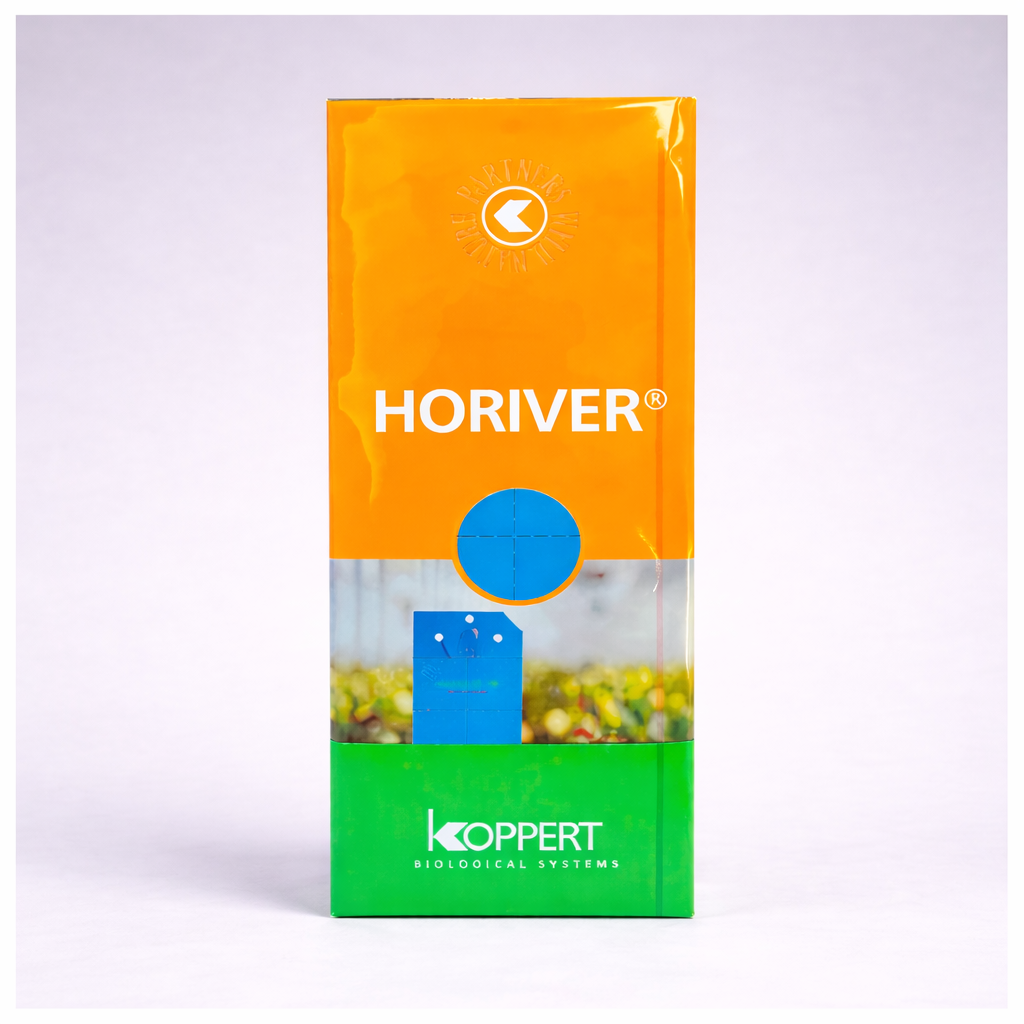
Koppert's professional sticky traps. The unglamorous product that makes every other one work: monitoring first, mass trapping second.
New to sticky traps?
Five things that catch almost everyone the first time.
Reading them
What to write down, what the numbers mean, and when to take them down.
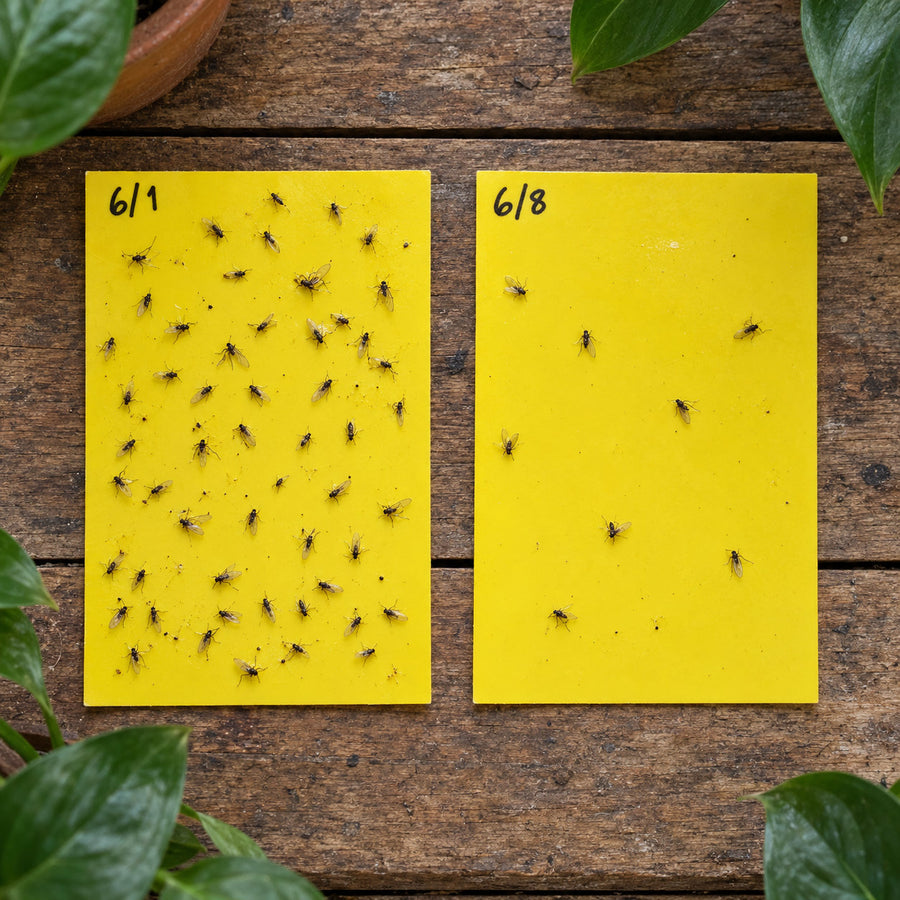
How to read a card
A falling count in the same location, week over week. That is what evidence looks like here — same card position, same day of the week, an actual number written down.
The comparison is what carries the information, so an undated card tells you nothing. Write the date on every one as you hang it.
Cards come down for about a week whenever flying beneficials go out, then straight back up. The second half matters as much as the first.
Getting it to you
What is in the pack, how it travels, and how to keep it.
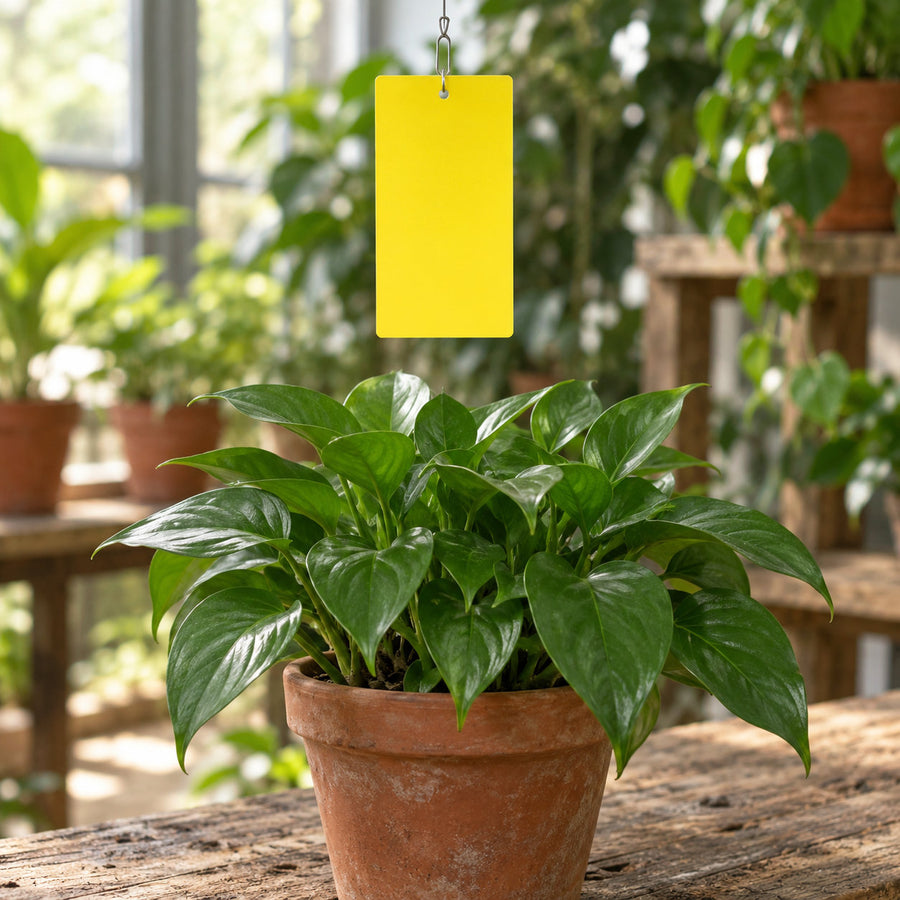
What arrives
Ten cards or discs per pack, flat, with a peel-off backing.
Nothing is alive and nothing is on a clock. Store the pack cool, dry and out of direct light and it is ready whenever you are.
Handle by the edges or the non-sticky border. The glue is exceptionally sticky, and oil or alcohol takes it off your hands where water absolutely will not.
When it ships, and when it lands
Shipping
This one just ships. No live-arrival window, no cold chain and no Monday-to-Thursday dispatch rule — it goes out as ordinary goods. Which makes it the easiest thing on the site to add to an order you are already placing.
When it lands
Peel, date, hang. Write the date on the card before it goes up. Hang it two to four inches above the canopy and raise it as the plants grow. Put some near doors, intake fans and vents to catch pests on the way in. Then check weekly and write the count down — that number, compared with last week's, is the entire product.
About the one product here that cannot die
No live-arrival window, no cushion, no clock.
Every other product on this site is alive and has to survive a van. This one is card and glue.
There is no transit mortality, no live-arrival window and no cushion to add, because there is nothing in the pack that can die on the way to you.
If a pack arrives crushed, soaked or with the cards stuck to each other, that is a straightforward damaged-goods problem and we replace it.
If a pack arrives damaged
Crushed, soaked, or cards stuck face to face in the pack. Any of those and we replace it — there is no diagnostic to run and no judgement call to make.
Do not try to peel apart cards that have bonded. The glue is stronger than the card, and you will end up with neither.
Why this one is easy
Mites, nematodes, eggs — the rest of the catalog. Not this. A sticky card either arrived intact or it did not, and you can see which from across the room.
Everywhere else on this site we cannot ask for a photo, because a bottle of carrier looks identical whether the mites inside are alive or not. Here the photograph is conclusive.
So this is the one product where a photograph settles it immediately. Send one of the pack as it arrived and we will not ask you anything else.
Seventy-two hours from delivery, either way, with your order number. Replacement or store credit, your pick.
What it does not reach
Three gaps this page has already named, and the beneficial that closes each one.
That is adult thrips, and it names the predator
Blue catches adult thrips, and no predatory mite takes an adult. Orius insidiosus, the minute pirate bug, is the one agent in the range that does. If your blue counts are climbing — or holding steady while new leaf damage slows — that is the reading that says order Orius. Take the cards down for the week after you release them.
Fungus gnats are a soil problem wearing wings
The adults on the card are the visible end of a population living in your media. Catching them changes the count and not the cause. Steinernema feltiae nematodes go into the substrate after the larvae, which is where the problem actually is — and the cards are how you prove it worked, because the count falls.
Mites never touch a trap
An empty card next to a plant that keeps getting worse is not a faulty card. Spider, broad and russet mites do not fly, so nothing you hang will ever catch one — which makes a clean card a genuine diagnostic result. Predatory mite sachets are the usual answer: four species covering mites, thrips and whitefly for four to six weeks at a time.
Two cheap things that make the rest work harder. Blue cards give you the dated count this page keeps asking you to read. Breeder's Blend is pollen and Artemia; it keeps the population fed through the lull when prey gets scarce.
Questions
Why use Blue for Thrips and Yellow for everything else?
Thrips are specifically attracted to blue light frequencies. If you use yellow traps for thrips, you will catch significantly fewer pests. Always use blue when thrips are the priority.
Why use White (Dry) traps?
Standard sticky traps can sometimes catch the beneficial parasitic wasps you are trying to use to fight leafminers. White traps are "blind" to those beneficials while still being highly attractive to leafminers.
Will these get rid of my infestation completely?
Sticky traps are a monitoring and suppression tool, not a "cure." Use them to reduce the flying adult population, but always pair them with biological controls (like beneficial mites or nematodes) to kill the eggs and larvae.
Are they safe for my pets?
Yes, but they are extremely sticky. Keep them well out of reach of furry pets. If glue gets into pet fur, it can be very difficult to remove.
How often should I replace them?
Replace them every 4–6 weeks, or sooner if the trap is fully covered in dust or pests.
What if I don't catch any pests on my traps?
If your traps are clean, that is actually a great sign! It means your garden is currently free of flying adult pests. Sticky traps are just as important for confirming your garden is healthy as they are for catching bugs. Keep them up as a preventative "early warning system"—if a pest suddenly appears, you’ll catch it on day one before it becomes an infestation.