

Bundle · Thrips
Thrips Total Control - Three Stage System
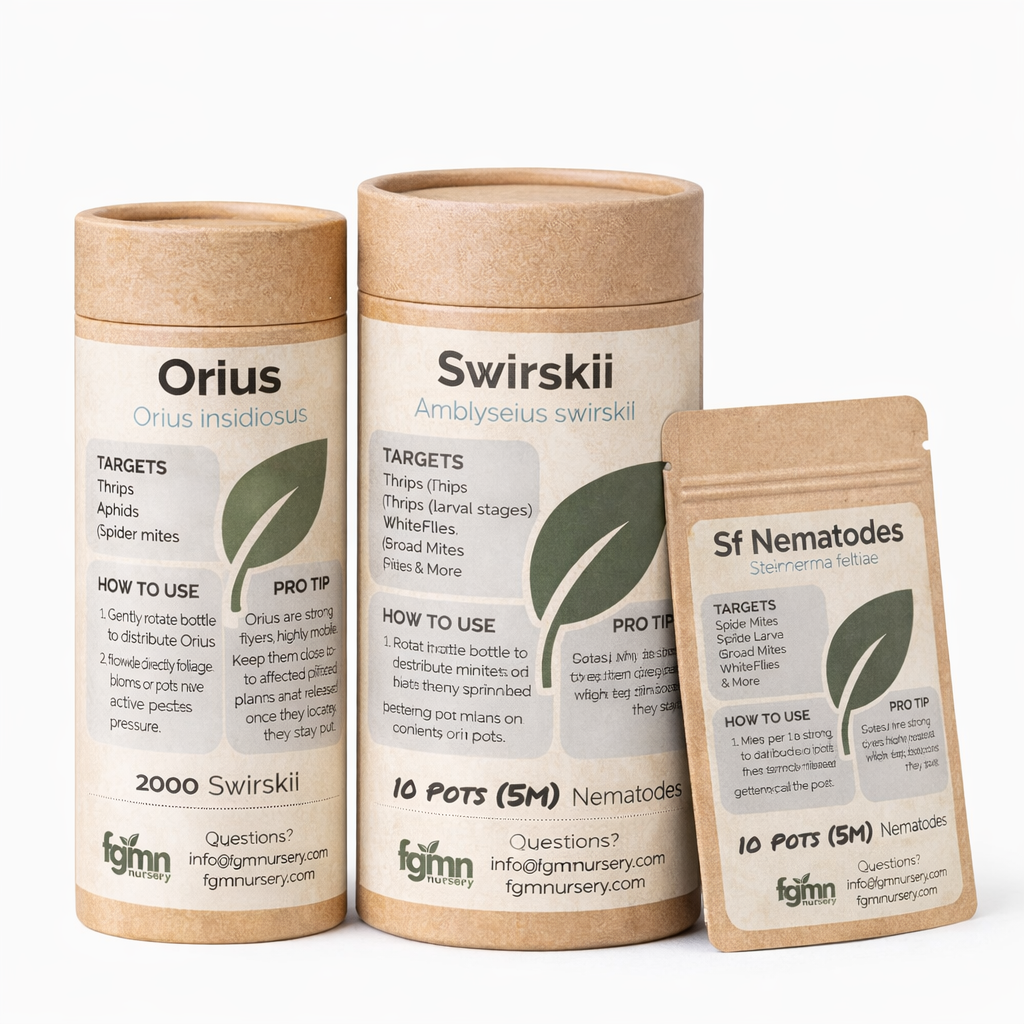
All three places thrips live, closed on the same day — mites on the larvae, Orius on the adults, nematodes on the pupae.
$150.00
Free Shipping for all orders over $30
If something's wrong when it arrives, file a report within 72 hours of delivery for a replacement or store credit.
By placing your order you agree to our Shipping Policy and Live Delivery Guarantee.

How much, and how often
Two questions — how bad it is, and how many plants. You get a size and the dates to put it out.
How bad is it?
Pick the one that sounds like your room. If you are between two, take the higher.
How many plants are in the space?
Six-inch pots. Count a large specimen with a dense canopy as three or four.
Your size and schedule
More about this dose
The three things people ask once they have their size. Open any of them.
Am I light, moderate or heavy?
Light
- You had to look closely — a few silver flecks on one or two leaves.
- The odd adult in a flower if you go looking for one.
- Blue cards catch a few rather than a stream.
- One plant, maybe two.
Moderate
- You notice the silvering walking past, on several plants.
- Adults lift off when you disturb the foliage, and the flowers are streaked.
- Blue card counts are climbing week to week.
- New leaves are opening already marked.
Heavy
- Whole leaves gone silver, flowers distorted before they open.
- Adults lift off in numbers whenever you touch a plant.
- Blue cards fill between checks.
- It has reached plants that were never near the first one.
Size to the whole space rather than to the plants with damage on them. The nematode drench goes on every pot — pupae drop out of any canopy, not just the obvious one — and Orius will patrol the whole room whether you paid for that or not. Sizing up costs you little, since swirskii hold on pollen and Orius often establishes; sizing down costs you the round.
Thrips are built to be underestimated:
- Only part of the population is on the leaves. Adults are in the flowers and pupae are in the substrate, which is why treatments aimed at one place look thorough and then fail.
- Damage is a record, not a reading. Silver scarring stays on the leaf long after every thrips that made it is dead.
- They feed where you cannot see. Larvae work inside folded new growth and under leaves. By the time the top of the leaf looks wrong, they have been there a while.
- Adults fly. A plant across the room is not out of range, which is why the drench goes on every pot rather than the obvious ones.
Why more than one round?
Putting it out
- Take the sticky cards down first. Blue and yellow traps catch Orius as efficiently as they catch thrips. Off for about a week, then back at the room perimeter rather than inside the canopy.
- Nematodes into the fridge, everything else onto the counter. Only the nematodes want cold. The mites and the Orius go out today.
- Sprinkle the swirskii thinly across the canopy. Thinly matters here — piles of carrier are where Orius finds them. Concentrate on new growth and leaf undersides.
- Release the Orius into the flowers and buds, where adult thrips congregate and where Orius will also find pollen. At dusk if you can.
- Drench every pot with the nematodes, same day, mixed with room-temperature dechlorinated water — chlorine kills them — into already-moist substrate, then water again to carry them down.
- Keep the substrate moist for two weeks, and give Orius fourteen hours of light or more, or it goes dormant instead of hunting.
Everything else is optional. Get these four and the release has done what it can.
A cleaner way
On a display plant, tip small piles into bio-boxes or paper cups hung in the branches instead of dusting the foliage. Same dose, nothing visible on the leaf.
The failure is forgetting. Very few programs fail because the mite underperformed. They fail in week five, when the plants look fine, the reorder does not happen, and the population holding the line ages out with nothing behind it.
A schedule is the same decision, made once. A kit when it looks bad, then another when it looks bad again, is already a rhythm — just one you have to remember at the exact moment the plants look fine.
Change the size or the frequency, skip a box, pause or cancel from your account at any time.
Is this the right beneficial for your problem?
Five questions, in the order a grower actually asks them: what have you got, is this the answer to it, what will it eat, how does it do the killing, and will it survive your room.
Is this your pest?
Thrips occupy three places at once: larvae on the foliage, adults in the canopy and the flowers, pupae in the soil. Total Control is the kit that covers all three, which is why it finishes rather than suppresses.
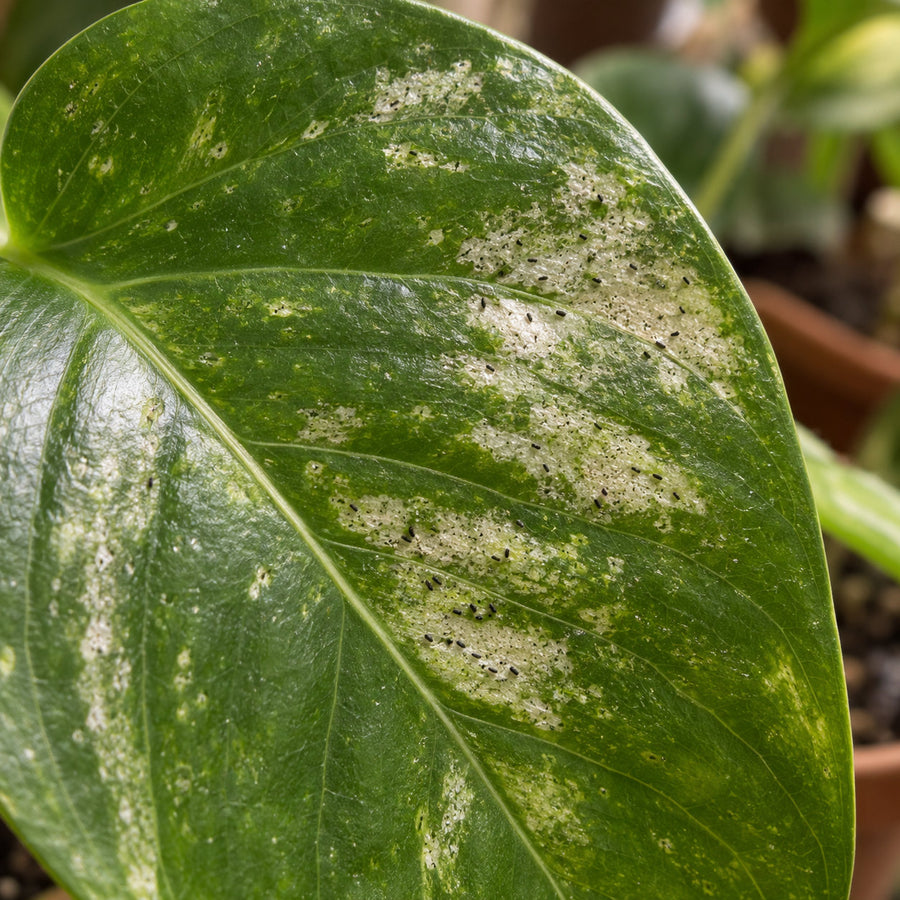
Thrips rasp the leaf surface and drink what comes out, leaving silvery or bronzed scarring with black frass specks on it, worst on the newest tissue and inside folded growth. Flowers come out streaked and distorted. The adults are slim and quick and fly up when you disturb a plant.
Three agents, one for each place thrips live. Amblyseius swirskii works the foliage and takes the larvae. Orius insidiosus, the minute pirate bug, hunts the adults in the canopy and in the flowers — the flying, feeding, egg-laying stage no predatory mite can catch. Steinernema feltiae nematodes take the pupae in the substrate. Nothing gets left running.
Then: is Total Control the right answer to it?
Choose this if
Choose it at moderate thrips pressure when you want the problem finished rather than suppressed. Covering all three stages at once is what makes that possible — partial treatments look like they are working and then are not, because whichever stage you missed refills the other two. It is also remarkably little work for what it does: all three go out the same day, in any order, with no waiting period between the foliage predators and the soil drench. Nothing to spray, no residue on the leaves, no re-entry interval and nothing to keep children or pets out of the room for. Between them these three reach the leaf undersides, the flowers and the root zone — more of the plant than any spray programme covers — and thrips cannot develop resistance to being eaten.
Choose something else if
If there are no adults in play, Thrips Rapid Response covers the other two stages for less. If the infestation is genuinely runaway — widespread damage, high numbers in both soil and canopy — Ultimate Control upgrades the foliage mite and swaps the soil agent for one built for that. And if what you have is Echinothrips, dark and sluggish and on the leaf blade rather than in the flowers, it pupates on the leaf rather than in the soil, so the nematode third has nothing to find.
What it kills, and what it won't
Orius is the piece that makes this a complete answer rather than a good one. It is one of very few predators able to take an adult thrips at all — everything else in biological thrips control works on the stages behind them. That is the difference between a population that keeps topping itself up and one that runs out.
How it works
What it does to the pest, what it does on the plant, and what that leaves you looking at.
Three places, one day
Swirskii onto the foliage for the larvae, Orius into the flowers for the adults, Sf nematodes into the substrate for the pupae. They are compatible and the sequencing does not matter — there is no waiting period between the foliage predators and the soil drench. The gaps are what hurt you, not the order.
Orius hunts where thrips actually are
Adult thrips concentrate in flowers and buds, and so does Orius — it eats pollen as well as prey, which is what keeps it in the right place between meals. It is also the one agent here you can see working: small, fast and dark, and worth looking for when you check a flower.
You read it on the cards and the crown
Blue sticky card counts fall as Orius works the adults, and new growth opens clean as the mites hold the larvae. Existing silver scarring never goes away — it is a record, not a reading — so judge it on new tissue and on the trend, not on the leaves you already have.
Being straight about one interaction. Orius eats predatory mites as well as thrips, and has been shown to push them out of flowers. The mites here ship loose, so spread them thinly across the foliage rather than leaving the carrier in piles, and expect to lose some to the bugs. It is not a reason to drop an agent: on its own, each one leaves a life stage running.
Will it work in your room?
Take the sticky cards down first. Blue and yellow traps catch Orius exactly as efficiently as they catch thrips, so pull them before the release and leave them off for about a week, then put them back at the room perimeter rather than inside the canopy. And check the thrips: dark, sluggish and on the leaf blade means Echinothrips, which pupates on the leaf and leaves the nematode third of this box with nothing to do.
About the Total Control kit
Three separate products in one box, because thrips use three habitats. A mite bottle, a container of live Orius and a nematode pack — all released the same day.
New to beneficials?
Five things that catch almost everyone the first time.
After you release it
What actually changes, how fast, and the one thing to take down before you start.
How you'll know it's working
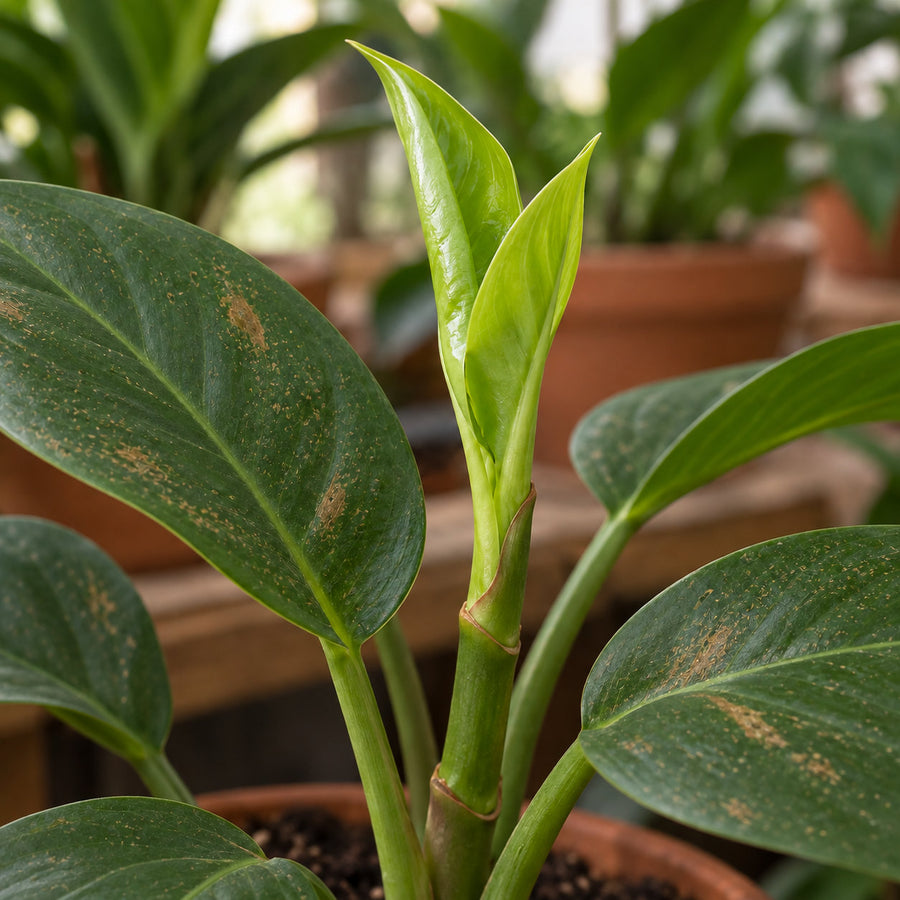
Blue card counts falling as Orius works the adults, and new growth opening clean as the mites hold the larvae. Both together, and fewer replacements coming up out of the soil underneath.
Orius is the agent you can actually check on: look into a flower for something small, fast and dark. If Orius has established, a repeat order often only needs the mite and nematode halves.
Cards off for a week, then back at the perimeter. Sticky traps do not know the difference between a thrips and an Orius, and releasing a thousand bugs into a room hung with traps is an expensive way to decorate them.
Getting it to you
What is in the box, how it travels, and what happens if it arrives wrong.
What arrives
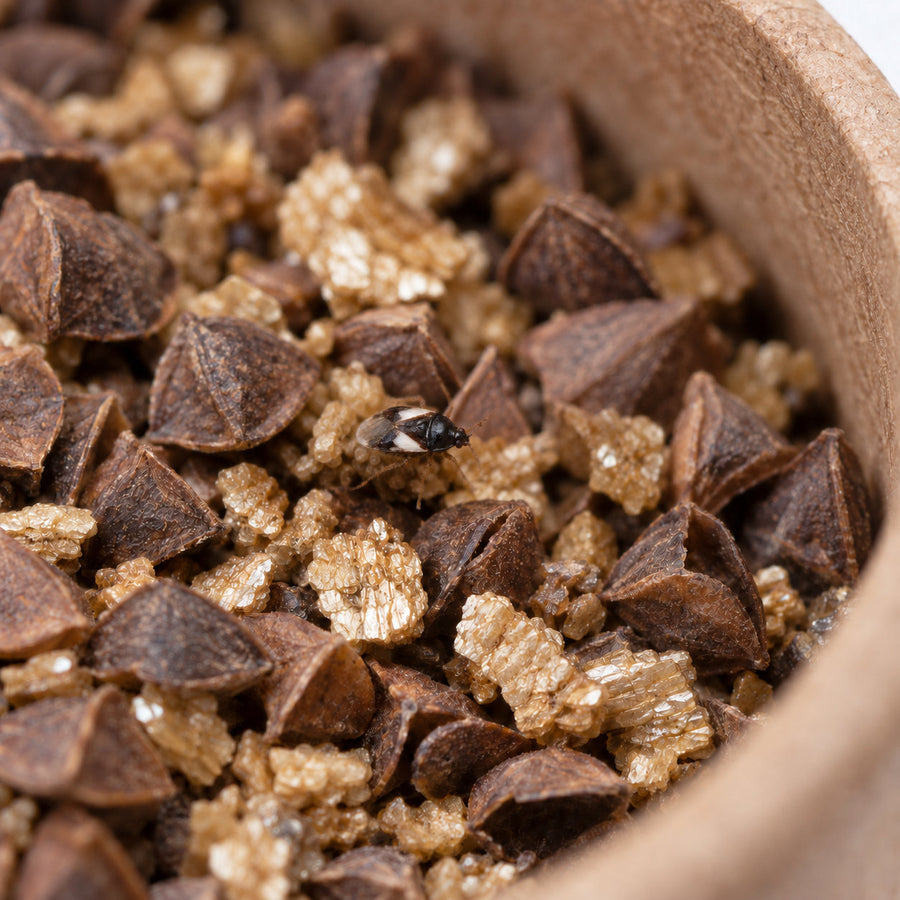
Three separate products: a bottle of loose swirskii in carrier, a container of live Orius in buckwheat hulls, and a pack of live Sf nematodes.
Only the nematodes want the fridge. The Orius will be moving when you open them, which is normal and mildly startling the first time.
All three the same day. They are compatible and the order does not matter. What does matter is not leaving a stage untreated while you wait for a better moment.
When it ships, and when it lands
Shipping
We ship when they're ready to travel. Live orders go out Monday to Thursday. If a colony needs a beat to peak, or we're propagating a fresh batch, yours might hold up to a week. All mites and insects ship 2-day or Overnight depending on what's best for them.
When it lands
Open it the day it lands. Sticky cards down first. Sprinkle the swirskii thinly across the canopy — thinly matters here, because piles of carrier are where Orius finds them. Release the Orius into and around the flowers and buds, at dusk if you can. Then mix the nematodes with room-temperature dechlorinated water and drench every pot, already moist, watering again afterwards to carry them to the root zone.
About the ones that don't make it
Some of them die on the way. That is why we send more than you paid for.
A predatory mite is the size of a grain of table salt and an Orius is not much bigger. They ship in bottles, in a van, for two days.
Roughly 15% will not survive that. We cannot prevent it, so we price it in: the number on the label gets counted out, and then the cushion goes in on top of it.
Your 200-Orius container leaves here holding more than 200, and the mite bottle the same. The dead ones are already paid for.
If you can see them
Ladybugs, lacewing larvae, Orius — the minute pirate bug — and the beetles. Tip a few onto white paper and give them twenty minutes at room temperature before you judge anybody.
Cold insects are genuinely good at playing dead. The deceased have been known to get up and walk off the counter.
Still more than about one in seven not moving? Photograph them and file a report.
The photo is not us doubting you. It is how we tell a bad batch from a bad courier day from a mailbox that hit 104°F.
If you can't see them
Mites, nematodes, eggs — two thirds of this box. A bottle of carrier looks the same whether it holds live mites or none, and a nematode pack tells you nothing at all from the outside. No photograph settles either, so we don't ask you to take one.
You file the report and our entomologist takes you through the diagnostic instead — the tap test on dark paper, where the box sat, what your room was doing, and then what the pest is doing about ten days later.
The Orius are the exception and they are the easy check: tip a few onto white paper, give them twenty minutes at room temperature, and count what walks. Cold insects are genuinely good at playing dead, so the twenty minutes is not optional.
Seventy-two hours from delivery, either way, with your order number. Replacement or store credit, your pick.
What it does not reach
Three gaps this page has already named, and the beneficial that closes each one.
Thrips Ultimate Control
Total Control is built for moderate pressure. Widespread damage and high numbers in both soil and canopy is a different job: Ultimate Control upgrades the foliage mite to Amblydromalus limonicus, swaps the soil nematodes for Dalotia rove beetles, and keeps Orius on the adults. If your current defences have already been outpaced, start there rather than here.
Thrips Rapid Response
Orius is the expensive third of this box, and it is only worth buying if there are adults to hunt. If your blue cards are quiet and what you have is larvae on the leaves and pupae in the soil, Rapid Response covers exactly those two stages with the same swirskii and the same nematodes, for less. You can always add Orius later.
Swirskii slow-release sachets
The swirskii in this box are loose adults, released all at once. Sachets hang the same species on the plant as a breeding colony, trickling out for four to six weeks — which is what keeps the plants you just cleared from being the ones it starts on next time. Hang them five to seven days after the knockdown.
Two cheap things that make the rest work harder. Blue cards give you the dated count this page keeps asking you to read. Breeder's Blend is pollen and Artemia; it keeps the population fed through the lull when prey gets scarce.
Questions
Do these predators eat each other?
Yes, to a degree. Orius will take predatory mites as well as thrips, and has been shown to push them out of flowers. It is still worth running both: on its own, each agent leaves a life stage running.
Can I use this if I already have sticky traps up?
Yes, with one adjustment. Blue sticky traps are worth keeping for monitoring, and they do catch adult thrips — but they catch Orius just as efficiently. Keep them at the room perimeter rather than inside the canopy, and pull them for about a week after an Orius release. Then put them back up and watch the adult count decline.
Is this safe for my plants?
100%. These are naturally occurring biological controls. They do not feed on plant tissue, do not damage roots, and leave zero residue on your harvest.
When should I re-apply?
For a total reset, we recommend a follow-up release of Swirskii every 4 weeks to maintain the standing army. The Orius and Nematodes can be re-applied every 6 to 8 weeks depending on your pest pressure.
Can I use chemical sprays, Neem oil, or essential oils with this bundle?
No. Chemical pesticides, soaps, and oils are non-selective—they will kill your predatory mites and Orius just as quickly as they kill the thrips. How long you wait depends on the active: neem and horticultural oil only need to be dry, insecticidal soap a day, spinosad 14 days, sulfur 21, a synthetic pyrethroid 8–12 weeks. Release the Thrips Total Control bundle after whichever of those applies, and later still where the label says so.
How soon will I see results?
Unlike chemical sprays that provide an instant "knockdown," biological control is a system that works over time. What you are watching for is the population stabilising first, then pest activity dropping. How long each stage takes depends on how heavy the pressure is. Patience is key—you are establishing a living army that will continue to hunt for you long after a spray would have evaporated.