
Generalist · Root Pathogens
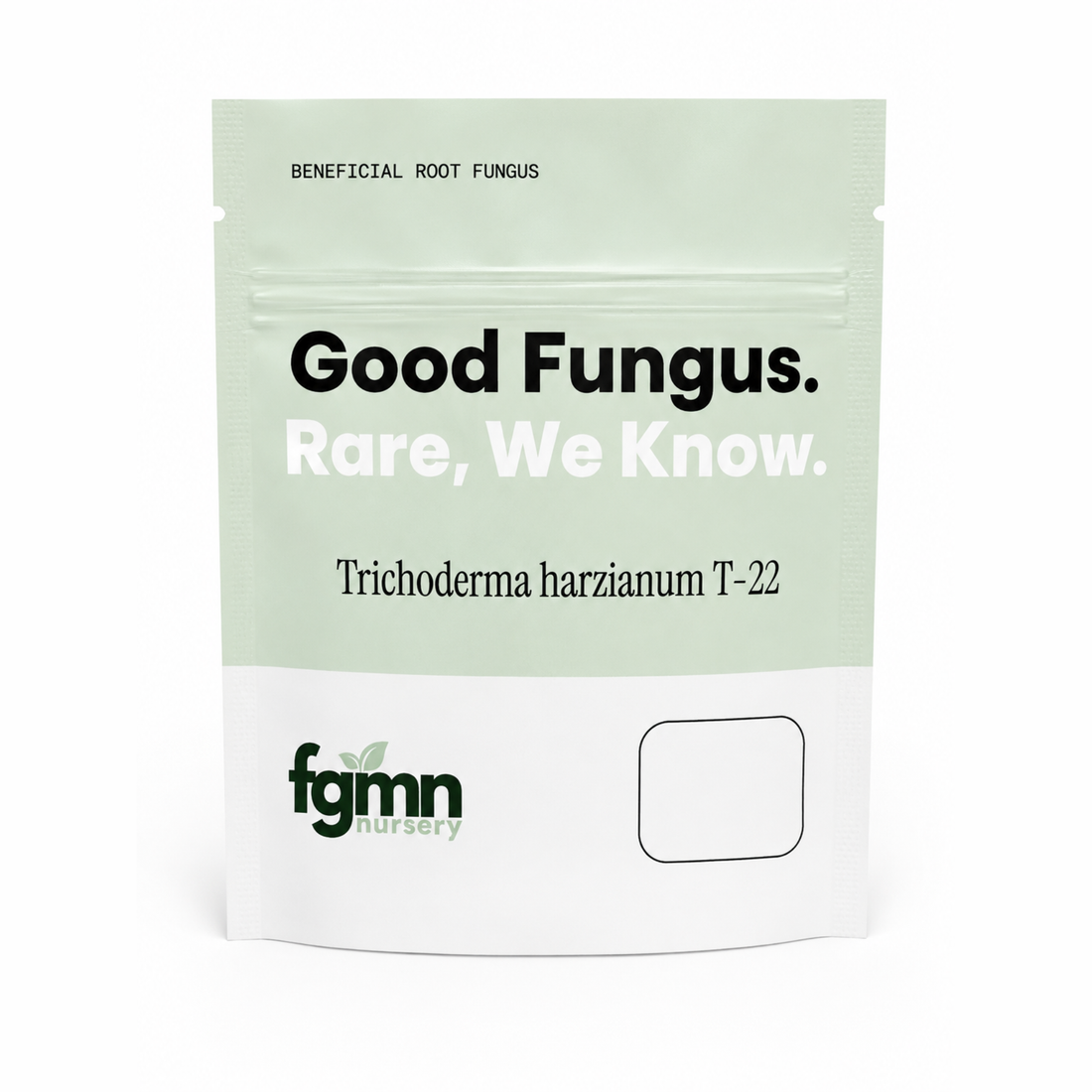
Trichoderma harzianum
A living shield around the roots — it takes the root surface before a pathogen can, and grows outward as the roots grow.
$12.00
Free Shipping for all orders over $30
If something's wrong when it arrives, file a report within 72 hours of delivery for a replacement or store credit.
By placing your order you agree to our Shipping Policy and Live Delivery Guarantee.
How much, and how often
One gram per gallon of finished drench for established plants — half a gram for tissue culture and cuttings, a gram and a half for mother plants and high-stress areas. Sizes are sold by the gallons of drench they make. Reapply after repotting, and boost every four to six weeks in a high-intensity indoor grow.
More about this dose
The three things people ask once they have their size. Open any of them.
Why more than one round?
Putting it out
- Measure your dose. Half a gram per gallon for tissue culture and cuttings, one gram for established plants, a gram and a half for mother plants and high-stress areas. Wear a mask while measuring dry powder, as with any fine dust.
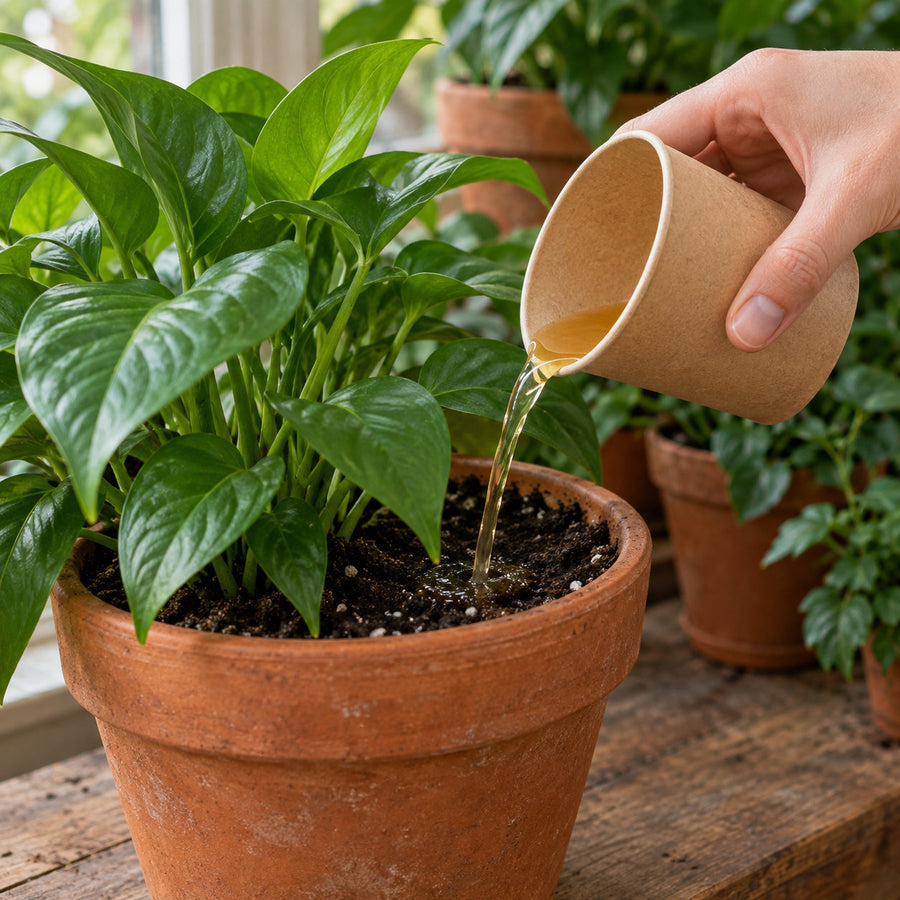
- Pre-mix into one cup of room-temperature water and whisk for thirty seconds until smooth. Dry powder tipped straight into a tank floats on top and never reaches the roots.
- Dilute into dechlorinated water. Chlorine and chloramine reduce spore viability, so let tap water stand or treat it first.
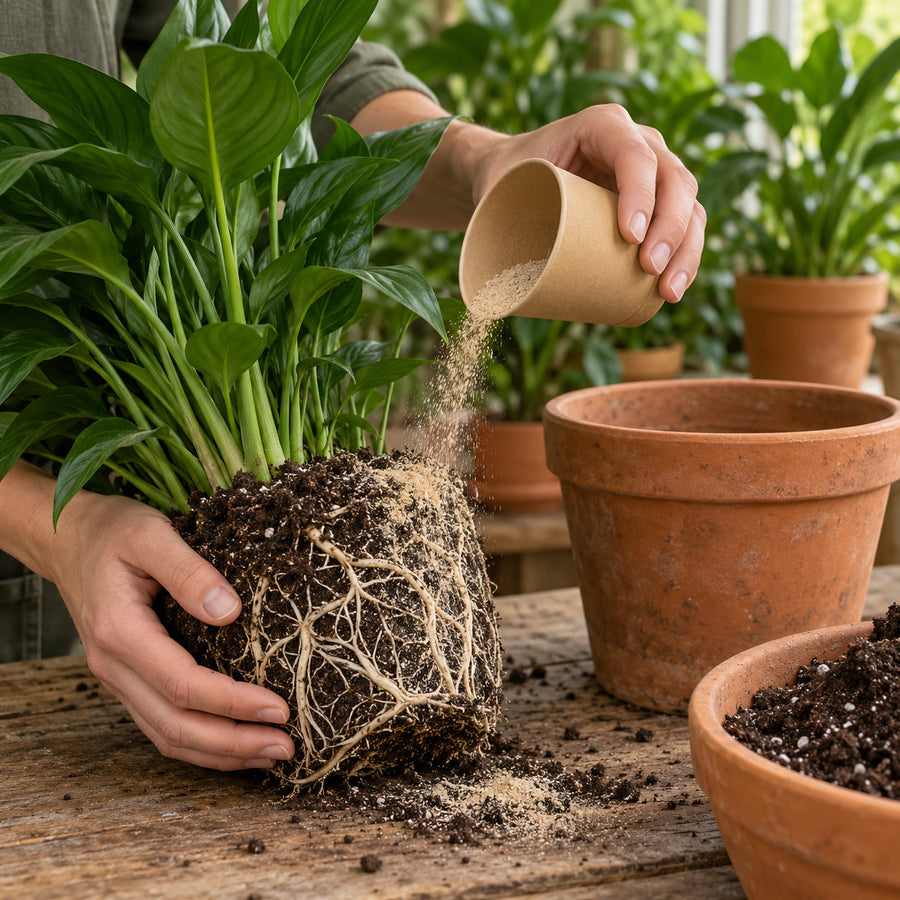
- Drench at the base until the root ball is saturated, into medium that is already moist rather than bone dry — and not waterlogged. Or incorporate the powder dry into the mix at potting.
- Keep the bucket moving. The spores are heavy and settle, so stir every few minutes if you are working down a bench.
- Use the slurry the same day, out of direct light. Spores do not hold in solution, and UV degrades them. Early morning, evening, or under grow lights.
Everything else is optional. Get these four and the release has done what it can.
A cleaner way
On a display plant, tip small piles into bio-boxes or paper cups hung in the branches instead of dusting the foliage. Same dose, nothing visible on the leaf.
Is this the right beneficial for your problem?
Five questions, in the order a grower actually asks them: what have you got, is this the answer to it, what will it eat, how does it do the killing, and will it survive your room.
Is this your problem?
While predatory mites guard the leaves, T-22 guards the root zone. It is a biological fungicide and a root enhancer in the same jar.
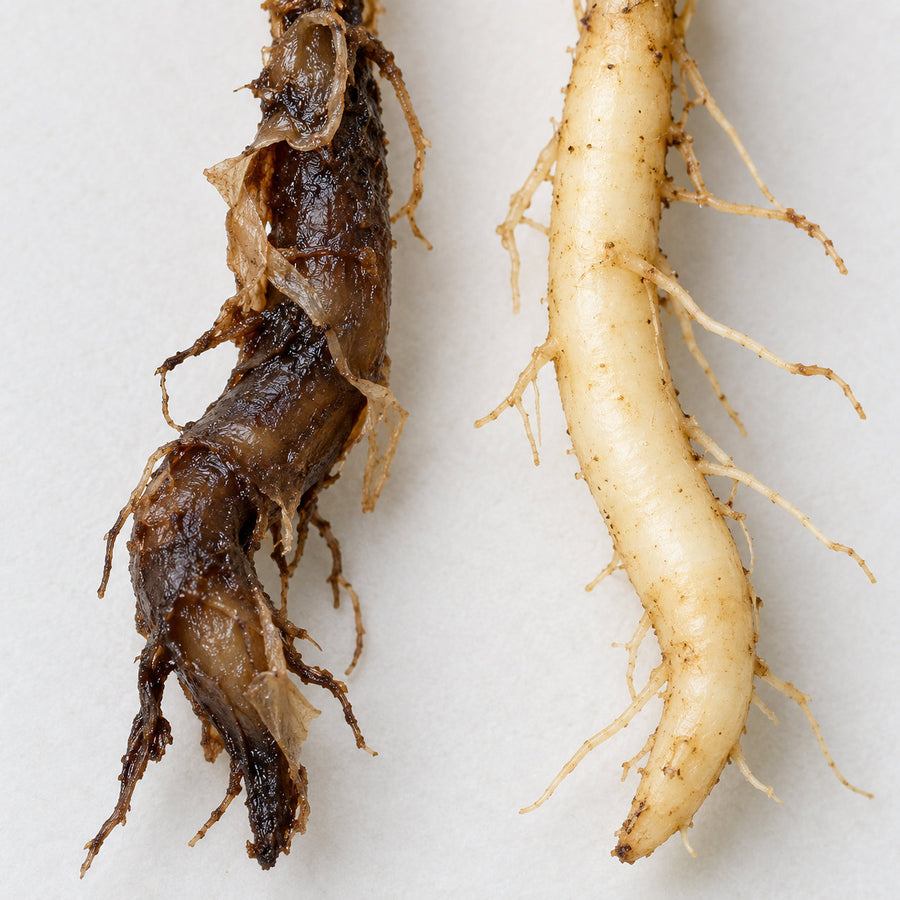
Root and crown rot announce themselves late and from the wrong end: wilting that watering does not fix, a stem going soft at the soil line, a cutting that damps off overnight, a plant that simply stops. By the time the foliage tells you, the roots have been losing for a while.
T-22 works against the organisms behind that — Pythium, Phytophthora, Rhizoctonia, Fusarium, Thielaviopsis, Cylindrocladium and Sclerotinia. What it does not touch is anything above the soil line: foliar disease like powdery mildew and leaf spot, bacterial rot, insects, or fungus gnats.
Then: is T-22 the right answer to it?
Choose this if
Choose it for the moments when the root zone is bare and something is going to colonise it — potting and repotting, a cutting striking, a tissue-culture plantlet coming out of a sterile flask with no root biology at all, a mother plant you would rather not gamble on, or any soilless medium that starts as a blank slate. It works by taking the territory first: colonising the root surface ahead of the pathogens, using the space and nutrients they would have used, parasitising the pathogenic fungi directly, and switching on the plant's own defence response. Applying it is a watering. Nothing to spray, no residue, no re-entry interval and nothing to keep children or pets away from — you stir a gram into a gallon of dechlorinated water and pour it in. It reaches the whole root ball rather than the surface, it goes on working for the life of the root system rather than the few days a drench lasts, and it is compatible with mycorrhizae, beneficial nematodes, predatory mites, springtails and most insecticides.
Choose something else if
It is preventive, and that is the honest framing: T-22 takes territory before a pathogen does, and on a plant that is already rotting it may not catch up. It is also the wrong product for anything above the soil line — powdery mildew, leaf spot and bacterial rot are all outside what it does, and so are insects and fungus gnats. And it cannot be run alongside a systemic or broad-spectrum fungicide, which will kill the colony outright.
What it kills, and what it won't
This particular strain is the reason the list is that long. T-22 was bred to colonise across a wider band of soils and temperatures than most biological fungicides manage — active from 50 to 90°F and across pH 5.5 to 7.0, which covers soil, coco coir, perlite and rockwool alike.
How it works
What it does to the pathogen, what it does for the plant, and what that leaves you looking at.
It takes the root surface first
Colonisation, not combat. T-22 occupies the root surface and the exudates a pathogen would have used, so there is nothing left to establish on. That is why timing beats dose here: the product is most valuable on a root system that has not been colonised by anything yet.
Then it attacks, and it recruits
Where a pathogenic fungus is already present, T-22 parasitises it directly. And it induces systemic resistance in the plant — the plant's own defences come up, which is a second line you did not have to buy.
It grows with the roots
A chemical drench lasts days. A colony lasts as long as the root system does, spreading outward as the roots spread, which is why the reapplication trigger is repotting rather than the calendar.
Dechlorinate the water. Chlorine and chloramine reduce spore viability, so let tap water stand or treat it first — and use the mixed slurry the same day, because spores do not hold in solution.
Will it work in your room?
One check, and it is about what else you are running. A systemic or broad-spectrum fungicide will kill this colony, so read the interval on that label before you drench. And if a plant is already visibly rotting, treat this as insurance for everything else in the room rather than as the rescue for that one.
About Trichoderma T-22
A living shield around the roots that grows outward as the root system grows. Preventive by nature, and best value at the moment of potting, propagation or deflasking.
New to biologicals?
Five things that catch almost everyone the first time.
After you drench it
What changes, how you would know, and when to drench again.
How you'll know it's working
Mostly by what does not happen: cuttings that strike instead of damping off, deflasked plantlets that harden off without collapsing, and transplants that push new roots instead of sulking.
The white fuzz that sometimes appears on the soil surface after a drench is usually the colony itself. Beyond that there is no visible feedback, which is the ordinary condition of a preventive.
Reapply on events, not on dates. Repotting and heavy media changes are what break up an established colony. In a high-intensity indoor grow, a booster drench every four to six weeks on top of that.
Getting it to you
What is in the pouch, how it travels, and how long it keeps.
What arrives
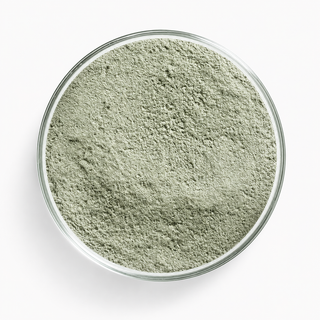
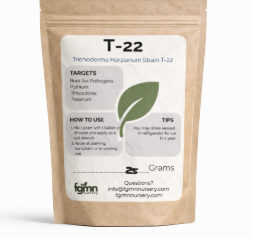
A sealed pouch of wettable powder — dormant, viable spores, sold by weight and sized by the gallons of finished drench it makes.
Nothing about the pouch changes on the way to you, which makes this the most forgiving thing we ship. Spores are shelf-stable at room temperature in transit; the only real enemies are sustained heat over 100°F and a bag left open to humidity.
Pre-mix before you dilute. Stir your dose into one cup of room-temperature water and whisk for thirty seconds until it is smooth, then pour that slurry into the full volume. Dry powder tipped straight into a tank floats on top and never reaches the roots.
When it ships, and when it lands
Shipping
We ship when they're ready to travel. Live orders go out Monday to Thursday. If a colony needs a beat to peak, or we're propagating a fresh batch, yours might hold up to a week. All mites and insects ship 2-day or Overnight depending on what's best for them.
When it lands
Store it sealed, cool, dry and dark until you need it. When you drench: measure the dose, pre-mix it into a cup of water, dilute into dechlorinated water, and pour at the base until the root ball is saturated. If you are working down a bench, stir the bucket every few minutes — the spores are heavy and settle. Apply out of direct intense light, in the early morning or evening or under grow lights, and use the slurry the same day.
About how long it stays viable
Nothing in this pouch is alive in the way the rest of the catalogue is. It keeps.
Unlike everything else we sell, nothing in this pouch is awake. T-22 ships as dormant spores, which is why it travels better than any live insect we handle.
Short exposure to ordinary transit temperatures will not kill it. What will, over time, is heat above 100°F, freezing below 32°F, or humidity getting into an open bag and waking the spores inside it.
Sealed, cool, dry and dark, it holds for about six months. Refrigerated at 35–45°F, up to eighteen.
If something goes wrong
A pouch that arrives split, damp, or after a week in a 110°F mailbox is worth telling us about, and so is a drench that visibly fails to do its job on a batch of cuttings.
There is no tap test for a fungus. The honest check is the outcome, and that takes a few weeks rather than twenty minutes.
Tell us anyway. A split or soaked pouch is something we can see, and it is how we tell a bad batch from a bad courier day.
Why we will not ask for a photo
Mites, nematodes, eggs — and spores, which is what this is. A pouch of powder looks the same whether the spores in it are viable or not, and no photograph settles that. So we don't ask you to take one.
You file the report and we take you through the diagnostic instead — how the pouch was stored, what water you mixed with, how long the slurry sat, and what else went on the plant in the same fortnight.
What we will ask about is storage and mixing, because that is where viability is usually lost: chlorinated water, a slurry left overnight, a drench into bone-dry medium, or a fungicide applied in the same fortnight.
Seventy-two hours from delivery, either way, with your order number. Replacement or store credit, your pick.
What it does not reach
Three gaps this page has already named, and the beneficial that closes each one.
Sf nematodes, for fungus gnats
T-22 works on the fungi that rot roots. It does nothing at all about the insects in the same pot — and a medium wet enough to grow root rot is usually wet enough to grow fungus gnats too. Steinernema feltiae takes the larvae in the media, and it is compatible with T-22, so both can go down in the same watering.
Stratiolaelaps, the soil-dwelling predatory mite
A root zone with T-22 in it has its fungal side covered and its arthropod side wide open. Stratiolaelaps scimitus lives in the top inch of media and hunts fungus gnat larvae, thrips pupae and soil mites continuously — and it does not touch T-22, which is not harmed by beneficial soil mites or nematodes.
Special Blend slow-release sachets
T-22 guards the root zone and nothing above it. Predatory mite sachets do the reverse — four species covering thrips, spider mites, broad and cyclamen mites and whitefly on the foliage, for four to six weeks at a time. The two are compatible and cover a plant end to end between them, which is the usual reason people buy both.
Two cheap things that make the rest work harder. Blue cards give you the dated count this page keeps asking you to read. Breeder's Blend is pollen and Artemia; it keeps the population fed through the lull when prey gets scarce.
Questions
Is T-22 a fertilizer?
No, it is a beneficial fungus. However, it makes your fertilizer work better by "solubilizing" nutrients—breaking down minerals that are normally trapped in the soil so the plant can easily drink them up.
Can I use T-22 if I already have Root Rot?
T-22 is most effective as a preventative. If your plants are already dying from advanced root rot, T-22 may struggle to catch up. For best results, apply to healthy plants or at the very first sign of stress.
How often should I apply it?
A single application at planting can last for months, but for high-intensity indoor grows, we recommend a "booster" drench every 4–6 weeks to ensure the root zone remains fully colonized.
Will it harm my Beneficial Nematodes or Soil Mites?
Not at all. Trichoderma is a fungus that targets other fungi; it does not harm beneficial insects or microscopic worms. In fact, they often work together to create a healthier soil ecosystem.
I see white fuzz on my soil after using T-22. Is that bad?
Usually, no! That is often the Trichoderma colony growing on the soil surface. Unlike gray mold or damping-off, this "good" fuzz is protecting your plant.
How does T-22 help with acclimating Tissue Culture (TC) plantlets?
Tissue Culture plantlets are raised in a sterile, 100% humidity environment and lack the "microbial memory" needed to survive in the real world. When you move them into soil or coco, they are entering a biological vacuum. T-22 acts as an immediate "bodyguard," colonizing the roots before harmful pathogens can. It also helps the plantlet develop its waxy cuticle and root structure faster, significantly reducing "transplant shock" and the high mortality rates often seen during the hardening-off phase.
Good product, fast delivery! Thank you!
Hard to measure out how much you need, but otherwise, ive really enjoied everything ive purchased from this shop.
After reading many articles, I decided to order Trichoderma. I used it according to the instructions, and so far my plants are in very good condition. I reduced fertilizing because after applying it, the plants do not show any nutrient deficiencies. I think it was a good decision because at this time last year my plants were already getting sick. The ordering process itself was trouble-free, and I waited about a week for the delivery, but it was worth it.
This is magical. I love it
Ordering and delivery were flawless. Instructions for use and storage were good and helpful
It’sgood
It's my first time using Trichoderma solution as a bio-fungal agent to prevent damping off. This stuff is great. I've already had success using it as a pre-soak and soil drench to germinate adeniums, aloes, and boswellia, and I've also drenched the soil of my other native plant starts. I've had zero issues with mold growth or damping off so far.
I love it! Good product! Thank you!
Does this help with black rot on grape vines
Hi!
Unfortunately, no. That’s more of a foliar disease.