


Bundle · Aphids
Aphid Eviction Notice - Wasp + Midge Kit
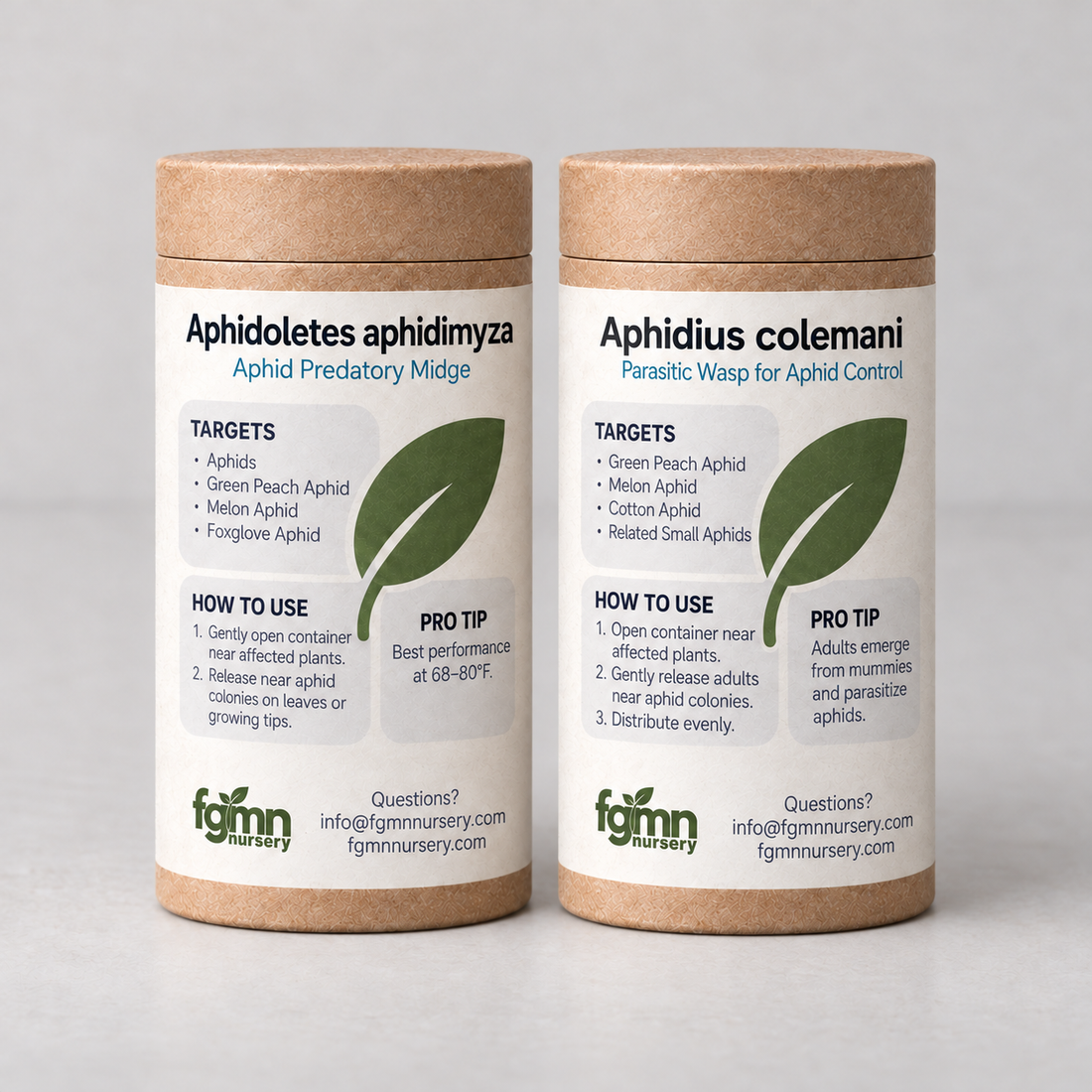
The pairing professional growers use: a wasp that finds the scattered aphids, and a midge whose larvae clear the crowded stems. Any aphid, no ID needed.
$85.00
Free Shipping for all orders over $30
If something's wrong when it arrives, email info@fgmnnursery.com within 72 hours of delivery for a replacement or store credit.
By placing your order you agree to our Shipping Policy and Live Delivery Guarantee.
Goes well with
-
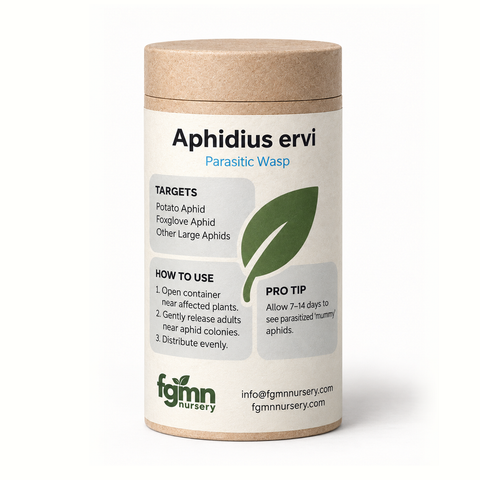
Aphidius ervi
Big aphids.
from $55
-
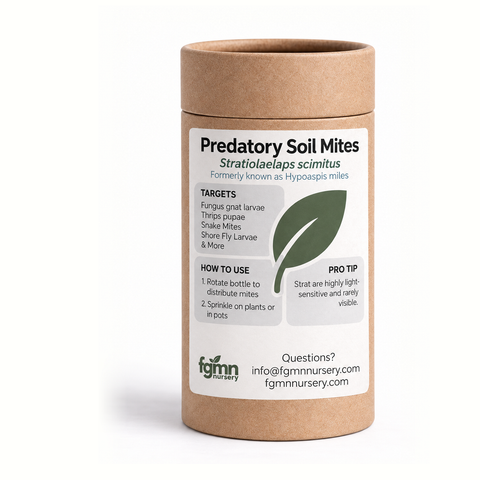
Stratiolaelaps scimitus
The roots.
from $50
-
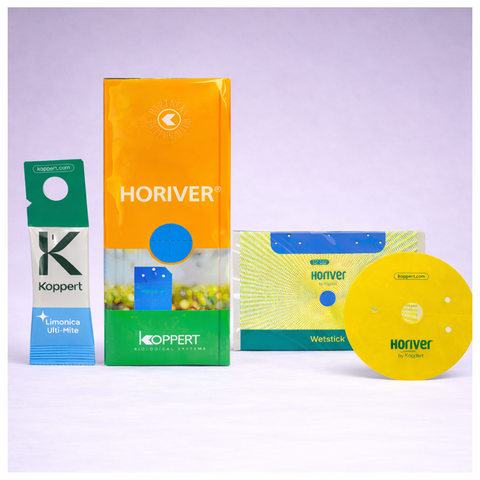
Horiver Professional Sticky Traps
Your yellow cards.
from $11
-
Root Network
For the roots: mycorrhizae and microbes that help roots take up water and nutrients. Use at repotting, then a monthly drench.
from $15
How much, and how often
Two questions — how bad it is, and how many plants. You get a size and the dates to put it out.
How bad is it?
Pick the one that sounds like your room. If you are between two, take the higher.
How many plants are in the space?
Six-inch pots. Count a large specimen with a dense canopy as three or four.
Your size and schedule
More about this dose
The three things people ask once they have their size. Open any of them.
Am I light, moderate or heavy?
Light
- A few aphids on one or two growing tips
- No honeydew yet, or one sticky leaf
- The plants either side look clean
Moderate
- Clusters on several stems and leaf undersides
- Sticky honeydew on the leaves below
- New growth coming in curled
- Aphids turning up on a second plant
Heavy
- Stems crowded end to end
- Sooty mold on the honeydew
- Winged aphids, which means they are leaving to start colonies elsewhere
- Ants running the stems
If you are between two levels, take the higher one. An aphid colony can double in under a week, and both halves of this kit work best when they arrive ahead of it rather than behind it.
Aphids are built to be underestimated:
- They breed without mating. Females give birth to live young that are already carrying the next generation, so a colony you judged as light on Monday is a different problem by Friday.
- They hide on the undersides. What you can see on the tips is usually a fraction of what is under the leaves.
- Winged ones travel. Once a colony gets crowded it starts sending winged aphids to the plants around it.
Why more than one round?
Putting it out
- Keep the ants off first. A ring of sticky tape or a line of diatomaceous earth around each stem base. Ants guard aphids and drive both halves of this kit away.
- Take yellow sticky cards down. They catch the wasps and the midges as well as they catch pests. A few days is enough.
- Wasps in the morning. Open the Aphidius colemani tube in the canopy near the colonies, in daylight, and leave the material undisturbed while they emerge.
- Midges at dusk. Set the open Aphidoletes bottle low, on damp, shaded growing medium near the worst plants. Not on the leaves and not on dry soil.
- Leave the mummies on the leaves. Every tan, papery husk is the next wasp.
Everything else is optional. Get these four and the release has done what it can.
A cleaner way
On a display plant, tip small piles into bio-boxes or paper cups hung in the branches instead of dusting the foliage. Same dose, nothing visible on the leaf.
The failure is forgetting. Very few programs fail because the mite underperformed. They fail in week five, when the plants look fine, the reorder does not happen, and the population holding the line ages out with nothing behind it.
A schedule is the same decision, made once. A kit when it looks bad, then another when it looks bad again, is already a rhythm — just one you have to remember at the exact moment the plants look fine.
Change the size or the frequency, skip a box, pause or cancel from your account at any time.
Is this the right kit for your problem?
What you have, whether this answers it, what each half does, and whether it will work in your room.
Is this your pest?
The Eviction Notice is built around one fact about aphids: they breed faster than almost anything else on a houseplant, so the answer has to keep up.
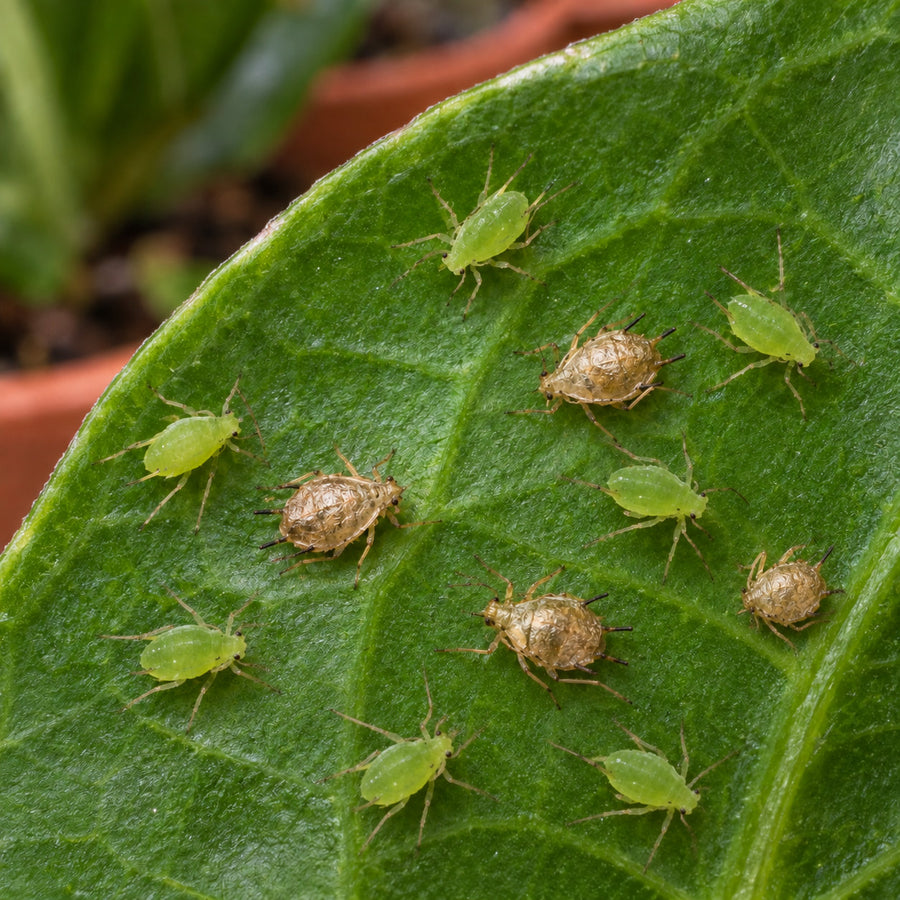
Aphids cluster on stems, buds and the undersides of new leaves, soft and pear-shaped, in greens, pinks, yellows and blacks. Look at the back end for two tiny tubes pointing backward. They leave sticky honeydew, sooty mold follows it, and new growth comes in curled.
This kit pairs Aphidius colemani, a tiny stingless wasp that finds scattered aphids and turns each one into a mummy that hatches another wasp, with Aphidoletes aphidimyza, a midge whose orange larvae clear the crowded stems and take over 60 aphid species.
Then: is the Eviction Notice the right answer to it?
Choose this if
You have early or spreading colonies, or you can't tell which aphid you have. One half searches, the other half clears, and between them they cover the aphid you can see, the one under the leaf, and the one on the plant you haven't checked. Nothing to mix, nothing to spray, no residue and nothing to keep children or pets away from.
Choose something else if
Most of your aphids are the big, long-legged potato or foxglove kind: the midges still work, but add Aphidius ervi for the wasp half. If the colonies are everywhere and you want them knocked down hard, Moving Day adds lacewings. And root aphids live below where either of these forages.
What it treats, and what it won't
Tan, papery aphids glued to the leaves are not a second pest. They are mummies, each with a wasp developing inside, and they are the clearest sign this kit is working. Leave them where they are.
How it works
What each half does to the pest, and what that leaves you looking at.
A searcher that multiplies
A female colemani finds a live aphid and lays a single egg inside it. The aphid hardens into a mummy, and about a week later a new wasp chews out and goes hunting. Every mummy is the next release.
A clearer that works at night
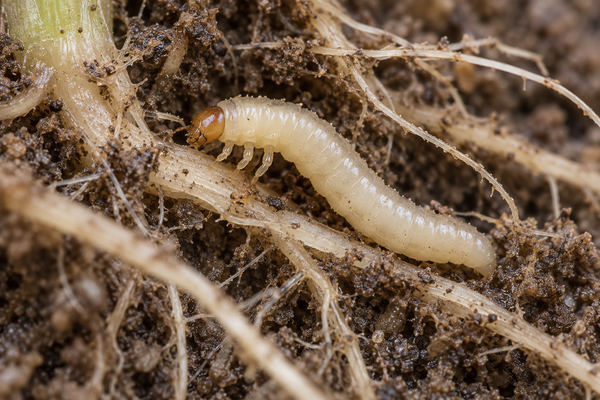
Adult Aphidoletes fly after dark, find colonies by scent and lay their eggs in among them. The orange larvae that hatch paralyze aphids and drink them, and they kill more than they need to eat.
Mummies, orange larvae, clean tips
Tan mummies on the leaves, small orange larvae tucked into the clusters, colonies going grey and shriveled, and then new growth coming in clean. Curled leaves stay curled, so judge by the new ones.
Ants first. Ants farm aphids for their honeydew and drive predators away. A sticky band or a line of diatomaceous earth around each stem base before you release decides whether this works.
Will it work in your room?
Two checks. Deal with any ants, because they will defend the aphids against both halves. And take yellow sticky cards down for a few days around the release, because they catch wasps and midges as efficiently as pests.
About the Eviction Notice kit
Two products in one box: a tube of Aphidius colemani mummies for the canopy, and a bottle of Aphidoletes pupae for the soil beneath the plants.
New to beneficials?
Four things that catch almost everyone the first time.
After you release it
What changes, in what order, and the one thing not to tidy up.
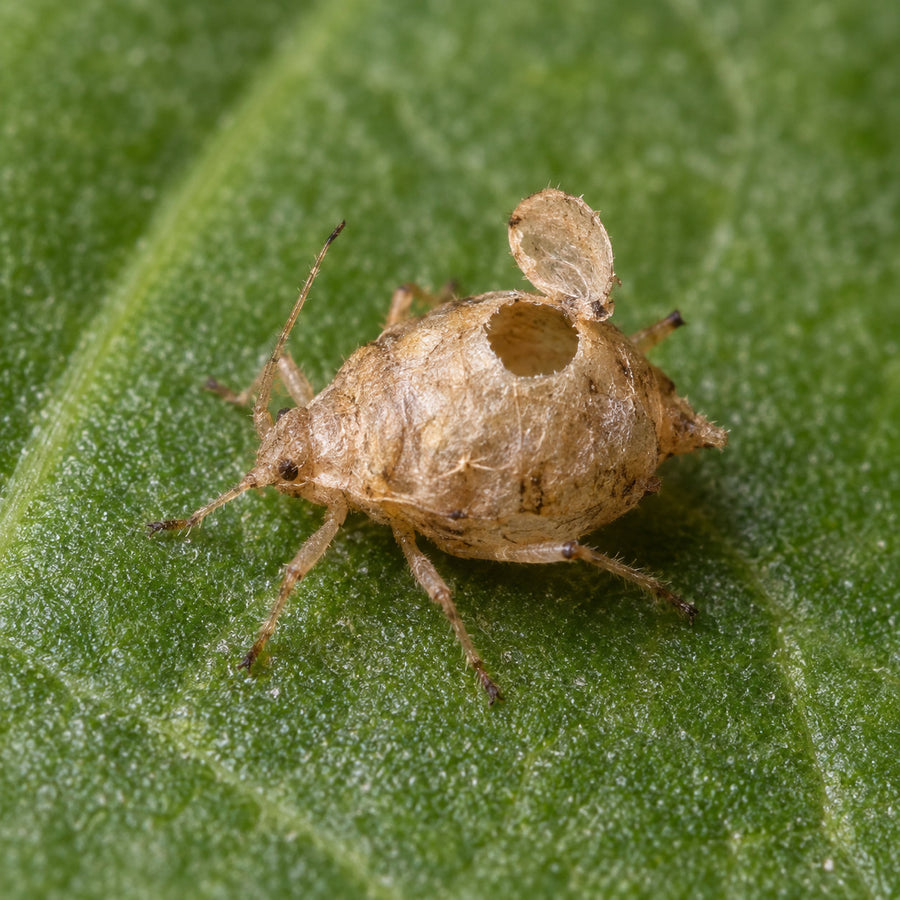
How you'll know it's working
Mummies on the leaves and orange larvae in the clusters. Those two together are the reading.
After that, fresh honeydew stops appearing on the leaves below, colonies shrink, and new growth comes in clean. How long that takes depends on how big the colonies were when you started.
Leave the mummies alone. Each one is an unhatched wasp. Wiping the leaves down loses that next generation.
Getting it to you
What is in the box, how it travels, and what happens if it arrives wrong.
What arrives
Two tubes: Aphidius colemani mummies in a wood chip carrier, and Aphidoletes pupae in a ventilated bottle.
Nothing in either will look like much, and that's normal. The wasps chew out of their mummies over the following days, and the midges emerge from the bottle over several days.
Same day, two moments. Wasps in the morning, in the canopy near the aphids. Midges at dusk, low down on damp, shaded soil.
When it ships, and when it lands
Shipping
We ship when they're ready to travel. Live orders go out Monday to Thursday. If a colony needs a beat to peak, or we're propagating a fresh batch, yours might hold up to a week. All mites and insects ship 2-day or Overnight depending on what's best for them.
When it lands
Open it the day it lands. Take yellow sticky cards down first. Put the wasps out that morning and leave the material undisturbed while they emerge. Set the midge bottle out at dusk on damp, shaded soil near the worst plants, and keep that surface slightly damp.
Why we pack extra
Two days in a van is a long trip for something this small, so we send more than you paid for.
A mummy is a hardened aphid the size of a pinhead, and a midge pupa is smaller than a grain of rice.
A trip like that is hard on anything this small, so we price it in: the number on the label gets counted out, and then roughly 15% more goes in on top as a cushion.
The ones that don't make it are already paid for.
If you can see them
Ladybugs, lacewing larvae, Orius — the minute pirate bug — and the beetles. These are the ones big enough to photograph, and a picture tells us a lot.
Something look wrong? Photograph them in the container and email the photo to info@fgmnnursery.com.
If you can't see them
Mummies and pupae, which is what this kit ships as. A tube of tan husks and a bottle of pupae look the same whether they're viable or not, and no photograph settles that. So we don't ask you to take one.
Email info@fgmnnursery.com and our entomologist takes you through the diagnostic instead — where the box sat, what your room was doing, and then what the aphids are doing about ten days later.
Seventy-two hours from delivery, either way, with your order number. Replacement or store credit, your pick.
What it does not reach
Three gaps this page has already named, and the beneficial that closes each one.
Potato and foxglove aphid need the larger wasp
The midges in this kit take big aphids too, but the colemani wasps can't develop inside them. If most of what you have is large, long-legged and green or pink, Aphidius ervi is the wasp built for them.
Root aphids are below where these two forage
White, waxy aphids on the roots are out of reach of anything that hunts on leaves. Stratiolaelaps scimitus lives in the top of the mix and is the one agent with a published field trial against a root aphid. Worth trying, not a cure. Isolating new plants is the best-supported thing you can do.
Down for the release, back up to measure it
Yellow cards catch the wasps and the midges as well as they catch anything else, so take yours down for a few days around a release. Then put them back. Winged aphids on a card are the early warning that a colony has started spreading to other plants.
Two small add-ons that make the rest work harder. Blue cards give you the dated count this page keeps asking you to read. Breeder's Blend is pollen and Artemia; it keeps the population fed through the lull when prey gets scarce.
Keep reading
Written by the people who raise and ship them.
- The Wasp Only Works on the Right Aphid.Most aphid advice treats aphids as one pest. The parasitoid wasps do not. One of them will sting a potato aphid and be unable…Read it
- The Ants Are Not Passing Through.If there are ants going up and down the stem of a plant with aphids on it, they are not there by coincidence and…Read it
- Aphidoletes Needs an ExitYou open the container and see carrier material. No dramatic movement. No tiny cavalry forming ranks. Aphidoletes commonly arrives as pupae, so stillness.Read it
Questions
Why two different beneficials?
They work different parts of the problem. Aphidius colemani is a searcher: it finds the scattered aphids on plants you haven't checked. Aphidoletes larvae are clearers: they work through the crowded stems. Together they cover the early colonies and the dense ones at the same time.
Do I need to know which aphid I have?
Not for this kit. Aphidoletes takes over 60 aphid species. The colemani wasps are at their best on green peach and melon aphid; if most of yours are the big potato or foxglove aphids, add Aphidius ervi.
Are these safe around pets and people?
Yes. The wasps are tiny and can't sting people or pets, and the adult midges feed only on nectar and honeydew. Safe around people, pets, plants and food crops.
Why release them at different times of day?
The wasps search by daylight, so they go out in the morning. The midges fly and lay at night, so their bottle goes out at dusk. Same day, two moments.
How often should I repeat it?
Every 2 to 4 weeks while aphids are active, until new growth stays clean two weeks in a row.
What if I can't release it the day it arrives?
Release it as soon as you can. If you truly have to wait, keep both containers somewhere cool and dark, around 45 to 55°F, for no more than 48 hours. Never in the freezer.