
Fungi + bacteria · Roots
Root Network
Mycorrhizae + microbial inoculant
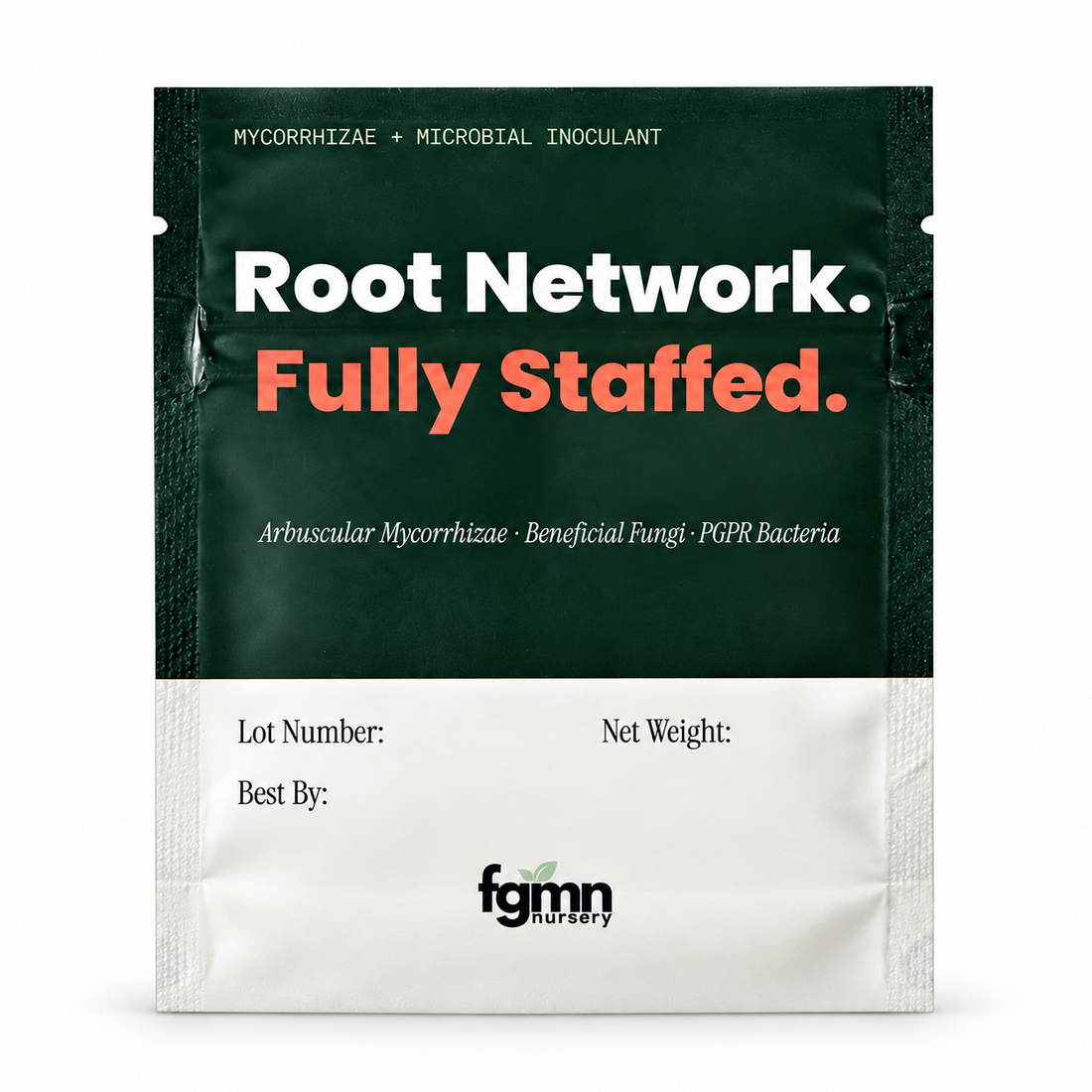
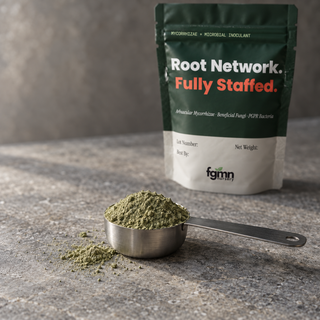
A whole root crew in one pouch: mycorrhizae, a Trichoderma and root bacteria, poured in with a watering.
$12.00
Free Shipping for all orders over $30
Damaged, the wrong item, or something missing from the box: tell us within 72 hours of delivery for a replacement or store credit.
By placing your order you agree to our Shipping Policy.
How much, and how often
One gram per gallon of water. Sizes are sold by the gallons of drench they make. Put it on at repotting, straight onto the roots or as a drench, then repeat the drench monthly during a normal watering.
More about this dose
Putting it out
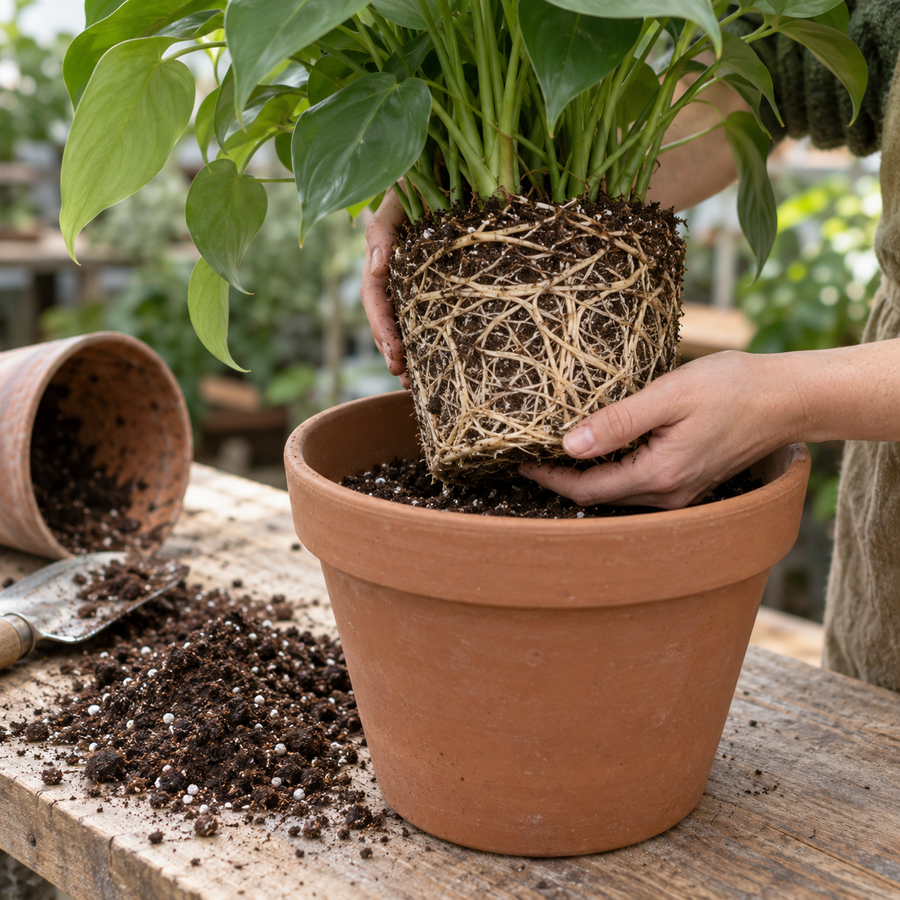
- At repotting, go to the roots. Dust it directly onto the exposed roots, or drench the root ball before you backfill.
- Or mix a drench. One gram per gallon of water, stirred in well.
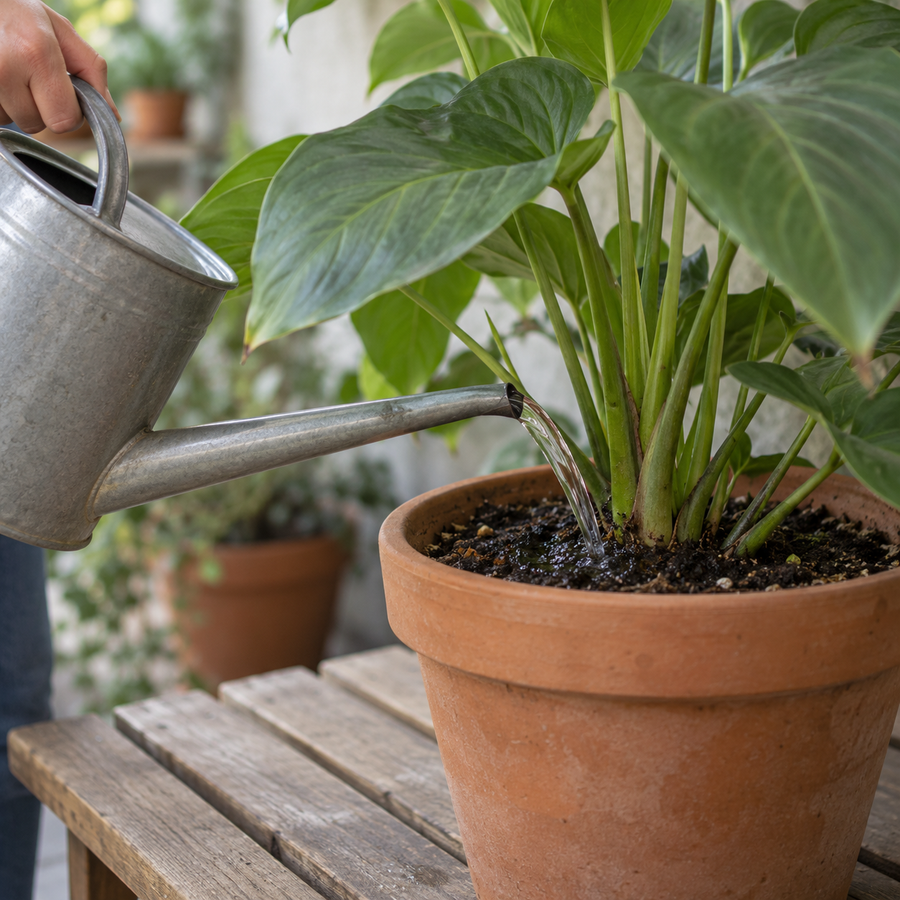
- Pour it into the root zone during a normal watering, not over the leaves. Repeat the drench once a month.
- Reseal the pouch. The powder pulls moisture from the air. Leave the desiccant in.
Is this the right one for your roots?
What's in the pouch, what each part does, and how it differs from T-22.
What it's for
Root Network is a root crew in a pouch: mycorrhizae, a Trichoderma, and five kinds of root bacteria.
A fresh bag of potting mix is close to empty of life, and so is the root zone of a plant you have just repotted or divided. Root Network puts the living part back, at the moment the roots are open and the mix is new.
Each organism in it has its own job. The mycorrhizae extend the root system's reach for water and nutrients. The Trichoderma, the same kind of fungus as in our T-22, settles on the root surface and spreads along it as the roots grow. The Bacillus and Pseudomonas bacteria live on and around the roots and support root growth.
Then: is Root Network the right pick?
Choose this if
You are repotting, potting up or dividing, and you want the whole root crew going in with the new mix, not one organism. It goes on as a watering, one gram to a gallon, or straight onto bare roots while they are out of the pot, and then as a drench once a month. Nothing to spray and no residue on the leaves.
Choose T-22 if
You want the Trichoderma on its own. T-22 is that single fungus, sold the same way at the same rate. Root Network carries a Trichoderma too, and adds the mycorrhizae and the root bacteria alongside it.
What it does, and what it doesn't
It isn't a fertilizer. The only non-living ingredient is dextrose, a simple sugar the organisms travel on. Keep feeding your plants the way you already do.
What's in the pouch
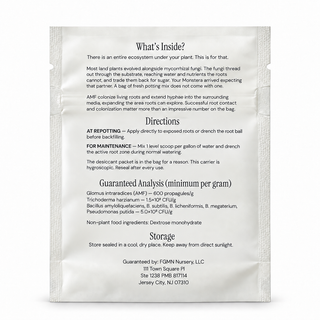
The guaranteed analysis on the label, minimum per gram.
One check: what else is going into the pot. A fungicide drench would hit the fungi in the pouch too, so keep the two apart.
Putting it on
At repotting, then once a month with a normal watering.
Two ways to use it
At repotting. Apply it directly to the exposed roots, or drench the root ball before you backfill.
Once a month, as a watering. Stir one gram into a gallon of water and drench it into the root zone during a normal watering.
You judge it at the roots. There's nothing to see on the soil surface. It all happens in the root zone, so the place to look is the roots, the next time they are out of the pot.
Getting it to you
What is in the pouch, how to store it, and how long it keeps.
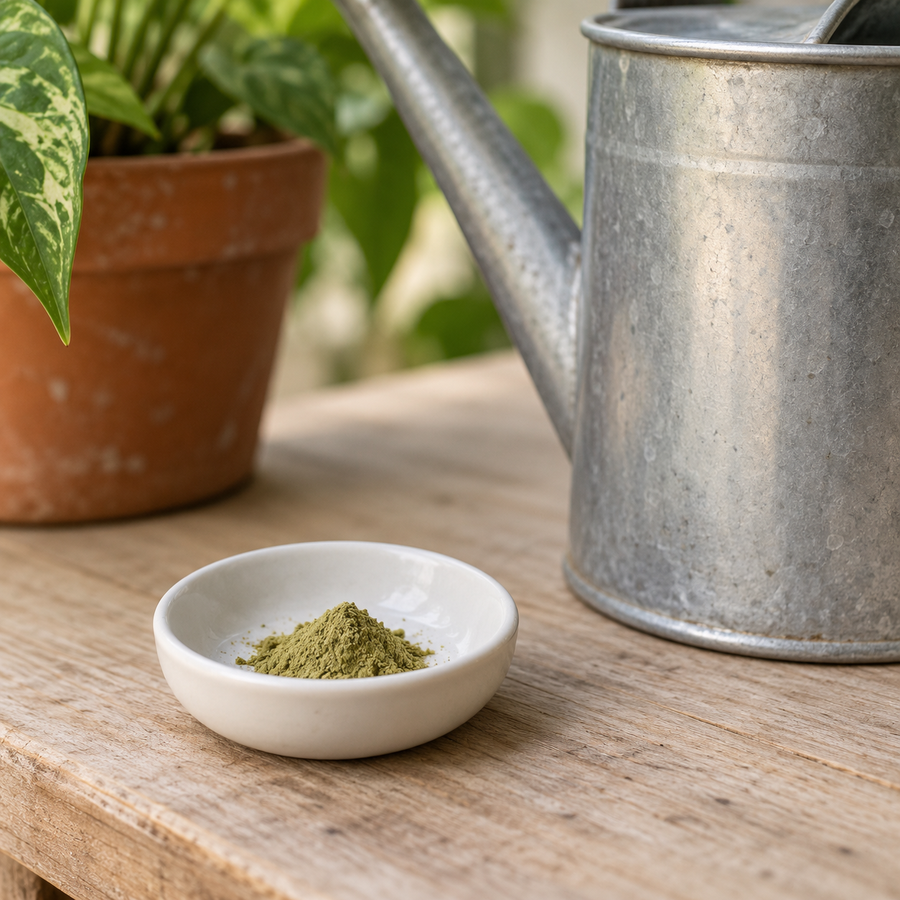
What arrives
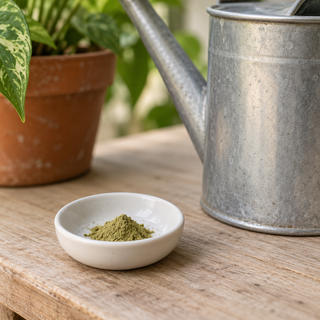
A sealed pouch of light olive-green powder, with a desiccant inside, sold by weight and sized by the gallons of drench it makes.
Keep it sealed, cool and dry, out of direct sunlight. The powder pulls moisture from the air, so reseal the pouch after every use and leave the desiccant in.
It keeps for 18 months, sealed and stored that way.
If something is wrong with it
A pouch that arrives damaged, the wrong item, or a pouch missing from the box.
Tell us within seventy-two hours of delivery, with your order number, and we'll send a replacement or store credit.
What it does not reach
Three gaps this page has already named, and the beneficial that closes each one.
Sf nematodes, for fungus gnats
Root Network looks after the roots. It does nothing about the insects in the same pot, and fungus gnat larvae live right where it goes. Steinernema feltiae takes the larvae in the mix.
Stratiolaelaps, the soil-dwelling predatory mite
Stratiolaelaps scimitus lives in the top inch of the mix and hunts fungus gnat larvae and thrips pupae there. It covers the insect side of the pot that Root Network doesn't.
Special Blend slow-release sachets
Root Network works below the soil line and nothing above it. Predatory mite sachets do the reverse: four species on the foliage for thrips, spider mites, broad and cyclamen mites and whitefly, one sachet every three to five linear feet, for four to six weeks at a time.
Questions
Is Root Network a fertilizer?
No. It's living organisms: mycorrhizae, a Trichoderma and root bacteria. The only non-living ingredient is dextrose, a simple sugar they travel on, and it isn't a plant food. Keep feeding your plants the way you already do.
How is Root Network different from T-22?
T-22 is one fungus, Trichoderma, on its own. Root Network carries a Trichoderma too, and adds mycorrhizae and five kinds of root bacteria alongside it. Both are sold the same way, one gram per gallon of water.
How often do I use it?
Put it on at repotting, straight onto the roots or as a drench. After that, repeat the drench once a month: one gram in a gallon of water, poured into the root zone during a normal watering.
How long does a pouch keep?
18 months, sealed and stored cool and dry, out of direct sunlight. Reseal it after every use and leave the desiccant in, because the powder pulls moisture from the air.