








Start from the pest, not the list
This is the widest list on the site, and it is the wrong place to browse if you already know what you are dealing with. Work from the pest and the choice gets small fast.
Spider mites — fine pale speckling, then webbing. Thrips — silvered patches and black specks, and a pest that needs more than one predator because it does not spend its whole life where you can reach it. Broad, russet and cyclamen mites — twisted or bronzed new growth and nothing visible to blame. Fungus gnats — small dark flies off the soil when you water. Whitefly, mealybugs, scale and aphids each have their own page. Can't name it? Work backwards from the damage with the identification guide.
Then pick the format
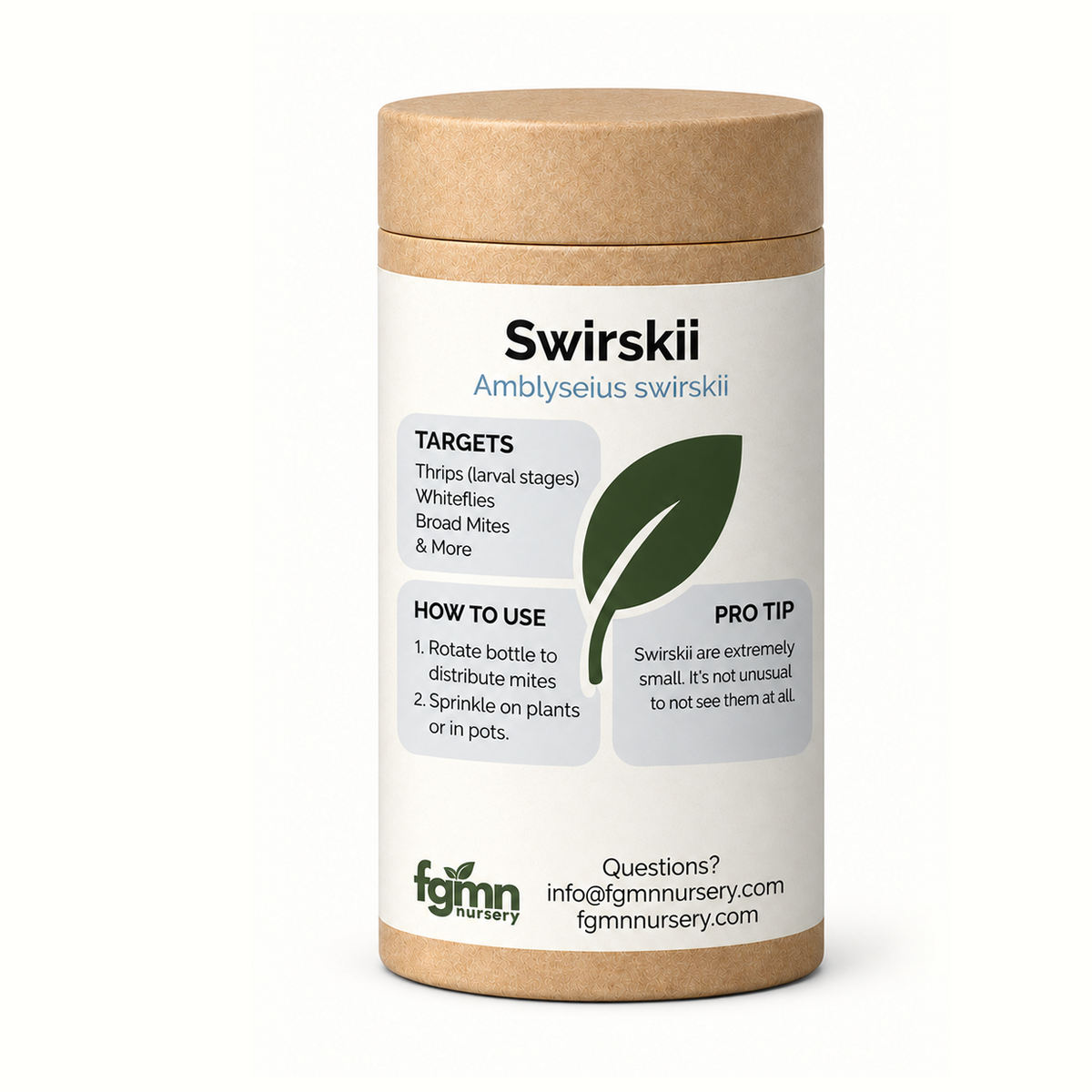
A bottle is a dose: a large number of predators released onto a problem that exists right now. That is treatment.
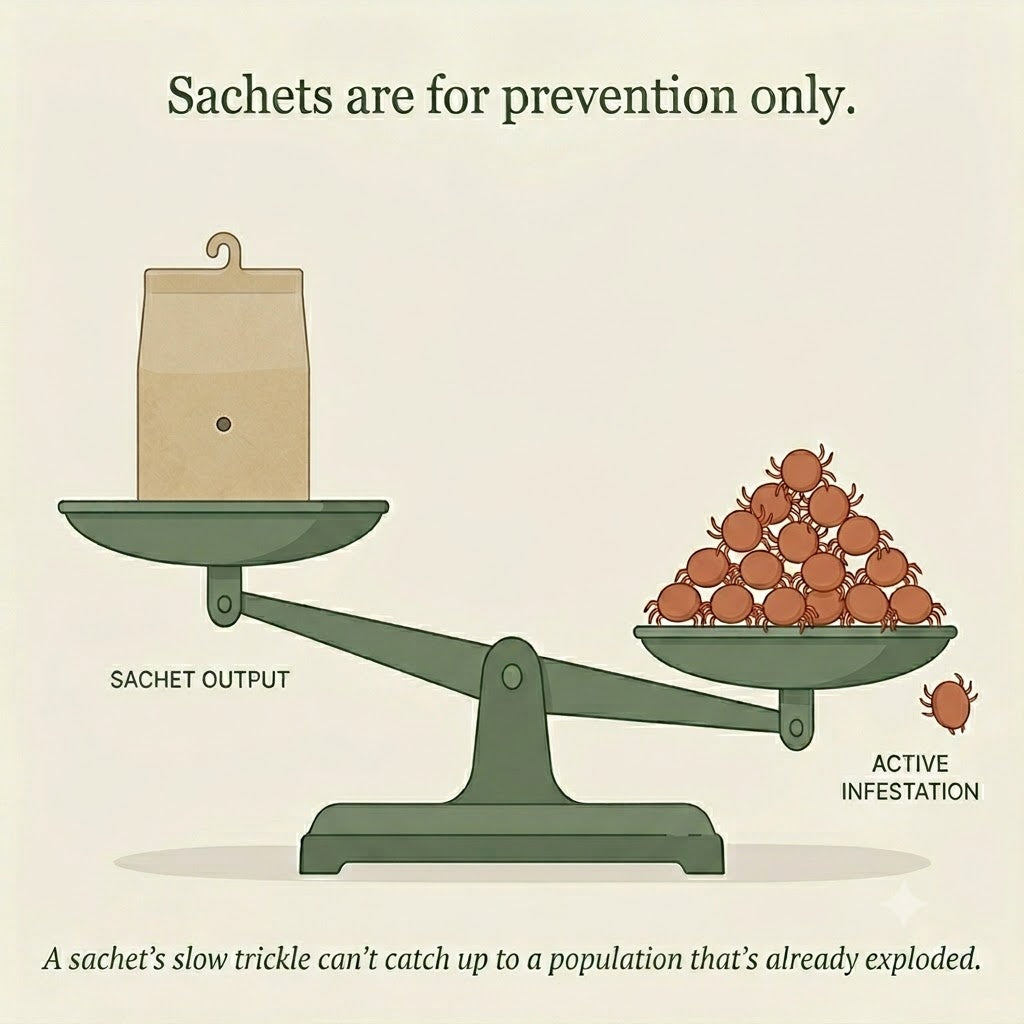
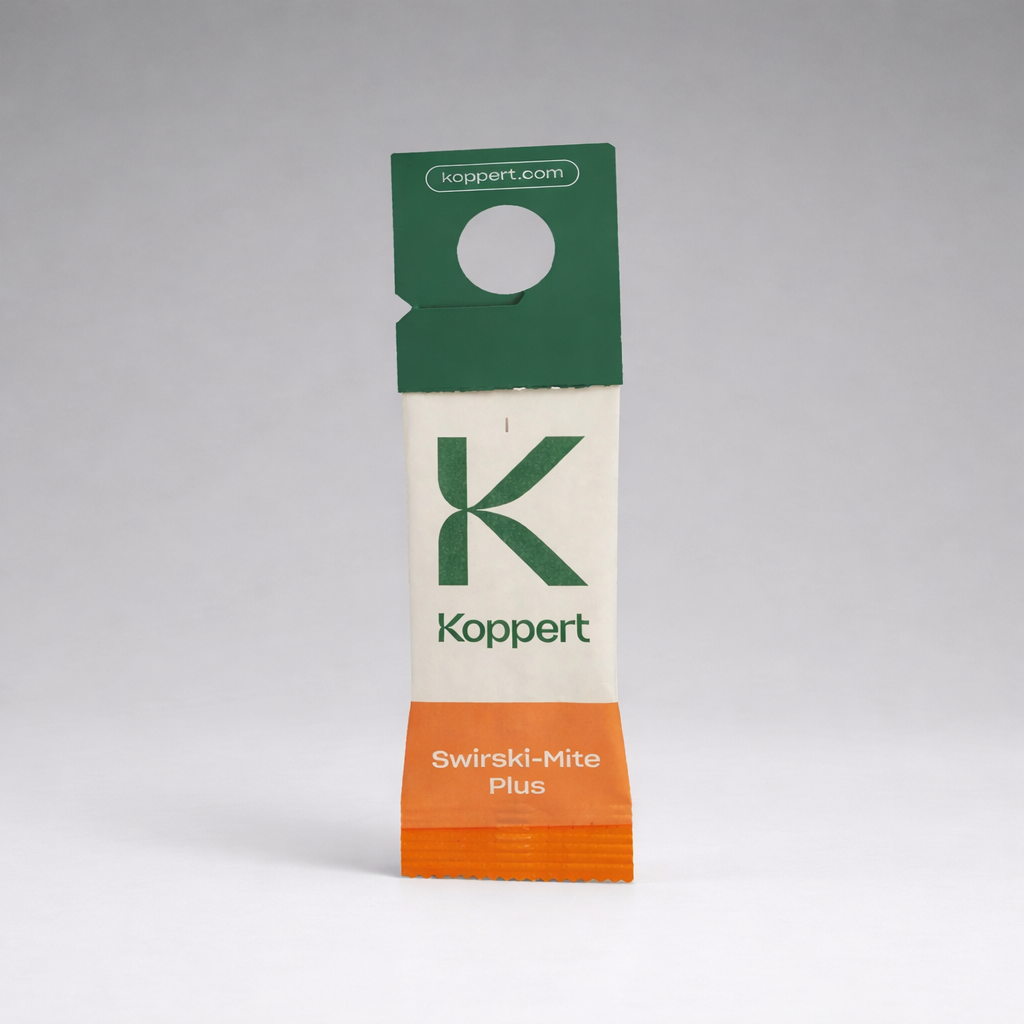
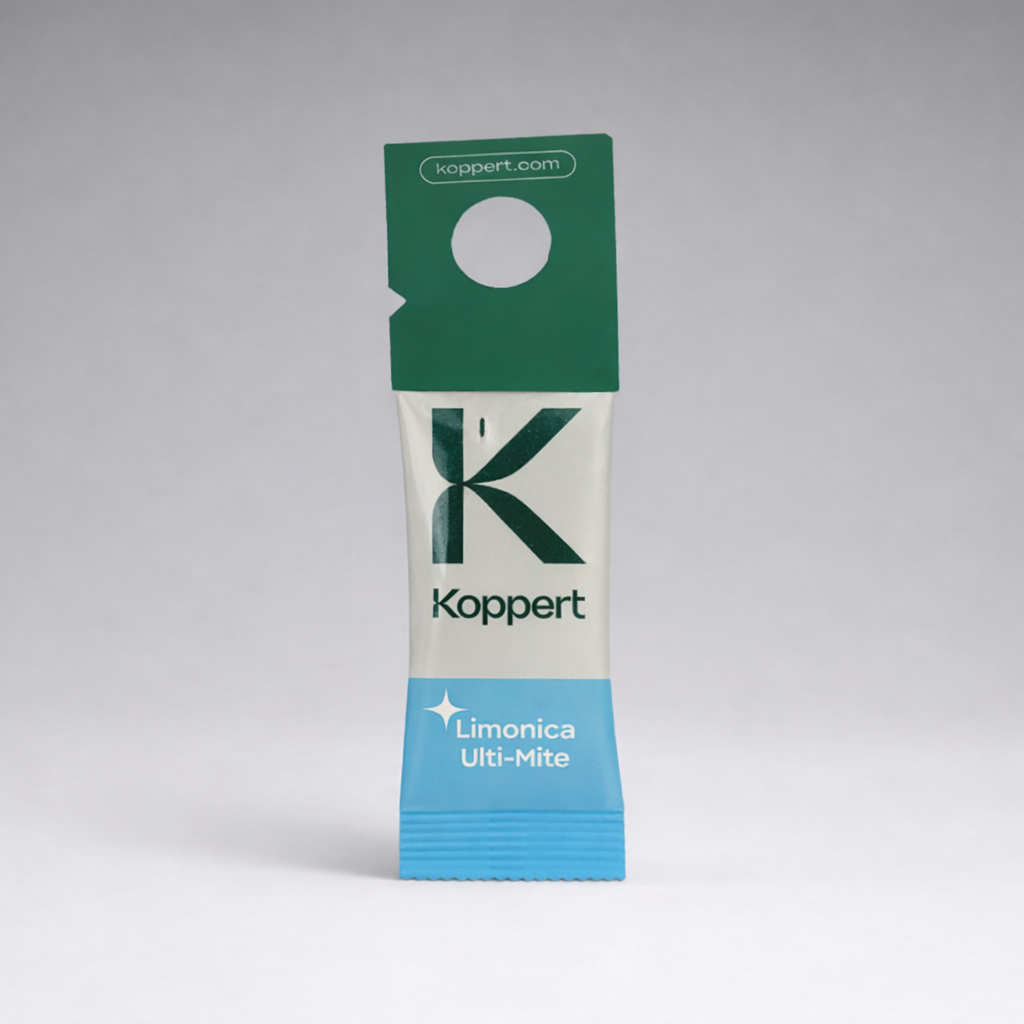
A sachet is a colony: a breeding population with its own food, walking out a few at a time over weeks. That is prevention, it goes up before anything is wrong, and more is always better.
Sticky traps aren't a control. They are how you find out early enough for prevention to still be the right answer — see supplies and monitoring.
And match it to your room
Species differ in what they put up with, and that is most of the difference between a release that works and one that quietly doesn't. The predatory mite field guide sets out which species suits a warm room, a dry one or a cool one, and when a specialist beats a generalist.
Where a pest sits under wax or armour, or has grown past the stage a mite can take, the answer is a beneficial insect instead — a beetle or a lacewing larva that can chew through it.
What working looks like
They are small on purpose. Most predatory mites are around half a millimetre, they live on the leaf, they hunt continuously, and they breed on your plant. You are unlikely to watch any of it happen.
So judge it the way we do: the pest population stops growing first, and new growth comes in clean. Damage already on the plant stays there. And nothing here can be sprayed around — pests cannot develop resistance to being eaten, which is the whole reason this keeps working.