


Sf Nematodes
Biological control is a programme, not a single release. A subscription puts the next one on its way before the last one runs out.
Skip a box, change how often it comes, or stop it — all from your account.
Heads up—this is just an estimate. We only ship when the bugs are happy and ready to travel (Mon–Thurs). If a colony needs a beat to peak, or we're propagating a fresh batch, your order might hold up to a week. Treatment bottles jump the line when you've got an active infestation.
Sf Nematodes
At A Glance
Steinernema feltiae, commonly known as "SF Nematodes," are your garden’s subterranean special forces. While predatory mites patrol the leaves, these microscopic beneficial roundworms hunt in the soil, targeting the larval and pupal stages of pests that use the media as a nursery. They are a high-performance biological solution for breaking the life cycle of Fungus Gnats, Thrips, and the notoriously difficult Root Aphid.
-
Scientific Name: Steinernema feltiae.
-
Best For: Eradicating Fungus Gnats, Western Flower Thrips, Root Aphids, and Shore Flies.
-
Safe For: Plants, humans, pets, and pollinators.
-
Key Feature: Persistence. Once applied to moist soil, they actively swim through the water film on soil particles to track down and eliminate pests.
Target Pests
Environmental Needs
Selection Guide
How to Use
How They're Shipped
Mix, drench, keep it moist.
How to apply your nematodes, and how to read the results over the next few weeks. Nematodes need water to move, soil to live in, and protection from sunlight — the routine is built around all three.
-
01
Open the box right away
Bring the package indoors as soon as it arrives. Don't leave it on a hot porch, in a cold mailbox, or in direct sun. Nematodes ship in a moist carrier — sponge, gel, or clay depending on the species. A warm package is normal. Warmth speeds their metabolism up; it doesn't kill them, and a melted pack is expected. What isn't normal is a carrier that has dried out, or one that has gone the consistency of toothpaste after sitting in high humidity.
-
02
Apply now, or refrigerate
Best results come from applying the same day. If you need to wait, store the unopened package in the refrigerator (not the freezer) at 38–42°F. Most species stay viable for two to four weeks refrigerated; check the product description for the exact window. Pull from the fridge an hour before mixing to take the chill off.
-
03
Mix with cool water
Dissolve the carrier in a bucket of cool, dechlorinated water — tap water is usually fine if it's been sitting out for an hour, or use rainwater if you have it. Stir gently to suspend the nematodes evenly. Use a watering can with the rose removed, or a backpack sprayer with any fine screens taken out (mesh finer than 50 will strain them out). See the product description for water volume per package.
-
04
Drench at dusk or on a cloudy day
Nematodes die in UV light within minutes, so timing matters more here than anywhere else. Pre-water the soil so it's already damp, then drench evenly across the target area — pots, beds, or lawn. Keep stirring the bucket as you go so the nematodes don't settle to the bottom.
-
05
Keep the soil moist for two weeks
Nematodes move through water films around soil particles to find their hosts. Dry soil stops them. Water lightly every two or three days for the first two weeks — enough to keep the top few inches damp, not soaked. Pest reduction shows up over one to four weeks depending on species and pest. If you don't see improvement by week four, that's when to bring in our bug pros.
Something not quite right?
Reach out to our entomologist by filing a report within 72 hours of delivery, with your order number and a photo. Candidly, without a photo the team can't approve a live beneficial claim.
Read the full Live Delivery Guarantee →Join Karen's Live Shows — Pests, Plants & Predators on PalmStreet.
Every Friday at 7pm EST — plus additional shows throughout the week. Ask your pest questions in real time — we answer everything.














The Weekly Newsletter
A weekly excuse to be weird about bugs at parties.
Weekly dispatches on the quietly alarming things happening in your soil. All of it real.
No spam. Leave whenever.
You're in
The first strange true thing arrives next week.
FAQ
What is your Live Delivery Guarantee?
We guarantee that your beneficial insects arrive healthy and ready to work. They're living things, so we pack for the season and ship expedited to give them the best trip we can.
If something looks wrong when the box opens, take a photo and file a report within 72 hours of delivery, with your order number. Photos matter: candidly, without them the team can't approve a live beneficial claim.
How many million nematodes should I use per gallon of water?
How soon will I see results after a drench?
Can I use Sf Nematodes in hydroponic or rockwool setups?
Why is dechlorinated water a "non-negotiable" for application?
Will Sf Nematodes harm my plants, pets, or family?
Do I need to re-apply them, or is one drench enough?
Help! I'm overwhelmed
Yeah, it's a lot the first time you're using beneficial nematodes. File a report and our bug pros will walk you through it!
I don’t see anything moving in my bottle or sachet. Does that mean they’re dead?
Not at all! In fact, go ahead and deploy them.
Predatory mites are microscopic (often less than 0.5mm) and naturally blend into their carrier medium (bran or vermiculite).
- For Bottles: The mites often huddle in the center of the bottle for insulation during transit.
- For Sachets: These are "slow-release" nurseries. The mites stay tucked deep inside the breeding media and emerge one by one over 2–4 weeks. Seeing an "empty-looking" sachet or bottle is not proof of a loss; it is simply how they are packaged for maximum survival.
Nematodes are the way to go. I purchase every grow and never get any gnats ever since using this.Greatest find ever.
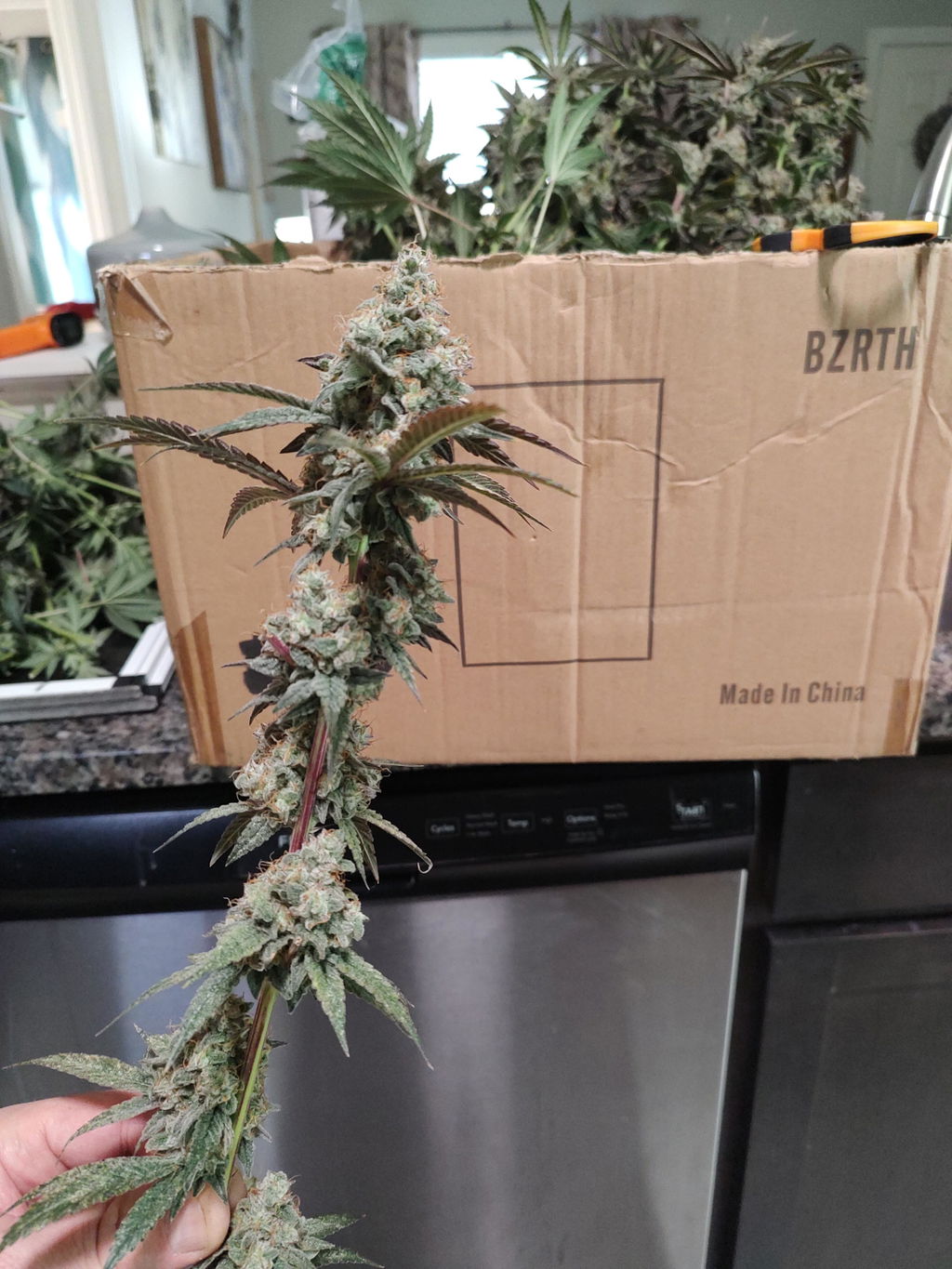
I was amazed. I had to leave town on a family emergency the day I received my nematodes. So I followed the directions, mixed with a gallon of water and fed it to 10 plants. Some were severely affected. I left town for 2 days and when I came back, there was marked improvement. Plants that were stunted and yellowing had already turned around. I love this product. Thank you. I've been fighting these knats for a long time.
Doing a great job!!
These works great! Finally I had some relief on my gnats problem!
Super easy to use I immediately dumped them into my plant right after a watering day and I can’t wait to see the real progress!!!!
I've used nematodes on houseplants previously and was amazed by how well they work. Got these little guys, mixed them up, and about 8 days later the infestation is under control. I was worried b/c my kid put the package in the freezer, not the fridge, when it was delivered. I caught it quickly and they must not have been any worse for wear.
Critters did their jobs! I don’t see any more shiny little varmints running around anymore. Thank you!
Works as intended. Swell things to have in your soil.
Very excited about using nematodes for the fungal gnats we’ve been living with for 8 months.
Company was wonderful. Great, timely, and fun communication.
Package came as expected.
Shipping was great, but I've dosed these buggers three times already, and I'm still struggling with fungus gnats....so, not sure it's working...
Hi Jacqueline, thank you for the feedback, and we’d genuinely like to help you get to the bottom of this. After three rounds, a fungus gnat problem that’s still hanging on usually points to something specific we can pinpoint rather than just needing more time. It may be that the size you’ve been choosing is under what your infestation actually calls for, or that something in your soil or setup — moisture levels, media type, or how the nematodes are being applied and watered in — is cutting into their ability to establish and hunt. Those are all fixable once we know what’s going on. If you’ll reach out to us at info@fgmnnursery.com with a bit about your setup and how you’ve been applying them, we’ll help you figure out the adjustment that actually gets you on top of the gnats.
definitely worked as intended haha.
Easy to use and incorporate, hard to say how much they've helped our gnat problem but optimistic
Fungus knats seem to be dead or their larva have been eaten. Idk…haven’t seen anymore.
Hi Rachel, we're so glad to hear the nematodes are helping control the fungus gnats! Thanks for sharing your experience.
They seem to have done what they are supposed to do.
Hi Christine, we're glad to hear the nematodes are doing their job!
Great product....even better communication.. I'll be buying from them again... Very professional...and their email updates had a touch of humor . Well done guys.
Everything arrived very well packaged & very quickly, as promised! Wonderful instructions, highly recommend the company! A+++
Fungus gnats are gone, and I haven’t even used all of the nematodes yet. Excellent experience. Fast shipping. Love the cute and humorous updates.
Thank you. Communication was amazing throughout the entire order process
Worth it! Would buy again but hopefully won’t need too. Thanks!
So far the little rascals are doing there job..I had a severs case of gnats flying around..there are a few left but I am totally surprised at how fast this has worked..thank you so much.
The fungus gnat are all gone! Thanks nematodes!
Very happy with my nematodes. I am already seeing less fungas gnats. Shipping was super fast and packaging was great.
It worked wonders!!
I appreciate the steady updates on shipping. I didn’t notice any changes in my plants but could have been something I did wrong.
Super easy to use and works great!
Nematodes are always a safe and effective plan for not only fungus gnats but other possible pests
A must for plant parents
Got for all the fungus gnats in my household plants. Love them
So far I haven’t seen the little fungus gnats flying around!
It seems there are some happy little nematodes doing their thing. Thank you:)
This was pretty confusing to use. The only directions on the package is to “follow the directions”. I had to chat with their AI bot for help.
They were shipped to me on Friday. Sat over the weekend in the summer heat. I received them 4days later on Monday. One uline ice pack completely melted.
Hi Michael — thanks for the feedback! A melted ice pack on arrival is actually normal and not a concern for nematodes specifically. Peer-reviewed research shows they tolerate 40-86°F without significant mortality, and they're packed in a stable medium that buffers them through transit even if the ice fully melts. Go ahead and apply them per the directions (moist soil, dusk application, water in well, keep moist 7-10 days) and they should perform as expected. If anything looks off once applied, please reach out to us at info@fgmnnursery.com.
Mite Matters

Cucumeris: Why It Works (and Why It Fails)
Cucumeris is reliable, widely researched, and genuinely effective — within a specific set of conditions. Here's what it actually does, what it won't do, and how to tell if it's the right species for your situation.

My Plant Has Webbing. Help.
Webbing on a plant isn't always spider mites — and the mite that causes the most damage indoors doesn't produce webbing at all. Here's how to tell what you're actually looking at before you treat.

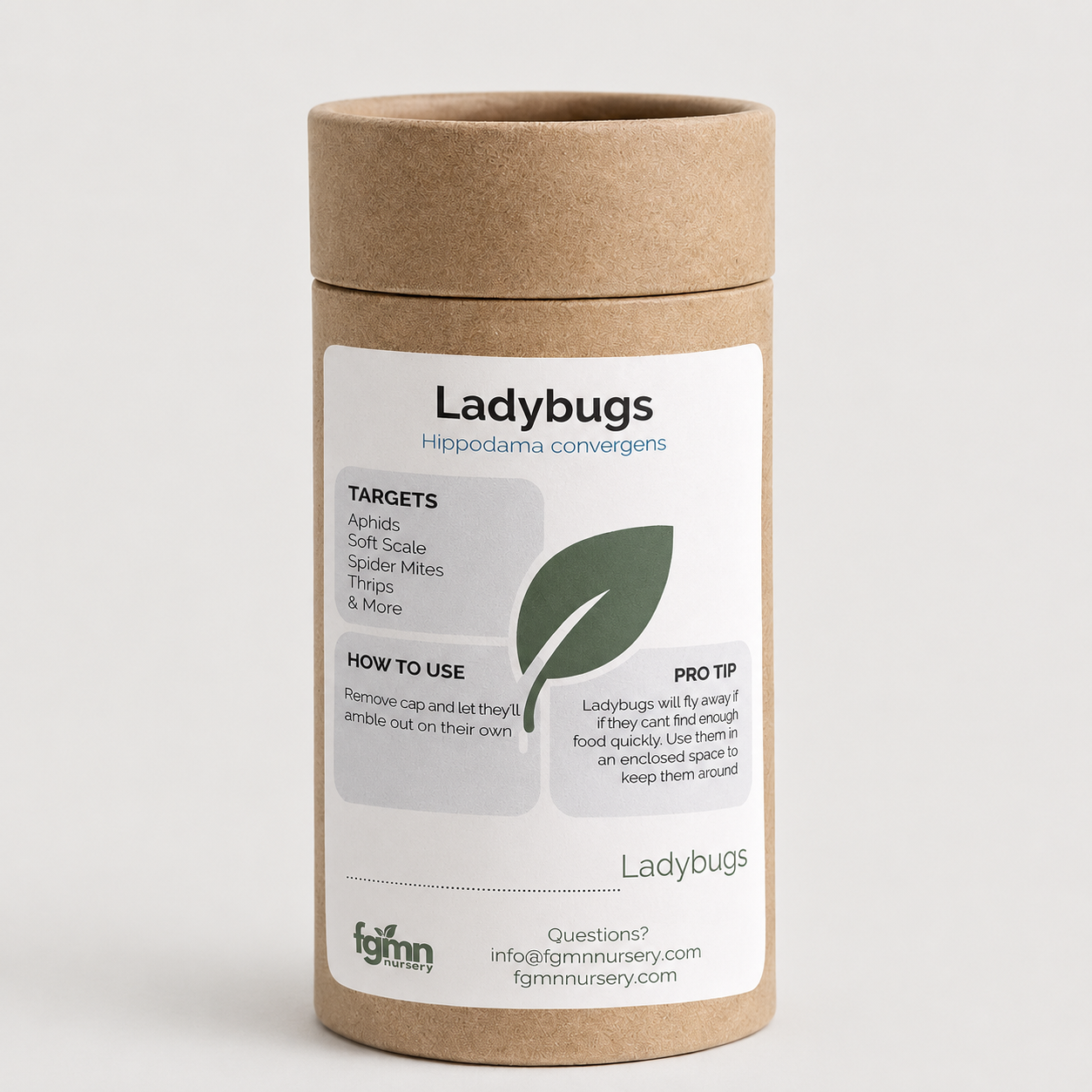
Native vs Invasive Ladybugs
Most ladybugs you'll encounter are red with black dots — and that description fits native, introduced, and invasive species equally. Here's how to actually tell them apart, what the harlequin ladybug has been doing to native populations, and where the real ecological concerns are.