
Physan 20
A disinfectant for tools, pots, benches and water — and the one product here that will kill everything else you bought from us.
$28.00
Free Shipping for all orders over $30
If something's wrong when it arrives, file a report within 72 hours of delivery for a replacement or store credit.
By placing your order you agree to our Shipping Policy and Live Delivery Guarantee.
How to mix it
The rate is per job, not one number — tools at 1 tsp per quart, benches at 1 Tbsp per gallon, orchids and roses at 2 tsp per gallon. Mix only what you will use today, and keep hard surfaces visibly wet for the full ten minutes.
More about this dose
The three things people ask once they have their size. Open any of them.
Why more than one round?
Putting it out
- Find the rate for the job in front of you. Tools 1 tsp per quart; benches and general pathogen control 1 Tbsp per gallon; greenhouse glass and house plants 1 tsp per gallon; orchids and roses 2 tsp per gallon; African violets 1 Tbsp in 4 gallons. One bucket for everything is the common mistake.
- Protect your eyes and skin while diluting. The concentrate is corrosive — that is where the label's warnings attach. The diluted working solution is a different proposition.
- Mix only what you will use today. A working solution does not keep.
- Keep hard surfaces visibly wet for ten minutes, and give tools, pots and flats a ten-minute soak. A wipe that dries in two minutes is a clean, not a disinfection.
- Let everything dry completely before anything living goes near it. Plants, and predatory mites, nematodes, rove beetles, springtails, Trichoderma and Root Biome Builder especially.
- Keep it away from fish. Ponds with fish in them, paludariums, aquariums — and bioactive vivariums, which are the same situation with springtails in it.
Everything else is optional. Get these four and the release has done what it can.
A cleaner way
On a display plant, tip small piles into bio-boxes or paper cups hung in the branches instead of dusting the foliage. Same dose, nothing visible on the leaf.
What it is for
Four questions, in the order a grower actually asks them: what is this for, is it the answer to my problem, what does it act on, and how is it mixed.
What it is for
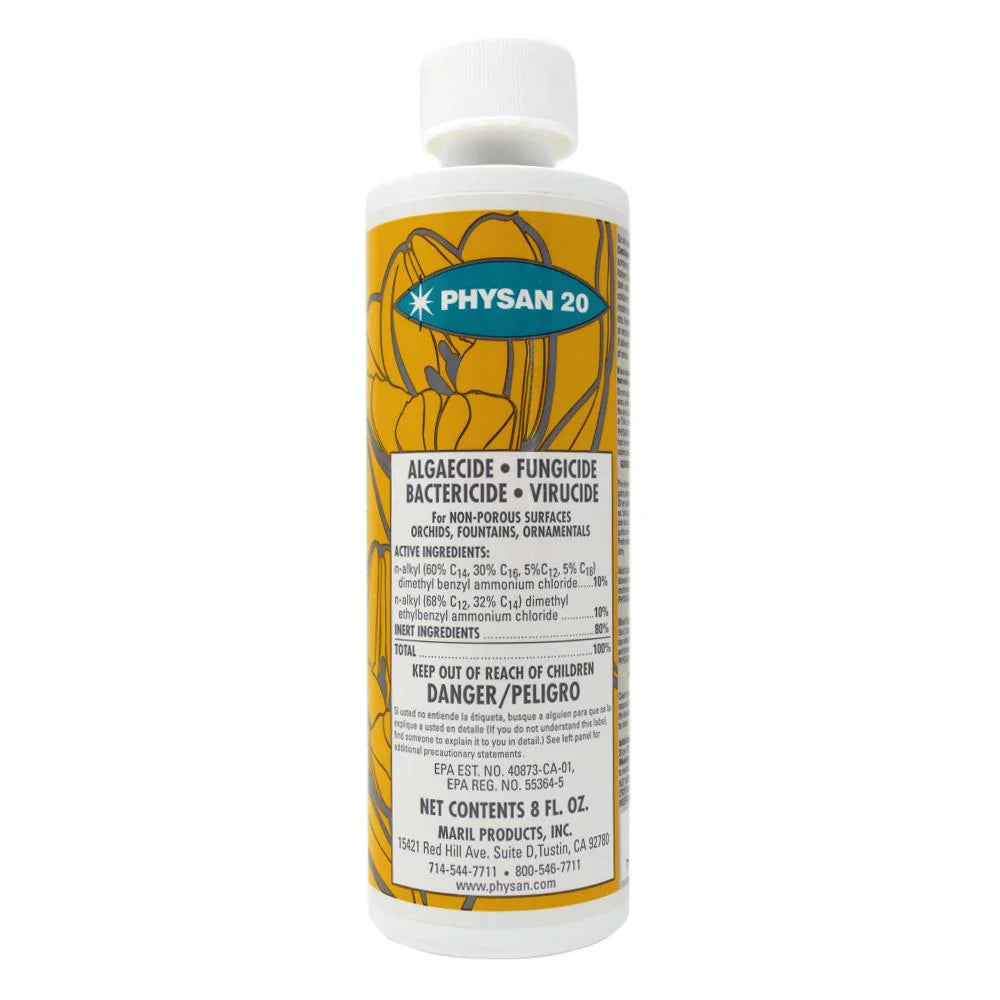
This is the one product on the site that is not alive and does not want anything else to be. Physan 20 is a disinfectant, fungicide, virucide and algaecide — it is here for surfaces, tools, pots and water, and for specific plant diseases on the label.
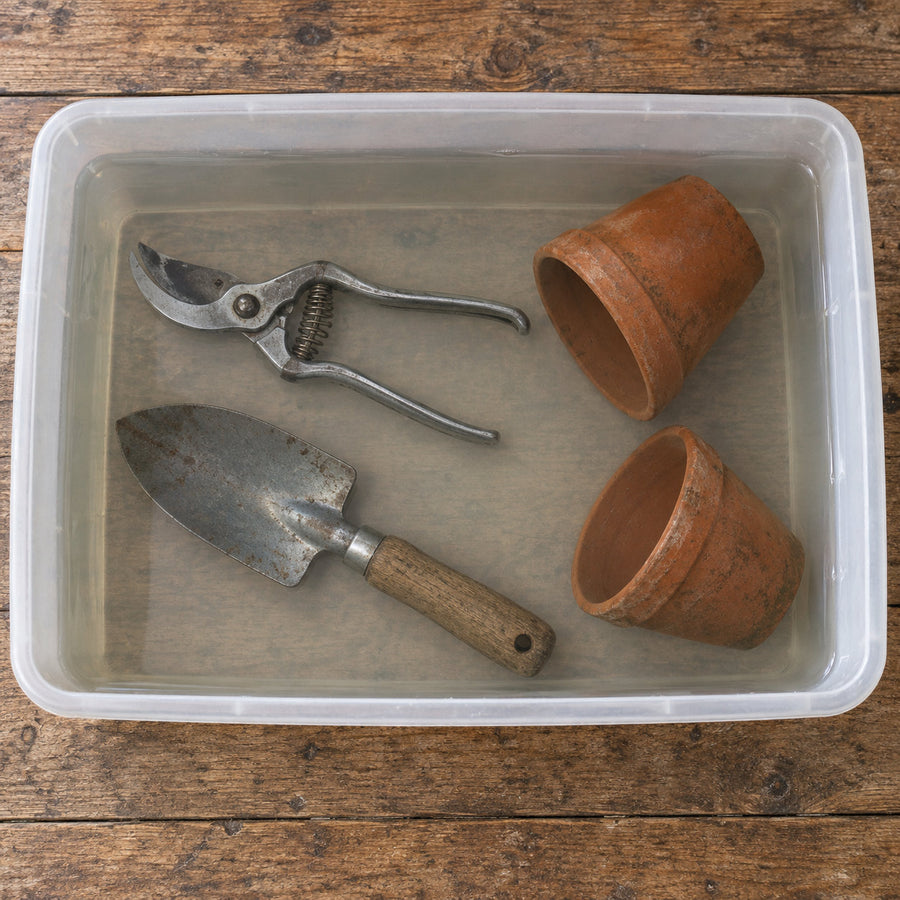
Most plant disease arrives on something you already own: a pot reused without cleaning, secateurs that went from one plant to the next, a bench that never got wiped between crops. Sterilising between jobs is unglamorous and it is the cheapest disease control there is.
Two quaternary ammonium actives at 10% each, EPA Reg. No. 55364-5. On the label it is used against bacteria, fungi, viruses and algae on hard surfaces, tools, pots and flats, greenhouse glass and walkways; in fountains, ponds and ornamental water displays for algae; and on plants for the diseases the label names — crown rot, botrytis and root rot on orchids, and damping-off on orchid seedlings.
Then: is Physan the right answer to it?
Choose this if
Reach for it between jobs rather than during one. It is the right tool for sterilising tools, pots, flats, trays, benches, greenhouse glass and walkways; for a propagation bench you want genuinely clean before cuttings go on it; and for algae in a fountain or an ornamental water display. The concentrate dilutes a long way and the mixing ratios are specific per job, so a bottle goes further than it looks. Used as directed it is straightforward: the manufacturer's own ornamental guidance says gloves are not required for the diluted working solution, and that it is safe for birds and mammals.
Choose something else if
It does not know the difference between a pathogen and a predator. Nothing you bought from us alive — the predatory mites, the nematodes, the rove beetles, the springtails, Trichoderma, Root Biome Builder — survives contact with it. Plan the two around each other rather than running them together, and never release onto a surface that is still wet with it. It is also toxic to fish: the label lists ornamental water displays as a use and warns about fish in the same breath, so a pond with fish in it, a paludarium or an aquarium is a place to keep this away from entirely.
What it acts on, and what it does not
Worth being blunt about the right-hand list, because the product name suggests otherwise. This is a disinfectant, not a pesticide in the sense the rest of this catalogue means it. It kills microorganisms and algae. It does nothing about thrips, mites, aphids, fungus gnats or anything else with legs — and it will kill the predators you bought to deal with them.
How it is used
Contact time, dilution and the fresh-mix rule — the three things that decide whether it worked.
It works on contact, and on time
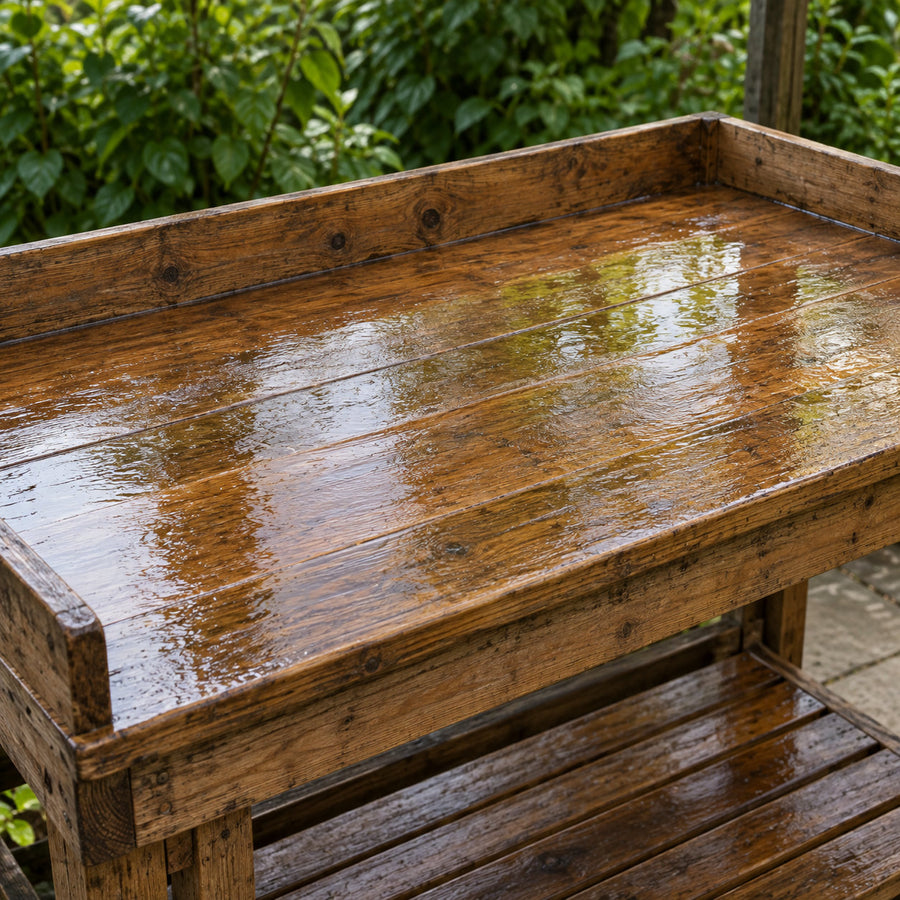
Hard surfaces have to stay visibly wet for the full ten minutes. A wipe that dries in two is not a disinfection, it is a clean. Tools and pots get a ten-minute soak for the same reason.
The dilution is per job, not one number
Tools, one teaspoon per quart. Benches, general pathogen control and African violets at their own rates. Orchids and roses at two teaspoons a gallon. Greenhouse glass and house plants at one teaspoon a gallon. Read the label for the job in front of you rather than mixing one bucket for everything.
Mix it fresh
A working solution is made for the day it is used. Yesterday's bucket is not a saving.
The concentrate and the working solution are two different products in the hand. The concentrate is corrosive — the label carries irreversible eye damage and skin burns, full PPE and a 12-hour restricted-entry interval for occupational use. The diluted solution is the one the manufacturer says needs no gloves. Handle the bottle with that in mind and dilute it somewhere you would be happy to spill it.
Rates, times and handling
Three. It is toxic to fish — keep it away from ponds with fish, paludariums and aquariums, and remember that springtails in a bioactive vivarium sit in exactly that kind of setup. The concentrate is corrosive, so protect your eyes and skin while you are diluting it. And it kills beneficials — there is no release interval to wait out, because the thing that matters is the surface being dry rather than a number of hours. Treat, let everything dry completely, then put living stock back.
About Physan 20
A concentrated disinfectant, fungicide, virucide and algaecide. Bought for surfaces, tools, pots and water rather than for anything on this site that is alive.
Before the first job
Five things that catch almost everyone the first time.
After you use it
Contact time, the fresh-mix rule, and getting living stock back on.
How you'll know it worked
There is nothing to watch. Disinfection is a procedure rather than a result you can see, which is exactly why the contact time and the dilution matter more than the effort you put in.
If you want feedback, it comes later and indirectly: fewer losses in propagation, fewer damping-off failures on a bench you now clean between crops.
Let it dry completely before anything living goes back. That applies to plants, and it applies twice over to predatory mites, nematodes, rove beetles, springtails, Trichoderma and Root Biome Builder.
Getting it to you
What is in the bottle, how it travels, and how to store it.
What arrives
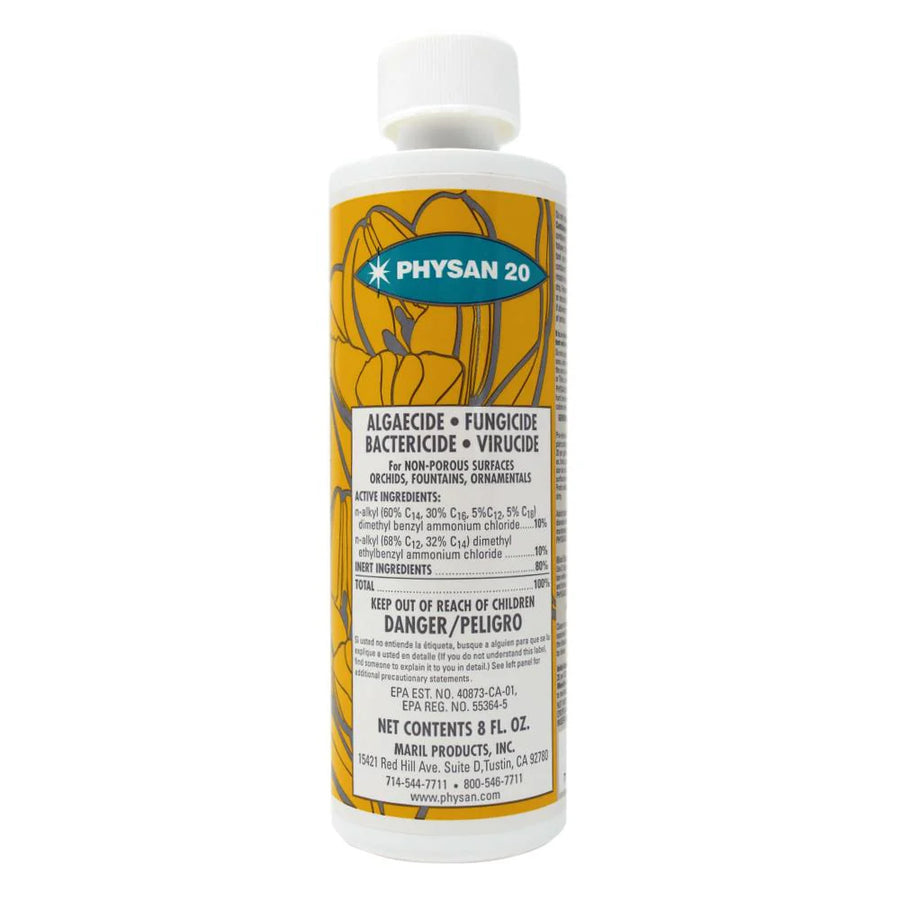
A sealed bottle of concentrate, 8 or 16 ounces.
Nothing is alive and nothing is on a clock. It ships as ordinary goods and keeps on a shelf.
Store it away from anything you keep fish in, and out of reach of children and pets. The concentrate is the form all the safety language attaches to.
When it ships, and when it lands
Shipping
This one just ships. No live-arrival window, no cold chain and no dispatch-day rule — it goes out as ordinary goods and keeps on a shelf once it lands.
When it lands
Put it on a shelf, and read the label before the first job. When you use it: find the rate for that specific job, mix only what you will use today, keep hard surfaces visibly wet for the full ten minutes, give tools and pots a ten-minute soak, and let everything dry completely before anything living goes near it.
About the label
This is a registered product. The bottle outranks this page.
This is a registered product, which makes it the one thing on the site where the authority is not us.
The label governs: the rates, the contact times, the protective equipment and the restricted-entry interval are all set there, and they are what you follow if anything on this page reads differently.
Everything above is a summary written to help you decide whether you want the product. It is not a substitute for the bottle.
If a bottle arrives damaged
A leaking or cracked bottle is a replacement, no questions. Do not clean it up bare-handed — this is the corrosive form, not the diluted one.
Photograph it where it sits and tell us. That is the whole process.
Why this one is straightforward
Mites, nematodes, eggs — the rest of the catalogue. Not this. A sealed bottle either arrived intact or it did not.
Everywhere else on this site we cannot ask for a photograph, because a bottle of carrier looks identical whether the mites inside are alive or not. Here it settles the matter immediately.
Which is a small mercy, because it is also the one product here you should not be poking at to find out.
Seventy-two hours from delivery, either way, with your order number. Replacement or store credit, your pick.
What it does not reach
Three gaps this page has already named, and the beneficial that closes each one.
Trichoderma T-22 works in the pot, not on the bench
Physan cleans the surfaces around a plant. It does not live in the root zone, and it cannot stop a pathogen colonising a fresh pot next week. T-22 does exactly that — it takes the root surface first and holds it for the life of the root system. The two are a natural pair with one rule: disinfect, let everything dry, then drench.
Find out what it is before you buy anything
Physan does nothing to insects or mites, so if the problem has legs this is the wrong shelf entirely. A sticky card costs a few dollars and tells you which pest you actually have — blue for thrips, yellow for fungus gnats and whitefly — before you spend anything on a predator for it.
A sterile root zone is a blank slate, not a safe one
Disinfecting leaves nothing living behind, which is the point on a bench and a problem in a pot — whatever colonises that space next is decided by luck. Root Biome Builder is how you decide it instead: beneficial bacteria poured in deliberately, once everything has dried.
Two cheap things that make the rest work harder. Blue cards give you the dated count this page keeps asking you to read. Breeder's Blend is pollen and Artemia; it keeps the population fed through the lull when prey gets scarce.