

Specialist · Spider Mites
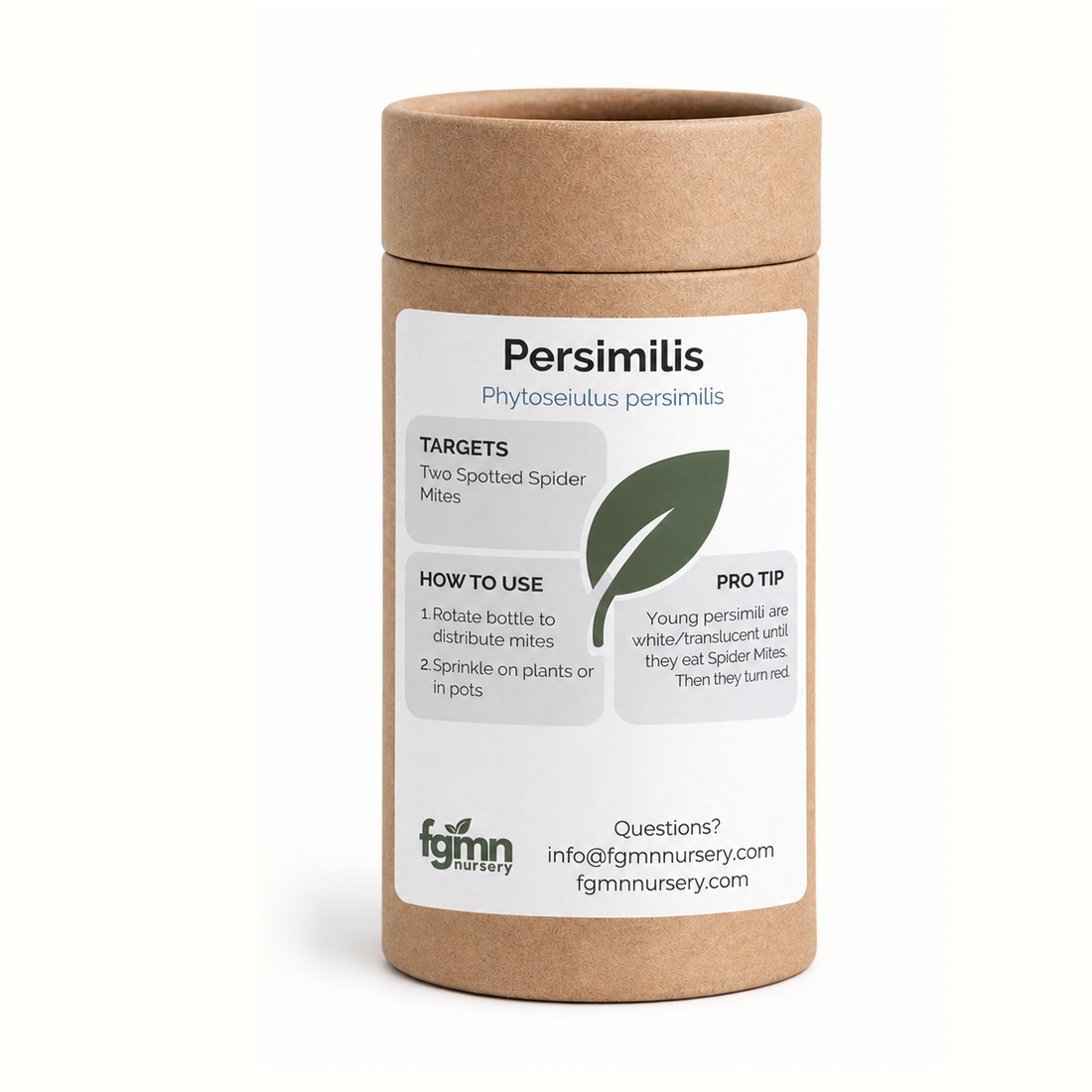
Phytoseiulus persimilis
The sprinter. Bright orange, fast, and interested in exactly one thing — two-spotted spider mites — which is why nothing in the catalogue clears an outbreak quicker.
$55.00
Free Shipping for all orders over $30
If something's wrong when it arrives, file a report within 72 hours of delivery for a replacement or store credit.
By placing your order you agree to our Shipping Policy and Live Delivery Guarantee.
How much, and how often
Two questions — how bad it is, and how many plants. You get a size and the dates to put it out.
How bad is it?
Pick the one that sounds like your room. If you are between two, take the higher.
How many plants?
Six-inch pots. Count a large specimen with a dense canopy as three or four.
Your size and schedule
More about this dose
The three things people ask once they have their size. Open any of them.
Am I light, moderate or heavy?
Light
- You had to turn a leaf over to find it — a few pale specks that read as dust.
- No webbing anywhere, at any angle to the light.
- New growth is coming in clean.
- One or two plants. The rest of the shelf is fine.
Moderate
- You notice the stippling walking past, without stopping to inspect.
- Fine webbing where a leaf meets the stem, or between two leaf tips.
- Undersides show live mites when you tap a leaf over white paper.
- A few plants in the same area have it.
Heavy
- You saw it from across the room — whole leaves gone pale or bronze.
- Webbing strung between leaves and running up the growing tips.
- Tapping a leaf over white paper drops mites you can watch move.
- It has reached plants that were never touching.
Do not ration it. Splitting a bottle across too many plants drops the predator-to-prey ratio below the point where it collapses anything — with this one, concentration is the whole mechanism. If you are between two levels, take the higher.
Spider mites are built to be underestimated:
- Damage is a record, not a reading. Stippling is scar tissue. It stays on the leaf long after every mite that made it is dead.
- They feed underneath. By the time the top of the leaf looks wrong, the colony on the other side has been there a while.
- Webbing means it has already moved. Plants touching an obviously bad one are usually already carrying it.
Why more than one round?
Putting it out
- Mist first. A light misting of the foliage just before release helps the carrier stick to the leaves and gives these mites the humidity they work best in.
- Rotate, don't shake. End over end, gently, so the mites are spread evenly through the carrier.
- Into the webbing. Persimilis walks into a web and works from inside it. Hot spots get the heaviest dose; clean plants get none.
- Undersides, always. Spider mites feed under the leaf. Carrier dusted only on top surfaces mostly lands on the floor.
Everything else is optional. Get these four and the release has done what it can.
A cleaner way
On a display plant, tip small piles into bio-boxes or paper cups hung in the branches instead of dusting the foliage. Same dose, nothing visible on the leaf.
The failure is forgetting. Very few programs fail because the mite underperformed. They fail in week five, when the plants look fine, the reorder does not happen, and the population holding the line ages out with nothing behind it.
A schedule is the same decision, made once. A bottle when it looks bad, then another when it looks bad again, is already a rhythm — just one you have to remember at the exact moment the plants look fine.
Change the size or the frequency, skip a box, pause or cancel from your account at any time.
Is this the right beneficial for your problem?
Five questions, in the order a grower actually asks them: what have you got, is this the answer to it, what will it eat, how does it do the killing, and will it survive your room.
Is this your pest?
Persimilis treats exactly one pest. If what you have is not two-spotted spider mite, the product you want is a different one.
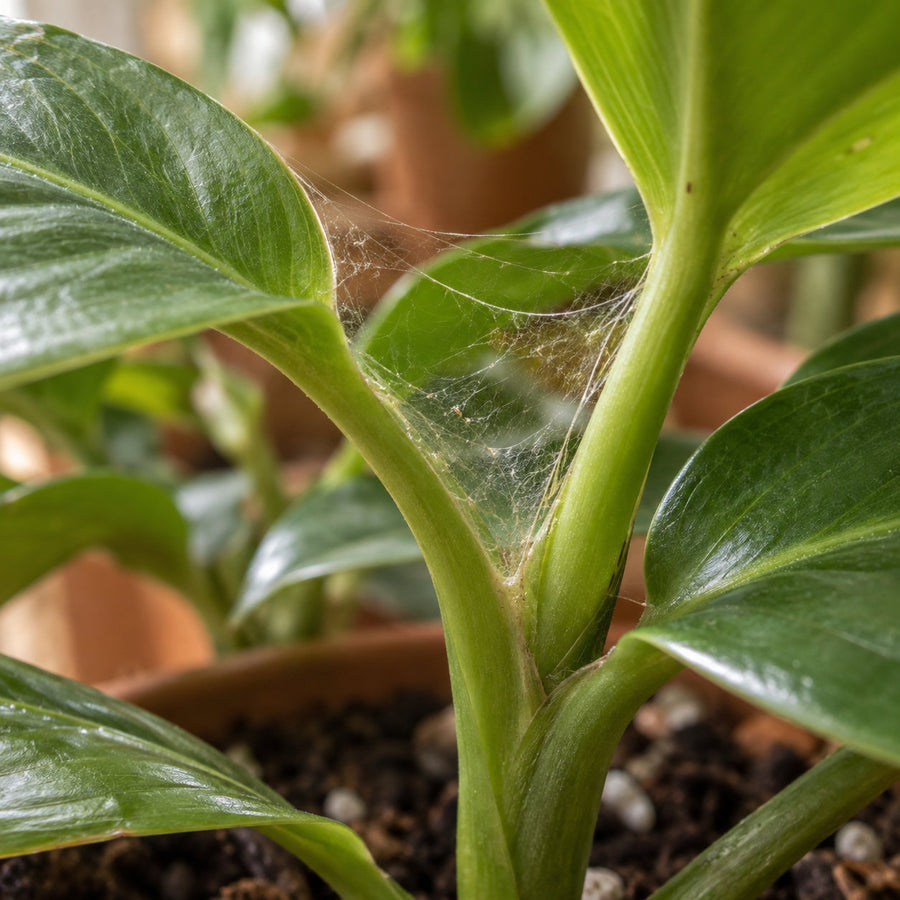
Fine webbing strung between leaf edges and growing tips, and a dusty, speckled look to the foliage that goes bronze under pressure. Turn a leaf over and the mites are on the underside, moving.
Persimilis takes two-spotted spider mite at every stage — eggs, nymphs and adults. It is slightly larger than its prey, tear-drop shaped and bright orange, and it moves fast. It walks straight into webbing that traps other predators and works the colony from the inside. It takes nothing else: no pollen, no debris, no alternative menu.
Then: is persimilis the right answer to it?
Choose this if
Choose persimilis when you can already see the problem — webbing, bronzing, a colony spreading — and you want it stopped. It is the fastest thing in the catalogue against two-spotted spider mite, and the single-mindedness is why: it never stops to graze on anything else. Give it 60% relative humidity or better and it will outpace the colony.
Choose something else if
Two things rule it out. Dry air: below 60% RH the eggs shrivel and fail to hatch, so the population never builds — Neoseiulus californicus is the one that holds down to 40%. A clean plant: persimilis is an obligate predator and starves within days without spider mites, so it cannot be released preventatively. For prevention, Amblyseius andersoni or a sachet.
What it kills, and what it won't
There is no bonus list here, and that is the point. Persimilis eats spider mites or it dies, which is exactly why it clears a colony faster than a generalist that stops to eat pollen on the way.
How it works
What it does to the pest, what it does on the plant, and what that leaves you looking at.
It goes into the web
Persimilis is a predator — not a poison, not a repellent, nothing systemic. Spider mite webbing is a defence that traps most predators at the edge; persimilis navigates it and hunts the colony from inside. There is no residue on the plant afterwards, no re-entry interval, and spider mites cannot develop resistance to being eaten.
It breeds faster than they do
What you release is the start of the population, not the whole of it. In humid conditions persimilis lays on the leaf and out-reproduces the colony it is eating, which is the mechanism that turns a release into a collapse. Below 60% humidity the eggs shrivel and that mechanism stops, even though the adults keep feeding.
Then it disappears
When the spider mites are gone, persimilis starves. That is the design and not a defect — it is what an obligate specialist does. If your predators vanish once the pests do, the job finished.
It is not a knockdown in the spray sense. The stippling already on a leaf is permanent damage and stays there whatever happens next. Webbing stops expanding first; counts drop after; new growth comes in clean last.
Will it work in your room?
If your room runs below 60% humidity, this is the wrong mite — the adults will eat but the population will not build. Neoseiulus californicus is the one for dry air. And do not buy it for a plant with no spider mites on it: it will starve within days.
About persimilis
A predatory mite slightly larger than its prey, bright orange and fast, that hunts on leaves. It has no interest in your plant and no interest in you — it eats two-spotted spider mites, and when there are none left it dies out.
New to beneficials?
Five things that catch almost everyone the first time.
After you release it
What actually changes, how fast, and the three things this one does not reach.
How you'll know it's working
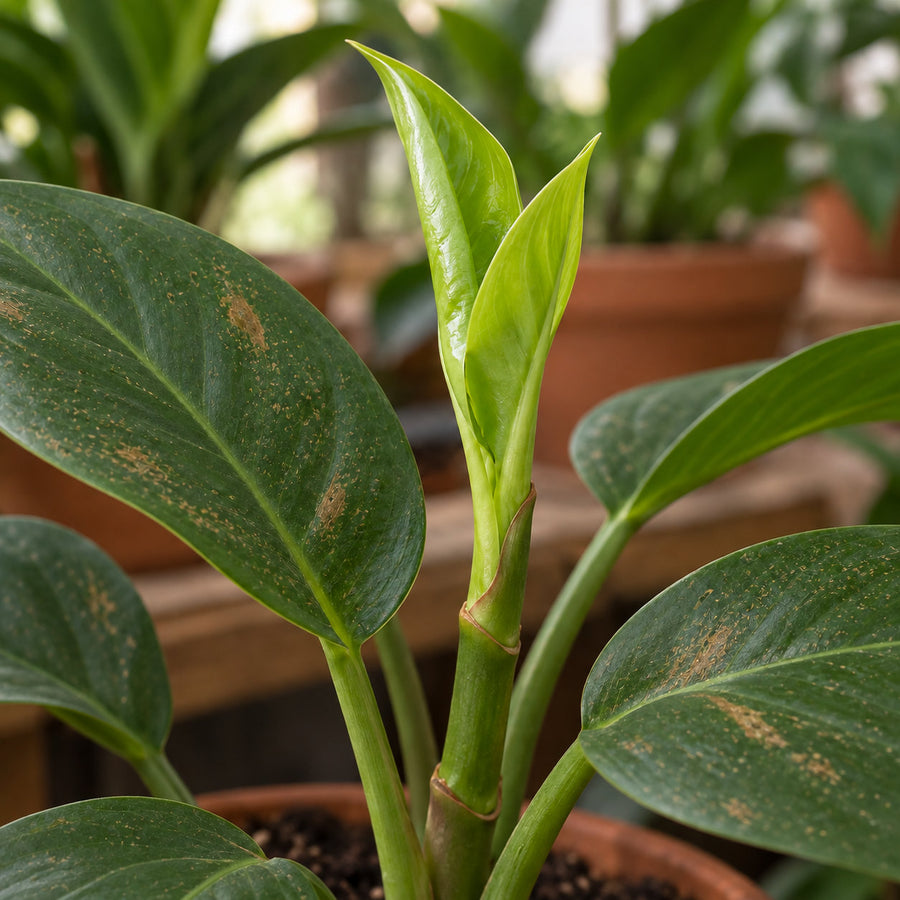
Existing damage does not heal. A leaf that was stippled stays stippled after every spider mite on it is dead, because that is scar tissue and not an infestation.
So judge by three things instead, in this order: webbing stops expanding, then live mite counts drop when you tap a leaf over white paper, then new leaves come in clean.
Fast, by biocontrol standards — but fast means a week or two, not overnight. If the predators vanish once the pests do, that is the job finishing rather than failing.
Getting it to you
What is in the bottle, how it travels, and what happens if it arrives wrong.
What arrives
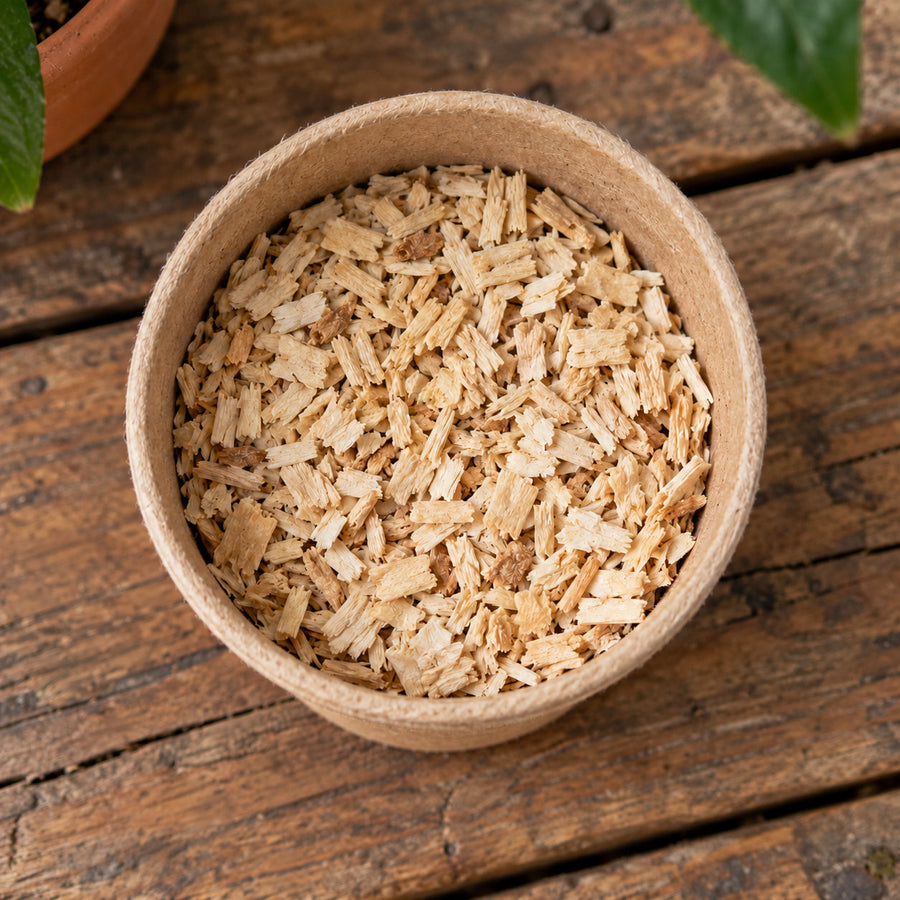
Loose mites in a wood chip carrier, mixed stages. Everything in the bottle goes onto the plant — the carrier is part of the release, not packaging to discard.
Under good light you can sometimes see them moving against the pale grains, which is more than you get with most predatory mites.
Release on arrival. There is no holding option for loose mites — open the bottle the day it lands.
When it ships, and when it lands
Shipping
We ship when they're ready to travel. Live orders go out Monday to Thursday. If a colony needs a beat to peak, or we're propagating a fresh batch, yours might hold up to a week. All mites and insects ship 2-day or Overnight depending on what's best for them.
When it lands
Open it that day. Aim at the webbing — hot spots first, clean plants never — and tip the carrier onto the leaf undersides where spider mites actually feed, rather than onto the top surface.
About the ones that don't make it
Some of them die on the way. That is why we send more than you paid for.
A predatory mite is the size of a grain of table salt. It ships in a bottle, in a van, for two days.
Roughly 15% will not survive that. We cannot prevent it, so we price it in: the number on the label gets counted out, and then the cushion goes in on top of it.
Your 500-mite bottle leaves here holding more than 500. The dead ones are already paid for.
If you can see them
Ladybugs, lacewing larvae, Orius — the minute pirate bug — and the beetles. Tip a few onto white paper and give them twenty minutes at room temperature before you judge anybody.
Cold insects are genuinely good at playing dead. The deceased have been known to get up and walk off the counter.
Still more than about one in seven not moving? Photograph them and file a report.
The photo is not us doubting you. It is how we tell a bad batch from a bad courier day from a mailbox that hit 104°F.
If you can't see them
Mites, nematodes, eggs — most of what we sell, this one included. A bottle of carrier looks the same whether it holds 500 live mites or none, and no photograph settles that. So we don't ask you to take one.
You file the report and our entomologist takes you through the diagnostic instead — the tap test on dark paper, where the box sat, what your room was doing, and then what the pest is doing about ten days later.
Seventy-two hours from delivery, either way, with your order number. Replacement or store credit, your pick.
What it does not reach
Three gaps this page has already named, and the beneficial that closes each one.
Neoseiulus californicus
When the spider mites are gone, persimilis starves — that is the design, not a defect. Californicus eats slower but holds on pollen, so it is still patrolling the crop a month later. The standard pairing is persimilis into the hot spots and californicus across everything else.
Ultimate Control Predatory Mite Mix
Persimilis is an obligate specialist: two-spotted spider mites, and nothing else. It does not control broad mites, cyclamen mites or thrips. If more than one thing is going on, the three-species blend is built to cover that range in a single bottle.
Special Blend sachets
No spider mites, no persimilis — it leaves with the pest. Slow-release sachets put a small mixed population on the plant for weeks afterwards, which is what stops the next outbreak starting from the plant you just cleared.
Two cheap things that make the rest work harder. Blue cards give you the dated count this page keeps asking you to read. Breeder's Blend is pollen and Artemia; it keeps the population fed through the lull when prey gets scarce.
Questions
Can I use them preventatively?
This is the most common confusion! Persimilis is bright orange/red, pear-shaped, and moves very fast (like a sports car). Two-Spotted Spider Mites are usually pale yellow with two spots, but they can turn orange/red when they are dormant or "overwintering." If the red mite is slow and sluggish, it is likely the pest. If it is sprinting across the leaf, it is likely your Persimilis.
Can I use Persimilis and Californicus together?
Yes, this is actually the best strategy for long-term control. Release Persimilis on the "hotspots" to knock down the high numbers of spider mites quickly. Release Californicus on the rest of the plants to act as a slow-release patrol force that cleans up stragglers and prevents the mites from spreading back.
My plants have heavy webbing. Should I remove it first?
Yes. While Persimilis is unique because it can navigate webbing (unlike other predators), heavy webbing acts like a highway for spider mites and a barrier for everything else. We recommend using a strong stream of water or a vacuum to physically remove the bulk of the webbing before releasing your predators. This gives the Persimilis easier access to the leaf surface where the eggs are.
What happens when they eat all the spider mites?
They will starve or leave. Persimilis is an "obligate predator," meaning it cannot survive on pollen or fungus. Once the spider mite population crashes, the Persimilis population will crash shortly after because they have run out of food. If the spider mites return later in the season, you will need to re-apply.
Can I spray soaps or oils before releasing?
You must be careful. If you use an insecticidal soap or horticultural oil to knock down the webbing, you must rinse it off thoroughly with water. Horticultural oil is done once it is dry; insecticidal soap needs a day before you release Persimilis. Residues from oils and soaps can kill the predatory mites just as easily as they kill the pests.
Why is humidity so important?
Your predators don't drink water, but absorb it from their environment. Persimilis are particularly prone to dehydration and require high humidity to stay hydrated.
Fantastic! We introduced at dark and they are happily munching away.
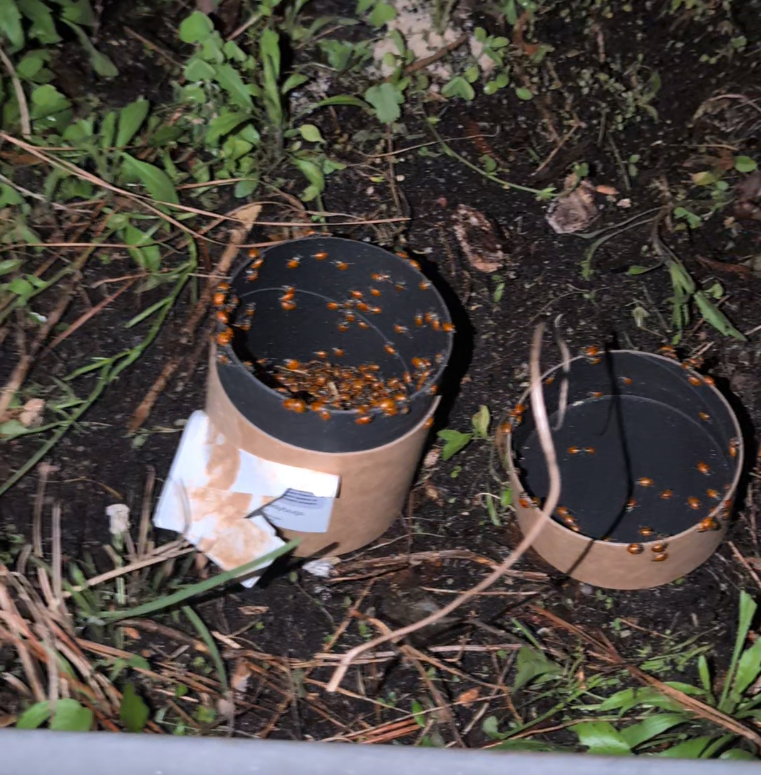
These are some awesome knockdown predators for spider mites!!! Cleared my plants really fast!!!
The package was misdelivered by FedEx, marked as delivered with a photo of my neighbor’s front door 4 days late.
The seller themselves confirmed the mites would be non-viable. Despite clear photo evidence of the wrong door and FedEx closing their ticket, FGMN refused a refund or to help in any way. Their only response was that I should have bought their $1 shipping insurance, something I never even saw as an option at checkout. If it’s only a dollar, I don’t understand why it isn’t just standard.
Worst customer service I’ve ever received from an online retailer. Will never order from them again.
Hi Travis,
Thank you for reaching out. At this time, you have not been refused a refund. Since your order was marked delivered, we do need FedEx to confirm it was not delivered before we reship new Persimilis to you. I realize the last few days must have felt like an eternity, but FedEx does not work weekends, and we're stuck to their timelines. Once they let us know their final decision on your order, we will happily reship the Persimilis. Hang in there! The claims can take weeks, but since you mentioned that FedEx reached out to you, we should be hearing from them in the next few days.
I followed the instructions provided on the website and was impressed by the results. Many of the plants in my greenhouse were infected, and they did not know what was in store for them. One week after the application and the battlefield was barren. New green leafy growth is what I am greeted with now upon entering the greenhouse.
It is assumption because I did not do a microscopic examination.
I've ordered from other companies before but never have I had as much support as I do with FGMN. Predator mites are newish to me and it was a huge help to be as educated as possible since everyone (human and non) has a job to do. My mites arrived in good shape and got right to work.
Got my bugs quickly. Now if she just kill the spider mites on my plants.
Karen,
I am not very tech savvy! While I was on vacation I could not understand your directions about sending you photos of the fgmn box used in shipping, from my phone to email. The box arrived in perfect condition but I ordered and paid for two sachets and received only one. Please send another. I want to let you know I am not happy with the Phytoseiulus Persimilis. I followed the directions and sprinkled water on the foliage and then sprinkled the crumbly material on the plants. Last night when I got home I saw No evidence of any creatures. I have worked for years to get a thick coverage - ground cover of my pachysandra and I am afraid it is all going to die. When I read about your product I had some hope it would help my plants. However, it does not look promising. I would not recommend your product to my friends.
Hi Anne — thank you for the note. On the missing bottle (or sachet?), please reply to your order confirmation email with a photo of what you received and we’ll take it from there. It doesn’t happen often that we miss packing something, but for anybody who reports missed items we require a photo of what was received. It doesn’t need to be anything fancy, but something to prove the missing product. :)
A couple of things that might help: persimilis are tiny, and the juveniles are translucent — they’re nearly impossible to see by eye, even mixed into the carrier you sprinkled. They also need specific conditions to establish: high humidity (60%+), moderate temperatures (70–85°F), and an active two-spotted spider mite population to feed on. Outdoor pachysandra typically doesn’t hold those conditions, and if a different pest or spider mite is behind the decline, persimilis won’t establish regardless.
If you can send close-up photos of the affected leaves (undersides especially), we’re happy to help figure out what’s actually going on.
So far so good! I've seen Less webbing and little red mites indicating that the spider mites are being eaten. Karen, who I have been back and forth with email, has been a treat to deal with! She is incredibly knowledgeable and not afraid to share that knowledge even on a beginner level with me. I have also decided to exclusively start using beneficials instead of sprays thanks to my experience and her help.
All in all this has been above expectations on every department!
Works well
It was fast delivery, I'm pretty sure that it was only 3-4 days after buying thatI received them. They got the job done! will definitely recommend this nursery to my plant friends and family! Also buying again if needed.!
Very active. Making progress, but time will tell for the spider mites.
I ordered some mites later in the day Wednesday afternoon, I wasn't sure 8f it would ship out that week because of the later order. My order was at my front door Thursday before noon, I will absolutely use this company again and recommend to everyone I know needing help with spidermite.
Can I buy these any where walking in
Hi,
Probably not. They have a very limited shelf life and eat only two-spotted spider mites, which makes keeping them in a physical retail environment very challenging. Please let us know if you find anywhere and we'll refer people there who prefer the physical retail experience!